
Pile Foundation
Bored Cast-in-Situ Piling Specialists
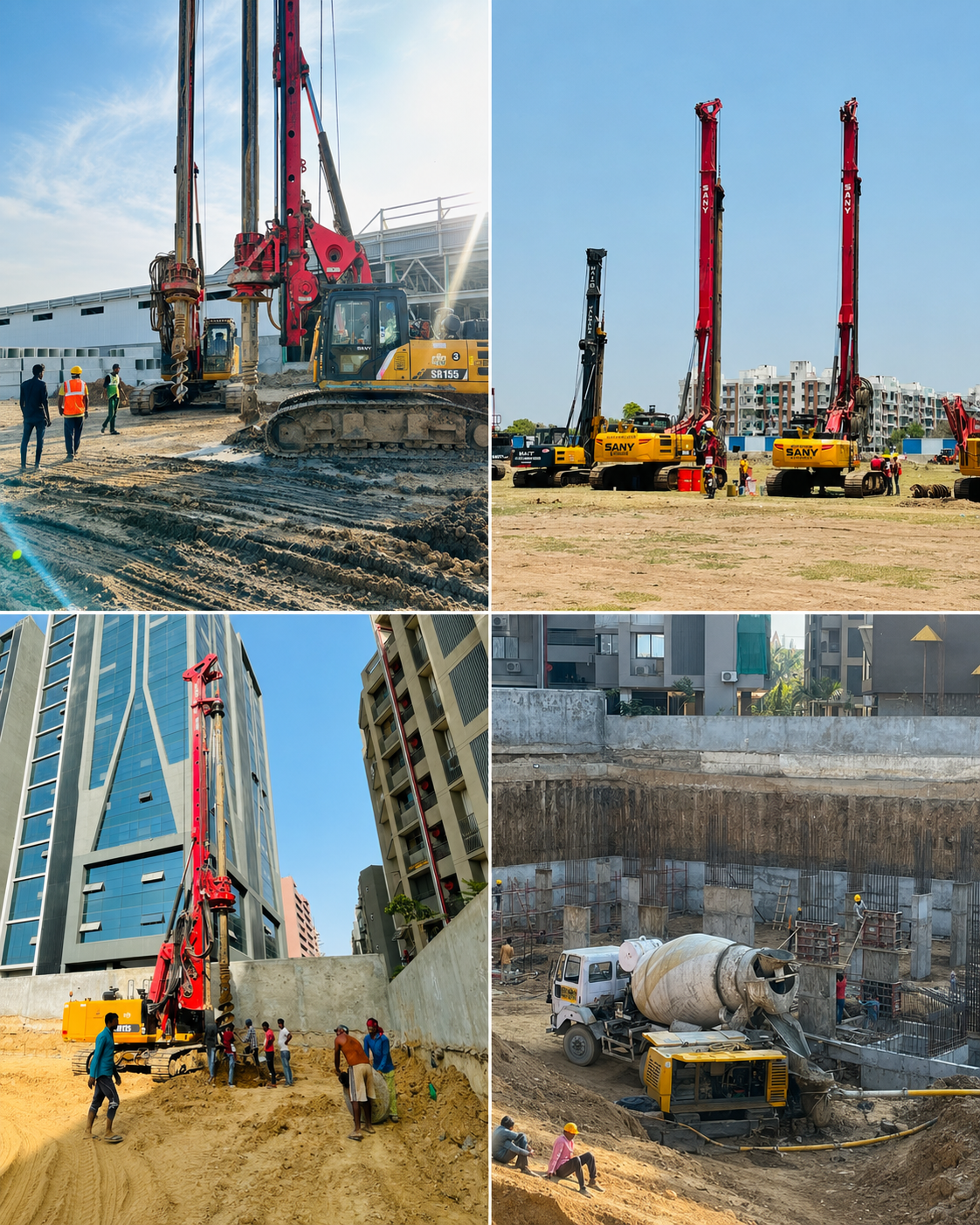
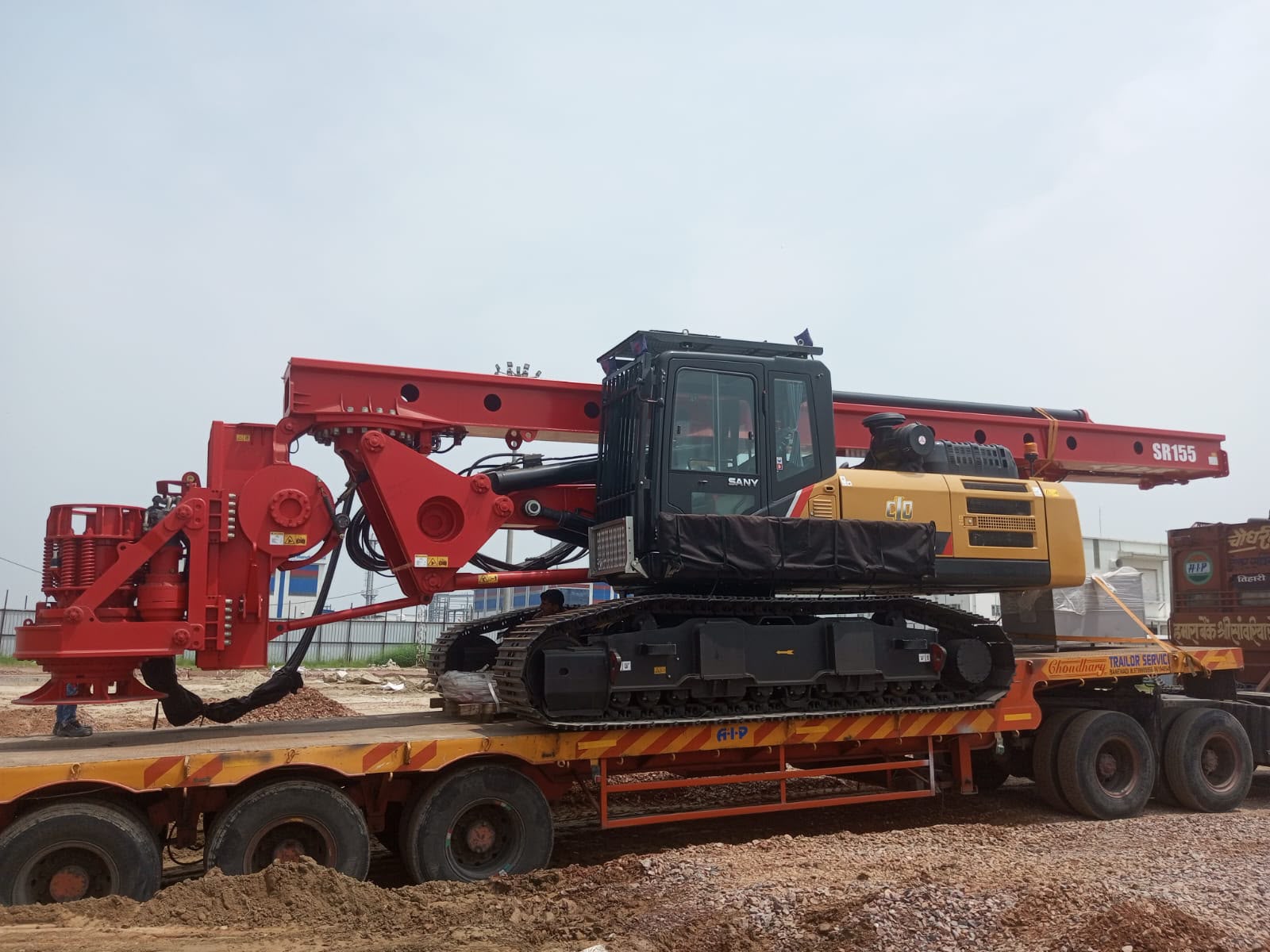
Jalmala Boring Works provides Pile Foundation and Deep Foundation Solutions using Bored Cast-in-Situ Piles for residential, commercial, industrial, and infrastructure projects. With advanced Hydraulic Rotary Rigs, we construct piles from 300 mm to 1800 mm diameter and depths of up to 50 metres, delivering reliable load-bearing capacity across soft soil, hard rock, and high groundwater conditions.
Our Piling Methods
We deploy six proven techniques — selected based on soil profile, site constraints, and project requirements.
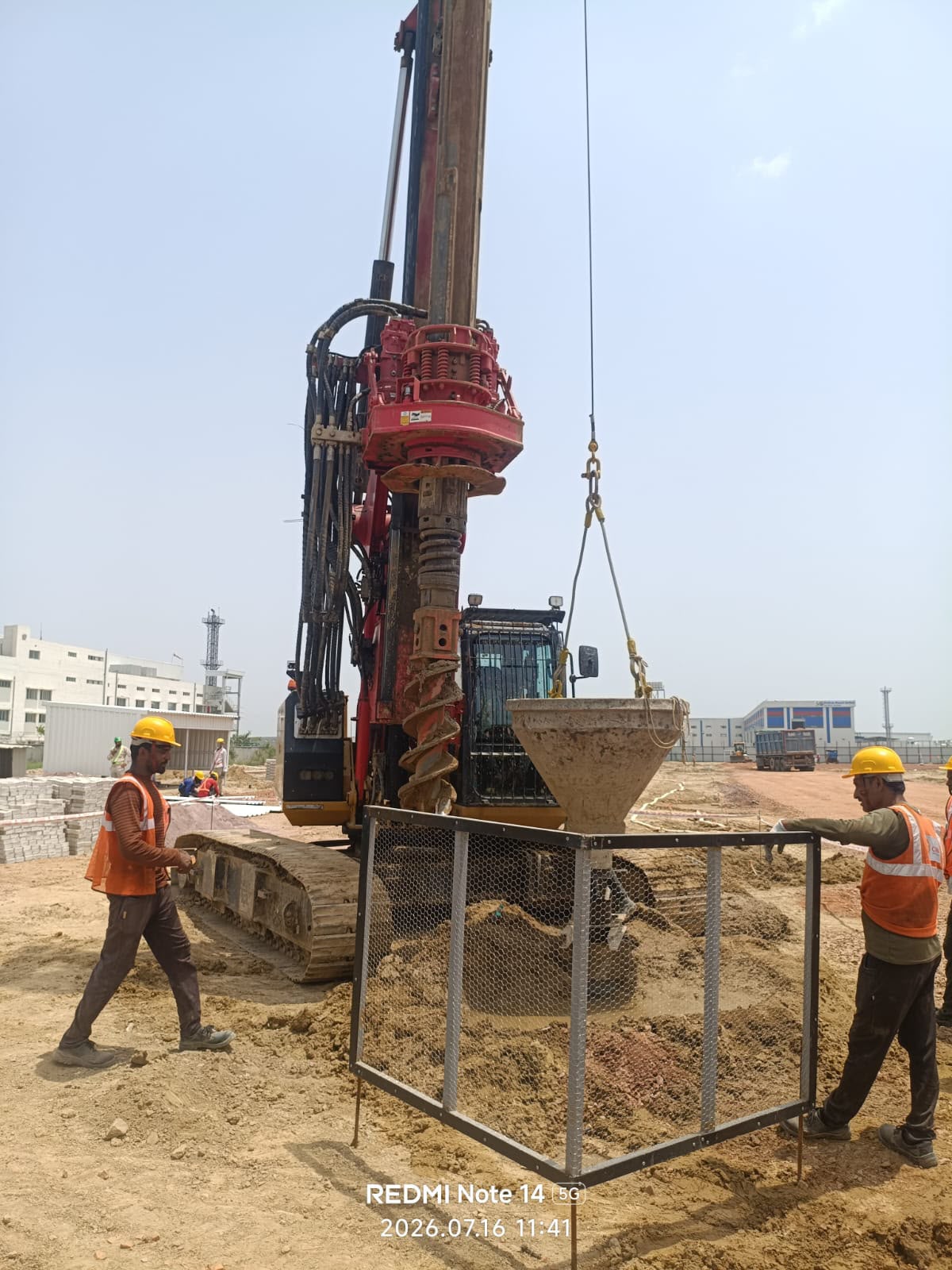
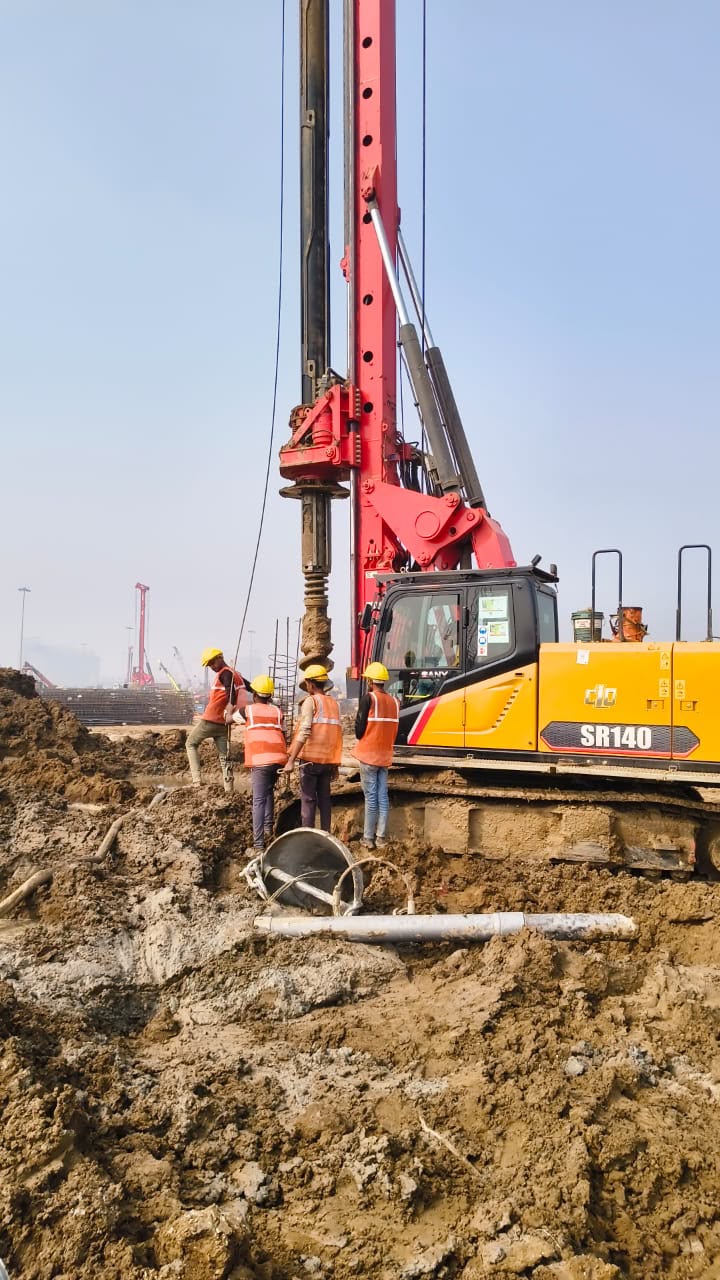
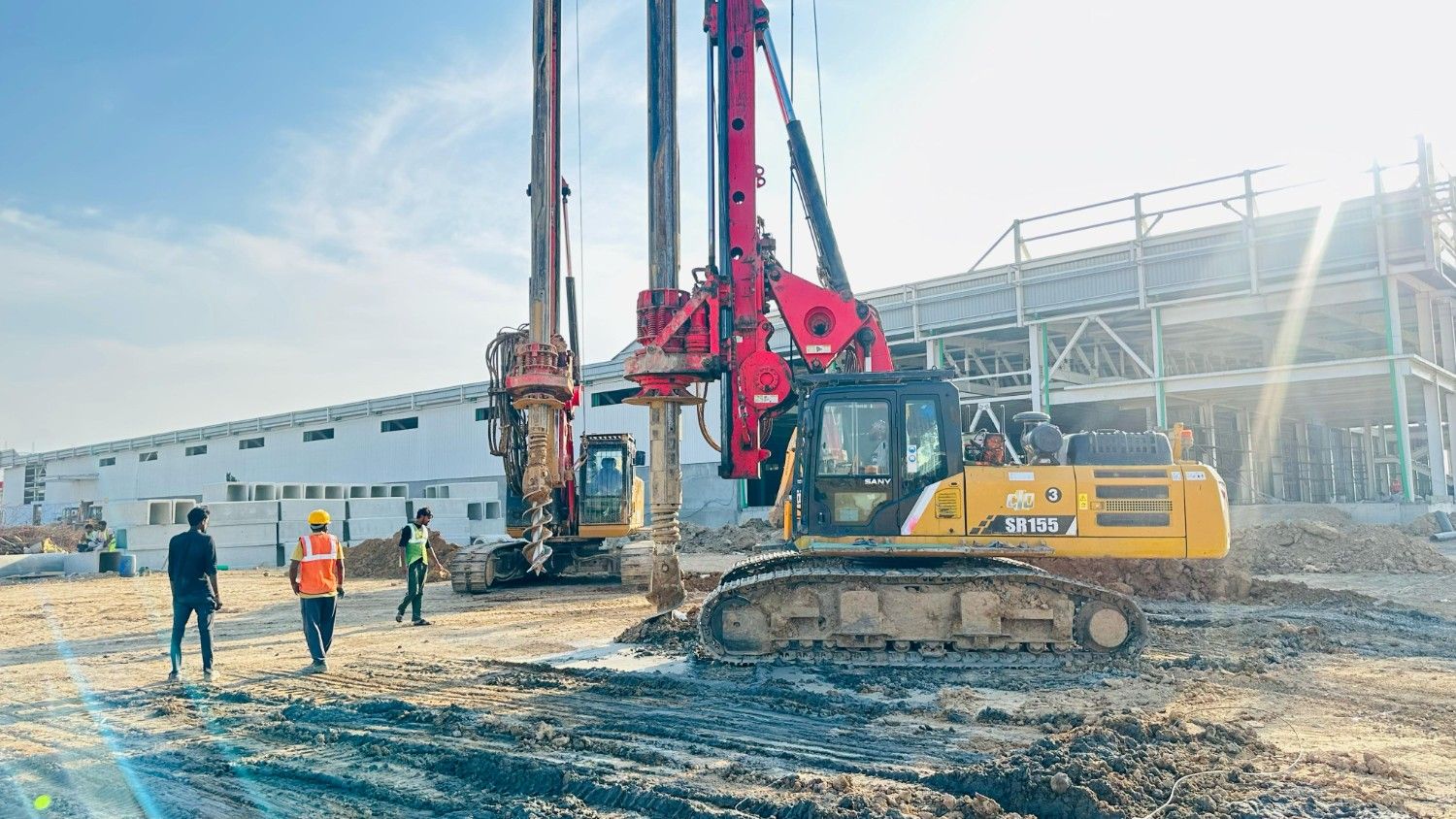
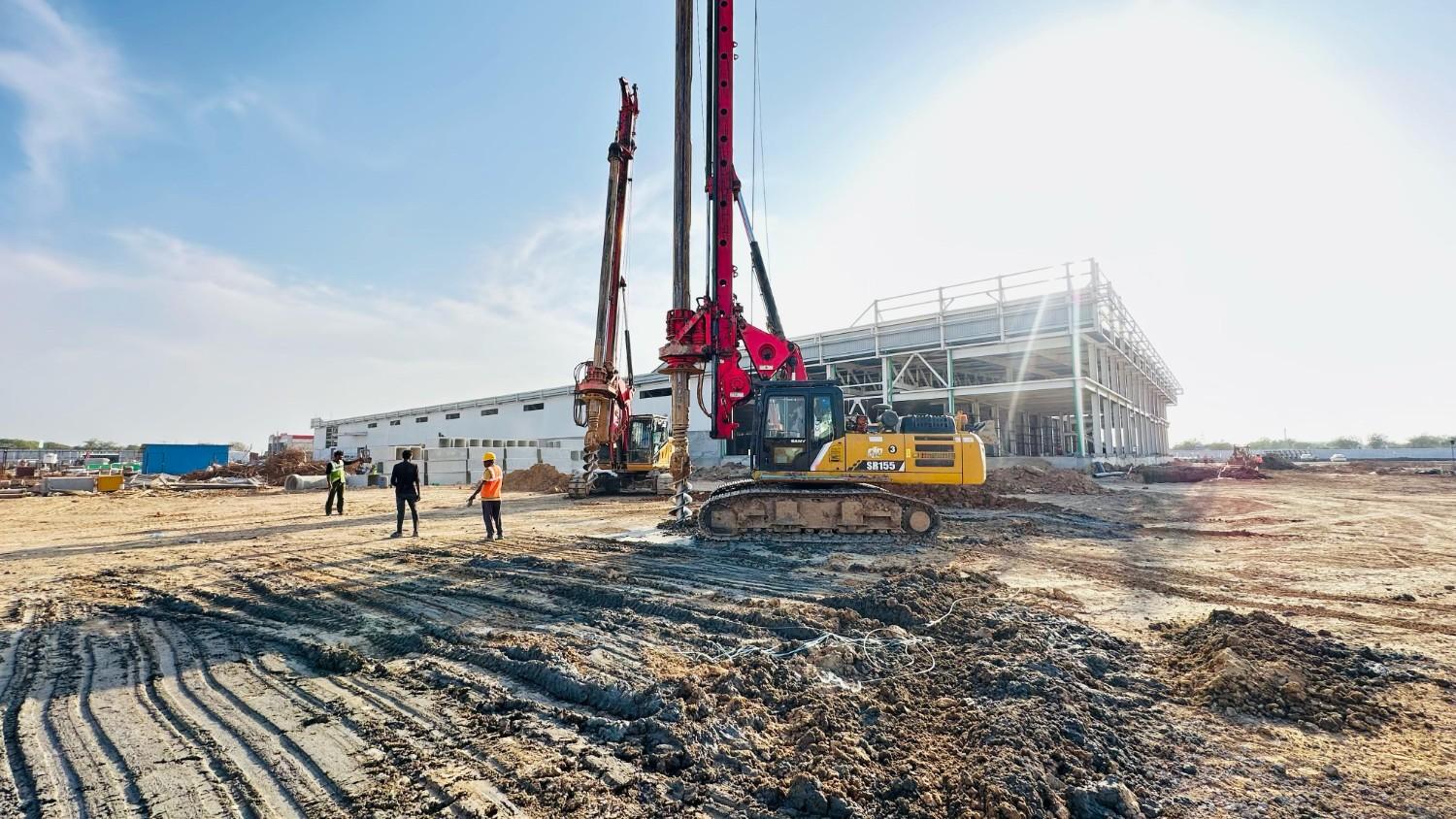
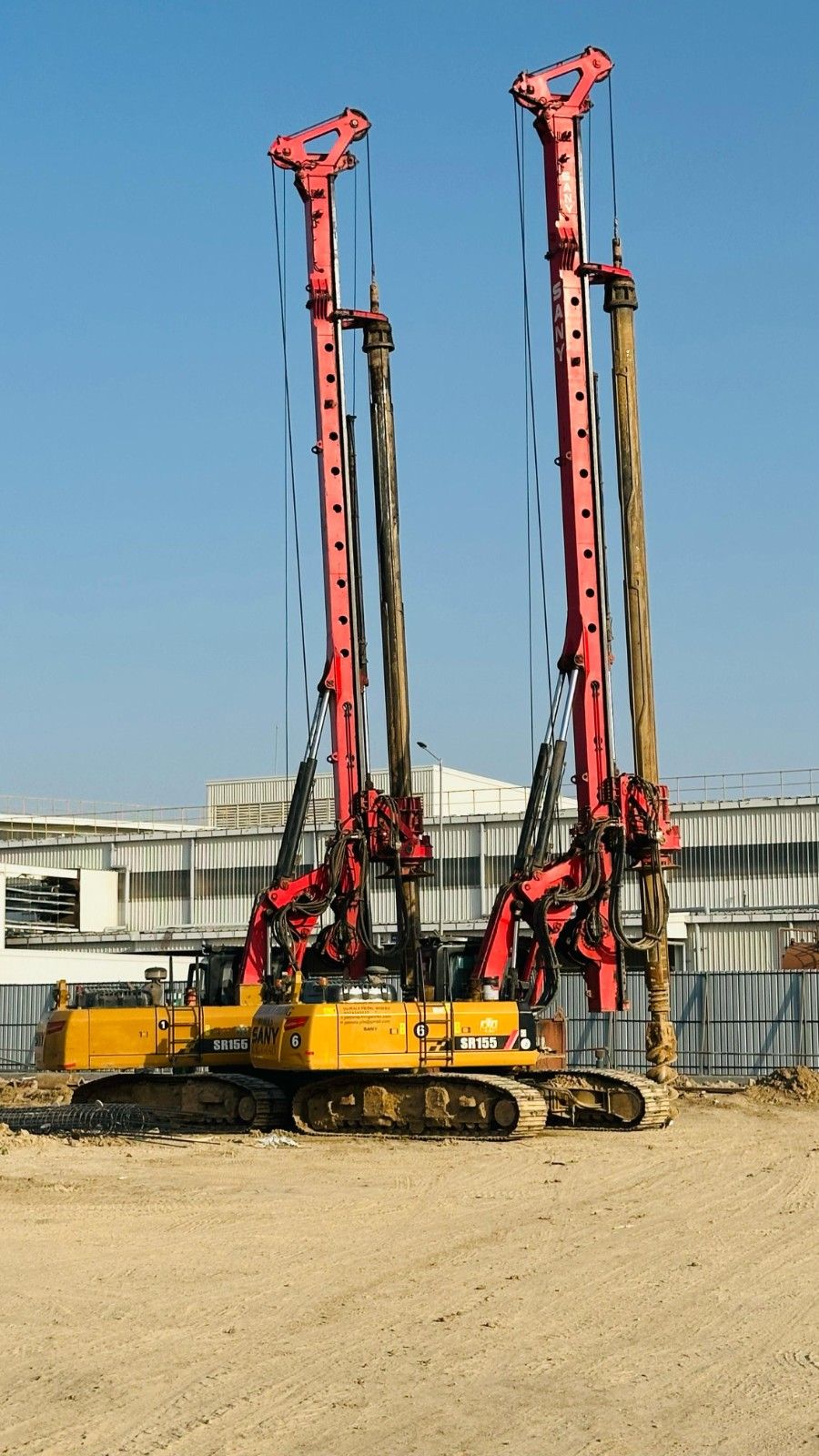
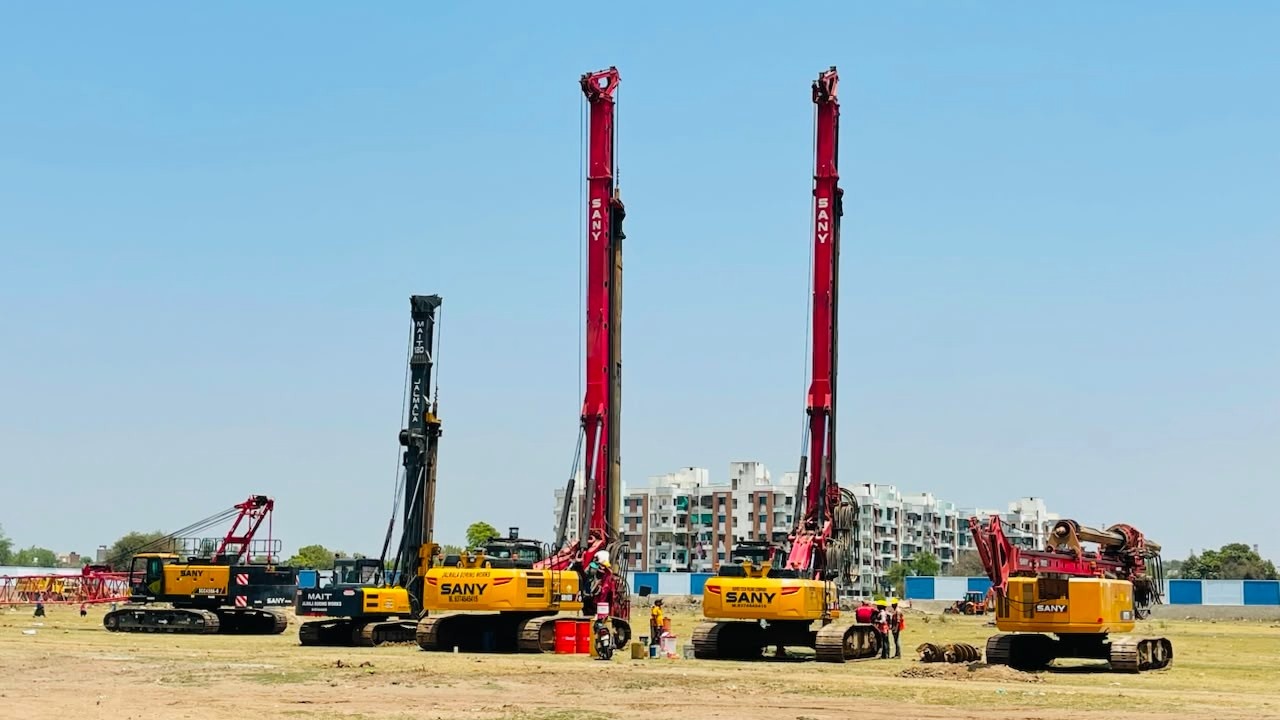
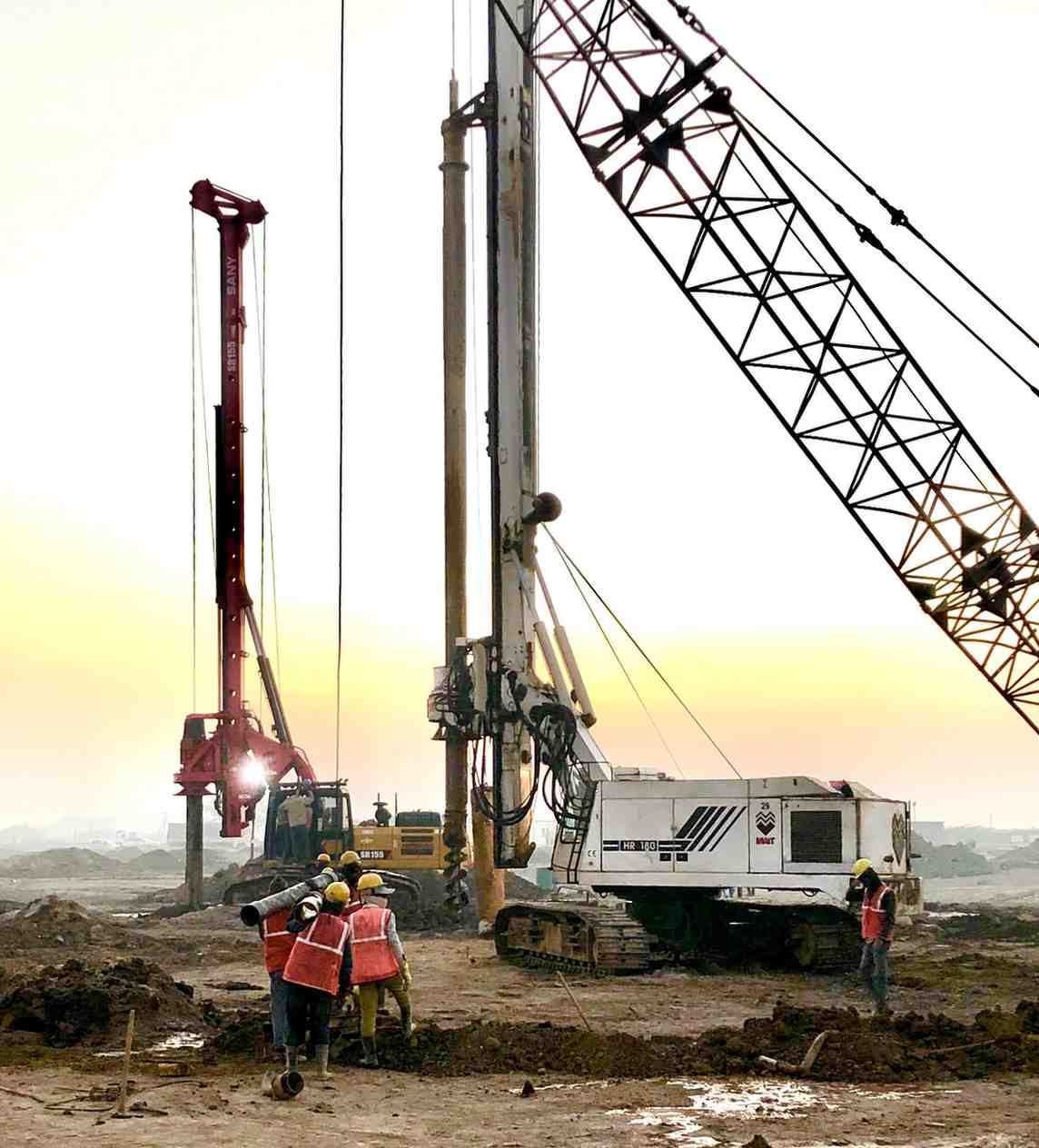
We specialize in bored piling with diameters ranging from 200 mm to 2000 mm and depths up to 50 meters. Using advanced hydraulic rotary rigs, we execute piling operations efficiently across a wide range of soil conditions. Our fleet includes high-performance rotary drilling rigs capable of working in restricted headroom areas while delivering precision, stability, and high productivity.
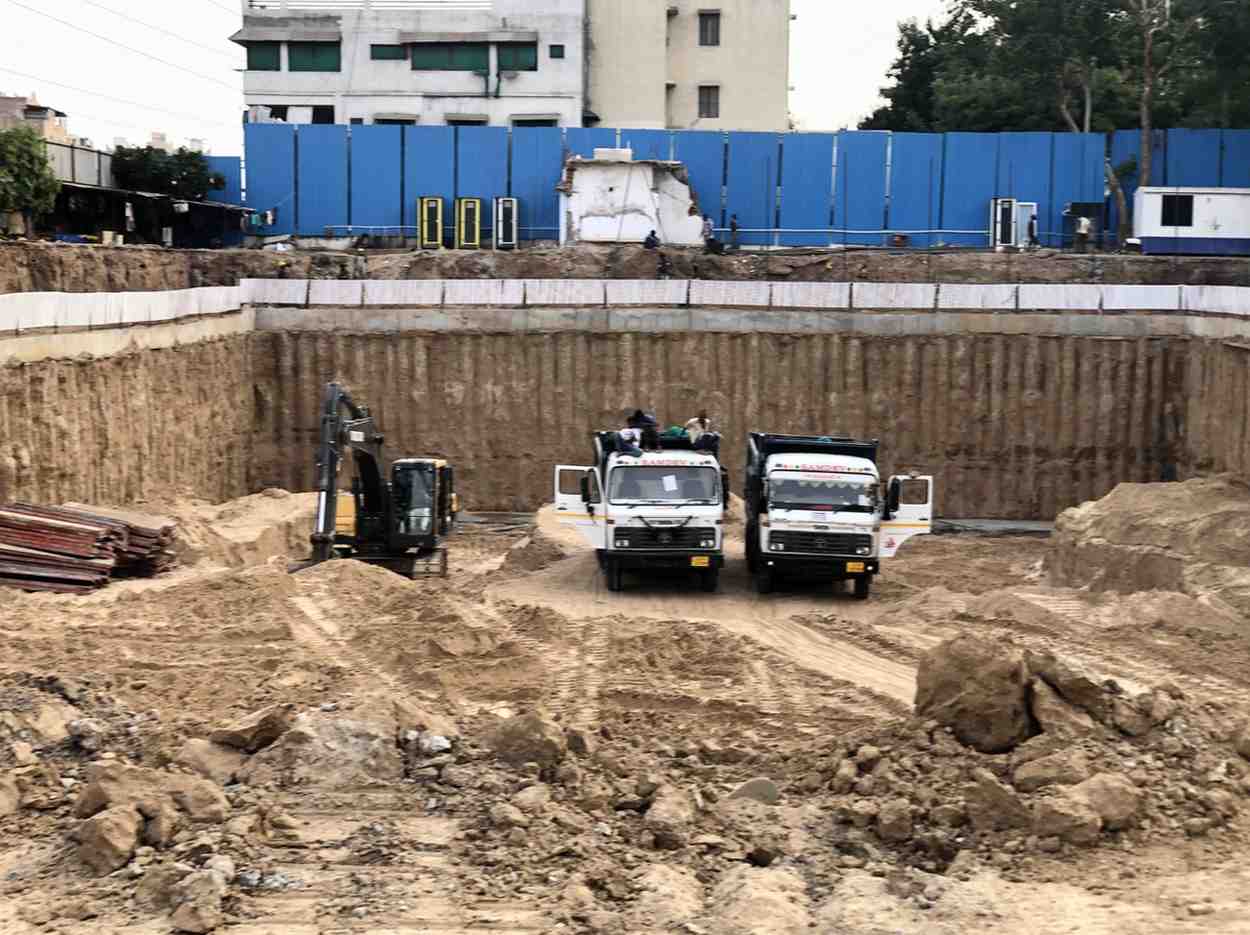
Secant pile walls are constructed by intersecting reinforced concrete piles to form a continuous retaining structure. Primary piles are installed first, followed by reinforced secondary piles after sufficient curing. This technique provides excellent groundwater control and soil retention, making it ideal for deep excavations, basements, and foundation support in challenging ground conditions.
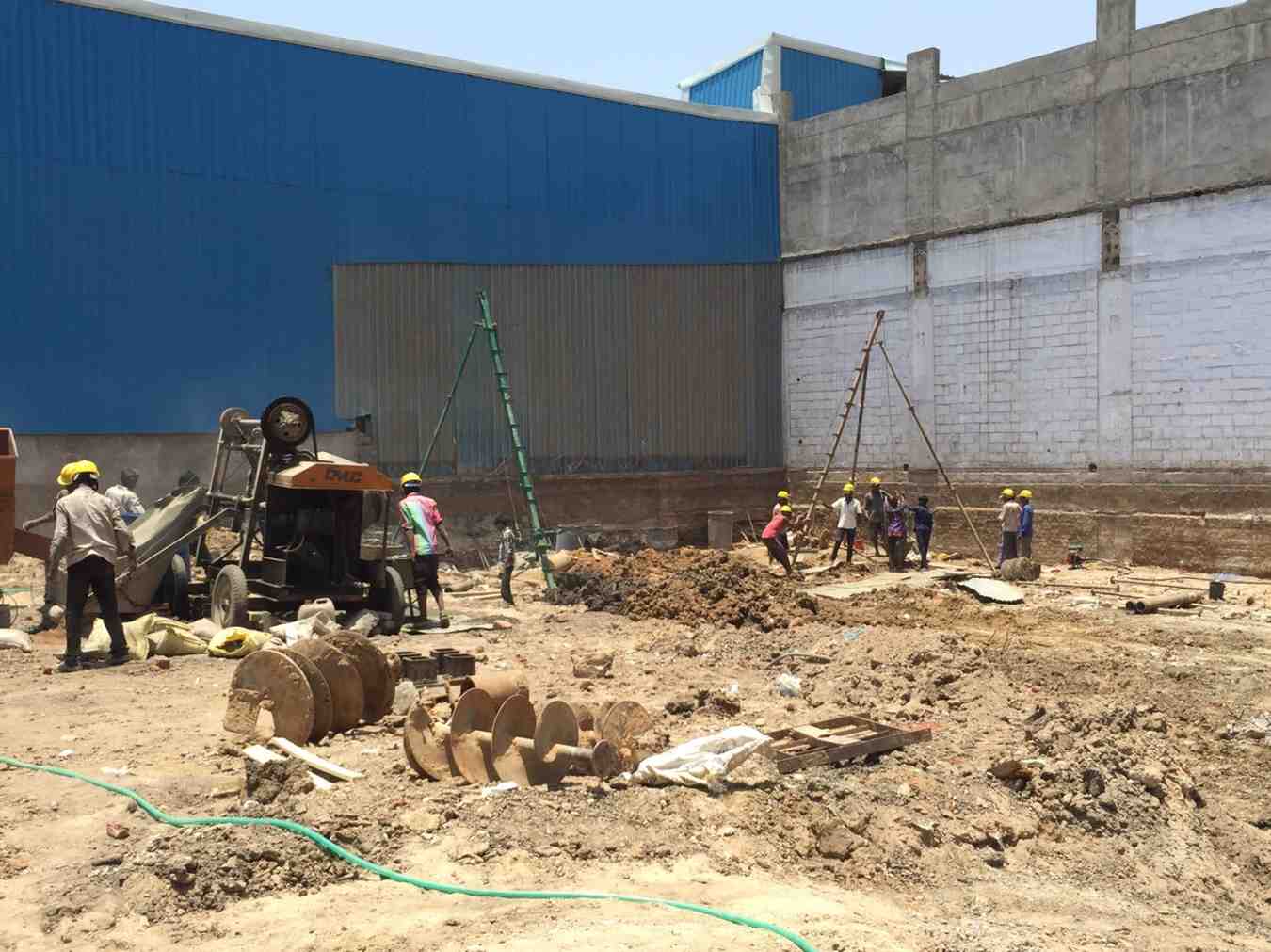
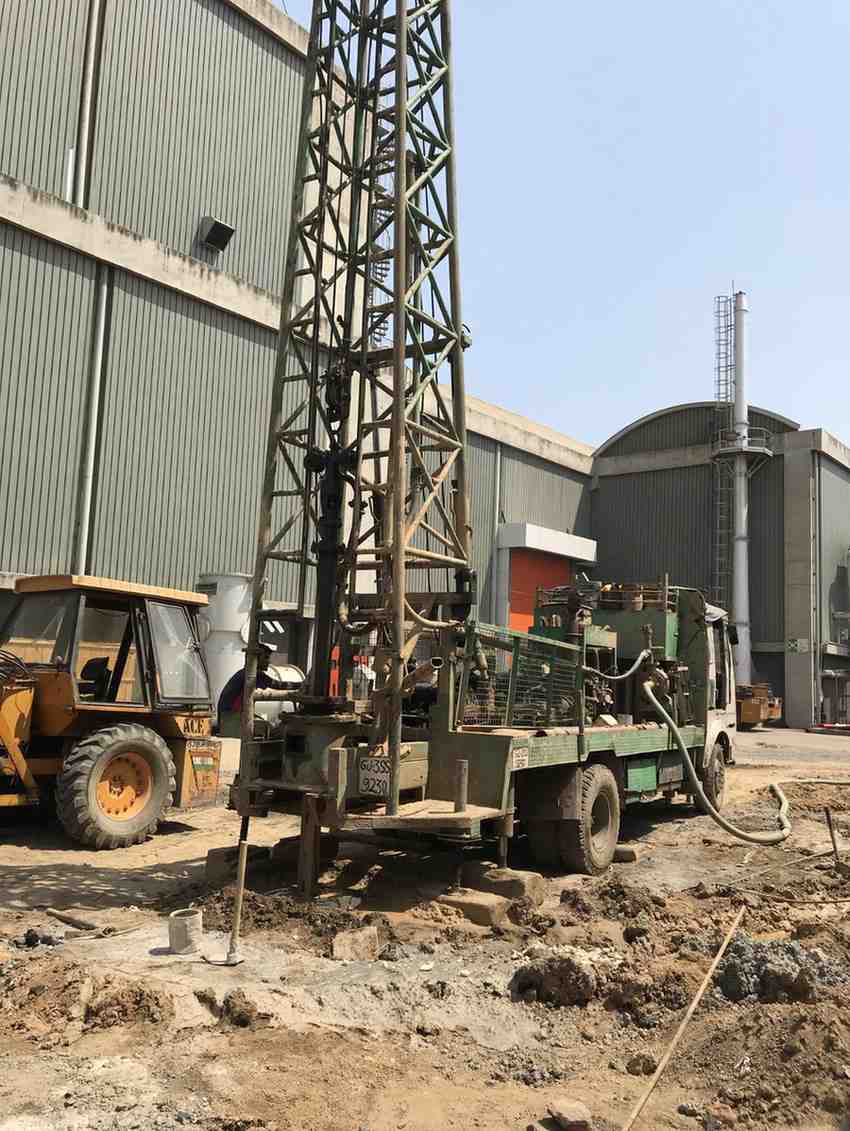
The Manual Auger Method is a reliable piling technique suitable for locations with restricted access or where low noise and vibration are essential. A tripod and manual winch system are used to drill boreholes using a helical auger. This method is commonly employed for pile diameters ranging from 250 mm to 1000 mm and offers an economical solution for smaller foundation projects.
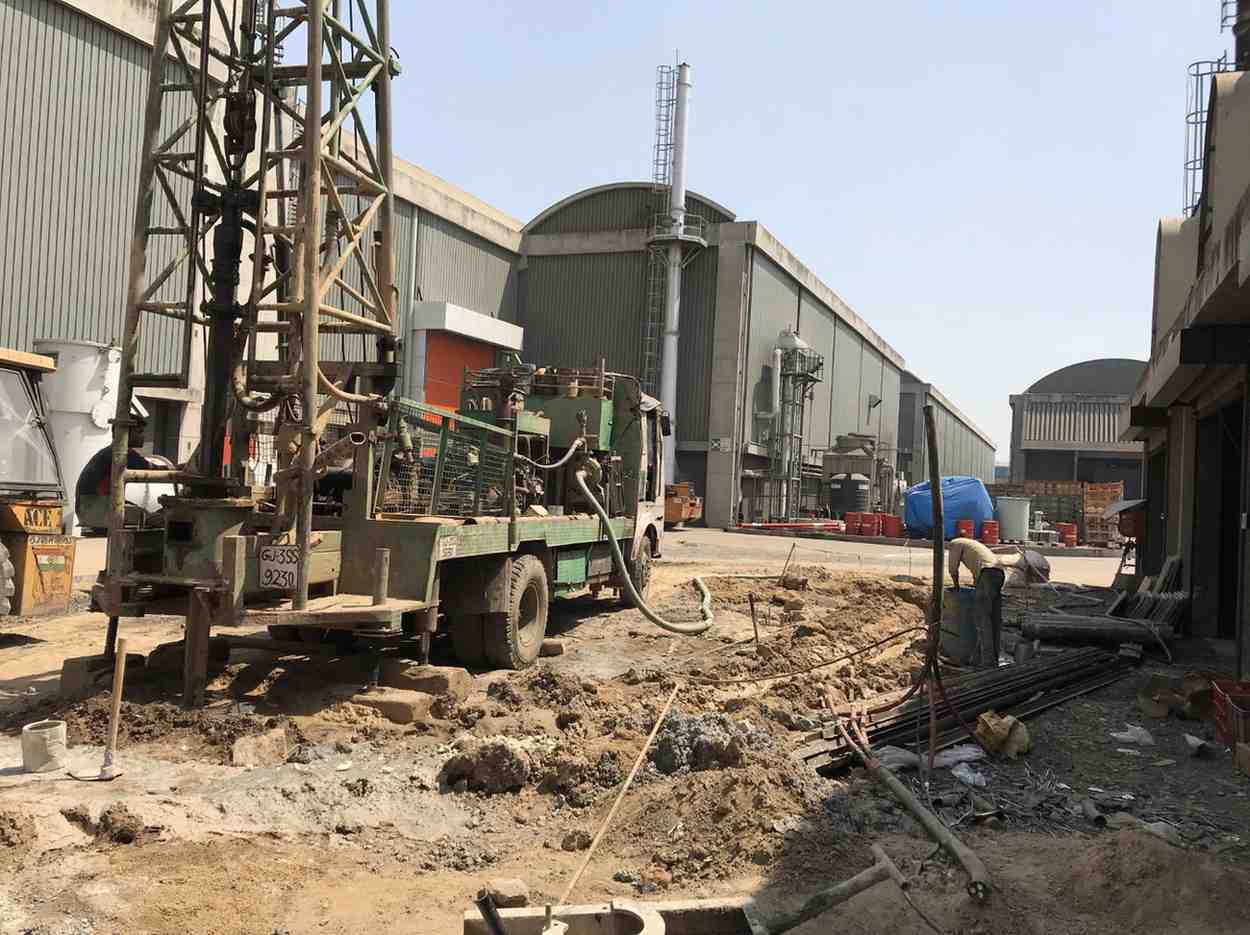
Our Truck Mounted Rotary (TMR) rigs utilize continuous bentonite slurry circulation to stabilize boreholes during drilling. Auger drilling is performed to the required depth while bentonite slurry supports the excavation and carries excavated soil back to a recycling tank. This method ensures bore stability, efficient spoil removal, and high productivity, particularly in loose or soft soil strata.
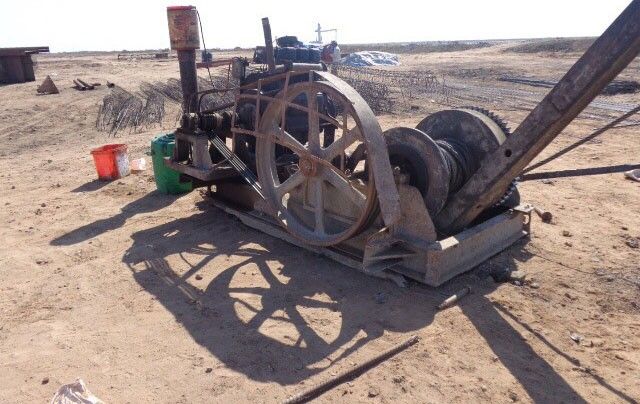
The DMC Pile Method employs Mendola-type rigs combined with bentonite drilling fluid for safe and efficient pile construction. Surface soil is loosened using a bailer before drilling continues with a percussion chisel. Bentonite slurry stabilizes the bore while transporting excavated material to settling pits. Once the desired depth is achieved, the drilling tools are removed and the final depth is verified before reinforcement and concreting.
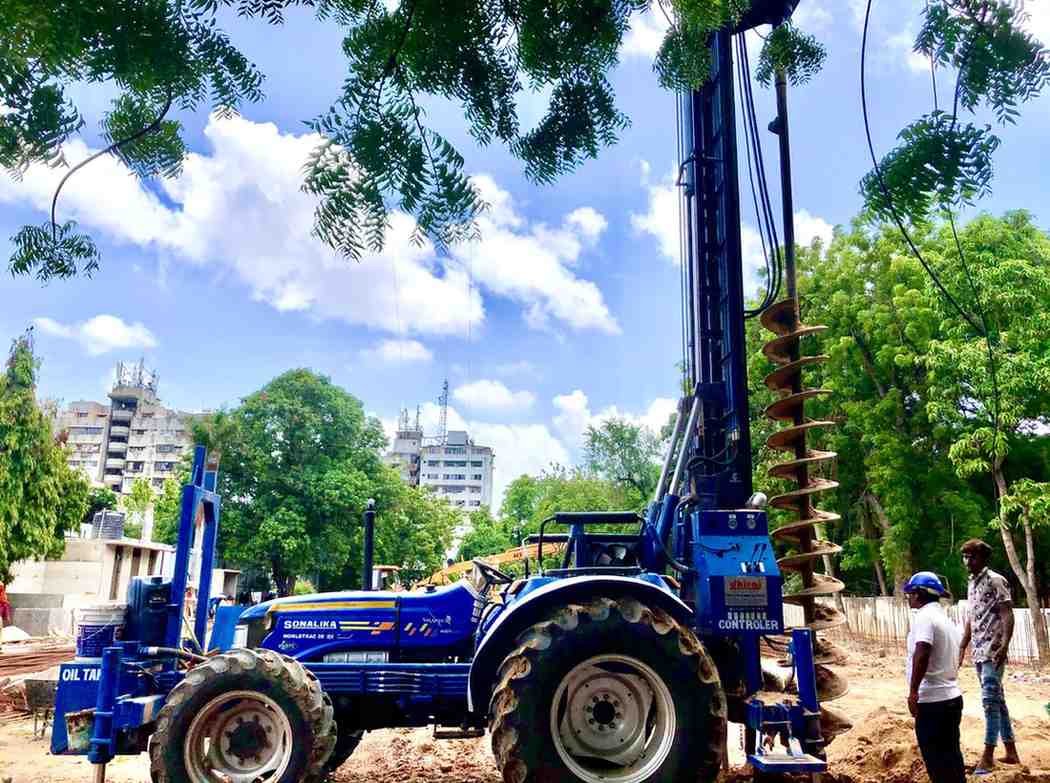
This method utilizes tractor-mounted rotary drilling rigs for fast and economical pile boring. Auger drilling is carried out to the required depth, with DMC rods added progressively to achieve deeper penetration through varying soil strata. It is particularly suitable for medium-depth foundation works and offers drilling capacities of up to 16 meters with excellent operational efficiency.
Our Work in Action
Click any image or video to view it in full screen.
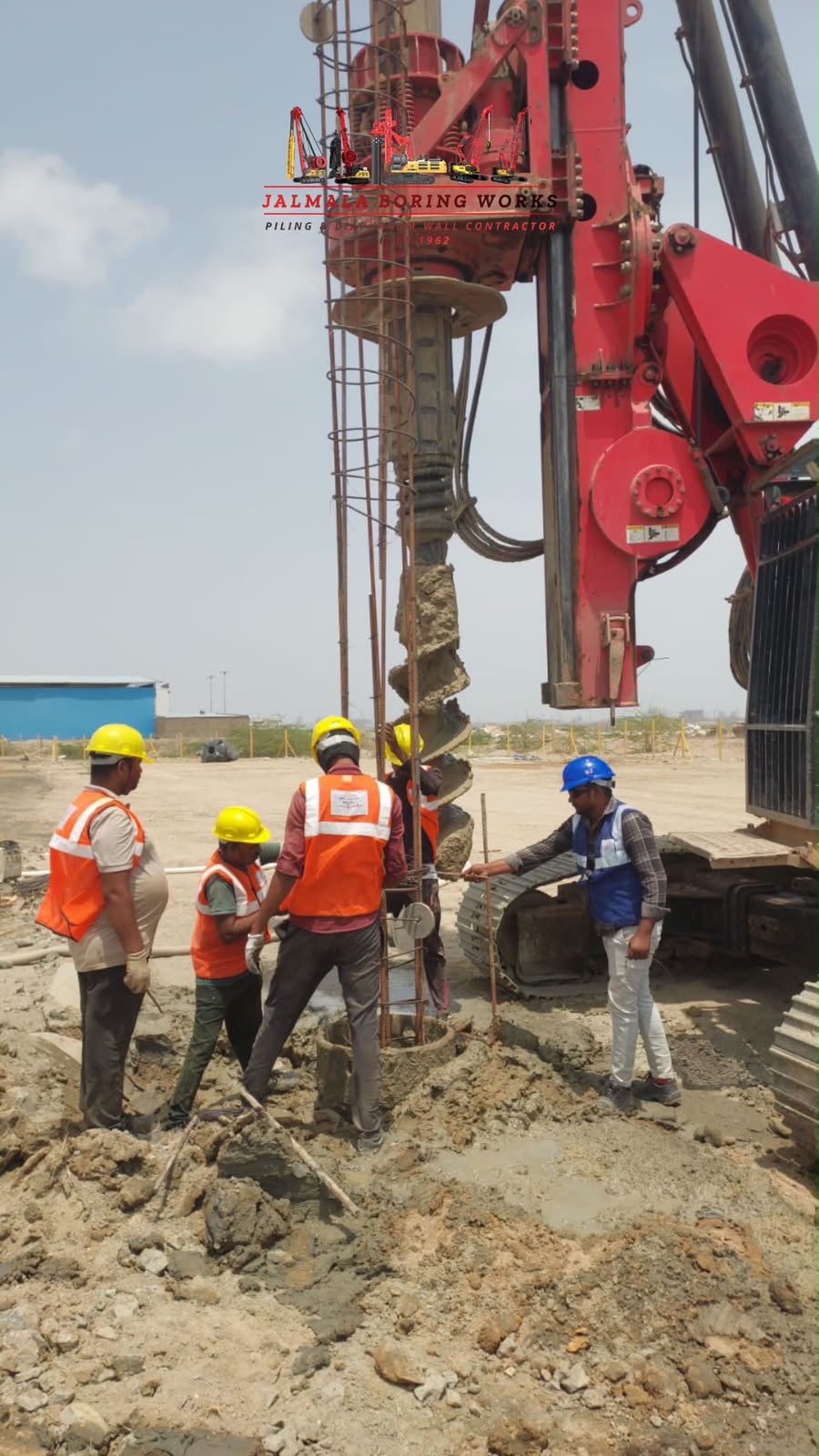
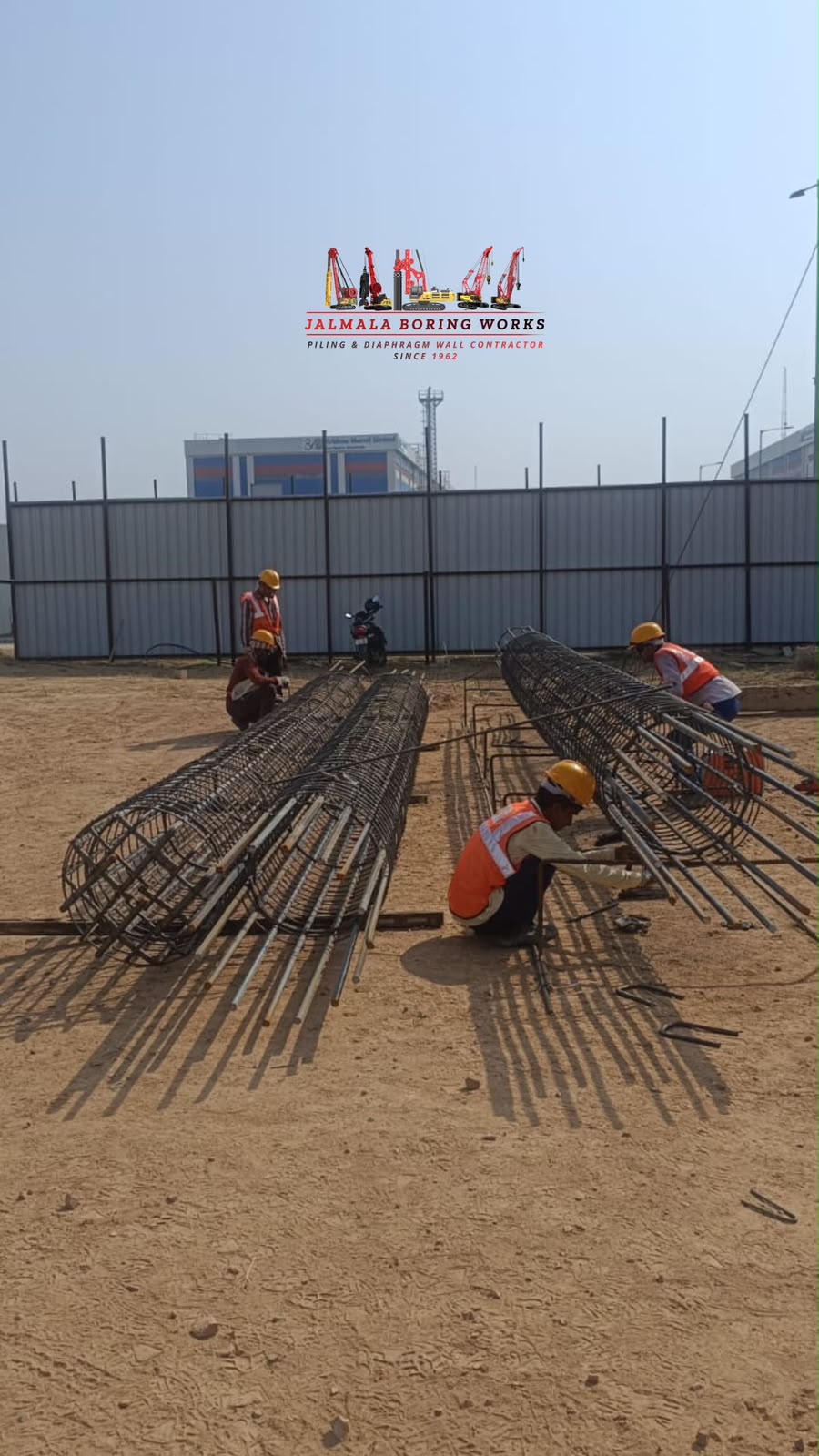
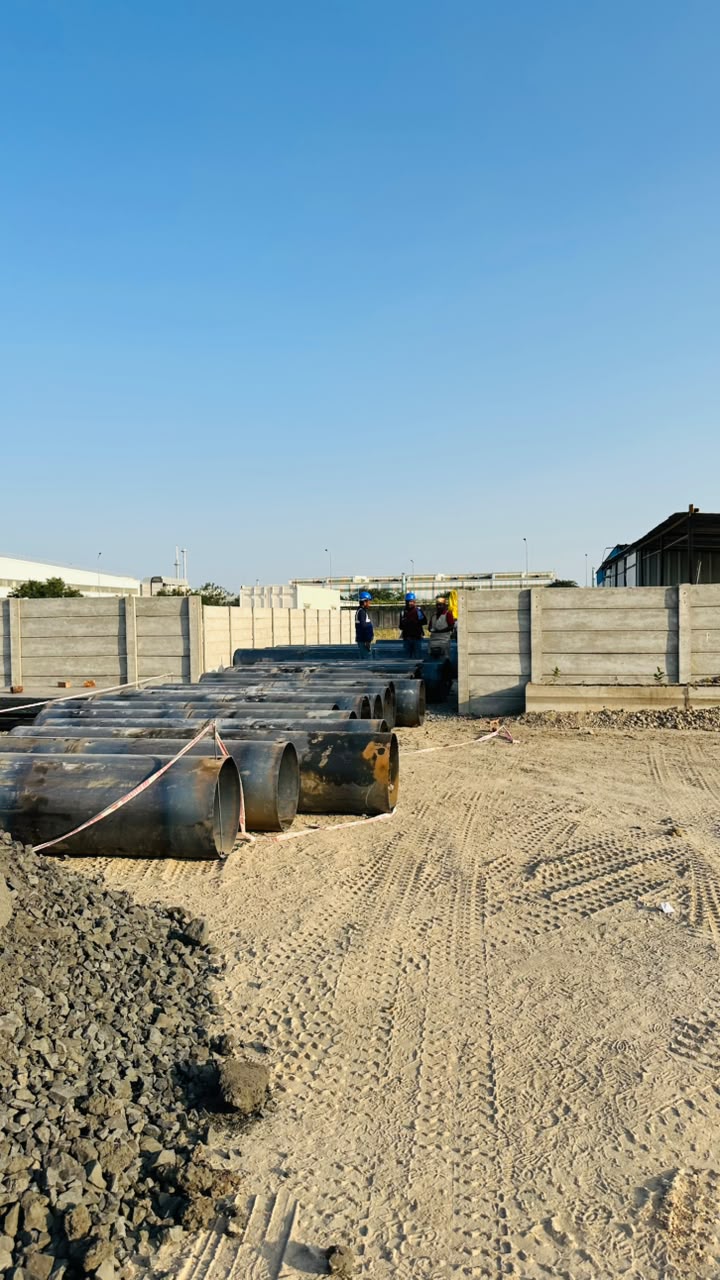
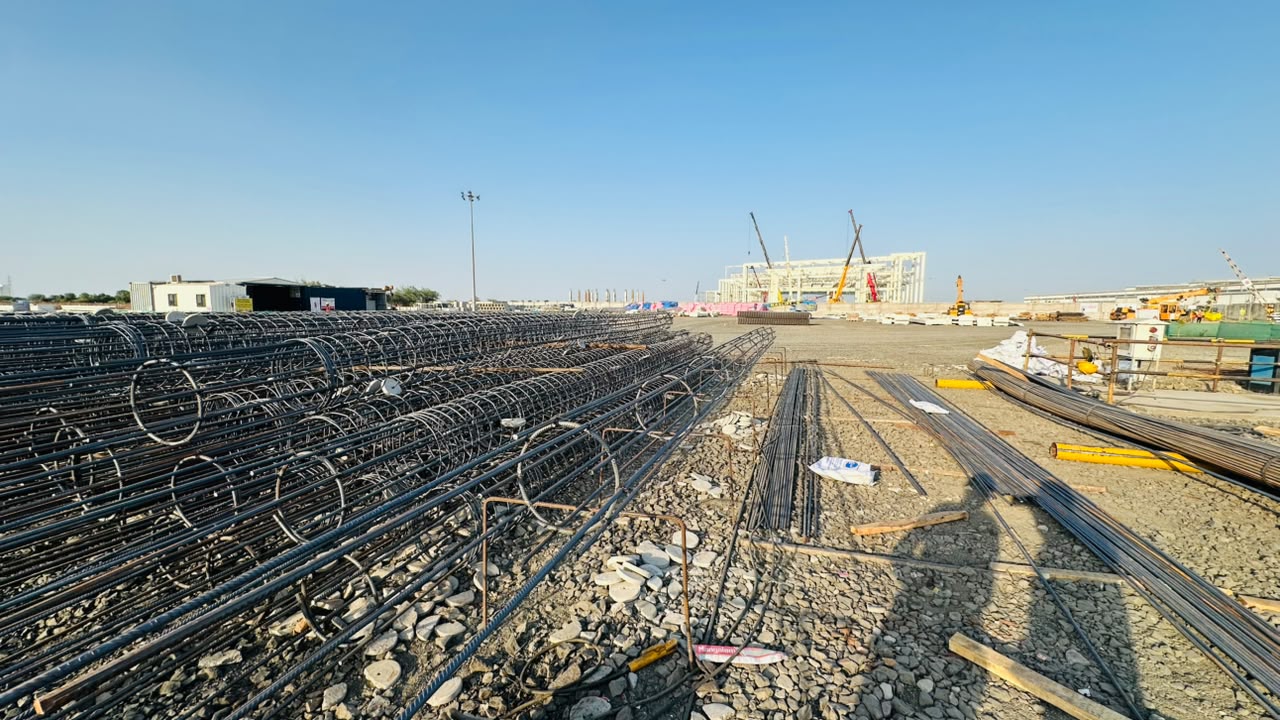
Recent Projects
Pile FoundationConstruction Process
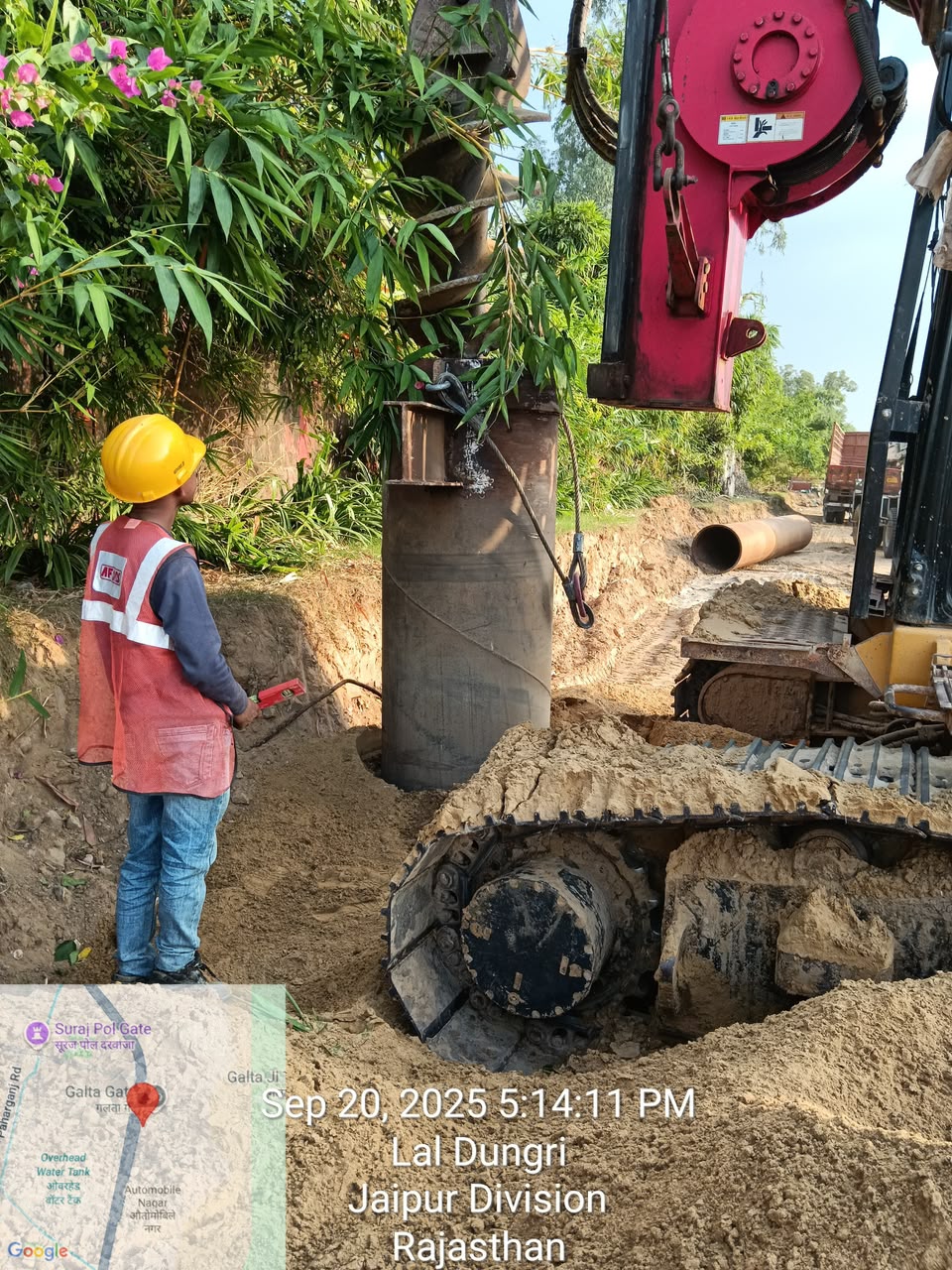
Survey, Setting Out & Guide Casing Installation
Detailed survey, marking of pile locations, and installation of temporary guide casing.
- Detailed survey and marking of pile locations
- Verification of pile coordinates and levels
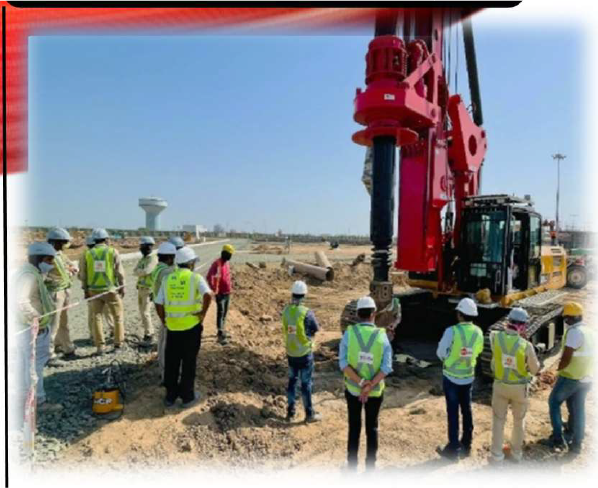
- Positioning of Hydraulic Rotary Piling Rig
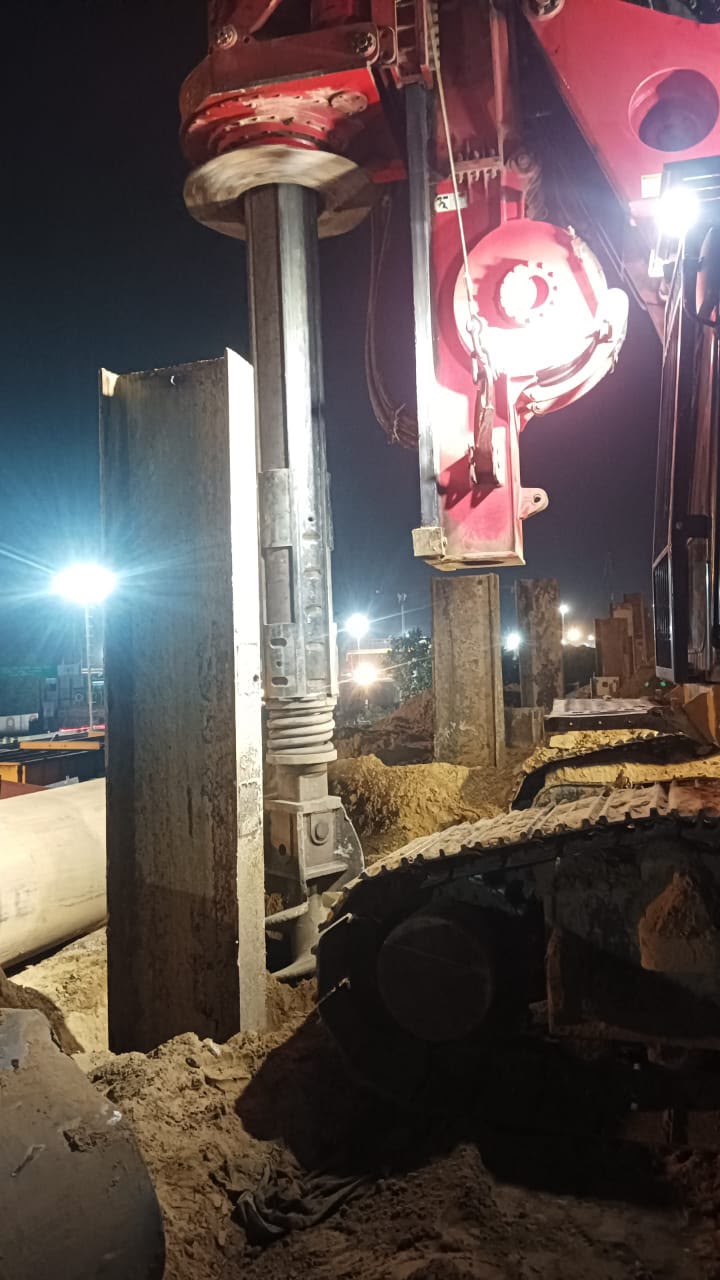
- Installation of temporary guide casing
- Ensures accurate pile alignment and protects bore opening
Pile Boring & Excavation
Drilling of pile bore using Hydraulic Rotary Rig to required depth.
- Drilling of pile bore using Hydraulic Rotary Rig
- Excavation carried out to the required depth and founding strata
- Suitable drilling tools used for soil, rock, or hard strata
- Continuous monitoring of depth, verticality, and pile diameter
- Removal and disposal of excavated soil from site
Slurry Support & Borehole Cleaning
Preparation and circulation of Bentonite/Polymer Slurry and borehole cleaning.
- Preparation and circulation of Bentonite/Polymer Slurry
- Stabilization of borehole walls during drilling
- Recycling of slurry through slurry plant
- Cleaning of borehole bottom to remove loose sediments
- Final inspection of bore depth and cleanliness
Reinforcement Cage Installation
Fabrication and lowering of reinforcement cage into the bore.
- Fabrication of reinforcement cage as per approved drawings
- Installation of spacers, couplers, lifting points, and cover blocks
- Lowering of reinforcement cage into the completed bore
- Accurate positioning and level adjustment
- Quality inspection before concrete placement
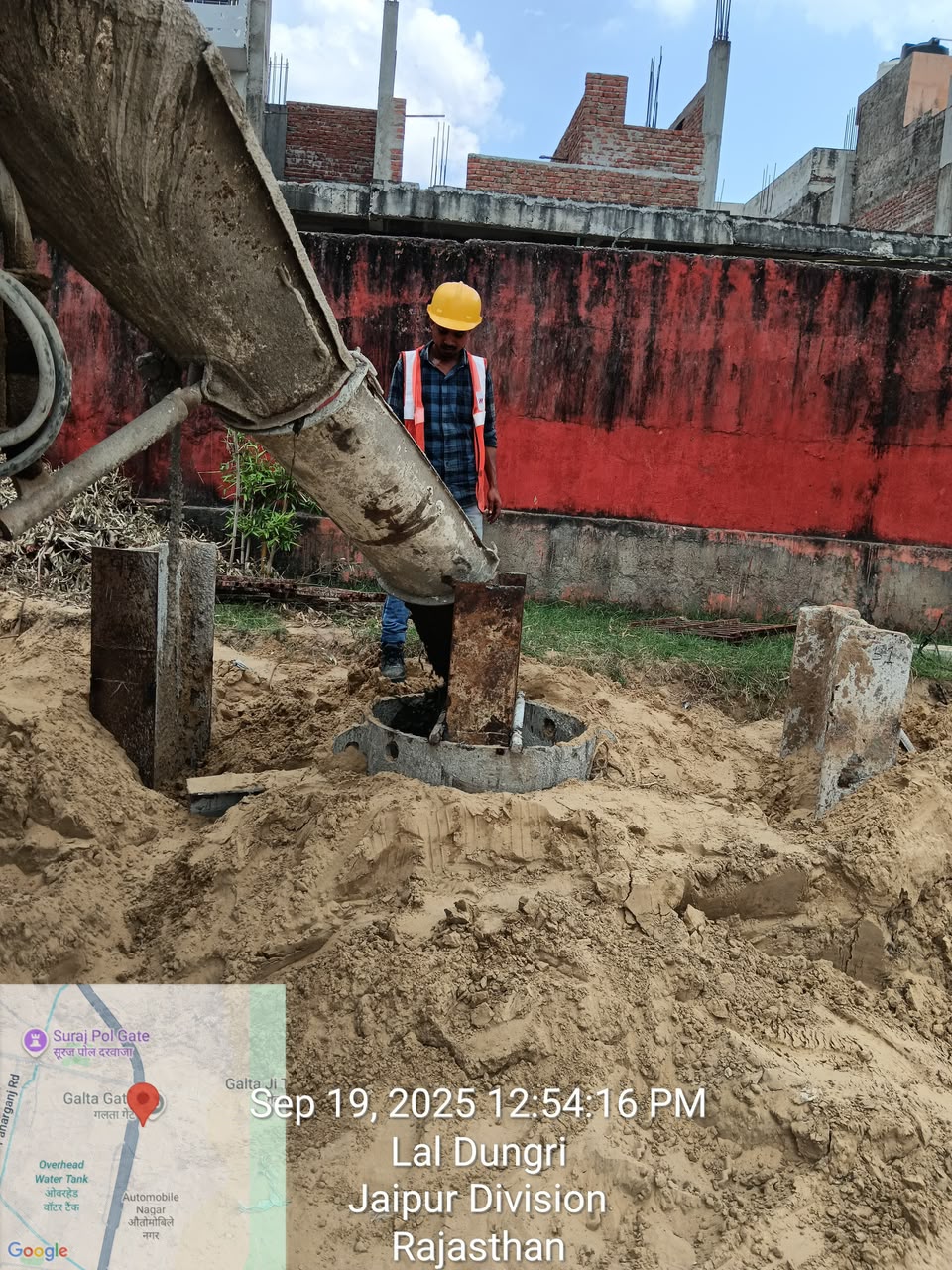
Tremie Concreting
Continuous concrete placement using tremie pipes.
- Installation of tremie pipes up to borehole bottom
- Continuous placement of concrete from bottom to top
- Prevention of concrete segregation through tremie method
- Displacement and recovery of slurry during concreting
- Completion of pile concreting in one uninterrupted operation
Pile Completion & Quality Control
Final pile completion, head trimming, and quality assurance.
- Extraction of temporary casing during or after concreting
- Recording of concrete consumption and pile parameters
- Pile head chipping up to cut-off level
- Verification of pile depth, diameter, and concrete quality
- Completion of testing, documentation, and quality assurance
- Ready for pile cap and foundation construction