
Anchor pile construction is an important part of modern geotechnical and foundation engineering. Ground anchors are installed to transfer tensile forces from retaining structures into stable soil or rock. They help resist lateral earth pressure and provide support to structures during deep excavation and underground construction. Jalmala Boring Works provides specialised anchor pile construction in India for projects that require dependable ground support, accurate drilling and controlled grouting.
Established in 1962, Jalmala Boring Works is a family-owned, third-generation deep foundation company with more than 60 years of practical industry experience. The company undertakes ground anchoring, pile foundation and diaphragm wall work for infrastructure, commercial, industrial and residential developments. Its experience in deep foundation engineering supports project-specific construction planning and coordinated site execution.
For project owners, developers, consultants and EPC contractors looking for anchor pile construction in India, the selection of an experienced contractor is important. Anchor installation involves geotechnical conditions, drilling alignment, tendon positioning, grout performance and stressing requirements. Each stage must follow the approved drawings, engineering design and project specifications.
Professional Ground Anchor Construction Services
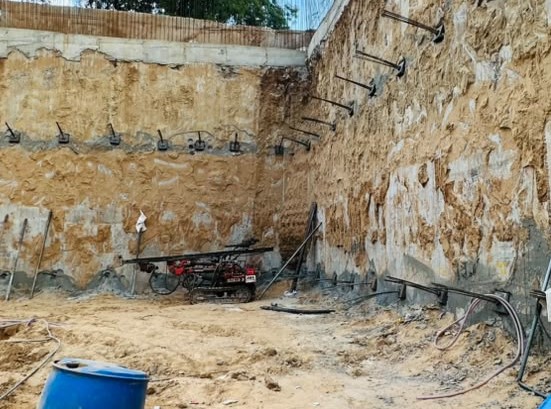
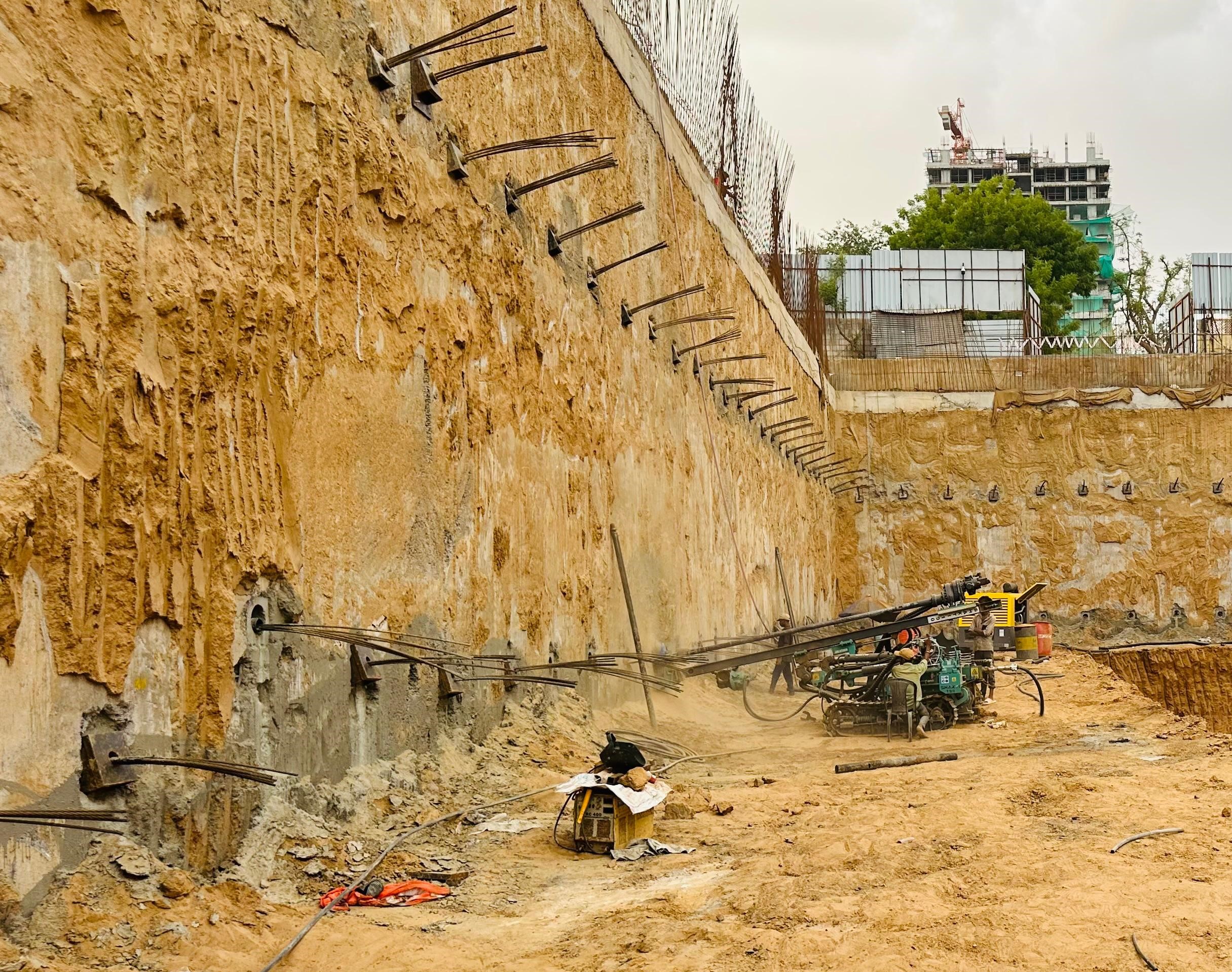
Ground anchors, also known as tieback anchors, are used to provide external support to retaining structures. They generally consist of a drilled borehole, steel tendon or anchor bar, grouted bond length and stressing arrangement. Once installed and tested, the anchor transfers the required tensile load into a suitable ground layer.
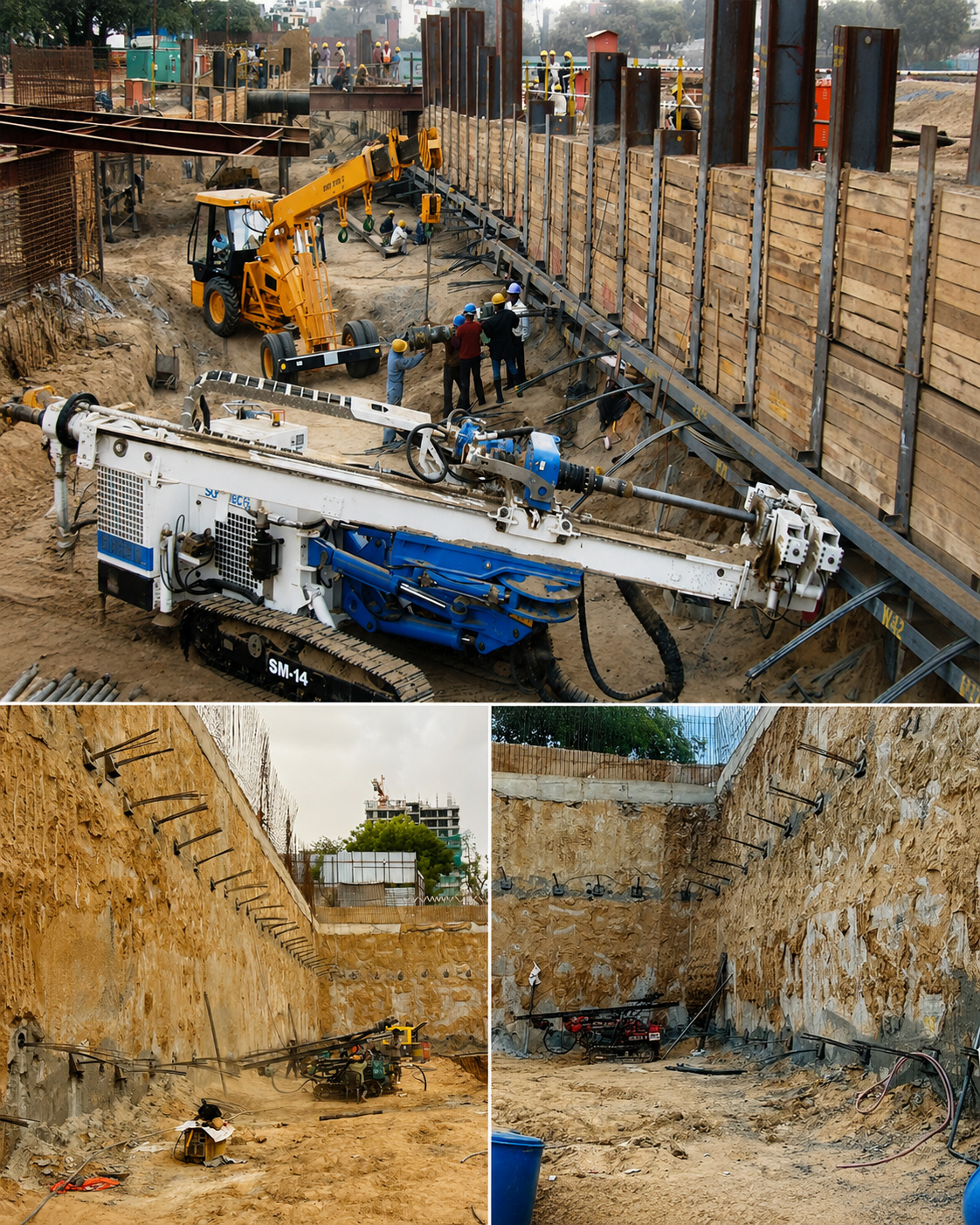
Jalmala Boring Works undertakes ground anchor construction for diaphragm wall systems, retaining walls, basement excavations and other applications where lateral stabilisation is required. Depending on the site conditions and approved design, projects may use temporary or permanent anchoring arrangements. Anchor configuration, drilling angle, length, bond zone and working load are determined through project engineering requirements.
Anchor Pile Construction for Deep Excavation
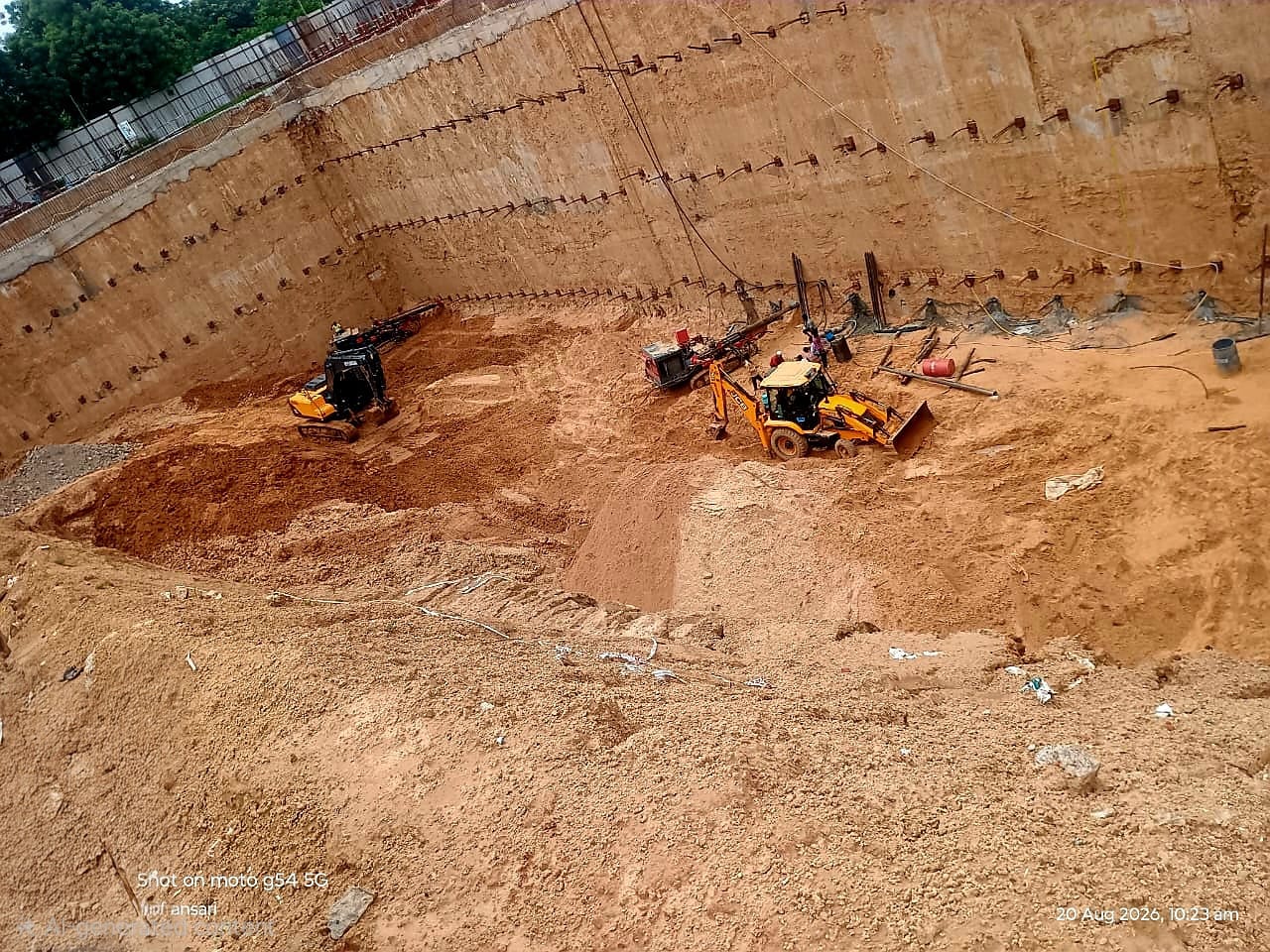
Deep excavation work requires careful control of surrounding soil and retaining wall movement. As excavation progresses, lateral earth pressure can place significant loads on diaphragm walls and retaining structures. Ground anchors provide additional restraint by transferring these forces into stable ground beyond the excavation zone.
Anchor pile construction is commonly considered for multi-level basements, underground structures, commercial developments, metro infrastructure, industrial facilities and large excavation projects. The anchoring arrangement may be installed in multiple levels as excavation proceeds, subject to the approved design and construction sequence.
Anchor Drilling and Installation Process
A planned construction sequence helps maintain accuracy, quality and site coordination throughout the ground anchoring operation. The exact procedure is finalised according to geotechnical investigation reports, structural drawings, anchor design and site requirements.
1. Site Survey and Anchor Positioning
The process begins with reviewing the approved drawings, checking site levels and marking the anchor positions. Required inclination, spacing, drilling depth and access arrangements are verified before equipment mobilisation. Proper setting out helps maintain the intended anchor geometry and avoid conflicts with existing structures or underground services.
2. Anchor Borehole Drilling
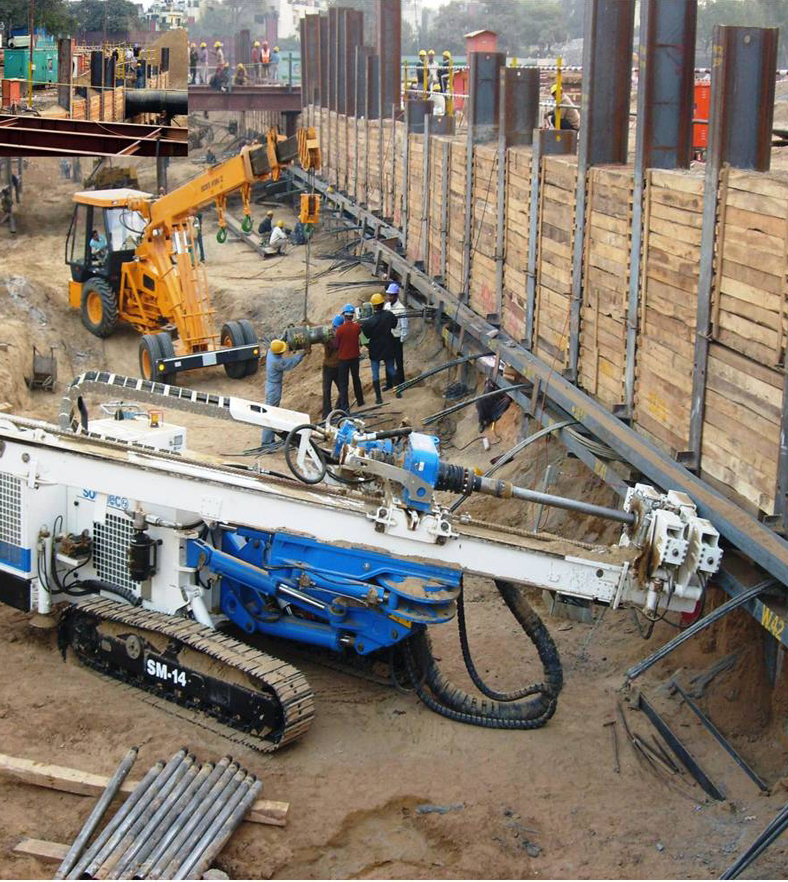
Hydraulic anchor drilling equipment is positioned at the specified location. Boreholes are drilled at the designed inclination and to the required depth using suitable rotary or percussion drilling methods. Drilling parameters are monitored according to ground conditions, approved specifications and site requirements. Borehole cleaning is carried out using an appropriate flushing method.
3. Anchor Tendon Installation
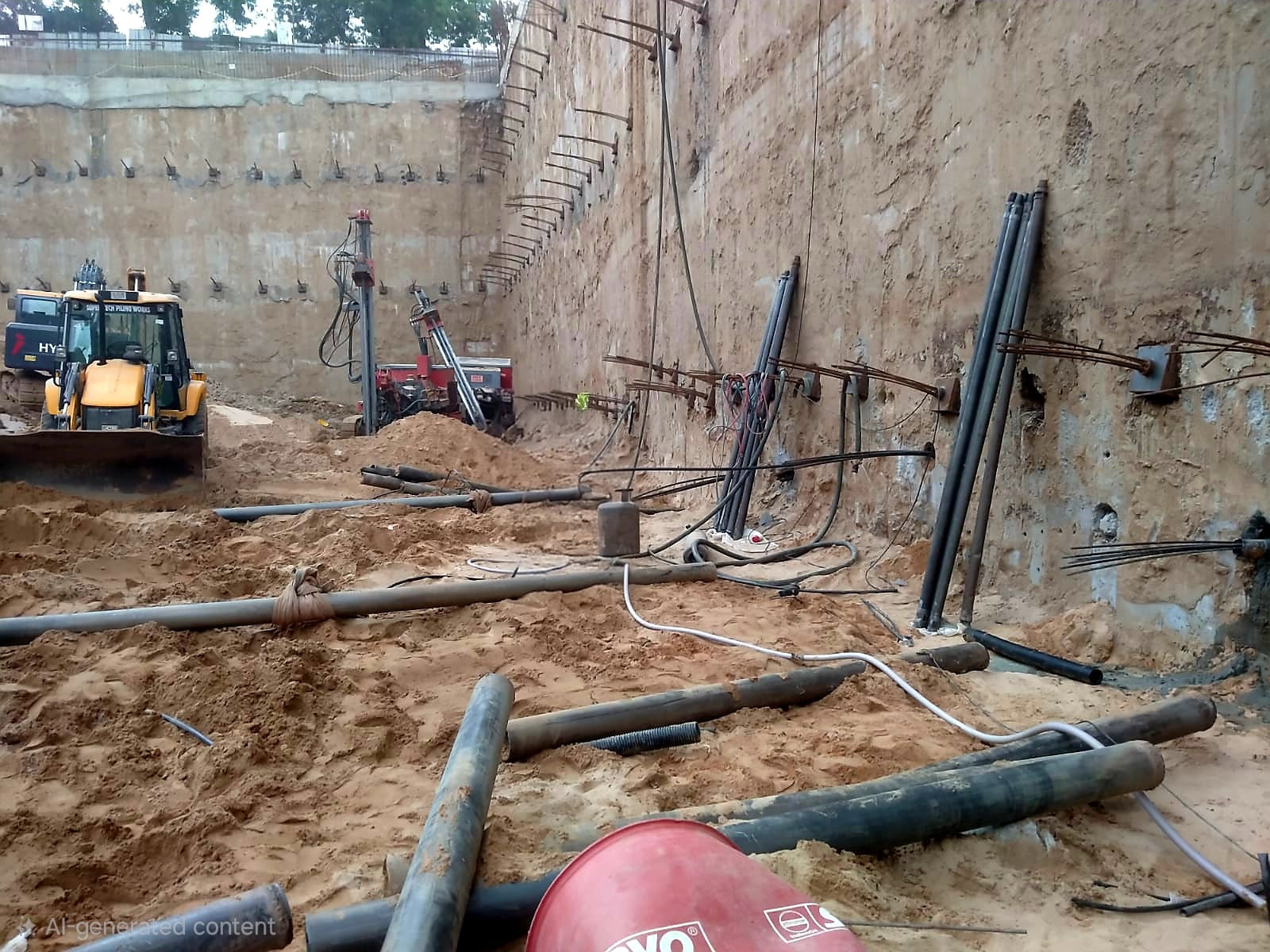
After borehole preparation, the specified prestressing strands or threaded anchor bars are assembled and inserted. Centralisers and suitable corrosion protection components are provided as required by the anchor design. The tendon position, free length and bond length are checked before grouting.
4. Cement Grouting
Cement grout is injected into the borehole to develop the required bond between the anchor tendon and surrounding ground. Grouting procedures, material quality, pressure and quantities are controlled according to the approved method statement and technical requirements. Adequate curing is allowed before stressing operations.
5. Anchor Stressing and Lock-Off
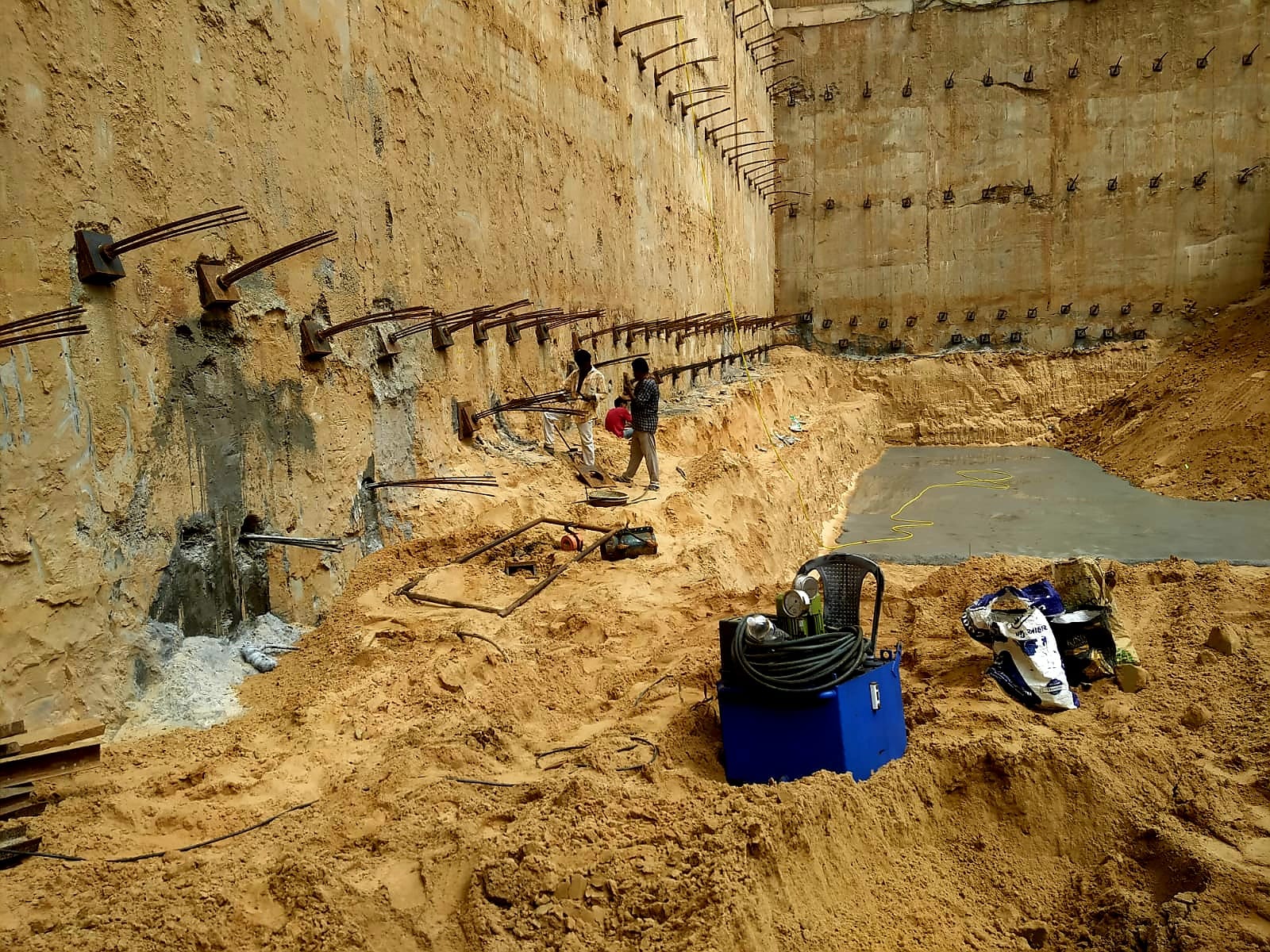
After the grout reaches the specified strength, the anchor is stressed using suitable hydraulic jacking equipment. The anchor is loaded according to the approved testing and stressing procedure, and then locked off at the specified load. Elongation and test observations are recorded for quality documentation.
6. Testing and Quality Verification
Anchor testing is carried out as specified in the project requirements. Proof testing, suitability testing or other prescribed checks help verify anchor performance. Test results, stressing records and installation details form part of the construction quality documentation.
Applications of Anchor Pile Construction
Ground anchor systems are suitable for several construction applications where retaining structures require additional lateral resistance. Their use and configuration depend on the ground profile, structural design, available site space and construction requirements.
- Diaphragm wall anchoring: Ground anchors provide lateral support to diaphragm walls during staged excavation.
- Basement construction: Tieback systems can support retaining structures for deep commercial and residential basements.
- Retaining wall support: Anchors help resist lateral forces acting on retaining structures.
- Metro and infrastructure projects: Ground anchors may be used in underground stations, cut-and-cover construction and other deep excavation works.
- Slope stabilisation: Suitable ground anchors can contribute to slope and cut stabilisation when designed for the site conditions.
- Industrial developments: Anchoring systems can support excavation and retaining structures for industrial buildings and facilities.
Why Choose Jalmala Boring Works?
Jalmala Boring Works brings more than six decades of foundation engineering experience to specialised ground anchoring projects. As a third-generation family-owned company, it combines practical site knowledge with modern hydraulic equipment and a focus on planned execution.
- Deep foundation experience dating back to 1962.
- Third-generation family-owned foundation engineering company.
- Modern SANY hydraulic piling and diaphragm wall rigs.
- ISO 9001:2015 certified quality management processes.
- Project execution experience across multiple Indian states.
- Site-focused planning, equipment coordination and construction supervision.
- Ground anchoring solutions for temporary and permanent applications, subject to project design.
Anchor Pile Construction Contractor Across India
Selecting the right anchor pile construction contractor involves evaluating technical capability, equipment, project experience, safety practices and quality documentation. Ground conditions can vary significantly between locations, so the installation methodology should be planned around the project-specific geotechnical and structural requirements.
Jalmala Boring Works provides ground anchoring services for projects across India, with its base in Ahmedabad, Gujarat. The company works with developers, infrastructure organisations, industrial clients, consultants and construction contractors to execute deep foundation activities. Its experience in diaphragm walls and pile foundations also supports coordinated planning for projects that combine retaining walls and ground anchors.
If you are evaluating anchor pile construction in India for a basement, retaining wall, diaphragm wall or infrastructure project, share the available drawings, soil investigation details and preliminary construction requirements with the technical team. These details help establish the scope, equipment requirements and suitable execution methodology.
For project information, explore this anchor pile construction in India service page to understand the company's ground anchoring capabilities and construction approach.
Jalmala Boring Works continues to support India's construction and infrastructure sector through experienced foundation engineering, modern equipment and project-based execution. For professional ground anchor construction, discuss your project requirements with the team.
Contact Jalmala Boring Works for technical discussions regarding anchor drilling, tendon installation, grouting, stressing, testing and excavation support requirements.