
Deep Basement Construction
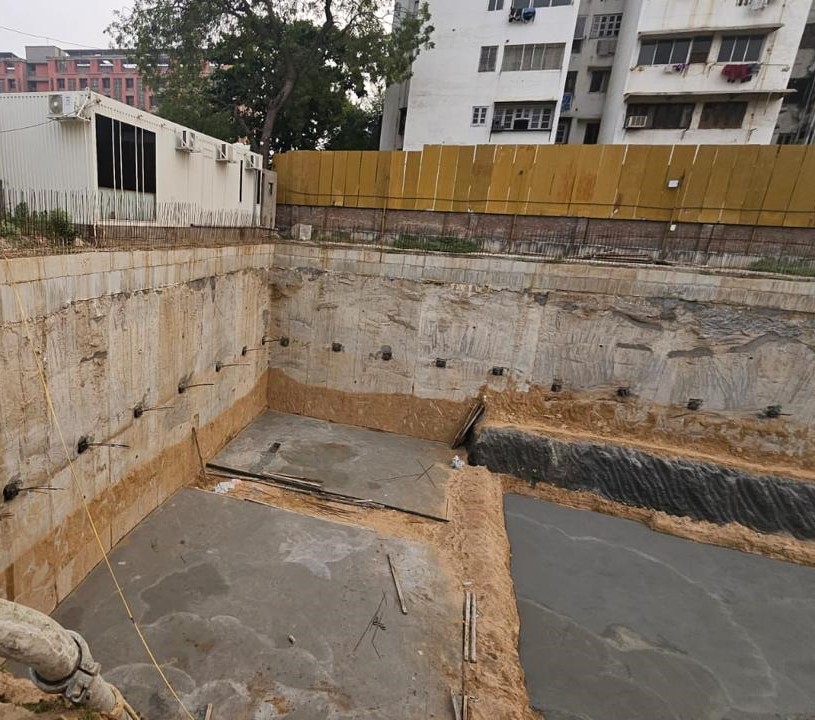
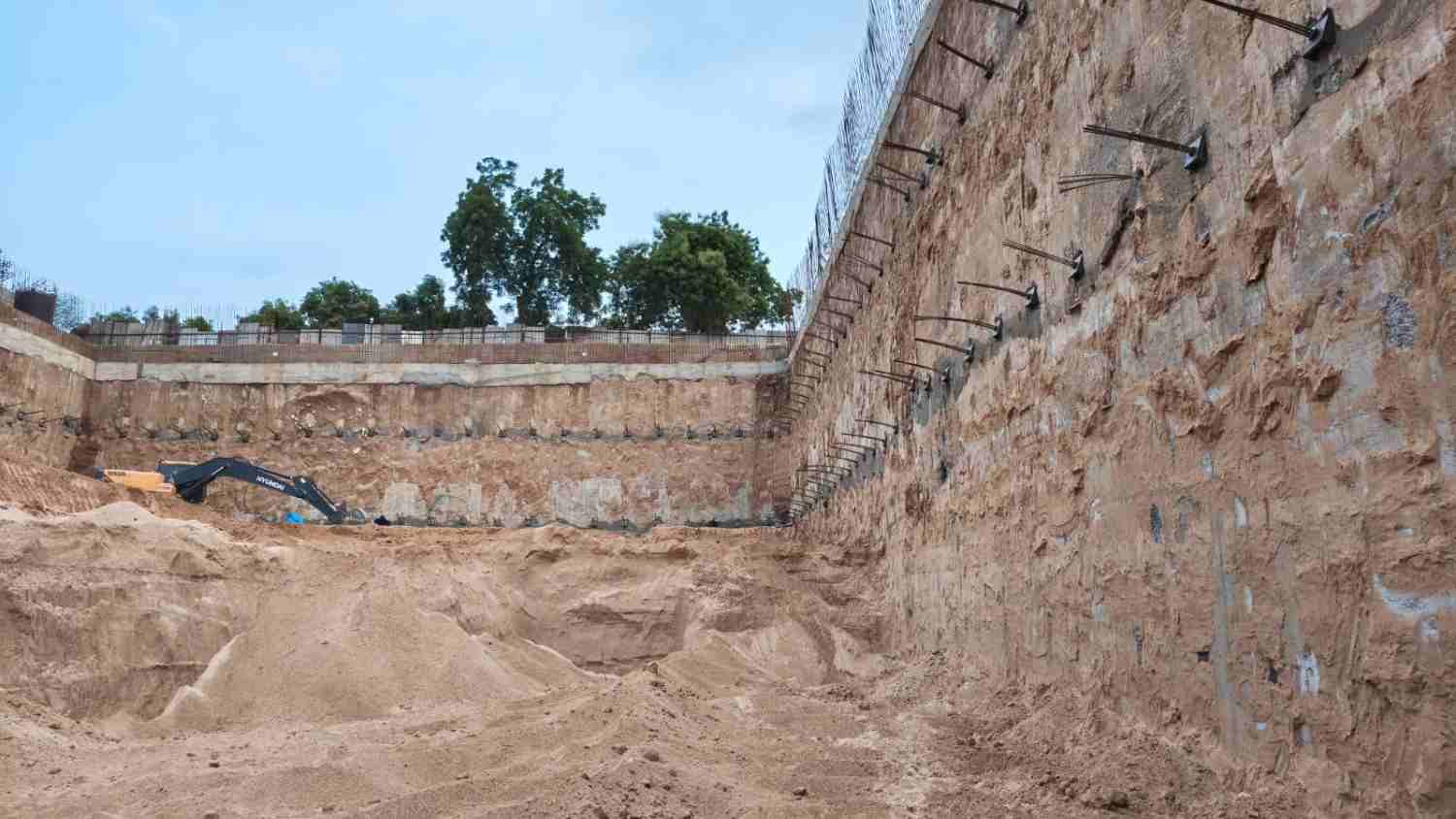
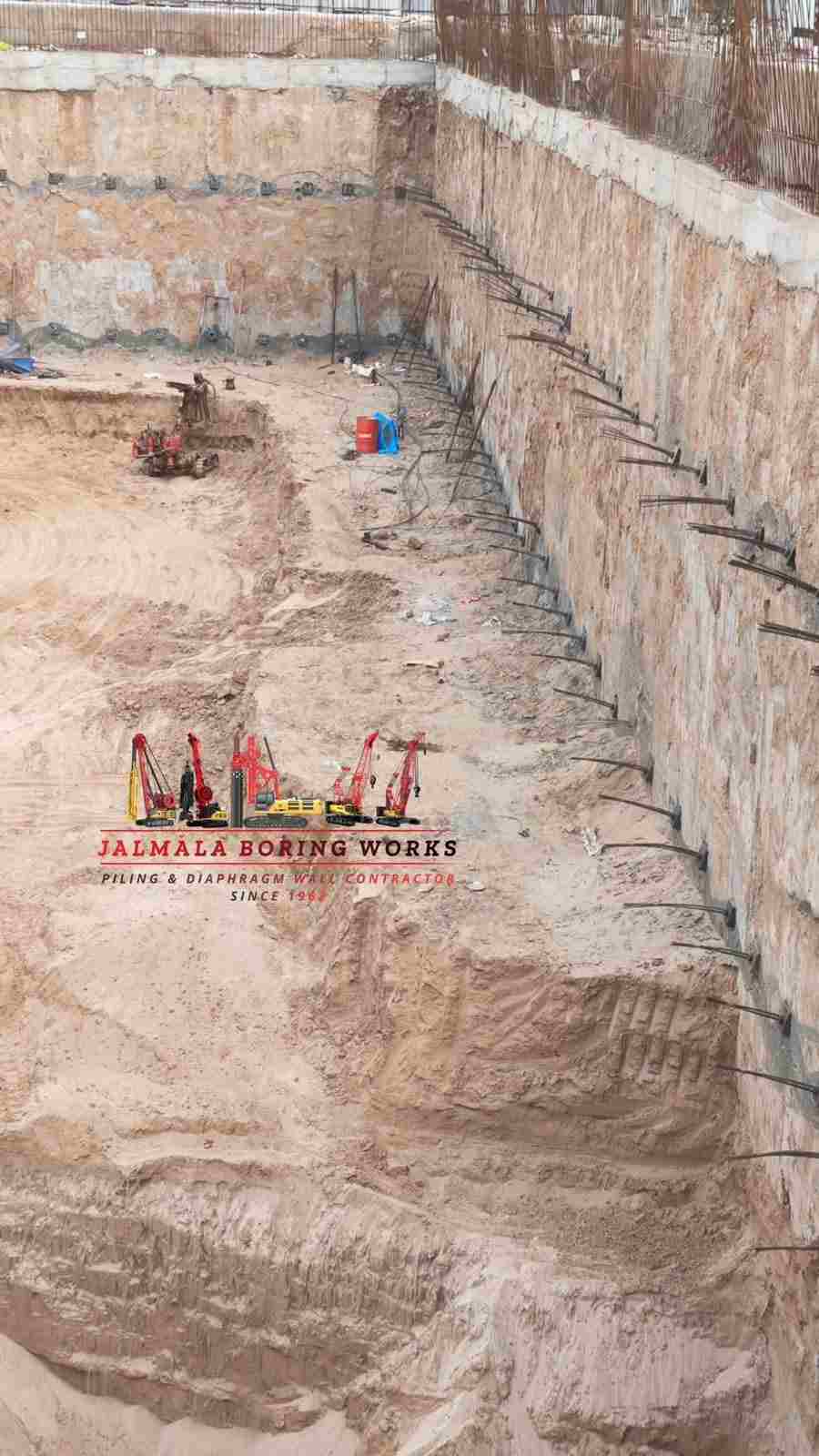
Anchored diaphragm wall systems can support selected deep basement excavations for commercial buildings, residential towers and large developments.
Deep Excavation & Retaining Wall Specialists
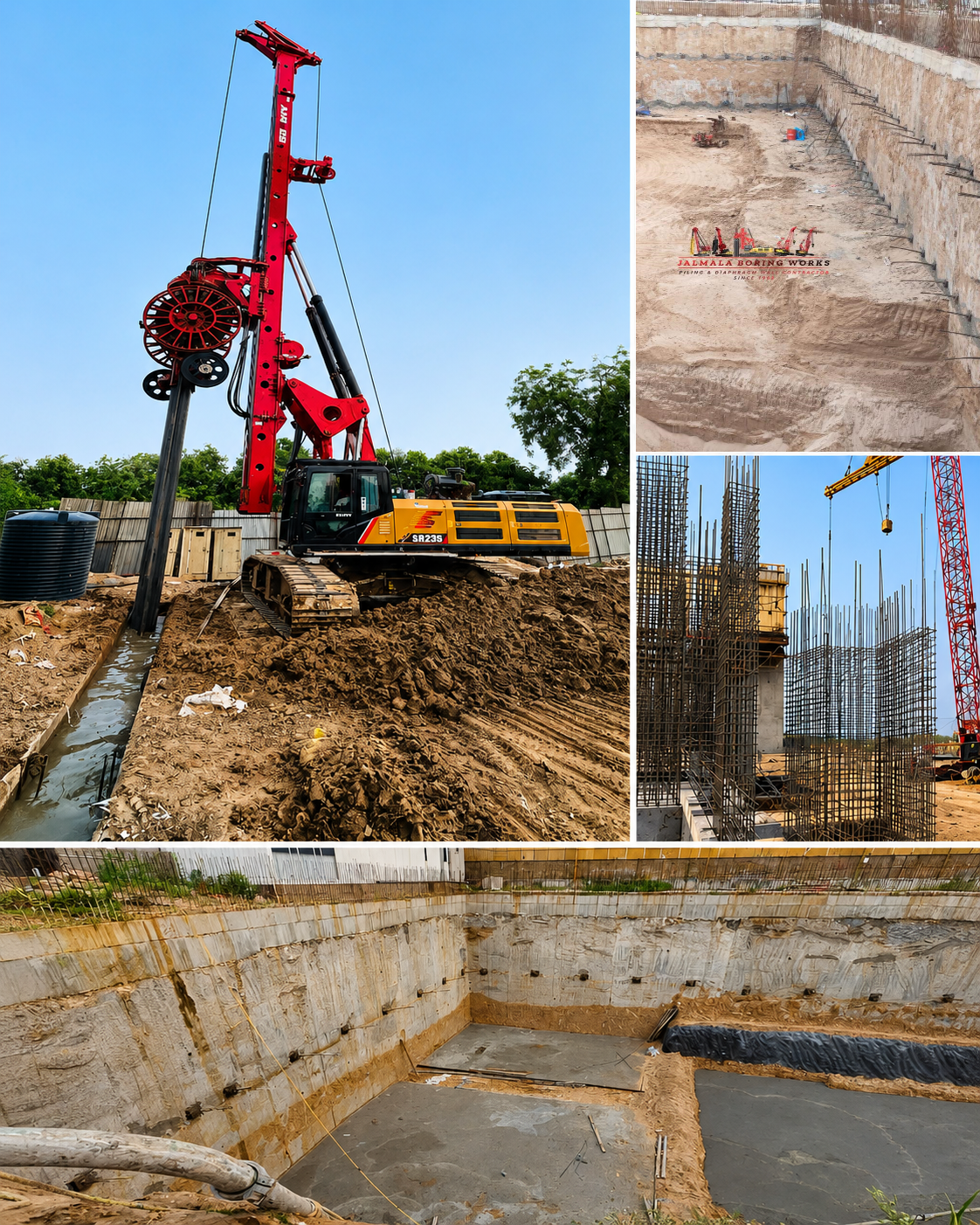
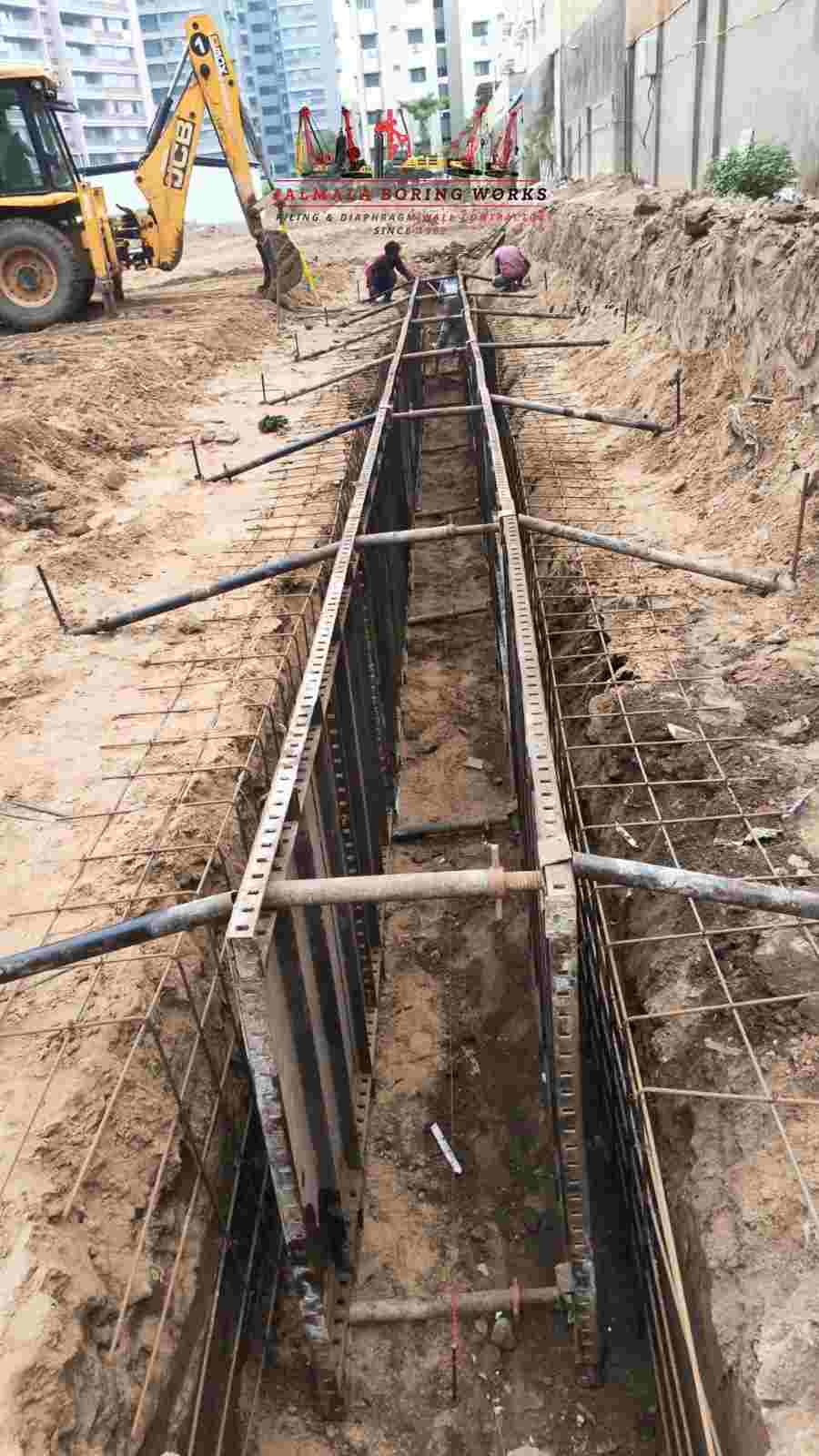
Jalmala Boring Works specializes in Diaphragm Wall Construction for deep excavations, basements, metro projects, commercial developments, and industrial infrastructure. We execute complete diaphragm wall work from 400 mm to 1200 mm thickness and depths of up to 40 metres, delivering watertight, high-strength retaining walls with minimal ground movement. Our end-to-end solution includes guide wall construction, slurry-supported panel excavation, reinforcement cage installation, tremie concreting, water-stop systems, and quality-controlled execution.
A step-by-step overview of how Jalmala Boring Works constructs high-quality Diaphragm Walls — from guide wall installation to final panel completion — with precision, safety, and six decades of expertise.
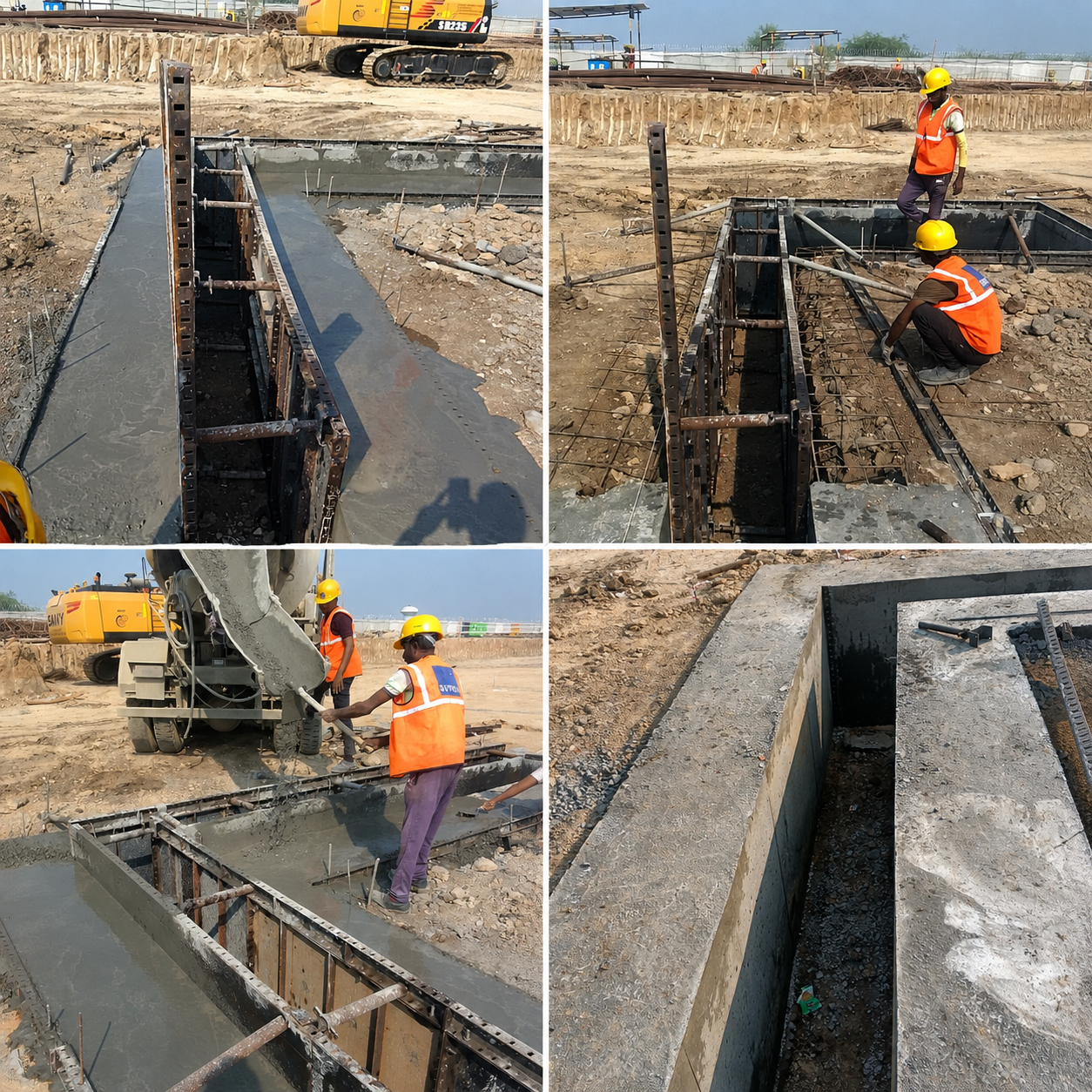
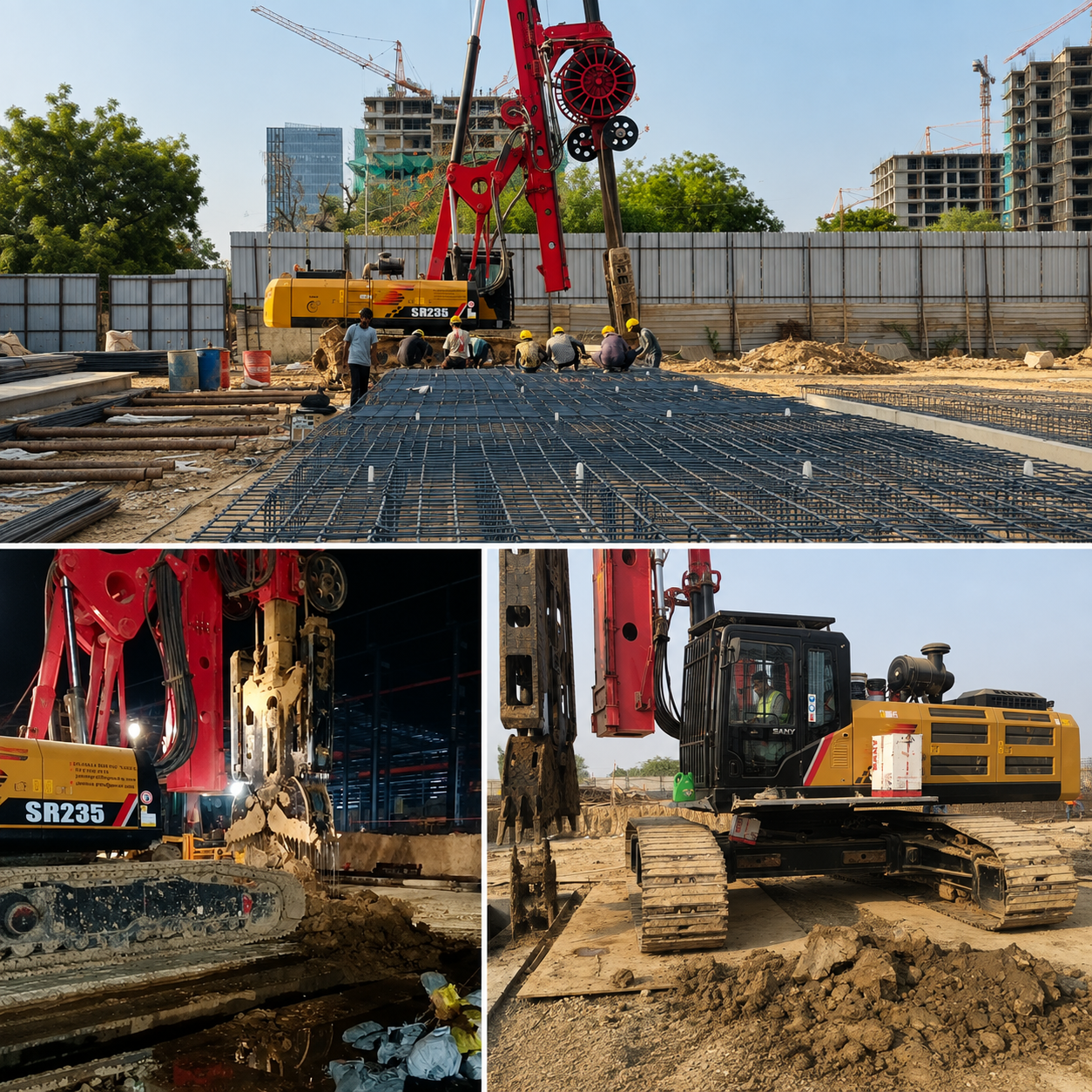
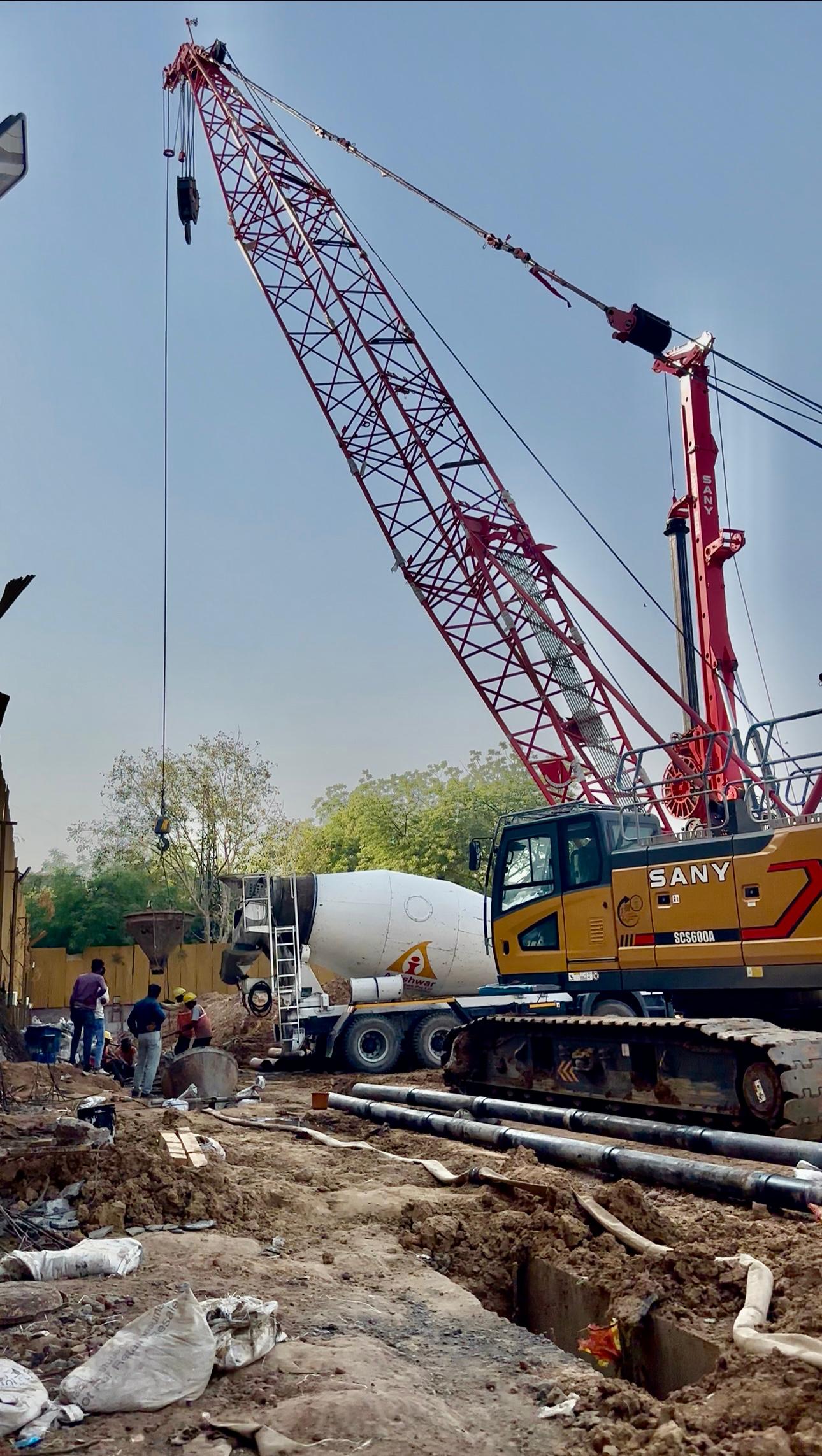
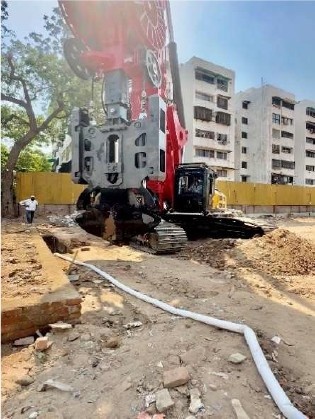
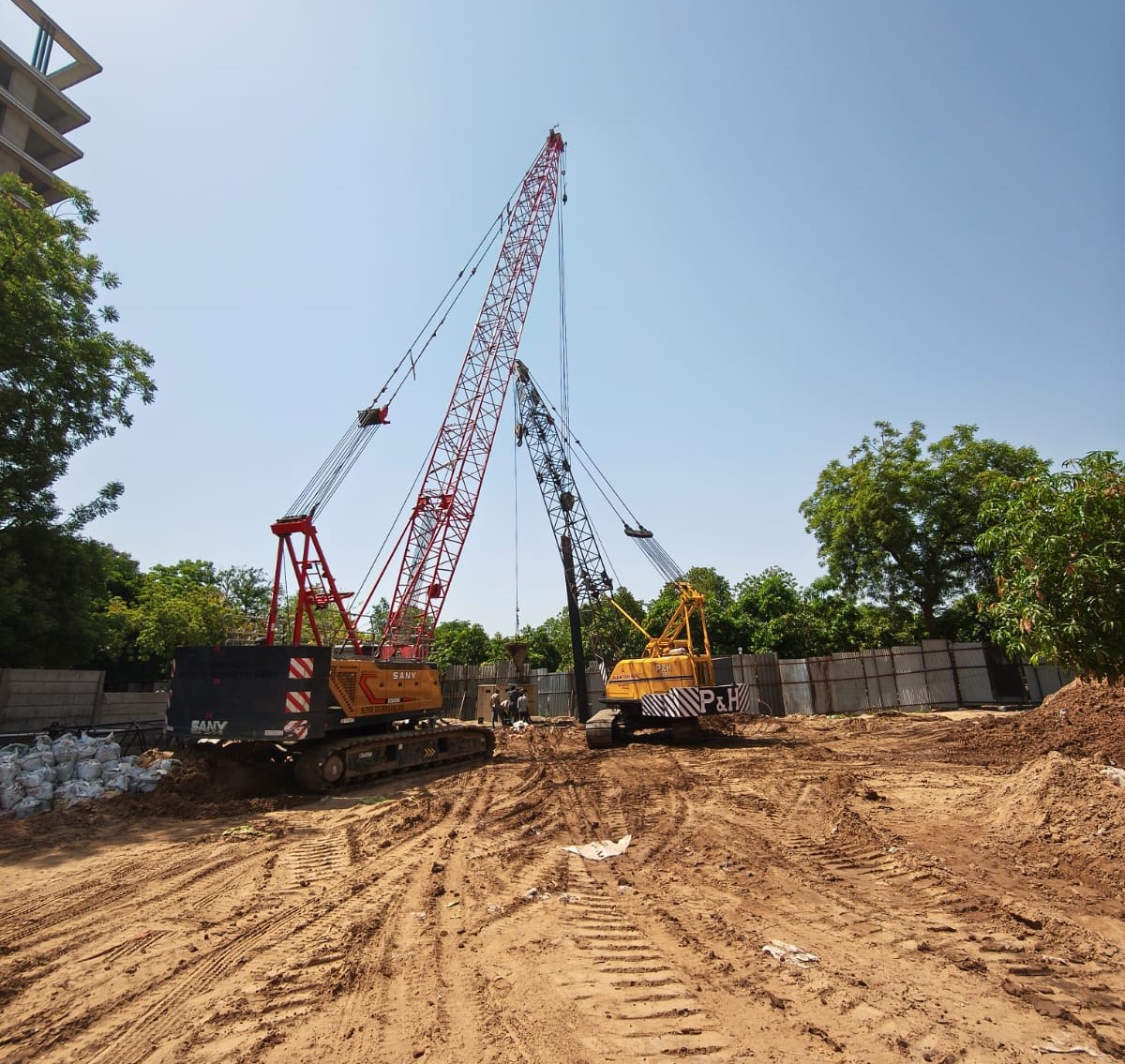
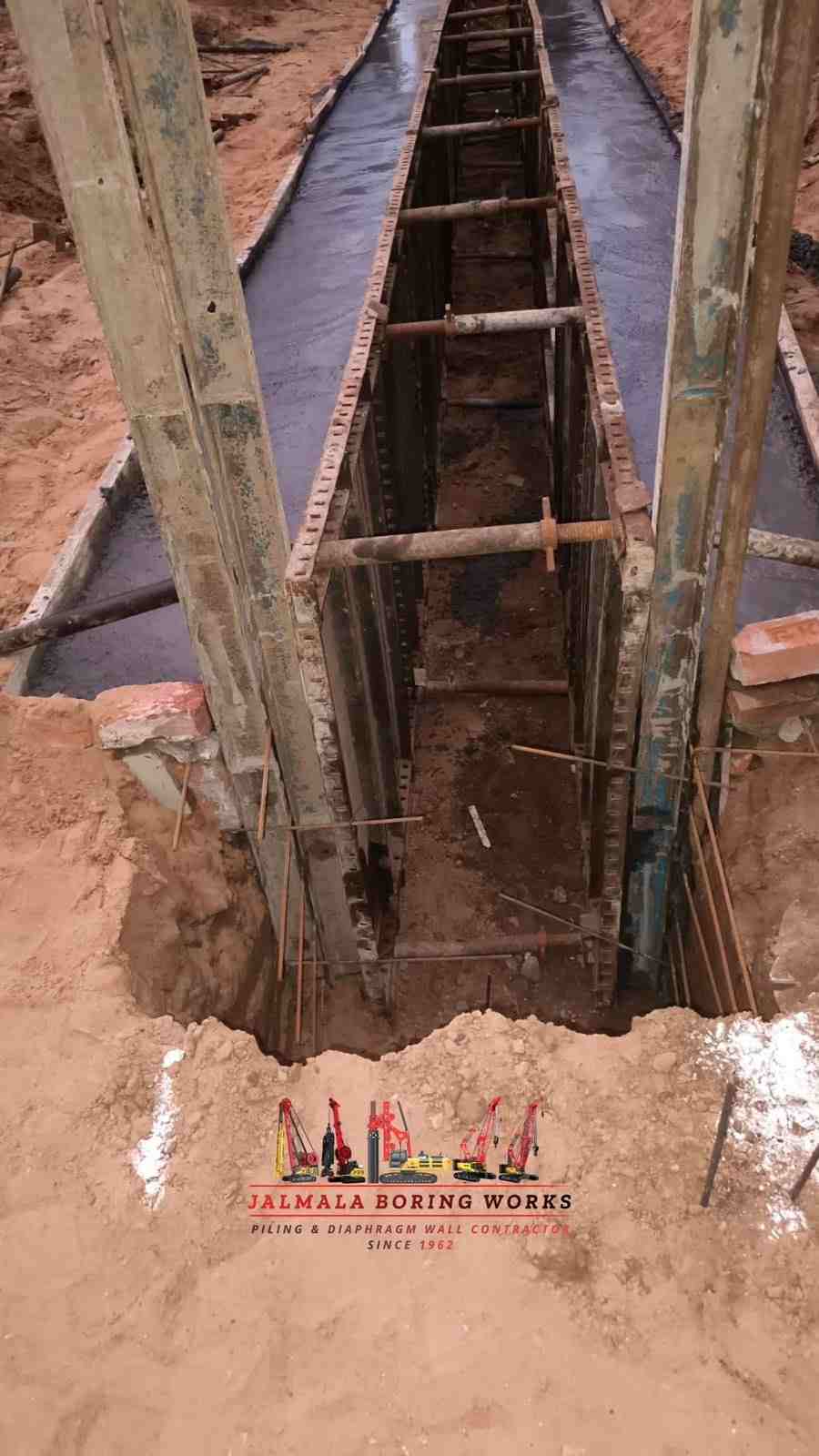
Detailed survey, panel marking, and guide wall construction for accurate alignment.
Preparation of slurry and excavation of diaphragm wall panels.
Formation of watertight joints and cleaning of excavated trench.
Fabrication and placement of reinforcement cage into trench.
Continuous concrete placement using tremie pipes.
Final wall formation, testing, and quality assurance activities.
Ground Engineering Solutions Across India
Jalmala Boring Works provides deep foundation and ground engineering solutions for infrastructure, commercial, industrial and residential construction projects. With a family-owned legacy dating back to 1962 and three generations of practical experience, the company supports complex foundation requirements involving pile foundations, diaphragm walls and ground anchors.
Diaphragm wall anchoring is an important component of selected deep excavation support systems. Ground anchors can help transfer lateral loads from retaining walls into suitable ground, supporting excavation stability when designed and installed according to project-specific geotechnical and structural requirements. Explore our diaphragm wall anchoring services in India for underground construction, basement development and infrastructure applications.
Deep Excavation Support
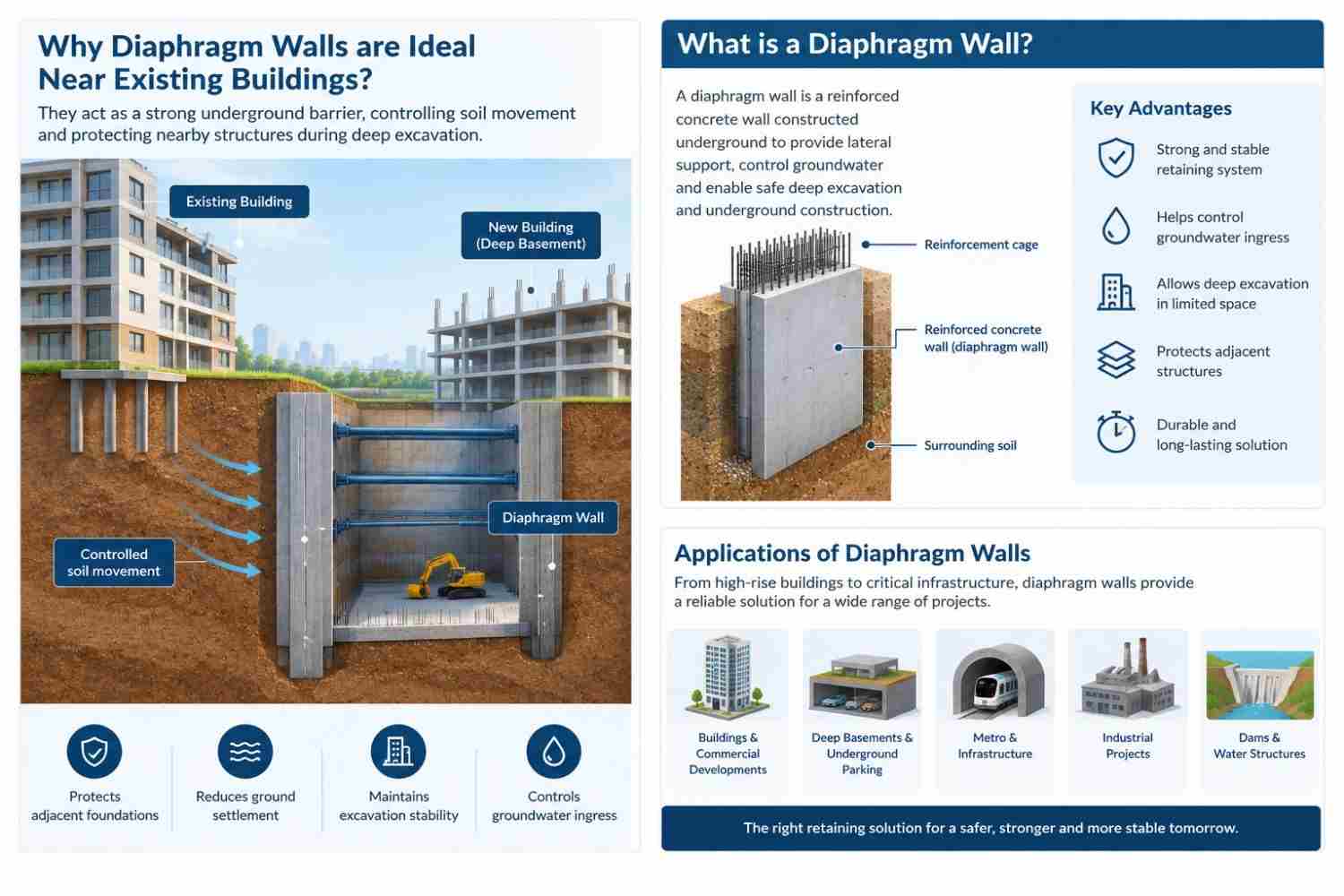
Diaphragm walls are commonly used as retaining structures for deep basements, underground facilities and large excavation projects. Depending on the excavation depth, surrounding ground conditions and structural design, these walls may require additional lateral support.
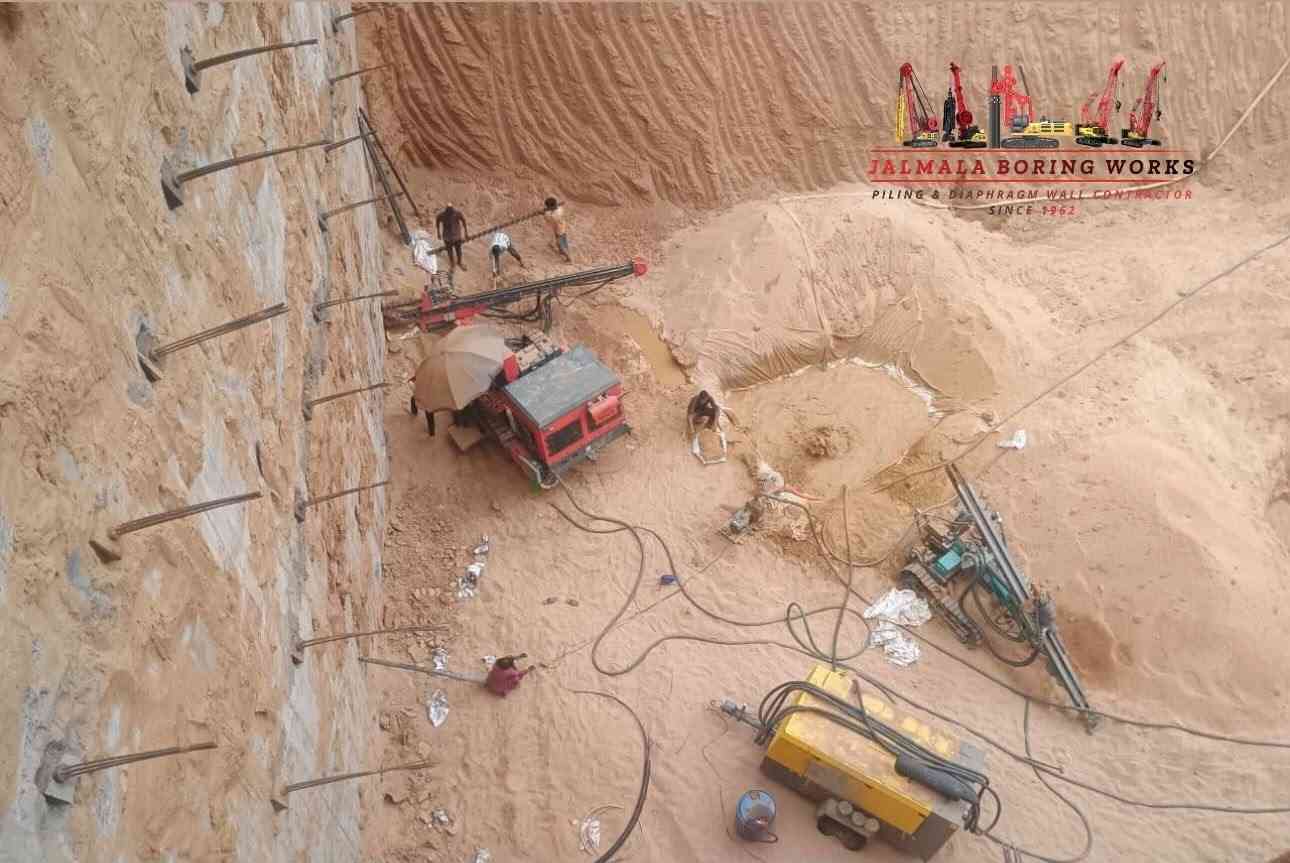
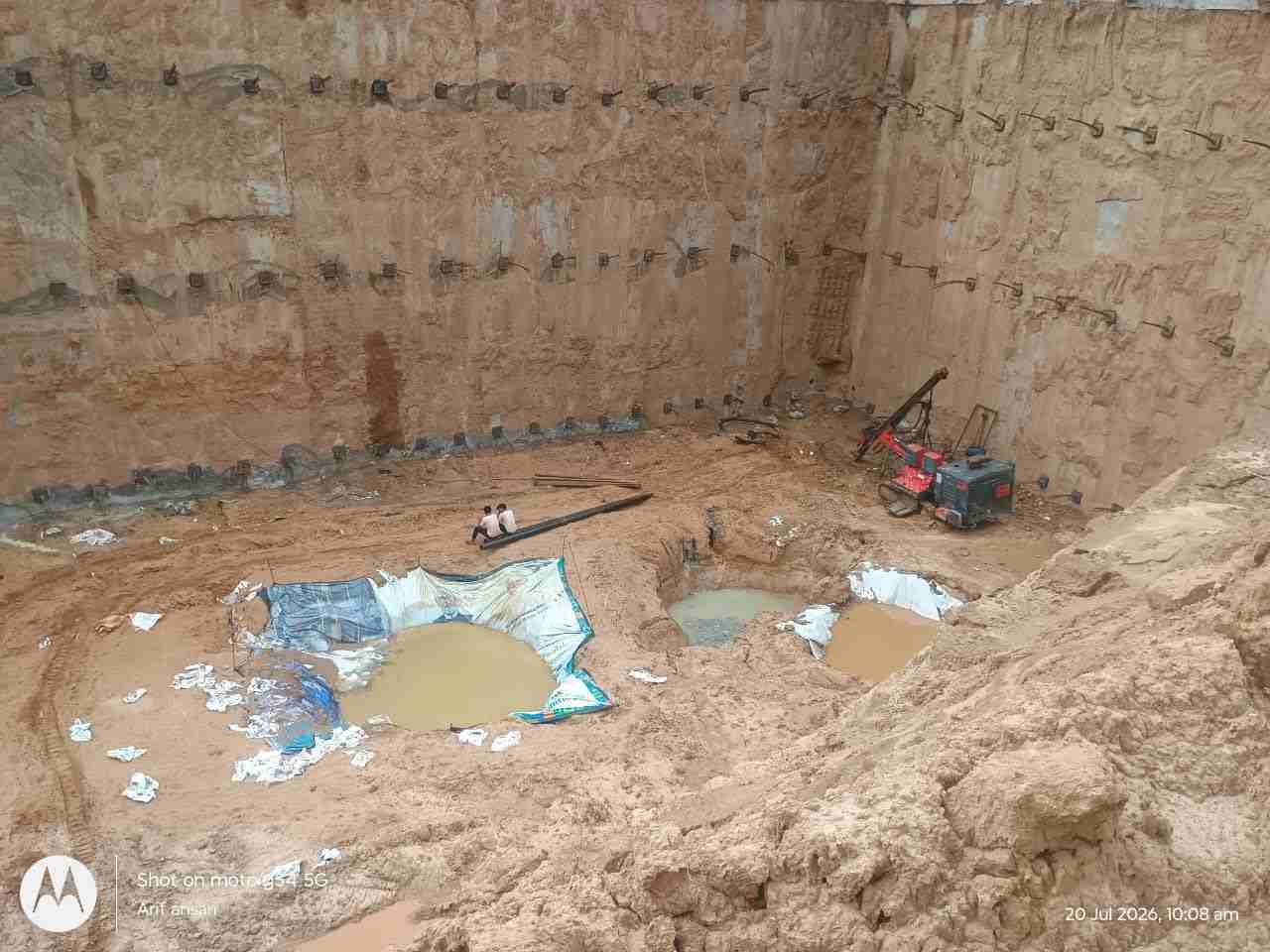
Ground anchors, also known as tieback anchors, are installed into suitable soil or rock beyond the excavation face. When designed as part of an engineered retaining system, they help resist lateral forces and control wall movement. Jalmala Boring Works understands the importance of coordinated foundation execution, suitable equipment and site-specific construction planning for diaphragm wall anchoring projects.
Foundation Experience Since
Generation Family Business
Modern Hydraulic Equipment
Project Service Coverage
Project Applications
Ground anchoring can be considered for different retaining wall and excavation support requirements. The final support arrangement depends on geotechnical investigation, structural calculations, site restrictions and construction sequencing.
Anchored diaphragm wall systems can support selected deep basement excavations for commercial buildings, residential towers and large developments.
Ground anchors may be incorporated into retaining systems for underground parking structures where excavation depth and surrounding conditions require additional support.
Anchoring systems can form part of engineered excavation support for underground stations, transit facilities and associated infrastructure.
Diaphragm wall anchoring can be considered for restricted urban sites where adjacent properties and existing infrastructure require careful movement control.
Anchored retaining systems may support deep construction areas for industrial facilities, utility structures and below-ground installations.
Ground anchors can be used in selected underground construction and retaining applications where suitable ground conditions and design provisions exist.
Engineering and Installation
A diaphragm wall anchoring arrangement consists of several coordinated components. Their specifications and dimensions must be established through approved structural and geotechnical design.
High-strength steel strands or bars that transfer the required tensile force from the wall into the anchorage zone.
The unbonded portion of the tendon that allows the anchor to elongate during stressing and transfer load to the fixed anchorage zone.
The grouted anchorage section that transfers the anchor load into suitable surrounding soil or rock.
The anchorage assembly that transfers the stressing force to the diaphragm wall through the specified bearing arrangement.
Cement-based grout used to form the bonded anchorage zone and provide the specified load-transfer and protection functions.
Protective measures selected according to the required service life, exposure conditions and approved anchor specifications.
Construction Methodology
Ground anchor installation requires proper coordination between excavation activities, drilling operations, grouting and stressing. The following is a general sequence; actual construction must follow the approved method statement and project specifications.
Review the geotechnical investigation, groundwater conditions, diaphragm wall drawings, anchor loads, surrounding structures and site constraints before selecting the installation methodology.
Construct the diaphragm wall according to the approved design, panel sequence, reinforcement details, concrete specifications and construction method statement.
Excavate to the specified anchor installation level while maintaining the required temporary stability and monitoring arrangements.
Use suitable drilling equipment to create the anchor borehole at the specified inclination, location and depth, subject to ground conditions and approved drawings.
Install the prepared anchor tendon and carry out grouting in accordance with the approved specifications, grout design and quality control requirements.
After the grout reaches the required strength, stress the anchor using suitable hydraulic equipment and lock it off at the approved design load.
Perform the specified anchor testing, record load and elongation observations, and monitor wall movement and excavation performance as required by the project.
Project Engineering
The performance of an anchored diaphragm wall depends on coordination between the retaining wall, ground conditions, anchor design and excavation sequence. Every project requires an engineering assessment before installation begins.
Soil profile, rock strata and groundwater conditions
Anchor inclination, spacing and installation depth
Free length and fixed bond length requirements
Design load, stressing load and lock-off load
Grout strength and corrosion protection provisions
Existing utilities and neighbouring structures
Excavation stages and groundwater management
Anchor testing and wall movement monitoring
About Our Company
Jalmala Boring Works brings decades of practical experience in deep foundation construction and ground engineering. Established in 1962, the company combines its third-generation family business legacy with modern hydraulic equipment and project-focused execution.
More than six decades of hands-on experience in foundation and ground engineering.
A family-owned business continuing its foundation construction legacy across generations.
A fleet of modern SANY hydraulic piling and diaphragm wall rigs.
Project support for infrastructure, commercial, industrial and residential developments across India.
Diaphragm Wall Anchoring Solutions
Diaphragm wall anchoring plays an important role in selected deep excavation and underground construction projects. In urban areas where buildings, roads, utilities and existing infrastructure are located close to the excavation boundary, an engineered retaining system may require additional lateral support. Ground anchors are one of the solutions that geotechnical and structural engineers may consider for these conditions.
Jalmala Boring Works is a foundation construction company based in Ahmedabad, Gujarat, with experience dating back to 1962. The company specializes in pile foundations, diaphragm walls and ground anchors for major infrastructure, commercial, industrial and residential developments. Its third-generation experience and modern SANY hydraulic equipment support demanding foundation construction requirements.
A typical diaphragm wall anchoring arrangement may include prestressed ground anchors installed at different excavation levels. Depending on the approved design, the anchor system can consist of steel strand tendons, free length, bonded length, grout, bearing plates and anchor heads. Drilling, tendon installation, grouting, stressing and testing must follow the approved method statement and relevant project specifications.
Ground anchors may be considered for deep basement construction, underground parking, metro infrastructure, commercial developments, industrial facilities and other projects involving deep excavation. Their suitability depends on the available ground conditions, property boundaries, easements, groundwater levels, anchor bond capacity and structural requirements. Where anchors cannot extend beyond the excavation boundary, alternative support arrangements may need to be evaluated by the design team.
For diaphragm wall anchoring in India, careful planning is essential. Site investigation reports, wall design, excavation depth, anchor loads, drilling access and construction sequence should be reviewed before work begins. Proper quality control includes checking drilling records, grout parameters, tendon installation, stressing results and required anchor testing. Monitoring of the retaining wall and nearby structures is also important throughout excavation.
Jalmala Boring Works aims to support construction teams with practical foundation expertise, modern equipment and coordinated site execution. From Ahmedabad and Gujarat to projects in other parts of India, the company works with project-specific requirements for deep foundation and underground construction. Clients looking for adiaphragm wall anchoring contractor in India can contact the team to discuss their project scope, technical drawings and site conditions.
Whether the requirement involves a deep basement, an underground structure or an engineered retaining system, diaphragm wall anchoring must be planned around structural stability, geotechnical performance and safe construction practices. Jalmala Boring Works brings its foundation construction background and long-standing industry experience to projects requiring reliable ground engineering solutions. Contact the company for project discussions related to ground anchors for diaphragm walls and deep excavation support.
For project enquiries, share the site location, soil investigation report, diaphragm wall drawings, excavation depth and proposed anchor requirements. This information helps the technical team understand the project and identify the appropriate scope of discussion.
Contact Jalmala Boring Works for foundation and ground engineering project enquiries across India.
Explore Diaphragm Wall AnchoringFrequently Asked Questions
Diaphragm wall anchoring is a structural support method in which ground anchors are installed through or connected to a diaphragm wall and extended into suitable ground. The anchors help resist lateral earth pressure and support the wall during deep excavation or other underground construction activities.
Diaphragm wall anchors are commonly considered for deep basements, underground parking structures, metro stations, commercial developments, infrastructure projects, retaining systems and excavations where lateral support is required.
Depending on the approved design, the general process includes excavation to the required anchor level, drilling an inclined borehole, installing the anchor tendon, grouting, allowing the grout to gain the required strength, stressing the anchor and locking it off at the specified load.
Prestressed ground anchors may be used in deep excavation support systems where the geotechnical and structural design confirms their suitability. Anchor capacity, inclination, bond length, free length, spacing and stressing requirements must be determined by qualified project engineers.
Jalmala Boring Works provides deep foundation and ground engineering services for projects across India, subject to project requirements, site conditions, technical scope and equipment availability.
Initial project assessment generally requires site location, excavation depth, soil investigation report, groundwater conditions, diaphragm wall drawings, structural design requirements, anchor loads and project execution schedule.
Jalmala Boring Works
Discuss your deep excavation, basement or underground construction requirements with our team.