
Diaphragm Wall
Deep Excavation & Retaining Wall Specialists
Jalmala Boring Works specializes in Diaphragm Wall Construction for deep excavations, basements, metro projects, commercial developments, and industrial infrastructure. We execute complete diaphragm wall work from 400 mm to 1200 mm thickness and depths of up to 40 metres, delivering watertight, high-strength retaining walls with minimal ground movement. Our end-to-end solution includes guide wall construction, slurry-supported panel excavation, reinforcement cage installation, tremie concreting, water-stop systems, and quality-controlled execution.
Diaphragm WallConstruction Process
A step-by-step overview of how Jalmala Boring Works constructs high-quality Diaphragm Walls — from guide wall installation to final panel completion — with precision, safety, and six decades of expertise.
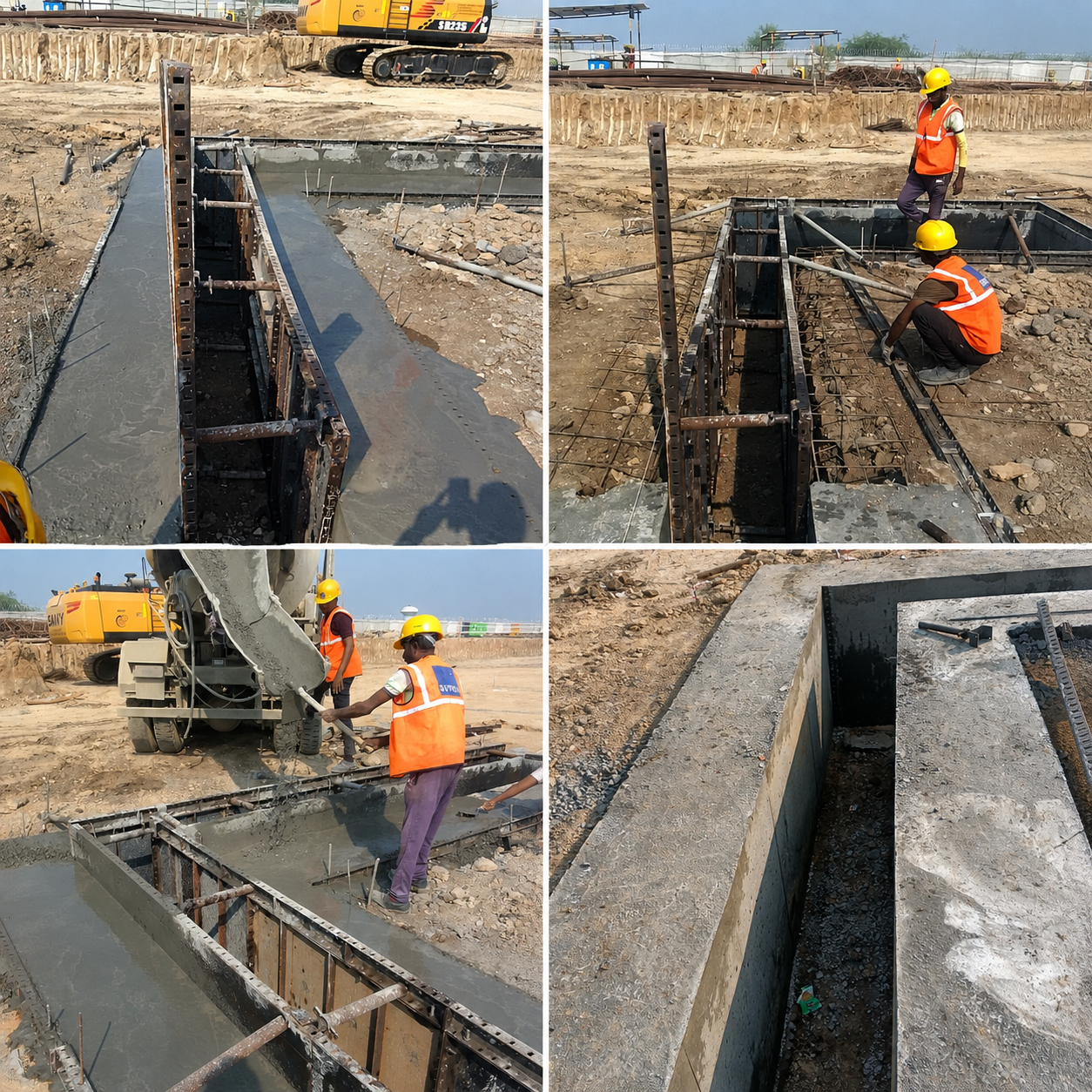
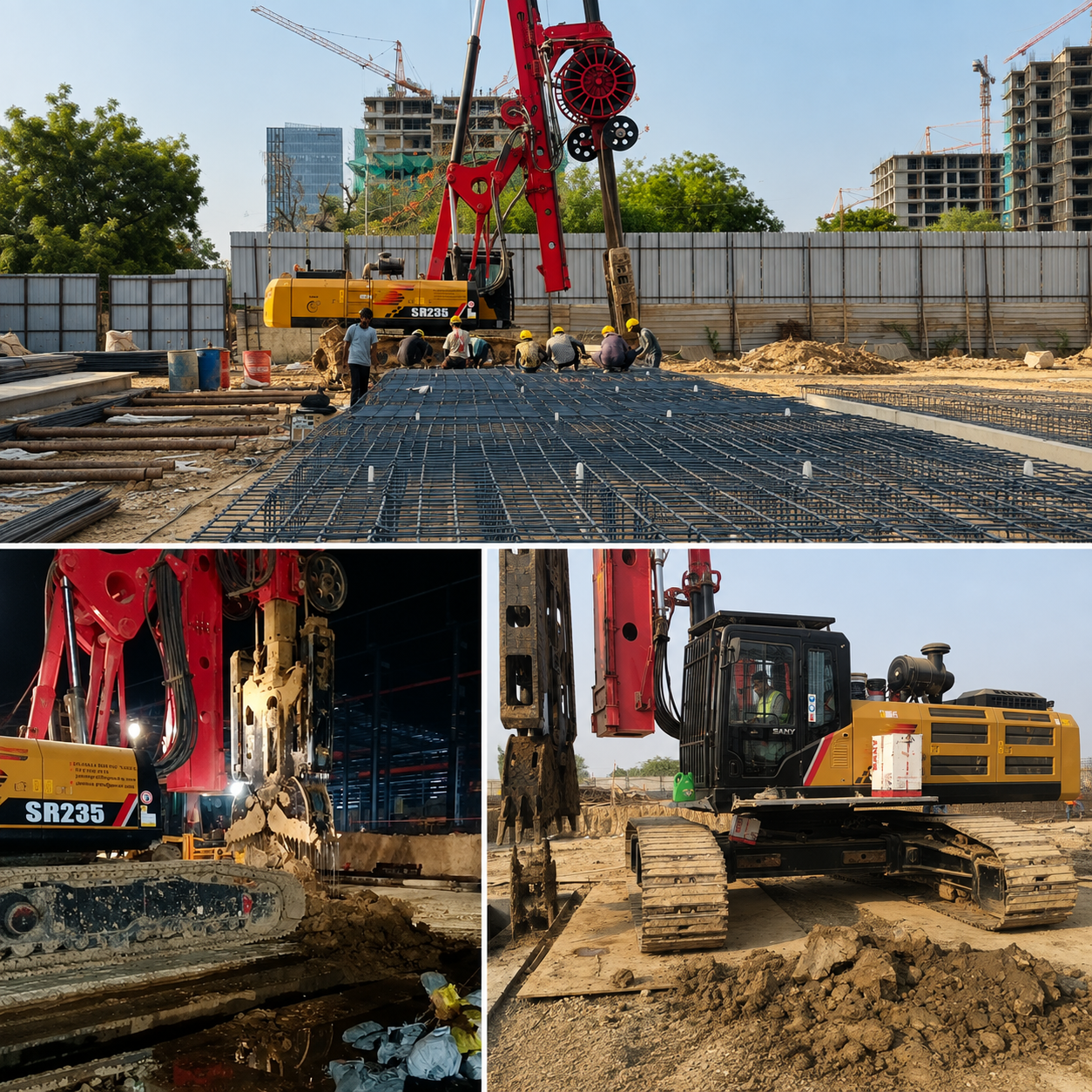
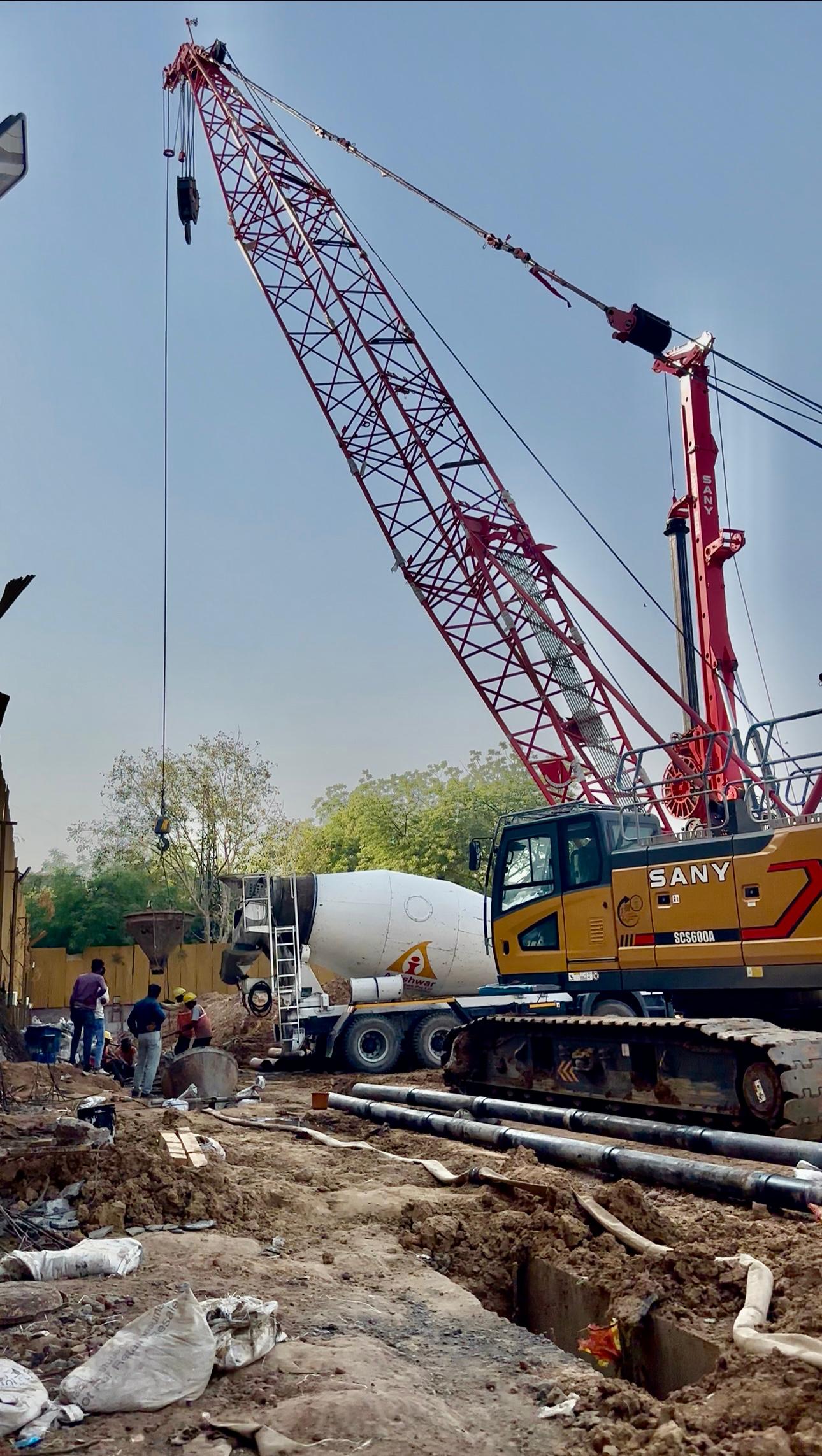
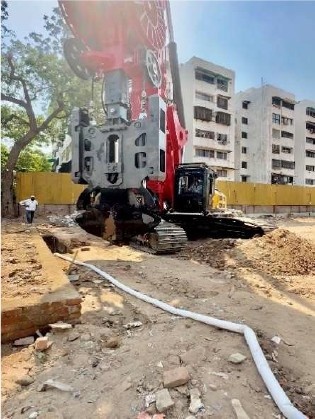
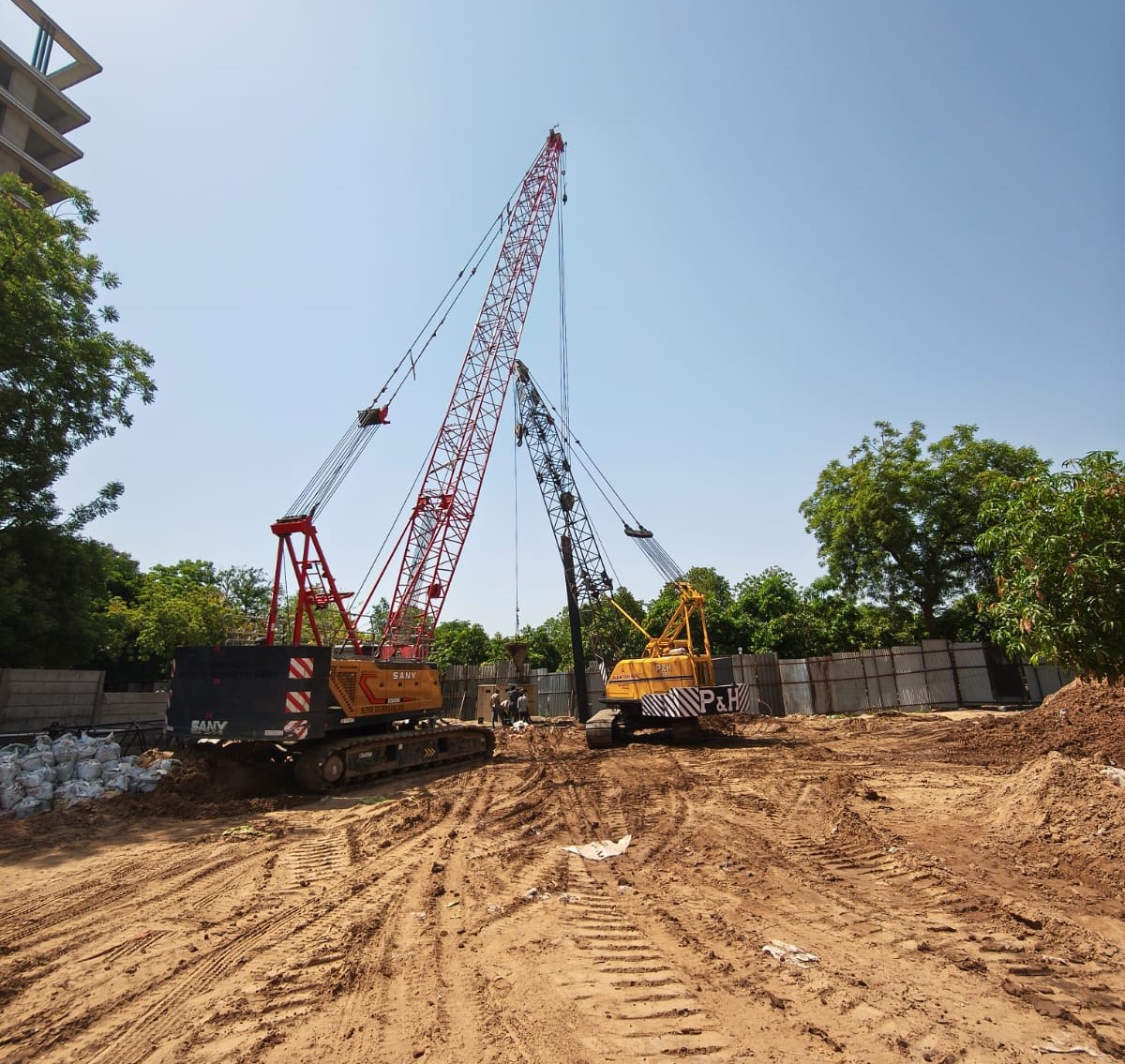
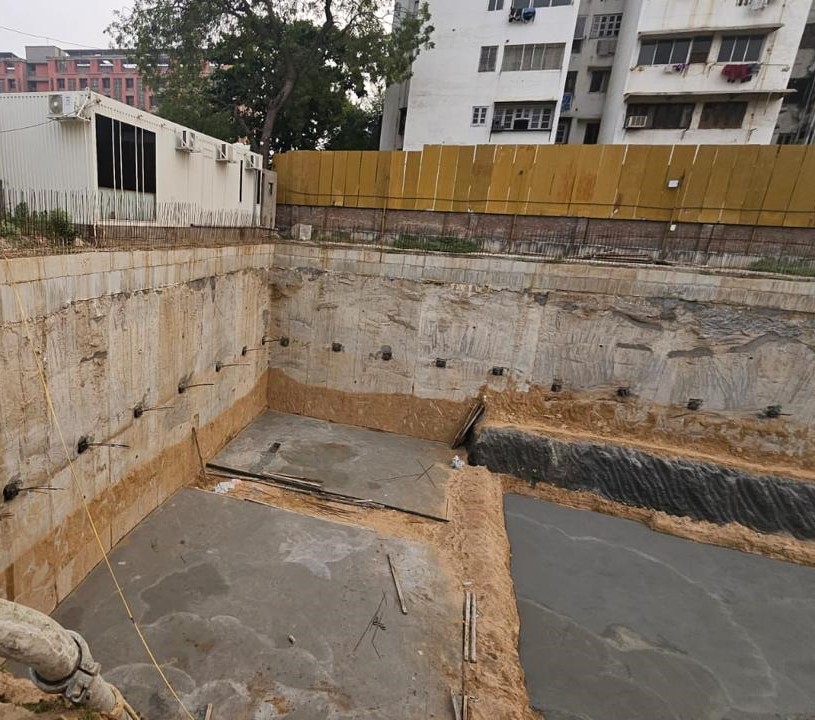
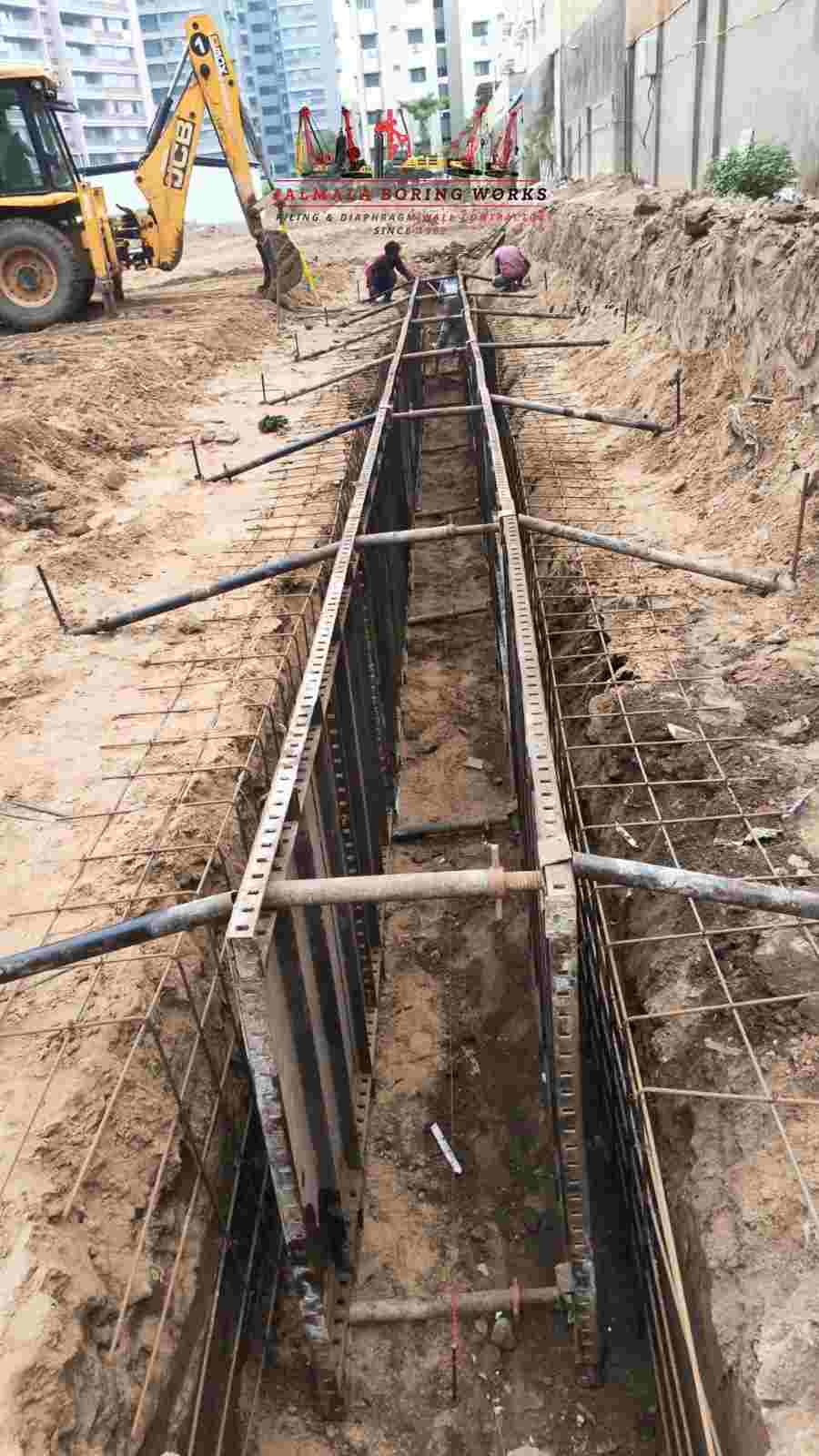
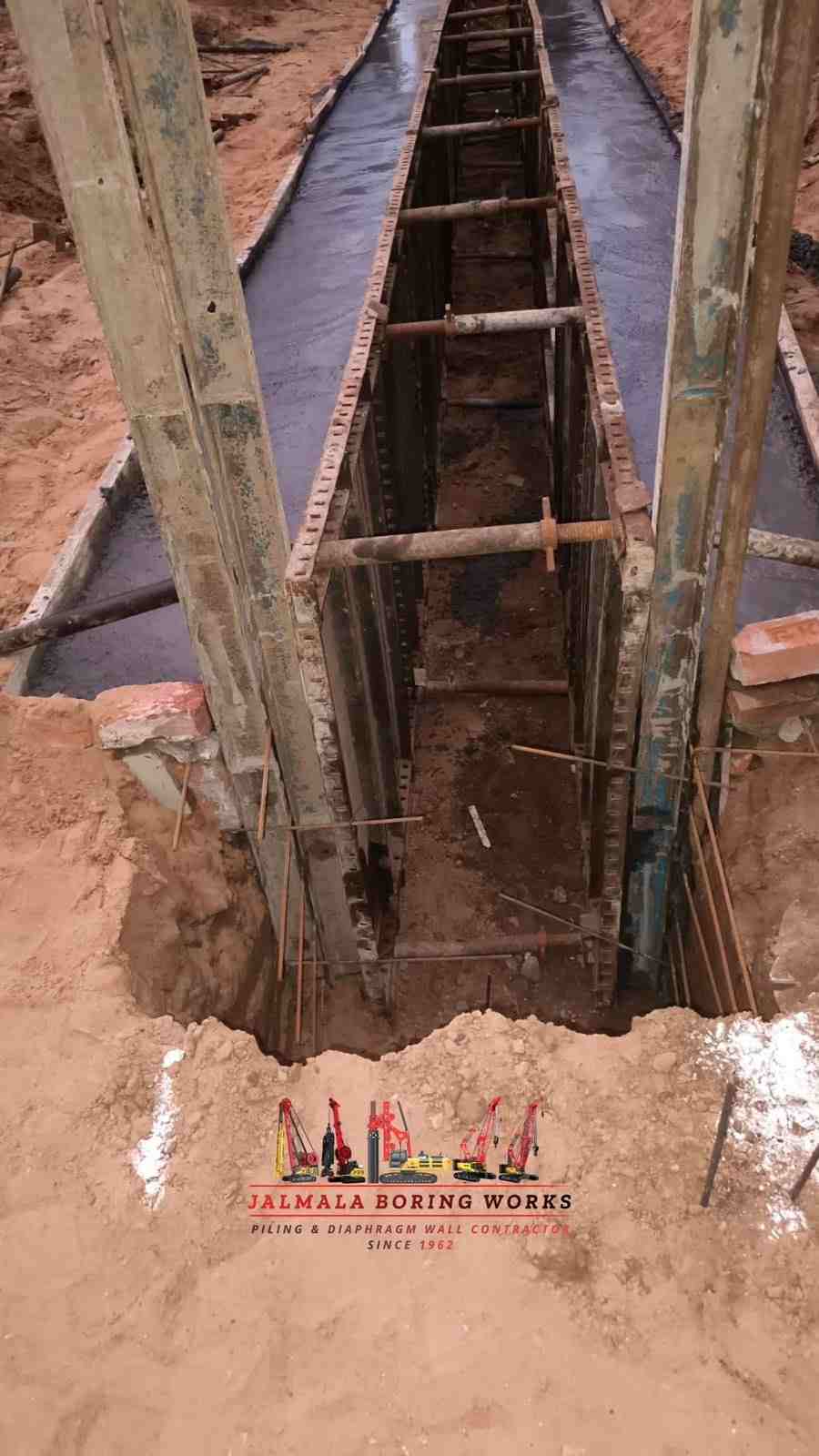
Survey, Setting Out & Guide Wall Construction
Detailed survey, panel marking, and guide wall construction for accurate alignment.
- Detailed survey and panel layout marking
- Construction of reinforced concrete guide walls
- Establishes accurate wall alignment
- Supports excavation equipment
- Prevents top soil collapse during excavation
Slurry Preparation & Panel Excavation
Preparation of slurry and excavation of diaphragm wall panels.
- Preparation of bentonite/polymer slurry
- Excavation using Hydraulic Grab or Hydromill
- Continuous slurry circulation for stability
- Excavation to required depth and founding strata
- Regular monitoring of depth and verticality
Joint Formation & Trench Cleaning
Formation of watertight joints and cleaning of excavated trench.
- Installation of Stop-End Pipes
- PVC Water Stopper installation
- Formation of watertight panel joints
- Desanding and slurry cleaning
- Removal of sediment from trench bottom
- Final trench inspection
Reinforcement Cage Installation
Fabrication and placement of reinforcement cage into trench.
- Fabrication as per approved drawings
- Installation of spacers and couplers
- Lowering cage into slurry-filled trench
- Maintains required concrete cover
- Pre-concreting quality inspection
Tremie Concreting
Continuous concrete placement using tremie pipes.
- Installation of tremie pipes
- Concrete poured from bottom to top
- Displacement and recovery of slurry
- Single uninterrupted concreting operation
- Formation of reinforced concrete wall panels
Panel Completion, Quality Control & Wall Formation
Final wall formation, testing, and quality assurance activities.
- Removal of stop-end elements
- Construction of secondary panels
- Formation of continuous watertight wall
- Verification of alignment and thickness
- Concrete quality testing and records
- Wall head trimming for capping beam
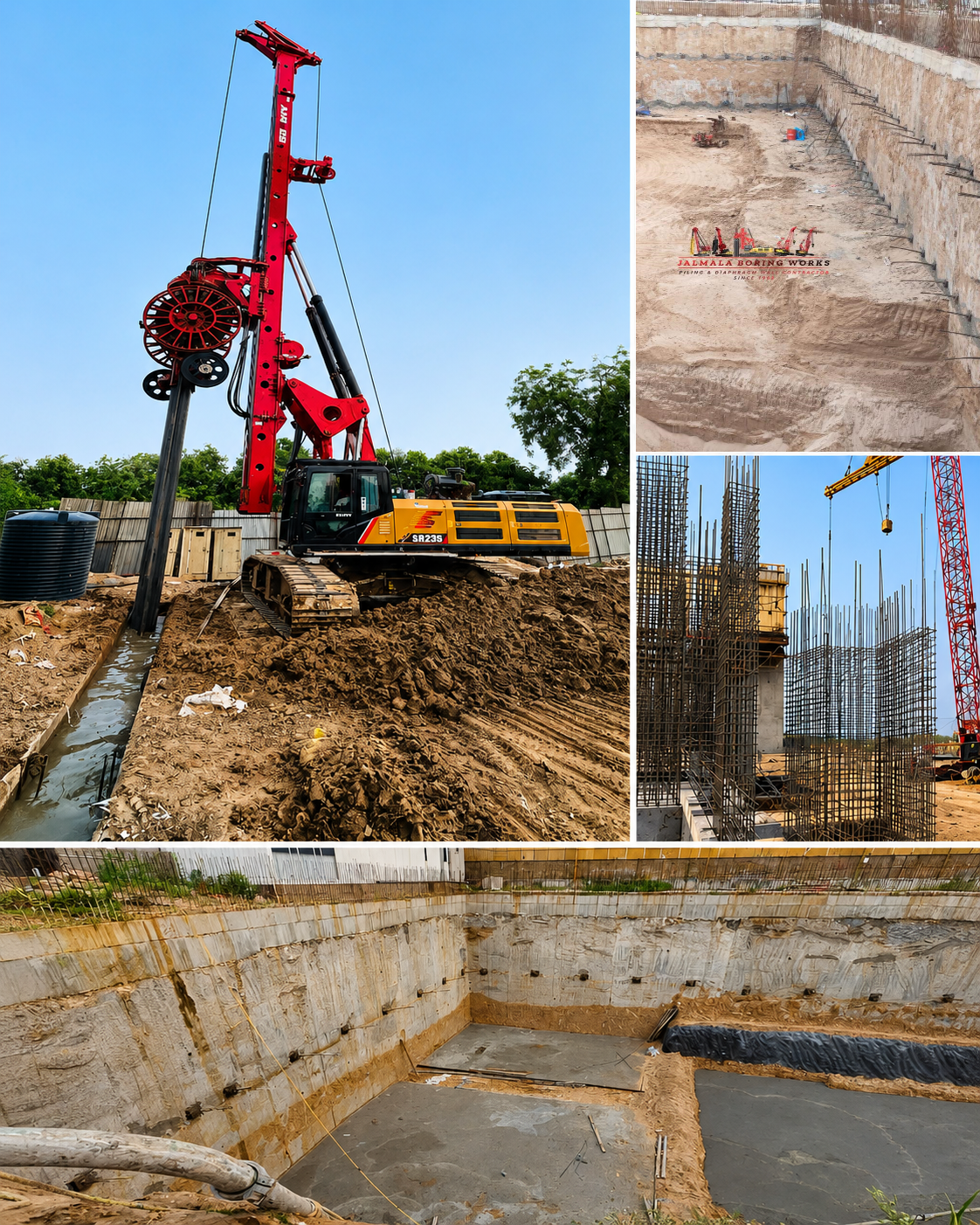
Execution Gallery
Recent Projects
Diaphragm Wall Contractor in India – Deep Basement & Metro Station Expertise
A diaphragm wall is one of the most demanding deep foundation operations in civil engineering. It requires continuous bentonite slurry management, precision panel excavation, water-tight joint construction, and integration with the structural system of the building above. When you hire a diaphragm wall contractor, you are hiring a specialist team that must hold back soil and water while the basement or metro box is constructed. Jalmala Boring Works has been executing diaphragm wall projects across India since the technique became mainstream in Indian construction — and we bring 60+ years of deep foundation expertise to every diaphragm wall project in India we take on.
What Is a Diaphragm Wall?
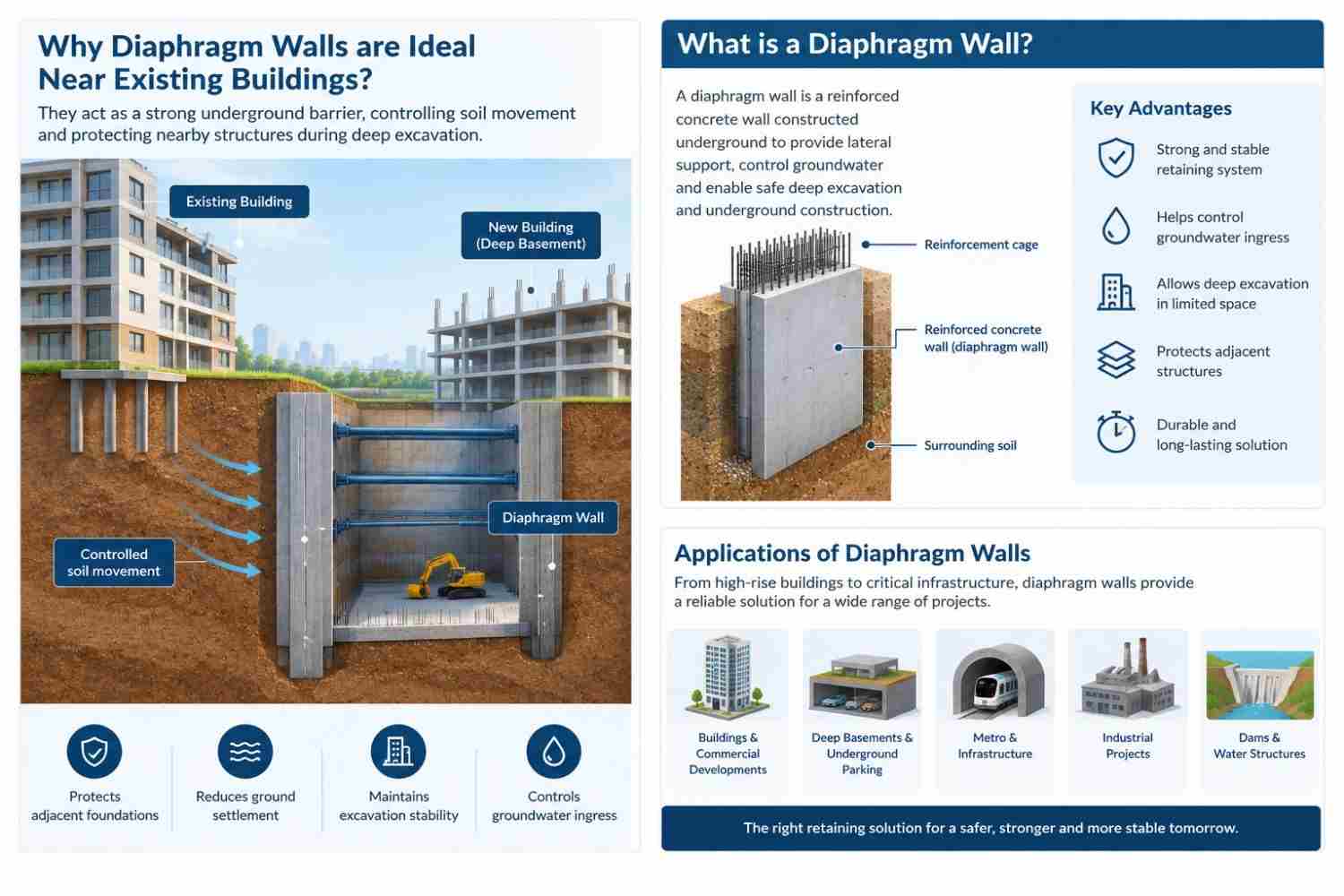
A diaphragm wall is a continuous reinforced concrete wall constructed in the ground using the slurry trench method. Panels are excavated alternately (primary and secondary) under bentonite slurry, then reinforced with steel cages and concreted through tremie pipes. The result is a water-tight, high-stiffness wall that serves as both the permanent retaining structure and the hydrostatic cutoff for deep excavations. Diaphragm walls are preferred over bored pile walls where space is tight, water tightness is critical, and the wall must double as the final basement wall.
Diaphragm Wall Construction Process – Step by Step
Diaphragm wall construction follows a defined sequence. First, a shallow guide wall is constructed along the alignment to support the trench and provide accurate positioning. Then primary panels are excavated under bentonite slurry using a grab or hydrofraise rig, with continuous slurry monitoring (density, viscosity, sand content) to maintain trench stability. Reinforcement cages are lowered by crane, end-stop joints are placed, and concrete is placed through a tremie pipe from the bottom up — the concrete displaces the slurry as it rises. Secondary panels are excavated between primary panels and joined to them for continuous water-tightness. After curing, the interior is excavated down to base level, and the diaphragm wall becomes the structural retaining system for the basement or metro box.
Applications of Diaphragm Walls in India
Diaphragm walls are used across India in six main applications. Metro station diaphragm walls are the most visible — underground station boxes in Mumbai, Delhi, Chennai, Bangalore, and Kolkata depend on deep diaphragm walls to hold back soil and water during excavation. Deep basement diaphragm walls are used for 3–6 level basements of high-rise buildings. Underground parking diaphragm walls serve commercial and residential complexes. Water-retaining diaphragm walls for pump houses, reservoirs, and dry docks require the strongest hydrostatic performance. Tunnel portal diaphragm walls support entry and exit excavations. And marine diaphragm walls for jetties and quay walls are constructed in tidal conditions with specialized equipment.
Bentonite Management – The Key to Safety
Every diaphragm wall contractor in India will tell you they manage bentonite. The difference is in the details. Bentonite slurry stabilizes the trench by creating hydrostatic pressure against the soil and forming a filter cake that prevents collapse. If the density is too low, the trench collapses. If it is too high, the tremie concreting fails. If the sand content rises above specification, the filter cake degrades. If the pH drifts, the slurry loses its properties. Our zero trench collapse record across 20+ states is the direct result of disciplined bentonite monitoring at every shift, trained slurry technicians, and immediate response when conditions change. This is why we are trusted for metro station diaphragm walls where adjacent structures cannot tolerate even small ground movements.
Serving Ahmedabad, Mumbai, Delhi NCR, Chennai, Bangalore, Hyderabad & Kolkata
We serve the entire country from our headquarters in Sarkhej, Ahmedabad. In Gujarat, we execute diaphragm wall projects in Ahmedabad, Surat, Vadodara, and Rajkot. In Maharashtra, we work on Mumbai metro stations, deep basements in BKC, and coastal structures in Navi Mumbai and Thane. In Delhi NCR, we handle basements in Noida, Gurugram, and Ghaziabad. In Tamil Nadu, we serve Chennai metro and coastal projects. In Karnataka, we cover Bangalore's tech corridor basements. In Telangana, we work on Hyderabad metro and HITEC City deep basements. And in West Bengal, we serve Kolkata metro and Salt Lake projects. Our diaphragm wall contractor team in India mobilizes to any project location within days.
Diaphragm Wall vs Bored Pile Wall – Which Do You Need?
Two common retaining systems for deep excavations are diaphragm walls and bored pile walls. Diaphragm walls are preferred for metro stations, deep basements, and water-tightness requirements because they provide a continuous, water-tight, thinner, and higher-stiffness wall. Bored pile walls are simpler, faster, and often more economical for shallower basement retention where water tightness is less critical. Many projects combine the two — using diaphragm walls on the critical sides and bored pile walls or soil nails elsewhere. Choosing the right system requires careful site analysis, and Jalmala Boring Works is one of the few Indian contractors that delivers both, allowing objective recommendations.
Contact India's Diaphragm Wall Contractor Today
Ready to discuss your diaphragm wall project anywhere in India? Call our team at +91 93745 45415 or email jalmala.pile@gmail.com. Our main office is at Dholka Road, near Nariampura Village, Narimanpura, Sarkhej, Ahmedabad, Gujarat 382210, and we mobilize across all 20+ states on short notice. For a complete overview of our diaphragm wall construction services in India, explore this page and see why metro authorities, high-rise developers, and infrastructure EPC firms across India choose Jalmala Boring Works as their diaphragm wall contractor.