
Deep Basement Excavation
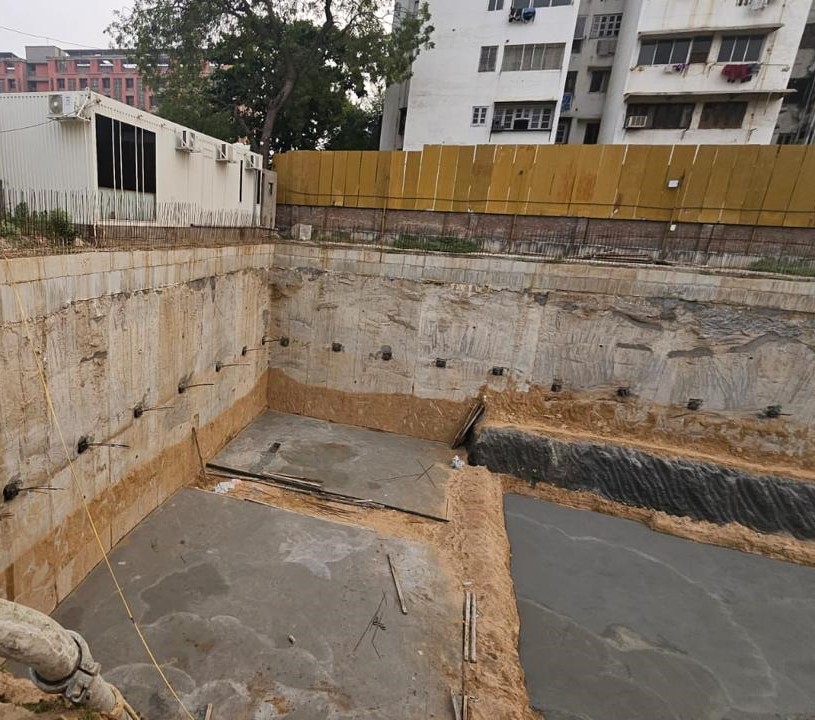
Retaining structures for commercial, residential and mixed-use developments requiring underground basement levels.
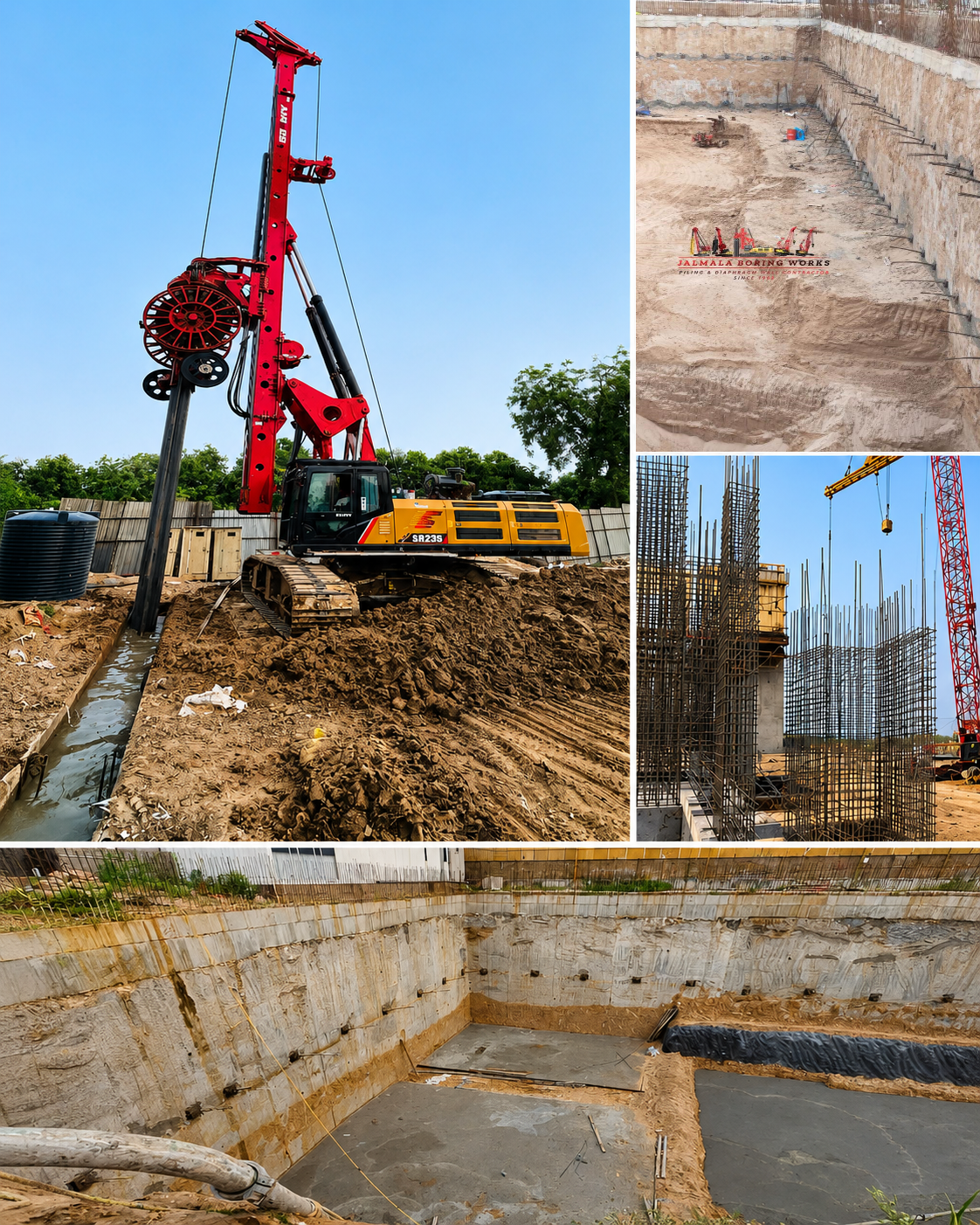
Deep Excavation & Retaining Wall Specialists
Jalmala Boring Works specializes in Diaphragm Wall Construction for deep excavations, basements, metro projects, commercial developments, and industrial infrastructure. We execute complete diaphragm wall work from 400 mm to 1200 mm thickness and depths of up to 40 metres, delivering watertight, high-strength retaining walls with minimal ground movement. Our end-to-end solution includes guide wall construction, slurry-supported panel excavation, reinforcement cage installation, tremie concreting, water-stop systems, and quality-controlled execution.
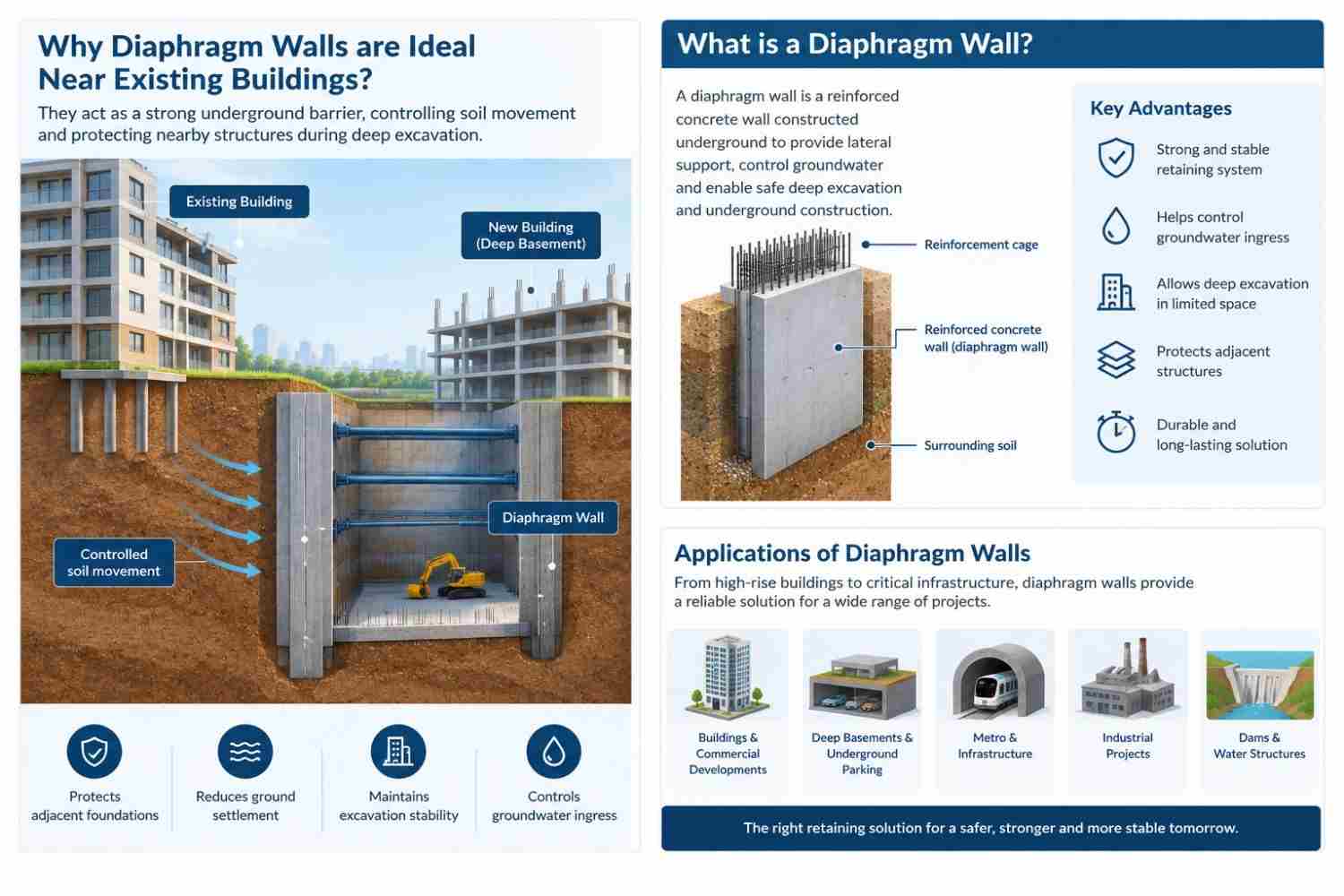
A step-by-step overview of how Jalmala Boring Works constructs high-quality Diaphragm Walls — from guide wall installation to final panel completion — with precision, safety, and six decades of expertise.
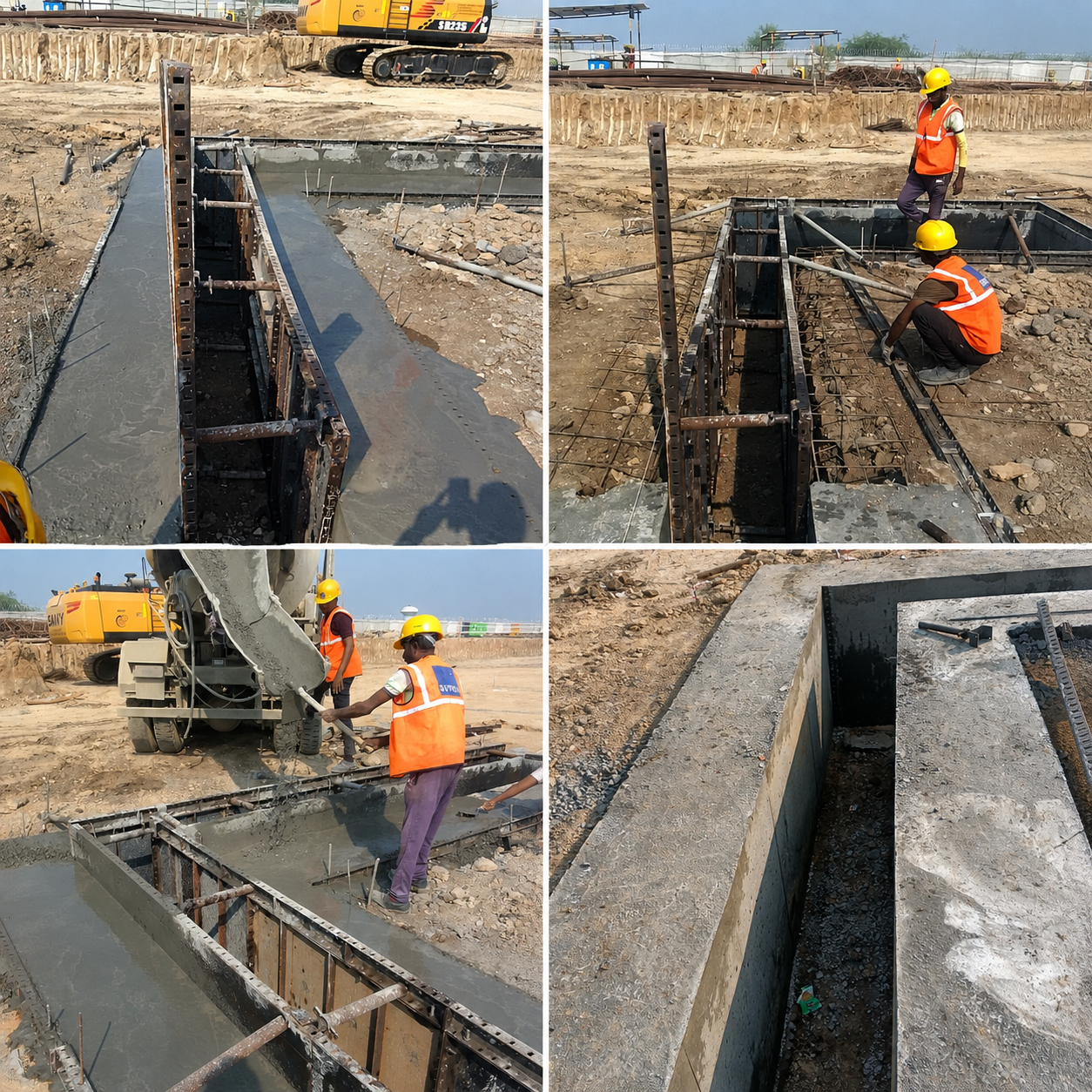
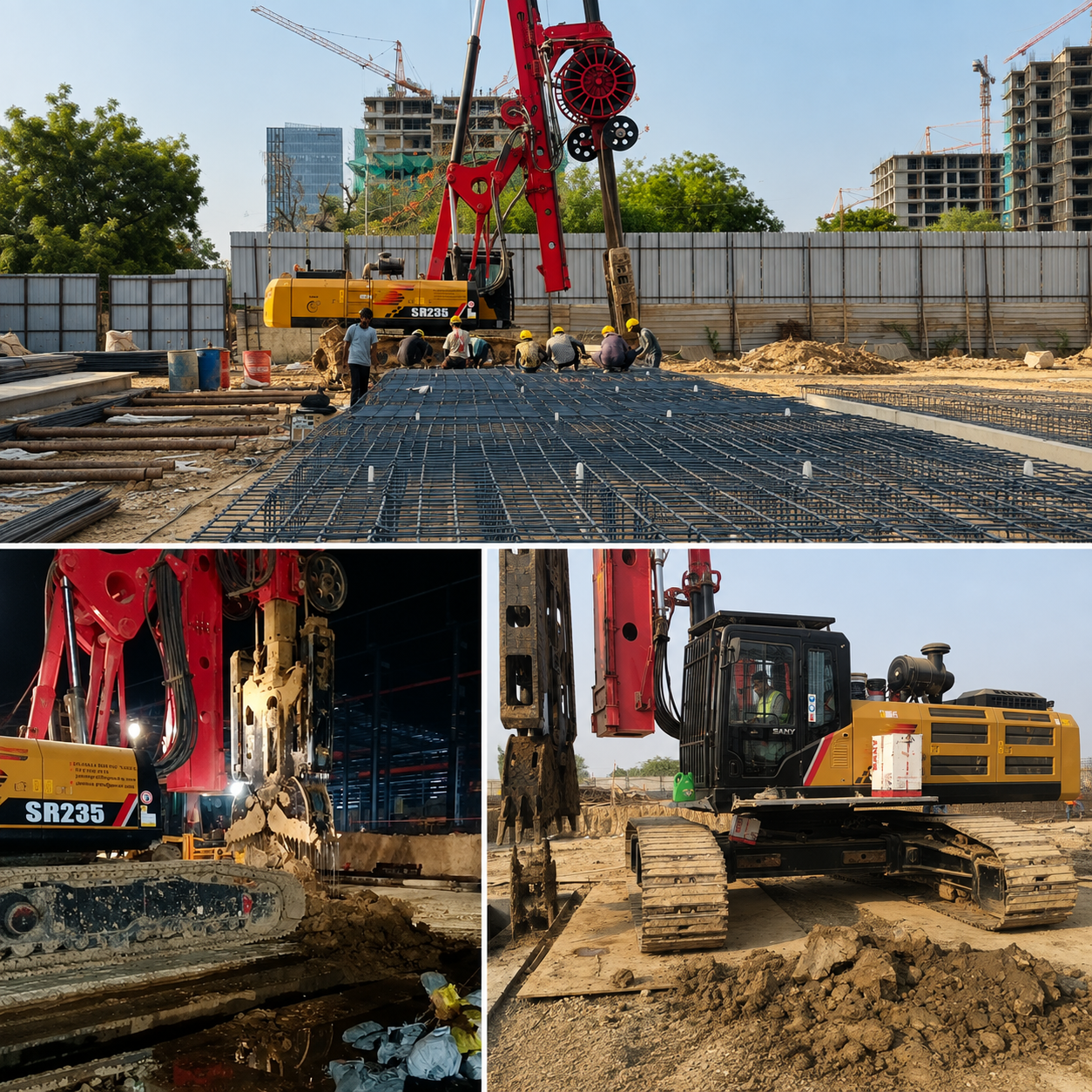
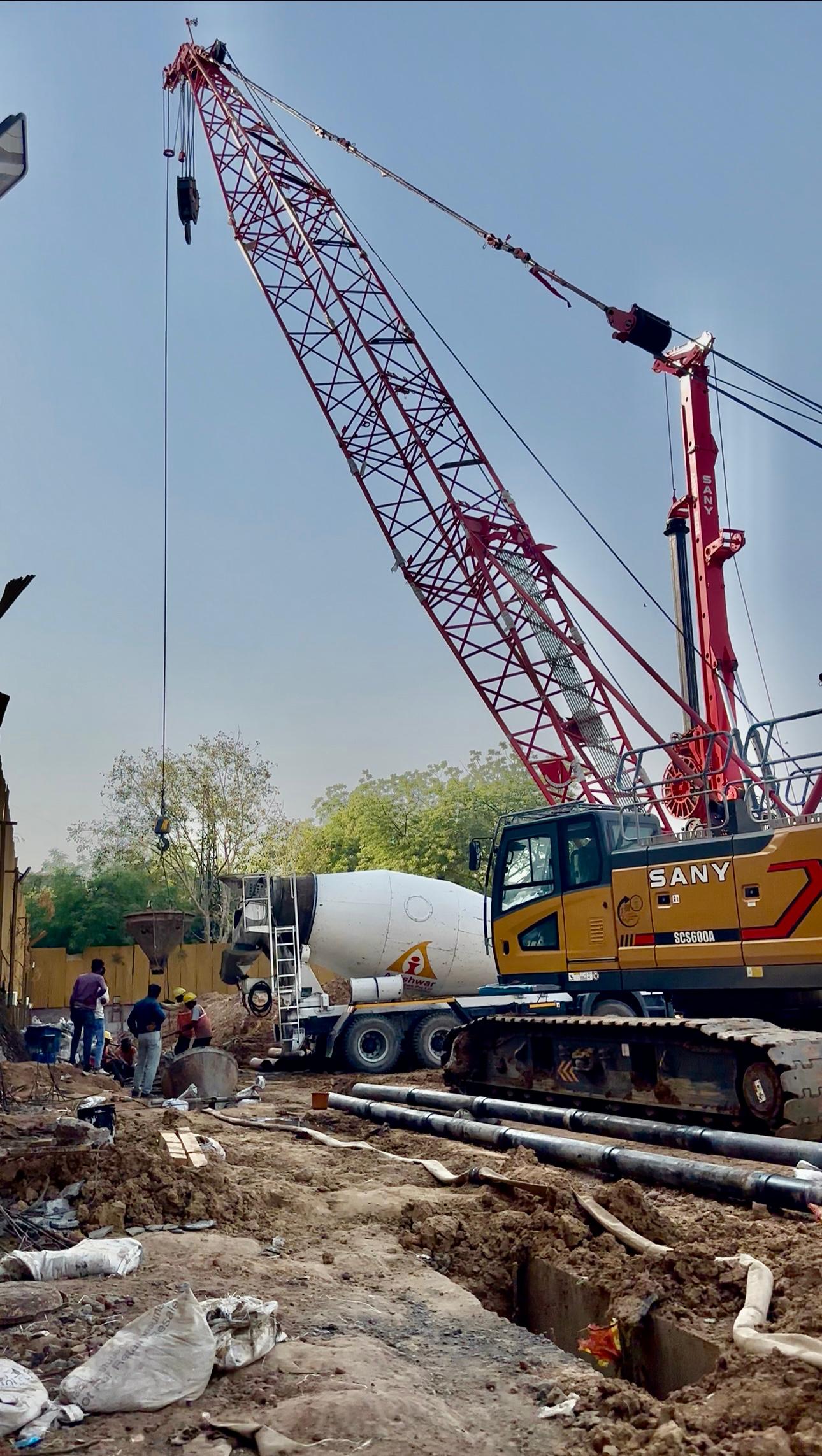
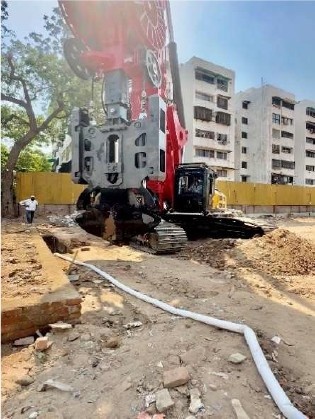
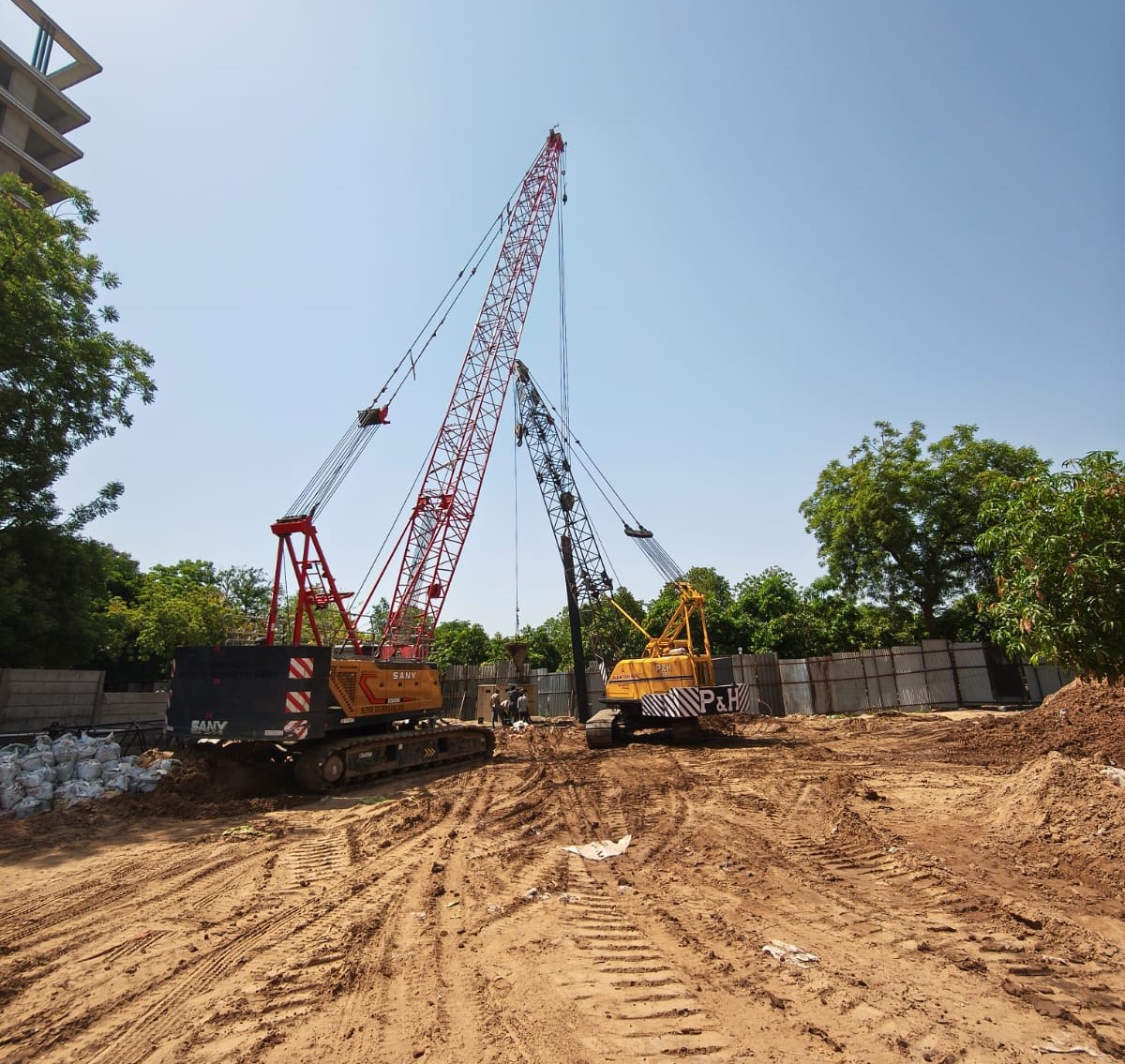
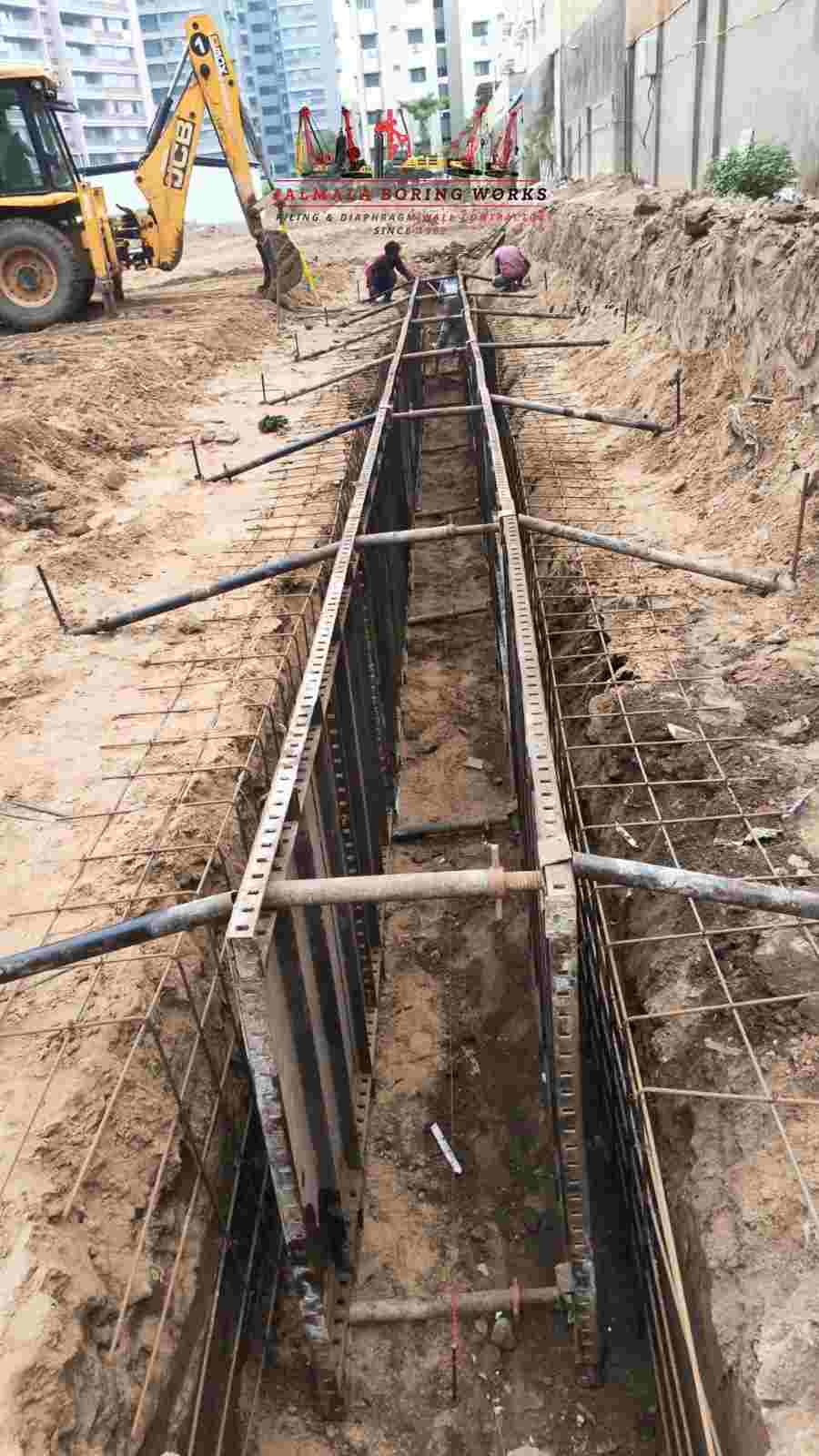
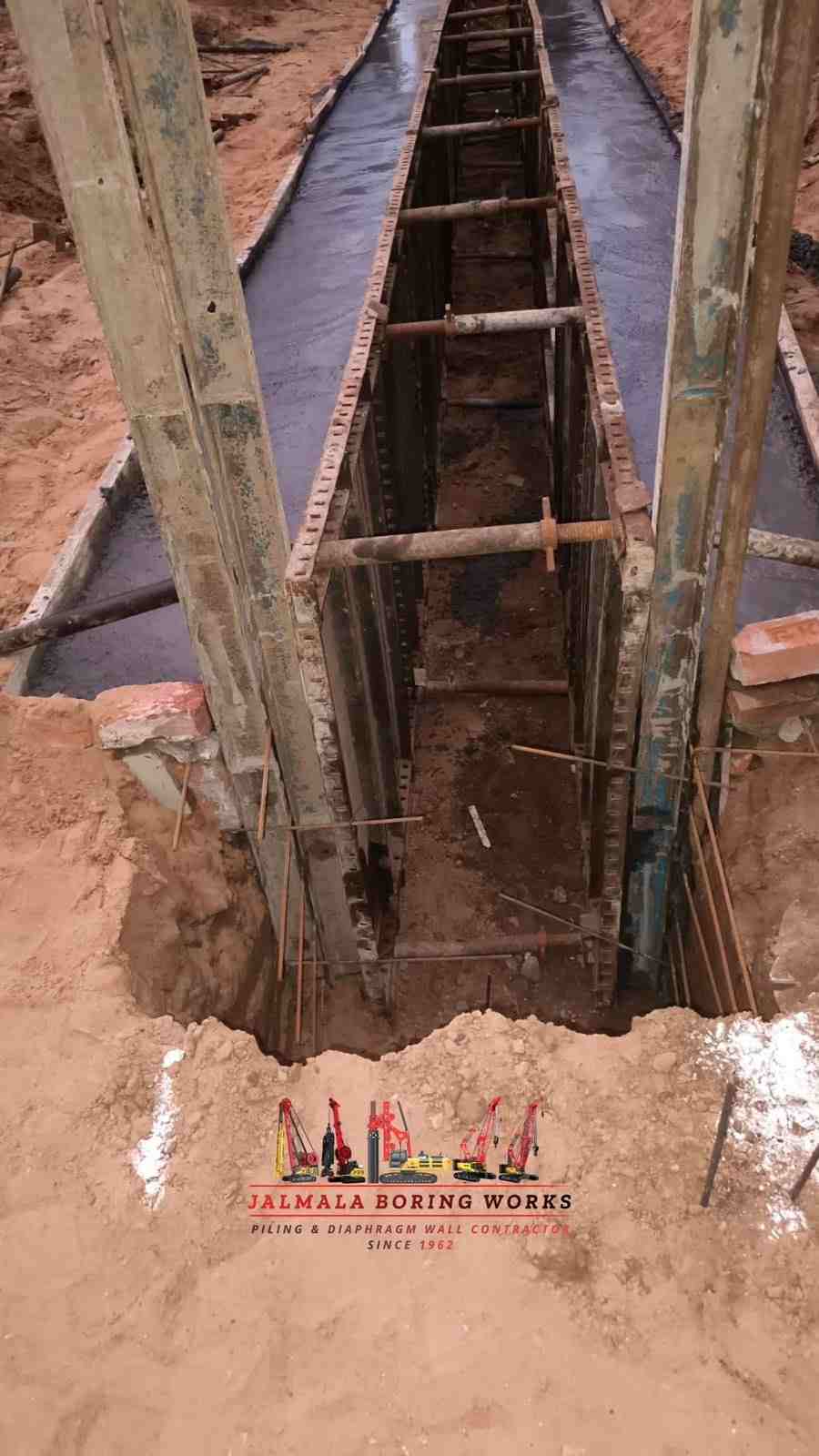
Detailed survey, panel marking, and guide wall construction for accurate alignment.
Preparation of slurry and excavation of diaphragm wall panels.
Formation of watertight joints and cleaning of excavated trench.
Fabrication and placement of reinforcement cage into trench.
Continuous concrete placement using tremie pipes.
Final wall formation, testing, and quality assurance activities.
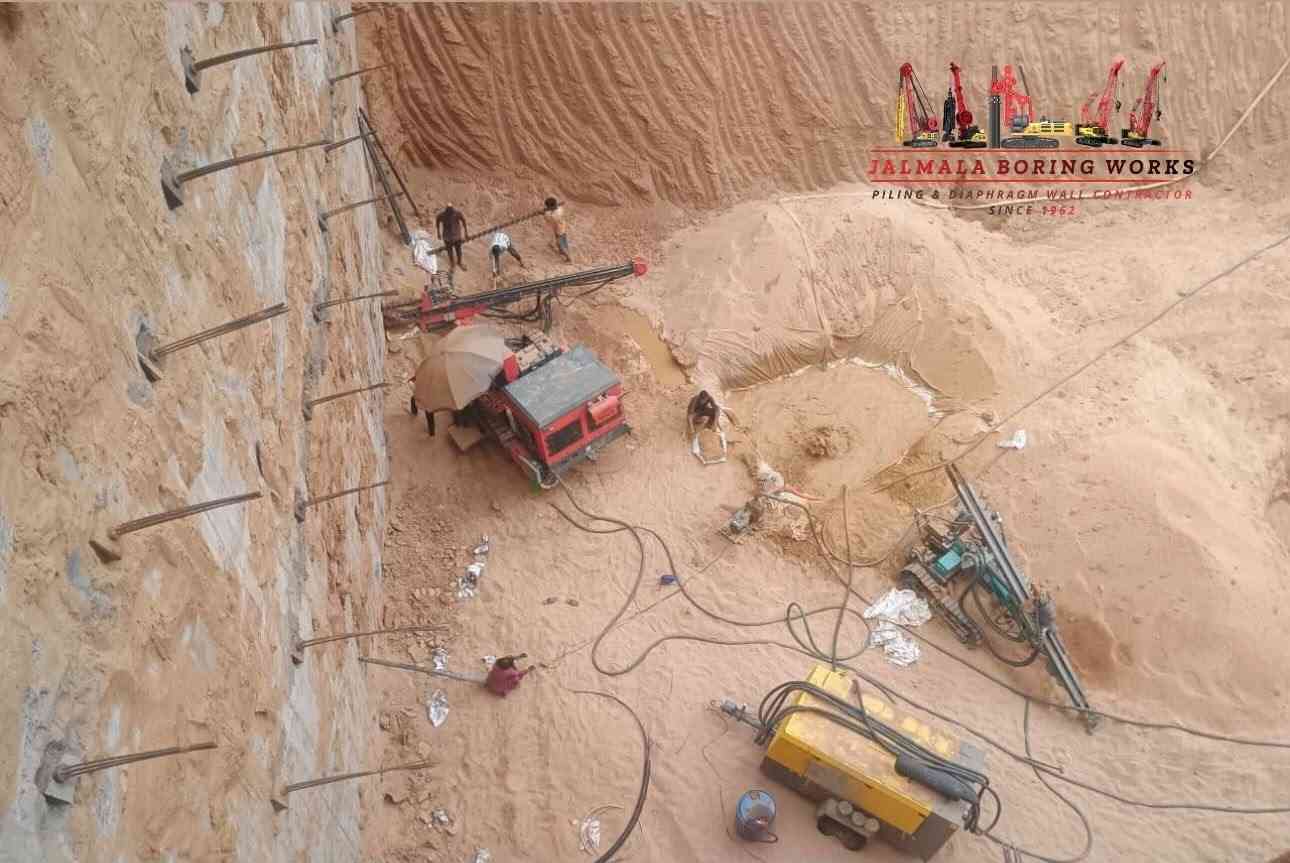
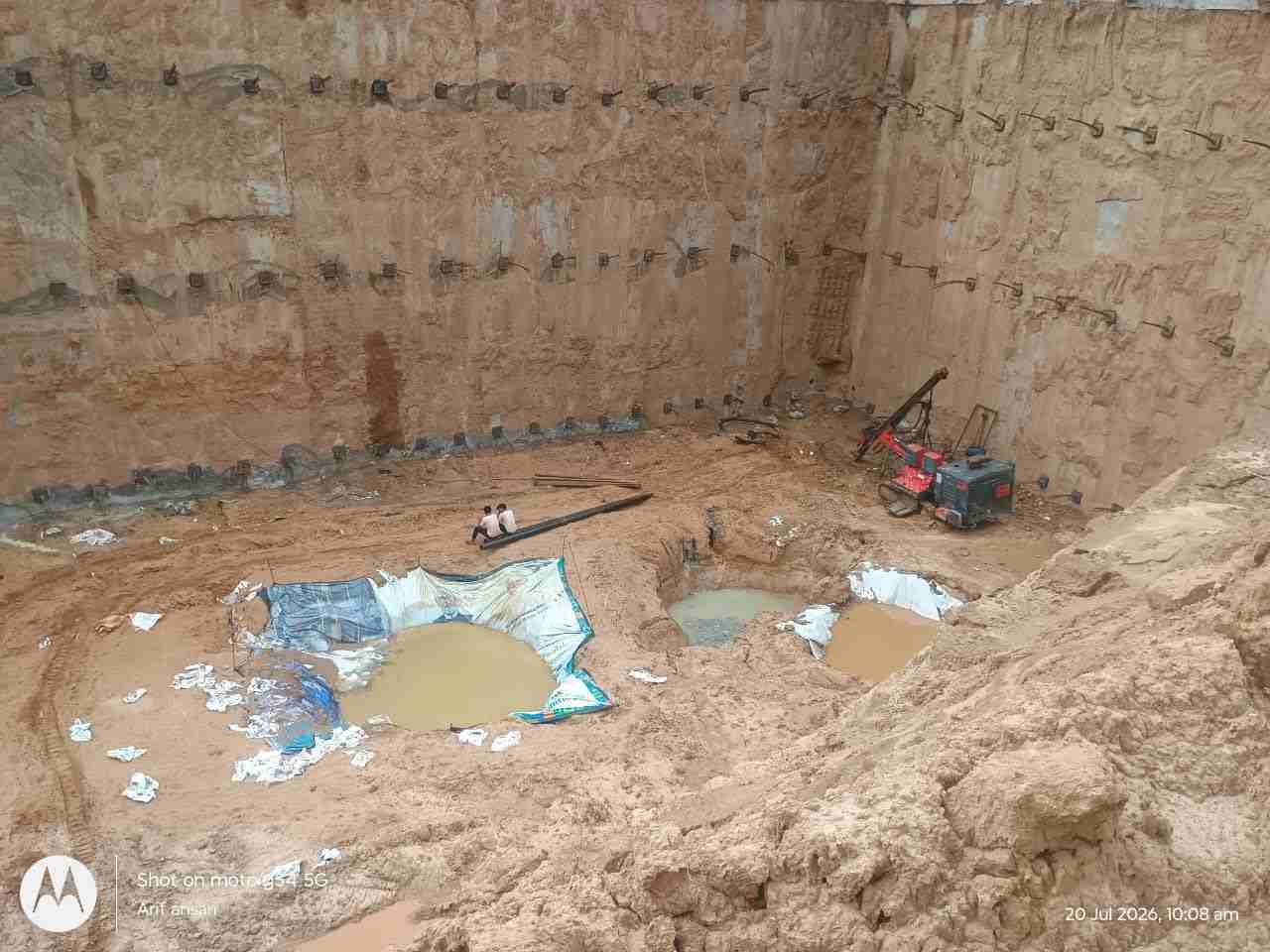
Jalmala Boring Works provides diaphragm wall construction solutions for deep excavation support, underground construction and large-scale infrastructure developments across India. Established in 1962, our family-owned, third-generation company brings more than six decades of practical experience in specialised foundation construction, including pile foundations, diaphragm walls and ground anchors.
Deep excavation requires proper planning to manage soil stability, groundwater conditions and the impact of construction on nearby structures. Diaphragm walls provide a reinforced concrete retaining system that can be engineered for demanding excavation conditions. With modern SANY hydraulic piling and diaphragm wall rigs, Jalmala Boring Works undertakes foundation construction work according to project-specific requirements and approved engineering methodologies.
Excavation Support Systems
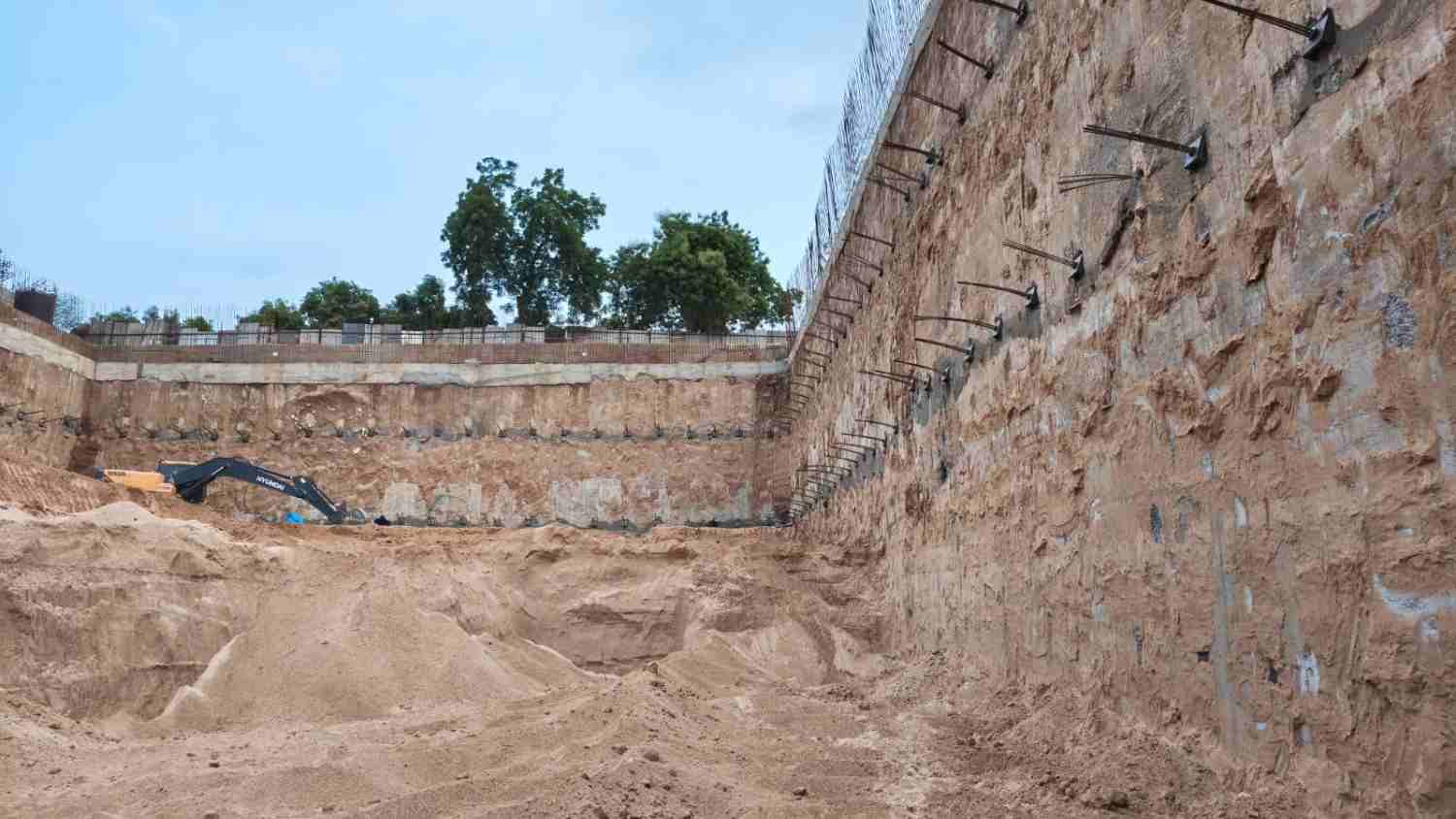
Excavation for underground structures can create significant changes in ground conditions, particularly in locations with high groundwater levels, weak soil layers or neighbouring buildings. An appropriately designed diaphragm wall can retain surrounding ground and provide a structural boundary for the excavation. Its depth, thickness, reinforcement and support arrangements must be established through engineering analysis and geotechnical investigation.
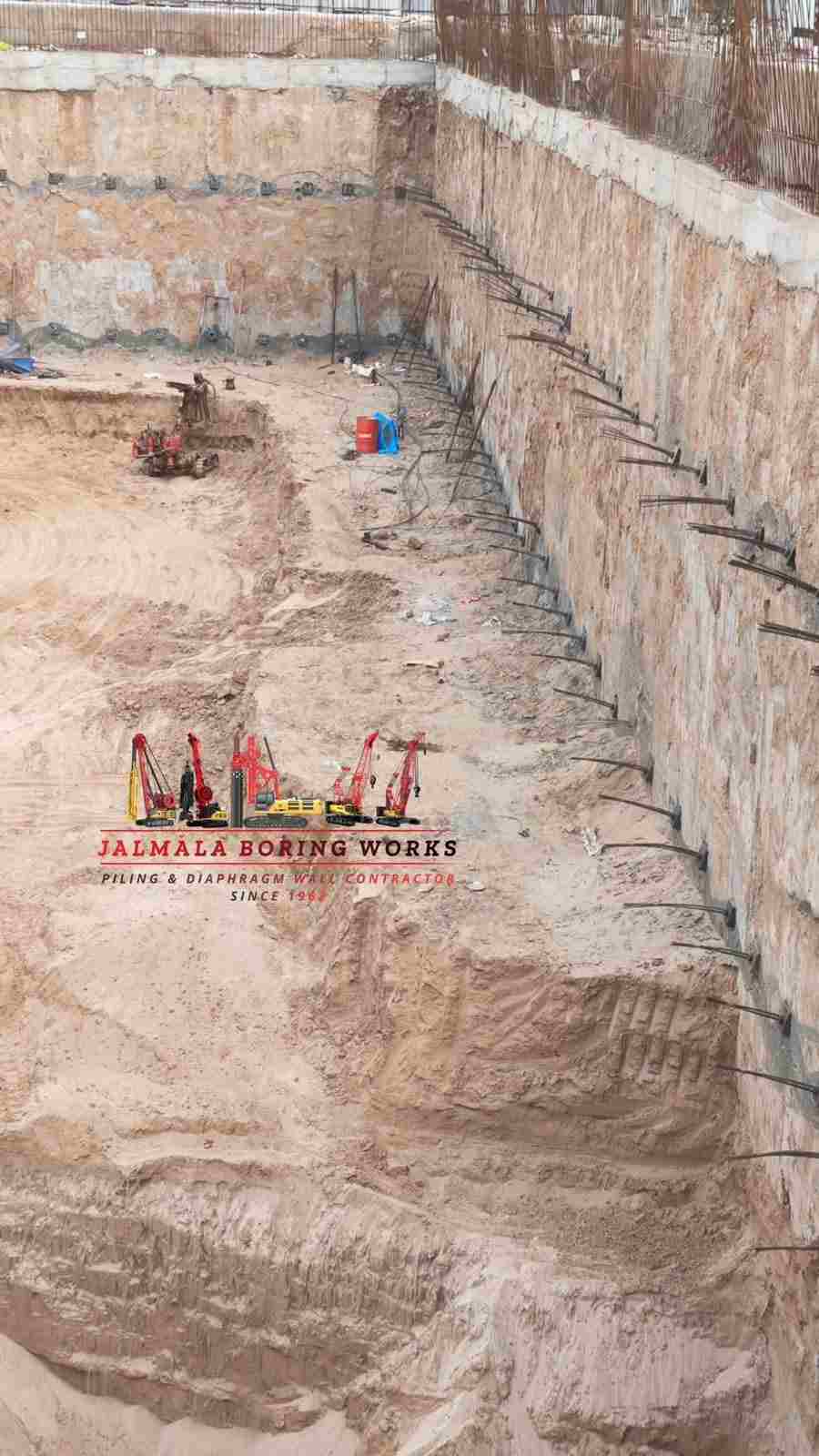
Retaining wall construction for multi-level basement excavation.
Engineered support for surrounding soil during excavation.
Wall systems designed with consideration for groundwater pressure and seepage.
Excavation support planning for sites with nearby structures and limited space.
Project Applications
Diaphragm wall excavation support is suitable for evaluating a wide range of underground construction requirements. The appropriate system depends on excavation geometry, site access, geotechnical data, groundwater and the structural design.
Retaining structures for commercial, residential and mixed-use developments requiring underground basement levels.
Excavation support applications for underground stations, access shafts and associated metro structures.
Diaphragm wall systems for underground parking facilities and large basement developments.
Ground-retention solutions for offices, shopping complexes and high-rise construction projects.
Underground excavation support for industrial facilities, plant structures and specialised infrastructure.
Retaining wall construction for underground utilities and infrastructure in developed urban areas.
Construction Methodology
Diaphragm wall construction involves a series of coordinated activities to create reinforced concrete retaining panels below ground level. The construction sequence is planned according to approved drawings, site conditions and project specifications.
Prepare the working platform, equipment access and construction area according to the approved methodology.
Construct guide walls to establish the required alignment and guide the diaphragm wall excavation.
Excavate individual diaphragm wall panels using suitable equipment and stabilising slurry.
Clean the excavated trench and check slurry properties as specified in the project quality requirements.
Lower the designed reinforcement cage into the excavated panel using suitable lifting arrangements.
Place concrete through an appropriate tremie system to complete the reinforced concrete panel.
Each stage requires appropriate equipment, skilled personnel and quality-control procedures. Particular attention is given to excavation depth, panel alignment, slurry management, reinforcement positioning and concrete placement. The completed wall is then used as part of the approved excavation support arrangement.
Technical Planning
Every deep excavation project has different geotechnical and structural requirements. Diaphragm wall design must consider lateral earth pressure, groundwater pressure, excavation depth, wall embedment and loading from nearby buildings or construction activities.
The project engineer determines the required wall dimensions, reinforcement, support system and construction sequence. Depending on the design, internal struts, ground anchors or permanent basement slabs may be incorporated to support the retaining structure during excavation.
About Jalmala Boring Works
Jalmala Boring Works is a family-owned, third-generation foundation construction company specialising in pile foundations, diaphragm walls and ground anchors. With more than 60 years of hands-on experience, the company supports infrastructure, commercial, industrial and residential construction projects. Our modern fleet of SANY hydraulic piling and diaphragm wall rigs helps us undertake specialised foundation work according to project requirements.
A long-standing family business with more than six decades of foundation construction experience.
Practical industry knowledge developed through generations of foundation construction work.
Hydraulic piling and diaphragm wall rigs for specialised foundation construction.
Project execution capabilities for construction and infrastructure requirements across India.
Attention to construction procedures, equipment readiness and project specifications.
Focus on site coordination, excavation procedures and approved safety requirements.
Excavation Support Solutions Across India
Diaphragm wall excavation support is an important construction solution for projects that require deep underground excavation in challenging ground conditions. Modern commercial buildings, residential towers, metro stations, underground parking facilities and industrial developments often require excavation below the existing ground level. These projects need suitable retaining systems to manage surrounding soil and groundwater conditions during construction. Reinforced concrete diaphragm walls can provide a strong retaining structure when designed for the specific requirements of the site.
Jalmala Boring Works provides diaphragm wall construction capabilities for deep excavation projects across India. Established in 1962, the company has developed its foundation construction experience over three generations. Its specialised work includes pile foundations, diaphragm walls and ground anchors. With modern SANY hydraulic piling and diaphragm wall rigs, Jalmala Boring Works supports projects that require specialised foundation construction and coordinated equipment deployment.
One of the main applications of diaphragm wall excavation support is deep basement construction. Commercial buildings, shopping complexes, hotels, hospitals and residential developments may require multiple basement levels for parking, utilities and building services. In these situations, the retaining wall is planned according to excavation depth, surrounding soil conditions and the loads acting near the excavation boundary. The final arrangement may include temporary or permanent structural support systems.
Diaphragm walls are also considered for underground metro infrastructure, station boxes, access shafts, tunnels and major urban development projects. Construction sites in densely populated areas may have limited working space and neighbouring structures close to the proposed excavation. A properly engineered diaphragm wall system can help retain the surrounding ground while excavation proceeds in planned stages. Site investigation and structural design remain essential to selecting the appropriate solution.
The construction process generally begins with preparation of the working platform and construction of guide walls. Individual diaphragm wall panels are then excavated using suitable equipment under stabilising slurry. After the required depth is achieved, the trench is cleaned and checked according to project specifications. Reinforcement cages are installed before concrete is placed through a tremie arrangement. Proper control of slurry properties, panel joints, reinforcement positioning and concrete placement is important throughout the construction process.
The performance of excavation support depends on several technical factors, including soil strength, groundwater conditions, excavation depth, wall thickness, reinforcement details and the distance from existing structures. The engineer must also evaluate earth pressure, surcharge loads, construction sequence and possible ground movement. Depending on project requirements, the diaphragm wall may be supported by internal struts, ground anchors or basement floor slabs. Instrumentation and monitoring may be specified to observe wall deflection and surrounding ground movement.
For projects in Gujarat, Maharashtra, Rajasthan, Madhya Pradesh, Delhi, Uttar Pradesh, Karnataka, Telangana and other regions, local site conditions must be evaluated before selecting the excavation support methodology. Jalmala Boring Works is based in Ahmedabad, Gujarat, and undertakes foundation construction work with a pan-India approach. Our experience in specialised foundation construction supports project discussions for commercial, residential, industrial and infrastructure developments.
Selecting a diaphragm wall excavation support contractor involves reviewing relevant construction experience, equipment capability, technical coordination and quality-control procedures. Contractors should work in accordance with approved structural drawings, geotechnical recommendations and project specifications. Careful planning before excavation helps coordinate equipment deployment, panel construction and subsequent excavation activities.
Jalmala Boring Works combines its foundation construction legacy, modern equipment and project-oriented execution approach to undertake diaphragm wall work for demanding construction environments. Whether your project involves a deep basement, underground parking, metro infrastructure or an industrial development, our team can discuss the site conditions and technical requirements. Contact Jalmala Boring Works to discuss diaphragm wall excavation support requirements for your next project in India.
Frequently Asked Questions
Diaphragm wall excavation support is a ground-retention system that uses reinforced concrete walls constructed in the ground to support soil around deep excavations. The system is designed according to soil conditions, groundwater levels, excavation depth and surrounding structures.
It is commonly used for deep basements, underground metro stations, commercial buildings, underground parking, tunnels, industrial facilities and major infrastructure developments.
A diaphragm wall retains surrounding soil and is designed to resist lateral earth and groundwater pressures. Depending on the engineering design, additional support may be provided through struts, ground anchors or permanent floor slabs.
The general process includes site preparation, guide wall construction, panel excavation under stabilising slurry, trench cleaning, reinforcement cage installation and concrete placement using a tremie system.
Diaphragm walls can be considered for excavation projects near existing buildings because they provide a relatively stiff retaining system. Suitability depends on geotechnical conditions, structural design, construction methodology and movement-control requirements.
Jalmala Boring Works undertakes diaphragm wall and foundation construction work for projects across India. Project requirements, site conditions, equipment and execution methodology are evaluated before work begins.
Discuss your diaphragm wall excavation support requirements with Jalmala Boring Works. Share your project location, excavation depth, drawings and technical specifications with our team.
Jalmala Boring Works | Since 1962 | Ahmedabad, Gujarat, India
Contact: +91 93745 45415 | jalmala.pile@gmail.com