
Anchor Piles
Ground Anchoring & Excavation Support Specialists
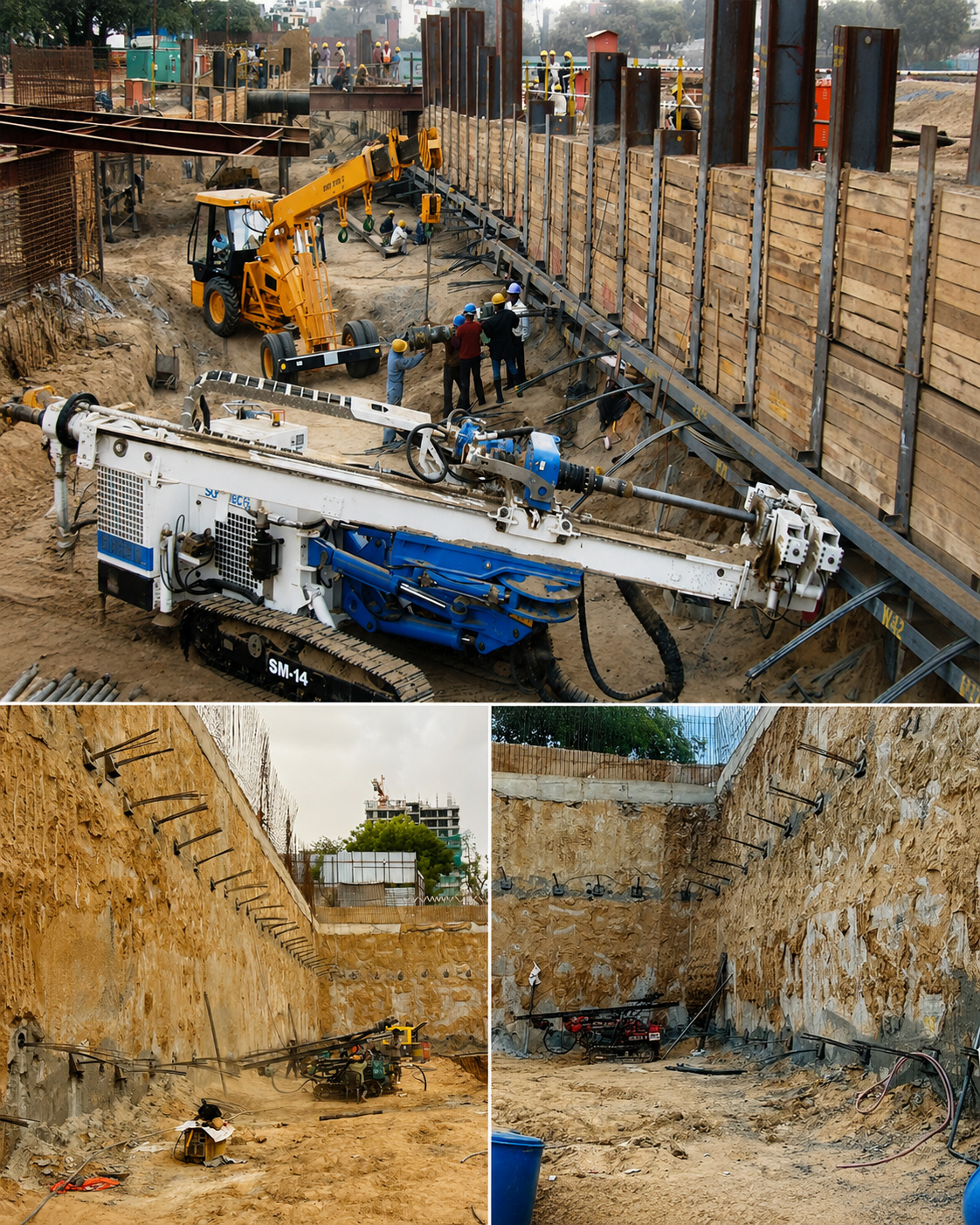
Jalmala Boring Works provides permanent and temporary ground anchor systems for diaphragm wall support, retaining walls, deep excavations, basements, and slope stabilization. Our high-capacity anchor piles are drilled, grouted, tested, and stressed to transfer lateral loads into stable ground, ensuring maximum structural stability, minimal wall movement, and safe excavation for commercial, industrial, infrastructure, and metro projects.
Ground Anchor(Tieback) Construction Process
A detailed step-by-step guide of how Jalmala Boring Works installs high-capacity Ground Anchors / Tieback Anchors for deep excavation support.
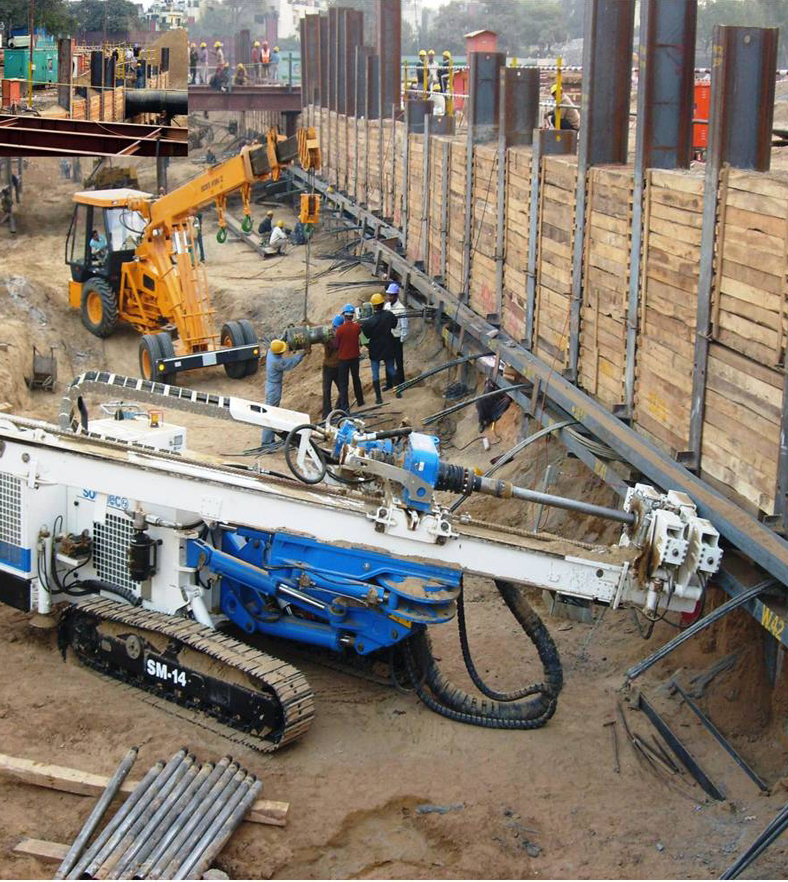
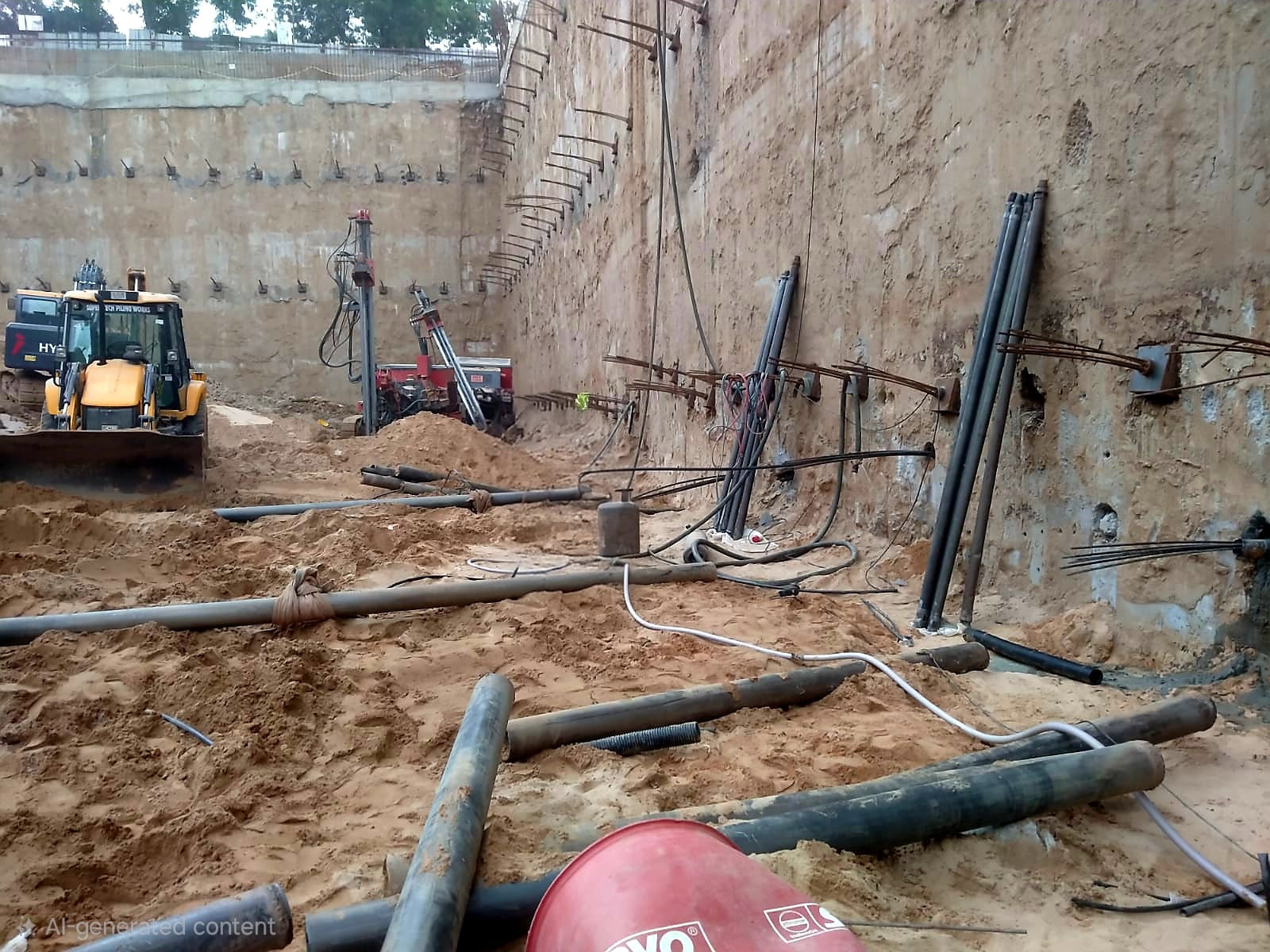
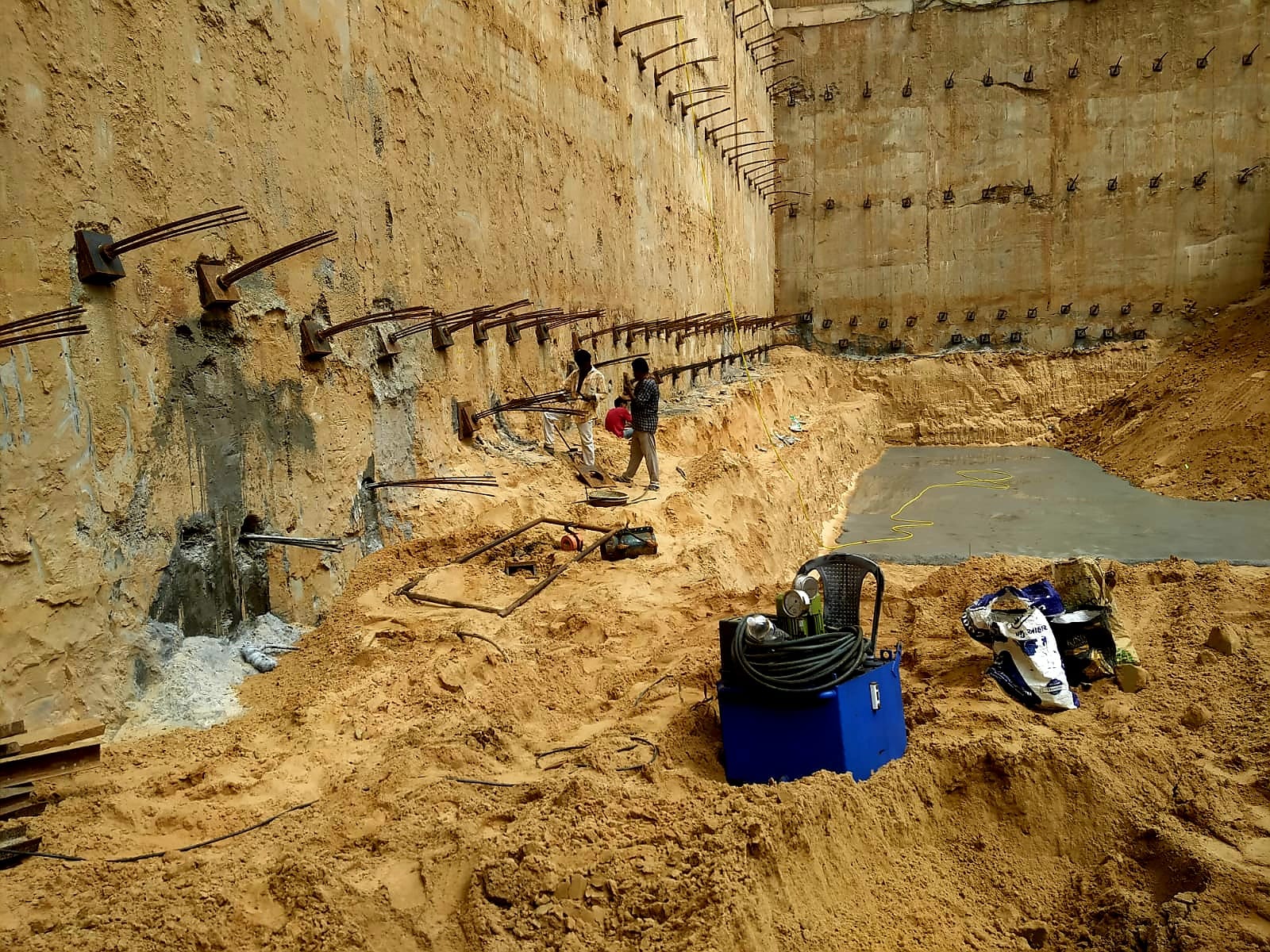
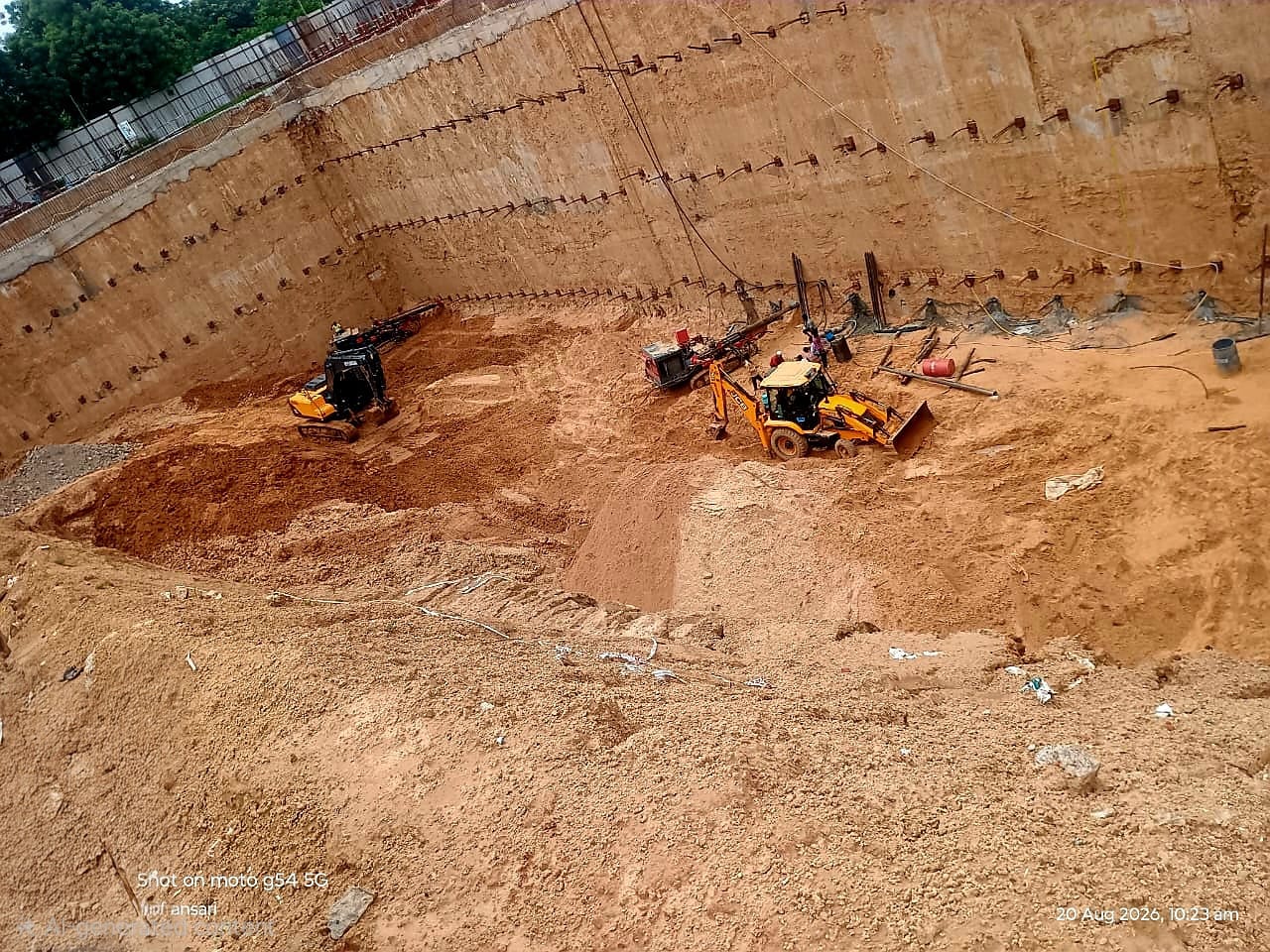
Survey, Setting Out & Anchor Positioning
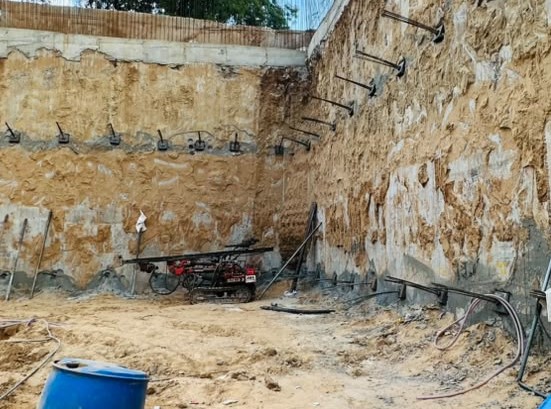
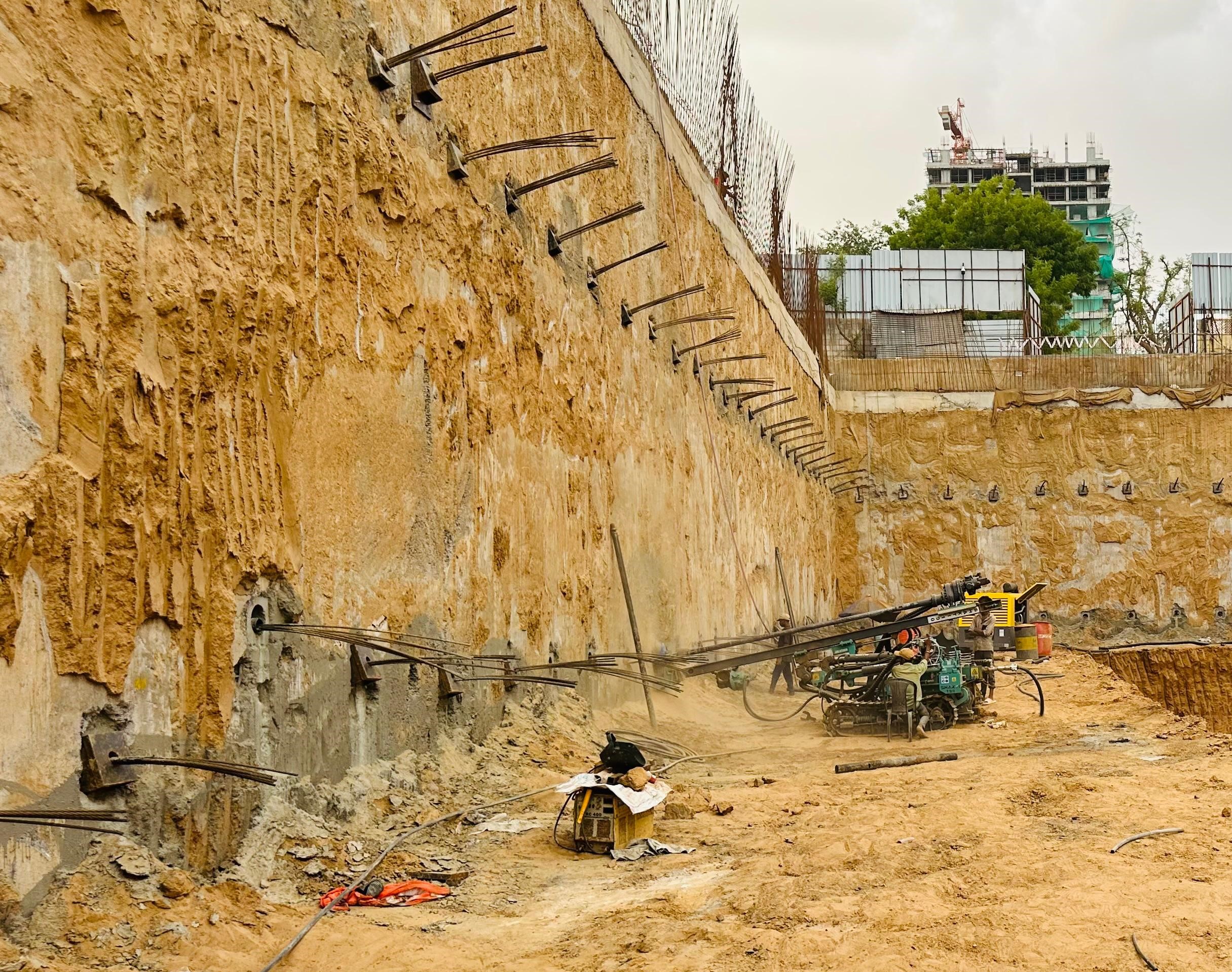
Survey, marking, and positioning of anchors with precise inclination and coordinates.
- Survey and mark anchor locations as per approved drawings
- Determine anchor inclination, spacing, depth, and capacity
- Set up Hydraulic Anchor Drilling Rig
- Verify wall levels and drilling coordinates
- Ensure safe working platform and access
Anchor Hole Drilling
Drilling of inclined boreholes using hydraulic anchor rig.
- Drill inclined boreholes through diaphragm wall or retaining structure
- Use Hydraulic Anchor Rig with rotary/percussion system
- Drill to required length and stable strata
- Monitor drilling angle, depth, and diameter
- Clean boreholes using compressed air or water flushing
Anchor Tendon Installation
Insertion of prestressed strands or bars with corrosion protection.
- Insert prestressed steel strands or threaded anchor bars
- Install centralizers, sheathing, and corrosion protection
- Ensure proper free length and bonded length
- Accurate positioning within the borehole
- Pre-grouting inspection and approval
Grouting Operations
High-pressure grouting to bond the anchor tendon with surrounding ground.
- Inject cement grout or chemical from bottom to top
- Create strong bond between tendon and soil/rock
- Fill all voids and ensure complete encapsulation
- Maintain specified grout pressure and quality
- Allow grout to achieve required strength
Anchor Stressing & Lock-Off
Stressing of anchors to design load and lock-off.
- Install anchor heads, bearing plates, and wedges
- Test anchors using hydraulic jacks
- Stress anchors to the required design load
- Lock-off at approved working load
- Record elongation and test results
Quality Control & Excavation Support
Testing, monitoring, and long-term performance verification.
- Verify performance through proof and lift-off tests
- Monitor wall movement and anchor loads
- Install additional levels as excavation progresses
- Complete testing records and documentation
- Provide continuous lateral support to deep excavations
Recent Projects
Specialist Foundation & Ground Engineering
Excavation Anchor Contractor in Gujarat for Construction Projects
Excavation work is an important stage in residential, commercial, industrial and infrastructure construction. Projects involving deep basements, underground structures and large foundation excavations require careful consideration of soil stability and the surrounding environment. In suitable ground conditions, excavation anchoring can form part of an engineered support system to help resist lateral forces acting on retaining structures.
Jalmala Boring Works is a third-generation, family-owned foundation company established in 1962. With over 60 years of practical industry experience, the company works in specialist foundation construction and ground engineering. Based in Ahmedabad, Gujarat, Jalmala Boring Works has project experience across more than 20 Indian states.
For developers, contractors and infrastructure companies searching for an excavation anchor contractor in Gujarat, understanding the project requirements is the first step. The appropriate anchoring arrangement must be determined through geotechnical investigation, structural calculations and site-specific engineering.
What Is Excavation Anchoring?
Excavation anchoring is a technique used in selected construction projects to provide additional support to retaining systems. Anchors are installed into suitable ground and connected to the supported structure. They transfer tensile forces into an engineered bond zone within the soil or rock.
Depending on the project design, excavation anchors may work alongside retaining walls, sheet pile systems, diaphragm walls or other temporary and permanent support arrangements. The objective is to provide the required structural resistance while controlling ground movement during construction.
Excavation anchoring is not a universal solution. The feasibility of an anchor system depends on the available ground conditions, excavation geometry, surrounding properties, underground utilities and project constraints.
Applications of Excavation Anchors
Different construction projects have different excavation support requirements. Depending on the engineering design, anchoring systems may be considered for the following applications:
Deep Basement Excavation
Anchoring may provide additional support to suitable retaining systems during the construction of multi-level basements and underground spaces.
Retaining Wall Support
Engineered anchors can help resist lateral earth pressure acting on selected retaining wall arrangements.
Commercial Developments
Commercial buildings with restricted construction space may require carefully planned excavation support solutions.
Industrial Construction
Industrial foundations, underground facilities and infrastructure developments may involve specialised excavation support requirements.
Road and Infrastructure Works
Certain road, bridge and infrastructure projects require ground support around excavated areas and structural retaining systems.
Underground Structures
Suitable anchoring arrangements may be incorporated into engineered support systems for selected underground construction projects.
Important Considerations for Excavation Anchor Projects
A successful excavation support arrangement begins with proper planning. Before choosing an anchoring method, project engineers generally evaluate the following factors:
1. Soil and Geological Conditions
Soil classification, ground strength, rock profile and groundwater levels influence the suitability and design of an excavation anchoring system.
2. Excavation Depth and Geometry
The depth, width and shape of an excavation influence the forces acting on the retaining structure and the required support arrangement.
3. Nearby Buildings and Utilities
Existing foundations, underground services, property boundaries and adjacent roads must be considered during the planning stage.
4. Anchor Capacity and Design
Anchor length, inclination, spacing, bond zone and design loads must be established by qualified engineering professionals.
5. Installation Quality and Testing
Project specifications may require installation records, material checks, load testing and other quality verification procedures.
Excavation Anchor Contractor in Ahmedabad and Across Gujarat
Ahmedabad and other growing regions of Gujarat have construction requirements across residential, commercial, industrial and infrastructure sectors. Projects involving restricted sites, basement levels and deep foundation excavations may require specialised ground support planning.
Ground conditions can vary between project locations. Therefore, excavation anchoring requirements should be assessed individually rather than selecting the same anchoring arrangement for every site. Proper investigation and engineering coordination are essential for determining an appropriate solution.
Jalmala Boring Works is based in Ahmedabad and has experience in foundation projects across India. For related ground engineering requirements, explore our pile foundation services, ground anchor contracting, ground anchor installation and soil anchoring solutions.
Why Choose Jalmala Boring Works?
Specialist foundation projects require experienced teams, suitable equipment and proper coordination with site engineers. Jalmala Boring Works has developed its foundation industry experience through three generations of family involvement.
- Established in 1962 with over 60 years of experience.
- Third-generation family-owned foundation company.
- ISO 9001:2015 certified processes.
- Modern SANY hydraulic piling and diaphragm wall rigs.
- Experience across more than 20 Indian states.
- Focus on project planning, execution and quality processes.
To understand the company's wider foundation capabilities, visit the Jalmala Boring Works homepage.
Frequently Asked Questions
1. What is excavation anchoring?
Excavation anchoring is a ground-support approach that uses engineered anchors to help resist forces acting on suitable retaining and excavation support structures. It is designed according to ground conditions and project-specific engineering requirements.
2. Why are anchors used in deep excavation projects?
Anchors may provide additional lateral support to retaining systems and help manage ground movement during excavation. Their suitability depends on the excavation depth, soil profile, groundwater and structural design.
3. Can excavation anchors be used for basement construction?
Yes, appropriately designed anchoring systems may be considered for certain basement excavation projects where the retaining arrangement and surrounding ground conditions allow their use.
4. Are excavation anchors suitable for every soil condition?
No. Anchor selection depends on soil or rock strength, groundwater, available bond length, nearby structures and design loads. A geotechnical investigation and engineering assessment are essential.
5. Does Jalmala Boring Works serve projects outside Ahmedabad?
Jalmala Boring Works is based in Ahmedabad, Gujarat, and has project experience across more than 20 Indian states. Contact the company to discuss the location and requirements of your project.
Discuss Your Excavation Support Requirements
Planning a basement, retaining wall or deep excavation project? Contact Jalmala Boring Works to discuss your project location, technical requirements and foundation-related construction needs.