
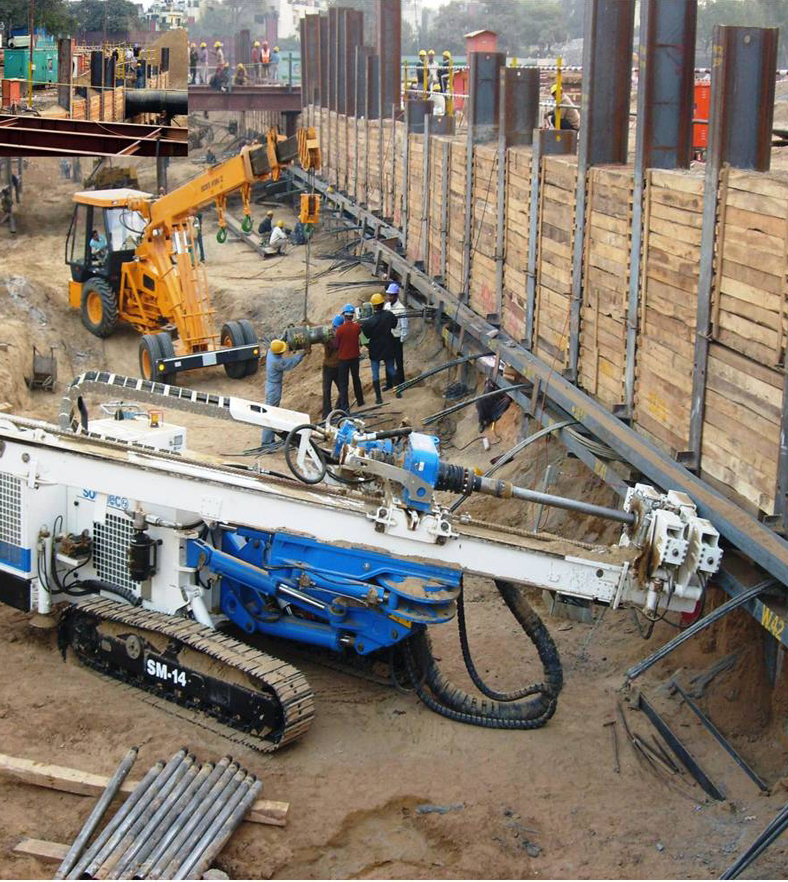
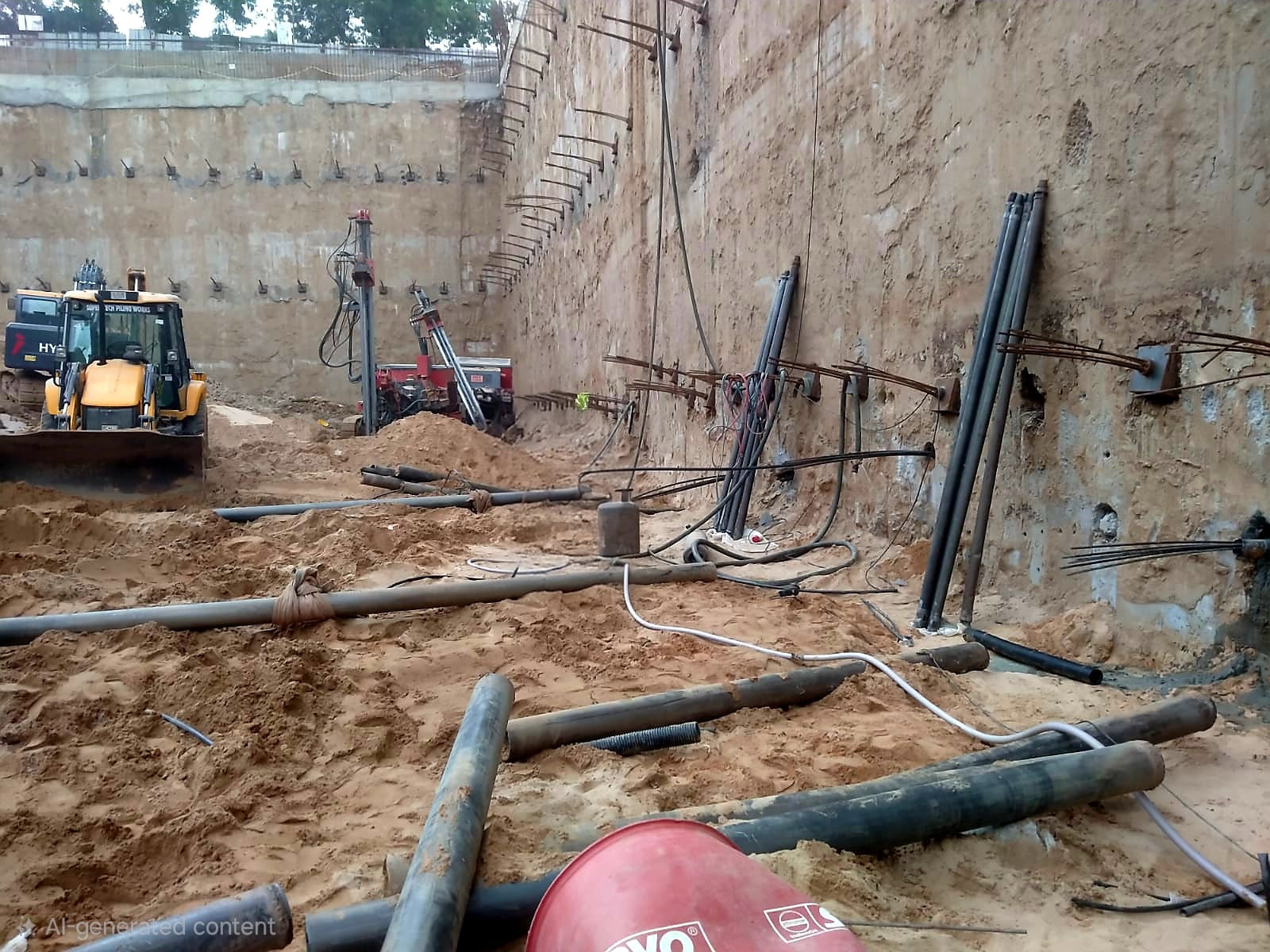
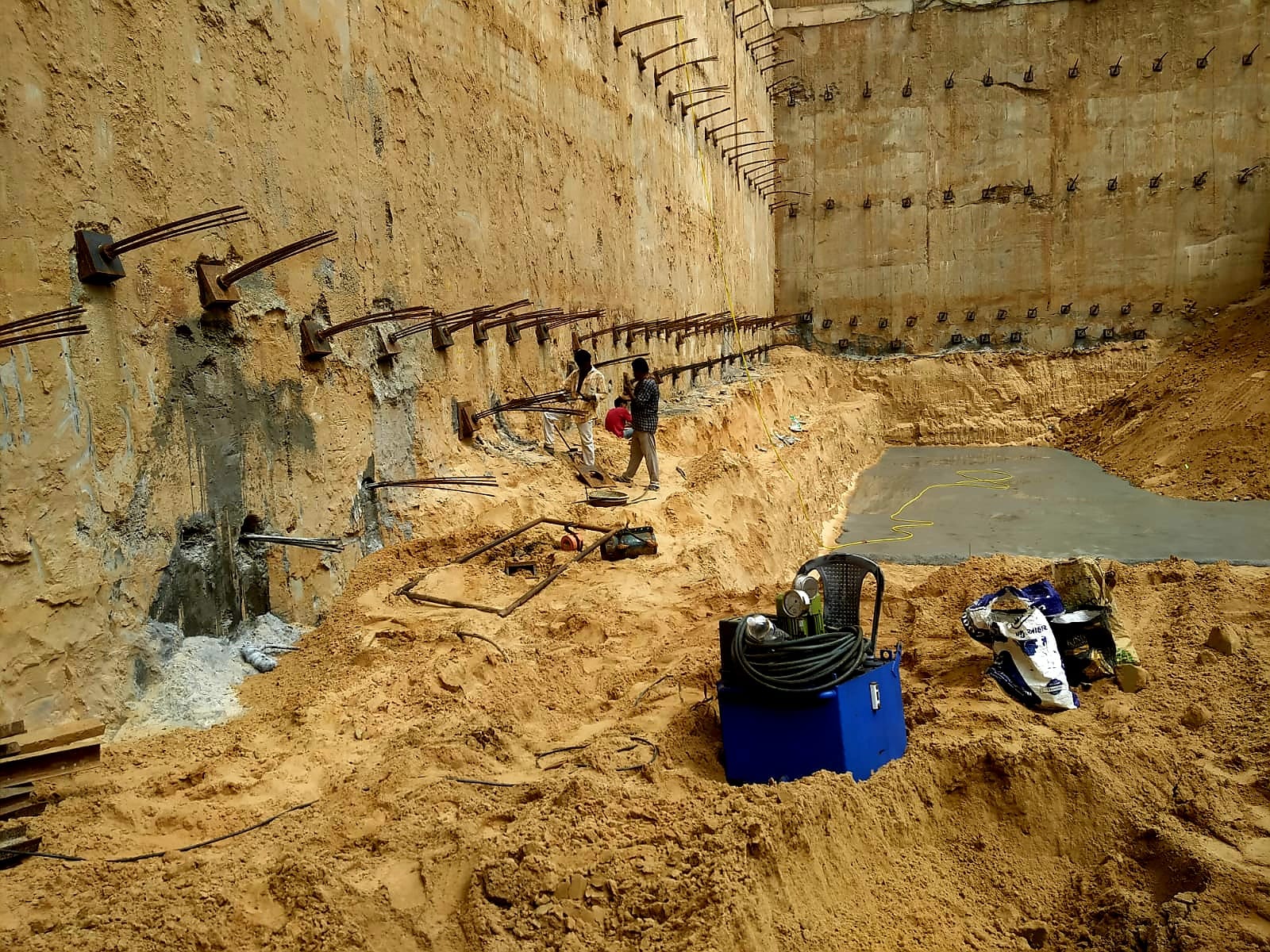
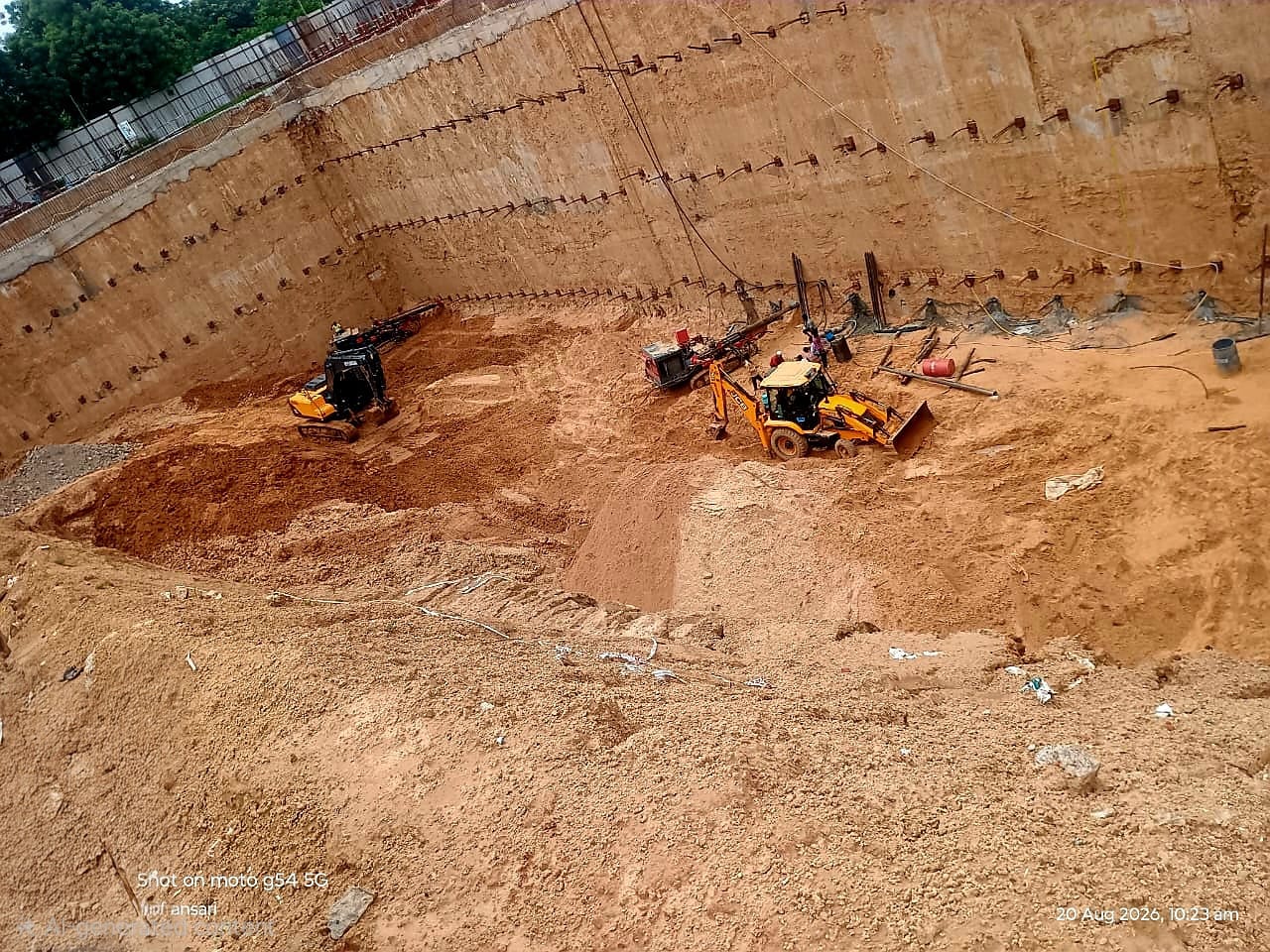
Horizontal ground anchors are an important part of geotechnical engineering and deep excavation support. They are installed through drilled boreholes at a specified inclination to transfer tensile forces from retaining structures into stable soil or rock. These systems help resist lateral earth pressure and provide additional restraint to retaining walls during construction. Jalmala Boring Works provides horizontal anchor pile and ground anchoring solutions for infrastructure, commercial, industrial and residential projects across India.
Established in 1962, Jalmala Boring Works is a family-owned, third-generation deep foundation company with more than 60 years of practical industry experience. The company specialises in pile foundations, diaphragm walls and ground anchors. With modern SANY hydraulic piling and diaphragm wall rigs and experienced site teams, Jalmala supports technically demanding foundation and excavation projects.
The requirement for a horizontal anchor pile system depends on the retaining wall design, soil profile, groundwater conditions, excavation depth and available working space. Anchor location, drilling angle, tendon arrangement, free length, bond length and stressing load must be established through the approved project design. Proper installation and testing are essential to achieve the intended anchoring performance.
Horizontal Ground Anchor Construction Services
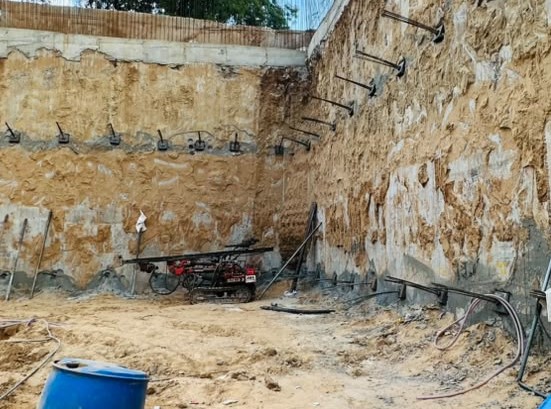
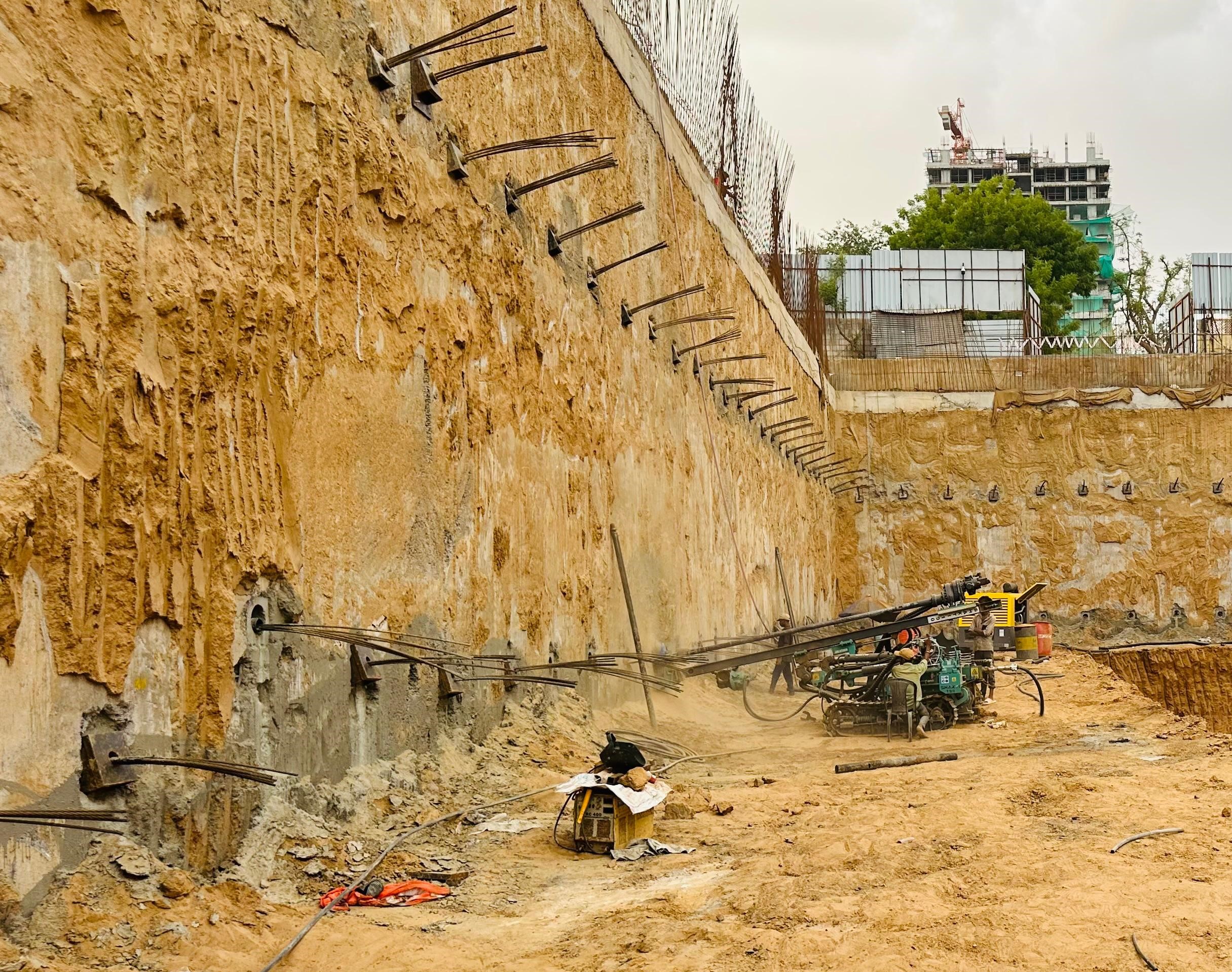
Horizontal ground anchors, commonly referred to as tieback anchors, provide tensile support to retaining structures. A typical system includes a steel tendon, drilled borehole, grouted bond zone and anchorage head. The tendon transfers the design load through the bonded section into the surrounding ground.
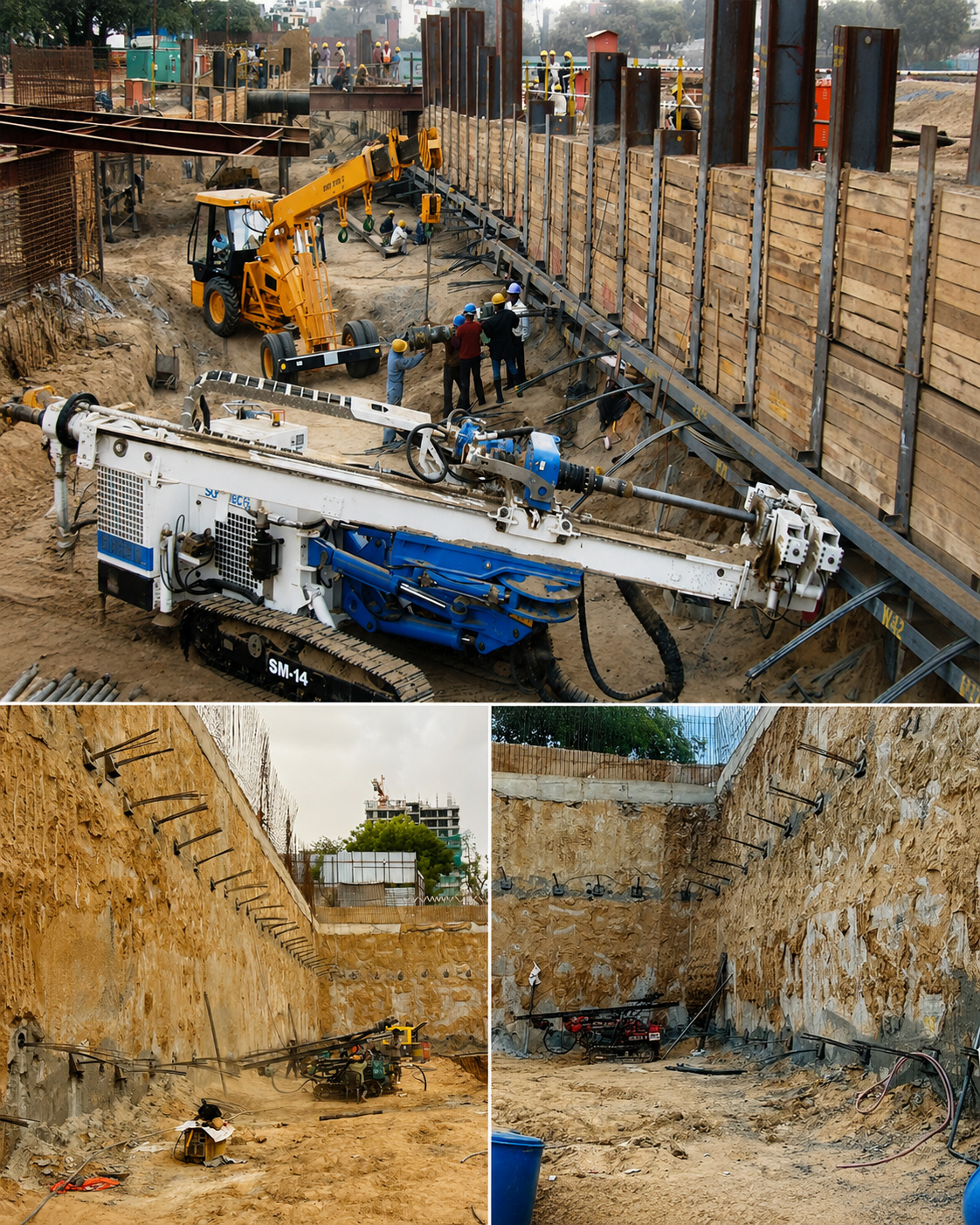
Depending on the project requirements, horizontal or inclined anchors can be installed in different ground conditions using suitable hydraulic drilling equipment. Rotary and percussion drilling methods may be selected according to the soil and rock profile, borehole requirements and site access. Jalmala Boring Works undertakes ground anchor installation for diaphragm walls, retaining walls and deep excavation support.
Horizontal Anchors for Diaphragm Wall Support
Diaphragm walls are widely used as retaining structures for underground construction and deep basement excavation. During excavation, the wall is subjected to lateral pressure from surrounding soil and water. Ground anchors can be incorporated into the approved support system to provide additional restraint and help control wall movement.
Horizontal anchor installation for diaphragm walls requires careful coordination between the structural design, excavation sequence and anchor drilling operations. Anchor positions and inclination must be checked against approved drawings before drilling. The tendon and bond zone must be installed at the specified location to develop the required resistance.
Horizontal Anchor Piles for Basement Excavation
Multi-level basement construction often requires temporary or permanent retaining systems to support surrounding ground during excavation. Horizontal tieback anchors may be used as part of the designed support arrangement, allowing lateral loads to be transferred beyond the retaining wall into suitable ground.
These systems are considered for commercial buildings, residential developments, industrial facilities, underground parking structures and infrastructure projects. Before installation, the contractor and engineering team must consider property boundaries, neighbouring foundations, underground utilities and any restrictions on anchor extensions beyond the site.
Horizontal Anchor Drilling and Installation Process
A systematic installation process helps maintain drilling accuracy, material quality and construction coordination. The actual methodology is finalised according to the approved drawings, geotechnical investigation and project specifications.
1. Site Survey and Anchor Positioning
The installation begins with a review of the approved anchor layout and site conditions. Survey teams mark the anchor coordinates and verify the required inclination, spacing and drilling depth. Equipment access, working platform conditions and possible obstructions are also considered before drilling.
2. Horizontal or Inclined Borehole Drilling
A suitable hydraulic anchor drilling rig is positioned at the marked location. The borehole is drilled at the specified angle using an appropriate rotary or percussion method. Drilling depth, alignment and diameter are monitored during the operation. The completed borehole is cleaned using a suitable compressed air or water flushing method.
3. Anchor Tendon Placement
After borehole preparation, prestressing steel strands or threaded anchor bars are assembled and inserted into the borehole. Centralisers, sheathing and corrosion protection are provided according to the anchor design. The specified free length and bonded length are checked before grouting.
4. Cement Grouting Operations
Cement grout is injected into the borehole to develop the required bond between the tendon and surrounding soil or rock. Grouting is carried out according to the approved method, with attention to grout consistency, pressure, quantity and continuity. The anchor is allowed to cure until the specified strength is achieved.
5. Anchor Stressing and Lock-Off
Once the grout reaches the required strength, the anchor is stressed using suitable hydraulic jacking equipment. The specified load is applied following the approved stressing procedure. After verification, the anchor is locked off using the designed anchorage arrangement, and the relevant load and elongation observations are recorded.
6. Anchor Load Testing and Quality Control
Anchor testing is conducted according to the project specifications and applicable technical requirements. Proof tests, suitability tests or other prescribed checks may be used to assess performance. Installation records, grout details, stressing observations and test results support the quality documentation.
Applications of Horizontal Ground Anchors
Horizontal ground anchoring is used in construction situations where retaining structures require additional tensile restraint. The selection of an anchoring system depends on the ground conditions, structural design, construction sequence and site limitations.
- Diaphragm wall support: Tieback anchors provide additional lateral restraint to diaphragm walls during excavation.
- Retaining wall stabilisation: Ground anchors help resist lateral forces acting on designed retaining structures.
- Deep basement construction: Horizontal anchors can form part of the temporary or permanent excavation support arrangement.
- Metro and underground projects: Ground anchors may be used in underground stations and cut-and-cover construction.
- Industrial construction: Anchoring systems can support retaining structures for industrial buildings and facilities.
- Slope and cut stabilisation: Suitable ground anchors can contribute to stabilisation where supported by geotechnical design.
Temporary and Permanent Horizontal Anchor Systems
Temporary ground anchors are generally used to provide support during a defined construction period, such as staged basement excavation. Their design considers construction loading, excavation sequence and the intended duration of use.
Permanent ground anchors are designed for long-term structural applications. They require suitable corrosion protection, anchorage detailing, testing and provisions for durability as specified by the project engineer. The selection between temporary and permanent systems should be based on the structural requirements and site-specific design.
Why Choose Jalmala Boring Works?
Jalmala Boring Works brings extensive practical experience in deep foundation construction and ground anchoring. Its long-standing involvement in pile foundations and diaphragm wall construction supports coordinated execution of projects that require integrated excavation support systems.
- More than 60 years of foundation engineering experience since 1962.
- Third-generation family-owned company.
- Modern SANY hydraulic piling and diaphragm wall equipment.
- ISO 9001:2015 certified quality management processes.
- Ground anchoring experience for retaining walls and deep excavation support.
- Project execution experience across more than 20 Indian states.
- Focus on site safety, equipment coordination and quality documentation.
Horizontal Anchor Pile Contractor in India
Choosing a horizontal anchor pile contractor requires consideration of technical experience, drilling equipment, ground conditions, installation methods and quality control procedures. A reliable execution plan should account for anchor geometry, drilling access, tendon installation, grouting, stressing and testing.
Jalmala Boring Works is based in Ahmedabad, Gujarat, and undertakes deep foundation and ground anchoring projects across India. The company works with infrastructure developers, industrial organisations, commercial construction companies, consultants and EPC contractors. Its experience in diaphragm walls and foundation works supports project coordination for retaining wall and excavation support systems.
If your project requires horizontal ground anchors for a diaphragm wall, basement, retaining structure or underground construction, share the available drawings, geotechnical report and preliminary construction details for technical discussion. The project requirements help determine the suitable drilling arrangement and installation methodology.
For further details about the company's horizontal anchoring capabilities, visit this horizontal anchor pile in India service page.
Jalmala Boring Works continues to support deep foundation and infrastructure construction through experienced site execution, modern hydraulic equipment and project-specific engineering coordination. Contact the team to discuss your horizontal anchor pile requirements.