
Anchor Piles
Ground Anchoring & Excavation Support Specialists
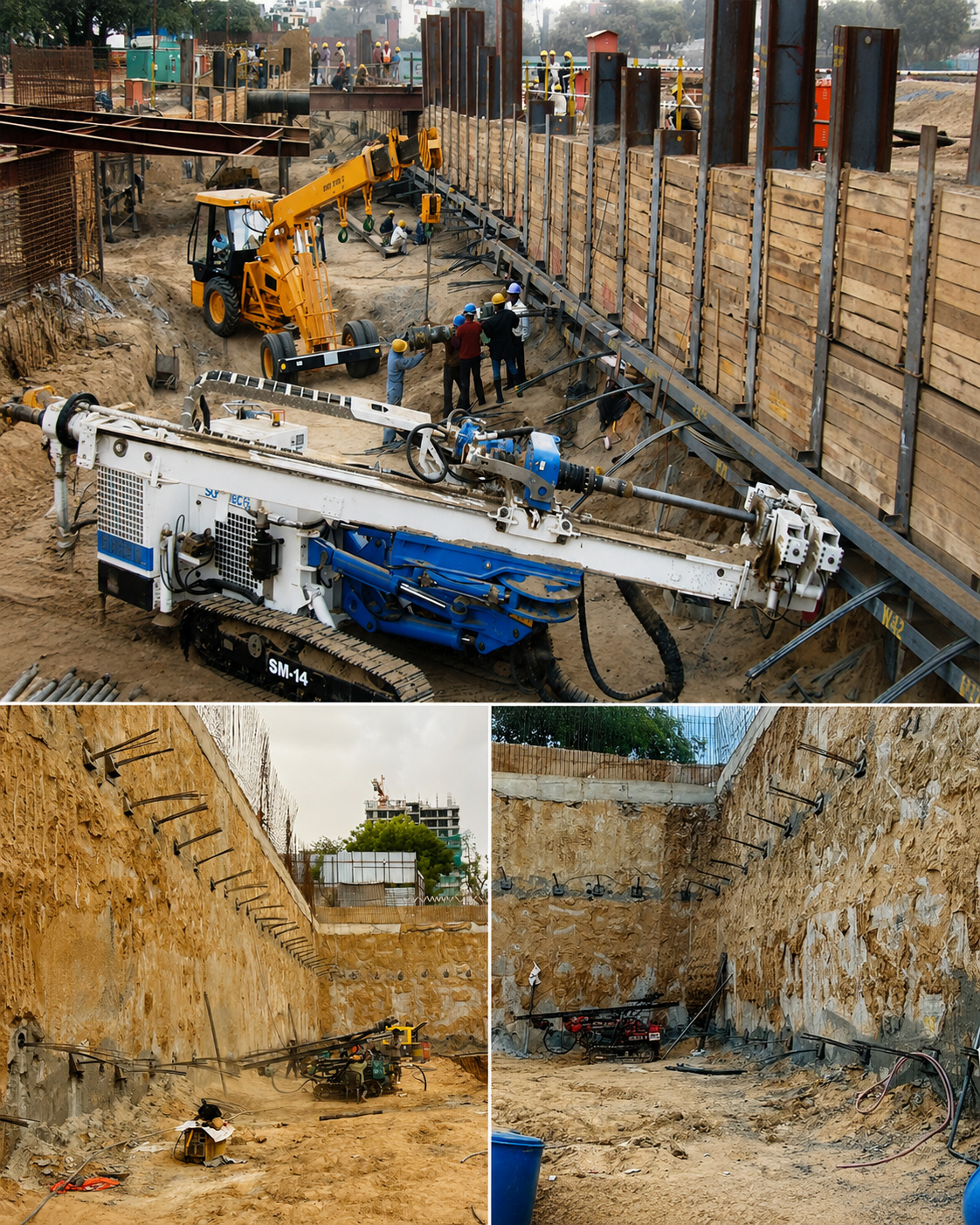
Jalmala Boring Works provides permanent and temporary ground anchor systems for diaphragm wall support, retaining walls, deep excavations, basements, and slope stabilization. Our high-capacity anchor piles are drilled, grouted, tested, and stressed to transfer lateral loads into stable ground, ensuring maximum structural stability, minimal wall movement, and safe excavation for commercial, industrial, infrastructure, and metro projects.
Ground Anchor(Tieback) Construction Process
A detailed step-by-step guide of how Jalmala Boring Works installs high-capacity Ground Anchors / Tieback Anchors for deep excavation support.
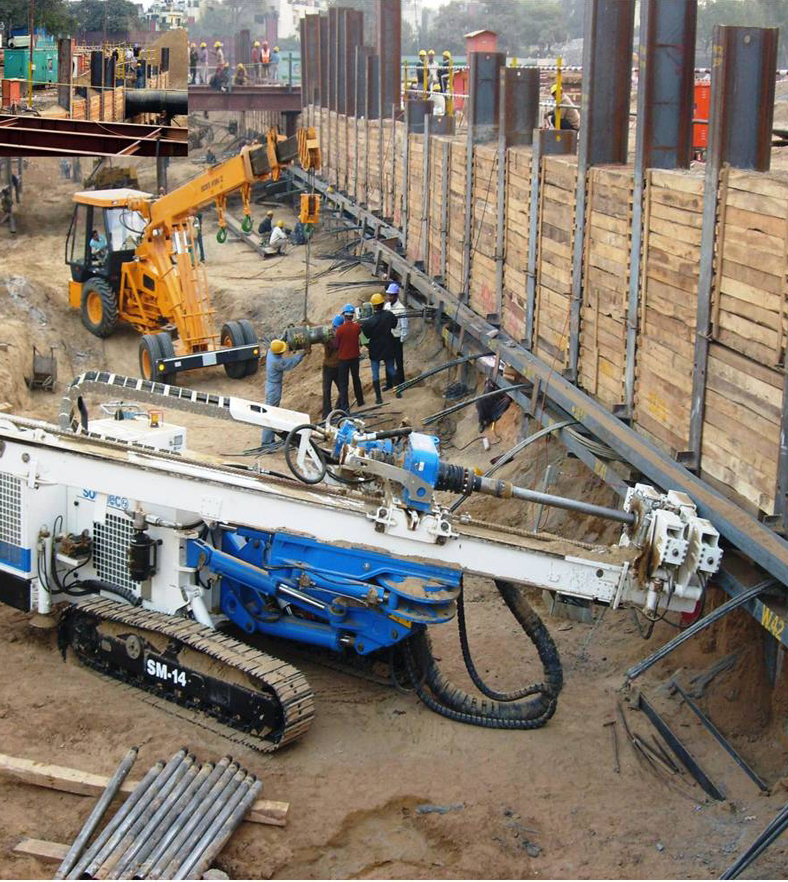
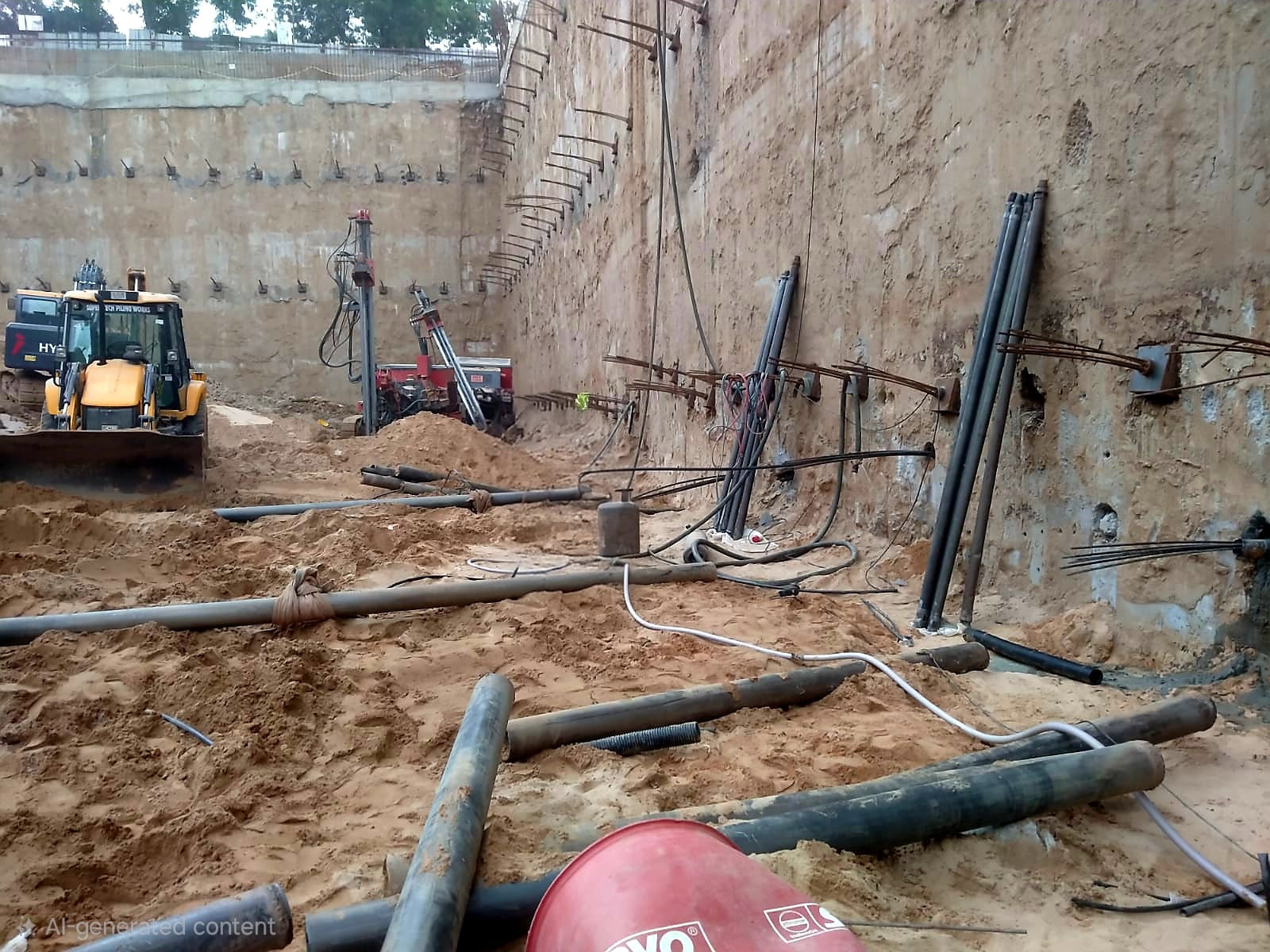
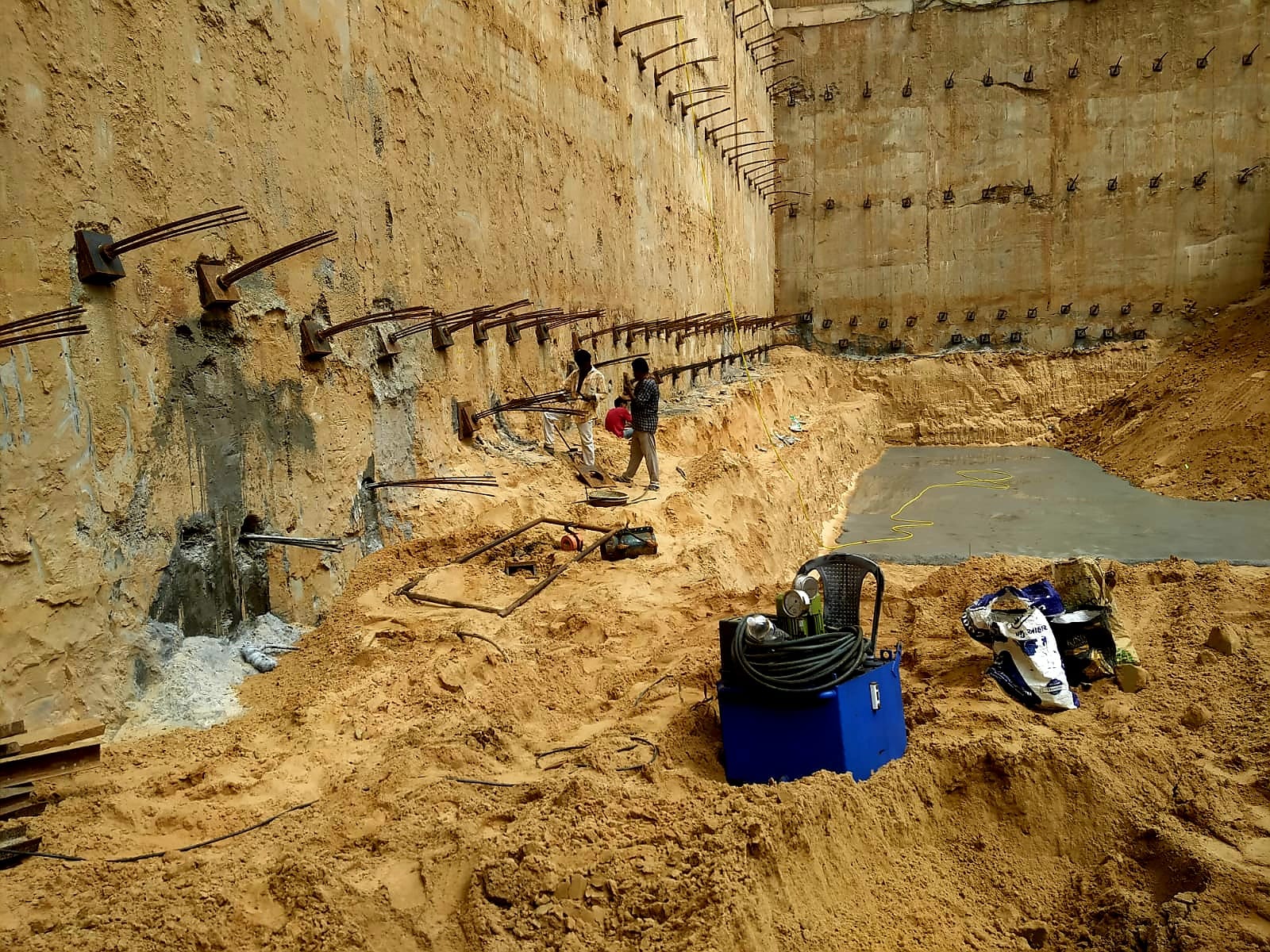
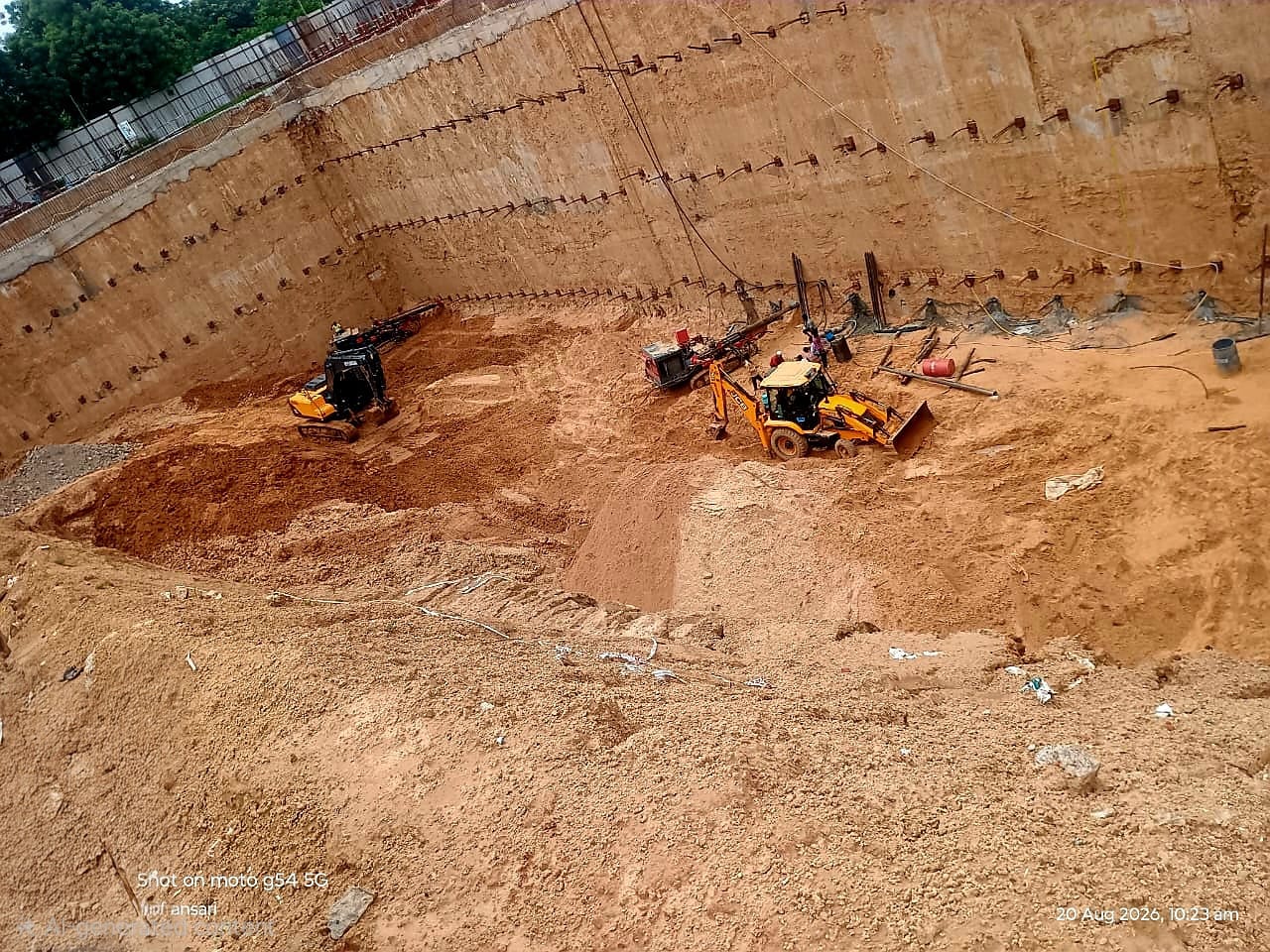
Survey, Setting Out & Anchor Positioning
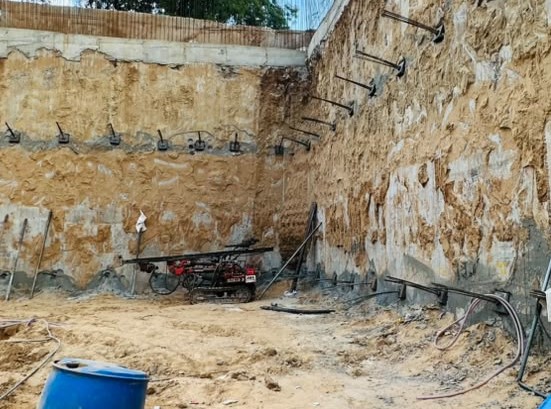
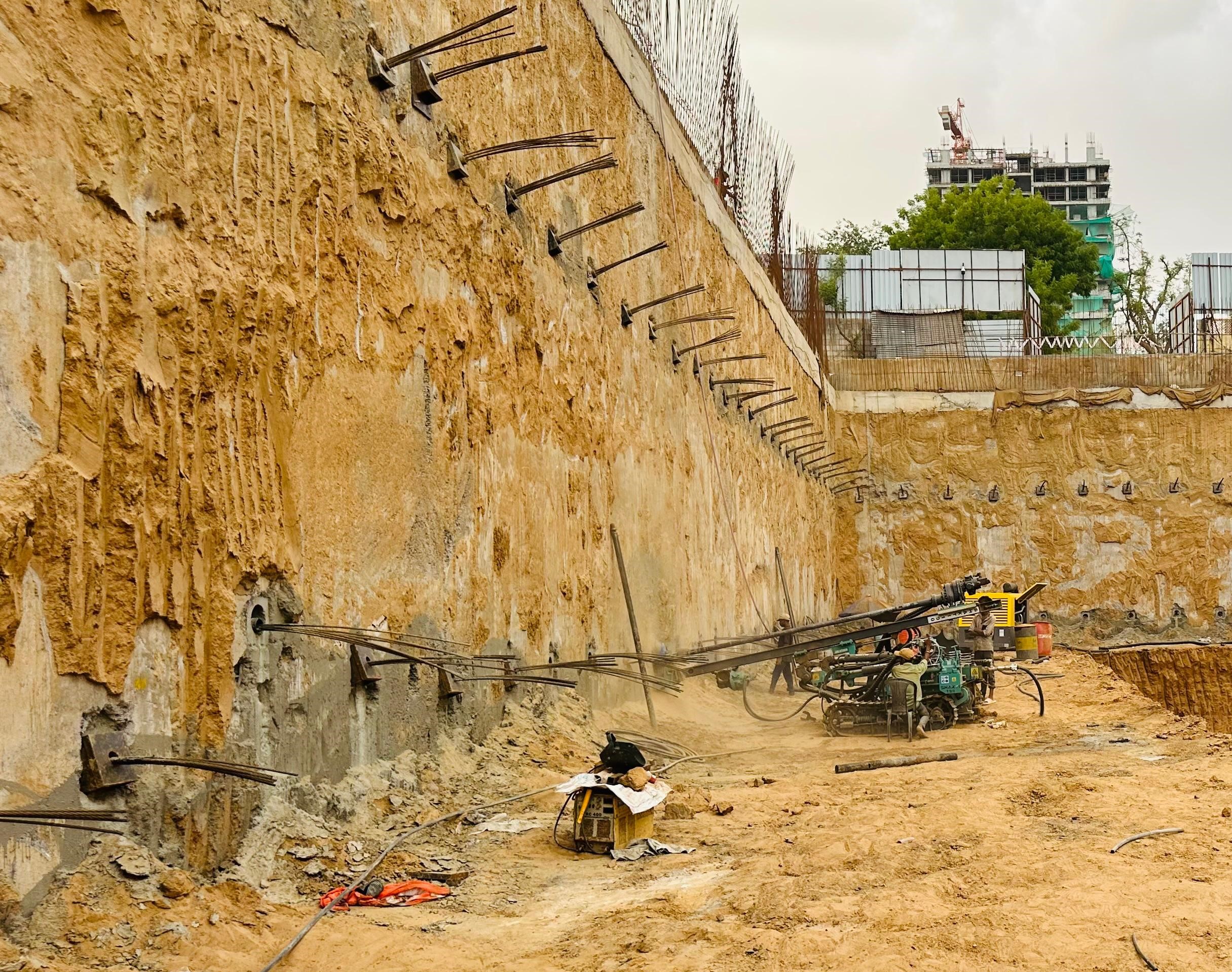
Survey, marking, and positioning of anchors with precise inclination and coordinates.
- Survey and mark anchor locations as per approved drawings
- Determine anchor inclination, spacing, depth, and capacity
- Set up Hydraulic Anchor Drilling Rig
- Verify wall levels and drilling coordinates
- Ensure safe working platform and access
Anchor Hole Drilling
Drilling of inclined boreholes using hydraulic anchor rig.
- Drill inclined boreholes through diaphragm wall or retaining structure
- Use Hydraulic Anchor Rig with rotary/percussion system
- Drill to required length and stable strata
- Monitor drilling angle, depth, and diameter
- Clean boreholes using compressed air or water flushing
Anchor Tendon Installation
Insertion of prestressed strands or bars with corrosion protection.
- Insert prestressed steel strands or threaded anchor bars
- Install centralizers, sheathing, and corrosion protection
- Ensure proper free length and bonded length
- Accurate positioning within the borehole
- Pre-grouting inspection and approval
Grouting Operations
High-pressure grouting to bond the anchor tendon with surrounding ground.
- Inject cement grout or chemical from bottom to top
- Create strong bond between tendon and soil/rock
- Fill all voids and ensure complete encapsulation
- Maintain specified grout pressure and quality
- Allow grout to achieve required strength
Anchor Stressing & Lock-Off
Stressing of anchors to design load and lock-off.
- Install anchor heads, bearing plates, and wedges
- Test anchors using hydraulic jacks
- Stress anchors to the required design load
- Lock-off at approved working load
- Record elongation and test results
Quality Control & Excavation Support
Testing, monitoring, and long-term performance verification.
- Verify performance through proof and lift-off tests
- Monitor wall movement and anchor loads
- Install additional levels as excavation progresses
- Complete testing records and documentation
- Provide continuous lateral support to deep excavations
Recent Projects
Ground Anchoring & Deep Foundation Specialists
Horizontal Anchor Piles in Gujarat
Horizontal ground anchoring systems are used in selected construction projects to provide additional support to retaining structures, excavation walls and underground developments. These systems are designed to transfer tensile forces into suitable soil or rock, helping resist lateral pressure and maintain the stability of the construction area.
Depending on the geotechnical and structural requirements, horizontal or near-horizontal anchors may be incorporated into retaining wall and excavation support arrangements. Their design considers drilling direction, anchor length, bonded zone, free length and the required load capacity.
Jalmala Boring Works is a third-generation, family-owned foundation company established in 1962. With more than 60 years of hands-on industry experience, the company specialises in pile foundations, diaphragm walls and ground anchoring. Based in Ahmedabad, Gujarat, Jalmala Boring Works has experience in foundation projects across more than 20 Indian states.
For construction companies, infrastructure developers and contractors looking for horizontal anchor piles in Gujarat, understanding the soil profile, retaining structure and project requirements is essential for selecting an appropriate anchoring system.
Understanding Horizontal Ground Anchoring Systems
Ground anchors are engineered structural components installed into soil or rock to provide tensile resistance. They are commonly incorporated into retaining wall and excavation support systems where additional resistance against lateral forces is required.
Horizontal or near-horizontal anchor arrangements may be used where the project geometry and ground conditions allow the required anchorage zone to be developed beyond the potential failure surface. The anchoring system works with the retaining structure according to the approved engineering design.
A typical ground anchor arrangement may include a steel tendon, anchor head, bearing plate, free length and bonded grouted length. Each component is selected according to the geotechnical investigation, structural loading and intended service life.
Types of Horizontal Ground Anchor Systems
The appropriate anchoring system depends on soil conditions, retaining wall configuration, excavation requirements and required service life. Common ground anchor arrangements include:
Temporary Ground Anchors
Used to provide horizontal or inclined support to retaining structures during a defined construction period, particularly in staged excavation projects.
Permanent Ground Anchors
Designed for long-term structural support with suitable corrosion protection and durability provisions.
Prestressed Tieback Anchors
Tensioned to specified design loads to transfer forces from retaining walls into suitable soil or rock.
Rock Anchors
Used where suitable rock formations provide an anchorage zone for transferring the required tensile forces.
Horizontal Anchor Pile Installation Process
Horizontal ground anchor installation requires appropriate drilling equipment, experienced operators, grouting arrangements and project-specific quality control. The installation sequence is coordinated with retaining wall construction and excavation activities.
1. Site Investigation and Anchor Design
Soil investigation, groundwater conditions, retaining wall configuration and project loading are assessed to establish anchor locations, inclination, length and design capacity.
2. Horizontal Anchor Hole Drilling
Specialised drilling equipment is used to create boreholes at the specified horizontal or designed inclination according to the approved project drawings.
3. Tendon Installation
The prepared steel tendon assembly is inserted into the borehole with the required free-length and bonded-length arrangements.
4. Cement Grouting
Grout is introduced according to the approved methodology to establish the bonded anchorage section and transfer tensile forces into the surrounding ground.
5. Anchor Stressing and Testing
After the grout reaches the required strength, the anchor is stressed and tested according to the approved project specifications.
6. Final Anchorage and Quality Records
The anchor head is secured at the specified load, and installation records and test results are documented for project quality control.
Applications of Horizontal Anchor Piles
Horizontal ground anchoring arrangements are considered for different construction environments where retaining structures require additional lateral support. Common applications include:
Retaining Wall Construction
Horizontal ground anchoring arrangements to provide additional support to suitable retaining wall systems.
Deep Basement Construction
Anchoring solutions for multi-level basement excavation and underground parking developments.
Commercial Building Projects
Ground support arrangements for commercial complexes and high-rise developments with underground floors.
Infrastructure Projects
Anchoring requirements for selected underground infrastructure and major civil engineering developments.
Industrial Construction
Ground anchoring arrangements for industrial basements, underground facilities and deep construction works.
Restricted Urban Sites
Engineered excavation support for construction sites located near existing buildings, roads and other structures.
Important Engineering Considerations for Horizontal Anchors
The performance of a horizontal ground anchoring system depends on several interconnected engineering factors. Proper planning helps ensure that the anchoring arrangement and retaining structure work together according to the project design.
Soil and Rock Conditions
Soil strength, rock profile, groundwater and grout-to-ground bond characteristics influence the selection and capacity of ground anchors.
Drilling Direction and Inclination
Horizontal or near-horizontal drilling direction must be determined according to the approved structural and geotechnical design.
Anchor Length and Spacing
The free length, bonded length and anchor spacing are established according to the ground profile and structural calculations.
Lateral Earth Pressure
Retained soil, surcharge loads, nearby structures and excavation stages influence the forces acting on the retaining structure.
Groundwater Management
Groundwater pressure, seepage control and drainage requirements must be considered in the complete excavation design.
Corrosion Protection
Permanent anchoring systems require suitable corrosion protection based on the intended service life and exposure conditions.
Anchor Testing and Monitoring
Specified load testing, stressing records and wall movement monitoring help verify the performance of the anchoring system.
Horizontal Anchor Pile Contractor in Ahmedabad and Gujarat
Ahmedabad is an important construction and industrial centre in Gujarat, with requirements for commercial buildings, infrastructure developments, underground structures and basement construction. These projects may require specialised ground anchoring arrangements depending on their engineering requirements.
Jalmala Boring Works operates from Sarkhej, Ahmedabad, and works in foundation engineering across Gujarat and other Indian states. The company's experience includes pile foundations, diaphragm wall construction and ground anchoring, supported by modern SANY hydraulic piling and diaphragm wall equipment.
Project requirements in Ahmedabad, Gandhinagar, Surat, Vadodara, Rajkot, Bharuch, Vapi, Anand, Mehsana and other Gujarat locations can be discussed with the company. Site-specific feasibility and execution depend on project drawings, ground investigation and construction requirements.
For projects outside Gujarat, Jalmala Boring Works also has experience across more than 20 Indian states. Contact the team to discuss the proposed location, retaining wall configuration and technical requirements for horizontal ground anchoring solutions.
Why Choose Jalmala Boring Works for Horizontal Anchoring Projects?
Foundation construction requires practical knowledge, modern equipment, quality management and coordination with engineering teams. Jalmala Boring Works has developed its industry experience through three generations of family involvement since 1962.
60+ Years of Experience
A third-generation family business with a long-standing history in foundation engineering since 1962.
ISO 9001:2015
Quality assurance processes supporting different stages of foundation construction.
Modern SANY Equipment
Hydraulic piling and diaphragm wall rigs for specialist foundation operations.
Pan-India Experience
Project experience across more than 20 Indian states.
Specialist Services
Pile foundations, diaphragm walls and ground anchoring capabilities.
Project Coordination
Focus on construction planning, site safety and quality management.
Frequently Asked Questions About Horizontal Anchor Piles
1. What are horizontal anchor piles?
Horizontal anchor piles generally refer to horizontally or near-horizontally installed ground anchoring arrangements used to provide support to retaining structures and excavation systems. Their configuration and installation depend on the project-specific engineering design.
2. Why are horizontal ground anchors used?
Horizontal ground anchors can provide additional resistance against lateral earth pressure and help control the movement of retaining structures. They are considered for suitable deep excavation, basement and retaining wall projects.
3. Where are horizontal anchor systems used?
Horizontal ground anchoring arrangements may be used for retaining walls, deep basement construction, underground parking, commercial developments, infrastructure projects and selected industrial construction applications.
4. What are the different types of horizontal anchors?
Ground anchoring systems may include temporary anchors, permanent anchors, prestressed tieback anchors and rock anchors. The suitable arrangement depends on the soil profile, structural requirements and intended service life.
5. How are horizontal ground anchors installed?
The general process involves site investigation, drilling at the designed inclination, installing the steel tendon, grouting the bonded length, allowing the grout to achieve the required strength and performing specified stressing and load testing.
6. What factors affect horizontal anchor pile installation?
Important factors include soil and rock conditions, groundwater level, anchor length, drilling inclination, bonded length, free length, spacing, retaining wall loading and corrosion protection requirements.
7. Does Jalmala Boring Works provide horizontal anchoring services across Gujarat?
Jalmala Boring Works is based in Ahmedabad, Gujarat, and undertakes foundation-related projects across Gujarat and other Indian states. Contact the company to discuss your project location and technical requirements.
Contact Jalmala Boring Works for Horizontal Anchor Piles
Planning a retaining wall, deep excavation, underground basement or ground anchoring project? Contact Jalmala Boring Works to discuss your project drawings, site conditions, location and foundation requirements.
Contact Person: Mr. Amrulla Memon
Phone: +91 93745 45415
Email: jalmala.pile@gmail.com
Location: Sarkhej-Okaf, Ahmedabad, Gujarat 382210, India