
Metro Rail Infrastructure
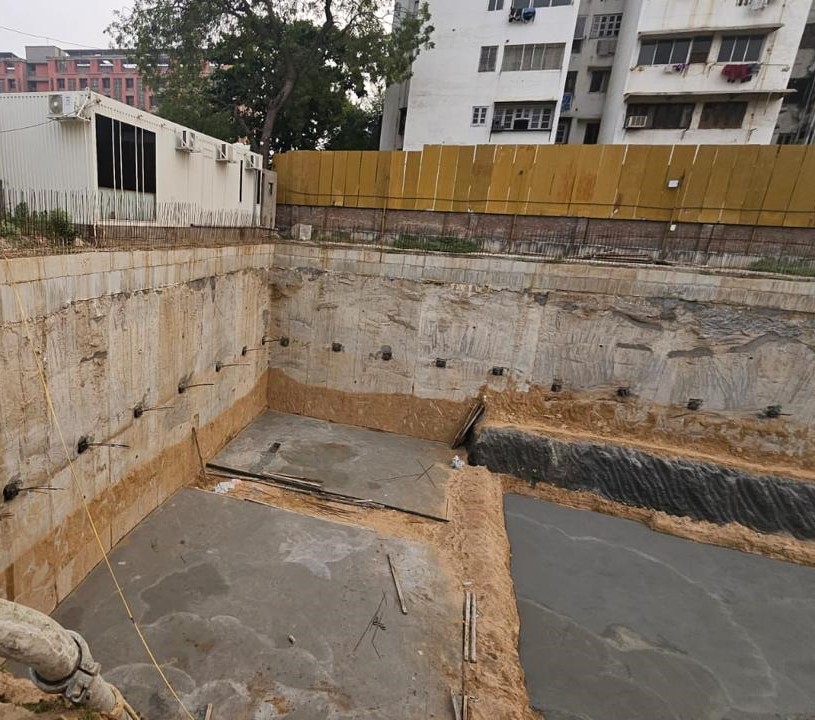
Diaphragm walls may be used for underground metro stations, station boxes, access shafts and cut-and-cover structures requiring deep excavation support.
Deep Excavation & Retaining Wall Specialists
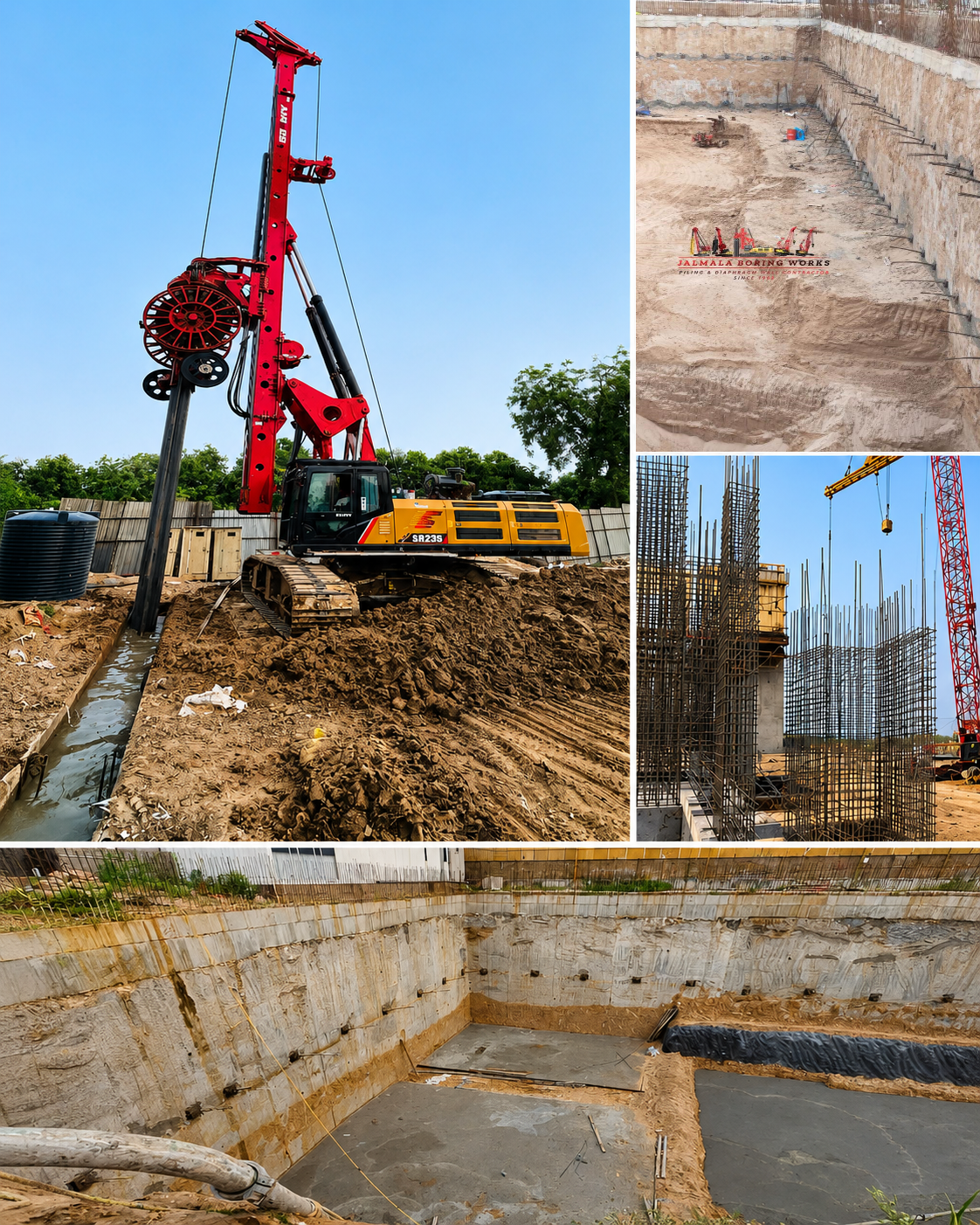
Jalmala Boring Works specializes in Diaphragm Wall Construction for deep excavations, basements, metro projects, commercial developments, and industrial infrastructure. We execute complete diaphragm wall work from 400 mm to 1200 mm thickness and depths of up to 40 metres, delivering watertight, high-strength retaining walls with minimal ground movement. Our end-to-end solution includes guide wall construction, slurry-supported panel excavation, reinforcement cage installation, tremie concreting, water-stop systems, and quality-controlled execution.
A step-by-step overview of how Jalmala Boring Works constructs high-quality Diaphragm Walls — from guide wall installation to final panel completion — with precision, safety, and six decades of expertise.
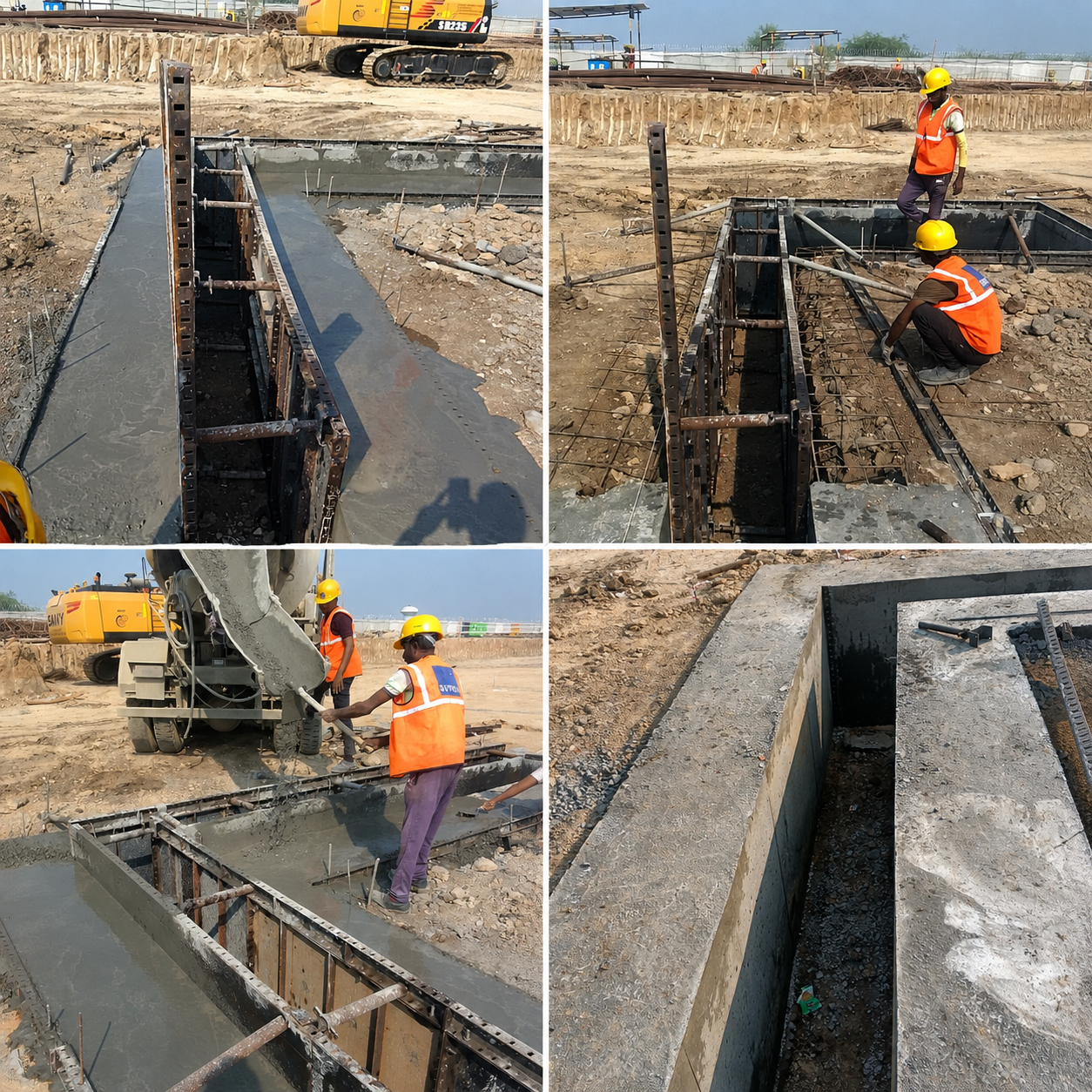
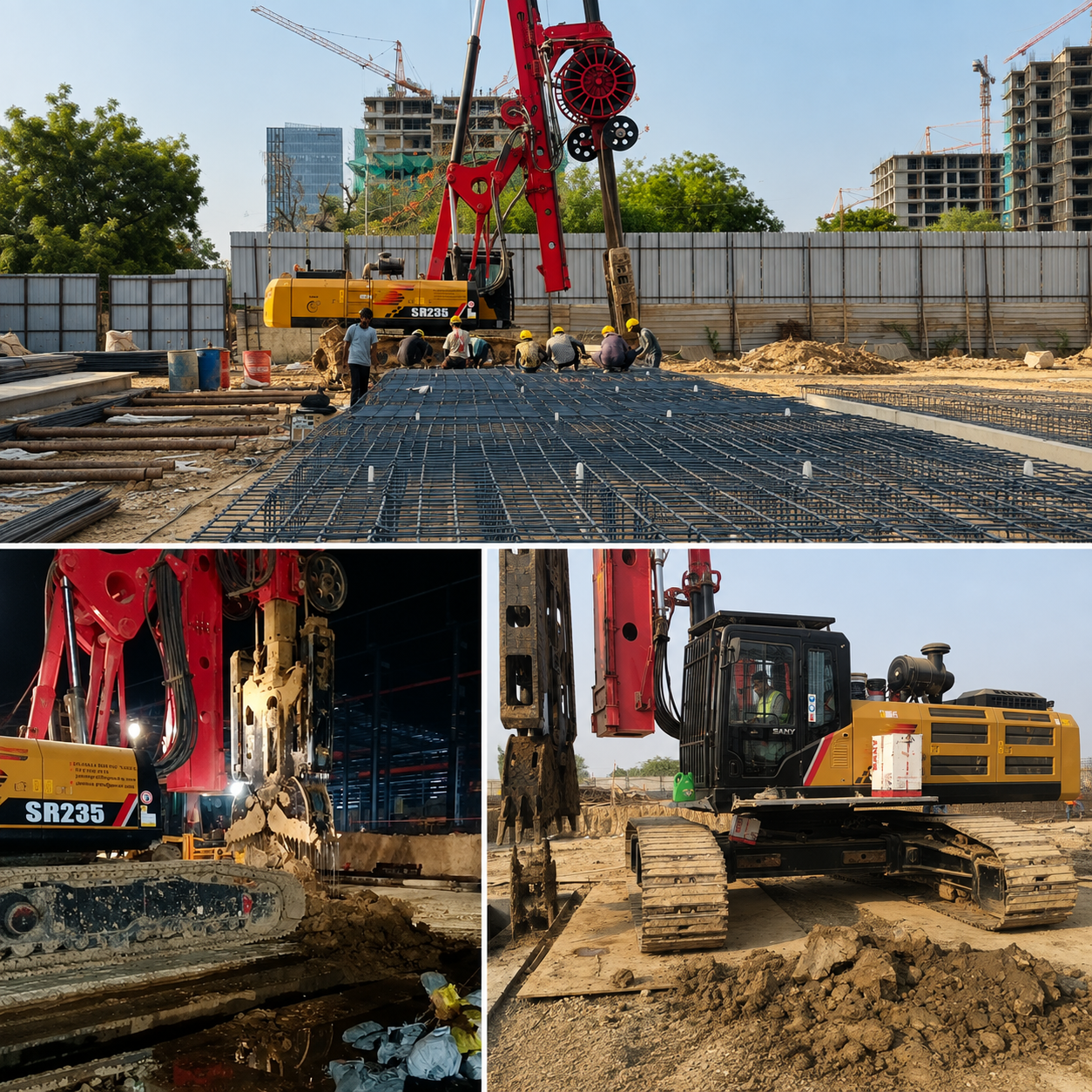
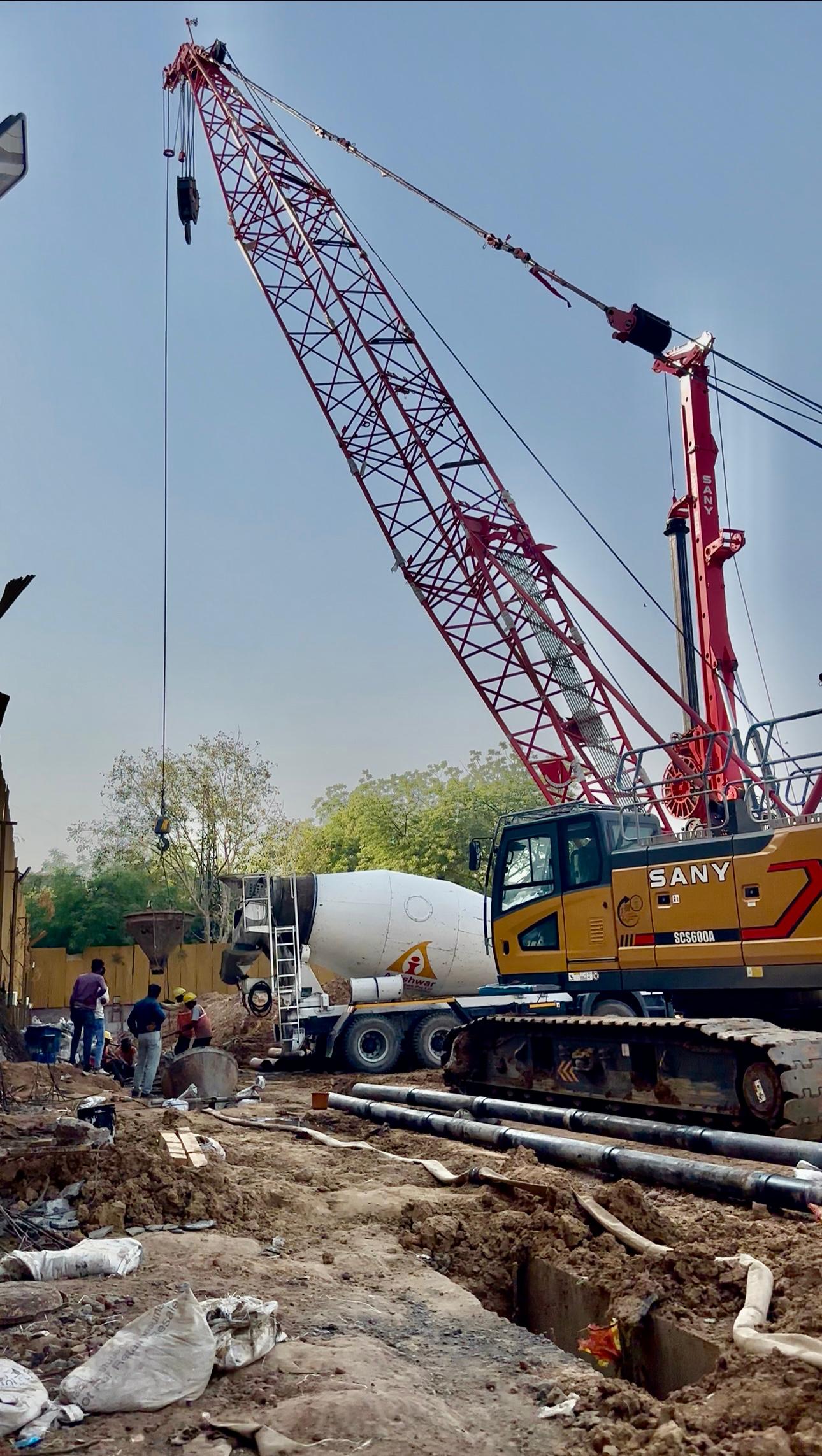
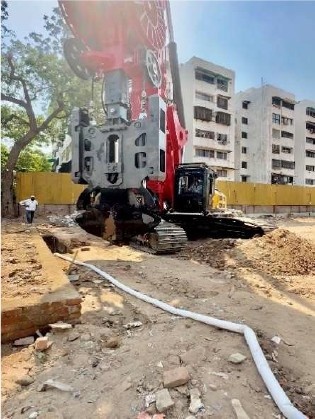
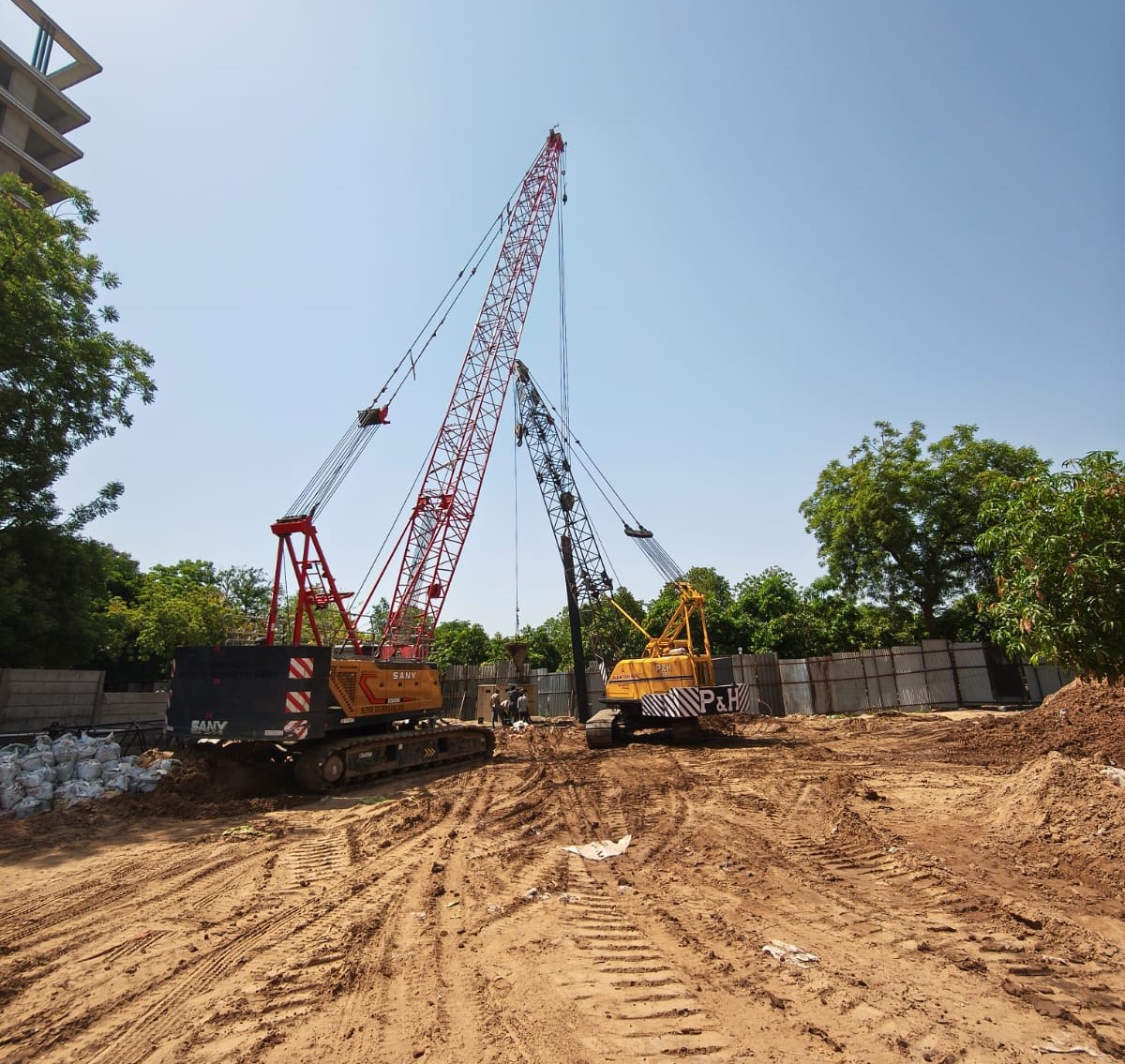
Detailed survey, panel marking, and guide wall construction for accurate alignment.
Preparation of slurry and excavation of diaphragm wall panels.
Formation of watertight joints and cleaning of excavated trench.
Fabrication and placement of reinforcement cage into trench.
Continuous concrete placement using tremie pipes.
Final wall formation, testing, and quality assurance activities.
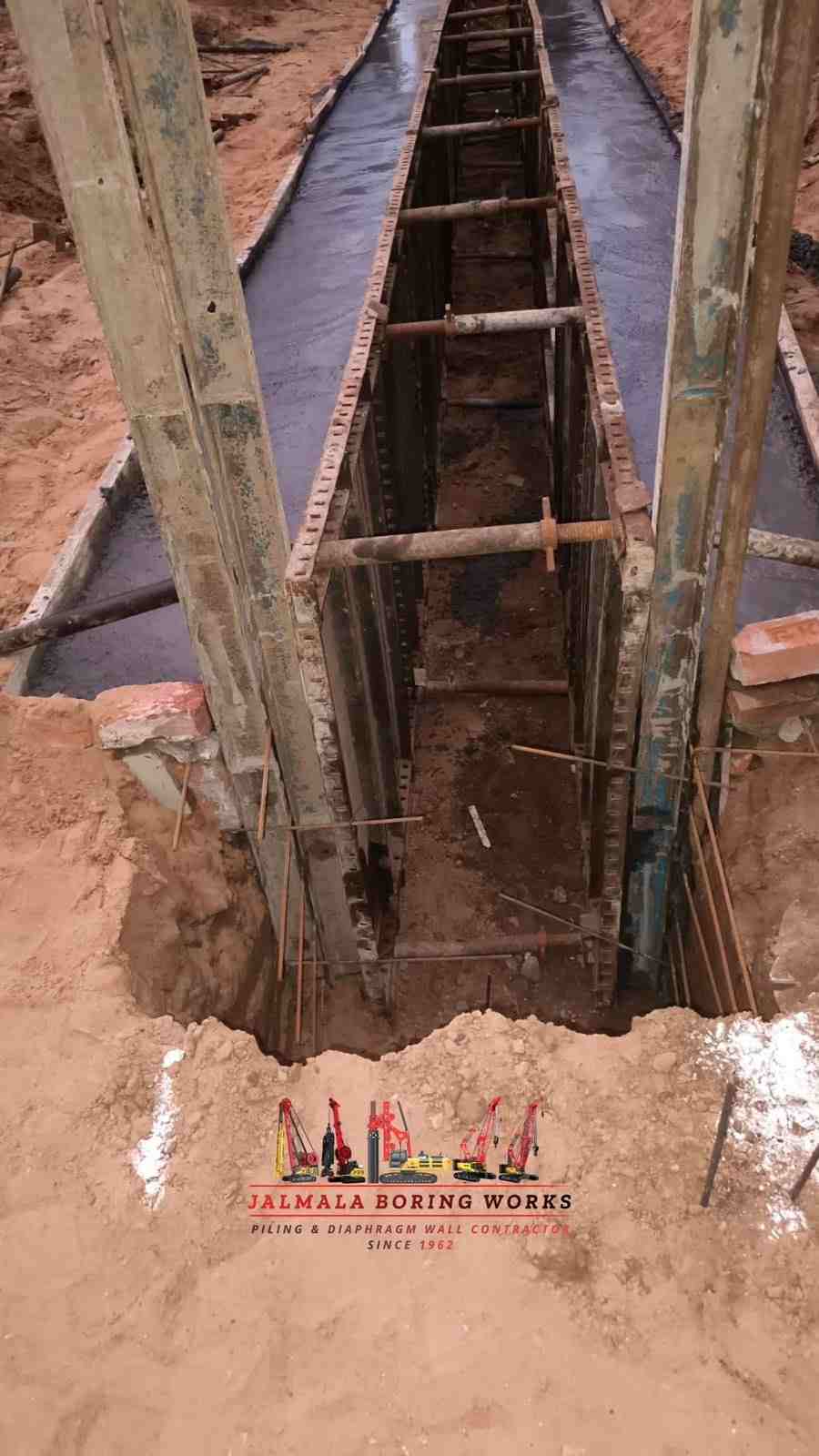
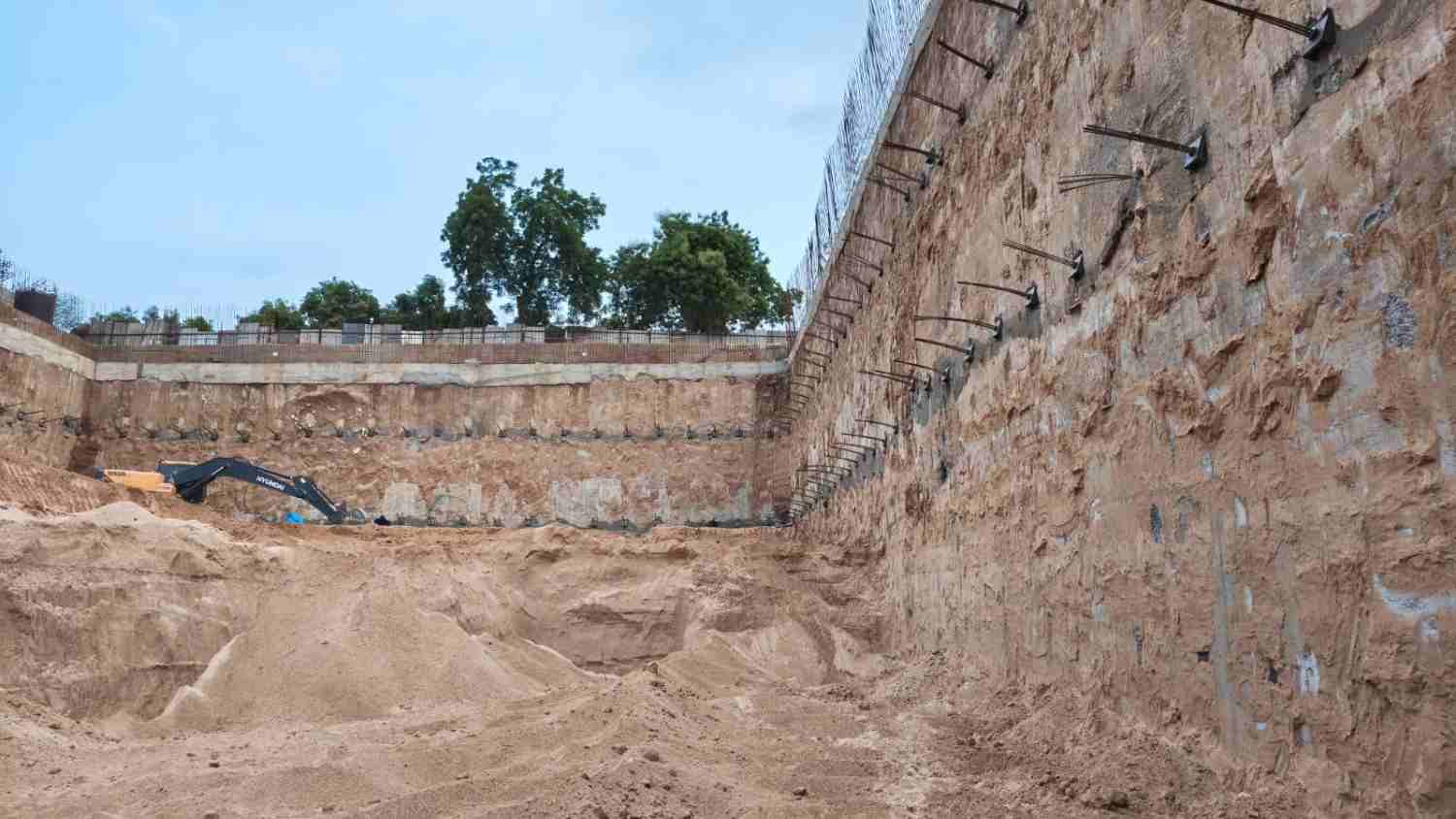
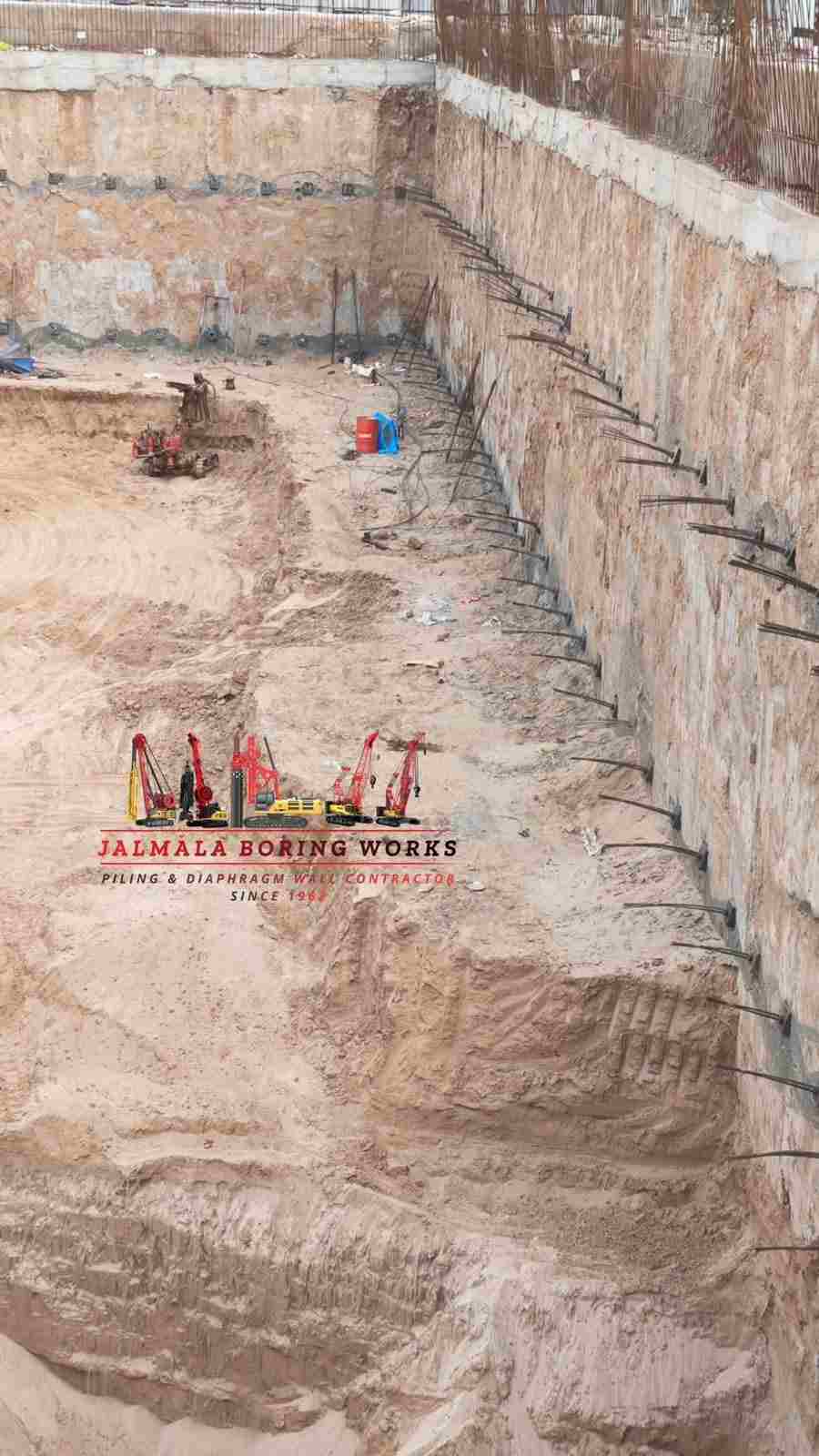
Infrastructure Foundation & Ground Engineering
Specialist diaphragm wall and ground-support solutions for infrastructure development, underground structures, metro construction, deep excavation and major civil engineering projects. Jalmala Boring Works brings decades of foundation engineering experience to demanding construction environments.
Infrastructure development requires reliable foundation systems and engineered ground-support solutions for complex construction conditions. Large-scale developments such as metro rail networks, bridges, highways, underground transport facilities, industrial infrastructure and public utility structures may require deep excavation and below-ground retaining systems.
Diaphragm walls are reinforced concrete retaining structures constructed in deep trenches using a panel-based construction method. During excavation, an engineered support fluid such as bentonite slurry may be used to maintain trench stability. Reinforcement cages are subsequently installed, and concrete is placed using an approved tremie procedure. The completed panels form a retaining wall according to the project design.
Depending on engineering requirements, diaphragm walls may serve as temporary excavation support, permanent retaining structures or part of an underground structure. Their application is particularly relevant where excavation depth, groundwater conditions, restricted working space and nearby infrastructure require careful planning.
Jalmala Boring Works is a family-owned, third-generation foundation contractor established in 1962. The company specialises in pile foundations, diaphragm walls and ground anchoring. As an infrastructure diaphragm wall contractor in India, the company can discuss specialist foundation and ground-support requirements for different infrastructure construction projects.
Diaphragm walls can be considered for a range of civil infrastructure applications. The final selection depends on geotechnical investigation, structural design, excavation requirements and the construction methodology approved for the project.
Diaphragm walls may be used for underground metro stations, station boxes, access shafts and cut-and-cover structures requiring deep excavation support.
Selected bridge-related excavations and underground structures may require engineered retaining systems depending on foundation layout and site conditions.
Underground highway structures, underpasses and selected approach excavations may require retaining solutions designed for surrounding ground and traffic conditions.
Railway-related underground facilities, access structures and below-ground developments may require deep excavation and retaining support.
Selected pumping stations, underground water facilities, treatment structures and utility chambers may use diaphragm walls where specified by the engineering design.
Industrial developments involving deep underground facilities, equipment pits and large below-ground structures may require diaphragm wall systems.
Each infrastructure application has different technical requirements. Wall thickness, panel length, excavation depth, reinforcement arrangement and support systems must be determined through project-specific engineering. An experienced diaphragm wall contractor for infrastructure projects works according to the approved drawings, specifications and construction sequence.
Diaphragm wall installation involves multiple construction stages that must be coordinated with the project design and site conditions. Typical activities include:
The construction area is prepared, site access is reviewed and the diaphragm wall alignment is marked according to approved project drawings. Underground utilities and nearby structures are considered before excavation.
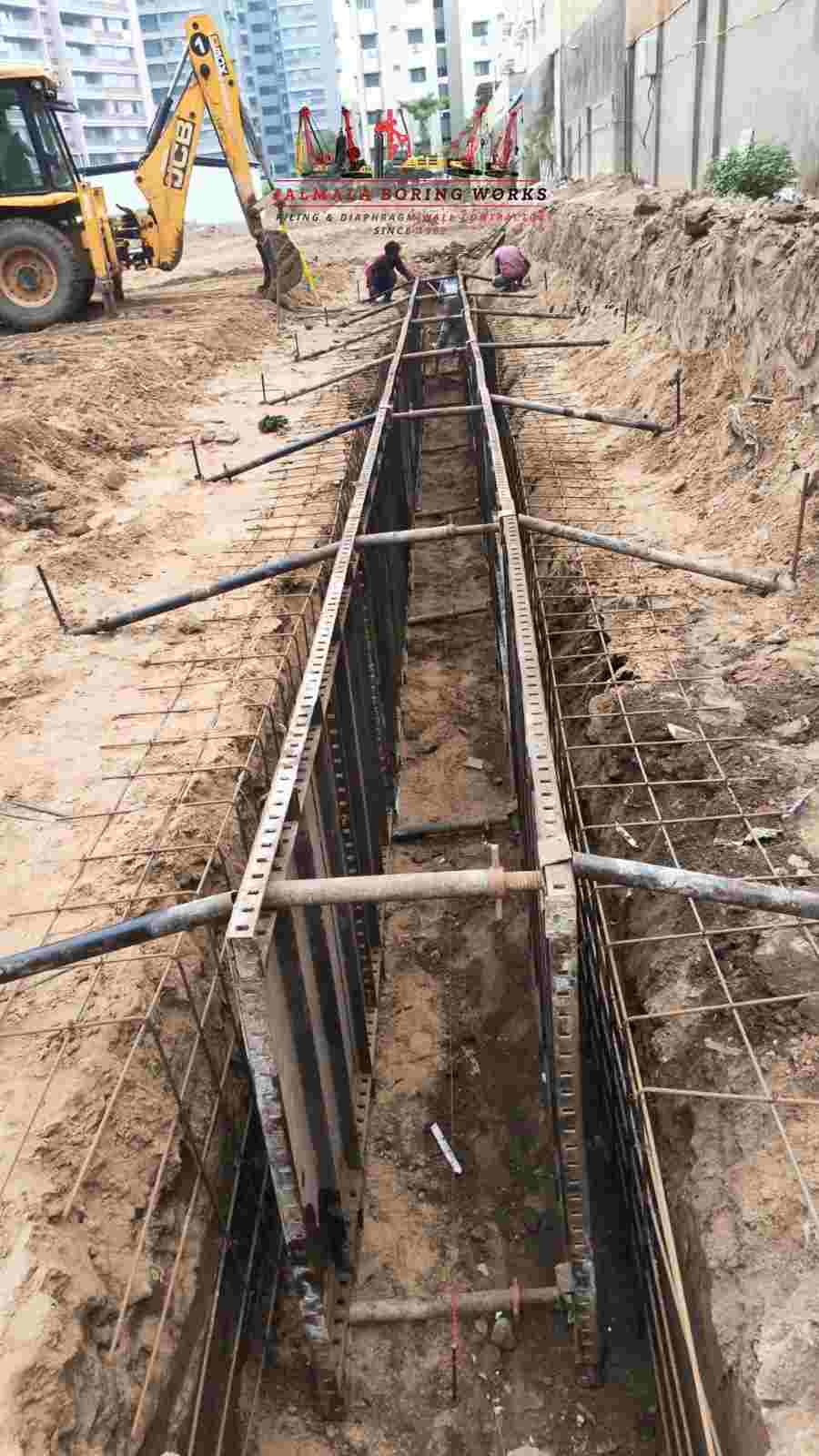
Guide walls are constructed along the proposed wall alignment. They help maintain panel positioning and provide guidance for excavation equipment during diaphragm wall construction.
Individual wall panels are excavated using suitable hydraulic grabs or trench-cutting equipment. Excavation depth and panel dimensions follow the approved structural and geotechnical requirements.
An approved support slurry may be used to stabilise the excavated trench. Slurry properties are monitored, and the trench is cleaned according to project specifications before reinforcement installation.
Prefabricated reinforcement cages are lifted and lowered into the excavated panel using suitable lifting equipment. Cage positioning, cover and embedded components are checked against approved drawings.
Concrete is placed through tremie pipes using an approved bottom-up procedure. The placement operation is monitored to meet the specified concrete quality and construction requirements.
Panel joints, alignment, concrete records and other specified quality parameters are reviewed. Adjacent panels are constructed in the approved sequence to achieve the required wall continuity.
Engineering and Quality Control
Infrastructure projects can involve challenging ground conditions, heavy structural loads, groundwater and nearby existing developments. Diaphragm wall construction requires careful coordination between geotechnical investigations, structural engineering, equipment planning and site operations.
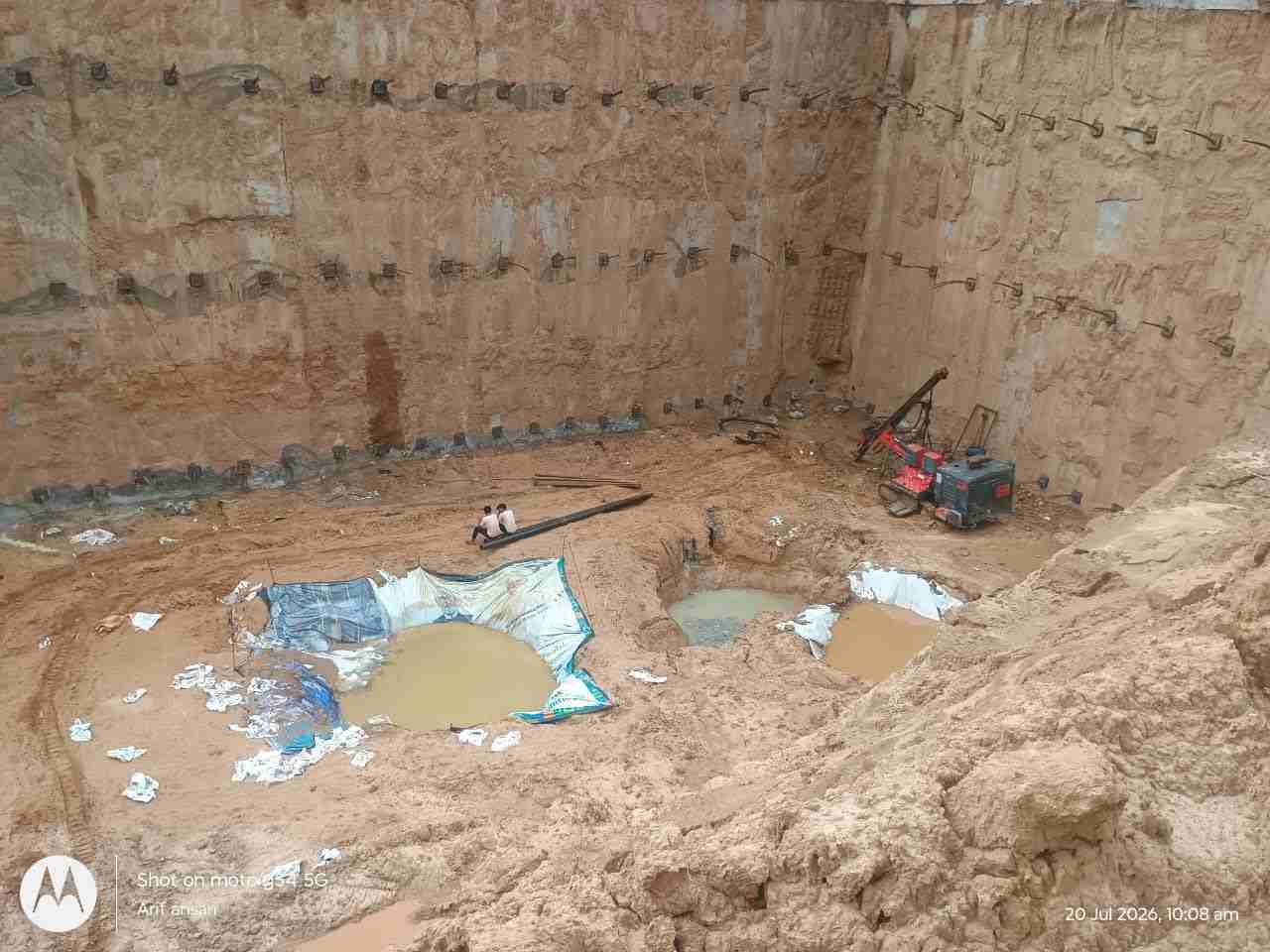
Soil layers, rock profile, groundwater levels and ground properties influence excavation stability, wall design and construction equipment selection.
Accurate setting out and verticality control help achieve the specified wall geometry and compatibility between adjacent panels.
Groundwater levels and seepage conditions must be evaluated during design and construction planning, particularly for deep underground structures.
Slurry preparation, testing, circulation, desanding and disposal must follow the approved project specifications and environmental requirements.
Reinforcement cage installation, concrete properties, tremie placement and construction records require suitable quality checks.
Existing buildings, roads, bridges and utilities may require monitoring and protective measures according to project-specific risk assessments.
Large infrastructure developments may require more than one type of foundation or ground-support system. Pile foundations, diaphragm walls and ground anchors serve different engineering purposes and may be included within a coordinated construction package where the design requires them.
Pile foundations transfer structural loads to suitable deeper soil or rock strata. They are commonly considered for bridges, elevated infrastructure, industrial facilities, transport structures and buildings where deep foundation support is required. The pile type and installation method depend on loading, geotechnical conditions and design specifications.
Diaphragm walls provide underground retaining support for selected deep excavations and below-ground structures. They may be used as temporary or permanent structural elements depending on the project design. Panel joints, groundwater considerations and construction sequence are important parts of the engineering process.
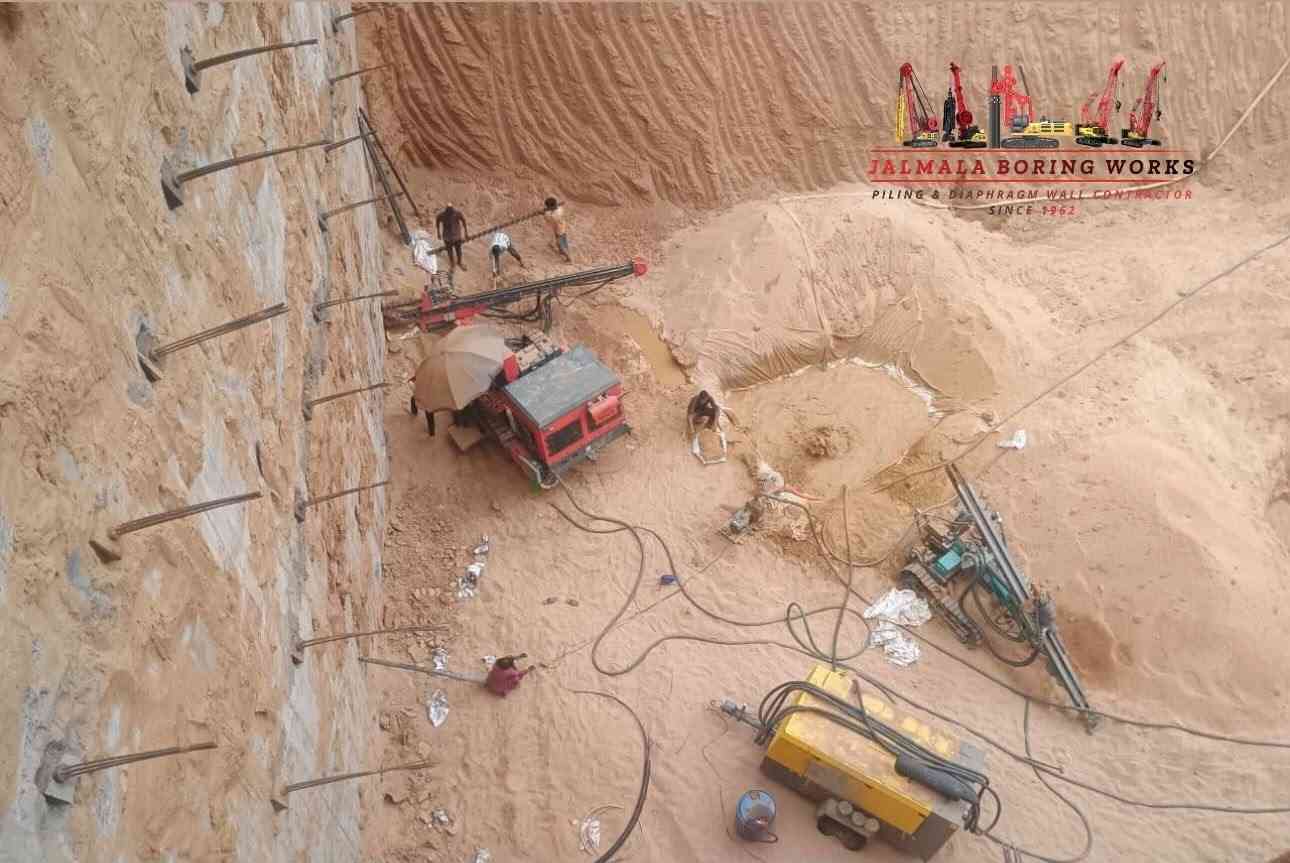
Ground anchors can provide additional restraint to retaining structures and excavation-support systems where permitted by the design. Their suitability depends on ground conditions, anchor capacity, working space, adjacent property boundaries and the approved construction methodology.
Jalmala Boring Works provides these three specialist service areas for foundation and ground-engineering requirements. Project-specific discussions help identify the scope, technical information and construction resources needed for infrastructure work.
Jalmala Boring Works is a family-owned, third-generation foundation contractor with a history dating back to 1962. Based in Ahmedabad, Gujarat, the company provides specialist pile foundation, diaphragm wall and ground anchoring services for infrastructure, industrial, commercial and residential developments.
The company operates modern SANY hydraulic piling and diaphragm wall rigs. Equipment selection is planned around the project scope, soil conditions, site access, working platform availability and approved construction methodology. Suitable equipment planning is an important part of coordinating specialist foundation activities on large construction sites.
Jalmala Boring Works follows ISO 9001:2015 certified processes and places importance on construction planning, equipment management, operational coordination and site safety. Bentonite management and trench stability are also important considerations in diaphragm wall operations.
With more than six decades of industry experience and operations across 20+ Indian states, the company can discuss specialist foundation requirements with infrastructure developers, EPC contractors, engineering consultants and construction organisations.
For an infrastructure diaphragm wall enquiry, useful preliminary information includes the project location, geotechnical investigation report, wall depth, panel dimensions, structural drawings, groundwater information and proposed construction schedule. These details help establish the technical scope for further discussion.
1962
Established
60+
Years of Experience
20+
Indian States Served
3
Core Specialist Services
Infrastructure construction across India involves different geological conditions, site environments and engineering requirements. Projects may be located in developed urban centres, industrial areas, transport corridors and locations where underground excavation must be coordinated with existing structures and utilities.
Jalmala Boring Works is based in Ahmedabad, Gujarat, and undertakes specialist foundation and ground-engineering work across India, subject to project scope and operational requirements. The company can discuss diaphragm wall and foundation requirements for infrastructure developments in Gujarat and other Indian states.
Infrastructure projects require careful planning of construction access, equipment movement, working platforms, ground investigation, excavation sequencing and quality control. The proposed retaining system must be compatible with the overall structural and geotechnical design.
If you are evaluating an infrastructure diaphragm wall contractor in India, contact Jalmala Boring Works to discuss the project scope, technical requirements and proposed construction activities.
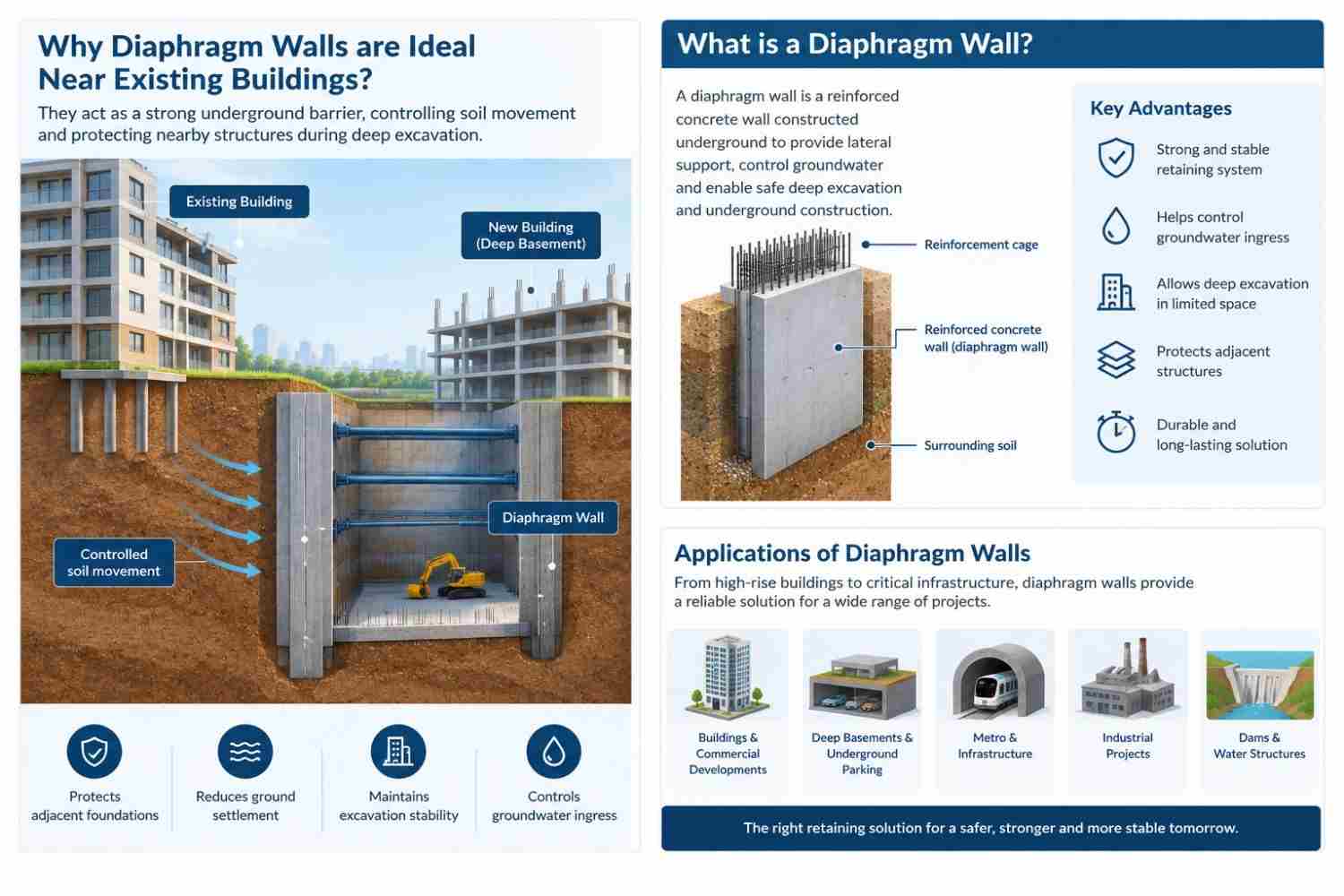
A diaphragm wall is a reinforced concrete retaining structure constructed underground in individual panels. It is used in suitable infrastructure projects for deep excavation support, underground structures, retaining systems and selected cut-and-cover construction applications.
Diaphragm walls may be used for metro stations, underground transport structures, bridge-related excavations, access shafts, utility structures, deep basements and other infrastructure developments requiring engineered underground retaining support.
Diaphragm walls can provide lateral ground retention and may help control excavation movements when properly designed and constructed. Their suitability depends on soil conditions, groundwater, excavation depth, nearby structures and the overall engineering design.
The general process includes site preparation, guide wall construction, panel excavation under stabilising slurry, trench cleaning, reinforcement cage installation and tremie concrete placement. Panel joints and quality checks are completed according to project specifications.
Yes. Diaphragm walls may be used for underground stations, shafts, cut-and-cover structures, utility facilities and other below-ground infrastructure where a designed retaining wall system is required.
Jalmala Boring Works is based in Ahmedabad, Gujarat, and undertakes specialist foundation and ground-engineering work across India, subject to project scope, technical requirements and operational planning.
You can contact Jalmala Boring Works by calling +91 93745 45415 or emailing jalmala.pile@gmail.com. Share your project location, drawings, geotechnical report, proposed wall depth and construction requirements for an initial discussion.
Discuss Your Infrastructure Project
Contact Jalmala Boring Works for a discussion about diaphragm wall construction, pile foundations and ground anchoring for infrastructure and underground construction projects.
Contact Person: Mr. Amrulla Memon
Phone: +91 93745 45415
Email: jalmala.pile@gmail.com
Address: Dholka Road, Near Nariampura Village, Narimanpura, Sarkhej-Okaf, Ahmedabad, Gujarat 382210, India