
Pile Foundation
Bored Cast-in-Situ Piling Specialists
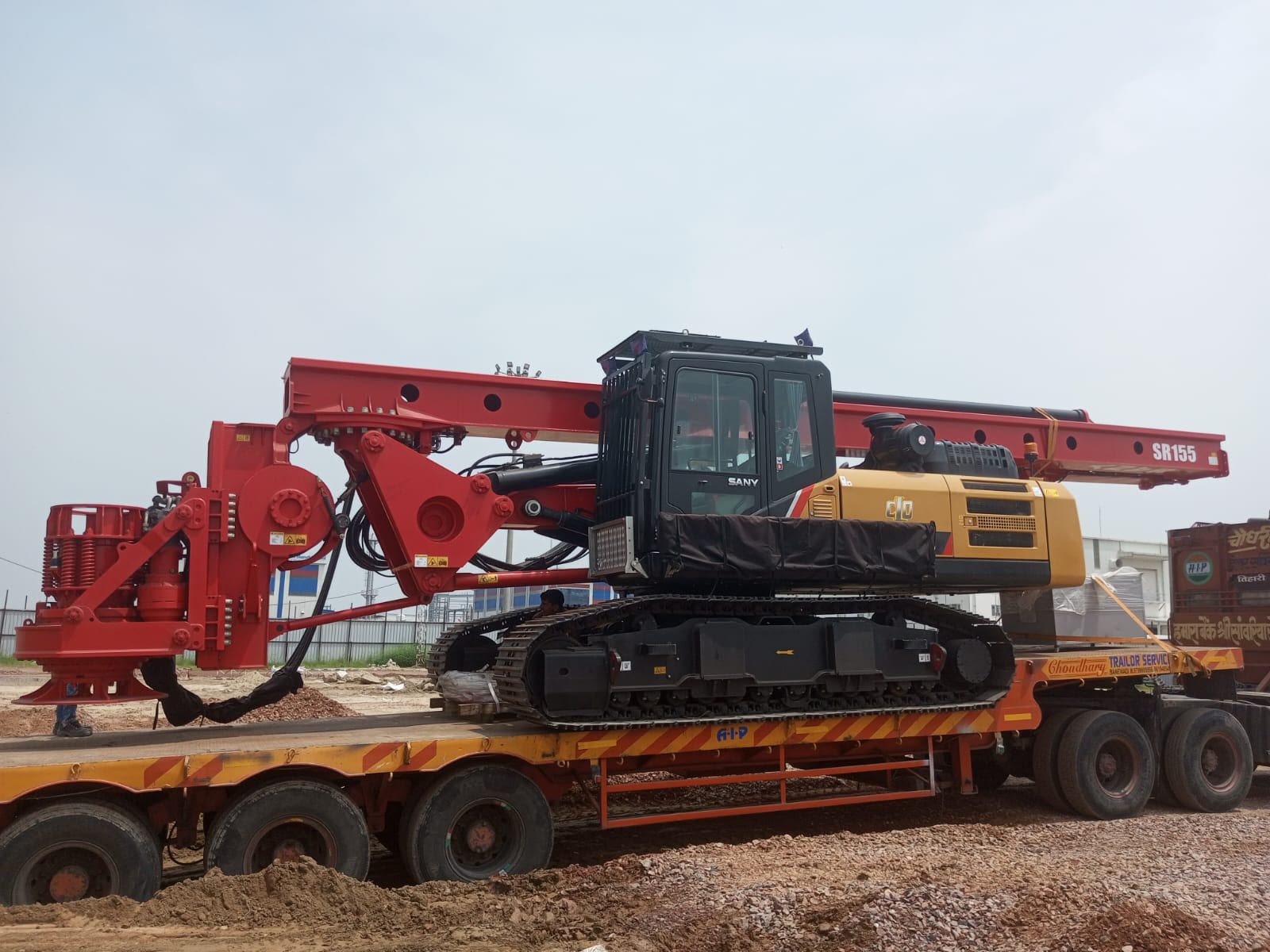
Jalmala Boring Works provides Pile Foundation and Deep Foundation Solutions using Bored Cast-in-Situ Piles for residential, commercial, industrial, and infrastructure projects. With advanced Hydraulic Rotary Rigs, we construct piles from 300 mm to 1800 mm diameter and depths of up to 50 metres, delivering reliable load-bearing capacity across soft soil, hard rock, and high groundwater conditions.
Our Piling Methods
We deploy six proven techniques — selected based on soil profile, site constraints, and project requirements.
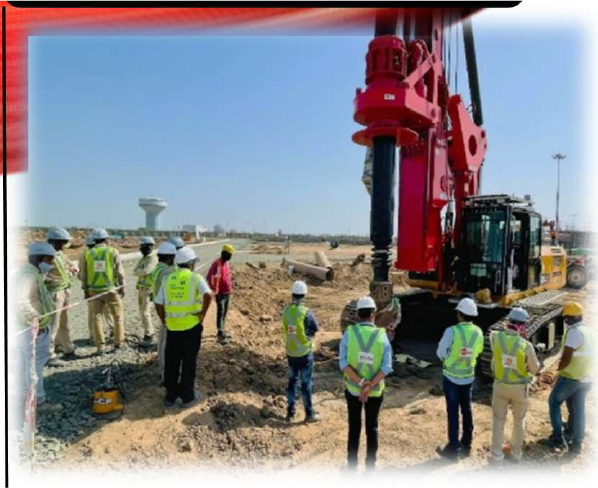
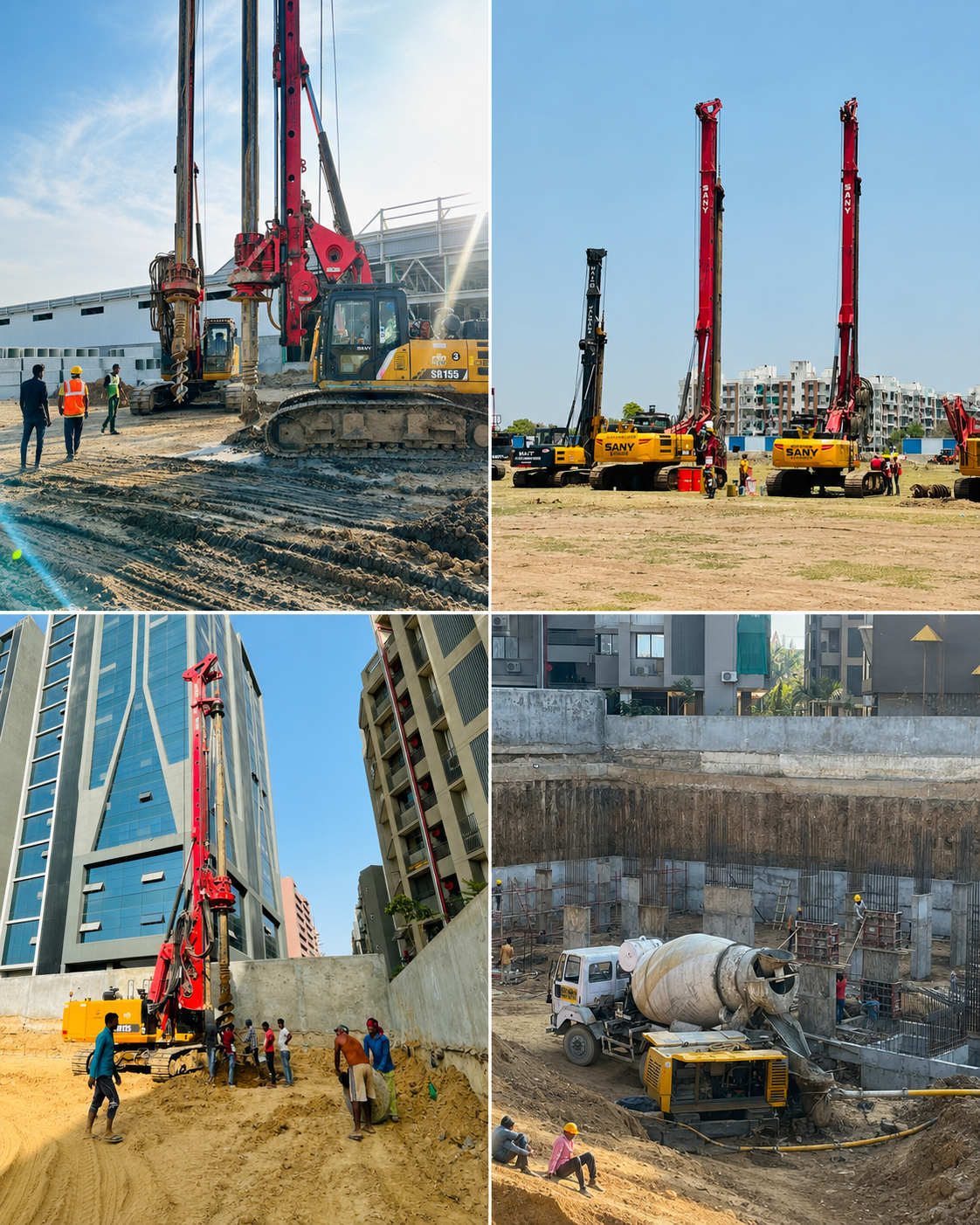
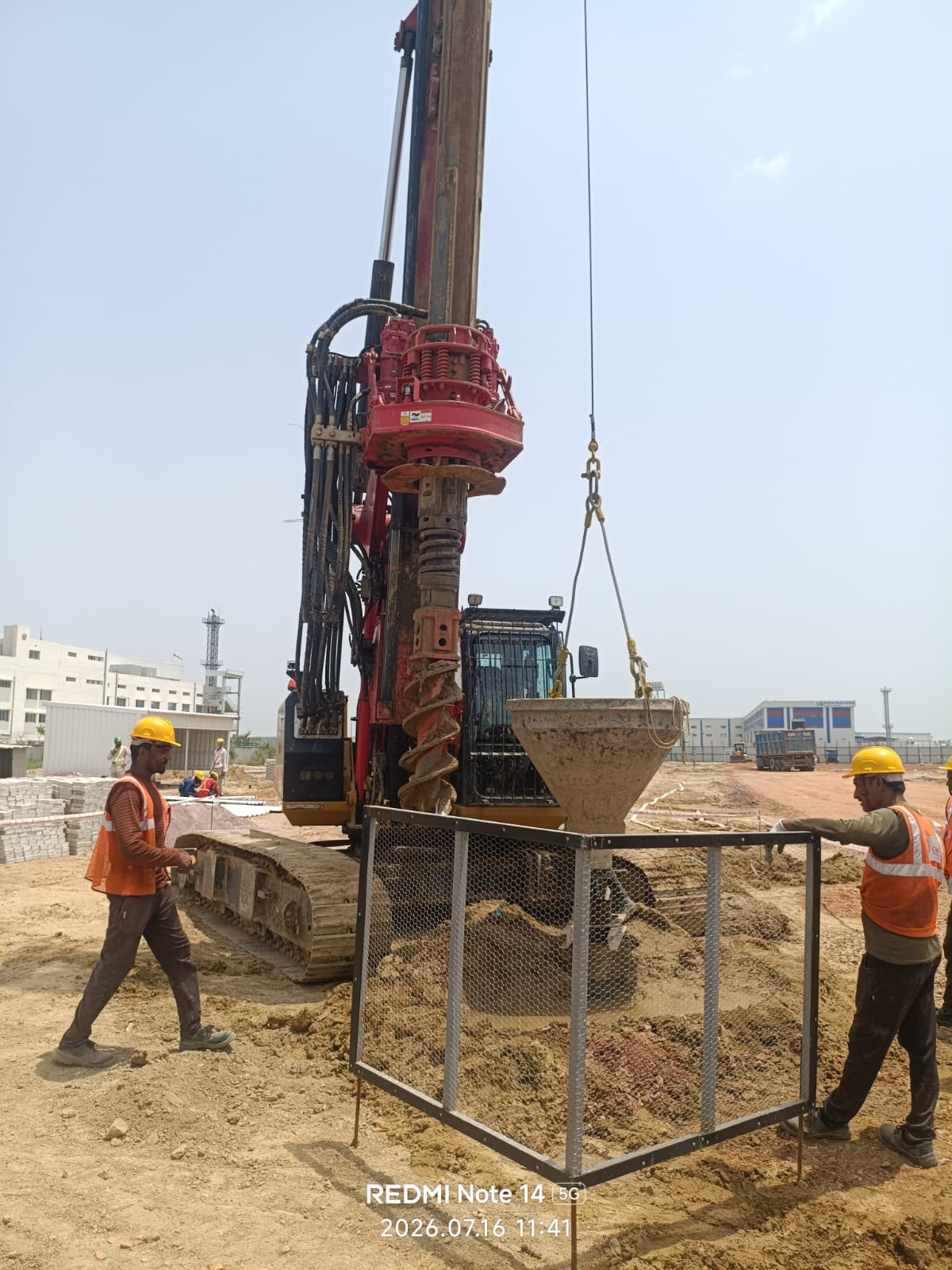
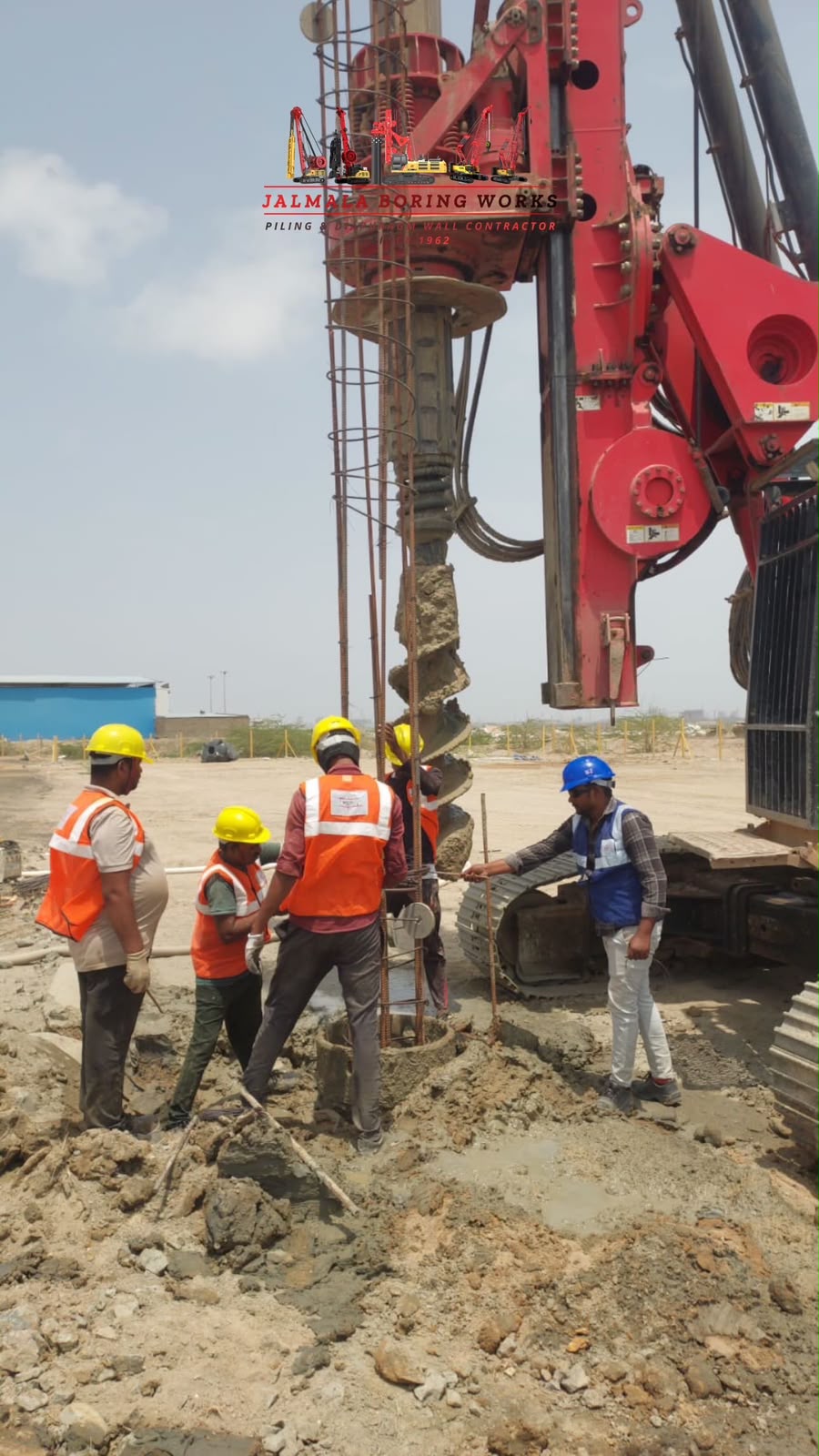
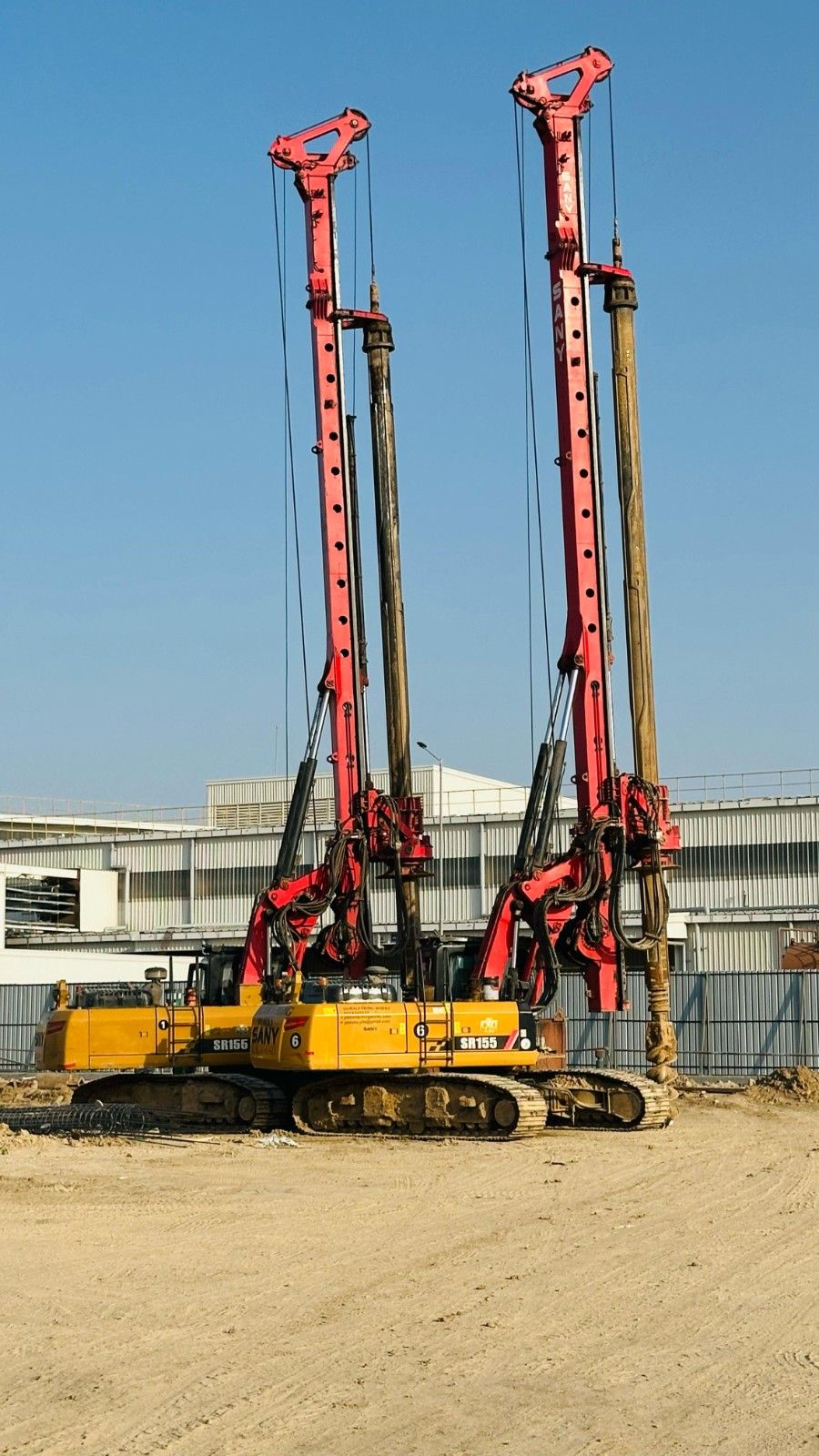
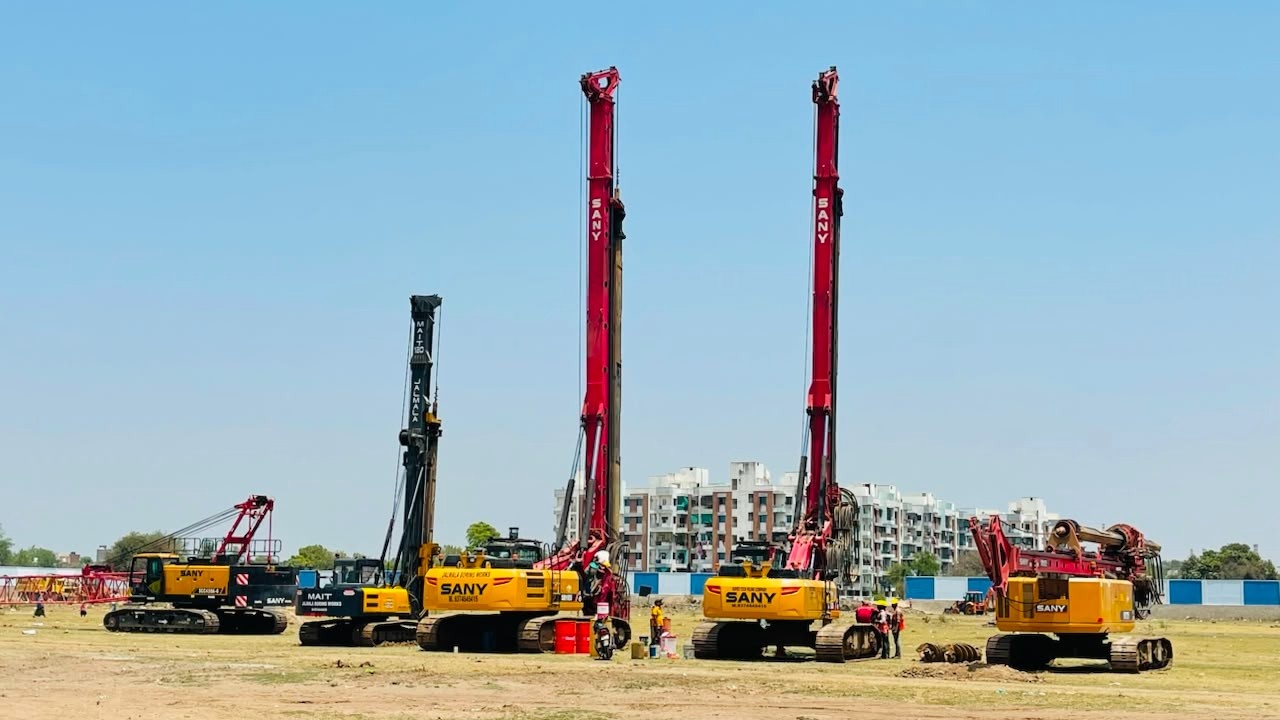
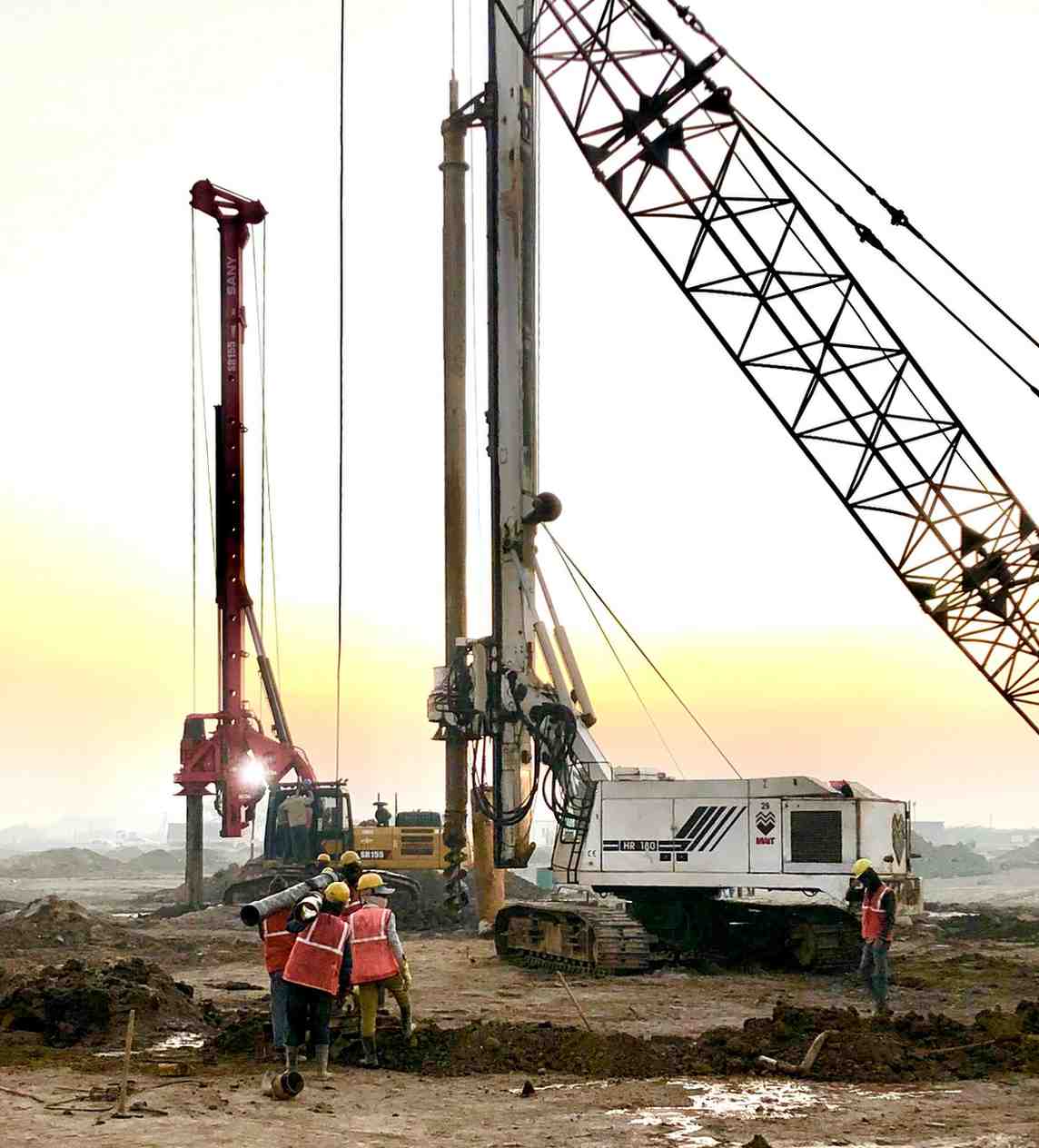
We specialize in bored piling with diameters ranging from 200 mm to 2000 mm and depths up to 50 meters. Using advanced hydraulic rotary rigs, we execute piling operations efficiently across a wide range of soil conditions. Our fleet includes high-performance rotary drilling rigs capable of working in restricted headroom areas while delivering precision, stability, and high productivity.
Secant pile walls are constructed by intersecting reinforced concrete piles to form a continuous retaining structure. Primary piles are installed first, followed by reinforced secondary piles after sufficient curing. This technique provides excellent groundwater control and soil retention, making it ideal for deep excavations, basements, and foundation support in challenging ground conditions.
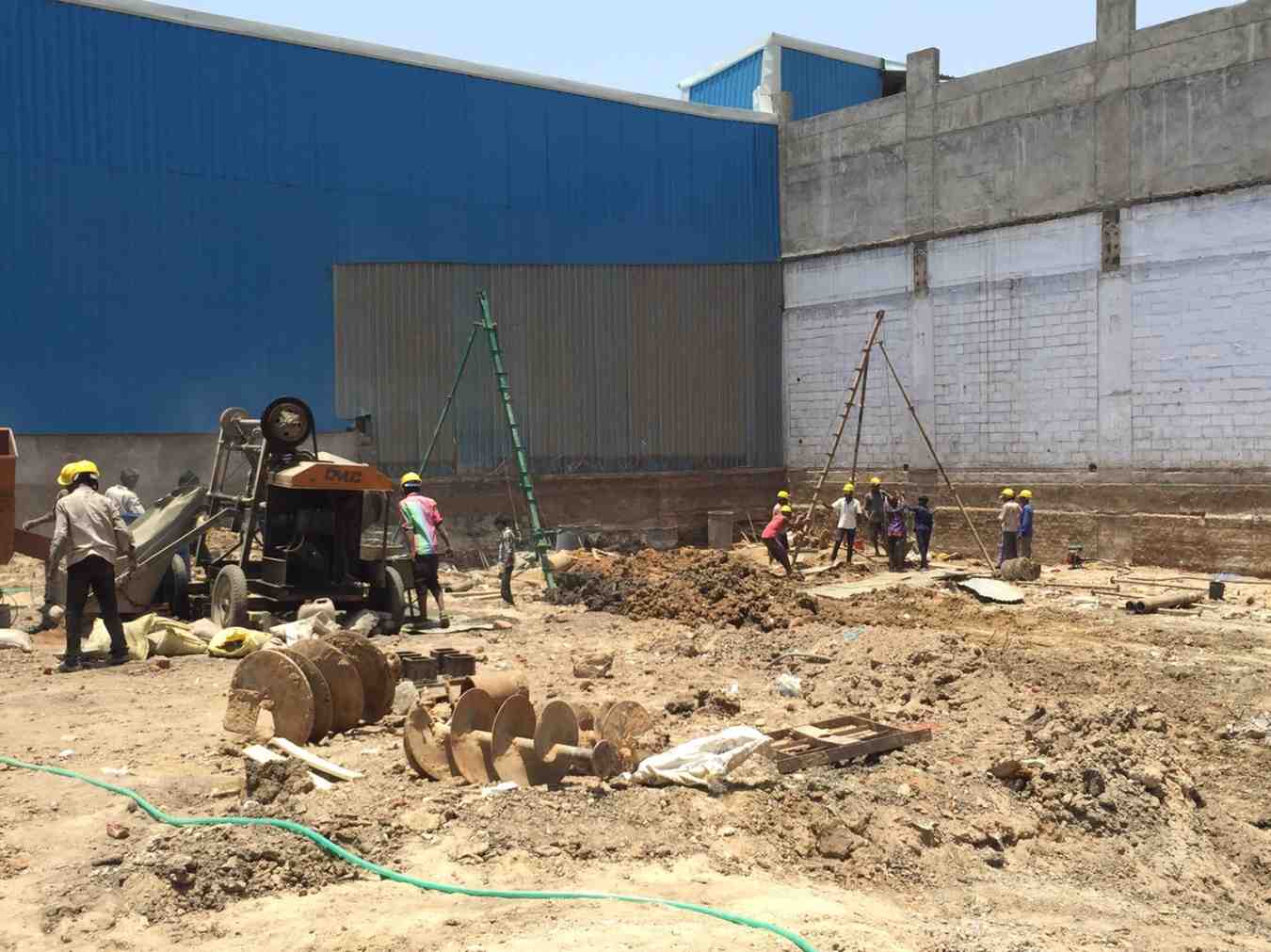
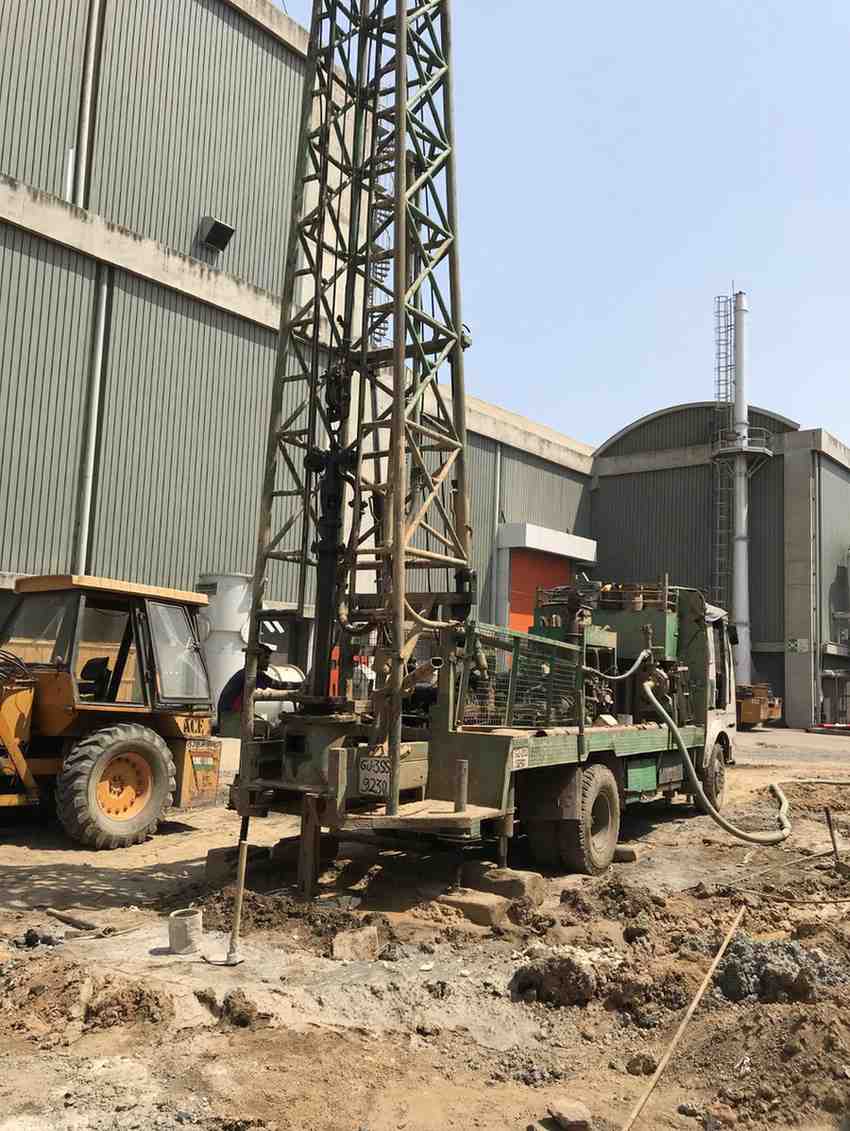
The Manual Auger Method is a reliable piling technique suitable for locations with restricted access or where low noise and vibration are essential. A tripod and manual winch system are used to drill boreholes using a helical auger. This method is commonly employed for pile diameters ranging from 250 mm to 1000 mm and offers an economical solution for smaller foundation projects.
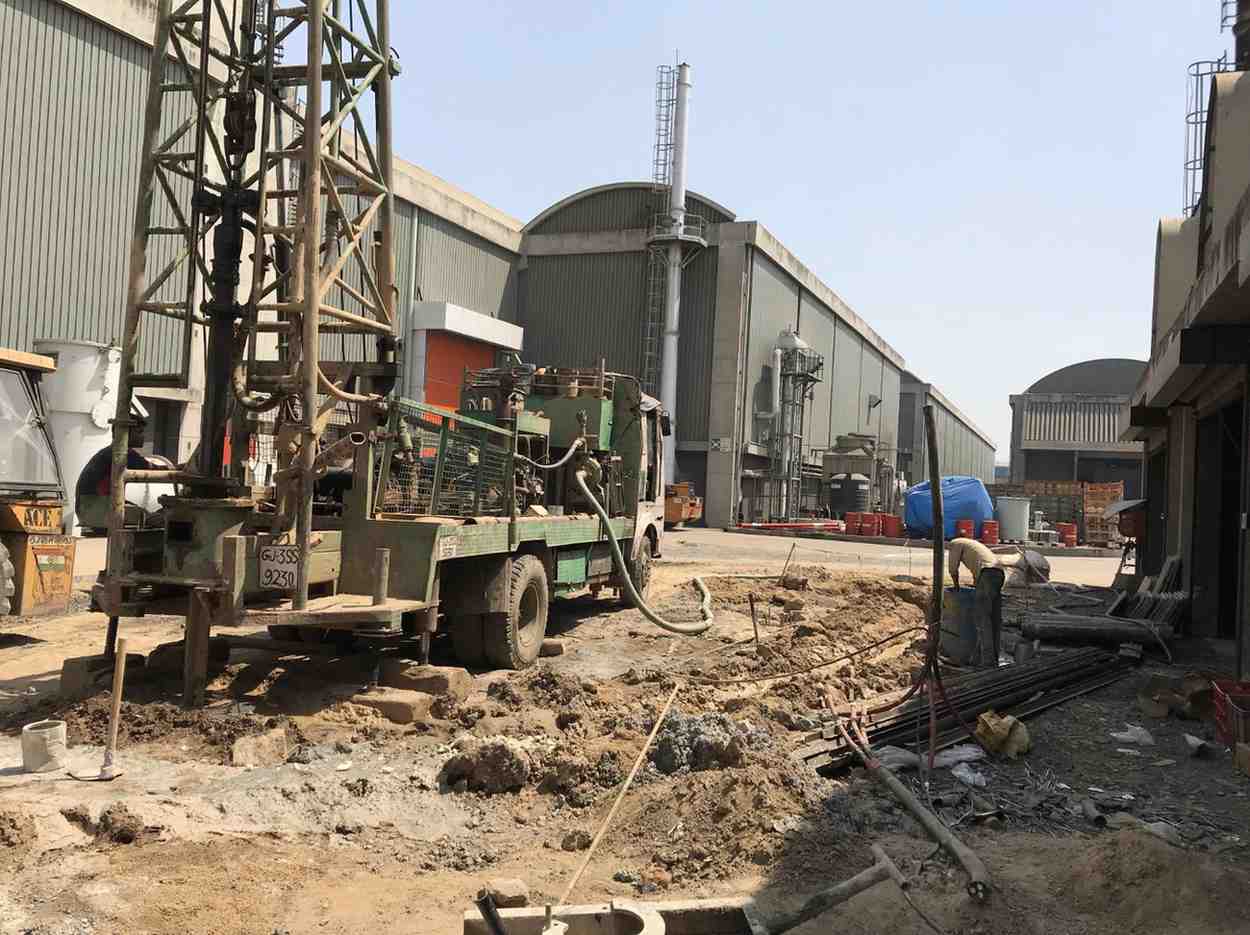
Our Truck Mounted Rotary (TMR) rigs utilize continuous bentonite slurry circulation to stabilize boreholes during drilling. Auger drilling is performed to the required depth while bentonite slurry supports the excavation and carries excavated soil back to a recycling tank. This method ensures bore stability, efficient spoil removal, and high productivity, particularly in loose or soft soil strata.
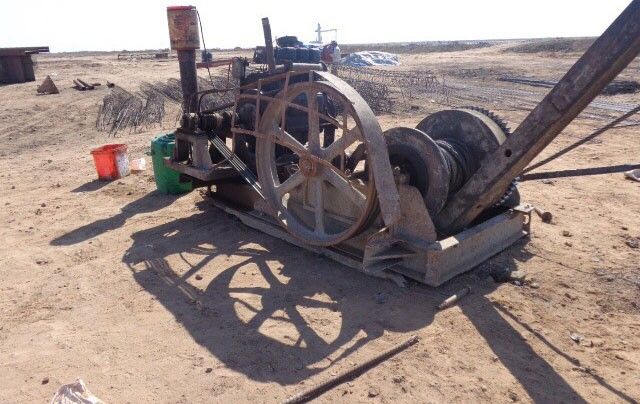
The DMC Pile Method employs Mendola-type rigs combined with bentonite drilling fluid for safe and efficient pile construction. Surface soil is loosened using a bailer before drilling continues with a percussion chisel. Bentonite slurry stabilizes the bore while transporting excavated material to settling pits. Once the desired depth is achieved, the drilling tools are removed and the final depth is verified before reinforcement and concreting.
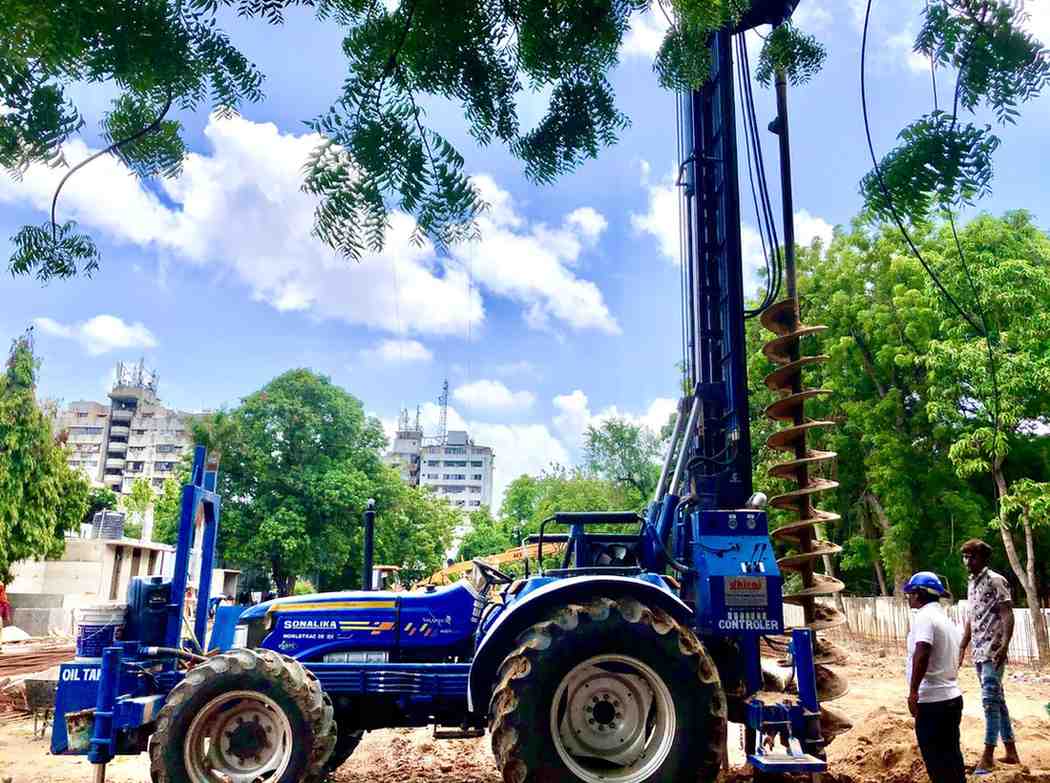
This method utilizes tractor-mounted rotary drilling rigs for fast and economical pile boring. Auger drilling is carried out to the required depth, with DMC rods added progressively to achieve deeper penetration through varying soil strata. It is particularly suitable for medium-depth foundation works and offers drilling capacities of up to 16 meters with excellent operational efficiency.
Our Work in Action
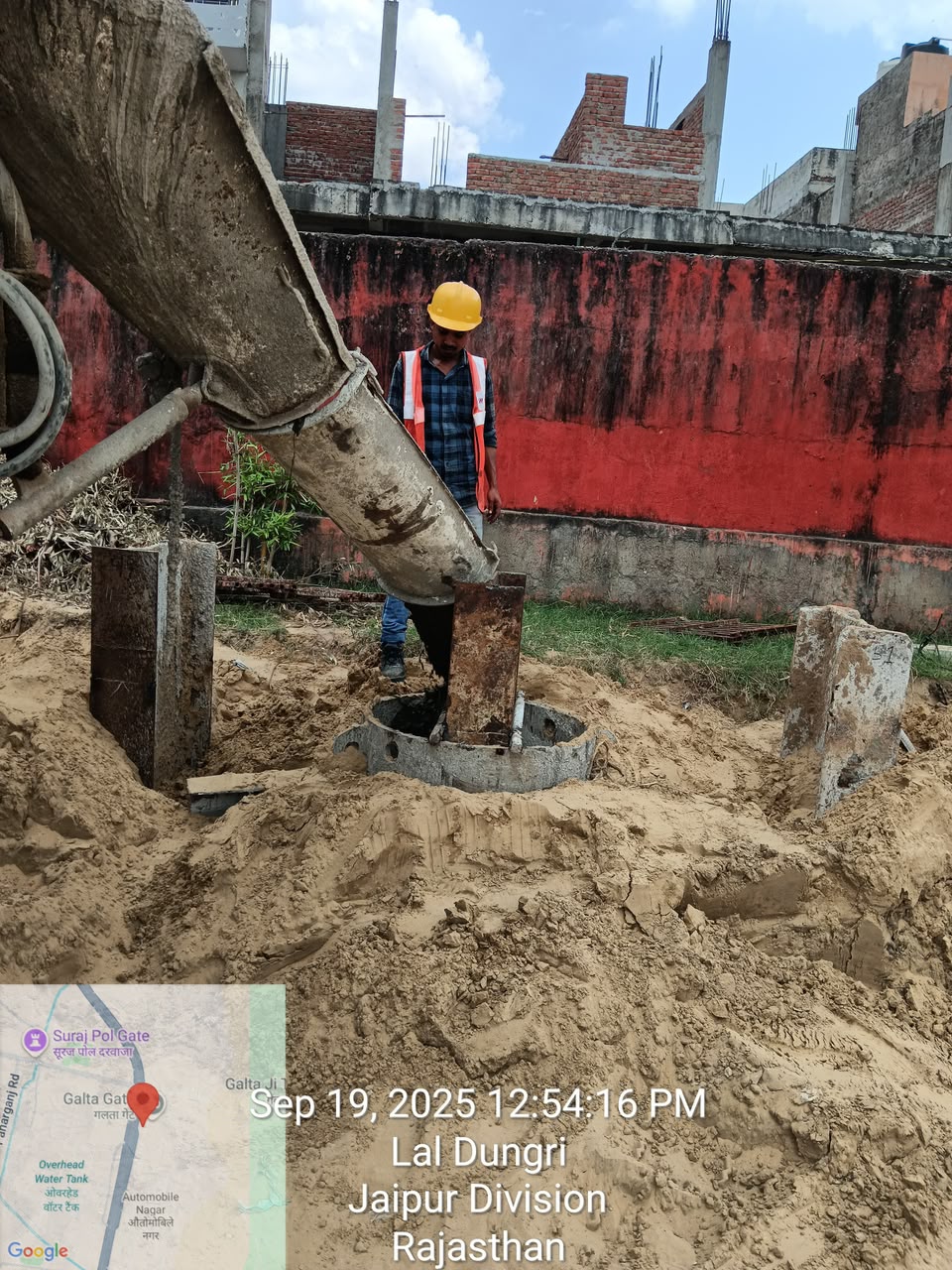
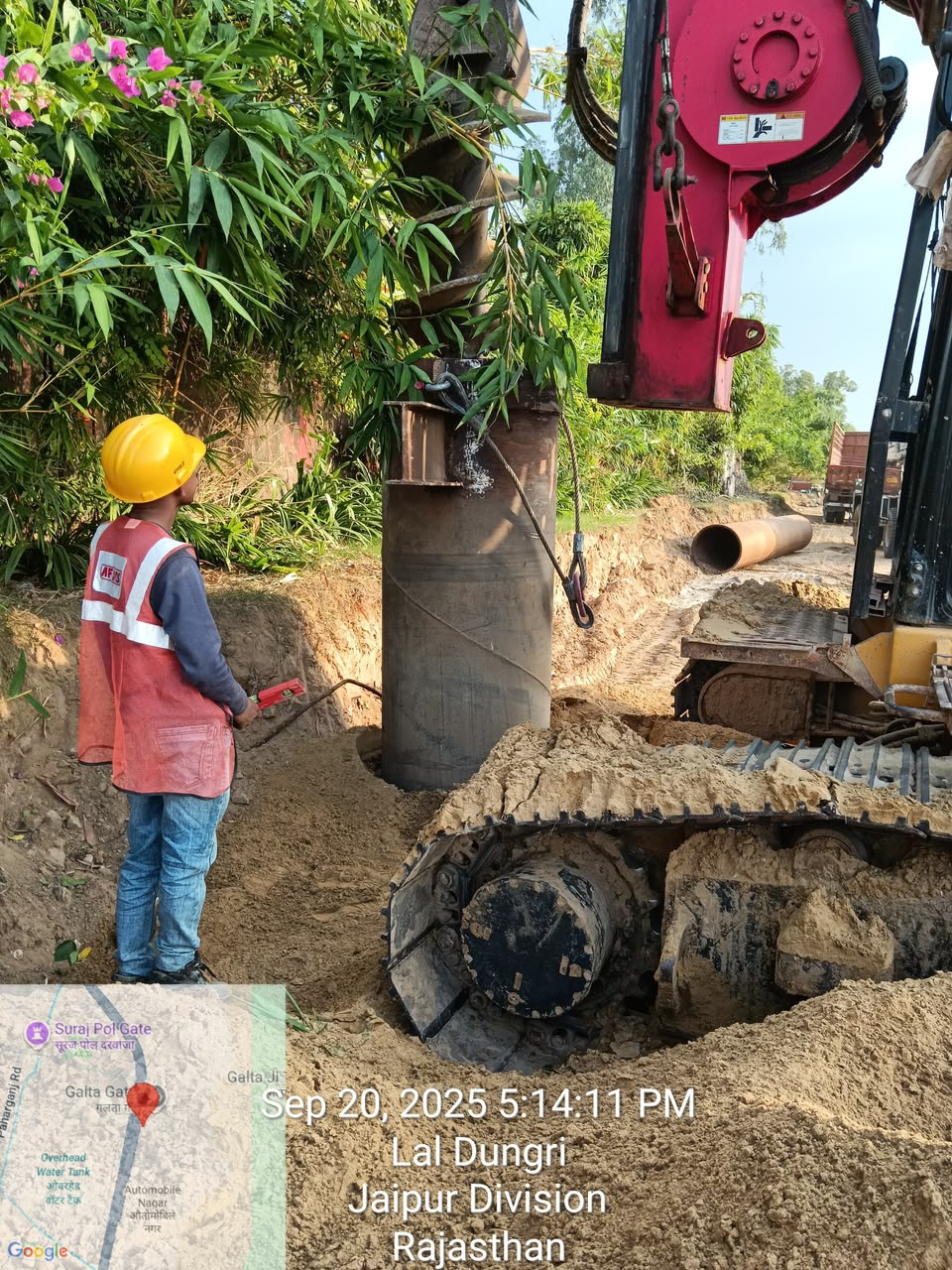
Click any image or video to view it in full screen.
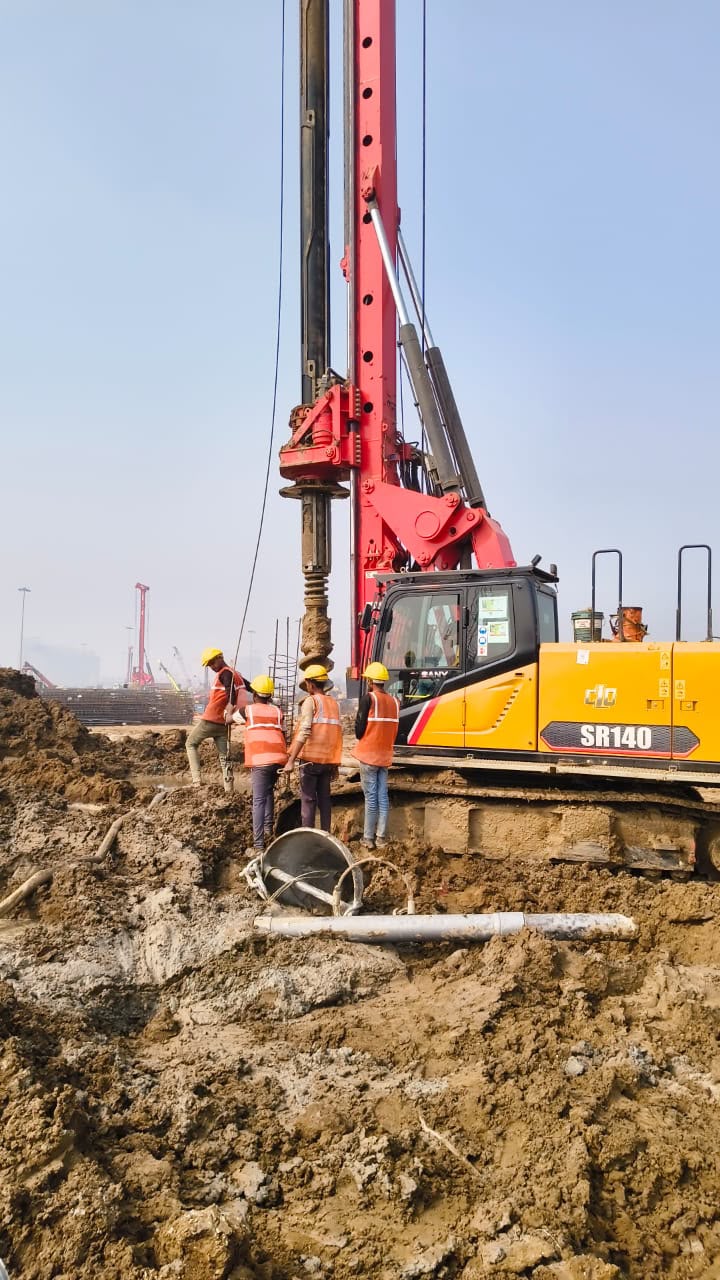
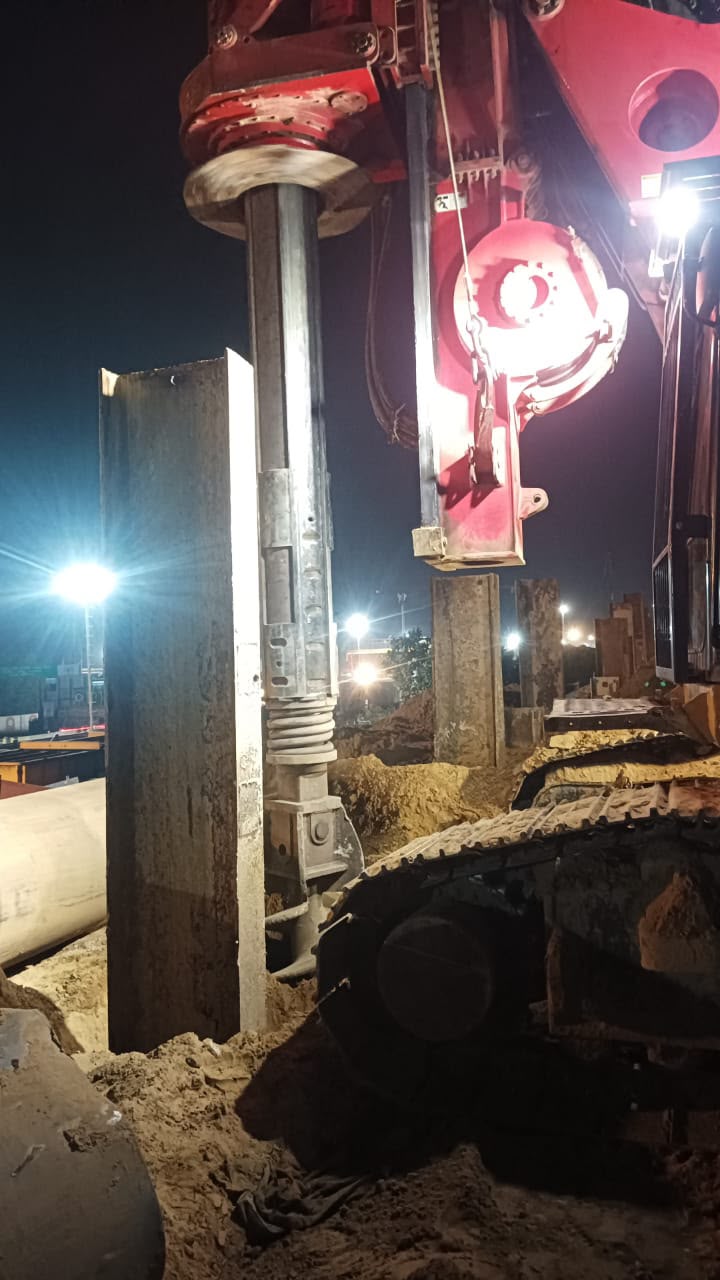
Recent Projects
Pile FoundationConstruction Process
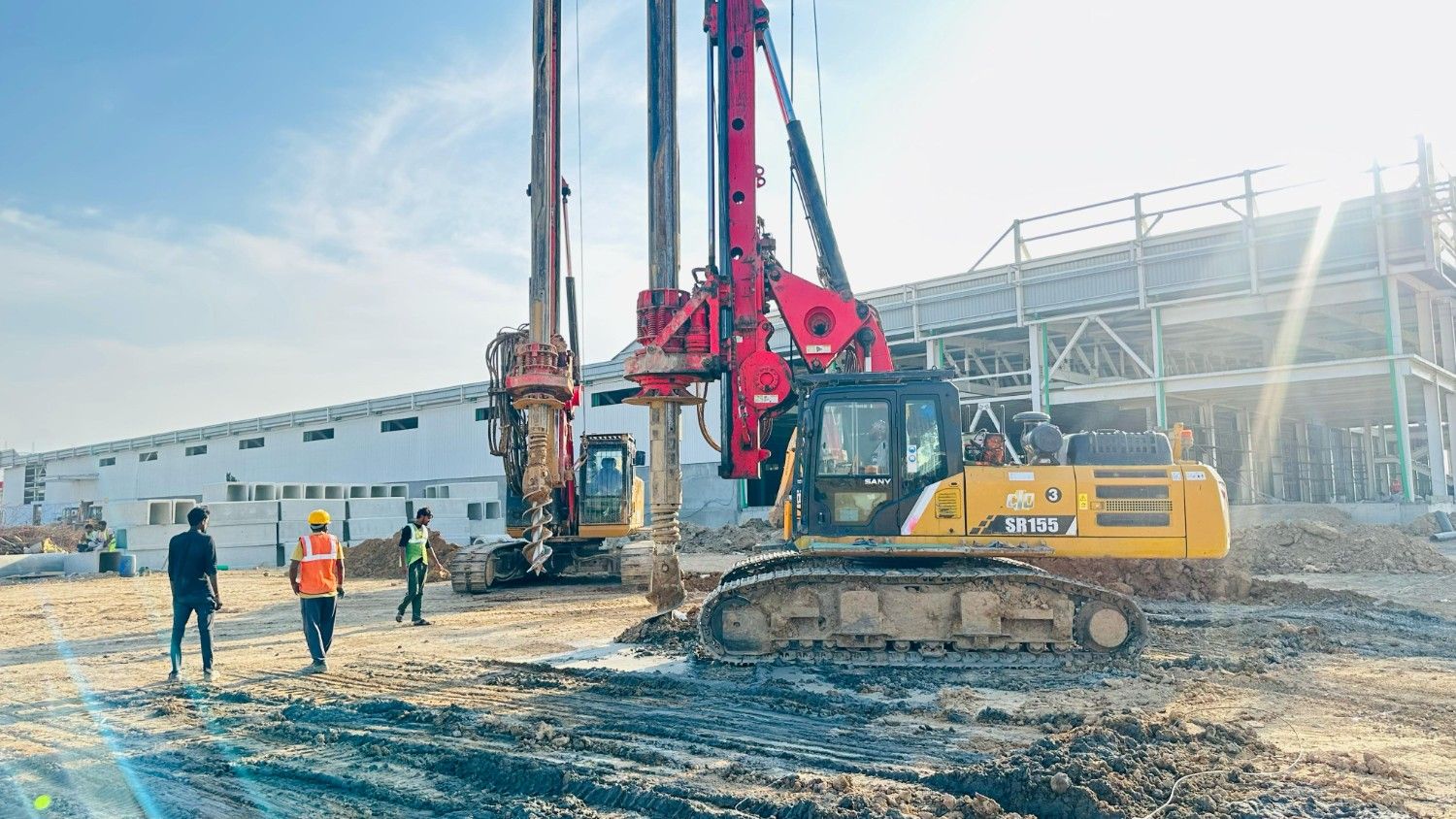
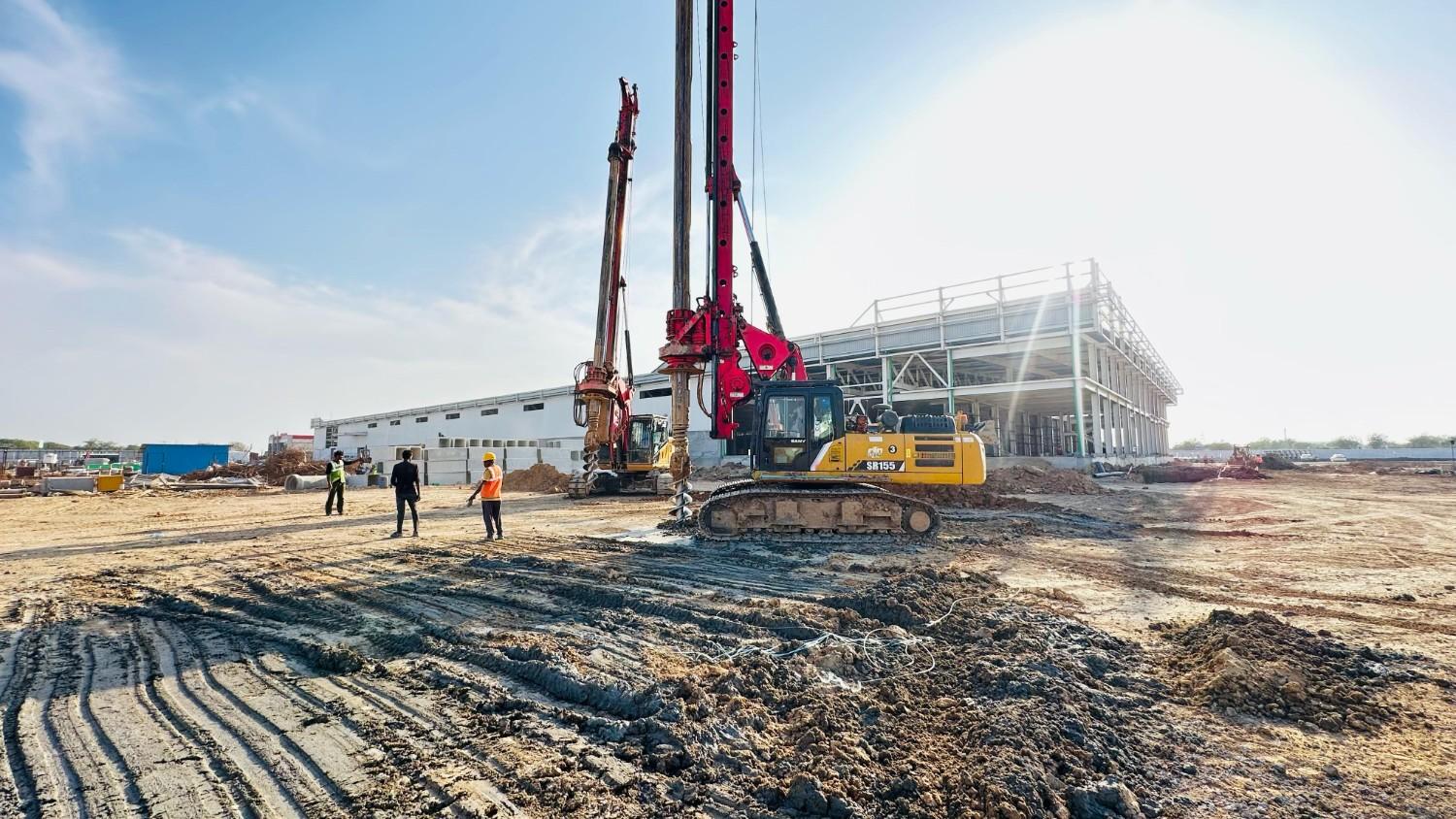
Survey, Setting Out & Guide Casing Installation
Detailed survey, marking of pile locations, and installation of temporary guide casing.
- Detailed survey and marking of pile locations
- Verification of pile coordinates and levels
- Positioning of Hydraulic Rotary Piling Rig
- Installation of temporary guide casing
- Ensures accurate pile alignment and protects bore opening
Pile Boring & Excavation
Drilling of pile bore using Hydraulic Rotary Rig to required depth.
- Drilling of pile bore using Hydraulic Rotary Rig
- Excavation carried out to the required depth and founding strata
- Suitable drilling tools used for soil, rock, or hard strata
- Continuous monitoring of depth, verticality, and pile diameter
- Removal and disposal of excavated soil from site
Slurry Support & Borehole Cleaning
Preparation and circulation of Bentonite/Polymer Slurry and borehole cleaning.
- Preparation and circulation of Bentonite/Polymer Slurry
- Stabilization of borehole walls during drilling
- Recycling of slurry through slurry plant
- Cleaning of borehole bottom to remove loose sediments
- Final inspection of bore depth and cleanliness
Reinforcement Cage Installation
Fabrication and lowering of reinforcement cage into the bore.
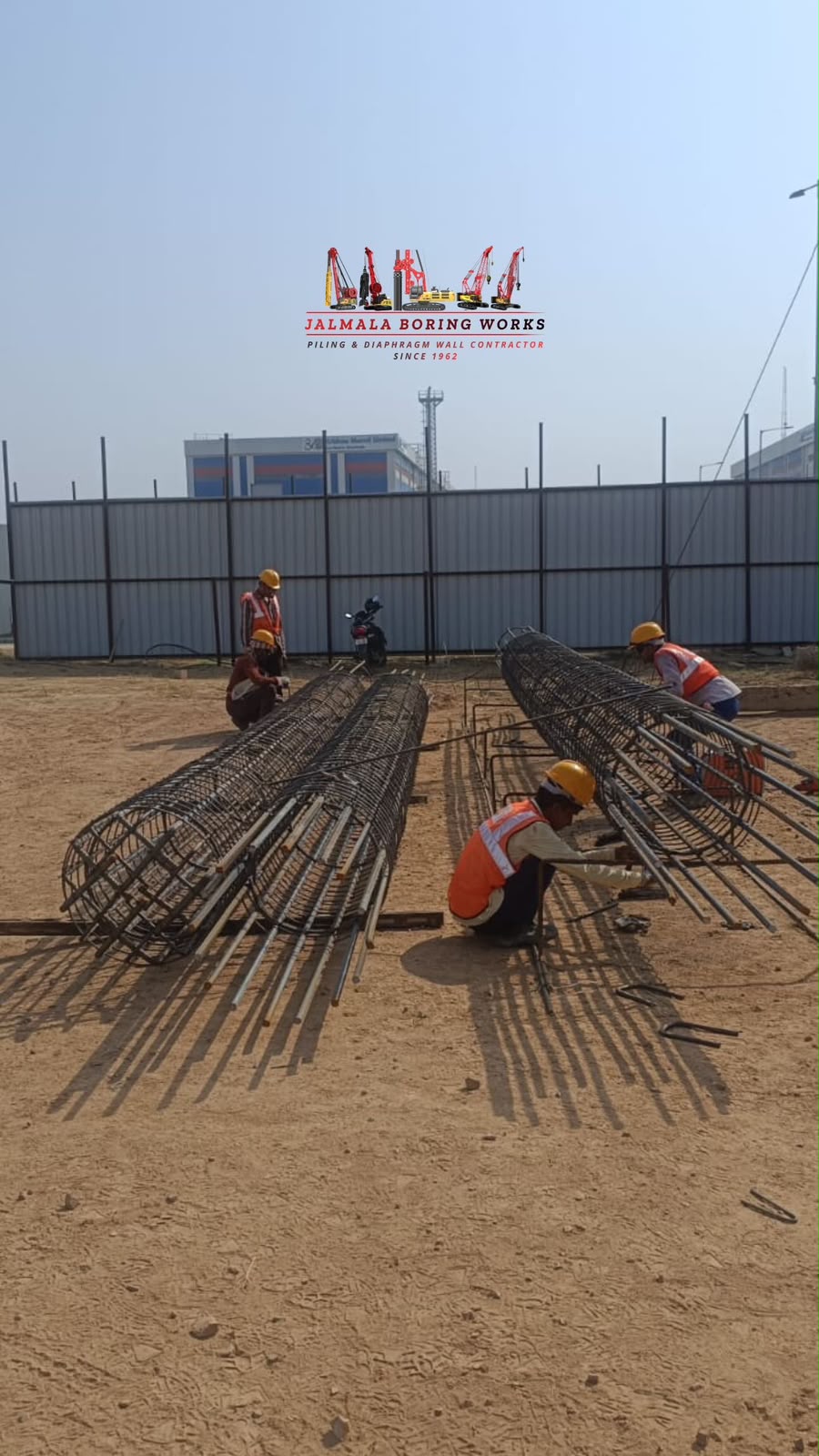
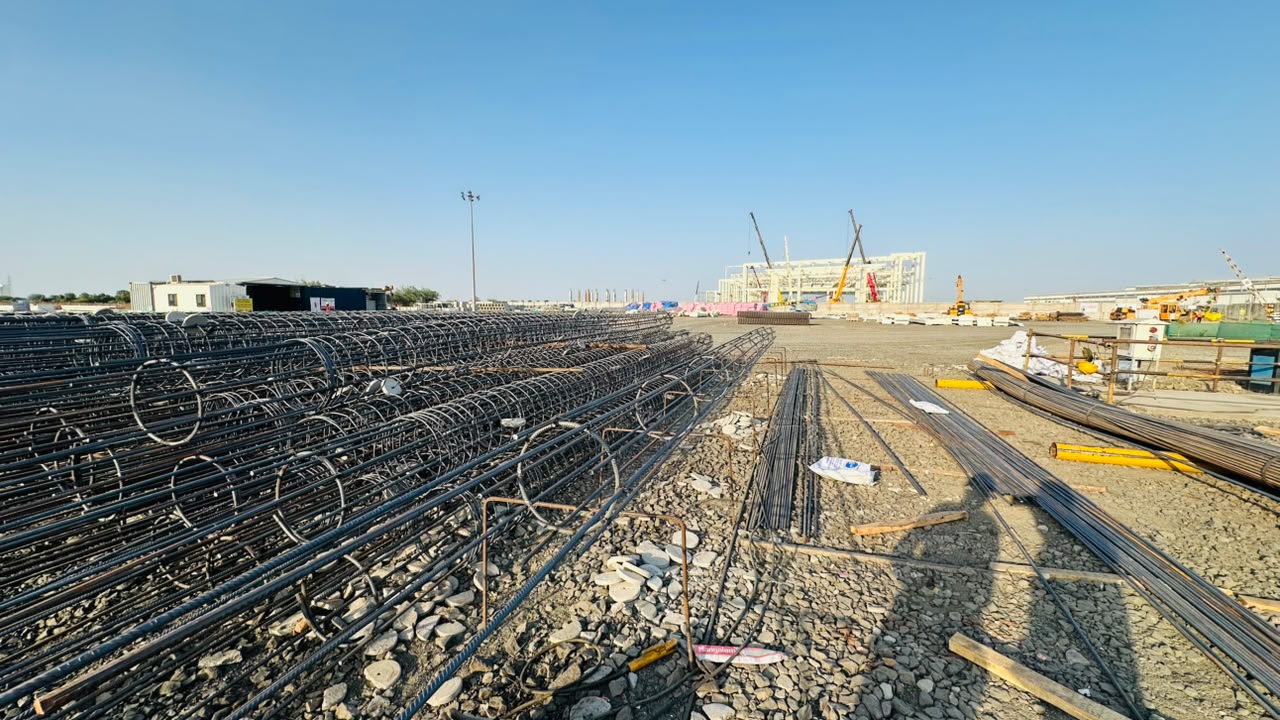
- Fabrication of reinforcement cage as per approved drawings
- Installation of spacers, couplers, lifting points, and cover blocks
- Lowering of reinforcement cage into the completed bore
- Accurate positioning and level adjustment
- Quality inspection before concrete placement
Tremie Concreting
Continuous concrete placement using tremie pipes.
- Installation of tremie pipes up to borehole bottom
- Continuous placement of concrete from bottom to top
- Prevention of concrete segregation through tremie method
- Displacement and recovery of slurry during concreting
- Completion of pile concreting in one uninterrupted operation
Pile Completion & Quality Control
Final pile completion, head trimming, and quality assurance.
- Extraction of temporary casing during or after concreting
- Recording of concrete consumption and pile parameters
- Pile head chipping up to cut-off level
- Verification of pile depth, diameter, and concrete quality
- Completion of testing, documentation, and quality assurance
- Ready for pile cap and foundation construction
Pile Foundation Contractor Ankleshwar – Legacy Contaminated Soil & Effluent Plume Engineering
Ankleshwar GIDC has been manufacturing dyes, intermediates, APIs, and specialty chemicals since the 1970s. That is 40+ years of accumulated chemical effluent seepage into the soil and groundwater. Beneath many plots in the estate, there are now contaminated groundwater plumes — some extending hundreds of meters from the original source, some at high enough concentrations to attack pile concrete within 15-20 years instead of the intended 50-year design life. This is not a theoretical concern — it is the physical reality of piling in Ankleshwar GIDC. If you are looking for a pile foundation contractor in Ankleshwar who understands legacy contamination engineering, this page explains what that actually involves. For MAH/GIDC compliance generally, see our Ankleshwar GIDC piling services page — this page is specifically for contamination engineering.
The Contamination Challenge – What 40 Years of Chemical Effluent Does Underground
Contamination in Ankleshwar GIDC does not stay where it was spilled. Effluent seeps into the soil, migrates with groundwater, and creates plumes that can extend far beyond the original source. For piling, three consequences matter most. First, aggressive soil chemistry — elevated sulfates, chlorides, and acidic pH attack concrete and reinforcement. Second, contaminated groundwater — pile drilling brings up contaminated water, which must be handled and disposed per pollution control norms. Third, contaminated soil disposal — excavated soil from piling is often hazardous and must be sent to an approved TSDF rather than disposed on-site. Our contaminated site piling services in Ankleshwar address all three as part of every project on legacy industrial plots.
Pre-Construction Contamination Assessment – What Should Happen Before Design
For any new piling project on a legacy Ankleshwar GIDC plot, a pre-construction contamination assessment is essential — not optional. The assessment involves: historical use review (what chemicals were handled on the plot over the past 40 years, from company records and GIDC documents); multi-depth soil sampling (surface 0-1m, intermediate 1-5m, deep 5-15m, and water table level — at multiple borehole locations); chemical analysis (sulfates as SO3, chlorides as Cl, pH, heavy metals, and specific contaminants related to prior use); groundwater monitoring (plume direction, concentration, and flow rate); and reporting that feeds directly into pile design specifications. This assessment typically costs ₹2-5 lakh and takes 3-4 weeks — but prevents 10-50× that cost in premature foundation failure or regulatory delays. Our pre-construction contamination assessment in Ankleshwar includes all these elements as part of project scoping.
Concrete Durability in Contaminated Ground – IS 456 Exposure Classification
Per IS 456 exposure classification, most of Ankleshwar GIDC falls into severe (0.5-1.0% sulfate or 0.5-1.0% chloride) or very severe (above 1.0%) categories — well above the "moderate" classification of clean sites. Mitigation for contaminated site piling in Ankleshwar GIDC includes: cement selection — sulfate-resisting cement (SRC) per IS 12330 with C3A below 3%, or Portland slag cement (PSC with 50%+ slag for chloride binding); enhanced cover — 75-100 mm minimum for cast-in-situ piles (vs 50-60 mm standard); reinforcement protection — epoxy-coated or galvanized rebar in the most aggressive zones; concrete grade — M40 or above with low permeability (typically 10⁻¹² m/s); admixtures — corrosion-inhibiting admixtures (calcium nitrite or amine-based) where specified by the design engineer. Without these measures, pile concrete in Ankleshwar GIDC's aggressive soil can deteriorate within 15-20 years — potentially requiring premature replacement at 5-10× the original cost.
Contaminated Soil Disposal – The Environmental Compliance Side
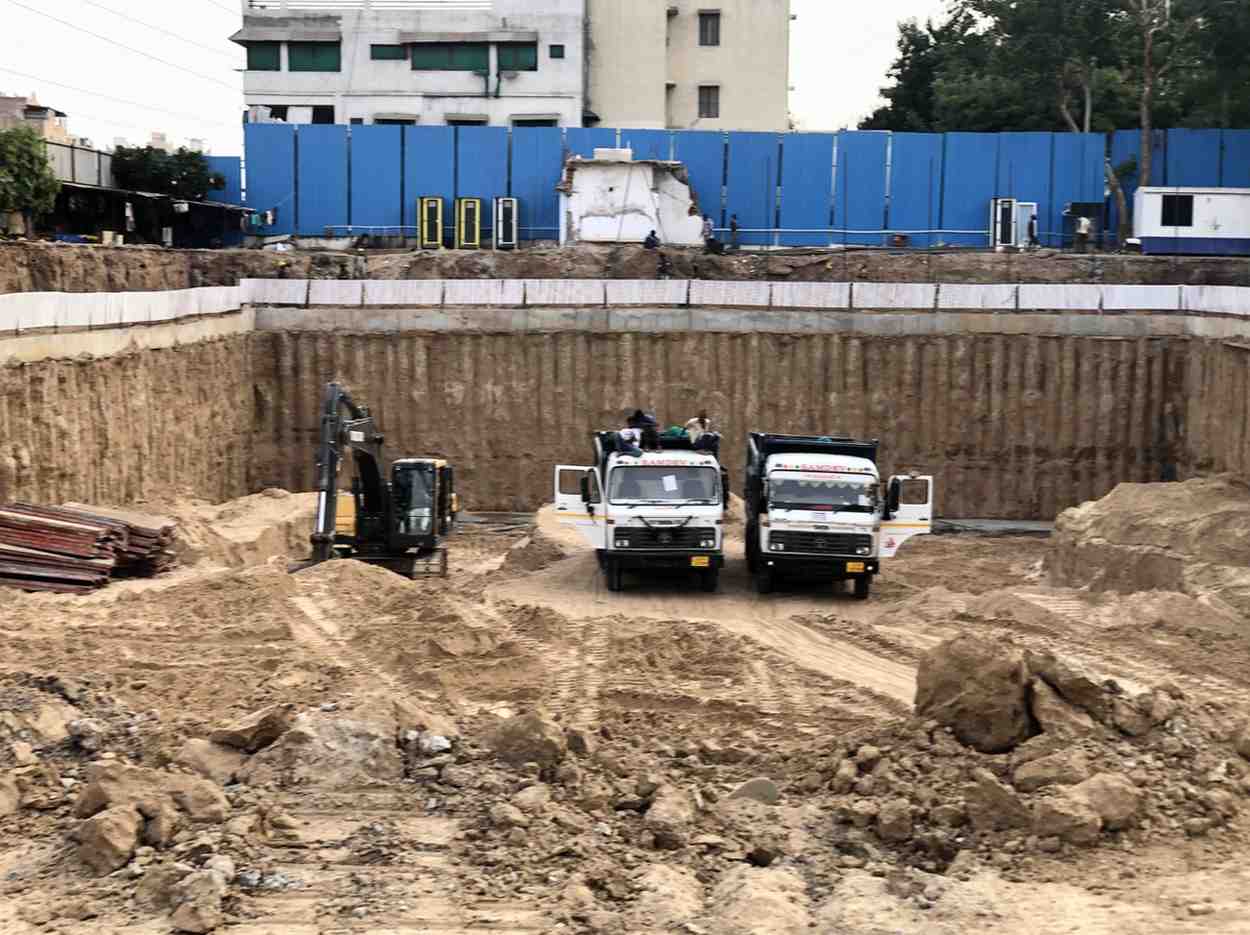
Piling generates significant excavated material — soil, bentonite slurry, and occasionally contaminated groundwater. On contaminated Ankleshwar GIDC plots, this material cannot be disposed on-site or in municipal landfills. Standard protocol for contaminated soil disposal during piling in Ankleshwar: (1) segregate contaminated soil from clean soil during excavation; (2) test excavated material for specific contaminants per Gujarat Pollution Control Board (GPCB) norms; (3) dispose contaminated material at an approved TSDF (Treatment, Storage, Disposal Facility) — typically the common TSDF in Ankleshwar or Nandesari GIDC; (4) document disposal through GPCB-compliant manifests; (5) treat bentonite slurry before discharge per GPCB norms. Handling and disposal can add 15-30% to piling cost for highly contaminated sites, but is legally required and protects the surrounding environment. We handle all documentation and disposal as part of the piling package.
Environmental Clearance Coordination
Environmental clearance (EC) requirements depend on the project's activity classification under the EIA Notification 2006. For most construction and industrial projects, the project itself needs EC — piling is part of the construction phase, not a separate EC trigger. However, if the site has known contamination or if the project is adjacent to sensitive receptors, the EC conditions typically include specific requirements for contaminated soil management during construction. In practice, we coordinate with the project owner's environmental consultant to ensure piling work complies with EC conditions. For brownfield projects on legacy-contaminated plots, a separate environmental site assessment may be required before EC conditions can be satisfied. Our team provides the piling-related environmental documentation that feeds into this process.
How Ankleshwar GIDC Contamination Differs From Other Estates
Ankleshwar GIDC is not the same as other chemical estates in India. Age — operating since the 1970s, meaning 40+ years of accumulated contamination versus 10-15 years in newer estates like Saykha or Dahej PCPIR. Density — hundreds of small chemical units packed closely together, creating overlapping contamination plumes that are difficult to attribute to any single source. Chemical diversity — dyes, intermediates, APIs, agrochemicals, and specialty chemicals all processed in proximity, resulting in complex and unpredictable soil chemistry. This combination means that generic "chemical plant piling" assumptions are insufficient — each plot in Ankleshwar GIDC requires its own contamination assessment and site-specific piling design. Our contamination-specific piling in Ankleshwar is calibrated to these realities.
Contact Our Ankleshwar Contamination Piling Team
Ready to discuss contaminated site piling in Ankleshwar GIDC for your project? Call our team at +91 93745 45415 or email jalmala.pile@gmail.com. Mention "contaminated site" or "brownfield assessment" in your inquiry for priority response. Share any historical use information, past environmental reports, and project scope — our team responds within 2-3 business days with an initial assessment and a proposal for pre-construction contamination testing. Main office is at Dholka Road, near Nariampura Village, Narimanpura, Sarkhej, Ahmedabad, Gujarat 382210. For broader Ankleshwar GIDC coverage (MAH compliance, NAA permits, sub-clusters), see our Ankleshwar GIDC piling services page.