
Pile Foundation
Bored Cast-in-Situ Piling Specialists
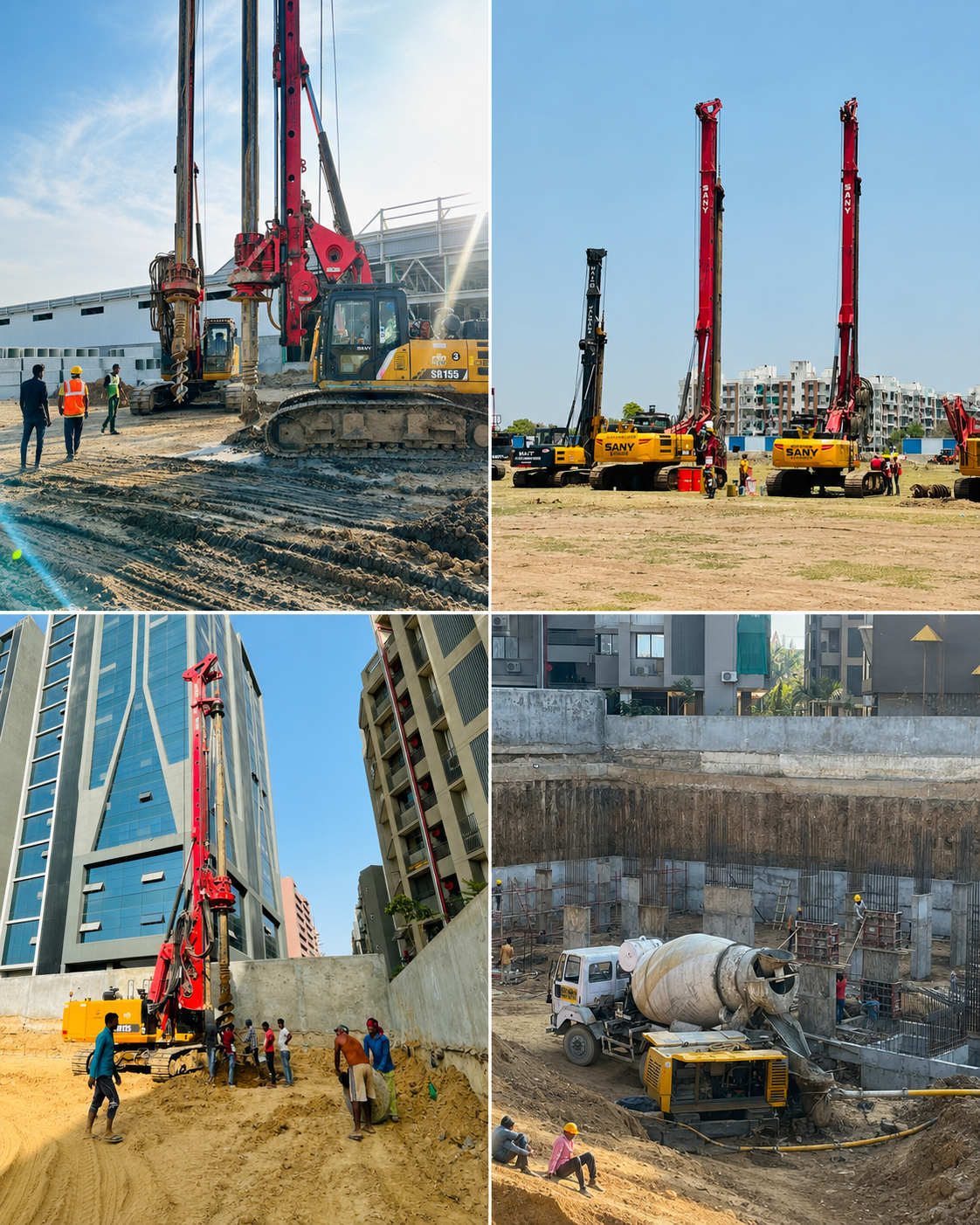
Jalmala Boring Works provides Pile Foundation and Deep Foundation Solutions using Bored Cast-in-Situ Piles for residential, commercial, industrial, and infrastructure projects. With advanced Hydraulic Rotary Rigs, we construct piles from 300 mm to 1800 mm diameter and depths of up to 50 metres, delivering reliable load-bearing capacity across soft soil, hard rock, and high groundwater conditions.
Our Piling Methods
We deploy six proven techniques — selected based on soil profile, site constraints, and project requirements.
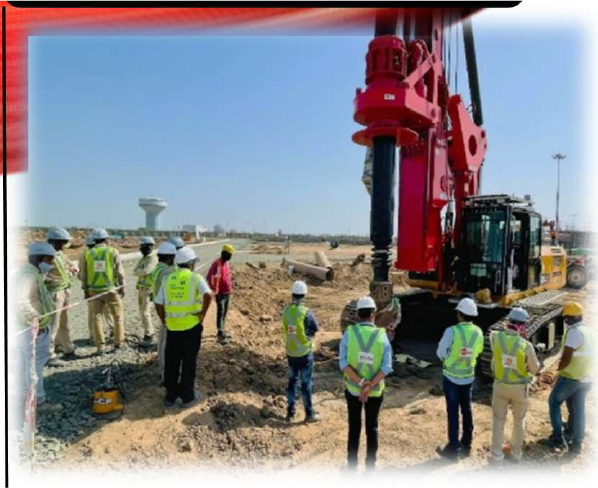
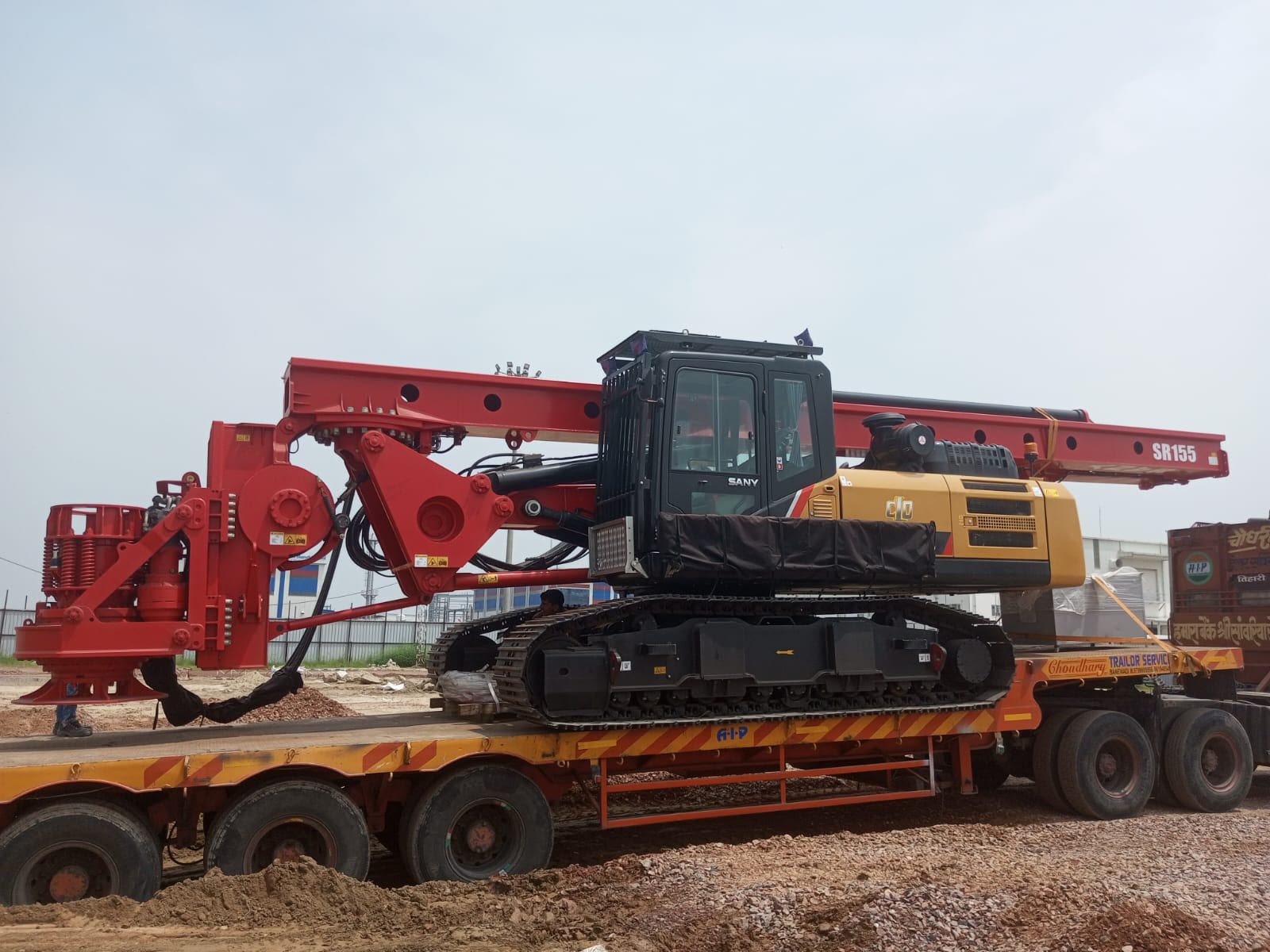
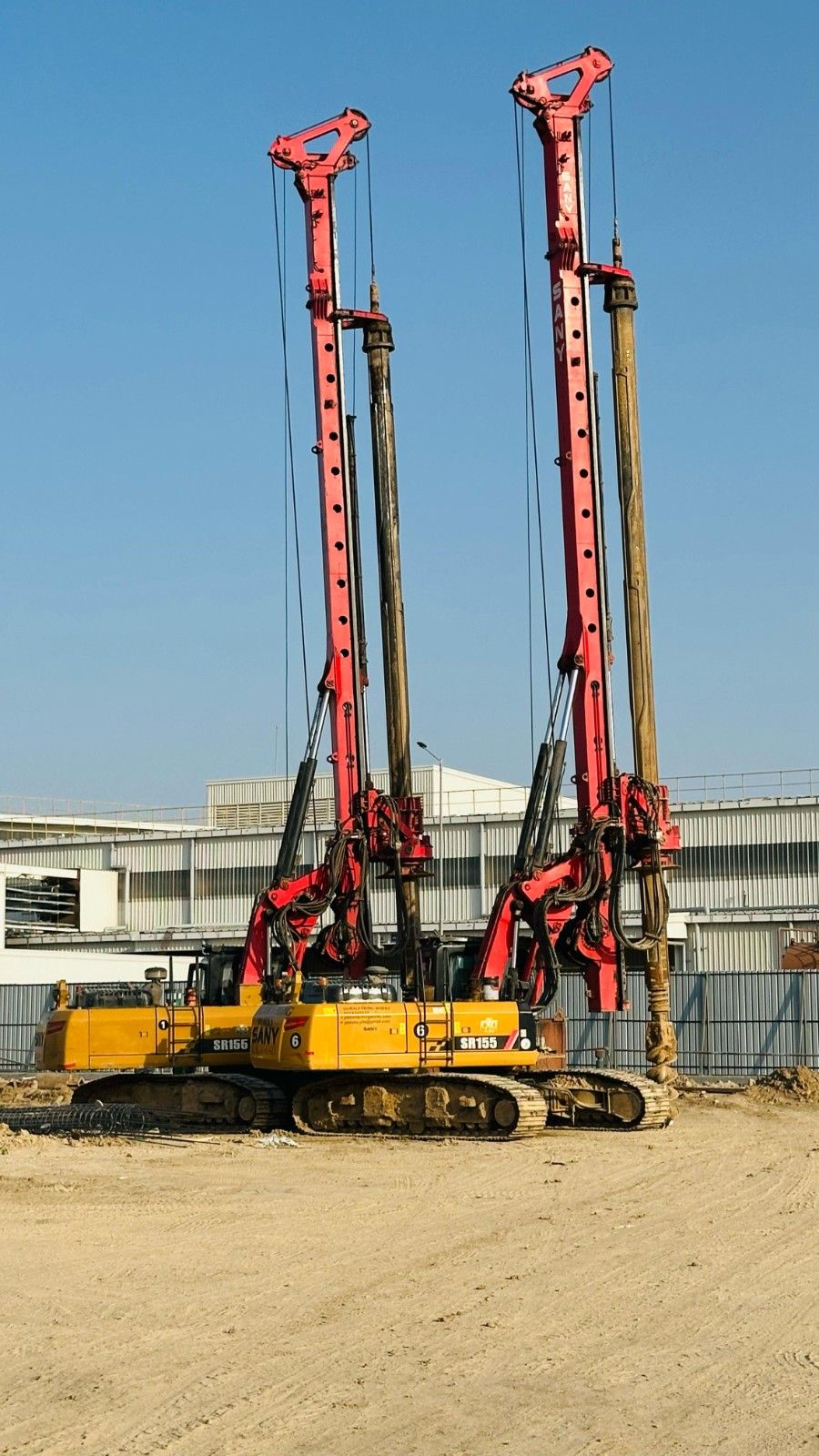
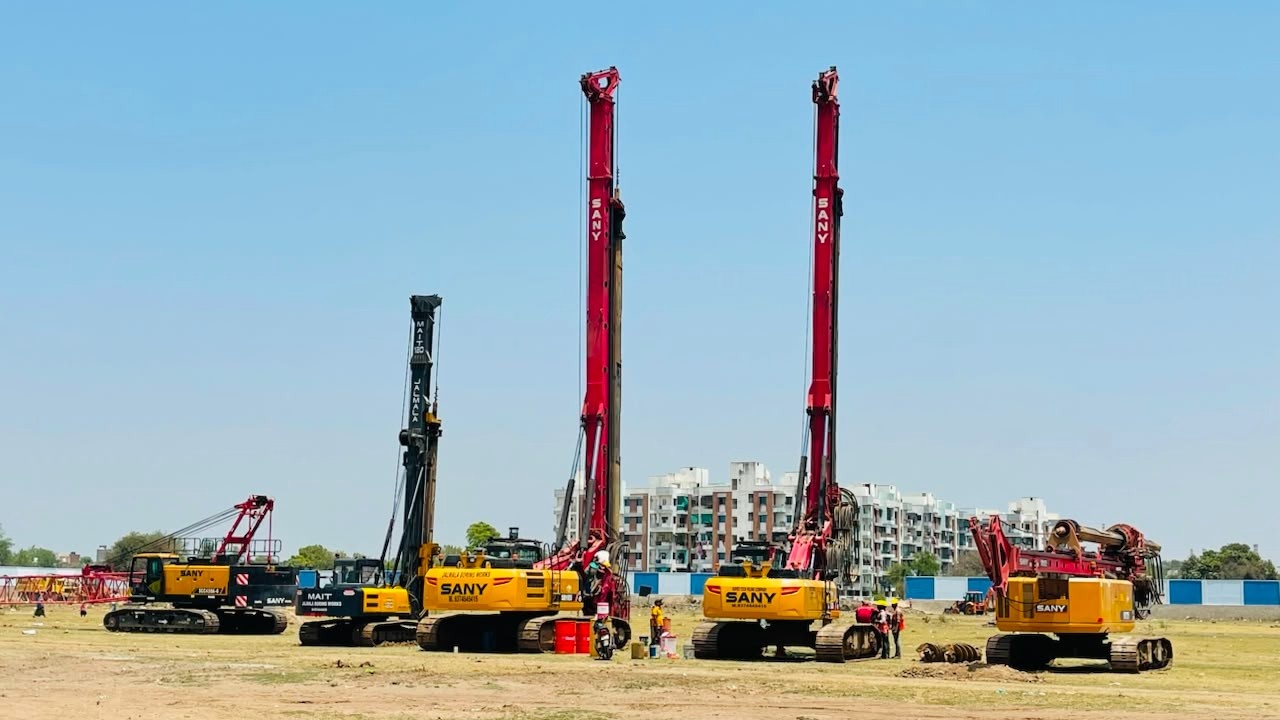
We specialize in bored piling with diameters ranging from 200 mm to 2000 mm and depths up to 50 meters. Using advanced hydraulic rotary rigs, we execute piling operations efficiently across a wide range of soil conditions. Our fleet includes high-performance rotary drilling rigs capable of working in restricted headroom areas while delivering precision, stability, and high productivity.
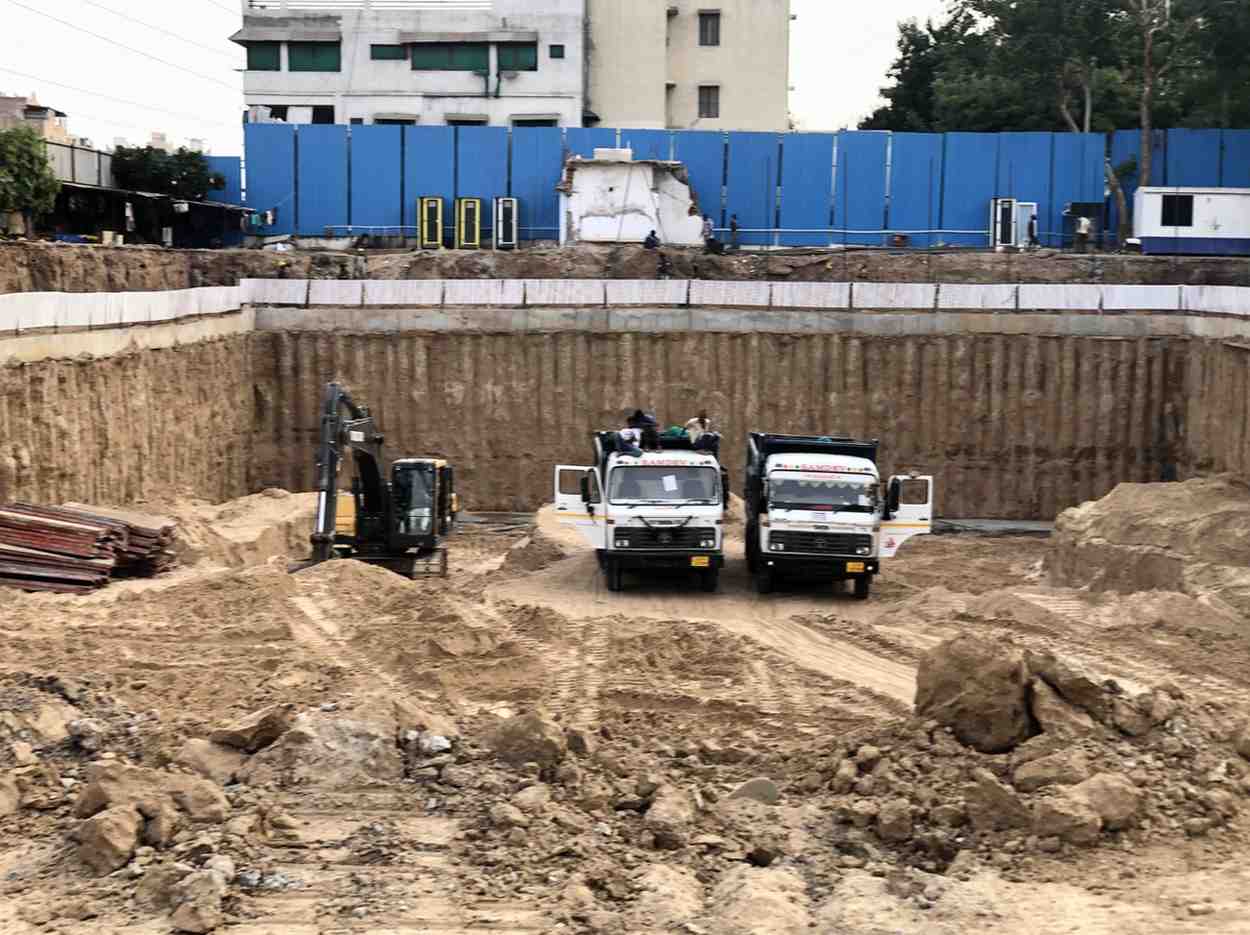
Secant pile walls are constructed by intersecting reinforced concrete piles to form a continuous retaining structure. Primary piles are installed first, followed by reinforced secondary piles after sufficient curing. This technique provides excellent groundwater control and soil retention, making it ideal for deep excavations, basements, and foundation support in challenging ground conditions.
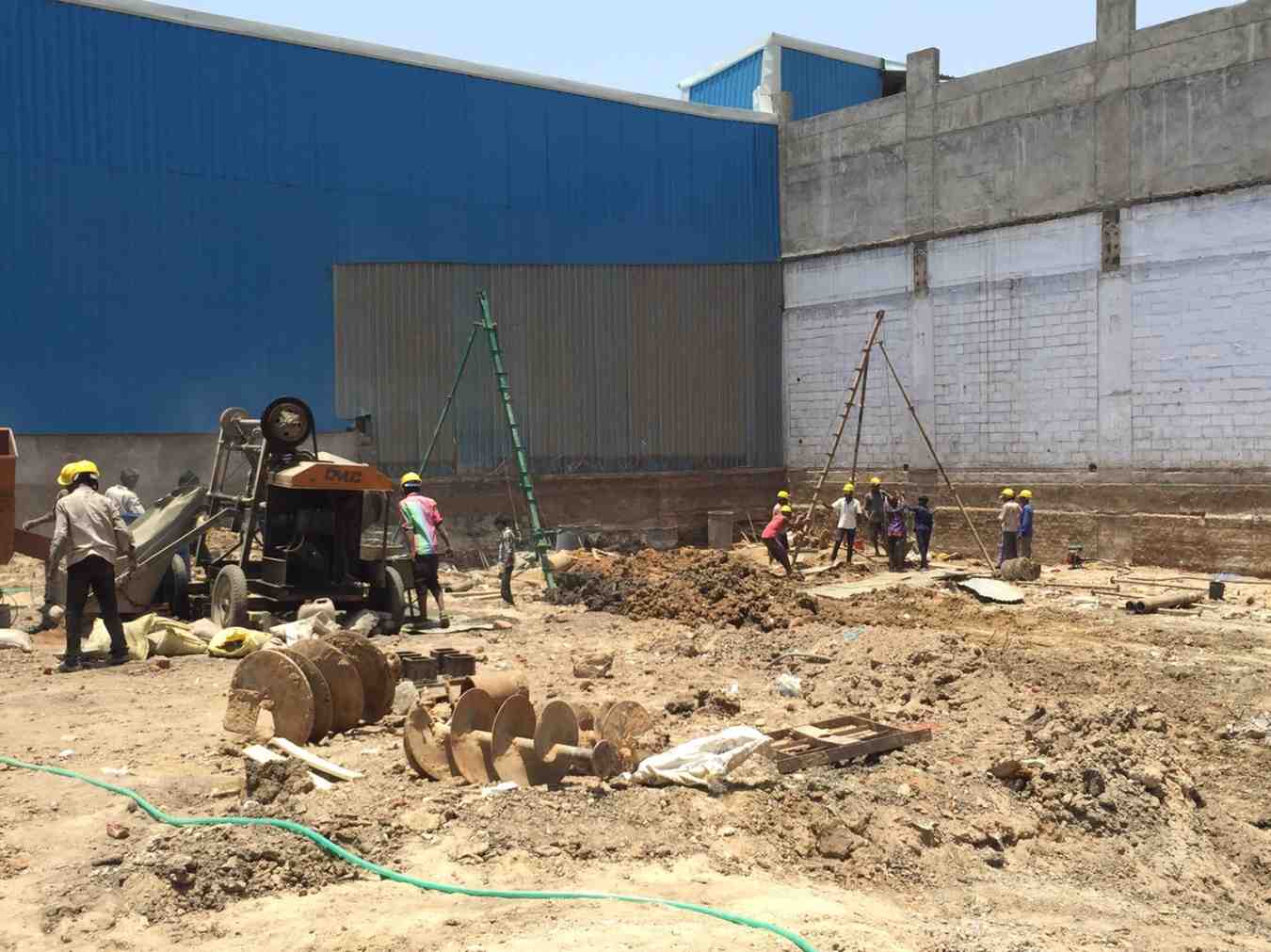
The Manual Auger Method is a reliable piling technique suitable for locations with restricted access or where low noise and vibration are essential. A tripod and manual winch system are used to drill boreholes using a helical auger. This method is commonly employed for pile diameters ranging from 250 mm to 1000 mm and offers an economical solution for smaller foundation projects.
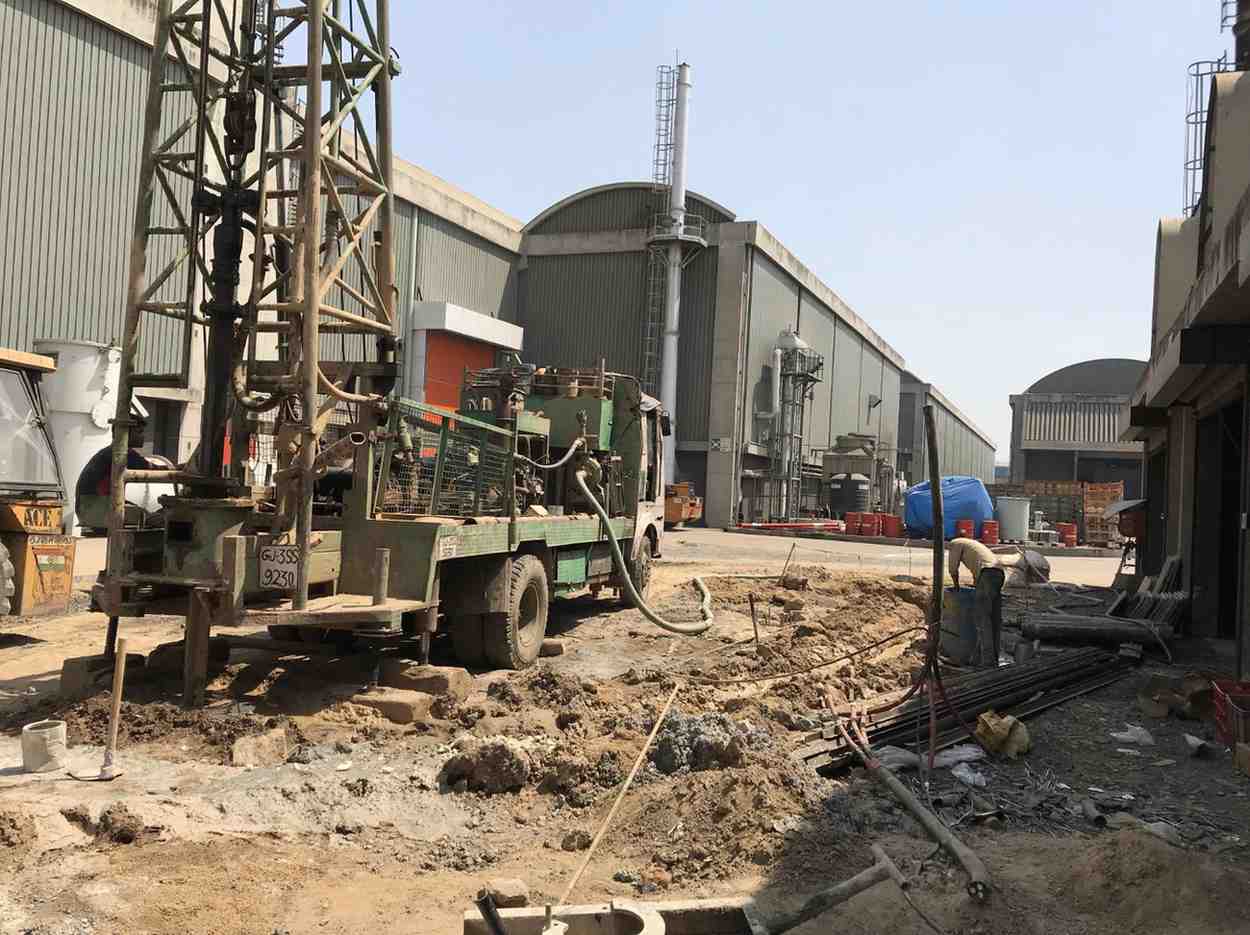
Our Truck Mounted Rotary (TMR) rigs utilize continuous bentonite slurry circulation to stabilize boreholes during drilling. Auger drilling is performed to the required depth while bentonite slurry supports the excavation and carries excavated soil back to a recycling tank. This method ensures bore stability, efficient spoil removal, and high productivity, particularly in loose or soft soil strata.
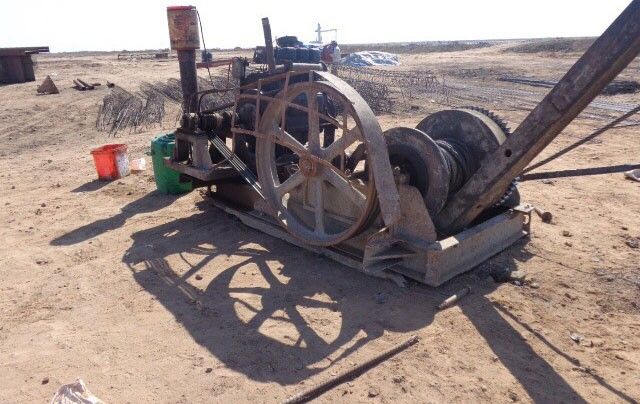
The DMC Pile Method employs Mendola-type rigs combined with bentonite drilling fluid for safe and efficient pile construction. Surface soil is loosened using a bailer before drilling continues with a percussion chisel. Bentonite slurry stabilizes the bore while transporting excavated material to settling pits. Once the desired depth is achieved, the drilling tools are removed and the final depth is verified before reinforcement and concreting.
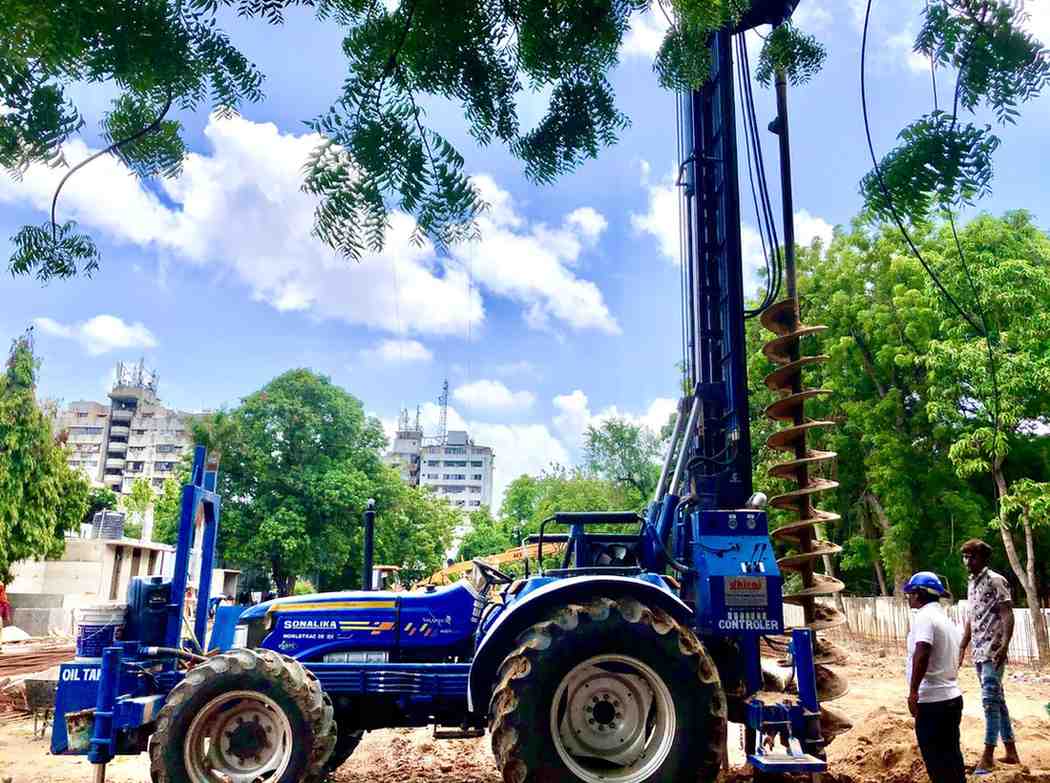
This method utilizes tractor-mounted rotary drilling rigs for fast and economical pile boring. Auger drilling is carried out to the required depth, with DMC rods added progressively to achieve deeper penetration through varying soil strata. It is particularly suitable for medium-depth foundation works and offers drilling capacities of up to 16 meters with excellent operational efficiency.
Our Work in Action
Click any image or video to view it in full screen.
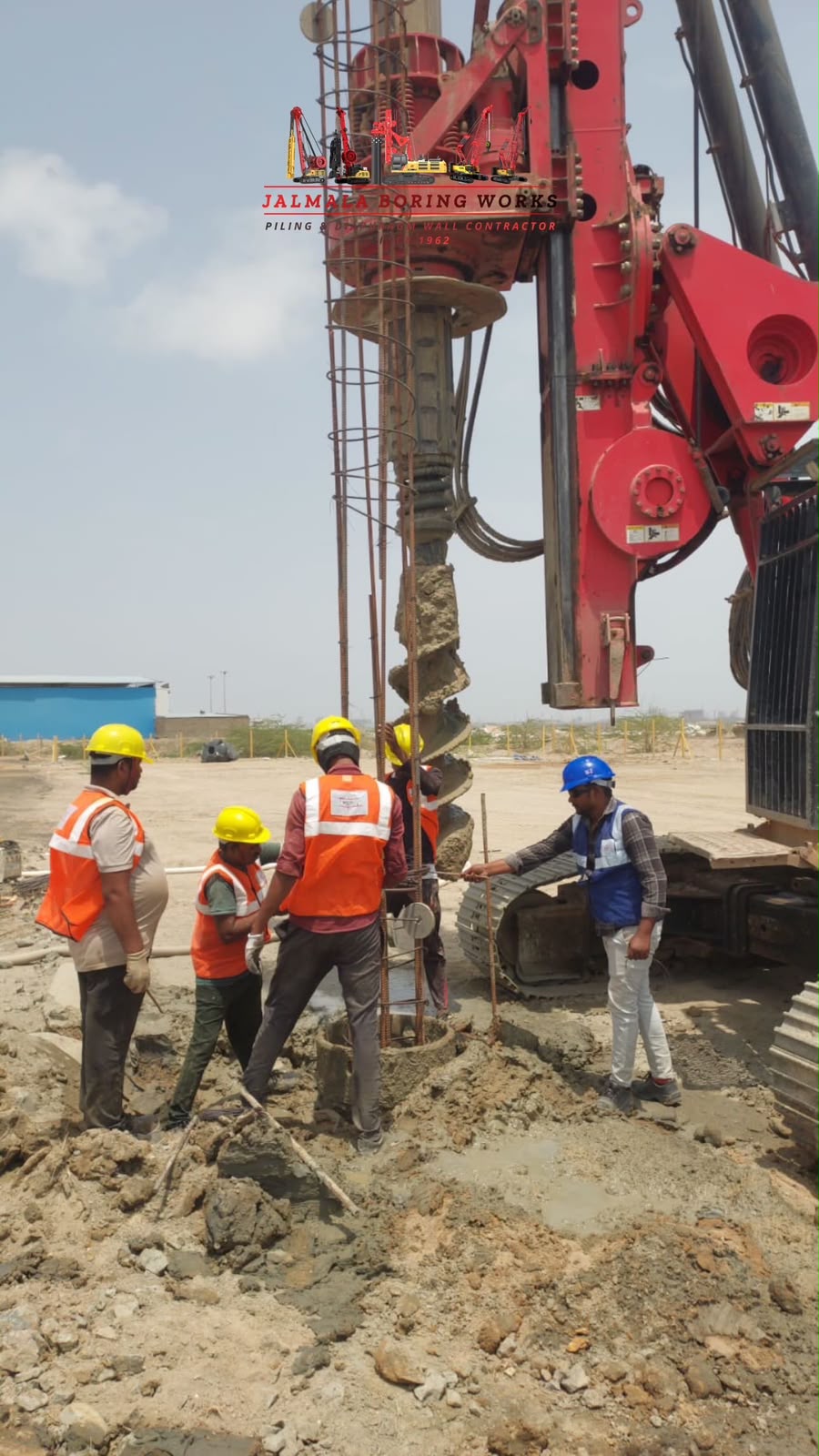
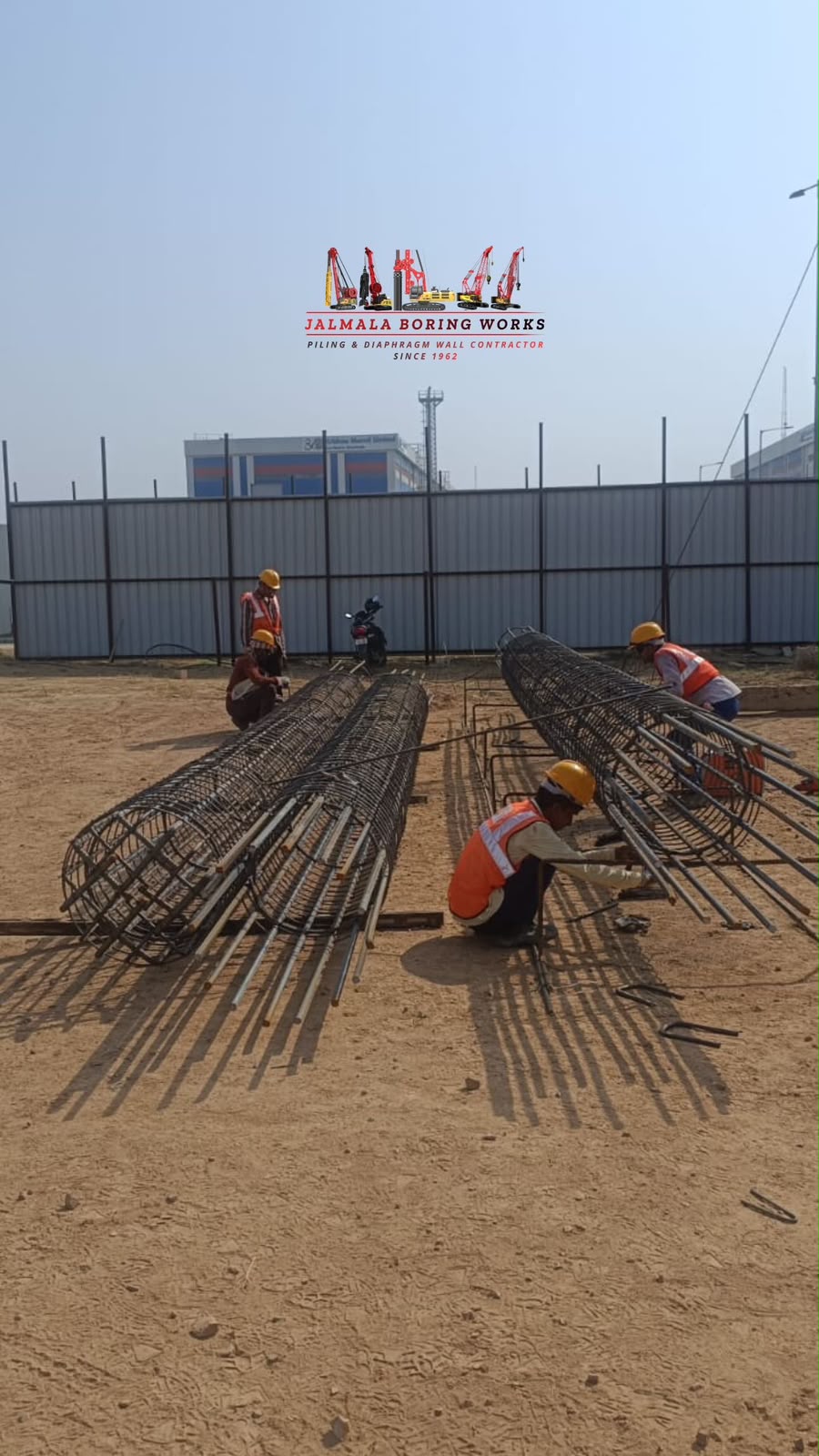
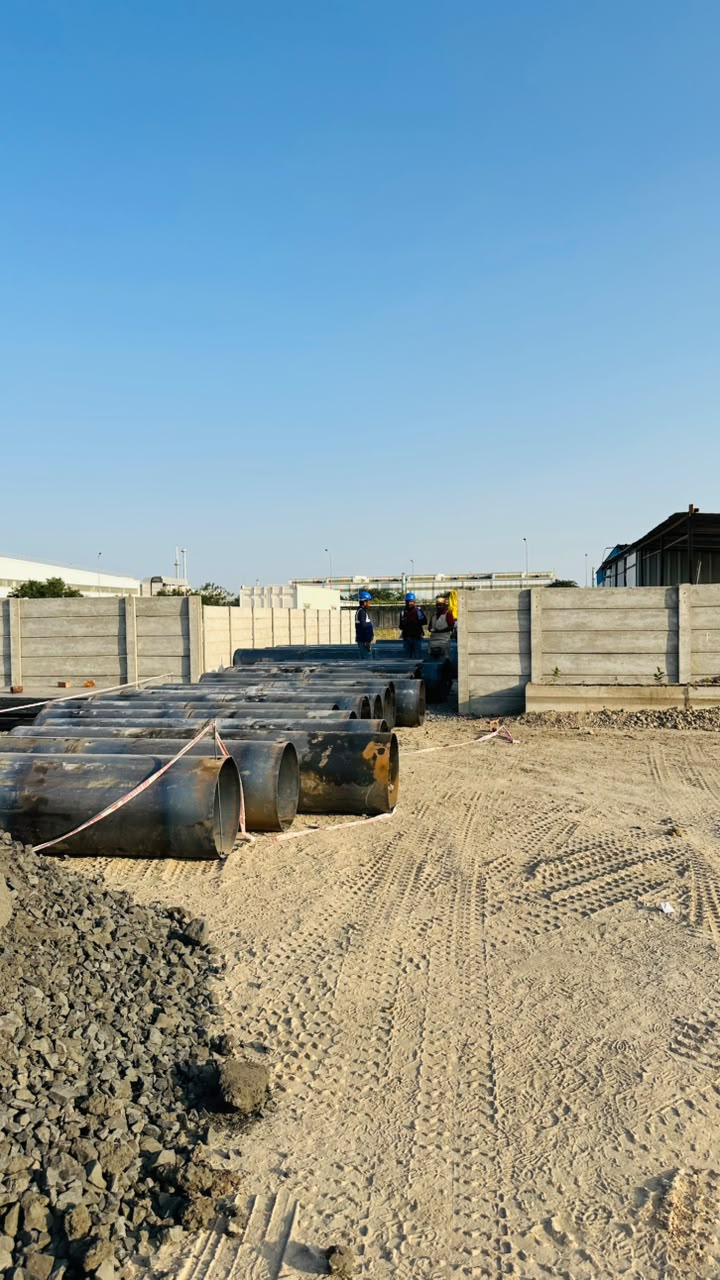
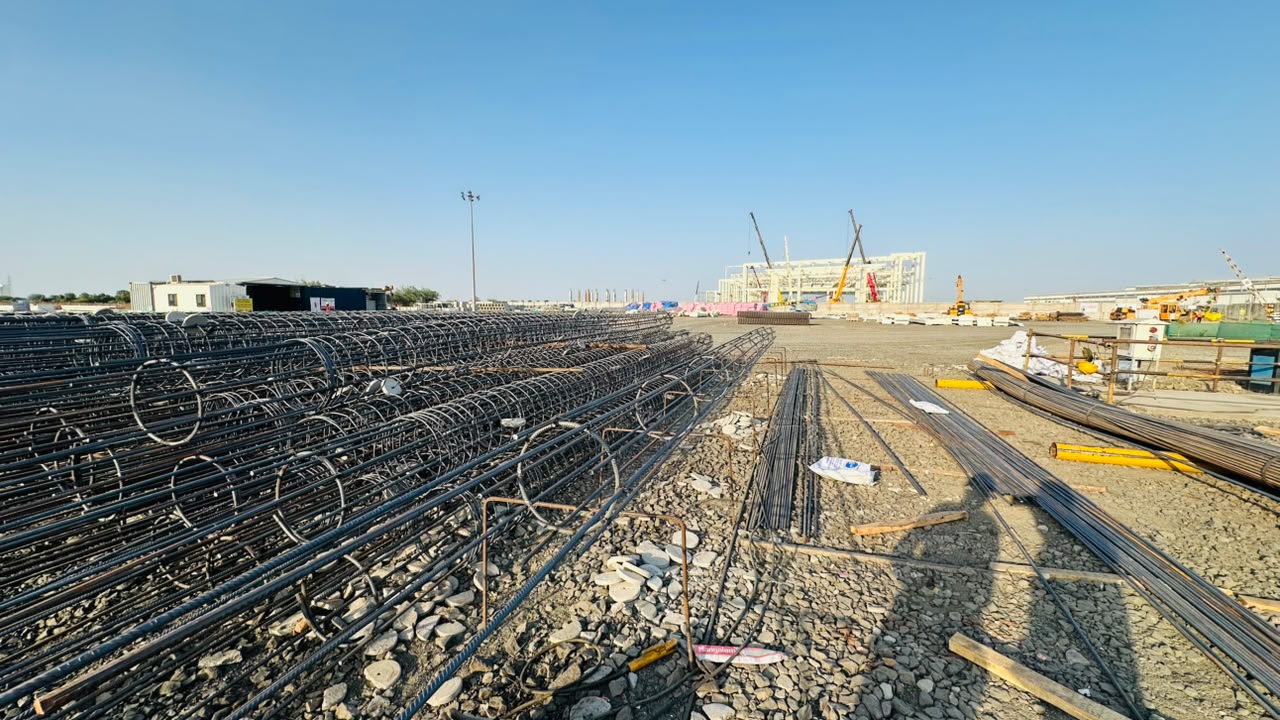
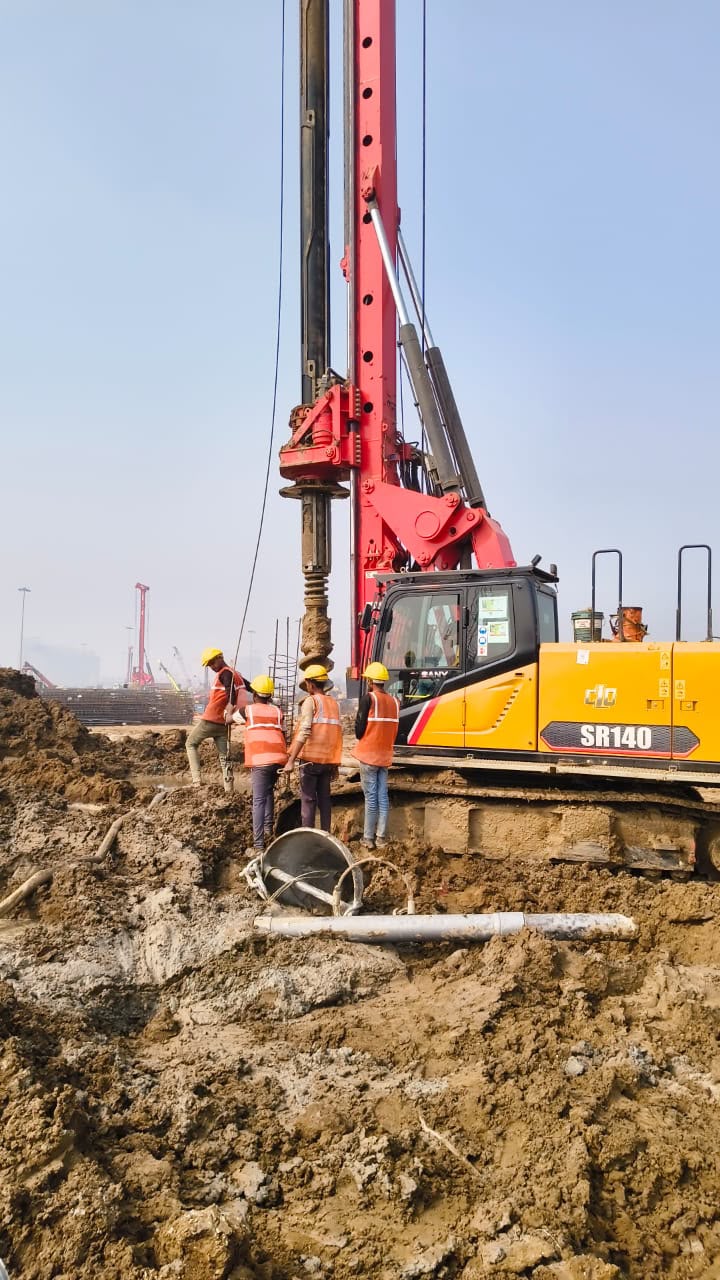
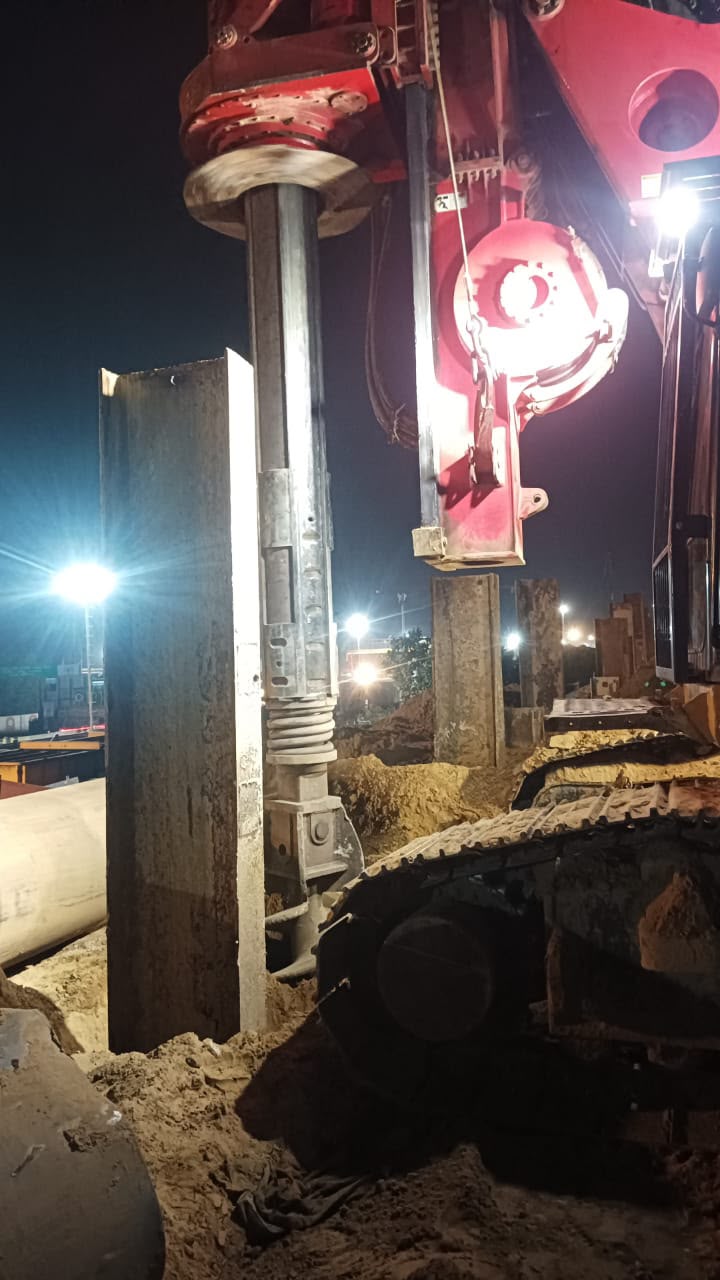
Recent Projects
Pile FoundationConstruction Process
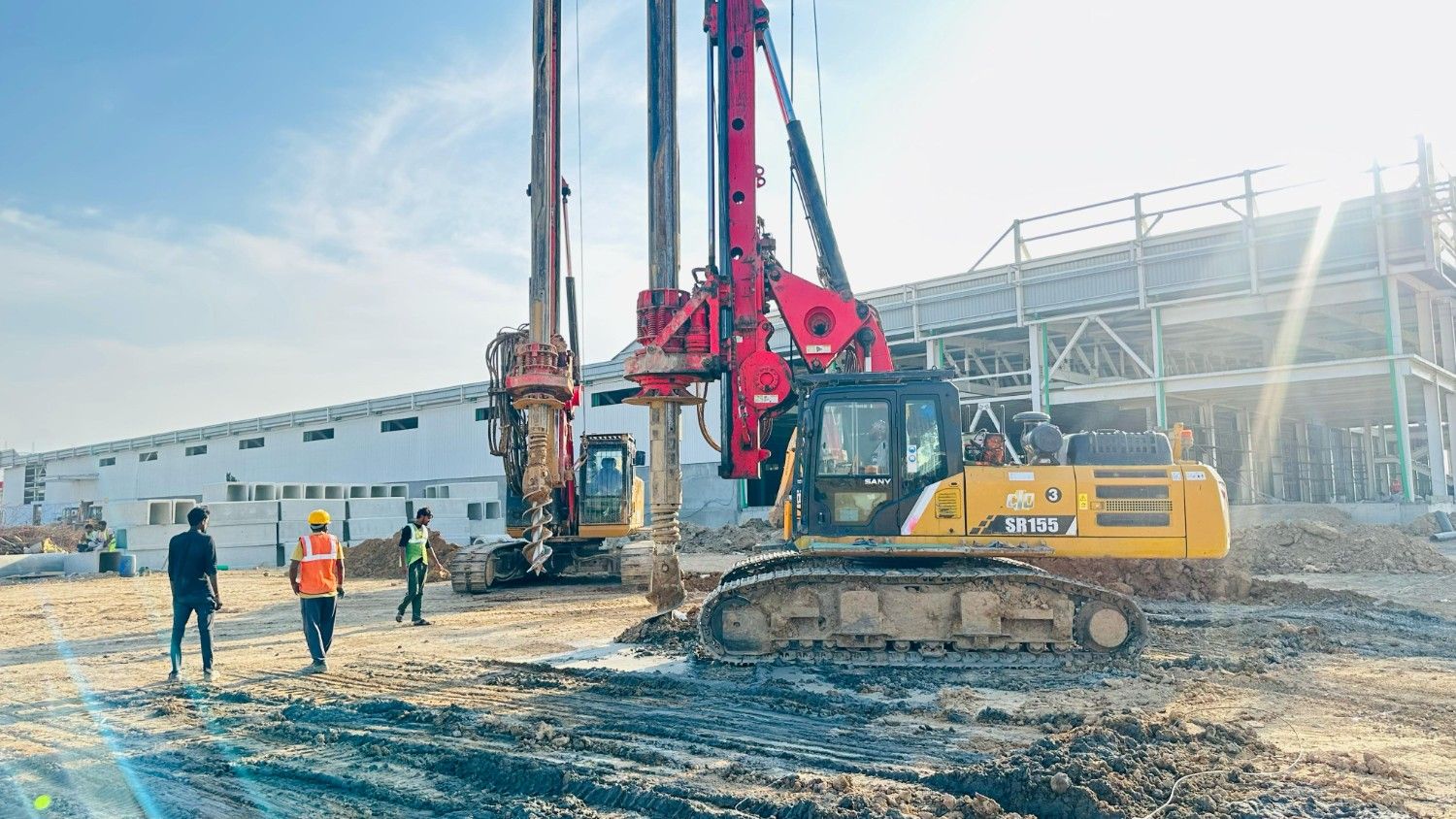
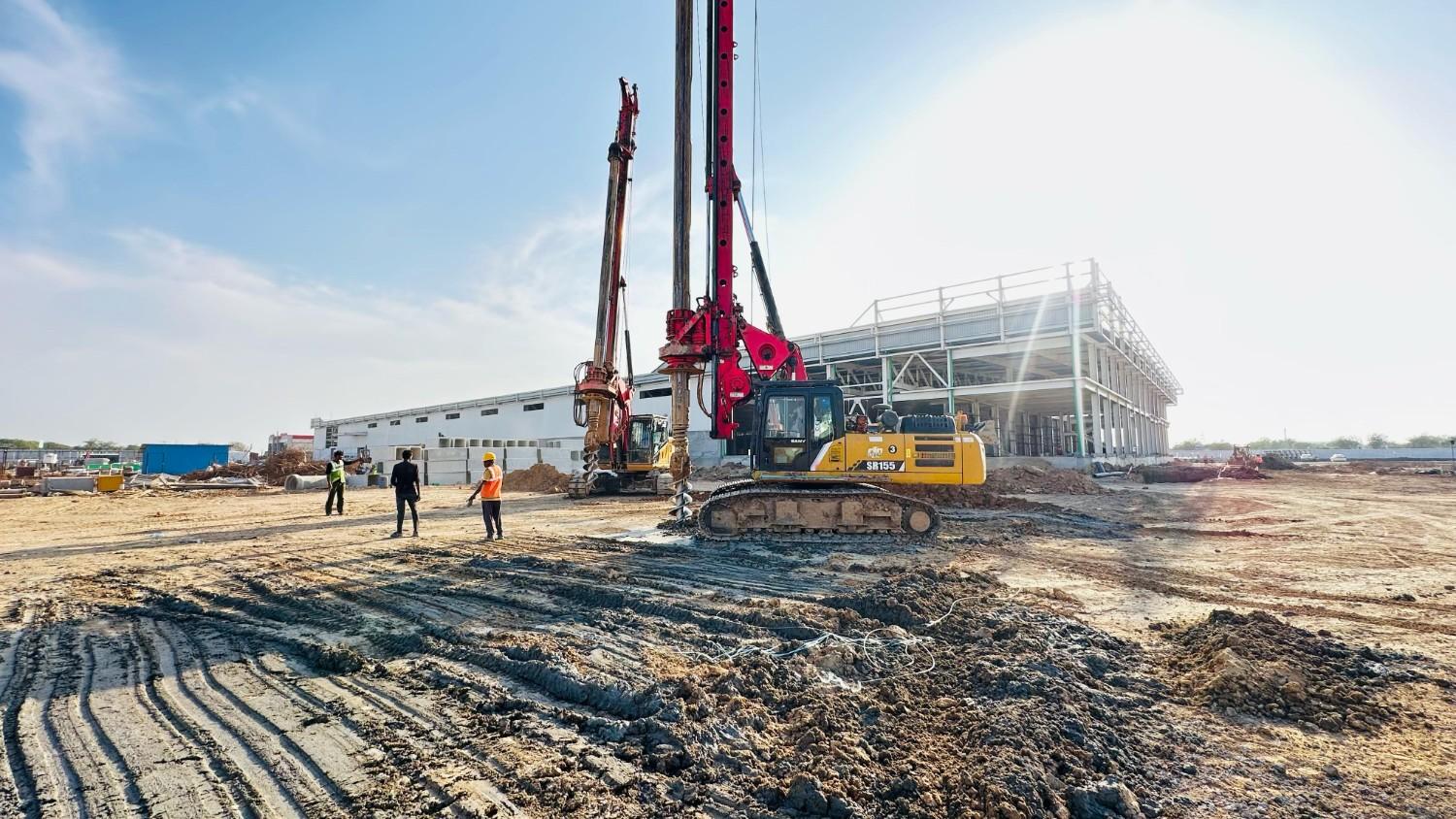
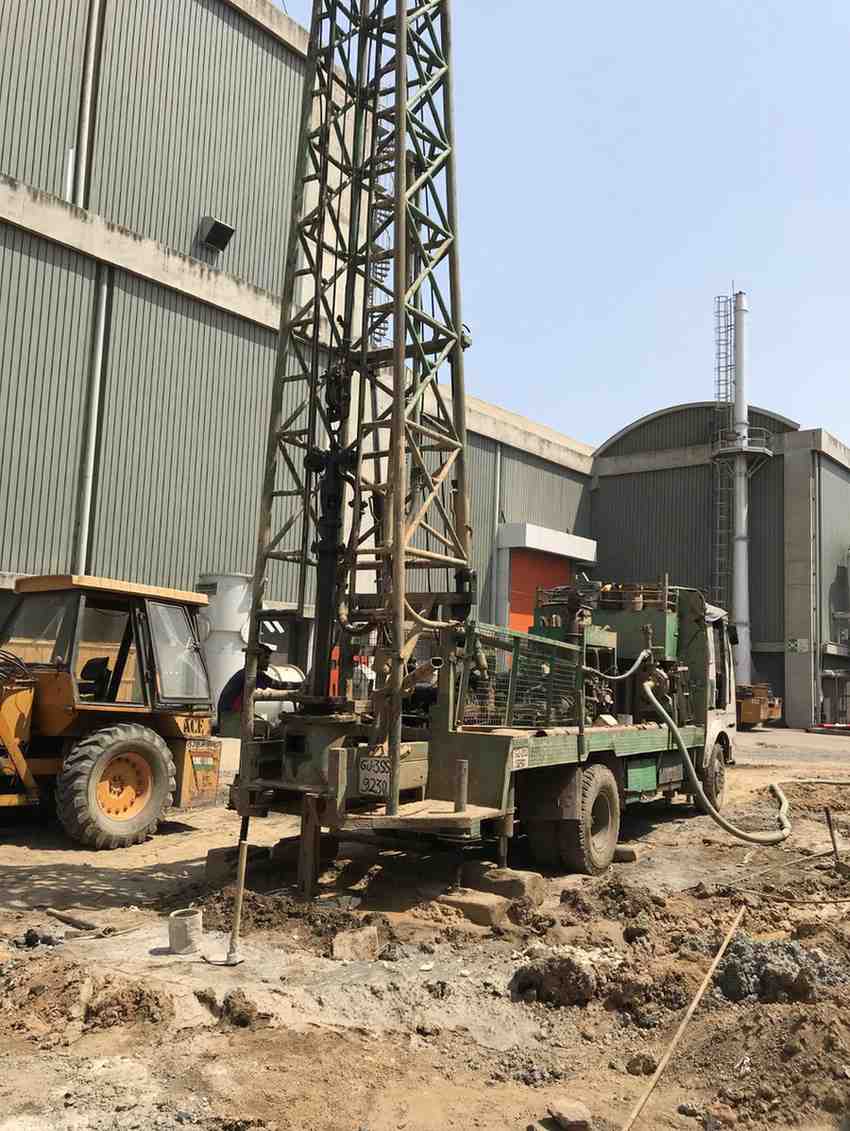
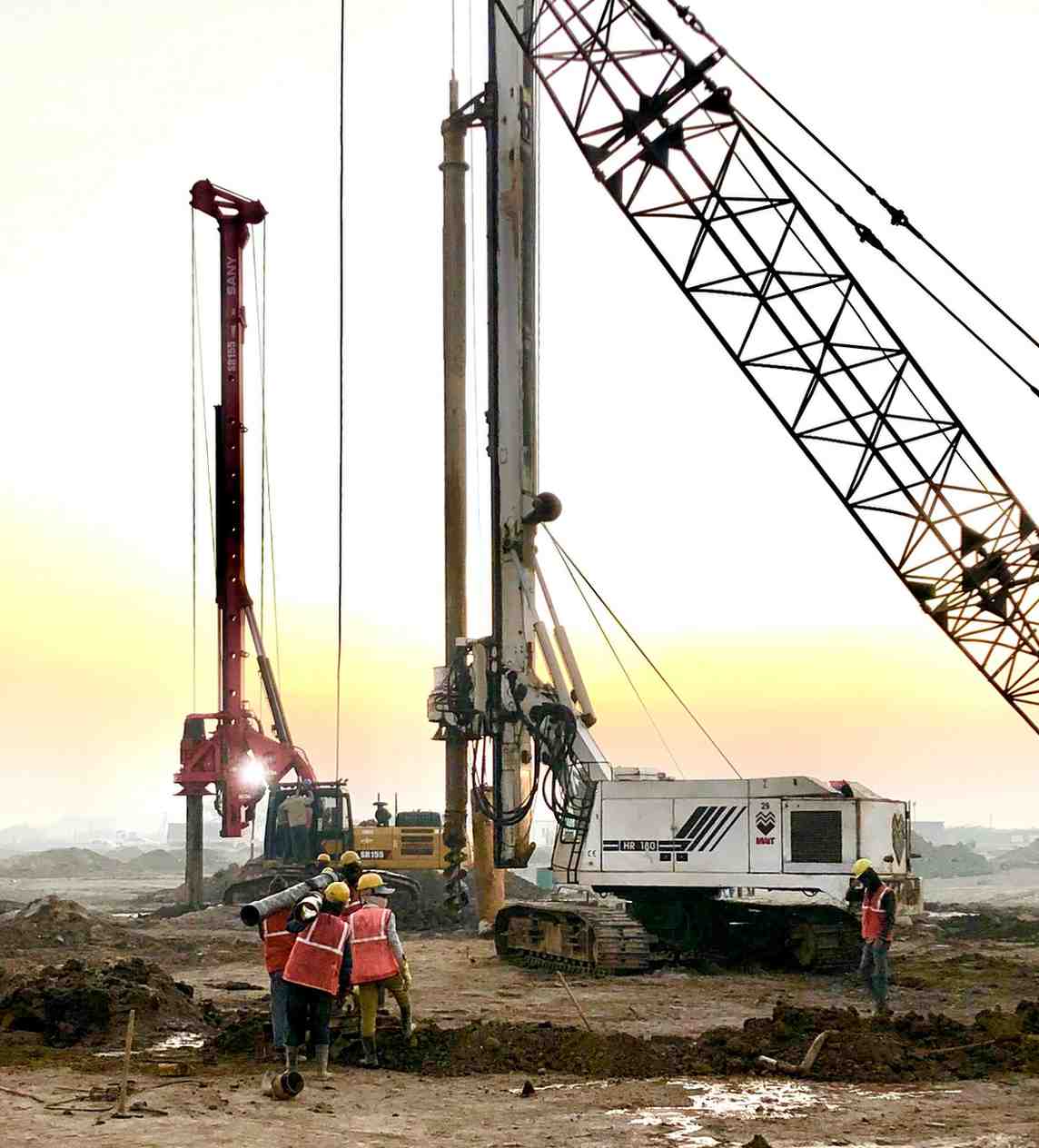
Survey, Setting Out & Guide Casing Installation
Detailed survey, marking of pile locations, and installation of temporary guide casing.
- Detailed survey and marking of pile locations
- Verification of pile coordinates and levels
- Positioning of Hydraulic Rotary Piling Rig
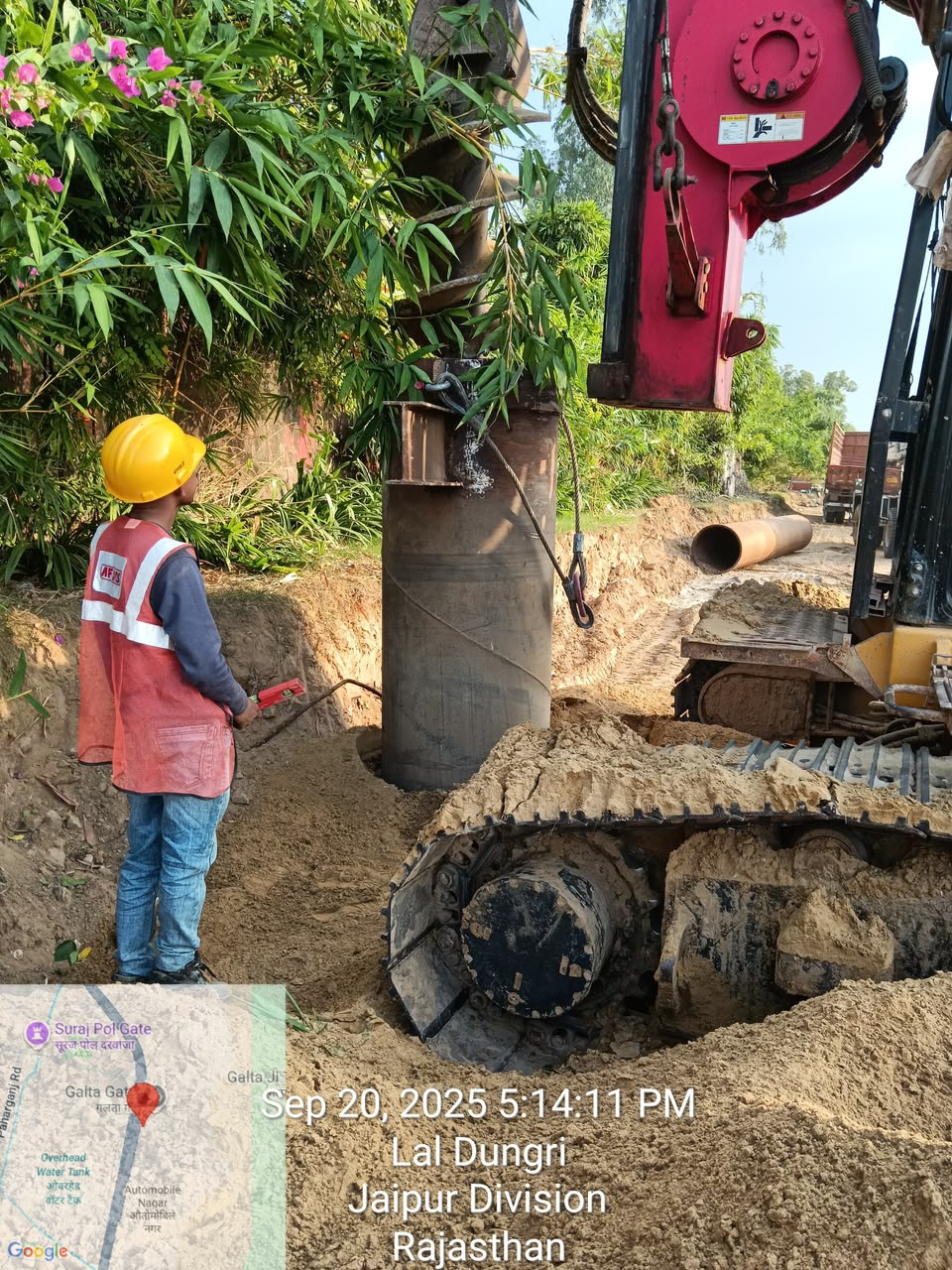
- Installation of temporary guide casing
- Ensures accurate pile alignment and protects bore opening
Pile Boring & Excavation
Drilling of pile bore using Hydraulic Rotary Rig to required depth.
- Drilling of pile bore using Hydraulic Rotary Rig
- Excavation carried out to the required depth and founding strata
- Suitable drilling tools used for soil, rock, or hard strata
- Continuous monitoring of depth, verticality, and pile diameter
- Removal and disposal of excavated soil from site
Slurry Support & Borehole Cleaning
Preparation and circulation of Bentonite/Polymer Slurry and borehole cleaning.
- Preparation and circulation of Bentonite/Polymer Slurry
- Stabilization of borehole walls during drilling
- Recycling of slurry through slurry plant
- Cleaning of borehole bottom to remove loose sediments
- Final inspection of bore depth and cleanliness
Reinforcement Cage Installation
Fabrication and lowering of reinforcement cage into the bore.
- Fabrication of reinforcement cage as per approved drawings
- Installation of spacers, couplers, lifting points, and cover blocks
- Lowering of reinforcement cage into the completed bore
- Accurate positioning and level adjustment
- Quality inspection before concrete placement
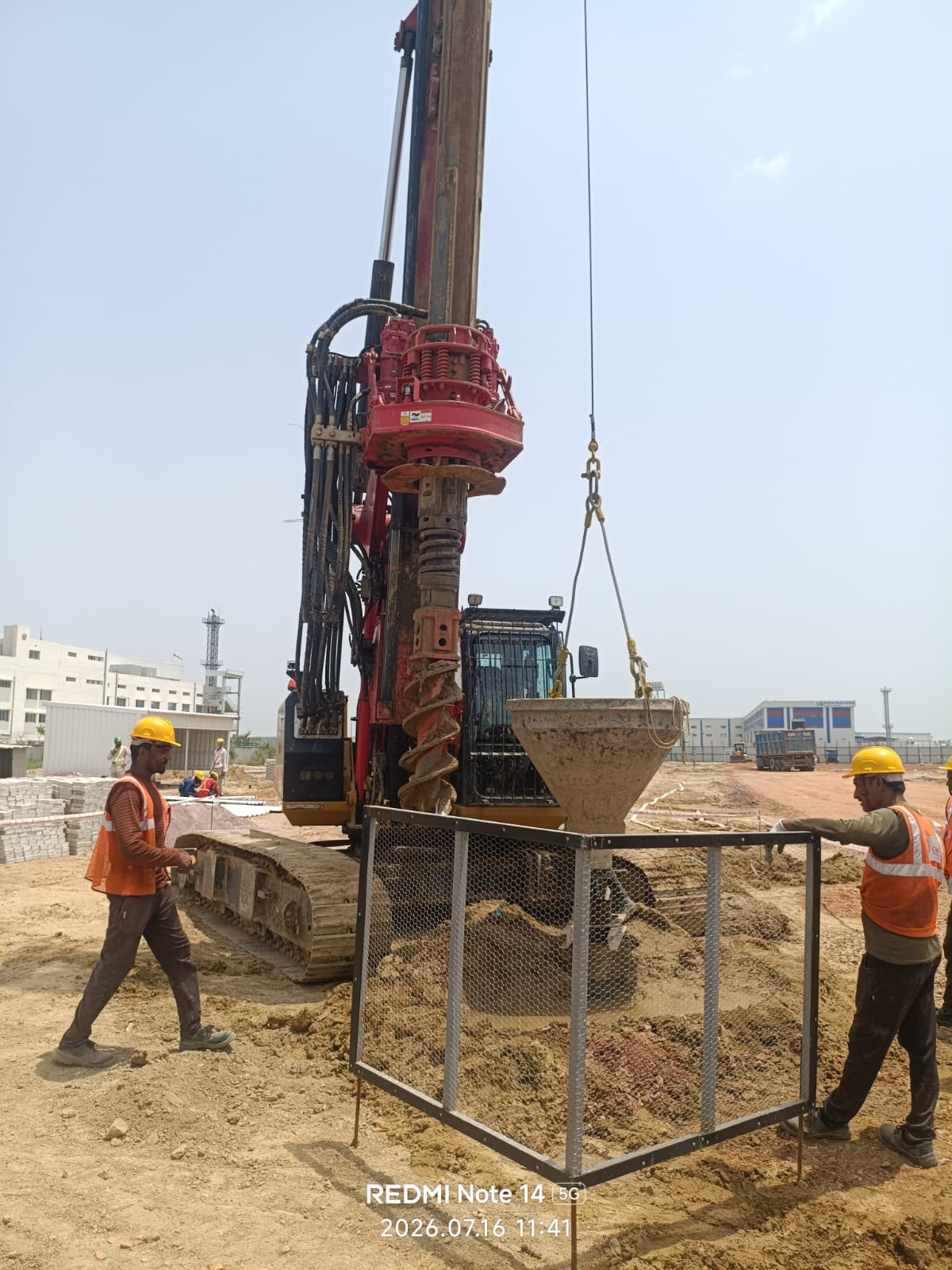
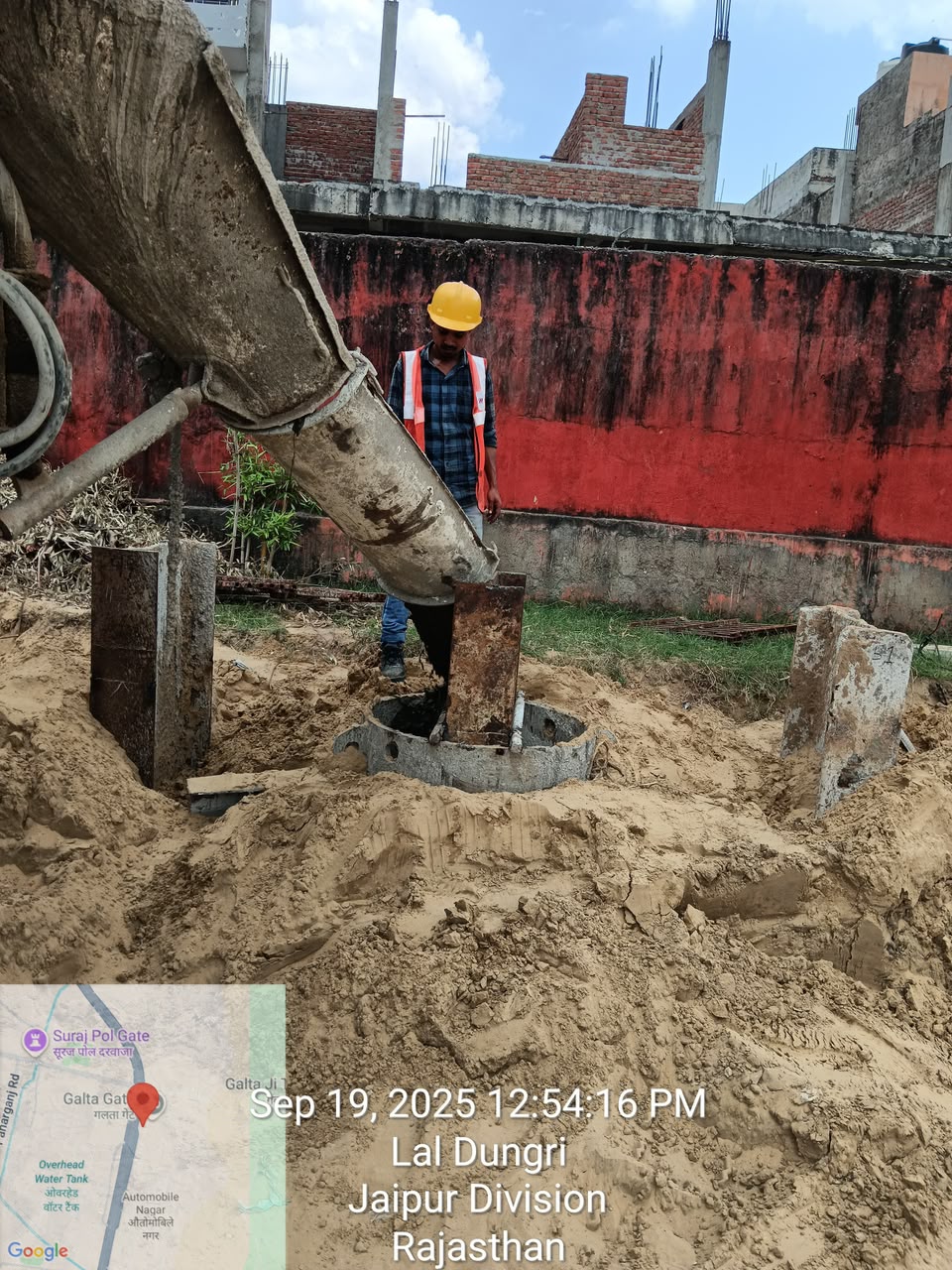
Tremie Concreting
Continuous concrete placement using tremie pipes.
- Installation of tremie pipes up to borehole bottom
- Continuous placement of concrete from bottom to top
- Prevention of concrete segregation through tremie method
- Displacement and recovery of slurry during concreting
- Completion of pile concreting in one uninterrupted operation
Pile Completion & Quality Control
Final pile completion, head trimming, and quality assurance.
- Extraction of temporary casing during or after concreting
- Recording of concrete consumption and pile parameters
- Pile head chipping up to cut-off level
- Verification of pile depth, diameter, and concrete quality
- Completion of testing, documentation, and quality assurance
- Ready for pile cap and foundation construction
Pile Foundation Contractor for Difficult Soil Conditions
Construction projects involving weak soil, loose ground, soft clay, high groundwater or variable underground strata require careful foundation planning. The ground beneath a building must safely transfer structural loads while controlling settlement and maintaining long-term stability. When the upper soil layers cannot provide adequate support for conventional shallow foundations, engineers may consider deep foundation systems such as pile foundations.
Choosing a suitable pile foundation contractor for difficult soil conditions is an important part of construction planning. The contractor must understand the approved foundation design, site restrictions, soil conditions, equipment requirements and installation methodology. Every site requires individual technical evaluation rather than relying on a single foundation solution.
1. Understanding Difficult Soil Conditions
Difficult soil conditions refer to subsurface situations that may affect the bearing capacity, settlement behaviour or construction process of a foundation. These conditions can vary considerably between locations and across different depths at the same project site.
Common challenging ground conditions include loose sandy soil, soft clay, filled ground, compressible deposits, expansive soil, waterlogged strata and areas with variable soil profiles. Each condition requires appropriate investigation to understand its engineering characteristics.
2. Pile Foundations in Weak Soil
Weak soil may not provide sufficient bearing resistance for heavily loaded structures through shallow foundations. Depending on the site investigation and design calculations, piles can transfer loads to deeper supporting strata or mobilise suitable resistance along their length.
Pile length, diameter, reinforcement and installation method are determined according to the structural loads, soil investigation results and applicable engineering standards. Proper construction control is essential to achieve the specified foundation performance.
3. Pile Foundation for Loose Sandy Soil
Loose sandy soil can present challenges related to ground stability, settlement and borehole support during pile installation. Groundwater conditions and the density of the sand can influence drilling behaviour and construction requirements.
Depending on the ground profile, engineers may specify bored cast-in-situ piles with suitable temporary casing or other approved construction methods. The installation methodology must maintain bore stability and comply with the approved technical specifications.
4. Pile Foundations in Soft Clay
Soft clay generally has lower shear strength and may undergo significant consolidation settlement under structural loading. These characteristics can create difficulties for buildings, industrial facilities and infrastructure projects.
Deep pile foundations may be evaluated when the required load capacity and settlement performance cannot be achieved economically through shallow foundations. Engineers assess clay thickness, strength parameters, compressibility and the properties of deeper soil layers before finalising the pile design.
5. Pile Foundation in Waterlogged Soil
High groundwater levels can affect drilling, borehole stability and concrete placement. Waterlogged ground may also require additional planning for temporary casing, groundwater management and construction sequencing.
Suitable pile installation methods are selected according to the groundwater level, soil characteristics, pile dimensions and project specifications. Where required, engineers may specify controlled concrete placement methods to maintain the quality of the completed pile.
6. Foundations in Filled and Variable Soil
Some construction sites contain previously filled ground, mixed soil deposits or uncontrolled fill materials. These layers may have inconsistent density and strength, resulting in unpredictable settlement behaviour.
A detailed geotechnical investigation helps identify the thickness and characteristics of these materials. Pile foundations may be considered where the design requires loads to be transferred beyond unsuitable upper layers. The required founding depth must be established through engineering assessment.
7. Types of Pile Foundation Systems
Different pile foundation systems are available for different construction requirements. The selection depends on the ground profile, structural loading, access conditions, surrounding buildings and construction specifications.
- Bored cast-in-situ piles: Constructed by drilling a bore and placing reinforcement and concrete according to the approved design.
- Driven piles: Installed by driving prefabricated pile elements into the ground where the site conditions and project specifications permit.
- Large-diameter bored piles: Used in selected projects requiring substantial structural load capacity.
- Under-reamed piles: Specialised piles that may be considered in suitable expansive soil conditions when supported by the design.
- Specialised deep foundation systems: Selected according to geotechnical conditions and structural requirements.
Not every pile type is suitable for every difficult soil condition. The final selection must follow the geotechnical report, structural design and applicable construction standards.
8. Importance of Geotechnical Investigation
Geotechnical investigation is a fundamental step before designing a pile foundation. It provides information about soil layers, groundwater conditions and engineering parameters required for foundation planning.
Depending on the project, investigations may include borehole drilling, standard penetration tests, laboratory testing, groundwater observations and other relevant field assessments. Engineers use these findings to estimate foundation capacity, settlement behaviour and construction requirements.
9. Modern Equipment for Pile Foundation Construction
Difficult ground conditions can require suitable drilling equipment and carefully planned construction operations. Equipment selection depends on the pile diameter, drilling depth, soil characteristics, site accessibility and project requirements.
Jalmala Boring Works uses modern SANY hydraulic piling and diaphragm wall rigs for relevant foundation construction activities. Equipment planning, experienced operators and coordination with the engineering team contribute to controlled execution of the approved foundation methodology.
10. Choosing an Experienced Pile Foundation Contractor
Selecting a foundation contractor involves more than comparing equipment or project quotations. Important considerations include experience with relevant construction activities, understanding of technical drawings, equipment suitability, site mobilisation, quality-control procedures and coordination with consultants.
Jalmala Boring Works is a family-owned, third-generation foundation construction company with experience dating back to 1962. Based in Ahmedabad, Gujarat, the company specialises in pile foundations, diaphragm walls and ground anchoring-related work.
The company considers foundation construction projects across India, subject to project scope, technical suitability, equipment availability and mobilisation requirements. Each project is assessed according to its specific engineering and site conditions.
11. Applications of Pile Foundations in Challenging Ground
Pile foundations may be used in a wide range of construction projects where subsurface conditions or structural loads require deep foundation support. Potential applications include residential buildings, commercial developments, industrial facilities, infrastructure projects, bridges and specialised structures.
The design requirements differ according to building height, column loads, soil characteristics, groundwater conditions and settlement limitations. Proper coordination between geotechnical consultants, structural engineers and the foundation contractor is essential for successful construction.
12. Quality Control During Pile Installation
Quality control is important throughout the pile construction process. Depending on the project specifications, checks may include bore depth, bore diameter, reinforcement cage details, concrete quality, concrete placement records and pile integrity testing.
Load testing and other verification procedures may also be specified by the design team. These activities help assess whether the installed foundation elements meet the required project specifications.
Conclusion
Difficult soil conditions require careful investigation and an appropriate foundation design. Weak soil, loose sand, soft clay, filled ground and high groundwater can influence the selection and installation of pile foundations. A technically suitable system must be chosen according to soil parameters, structural loads, settlement requirements and construction limitations.
Jalmala Boring Works brings third-generation foundation construction experience dating back to 1962. With its focus on pile foundations, diaphragm walls and ground anchoring-related work, the company considers projects requiring specialised foundation construction across India, subject to technical and operational suitability.
For further information, visit pile foundation contractor for difficult soil conditions or contact Jalmala Boring Works to discuss your project requirements.
Looking for a Pile Foundation Contractor?
Discuss your soil conditions, foundation requirements and construction scope with Jalmala Boring Works.
Jalmala Boring Works
jalmala.pile@gmail.com
Dholka Road, near Nariampura Village, Sarkhej, Ahmedabad, Gujarat 382210, India
Frequently Asked Questions
What is a pile foundation for difficult soil conditions?
A pile foundation transfers structural loads through weak or unsuitable upper soil layers to deeper soil or rock strata capable of providing the required support. The appropriate pile type and installation method depend on geotechnical investigation and structural design.
When are pile foundations required in weak soil?
Pile foundations may be considered when shallow foundations cannot provide adequate bearing capacity or acceptable settlement performance. Soil strength, compressibility, groundwater and structural loading must be evaluated before selecting the foundation system.
Can pile foundations be constructed in waterlogged soil?
Pile foundations can be designed for sites with high groundwater levels or waterlogged ground. The construction method, temporary casing, drilling support and concrete placement procedure depend on the soil profile and project conditions.
Which pile foundation is suitable for loose soil?
The suitable pile system depends on the depth and characteristics of the loose soil, the underlying strata, structural loads and settlement requirements. Bored cast-in-situ piles and other pile systems may be evaluated by the geotechnical and structural design teams.
Are pile foundations suitable for expansive soil?
Pile foundations may be considered where expansive soil movement creates challenges for shallow foundations. Engineers must assess seasonal moisture variation, active soil depth, uplift forces and the characteristics of deeper supporting strata.
What equipment is used for pile foundation construction?
Equipment depends on pile diameter, depth, ground conditions and construction methodology. Hydraulic piling rigs, drilling tools, temporary casing systems and concrete placement equipment may be used where appropriate.
Does Jalmala Boring Works undertake projects across India?
Jalmala Boring Works is based in Ahmedabad, Gujarat and considers foundation construction projects across India, subject to project scope, technical suitability, equipment availability and mobilisation requirements.
Related Pile Foundation Search Terms
Explore more information about pile foundations and challenging soil conditions.