
Pile Foundation
Bored Cast-in-Situ Piling Specialists
Jalmala Boring Works provides Pile Foundation and Deep Foundation Solutions using Bored Cast-in-Situ Piles for residential, commercial, industrial, and infrastructure projects. With advanced Hydraulic Rotary Rigs, we construct piles from 300 mm to 1800 mm diameter and depths of up to 50 metres, delivering reliable load-bearing capacity across soft soil, hard rock, and high groundwater conditions.
Our Piling Methods
We deploy six proven techniques — selected based on soil profile, site constraints, and project requirements.
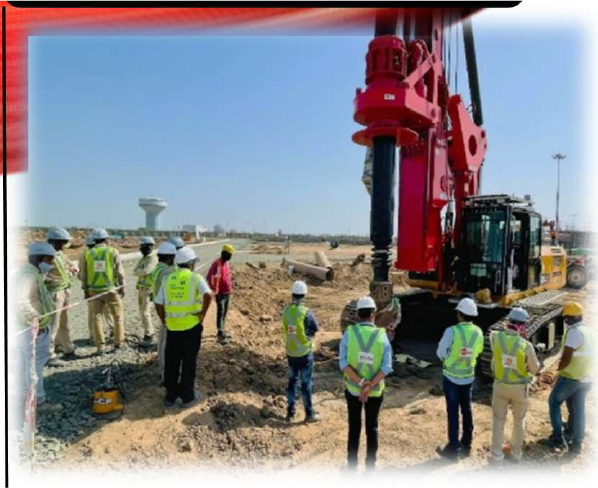
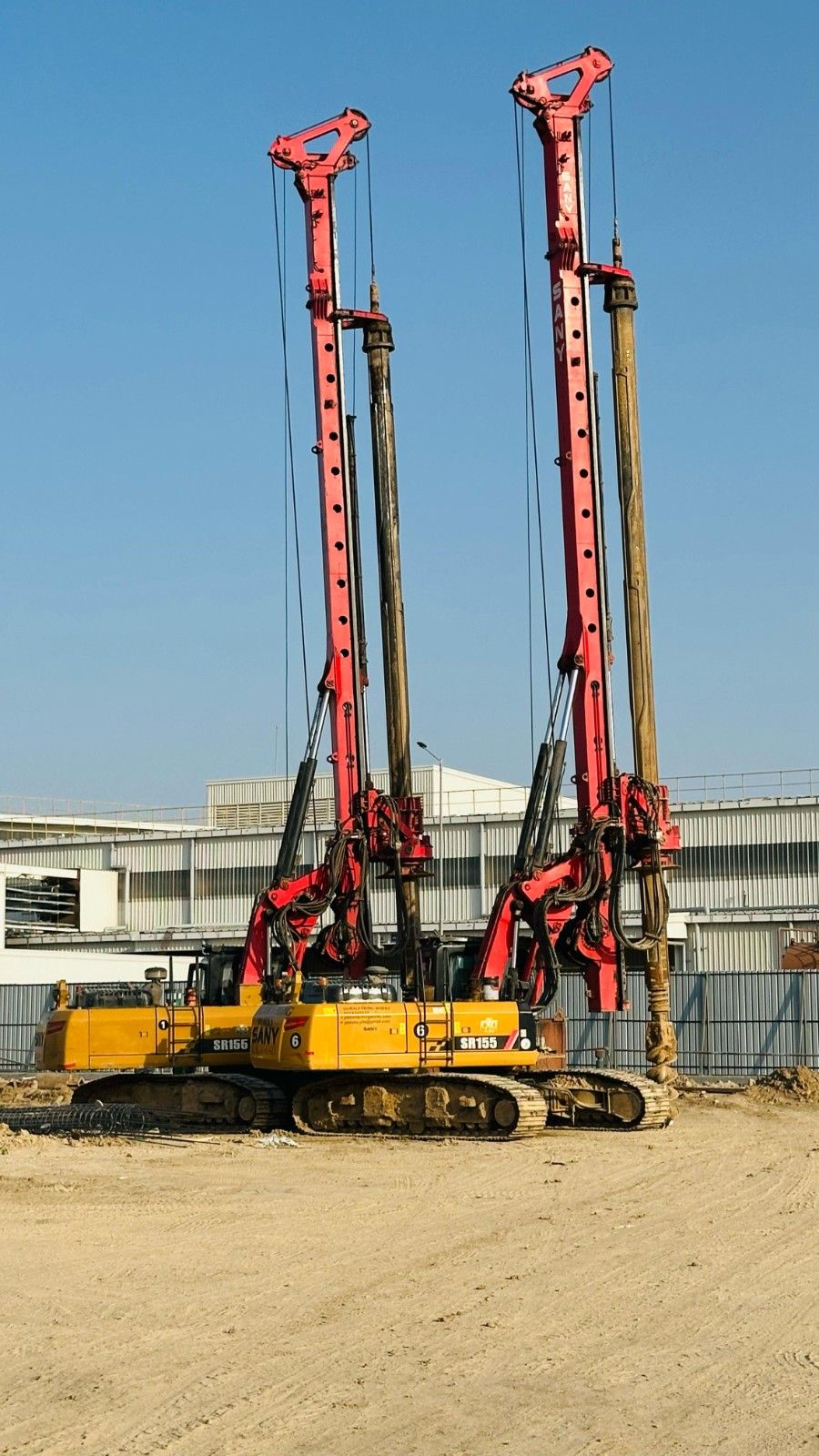
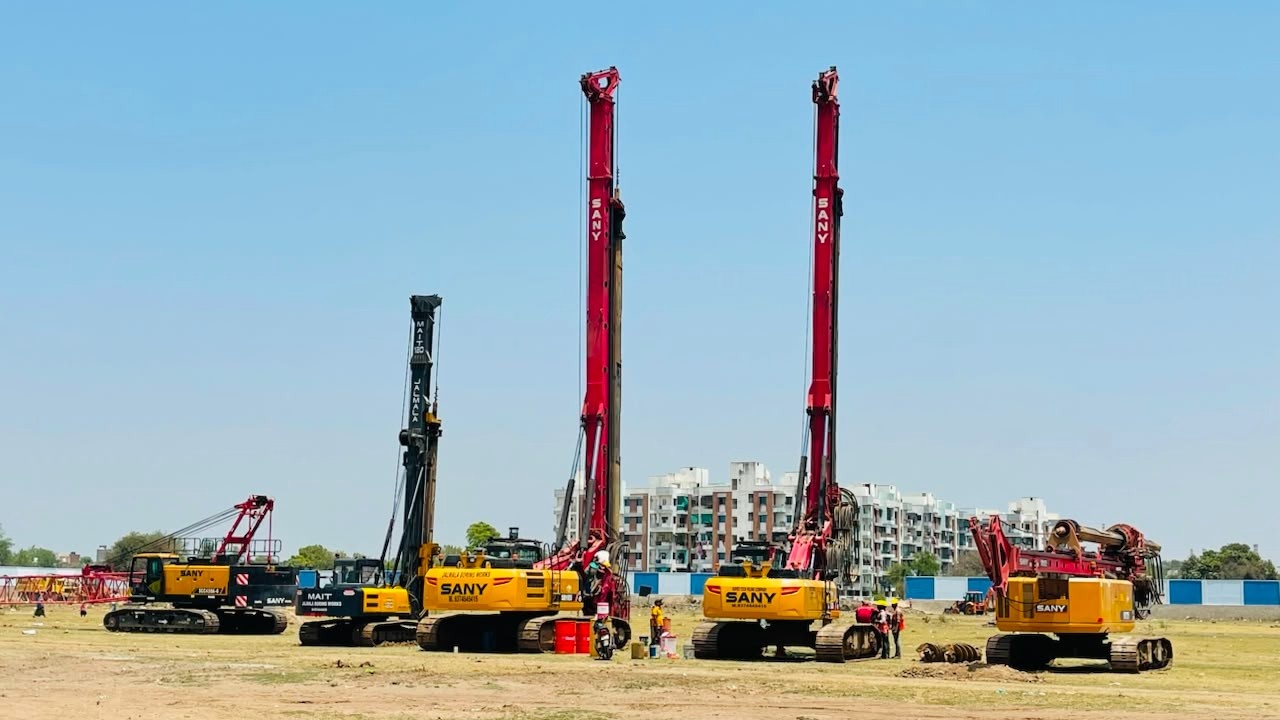
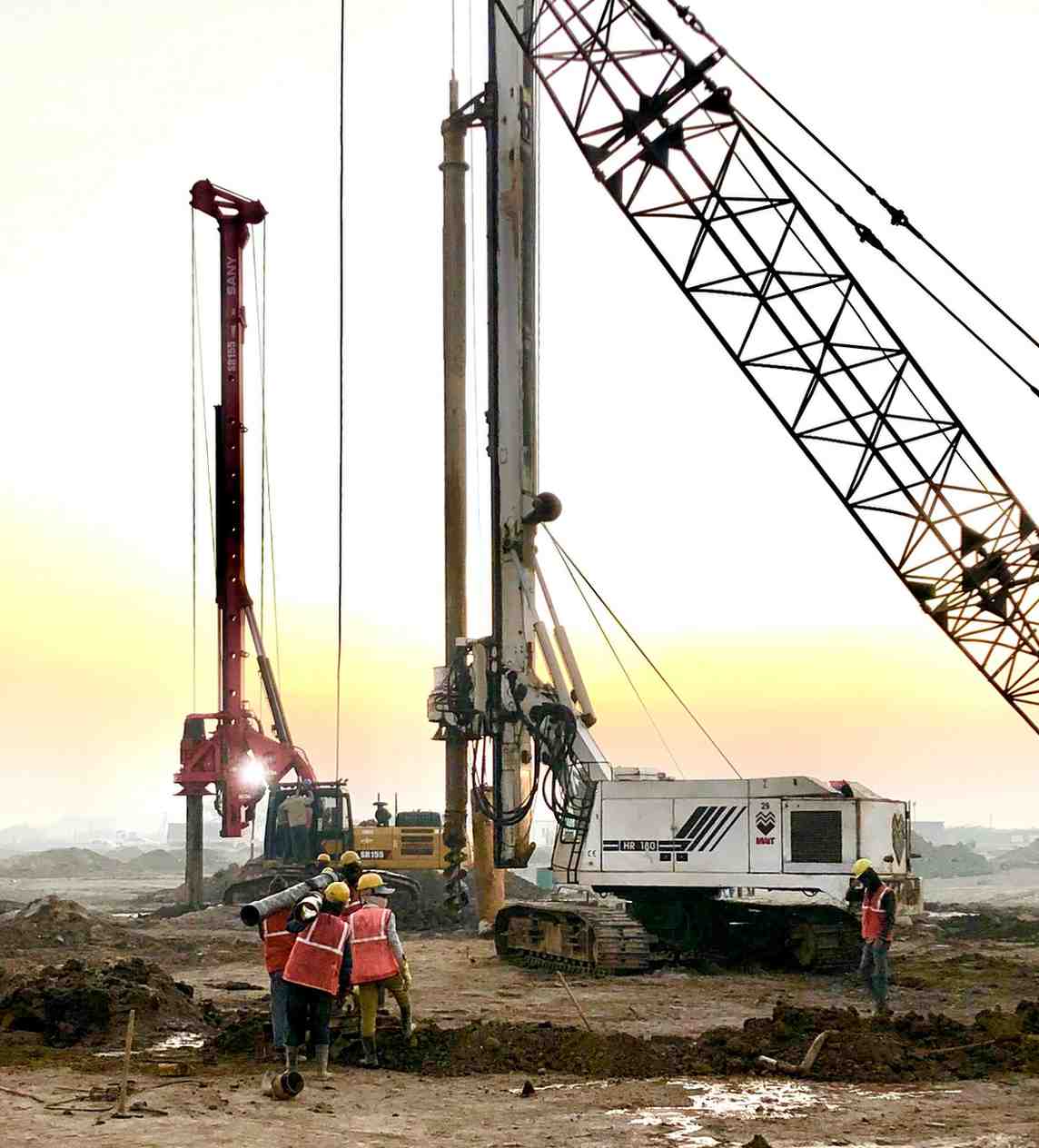
We specialize in bored piling with diameters ranging from 200 mm to 2000 mm and depths up to 50 meters. Using advanced hydraulic rotary rigs, we execute piling operations efficiently across a wide range of soil conditions. Our fleet includes high-performance rotary drilling rigs capable of working in restricted headroom areas while delivering precision, stability, and high productivity.
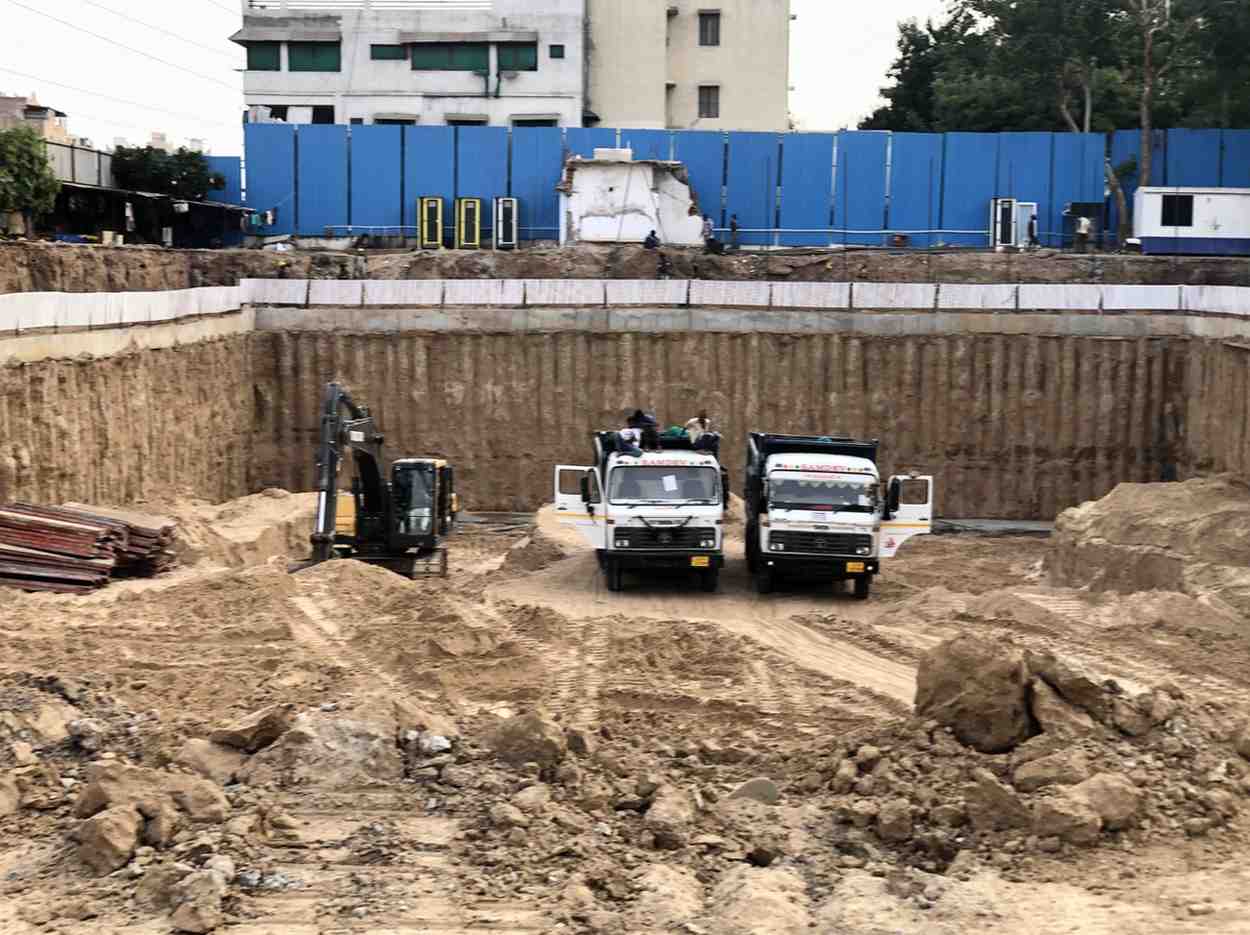
Secant pile walls are constructed by intersecting reinforced concrete piles to form a continuous retaining structure. Primary piles are installed first, followed by reinforced secondary piles after sufficient curing. This technique provides excellent groundwater control and soil retention, making it ideal for deep excavations, basements, and foundation support in challenging ground conditions.
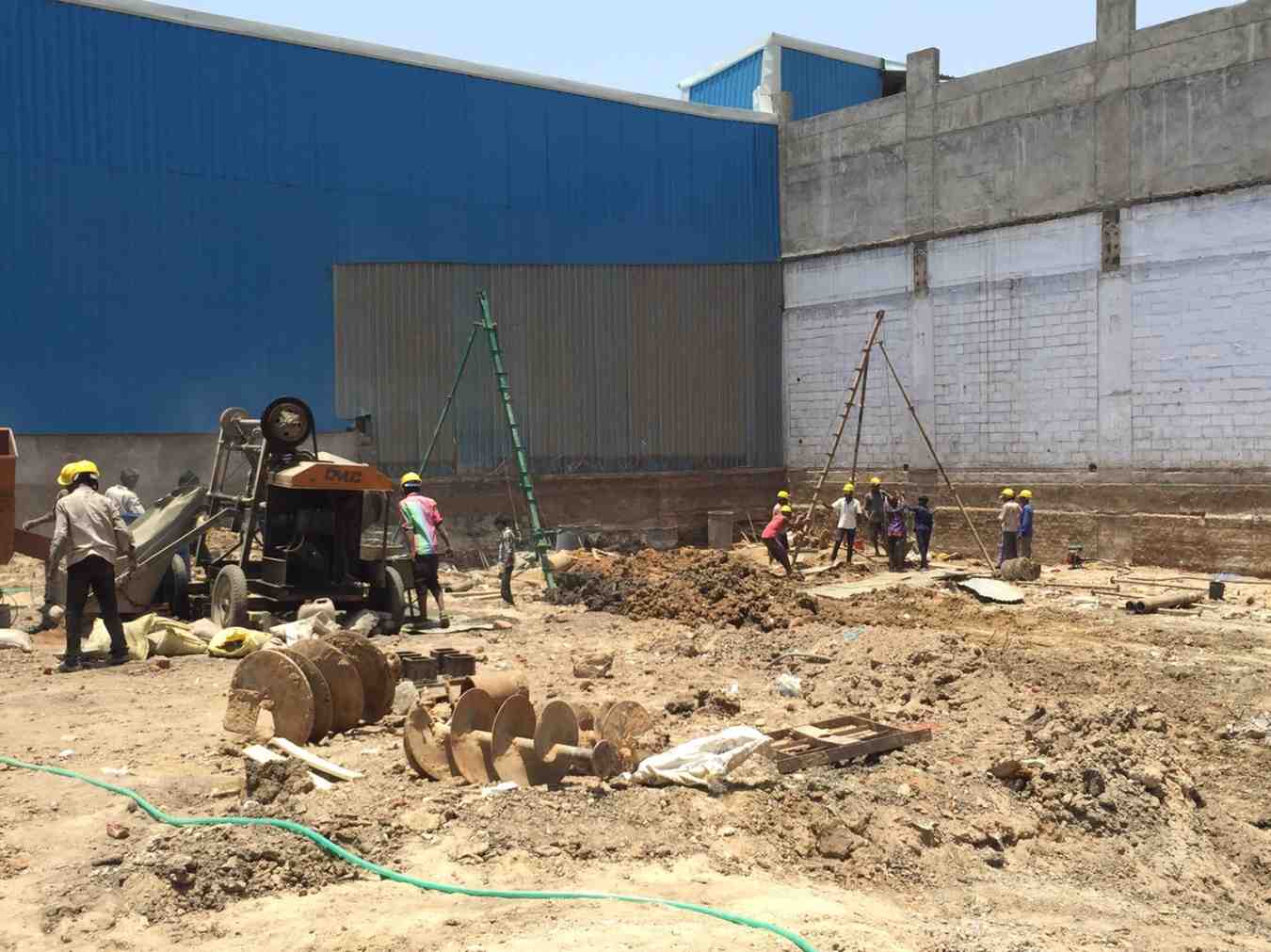
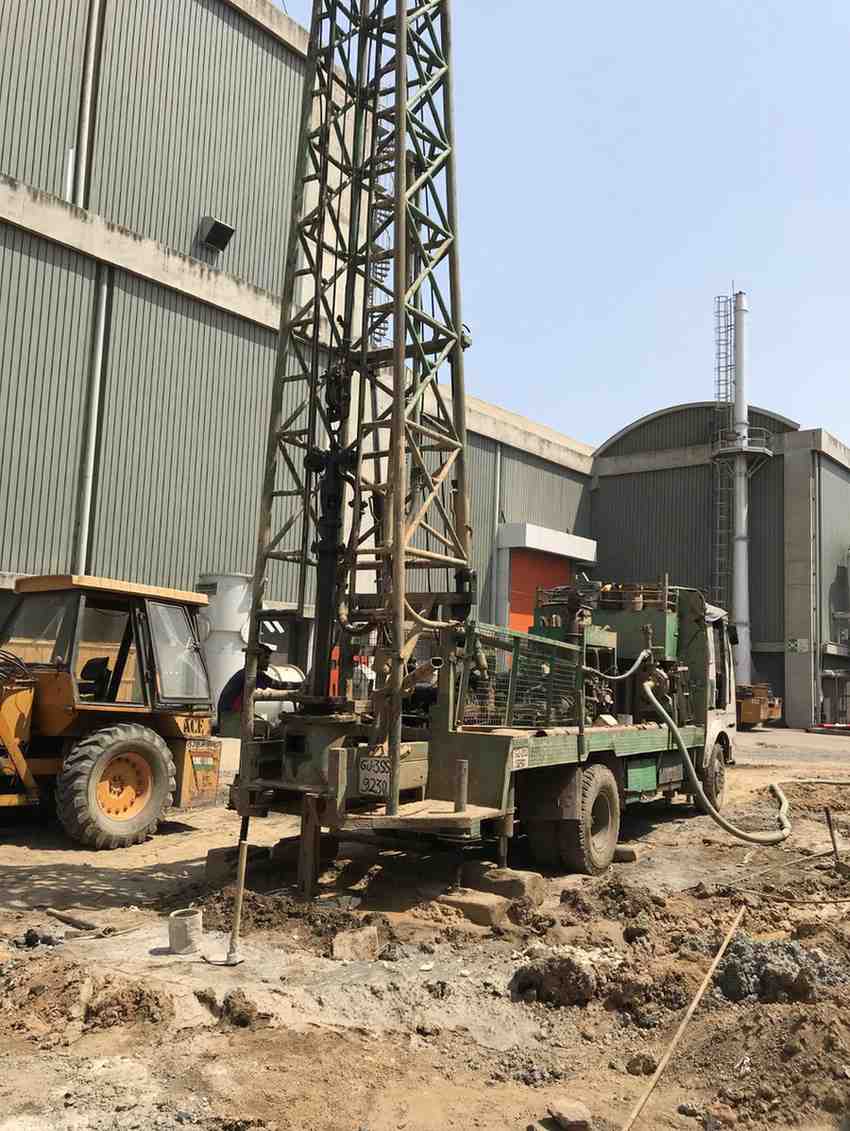
The Manual Auger Method is a reliable piling technique suitable for locations with restricted access or where low noise and vibration are essential. A tripod and manual winch system are used to drill boreholes using a helical auger. This method is commonly employed for pile diameters ranging from 250 mm to 1000 mm and offers an economical solution for smaller foundation projects.
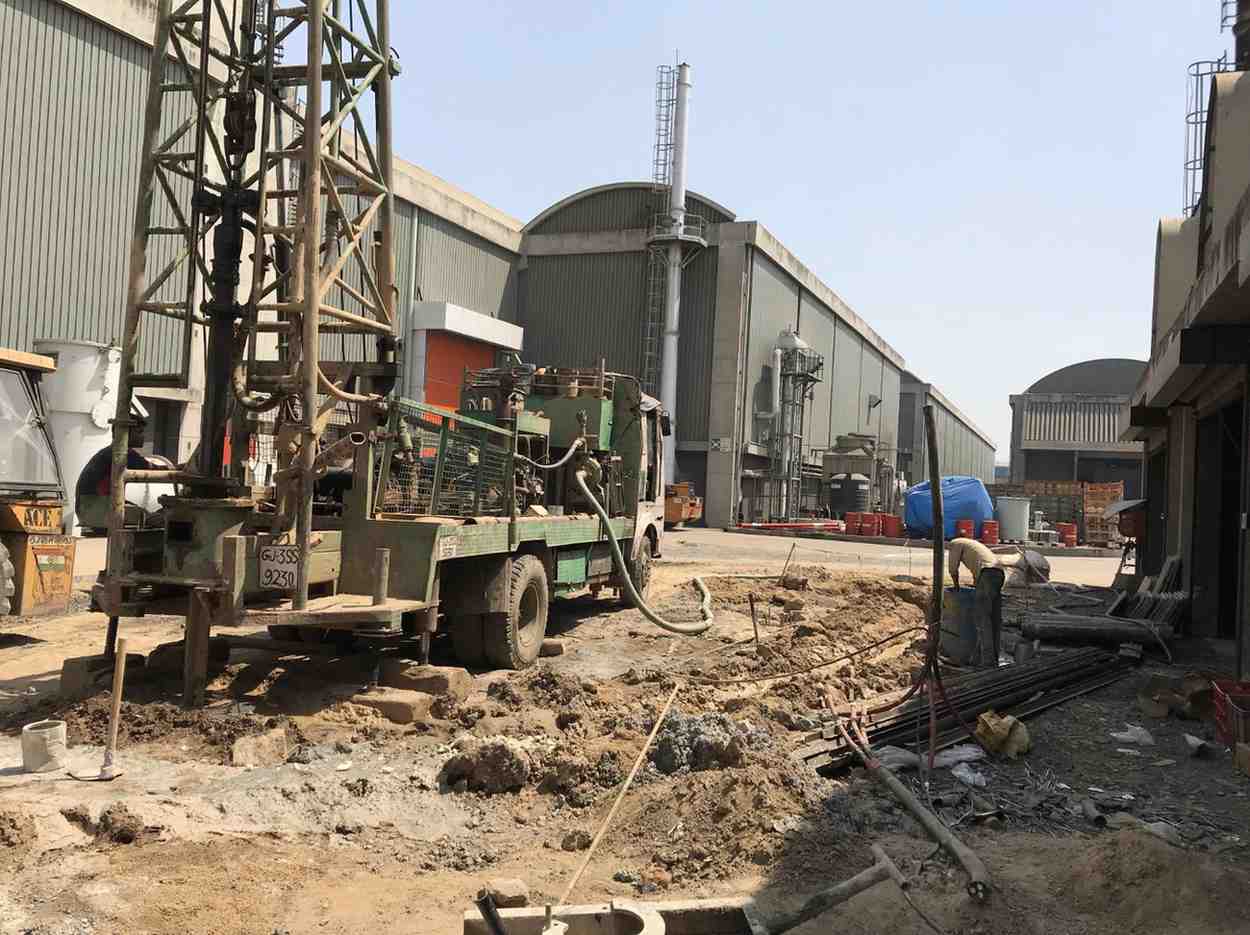
Our Truck Mounted Rotary (TMR) rigs utilize continuous bentonite slurry circulation to stabilize boreholes during drilling. Auger drilling is performed to the required depth while bentonite slurry supports the excavation and carries excavated soil back to a recycling tank. This method ensures bore stability, efficient spoil removal, and high productivity, particularly in loose or soft soil strata.
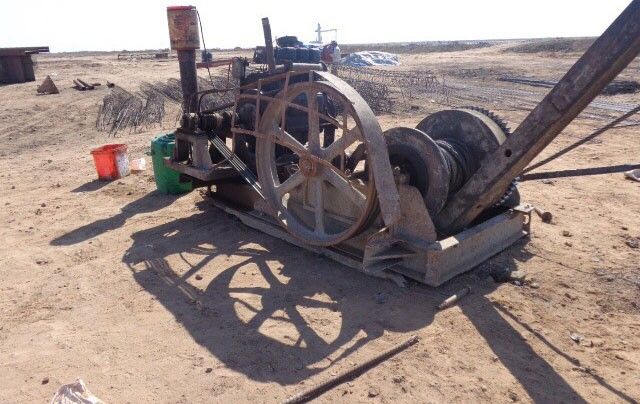
The DMC Pile Method employs Mendola-type rigs combined with bentonite drilling fluid for safe and efficient pile construction. Surface soil is loosened using a bailer before drilling continues with a percussion chisel. Bentonite slurry stabilizes the bore while transporting excavated material to settling pits. Once the desired depth is achieved, the drilling tools are removed and the final depth is verified before reinforcement and concreting.
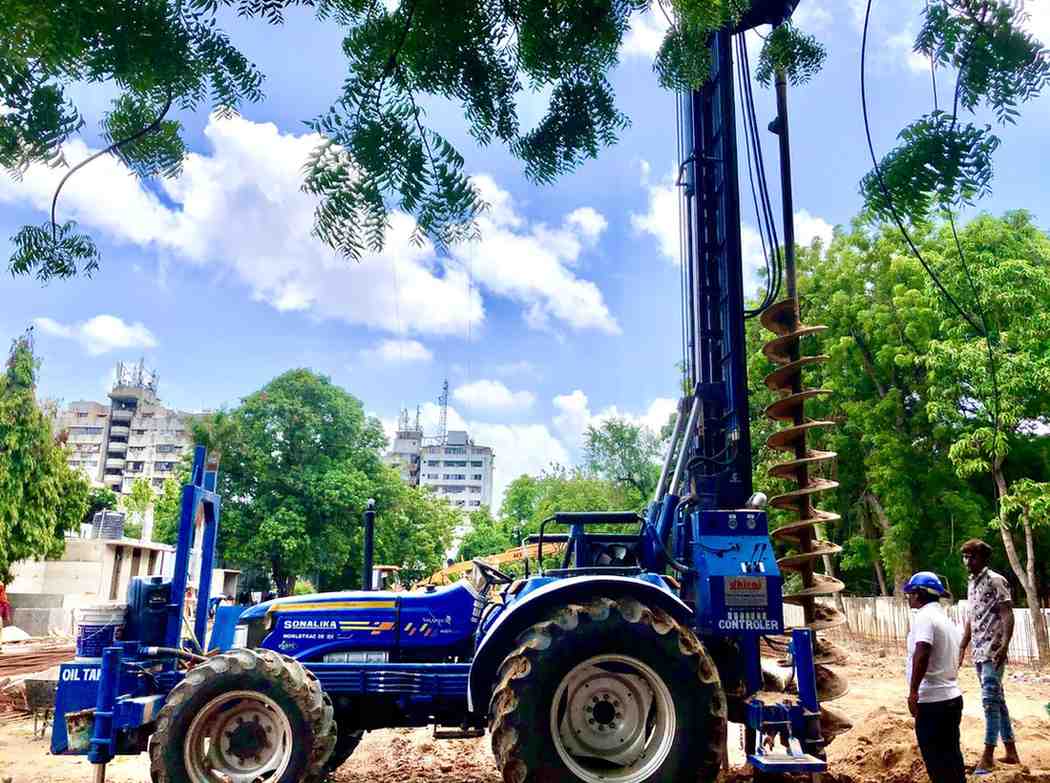
This method utilizes tractor-mounted rotary drilling rigs for fast and economical pile boring. Auger drilling is carried out to the required depth, with DMC rods added progressively to achieve deeper penetration through varying soil strata. It is particularly suitable for medium-depth foundation works and offers drilling capacities of up to 16 meters with excellent operational efficiency.
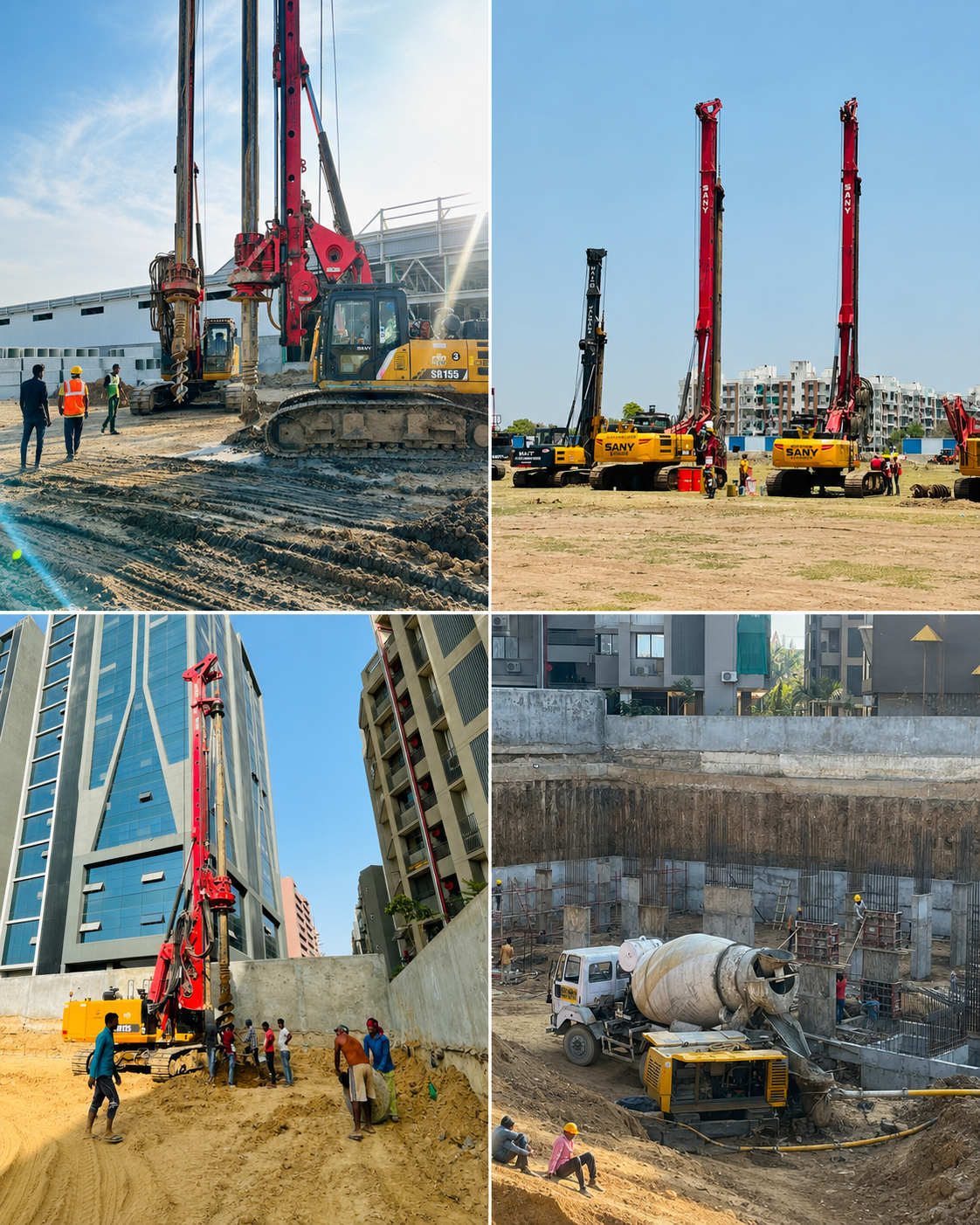
Our Work in Action
Click any image or video to view it in full screen.
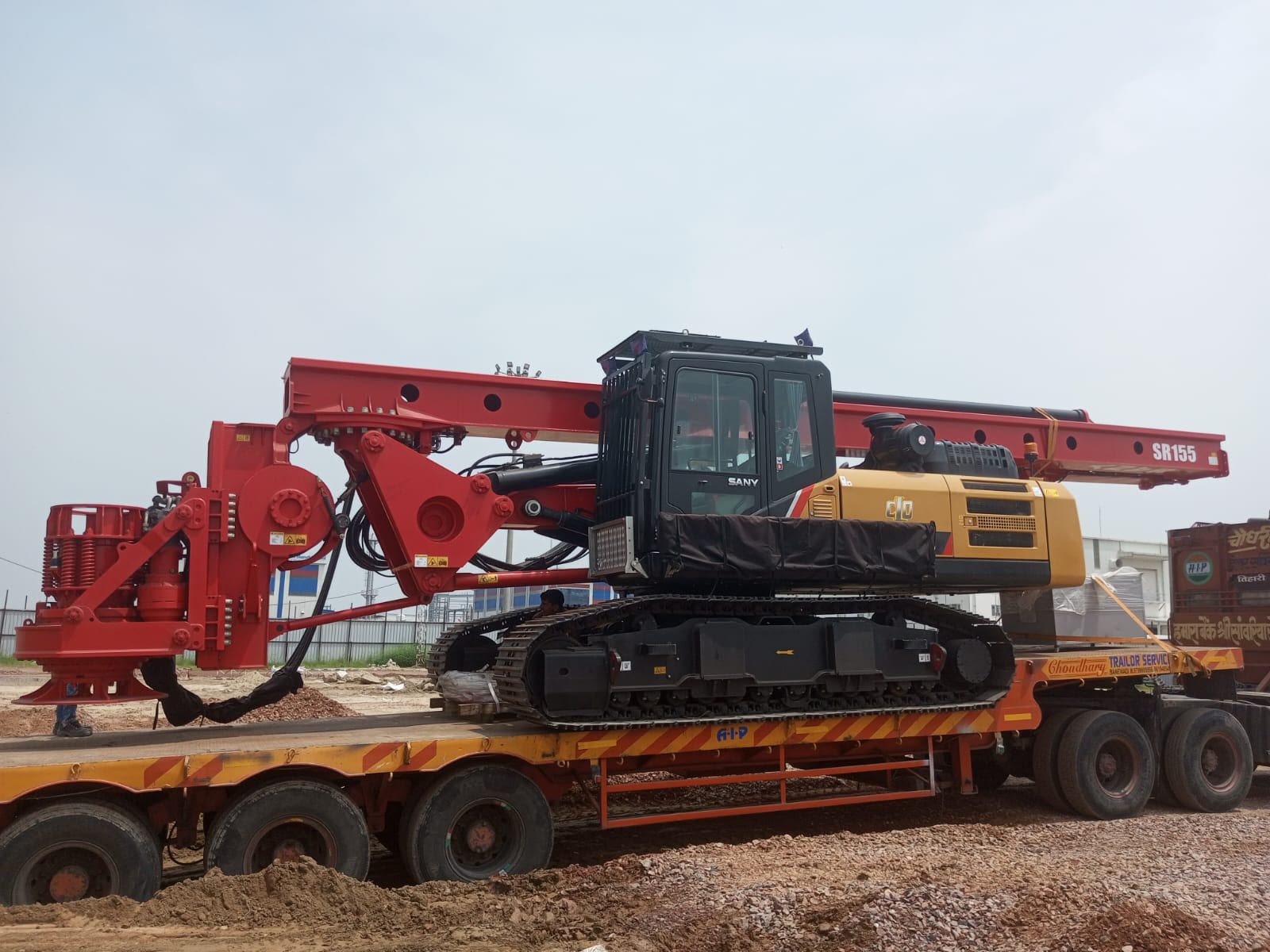
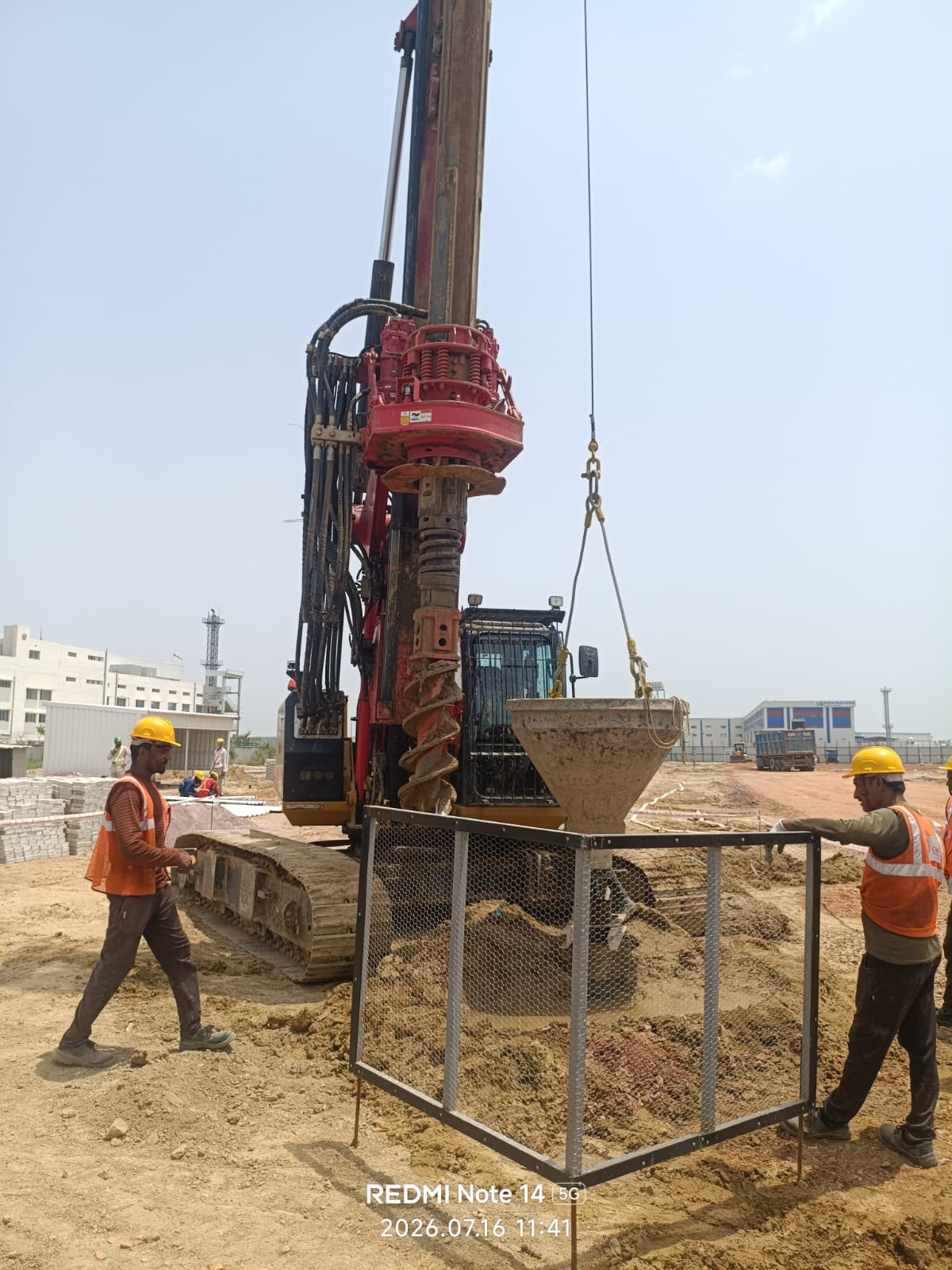
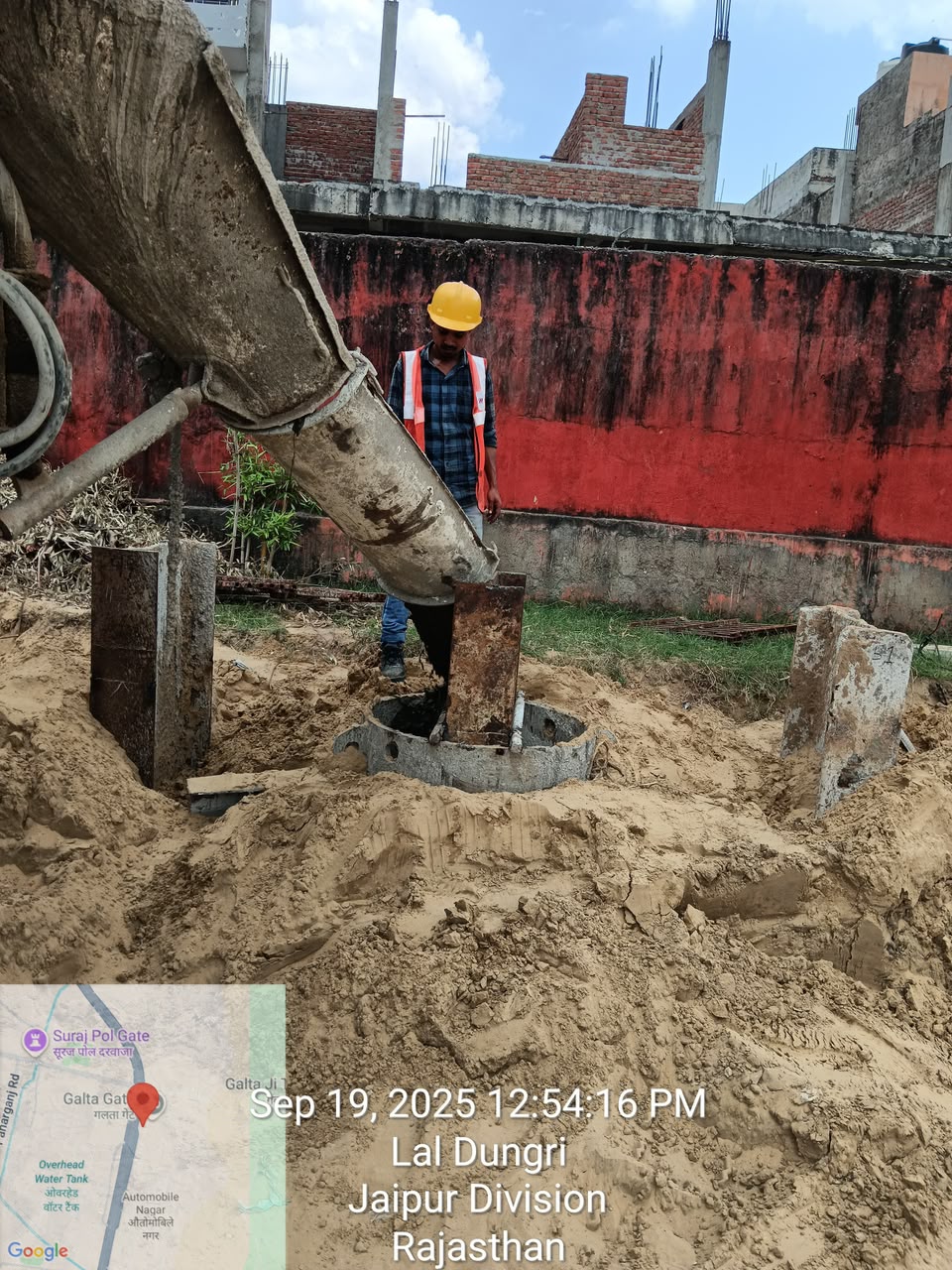
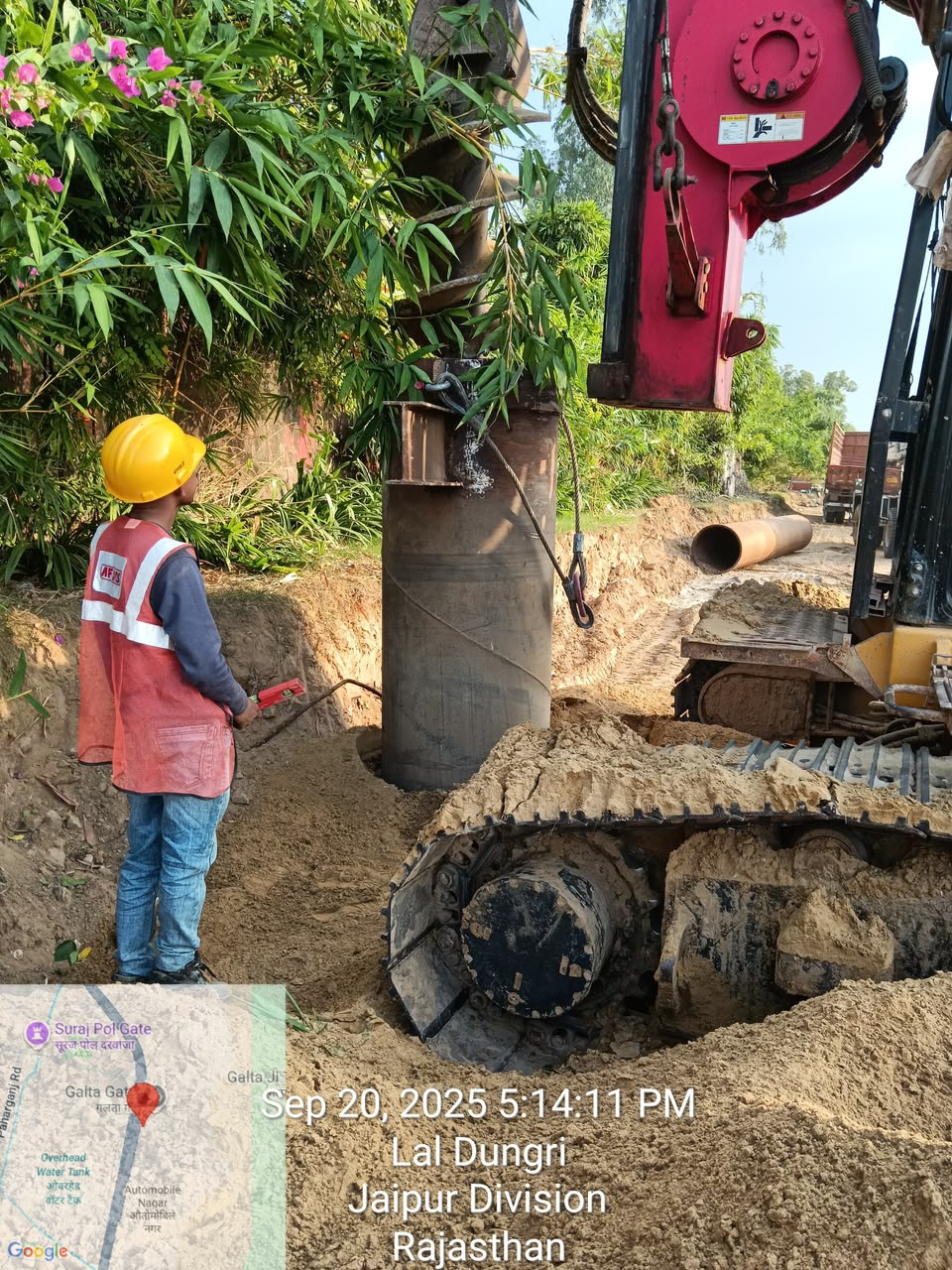
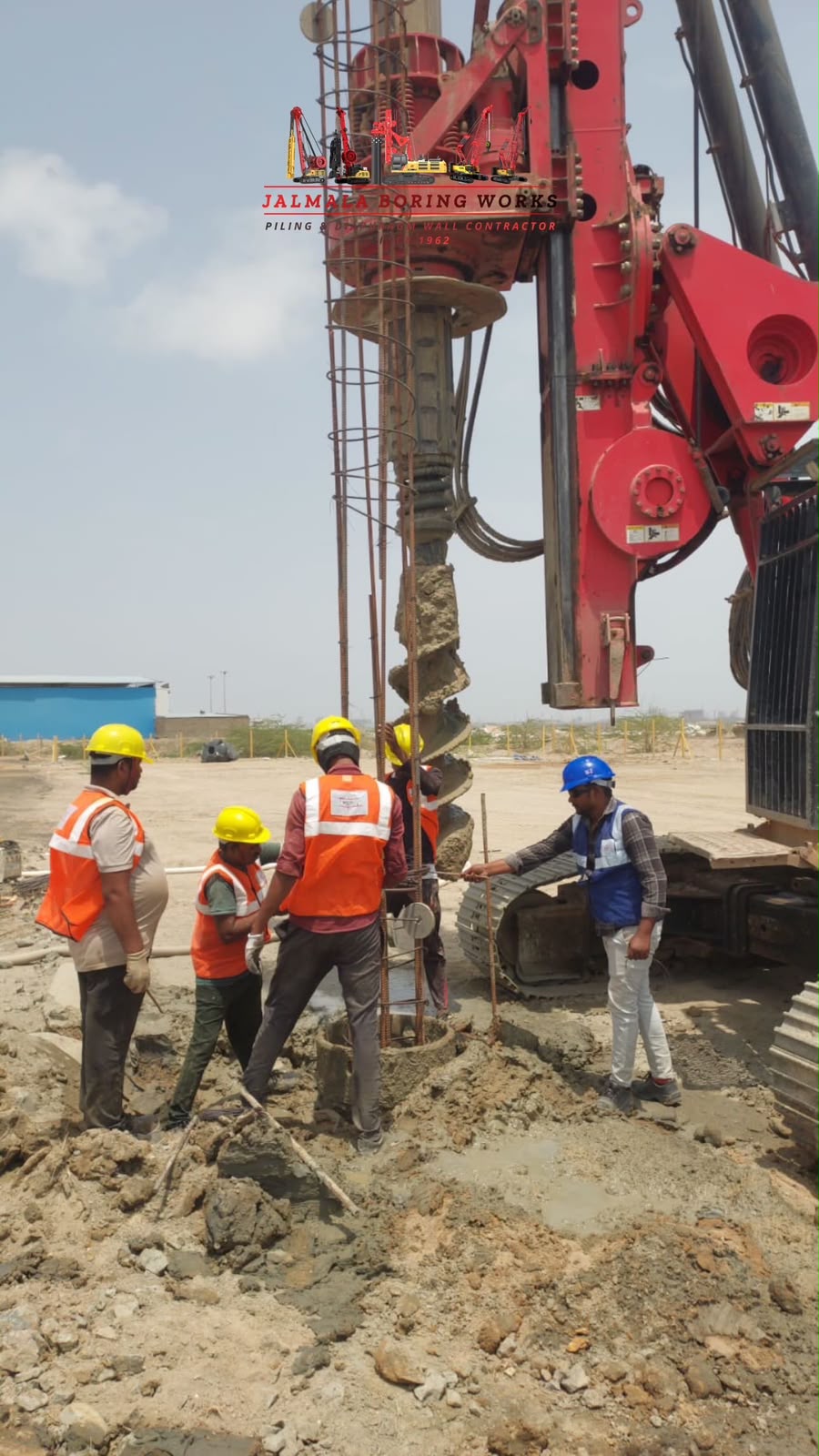
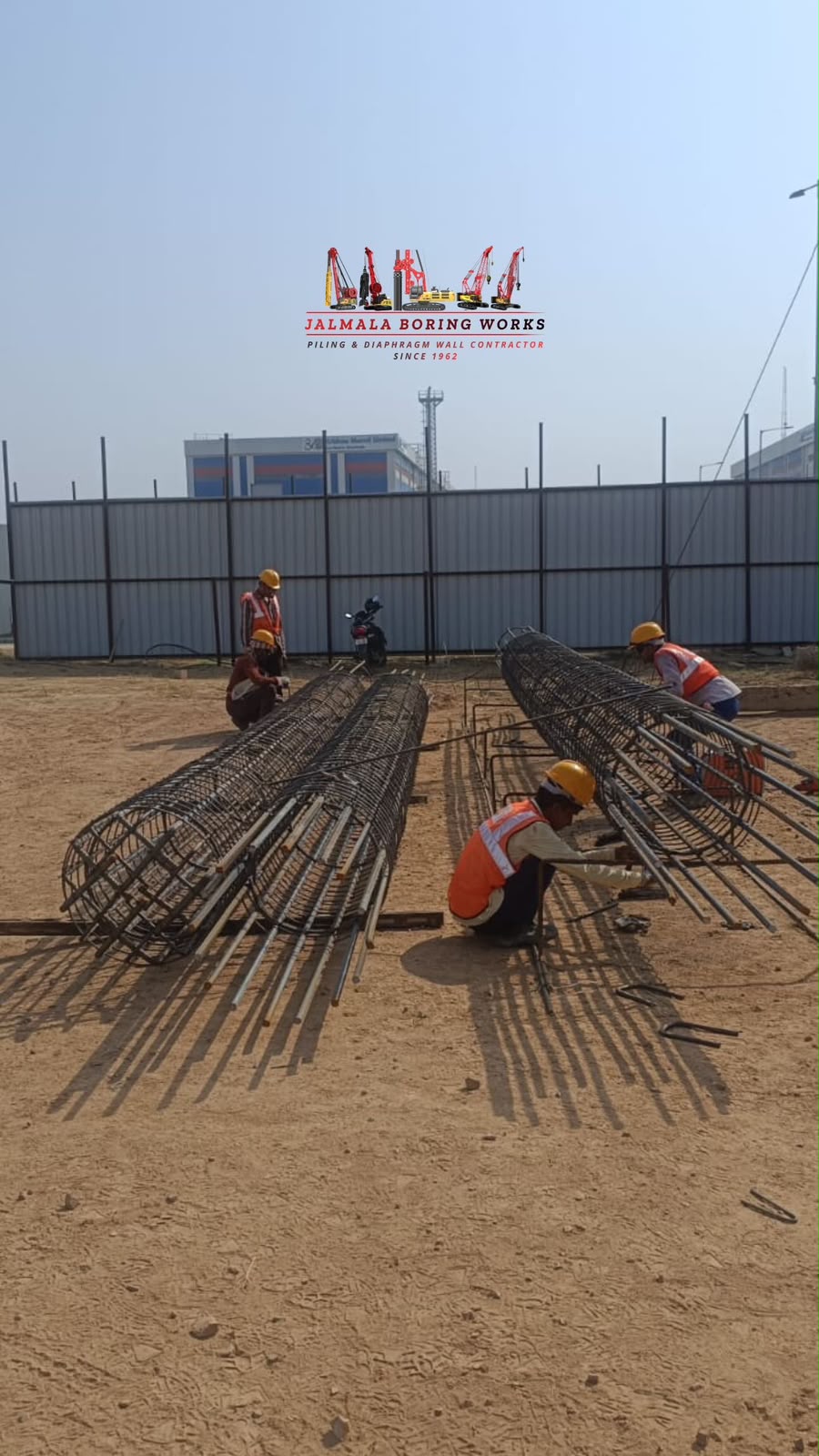
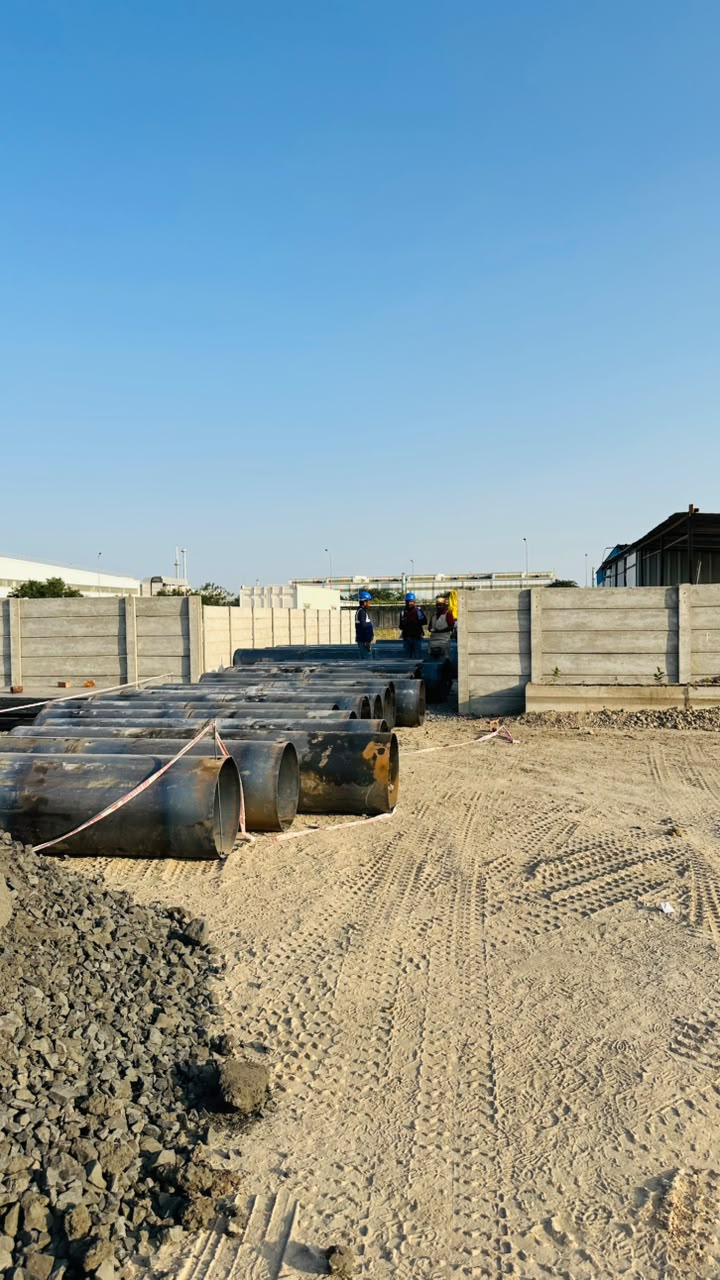
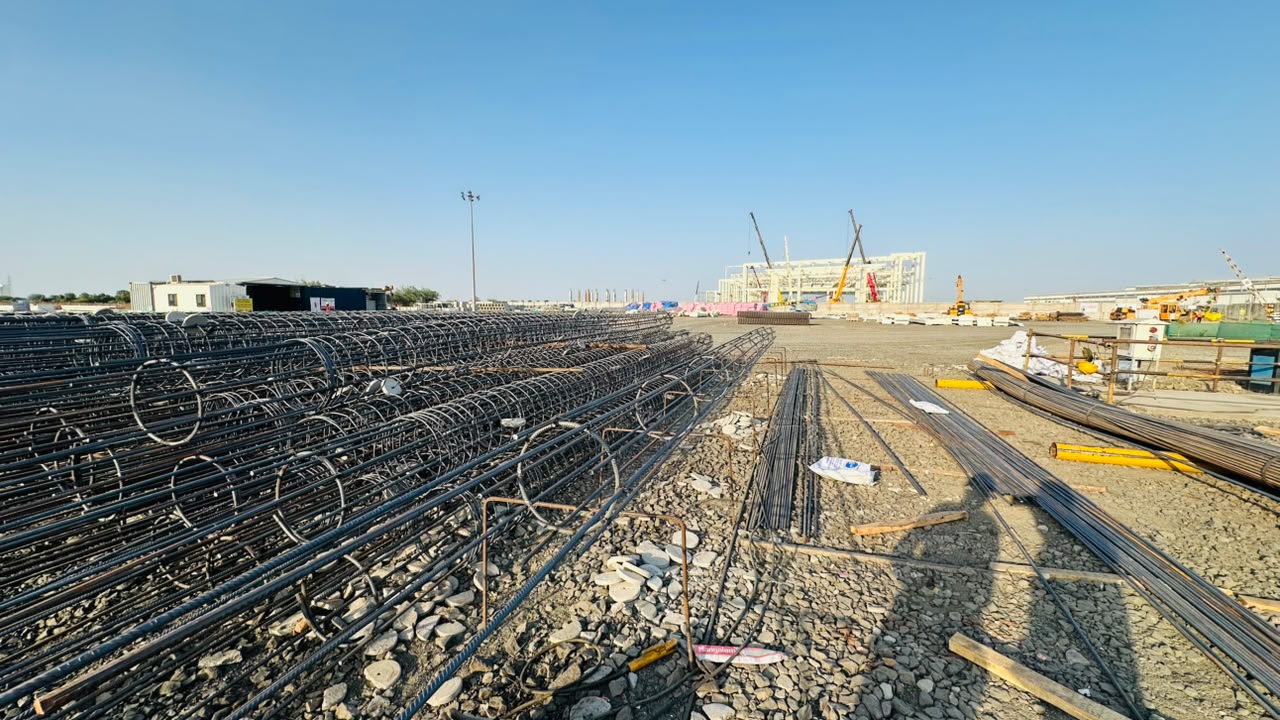
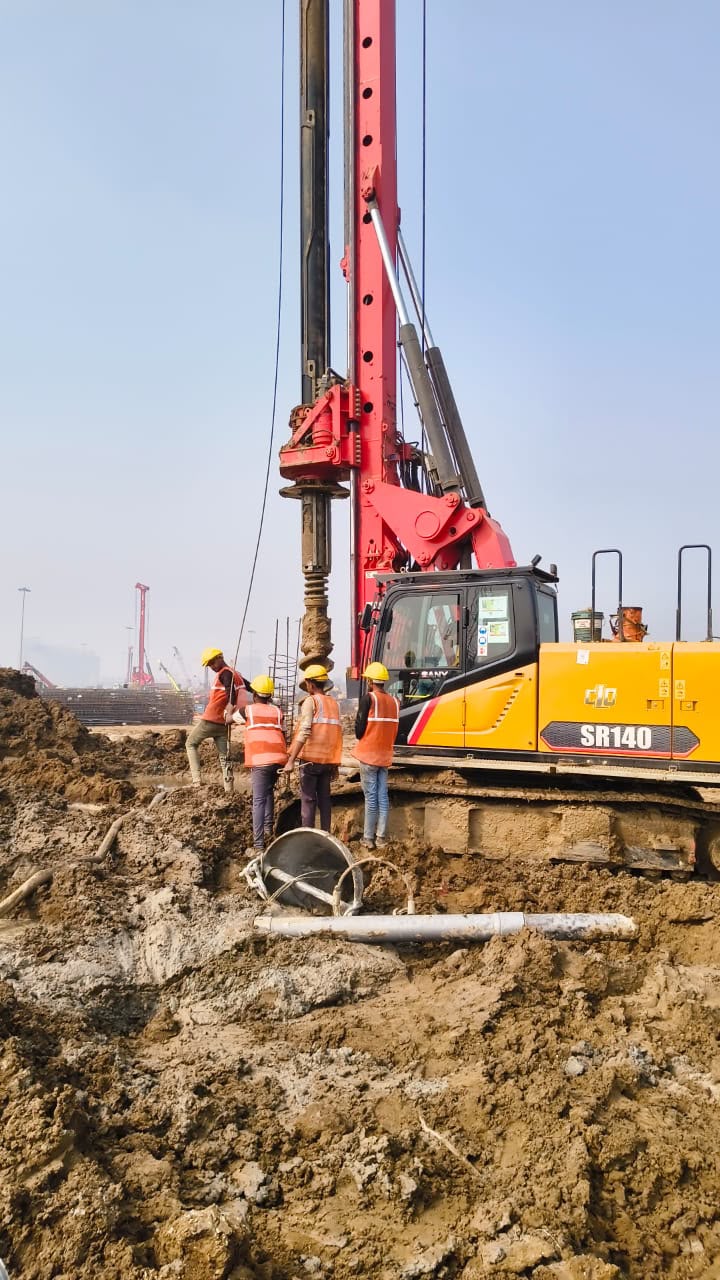
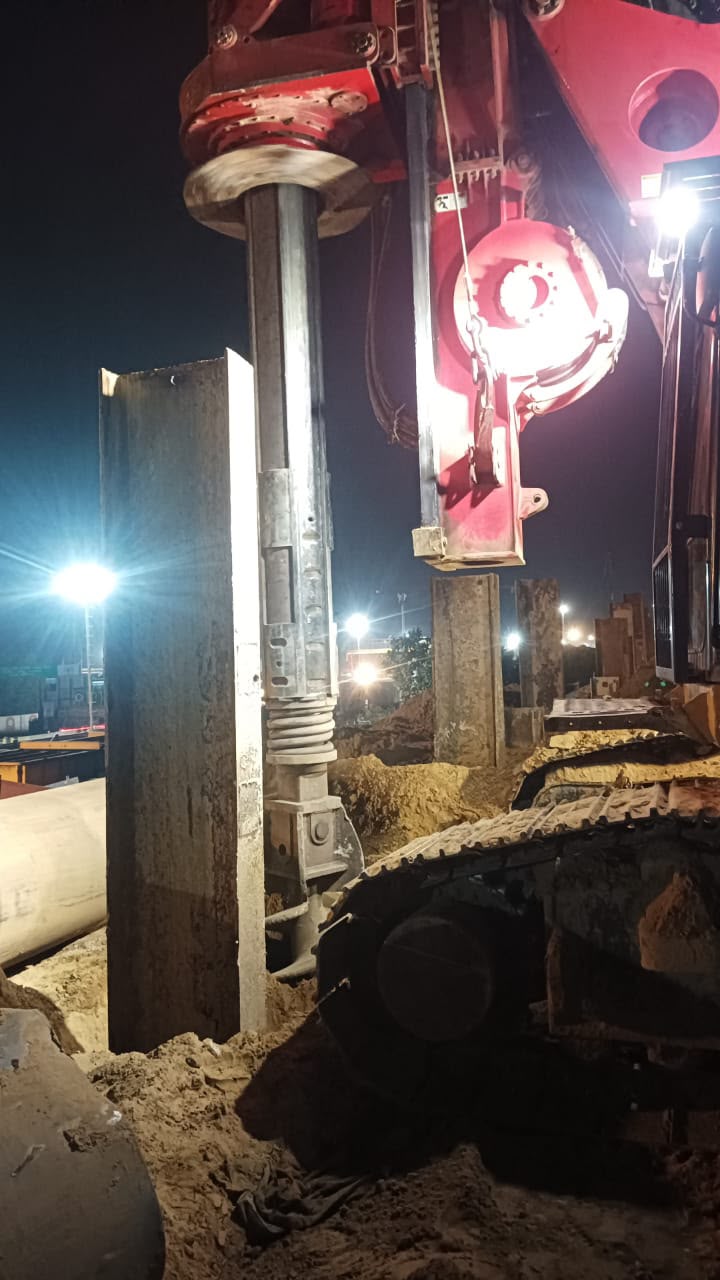
Recent Projects
Pile FoundationConstruction Process
Survey, Setting Out & Guide Casing Installation
Detailed survey, marking of pile locations, and installation of temporary guide casing.
- Detailed survey and marking of pile locations
- Verification of pile coordinates and levels
- Positioning of Hydraulic Rotary Piling Rig
- Installation of temporary guide casing
- Ensures accurate pile alignment and protects bore opening
Pile Boring & Excavation
Drilling of pile bore using Hydraulic Rotary Rig to required depth.
- Drilling of pile bore using Hydraulic Rotary Rig
- Excavation carried out to the required depth and founding strata
- Suitable drilling tools used for soil, rock, or hard strata
- Continuous monitoring of depth, verticality, and pile diameter
- Removal and disposal of excavated soil from site
Slurry Support & Borehole Cleaning
Preparation and circulation of Bentonite/Polymer Slurry and borehole cleaning.
- Preparation and circulation of Bentonite/Polymer Slurry
- Stabilization of borehole walls during drilling
- Recycling of slurry through slurry plant
- Cleaning of borehole bottom to remove loose sediments
- Final inspection of bore depth and cleanliness
Reinforcement Cage Installation
Fabrication and lowering of reinforcement cage into the bore.
- Fabrication of reinforcement cage as per approved drawings
- Installation of spacers, couplers, lifting points, and cover blocks
- Lowering of reinforcement cage into the completed bore
- Accurate positioning and level adjustment
- Quality inspection before concrete placement
Tremie Concreting
Continuous concrete placement using tremie pipes.
- Installation of tremie pipes up to borehole bottom
- Continuous placement of concrete from bottom to top
- Prevention of concrete segregation through tremie method
- Displacement and recovery of slurry during concreting
- Completion of pile concreting in one uninterrupted operation
Pile Completion & Quality Control
Final pile completion, head trimming, and quality assurance.
- Extraction of temporary casing during or after concreting
- Recording of concrete consumption and pile parameters
- Pile head chipping up to cut-off level
- Verification of pile depth, diameter, and concrete quality
- Completion of testing, documentation, and quality assurance
- Ready for pile cap and foundation construction
Industrial Deep Foundation Solutions
Pile Foundation Contractor for Industrial Projects
Industrial construction projects require carefully planned foundation systems to support buildings, production facilities, heavy machinery, storage structures and other infrastructure. When surface soil conditions cannot provide the required bearing support, pile foundations may be considered to transfer structural loads to suitable deeper soil or rock strata. Choosing an experienced pile foundation contractor is therefore an important part of industrial project planning and execution.
Jalmala Boring Works is a third-generation, family-owned foundation construction company with experience dating back to 1962. The company specialises in pile foundations, diaphragm walls and ground anchoring-related construction. Its bored cast-in-situ piling capabilities support industrial, commercial, residential and infrastructure developments across India.
Industrial Pile Foundation Construction
Industrial buildings can have different foundation requirements depending on their purpose, structural configuration and operational loads. A manufacturing plant may include production halls, equipment foundations, utility structures and storage areas. Warehouses and logistics facilities may require foundations designed around building loads, racking arrangements and site conditions. Process industries may also have specialised structural and equipment support requirements.
Pile foundation systems are considered when recommended by the geotechnical and structural design. The selected pile type, diameter, depth, reinforcement and spacing must be based on the soil investigation, design loads, groundwater conditions and applicable project specifications.
Pile Foundation Services for Factories and Manufacturing Plants
Factory and manufacturing plant construction often involves large building areas and different types of structural loading. The foundation contractor must understand the approved pile layout and coordinate drilling, reinforcement placement and concreting activities with the overall construction programme.
Jalmala Boring Works provides bored cast-in-situ pile construction for industrial and other project categories. Its published piling capabilities include pile diameters from 300 mm to 1800 mm and depths up to 50 metres. Actual dimensions and founding levels are determined by the project design and site investigation.
Bored Cast-in-Situ Piles for Industrial Foundations
Bored cast-in-situ piling is a widely used deep foundation construction method. The process involves drilling a borehole to the specified depth, maintaining bore stability where necessary, cleaning the borehole, lowering the reinforcement cage and placing concrete using the specified procedure.
Depending on the soil profile and groundwater conditions, suitable casing or slurry support may be required during drilling. Tremie concreting can be used where the borehole conditions and approved method statement require it. Proper control of bore depth, verticality, reinforcement and concrete placement is important throughout execution.
Hydraulic Rotary Piling Equipment
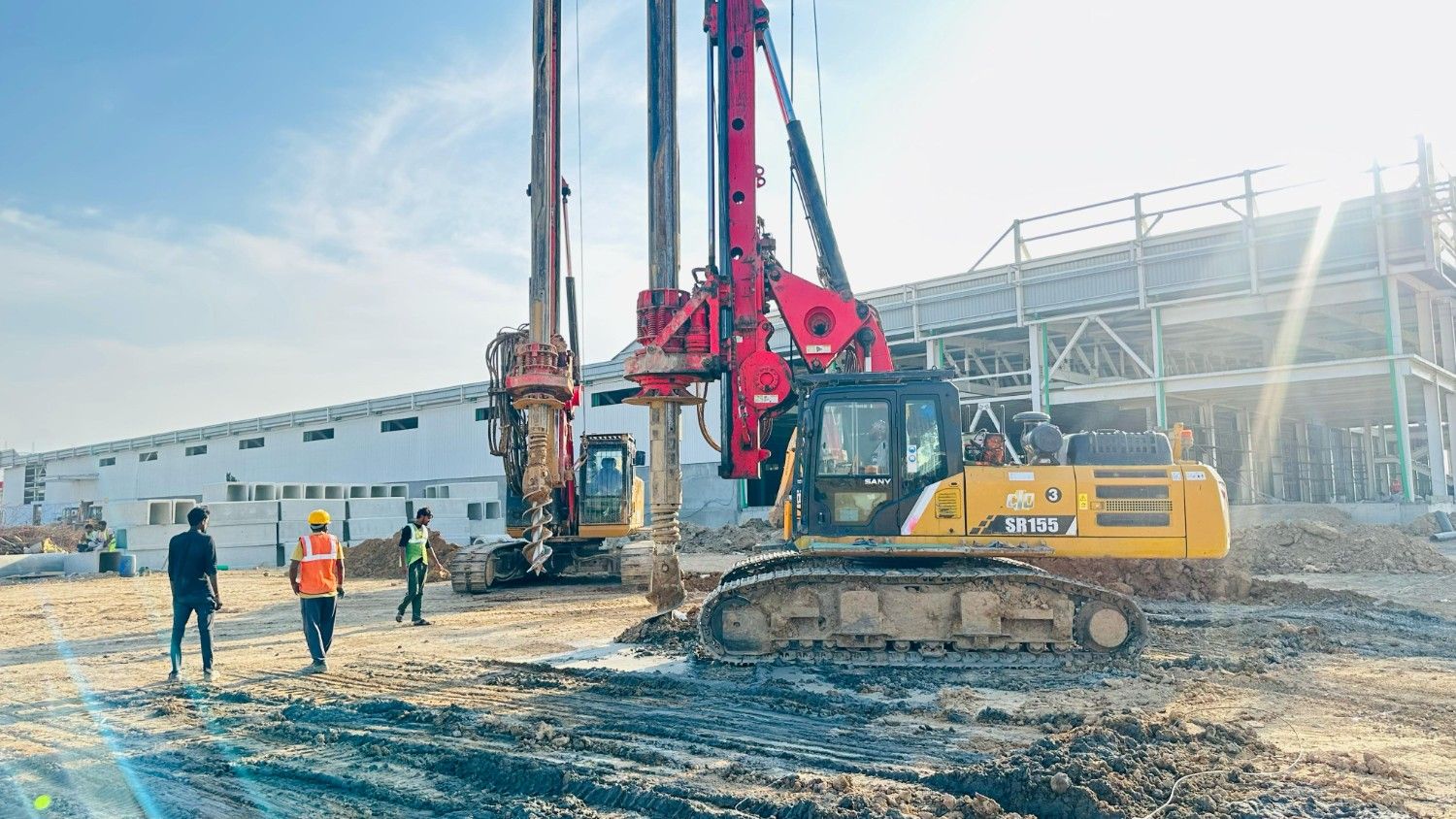
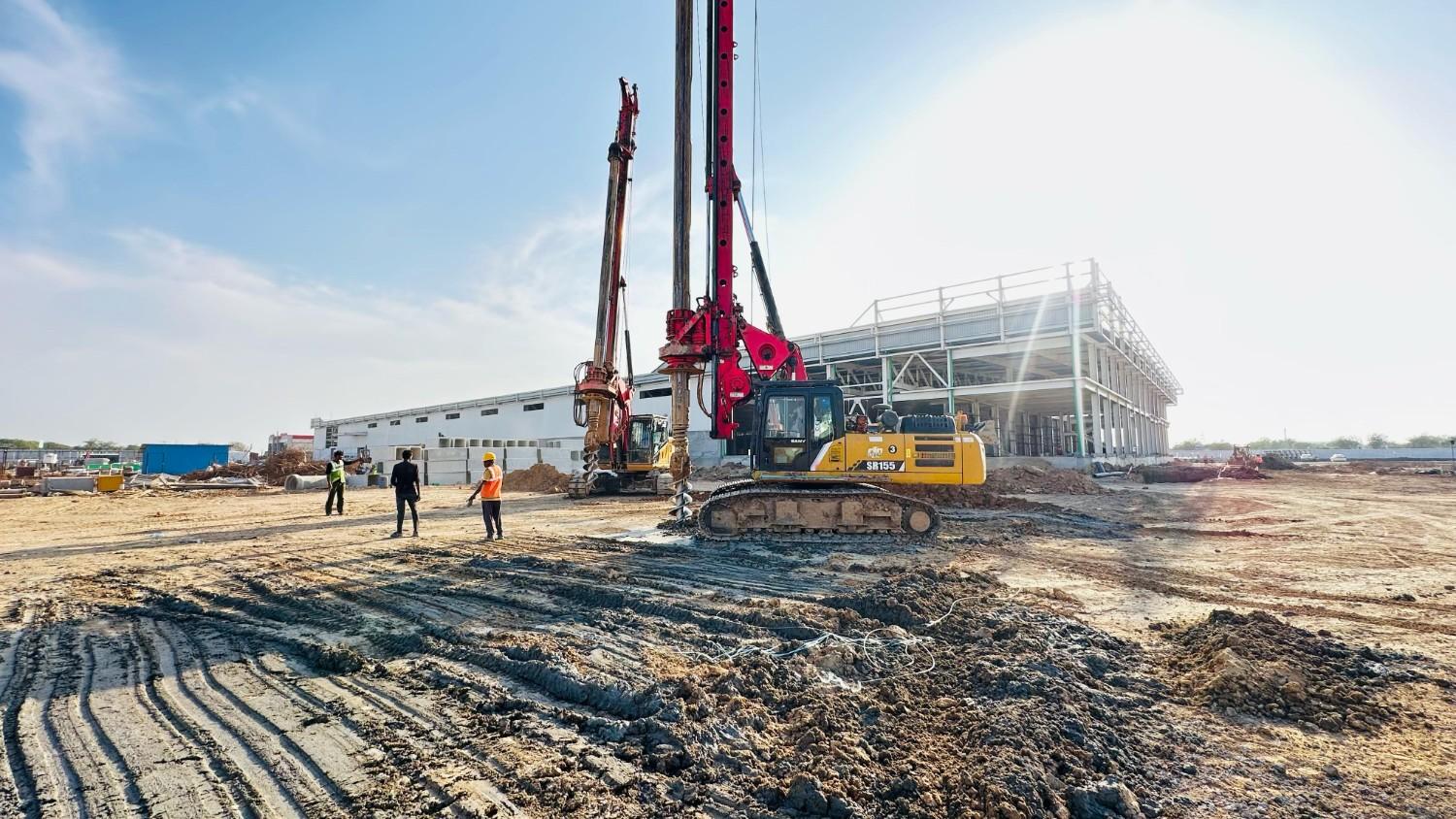
The selection of drilling equipment depends on the pile diameter, required depth, soil or rock strata, site access and project programme. Jalmala Boring Works operates modern SANY hydraulic rotary piling rigs for relevant deep foundation activities. The company also uses DMC percussion methods according to ground conditions and project requirements.
Appropriate equipment selection can help maintain drilling accuracy and coordinate construction activities. Before mobilisation, the contractor should review working platform capacity, access routes, overhead clearances, equipment positioning and material handling arrangements.
Piling for Industrial Warehouses and Storage Facilities
Industrial warehouses and storage facilities may require foundation systems that account for building loads, column reactions, floor arrangements and site-specific ground conditions. Where the design specifies pile foundations, the contractor must follow the approved pile coordinates, dimensions, reinforcement details and construction specifications.
The piling programme should also be coordinated with excavation, foundation concreting, material delivery and other construction activities. A planned execution sequence can help reduce site conflicts and support efficient project coordination.
Foundations for Heavy Industrial Structures
Certain industrial developments include structures and equipment that generate significant static or dynamic loads. Examples may include production machinery, industrial sheds, process structures, utility buildings and equipment support systems. Foundation requirements must be established by the project's structural and geotechnical engineers.
Depending on the design, pile foundations may be used to transfer loads through weaker surface layers to more suitable supporting strata. The number of piles, pile capacity, reinforcement and group arrangement must be calculated for the specific structure rather than selected using a general standard dimension.
Industrial Piling Projects Across India
Industrial developments are located across manufacturing zones, industrial estates and infrastructure corridors. Jalmala Boring Works is based in Ahmedabad, Gujarat, and undertakes deep foundation projects in different parts of India, subject to project scope and mobilisation requirements.
Its project portfolio includes industrial developments such as the Adani ACMD project in Mundra, the LNG Petrochemical Plant at Dahej, factory projects in Changodar and industrial facilities in other locations. These examples demonstrate experience in industrial project environments. The appropriate piling system for each new project must still be established through technical review.
Quality Control and Pile Load Testing
Quality control is an essential part of industrial pile foundation construction. Depending on project specifications, the construction process may include checking pile location, bore depth, verticality, borehole cleanliness, reinforcement cage details and concrete placement records.
Jalmala Boring Works lists static and dynamic pile load testing among its piling capabilities. The type, quantity and acceptance criteria for pile testing should be specified by the project consultant or engineer in accordance with the applicable design and standards.
Why Consider Jalmala Boring Works for Industrial Piling?
Jalmala Boring Works has been involved in foundation construction since 1962. Its third-generation team specialises in pile foundations, diaphragm walls and ground anchoring-related work. The company operates hydraulic rotary piling equipment and provides bored cast-in-situ piling services for industrial and infrastructure developments.
- Foundation construction experience dating back to 1962.
- Bored cast-in-situ pile capabilities from 300 mm to 1800 mm diameter.
- Published pile depth capability up to 50 metres.
- SANY hydraulic rotary piling equipment.
- DMC percussion piling methods.
- Temporary and permanent steel casing capabilities.
- Tremie concreting and pile load testing services.
- Project execution experience across industrial and infrastructure sectors.
Information Required for an Industrial Piling Quotation
Before requesting a quotation, industrial developers, contractors and consultants should prepare the available technical information. This helps the piling contractor understand the scope and review the requirements before proposing an execution approach.
- Industrial project name and site location.
- Geotechnical investigation and soil report.
- Structural drawings and pile layout.
- Required pile diameter and depth.
- Estimated number of piles and quantities.
- Groundwater and soil strata information.
- Site access and working platform details.
- Concrete and reinforcement specifications.
- Required pile testing and inspection details.
- Expected project start date and schedule.
Once these details are available, the contractor can review the project scope, equipment requirements, construction methodology and mobilisation considerations. Final technical and commercial proposals should be based on the approved drawings, specifications and site conditions.
Contact an Industrial Pile Foundation Contractor
If you are planning a factory, manufacturing unit, warehouse, industrial plant or other industrial development, contact Jalmala Boring Works to discuss your pile foundation requirements. The team can review your project location, drawings, soil report and proposed foundation specifications.
Jalmala Boring Works is located in Ahmedabad, Gujarat, and considers industrial piling enquiries from across India. For technical discussions and project quotations, call +91 93745 45415 or email jalmala.pile@gmail.com.
Learn more about a pile foundation contractor for industrial projects and discuss your requirements with Jalmala Boring Works.
Jalmala Boring Works
Need Pile Foundation Work for Your Industrial Project?
Contact our team for industrial piling enquiries, technical discussions and project quotations. Share your drawings and soil investigation report for an initial review.
Company: Jalmala Boring Works
Phone: +91 93745 45415
Email: jalmala.pile@gmail.com
Address: Dholka Road, near Nariampura Village, Sarkhej, Ahmedabad, Gujarat 382210, India
Frequently Asked Questions
What is a pile foundation contractor for industrial projects?
An industrial pile foundation contractor carries out deep foundation construction for facilities such as factories, manufacturing plants, warehouses and industrial infrastructure. The work may include bored cast-in-situ piling, borehole preparation, reinforcement installation, concreting and required quality testing.
Why are pile foundations used for industrial buildings?
Pile foundations may be selected when soil near the surface cannot provide the required support for structural loads, machinery foundations or other industrial structures. The final foundation system depends on the geotechnical investigation and structural design.
What piling services does Jalmala Boring Works provide?
Jalmala Boring Works provides bored cast-in-situ pile foundation services using hydraulic rotary rigs and DMC percussion methods. Its capabilities include casing installation, tremie concreting and static and dynamic pile load testing.
What pile diameter and depth are available for industrial projects?
Jalmala Boring Works lists bored cast-in-situ pile capabilities from 300 mm to 1800 mm diameter and depths up to 50 metres. Actual pile dimensions and founding levels depend on the approved design, soil conditions and project requirements.
Can pile foundations be used for factory and manufacturing plants?
Yes. Pile foundations can be considered for factory buildings, manufacturing facilities, warehouses, industrial plants and other structures when recommended by the geotechnical and structural design. The foundation must account for building loads, equipment loads and site conditions.
Does Jalmala Boring Works undertake industrial projects across India?
Jalmala Boring Works is based in Ahmedabad, Gujarat, and undertakes deep foundation projects in different parts of India. Project execution is assessed according to location, technical scope, equipment availability and mobilisation requirements.
How can I request an industrial piling quotation?
Contact Jalmala Boring Works by phone or email and share your project location, soil investigation report, foundation drawings, pile diameter, pile depth, estimated quantity and expected schedule for an initial project review.