
Pile Foundation
Bored Cast-in-Situ Piling Specialists
Jalmala Boring Works provides Pile Foundation and Deep Foundation Solutions using Bored Cast-in-Situ Piles for residential, commercial, industrial, and infrastructure projects. With advanced Hydraulic Rotary Rigs, we construct piles from 300 mm to 1800 mm diameter and depths of up to 50 metres, delivering reliable load-bearing capacity across soft soil, hard rock, and high groundwater conditions.
Our Piling Methods
We deploy six proven techniques — selected based on soil profile, site constraints, and project requirements.
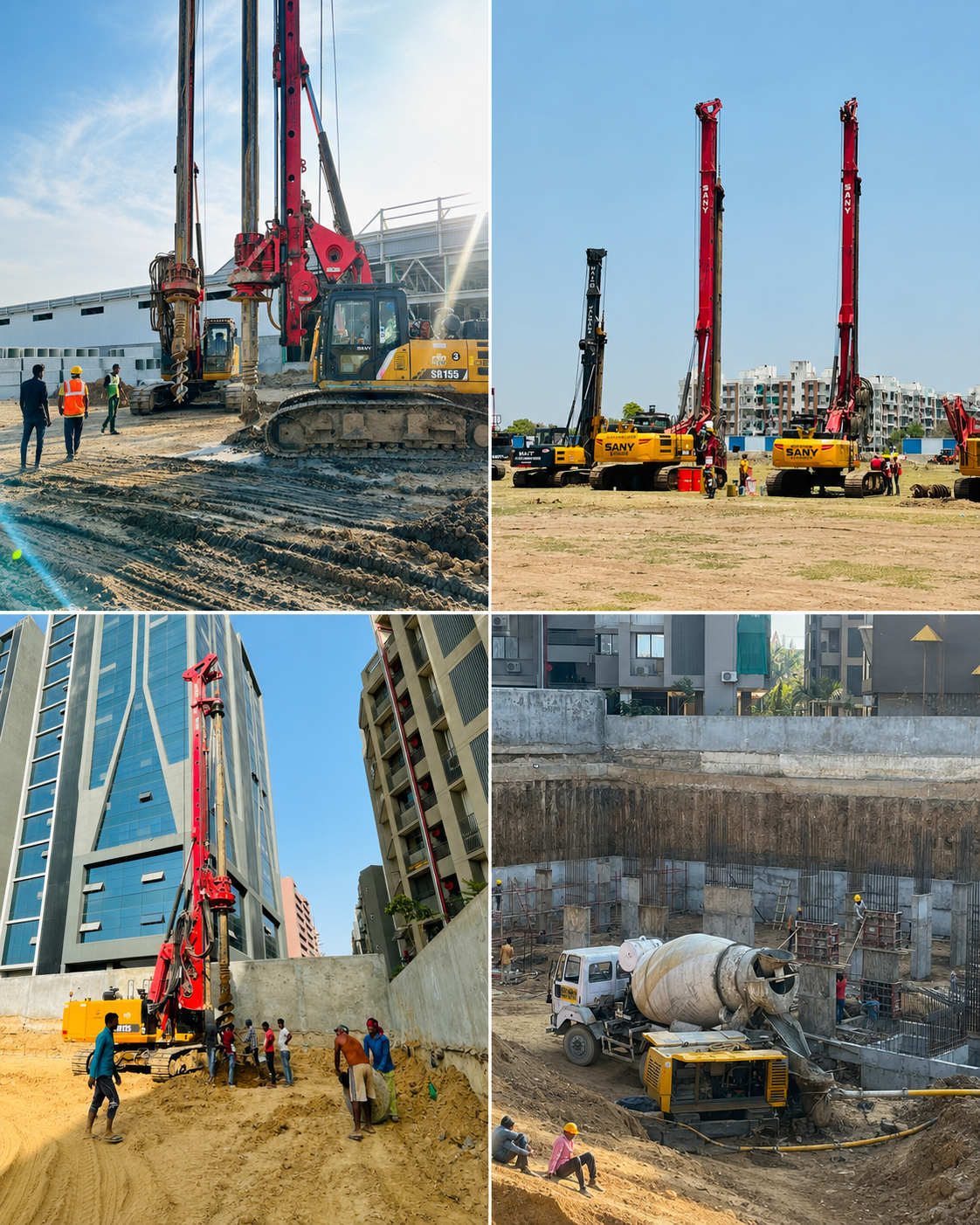
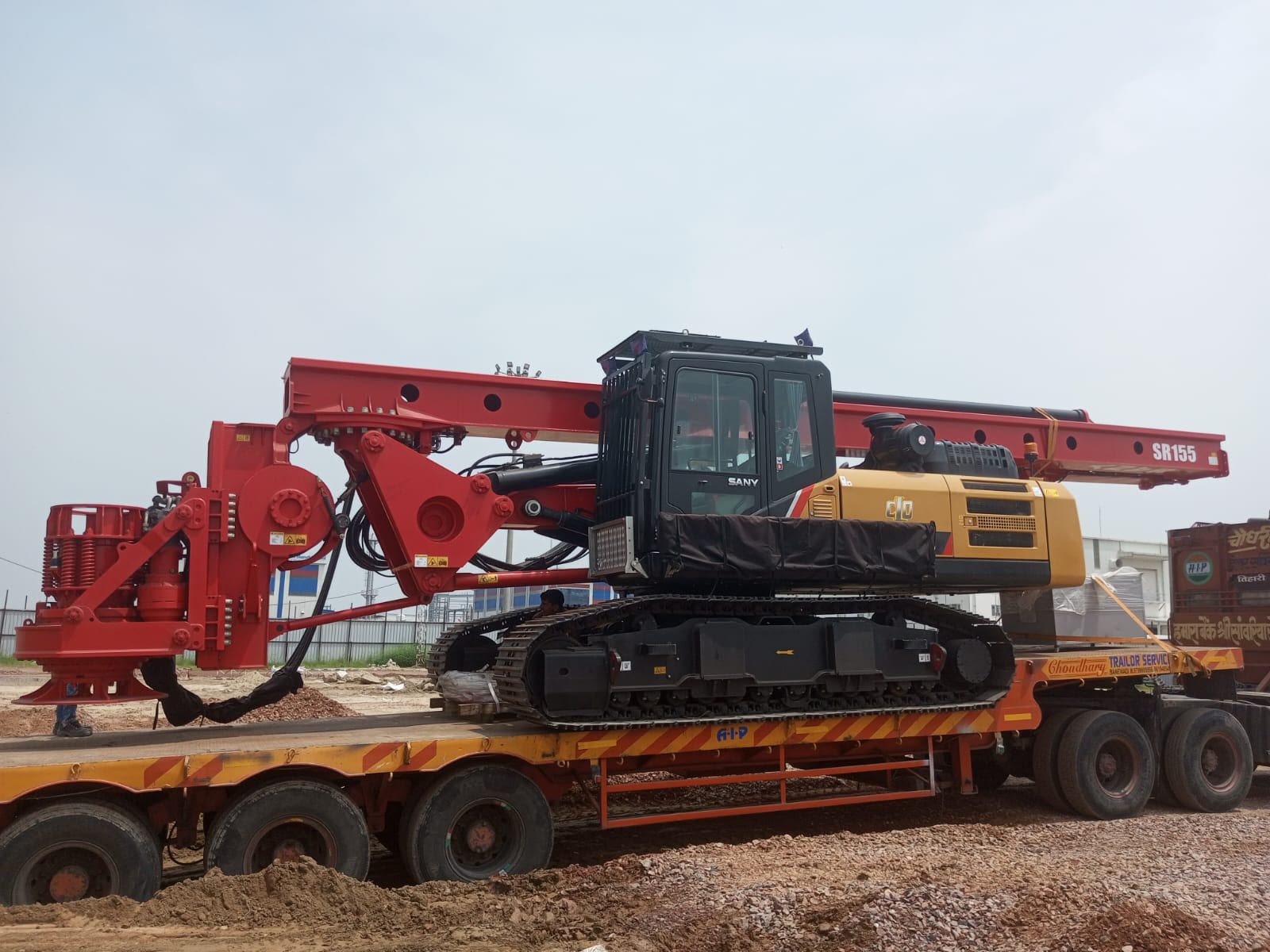
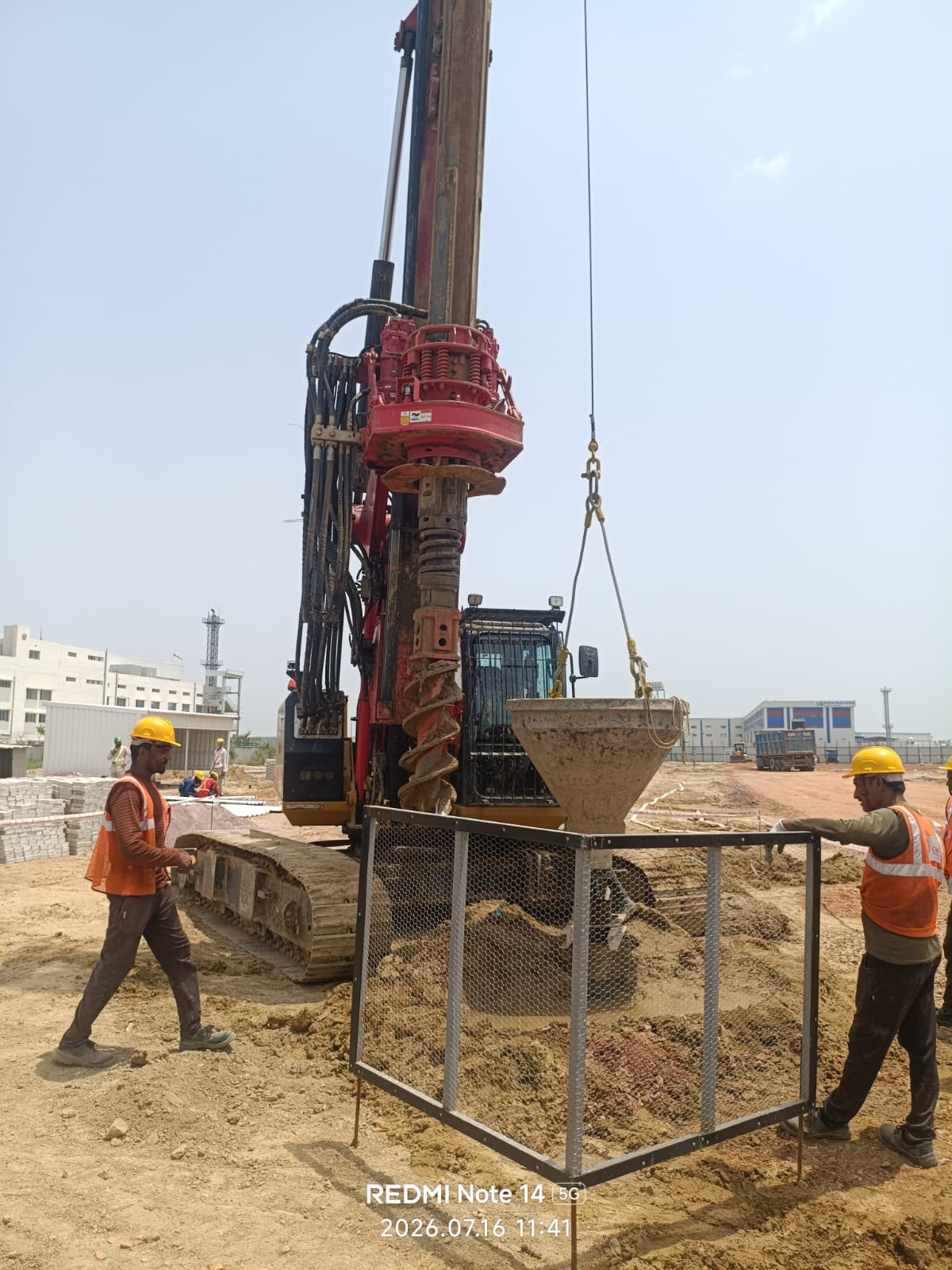
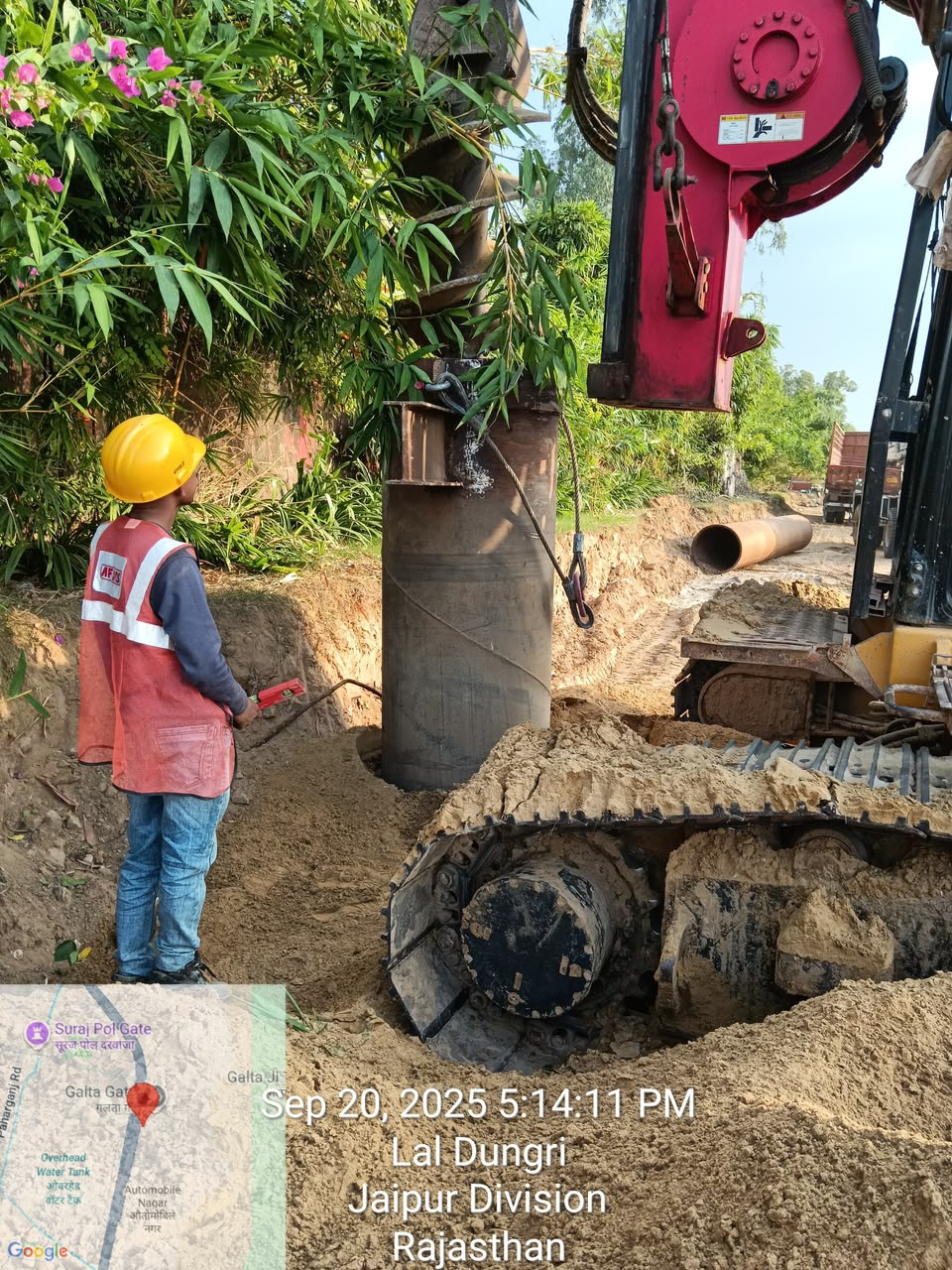
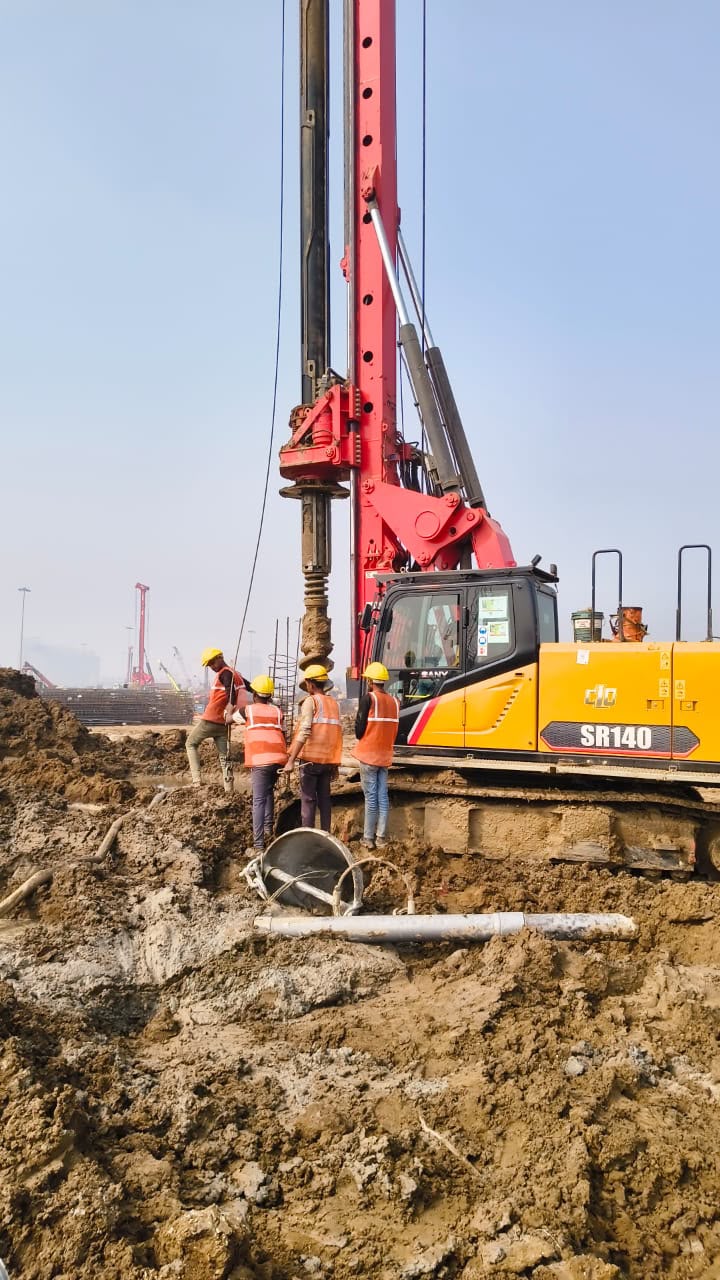
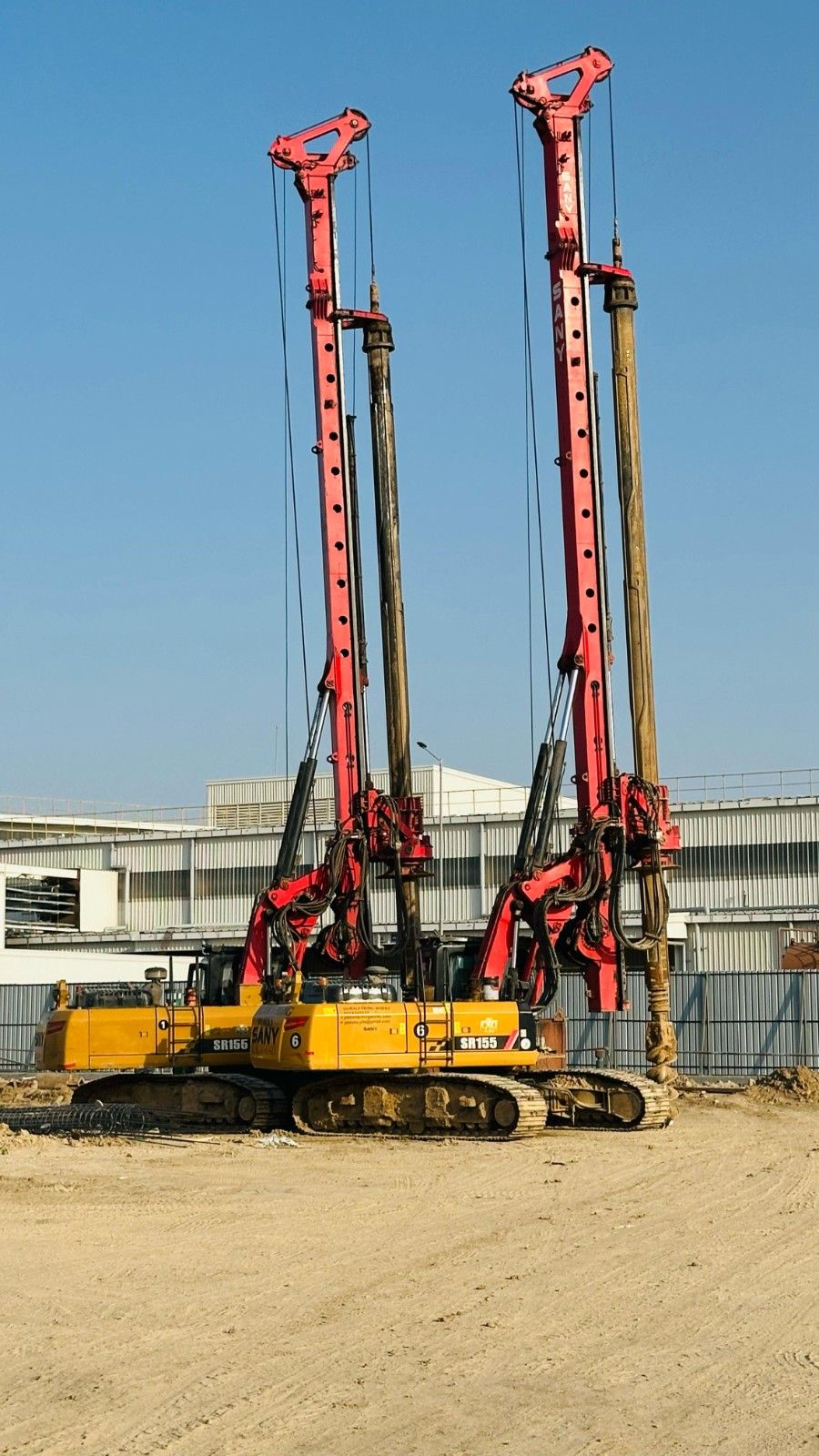
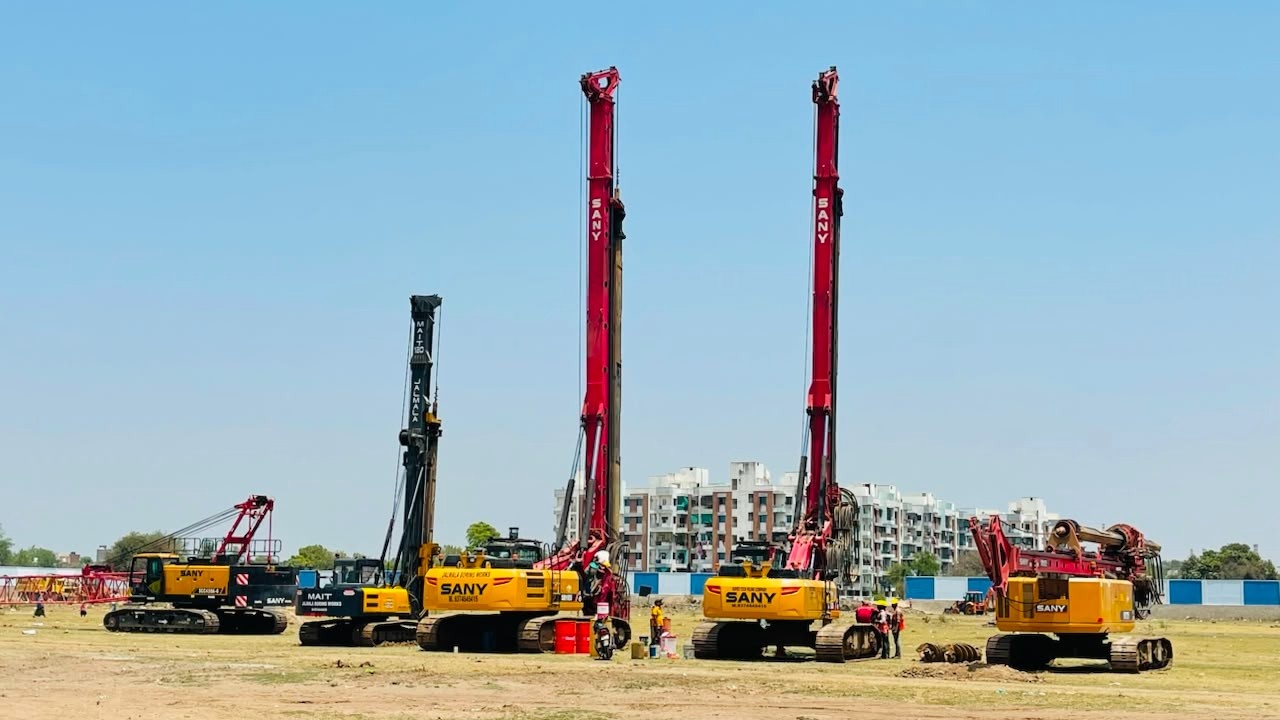
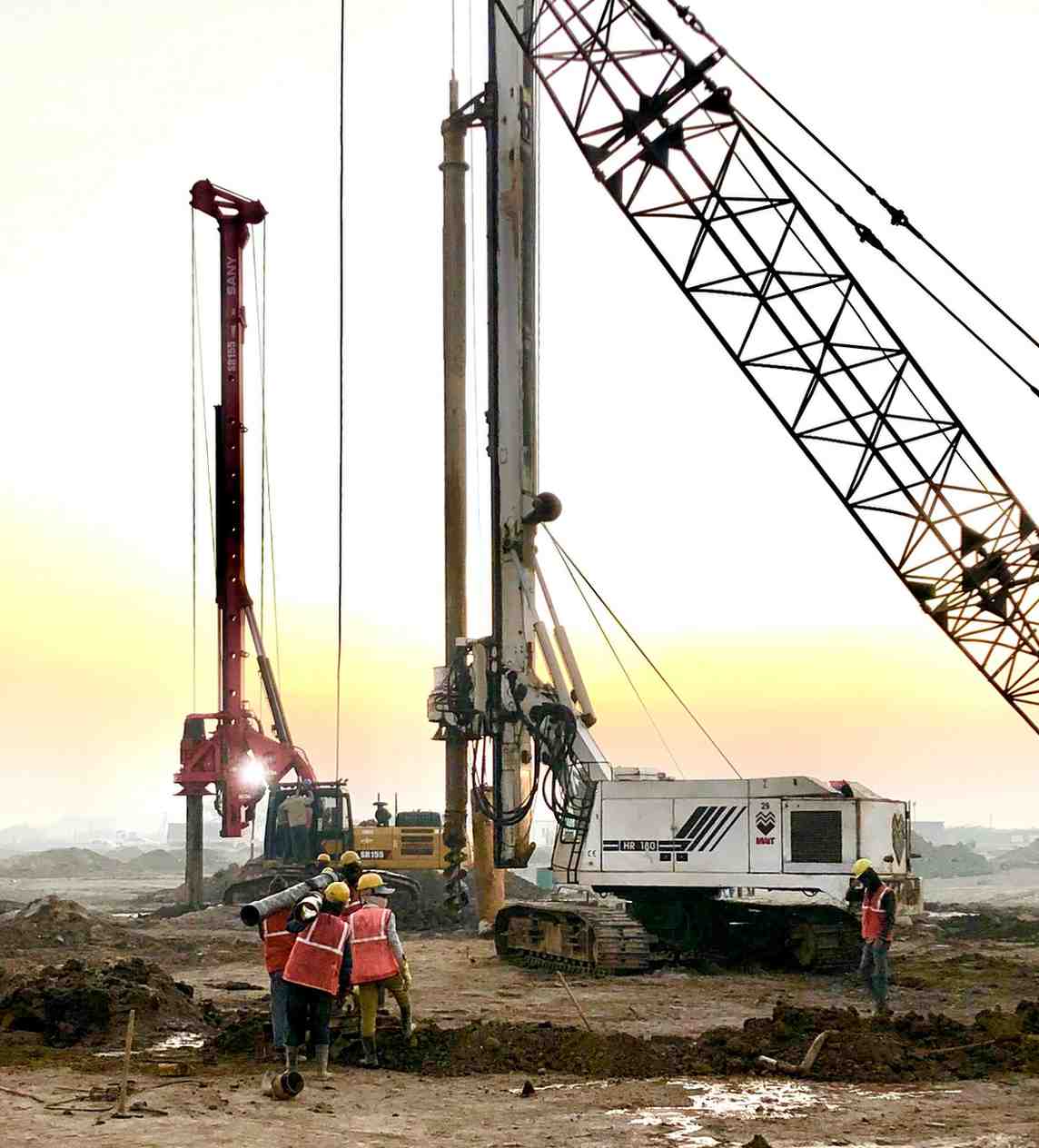
We specialize in bored piling with diameters ranging from 200 mm to 2000 mm and depths up to 50 meters. Using advanced hydraulic rotary rigs, we execute piling operations efficiently across a wide range of soil conditions. Our fleet includes high-performance rotary drilling rigs capable of working in restricted headroom areas while delivering precision, stability, and high productivity.
Secant pile walls are constructed by intersecting reinforced concrete piles to form a continuous retaining structure. Primary piles are installed first, followed by reinforced secondary piles after sufficient curing. This technique provides excellent groundwater control and soil retention, making it ideal for deep excavations, basements, and foundation support in challenging ground conditions.
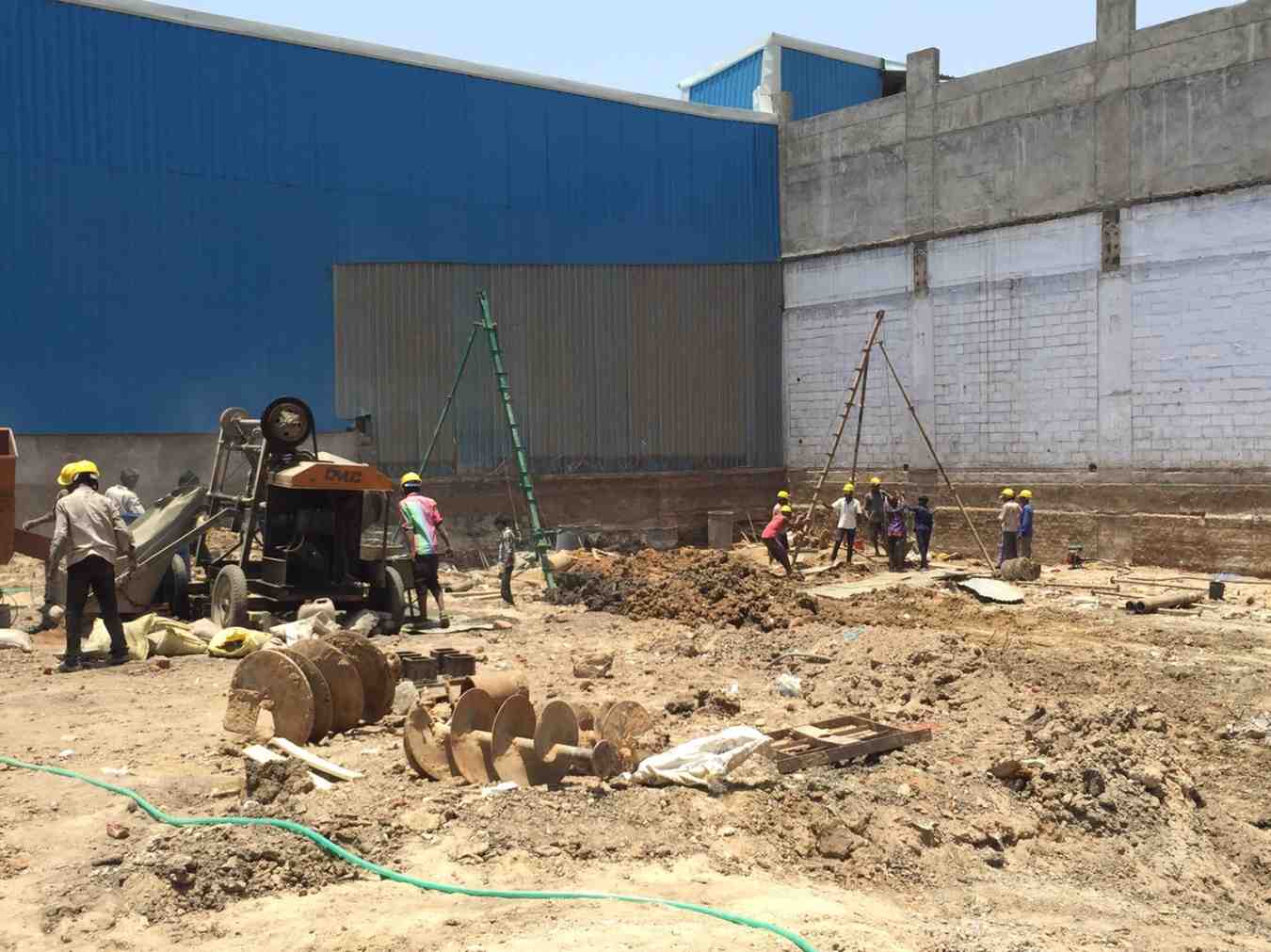
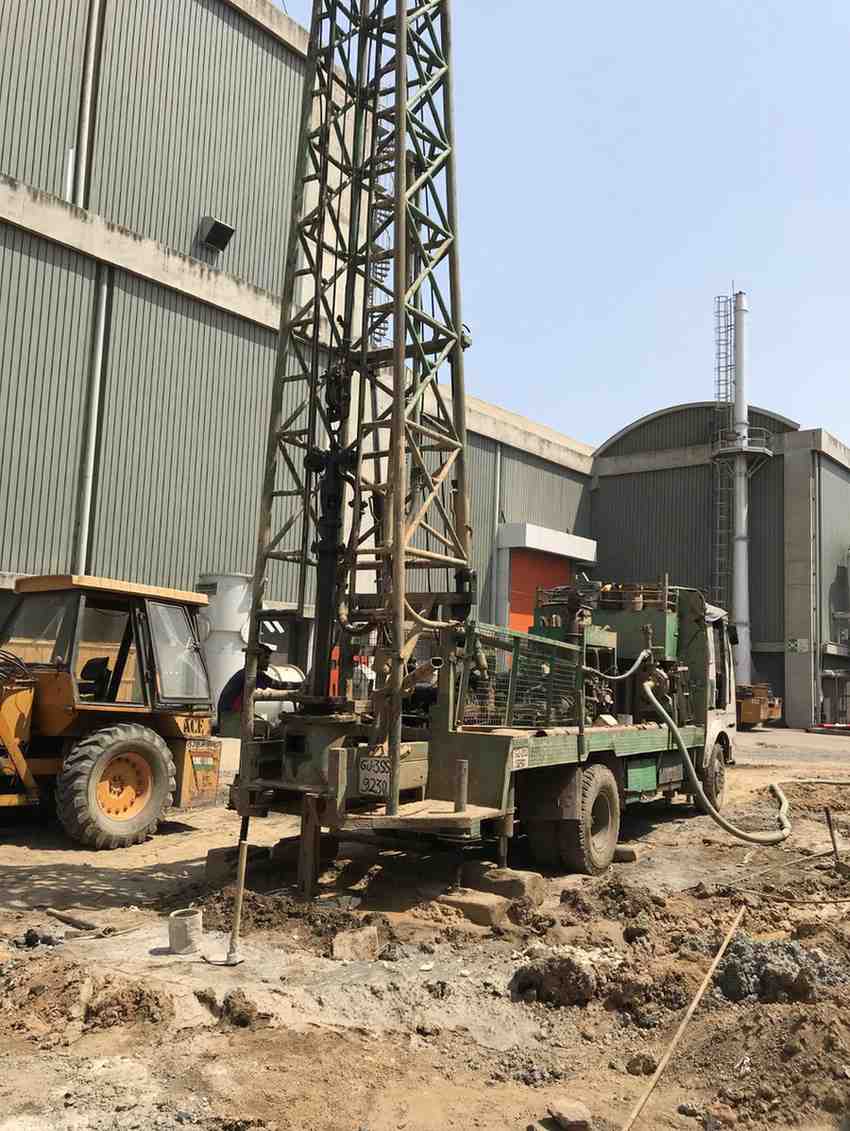
The Manual Auger Method is a reliable piling technique suitable for locations with restricted access or where low noise and vibration are essential. A tripod and manual winch system are used to drill boreholes using a helical auger. This method is commonly employed for pile diameters ranging from 250 mm to 1000 mm and offers an economical solution for smaller foundation projects.
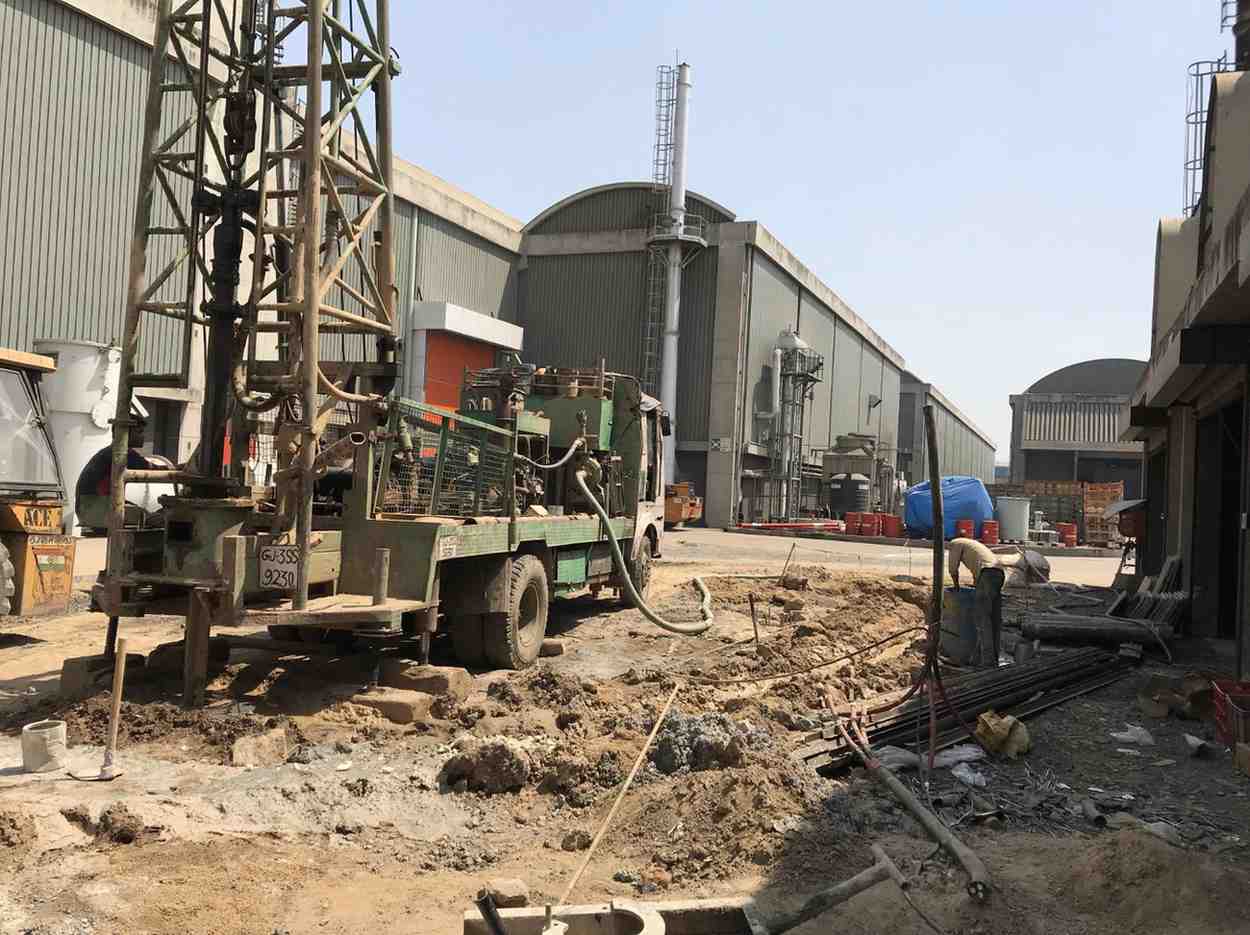
Our Truck Mounted Rotary (TMR) rigs utilize continuous bentonite slurry circulation to stabilize boreholes during drilling. Auger drilling is performed to the required depth while bentonite slurry supports the excavation and carries excavated soil back to a recycling tank. This method ensures bore stability, efficient spoil removal, and high productivity, particularly in loose or soft soil strata.
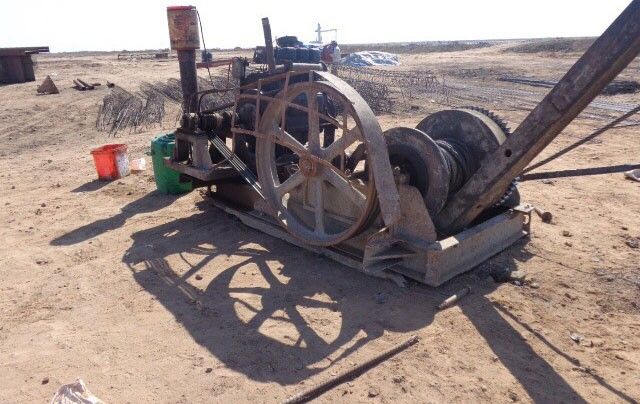
The DMC Pile Method employs Mendola-type rigs combined with bentonite drilling fluid for safe and efficient pile construction. Surface soil is loosened using a bailer before drilling continues with a percussion chisel. Bentonite slurry stabilizes the bore while transporting excavated material to settling pits. Once the desired depth is achieved, the drilling tools are removed and the final depth is verified before reinforcement and concreting.
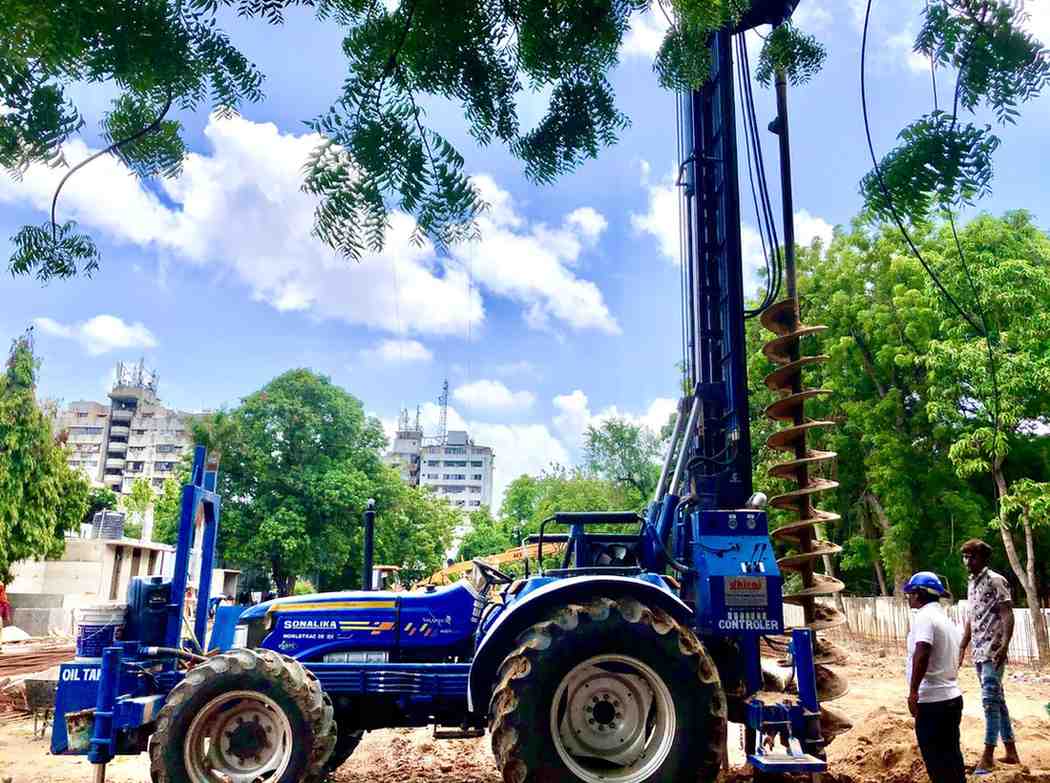
This method utilizes tractor-mounted rotary drilling rigs for fast and economical pile boring. Auger drilling is carried out to the required depth, with DMC rods added progressively to achieve deeper penetration through varying soil strata. It is particularly suitable for medium-depth foundation works and offers drilling capacities of up to 16 meters with excellent operational efficiency.
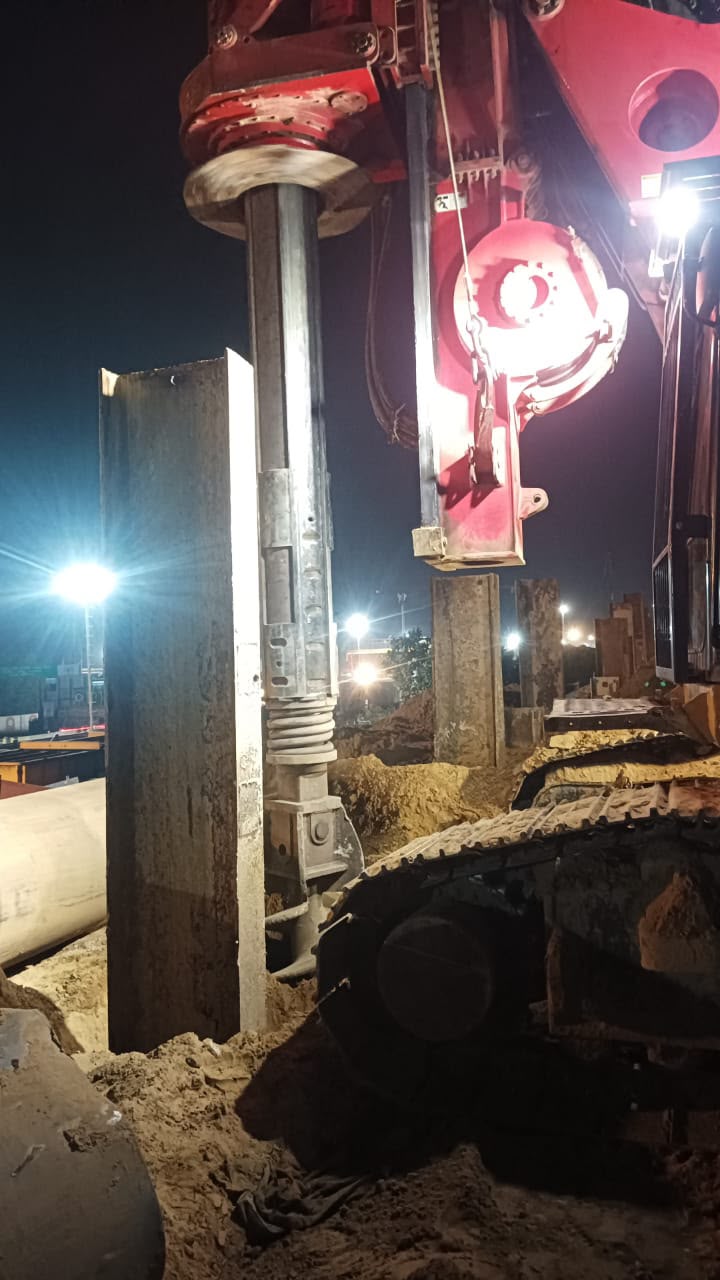
Our Work in Action
Click any image or video to view it in full screen.
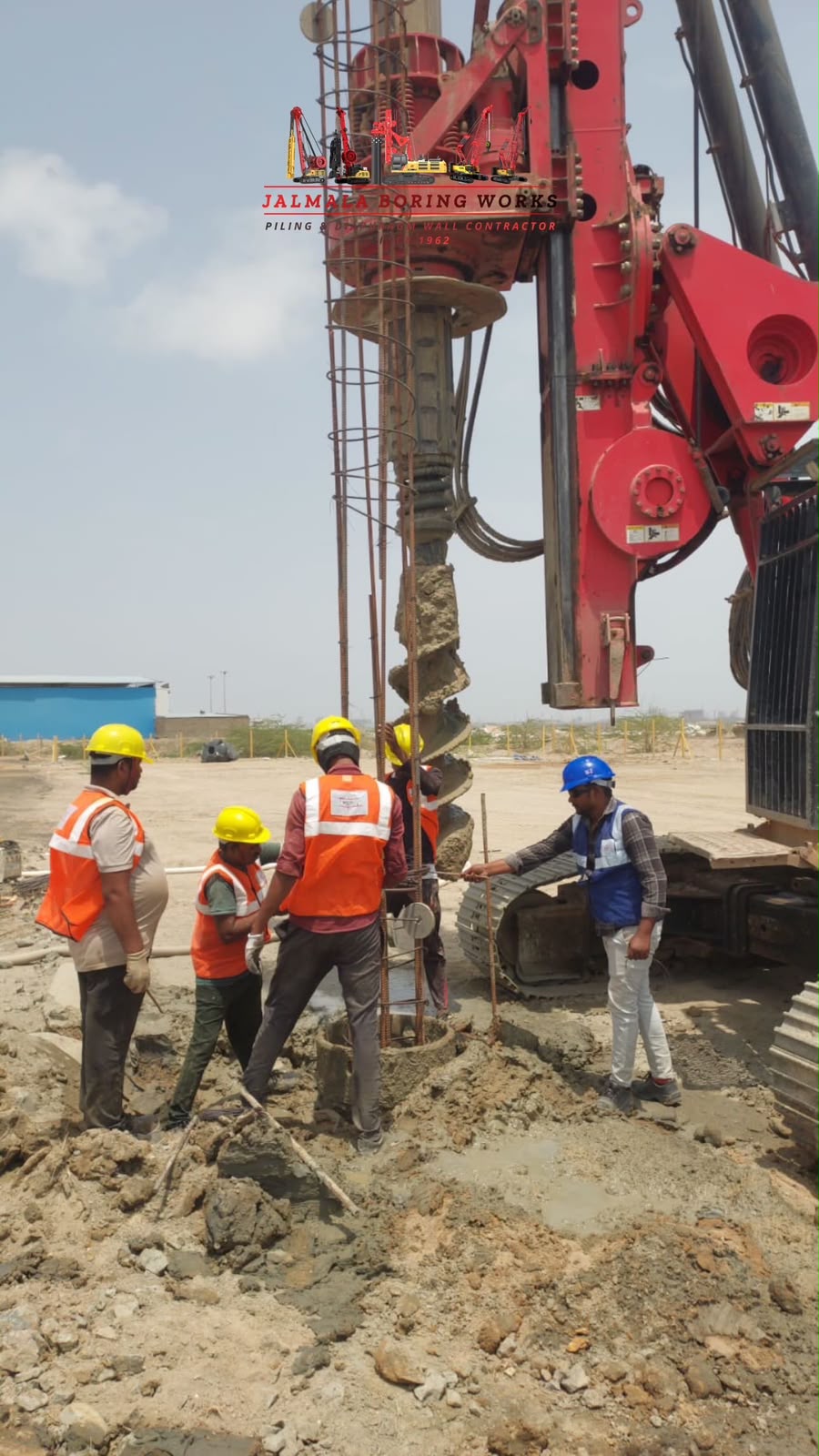
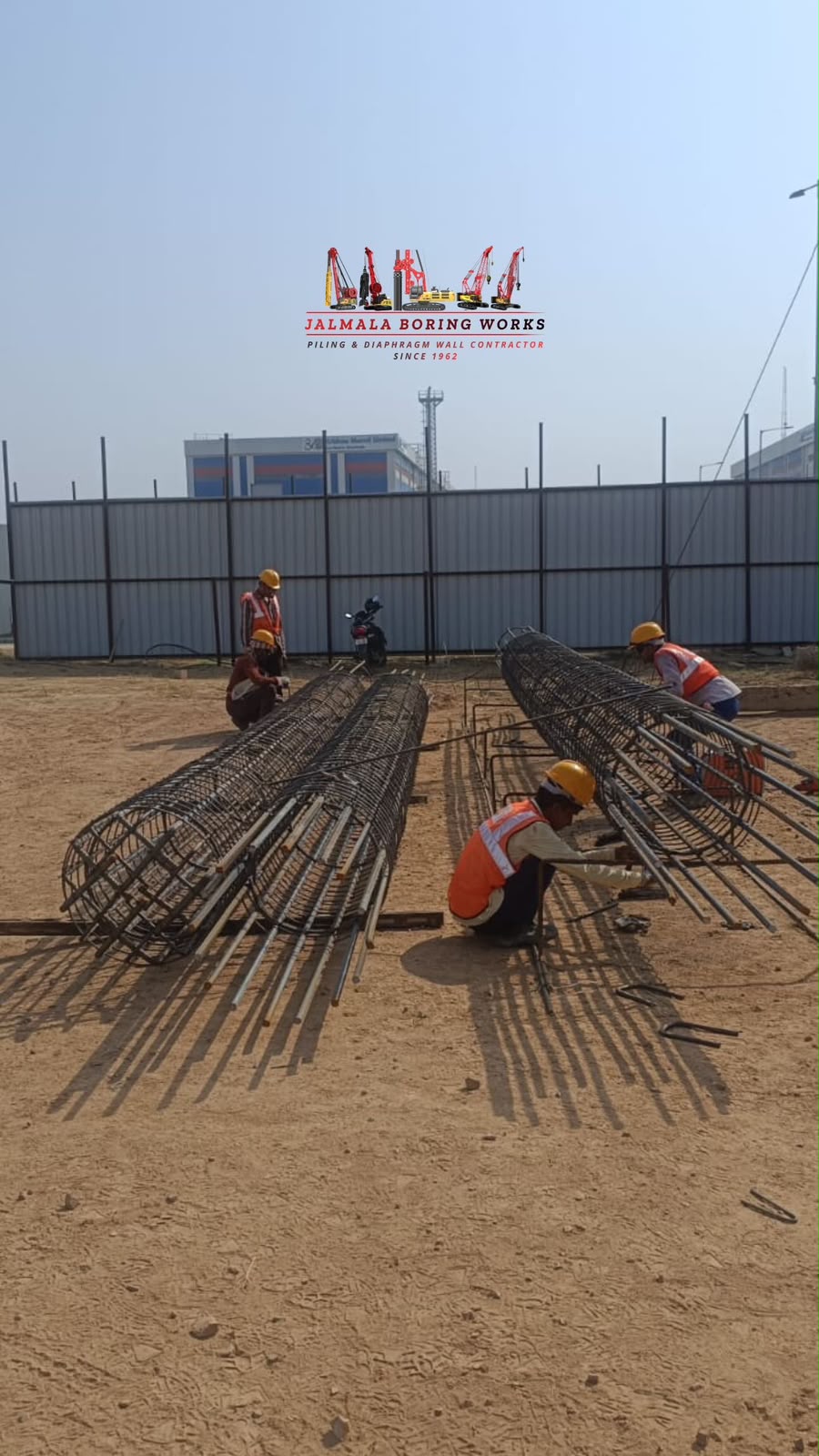
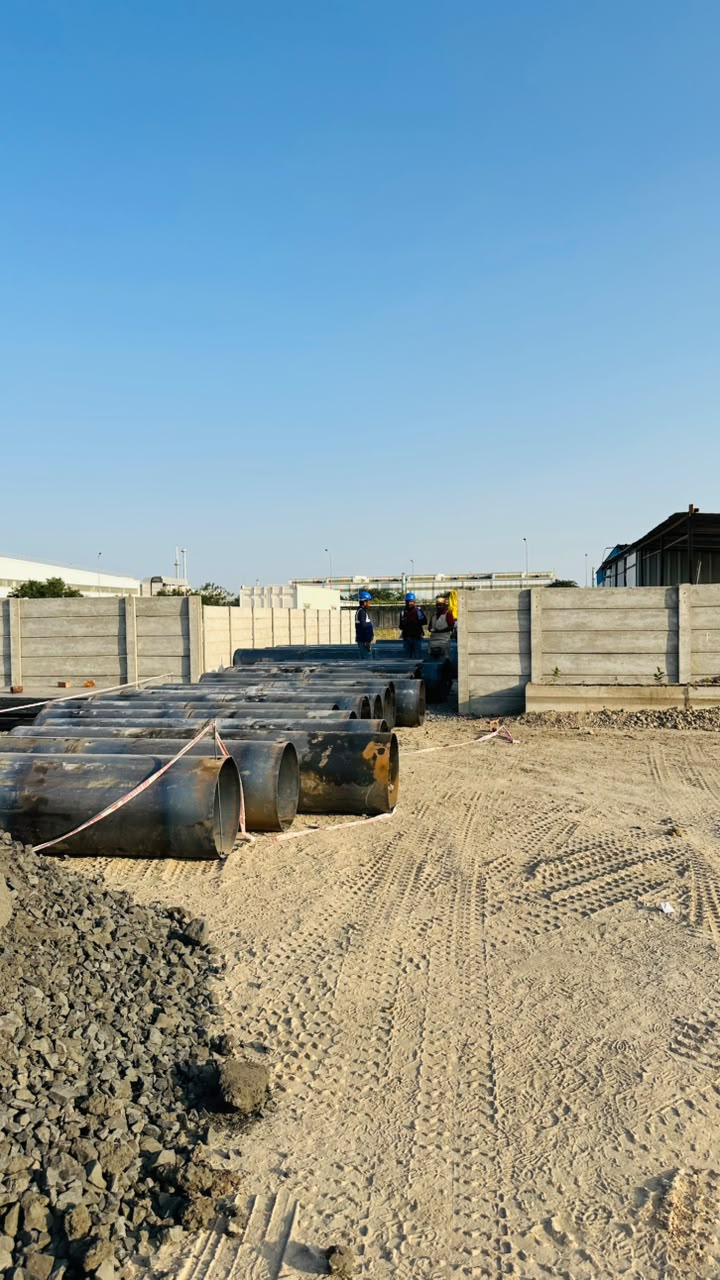
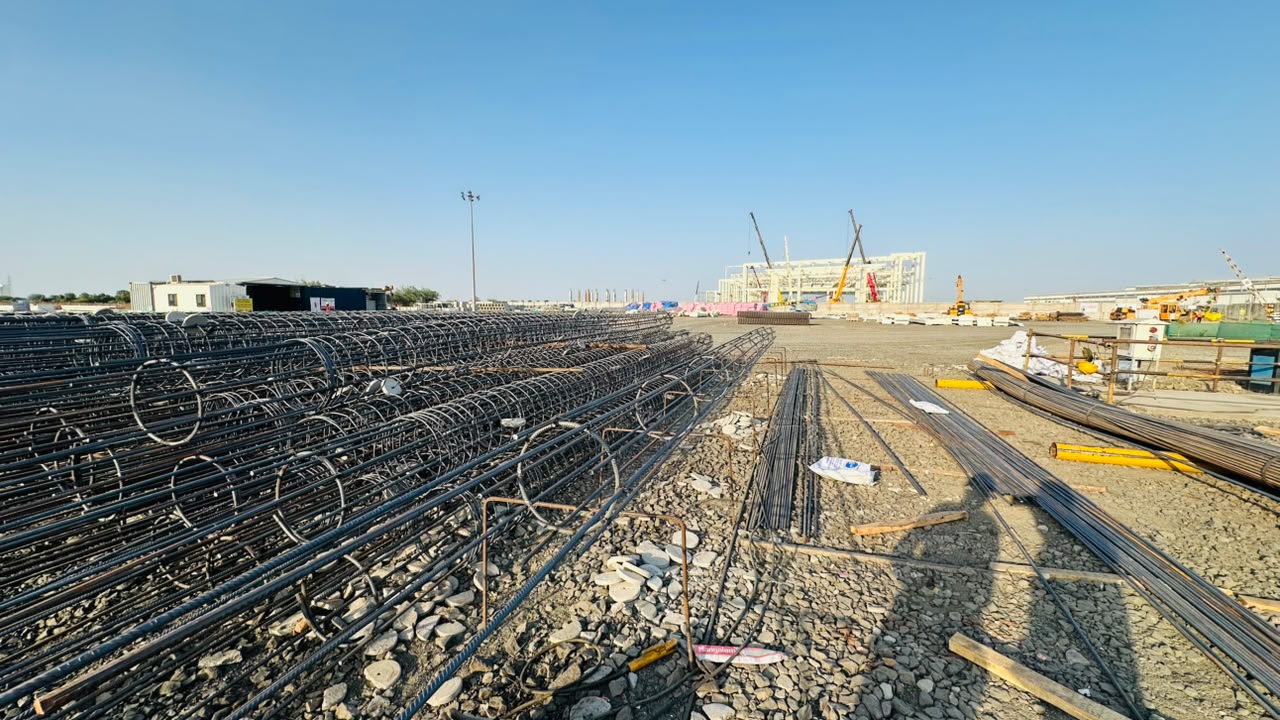
Recent Projects
Pile FoundationConstruction Process
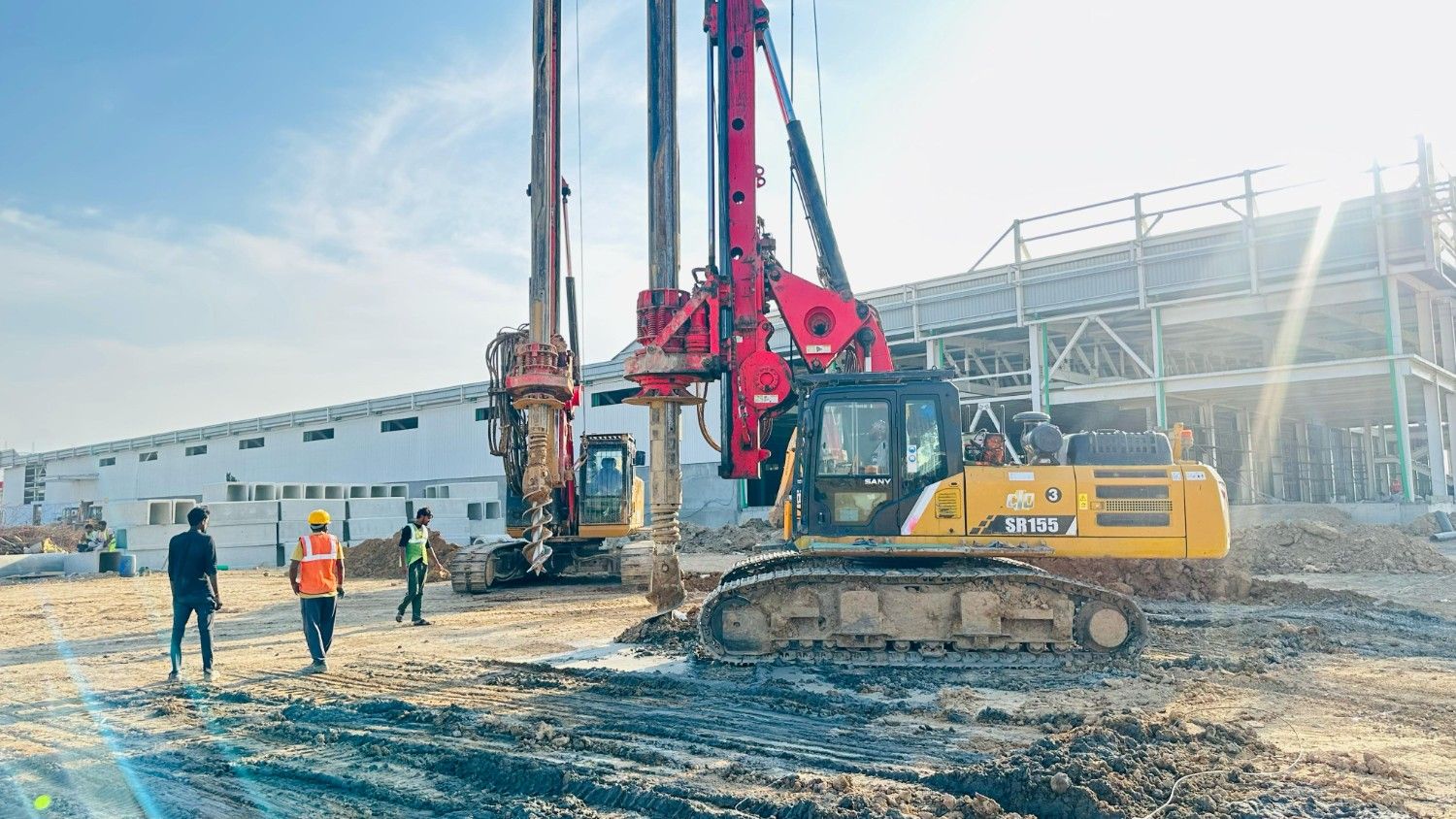
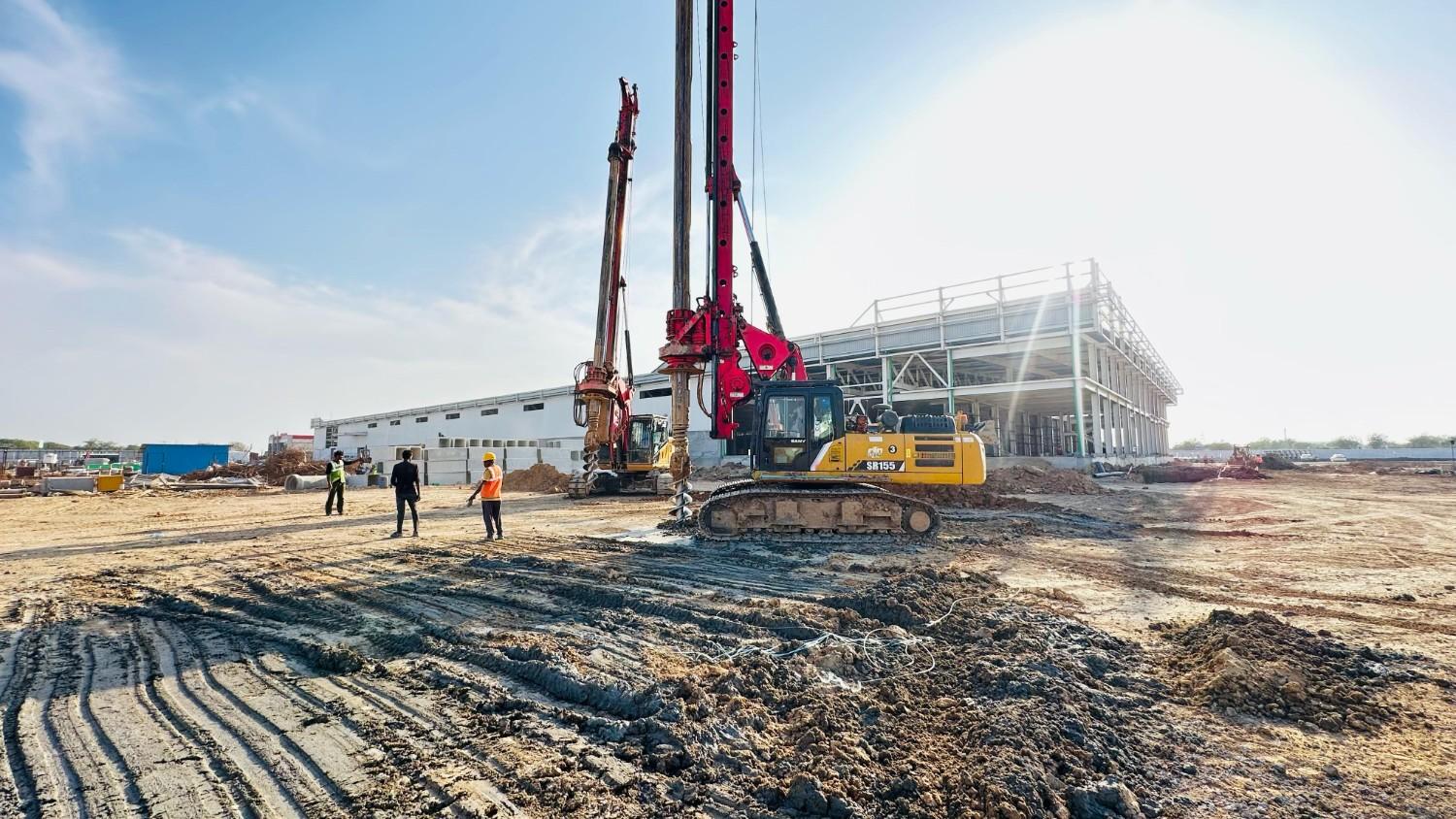
Survey, Setting Out & Guide Casing Installation
Detailed survey, marking of pile locations, and installation of temporary guide casing.
- Detailed survey and marking of pile locations
- Verification of pile coordinates and levels
- Positioning of Hydraulic Rotary Piling Rig
- Installation of temporary guide casing
- Ensures accurate pile alignment and protects bore opening
Pile Boring & Excavation
Drilling of pile bore using Hydraulic Rotary Rig to required depth.
- Drilling of pile bore using Hydraulic Rotary Rig
- Excavation carried out to the required depth and founding strata
- Suitable drilling tools used for soil, rock, or hard strata
- Continuous monitoring of depth, verticality, and pile diameter
- Removal and disposal of excavated soil from site
Slurry Support & Borehole Cleaning
Preparation and circulation of Bentonite/Polymer Slurry and borehole cleaning.
- Preparation and circulation of Bentonite/Polymer Slurry
- Stabilization of borehole walls during drilling
- Recycling of slurry through slurry plant
- Cleaning of borehole bottom to remove loose sediments
- Final inspection of bore depth and cleanliness
Reinforcement Cage Installation
Fabrication and lowering of reinforcement cage into the bore.
- Fabrication of reinforcement cage as per approved drawings
- Installation of spacers, couplers, lifting points, and cover blocks
- Lowering of reinforcement cage into the completed bore
- Accurate positioning and level adjustment
- Quality inspection before concrete placement
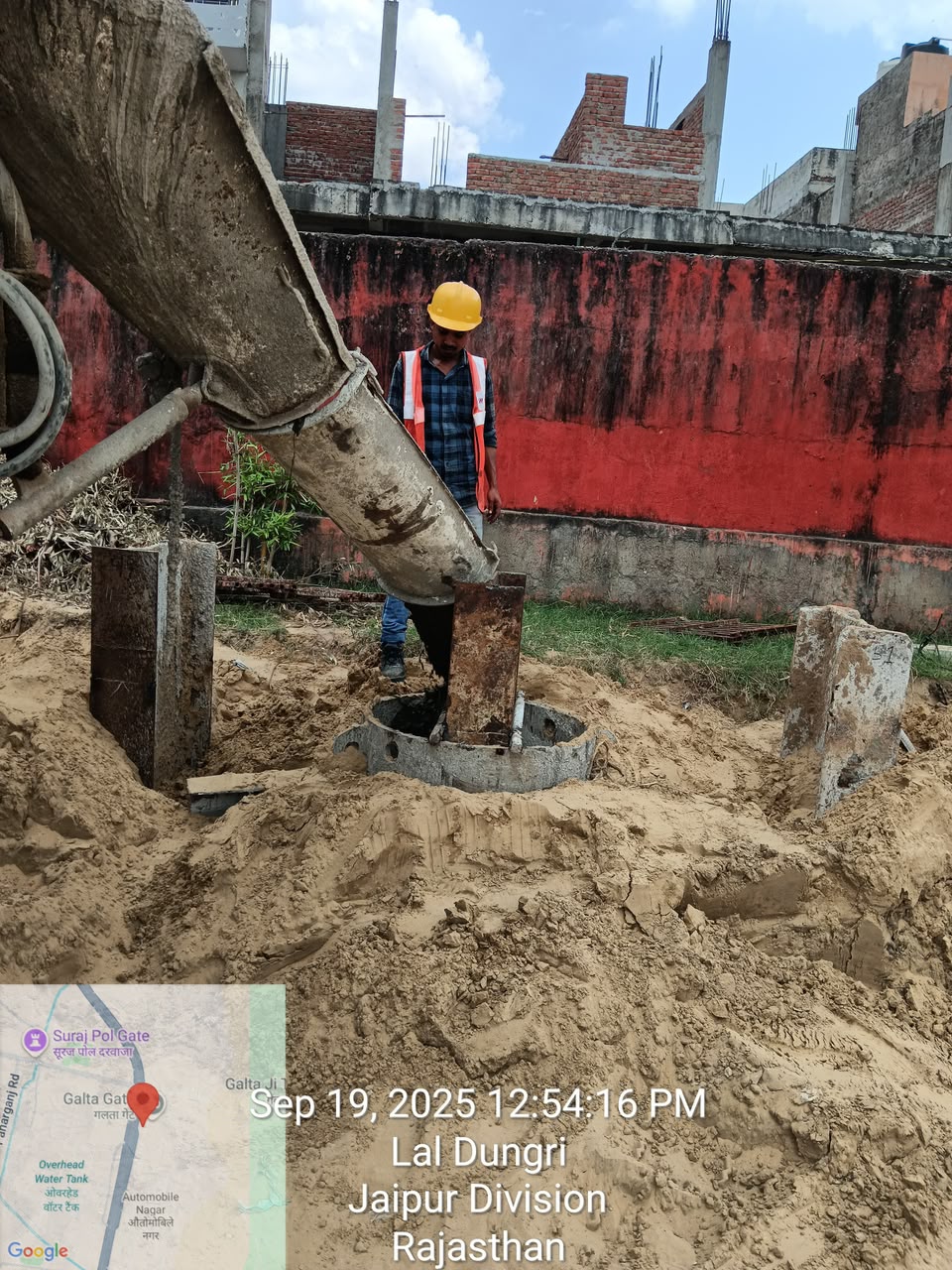
Tremie Concreting
Continuous concrete placement using tremie pipes.
- Installation of tremie pipes up to borehole bottom
- Continuous placement of concrete from bottom to top
- Prevention of concrete segregation through tremie method
- Displacement and recovery of slurry during concreting
- Completion of pile concreting in one uninterrupted operation
Pile Completion & Quality Control
Final pile completion, head trimming, and quality assurance.
- Extraction of temporary casing during or after concreting
- Recording of concrete consumption and pile parameters
- Pile head chipping up to cut-off level
- Verification of pile depth, diameter, and concrete quality
- Completion of testing, documentation, and quality assurance
- Ready for pile cap and foundation construction
Pile Foundation Services in Nadiad – Medical, Education, Pilgrimage & Expressway Expertise
Nadiad is not a generic central Gujarat town. It hosts Dharmsinh Desai University (DDU) — one of Gujarat's top private engineering universities — and Muljibhai Patel Urological Hospital (MPUH), one of India's leading urology hospitals and a major medical tourism destination. Add Santram Mandir (major regional pilgrimage site), Vadtal Swaminarayan Temple (adjacent to Nadiad), the Ahmedabad-Vadodara Expressway corridor bridges, and Nadiad GIDC's mixed industrial estate, and Nadiad requires a piling profile that is genuinely distinct from Anand (dairy) or Vadodara (refinery). If you are looking for pile foundation services in Nadiad, you need a contractor who understands medical, education, pilgrimage, and expressway piling. Jalmala Boring Works brings 60+ years of deep foundation expertise to every Nadiad pile foundation project we take on.
Muljibhai Patel Urological Hospital (MPUH) – Medical Piling
MPUH Nadiad is one of India's leading urology hospitals and a major medical tourism destination, with continuous surgical, ICU, imaging (MRI, CT), and dialysis operations. Hospital piling requires specialized considerations: vibration-isolated construction (rotary bored piles over percussion) to protect surgical precision and imaging equipment; medical gas pipeline coordination (avoiding oxygen, nitrous oxide, vacuum lines); construction-phasing with hospital operations (off-peak surgical hours); dust/noise control with negative pressure isolation; and infection control protocols for construction zones near wards. Contractors without hospital experience often cause surgical disruptions. Our MPUH hospital piling is calibrated to these specific requirements.
Dharmsinh Desai University (DDU) – Education Campus Piling
Dharmsinh Desai University (DDU) is one of Gujarat's top private engineering universities, with significant ongoing campus construction and expansion. DDU piling requires: institutional building foundations (academic blocks, hostels, labs, library, auditorium); vibration-sensitive execution near ongoing academic operations (especially during exam periods); coordination with university estate department for campus access and scheduling; Zone III seismic design; and public trust / private university tender norms depending on funding source. Laboratory buildings require additional attention to vibration isolation for sensitive equipment. Our DDU campus piling in Nadiad is calibrated to these campus requirements.
Santram Mandir, Vadtal Temple – Pilgrimage Infrastructure
Nadiad is home to Santram Mandir (major regional pilgrimage site) and is adjacent to Vadtal (one of the two primary Swaminarayan dioceses, with a large historic temple). Pilgrimage infrastructure piling requires: phased execution around festival seasons (avoiding construction during major yatras); heritage-sensitive design (piling must not compromise adjacent historic temple structures); large-footprint assembly hall and dining hall foundations; accommodation and dormitory construction for pilgrims; and coordination with temple trust management. Both Santram and Vadtal have ongoing pilgrim infrastructure development — a genuinely unique piling market not present in other central Gujarat cities. Our Santram and Vadtal pilgrimage piling covers this specialized market.
Ahmedabad-Vadodara Expressway – Bridge and Interchange Piling
The Ahmedabad-Vadodara Expressway (NE-1) runs through Nadiad district, with several bridges, overpasses, and interchange structures. Expressway piling differs from building piling: high-capacity pile requirements (1,000-1,500 mm diameter, 500-800 tonnes per pile); lateral load resistance for vehicular braking and wind forces; Zone III seismic design per IS 1893; coordination with National Highways Authority of India (NHAI) for construction phasing; and temporary traffic management during piling operations. Expressway piling contractors require NHAI vendor registration and highway-specific experience. Our Nadiad expressway bridge piling is calibrated to these highway infrastructure requirements.
Central Gujarat Alluvial Soil – Same as Anand, Different Demand
Nadiad sits on central Gujarat alluvial soil — deep alluvial deposits (30-50m) with occasional soft clay layers. Friction piles are standard (no shallow rock for socketing); water table management is critical; soft clay layers require careful pile spacing and bentonite management; and settlement is a bigger concern than capacity. The geology is similar to Anand, but the piling demand profile is entirely different — medical, education, pilgrimage, and expressway rather than dairy or agricultural. Our central Gujarat alluvial piling in Nadiad is calibrated to these soil conditions.
Serving Nadiad, Vadtal, DDU, MPUH, Nadiad GIDC & All of Kheda District
We serve the entire Nadiad and Kheda district region — including pile foundation projects in Nadiad, Dharmsinh Desai University, MPUH, Santram Mandir, Vadtal, Nadiad GIDC, and surrounding areas. Our site visit commitment is 24-48 hours across all Nadiad locations, with rig mobilization typically 8-12 working days from contract award (Nadiad is ~65 km from our Sarkhej headquarters via the Ahmedabad-Vadodara Expressway — faster than most other Gujarat cities). For fast-track hospital, university, or temple projects with pre-approved permits, mobilization can be accelerated to 6-10 working days. Whether your project is an MPUH hospital expansion, a DDU campus building, a Santram or Vadtal temple facility, a Nadiad expressway bridge, or a Nadiad GIDC industrial unit, our Nadiad piling contractor team is ready to mobilize.
Contact Our Nadiad Pile Foundation Team Today
Ready to discuss Nadiad piling for your project? Call our team at +91 93745 45415 or email jalmala.pile@gmail.com. Mention "Nadiad" and specify the project type — MPUH hospital, DDU university, temple pilgrimage, expressway bridge, GIDC industrial, or residential. Our team responds within 2 business days with an initial technical assessment. Main office is at Dholka Road, near Nariampura Village, Narimanpura, Sarkhej, Ahmedabad, Gujarat 382210. For a complete overview of our pile foundation services in Nadiad, explore this page and see why hospital, university, temple, and expressway clients across Nadiad choose Jalmala Boring Works as their piling partner.