
Pile Foundation
Bored Cast-in-Situ Piling Specialists
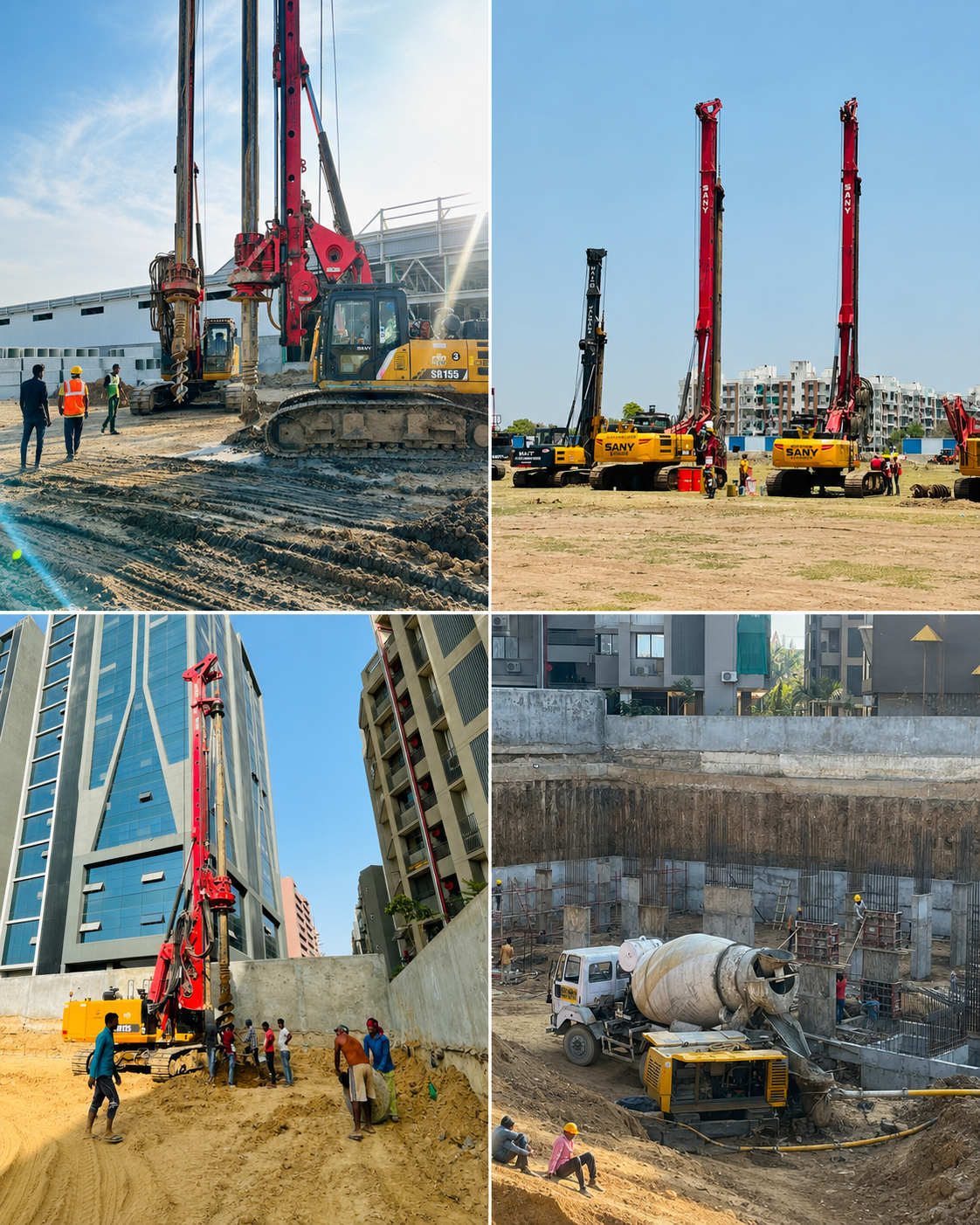
Jalmala Boring Works provides Pile Foundation and Deep Foundation Solutions using Bored Cast-in-Situ Piles for residential, commercial, industrial, and infrastructure projects. With advanced Hydraulic Rotary Rigs, we construct piles from 300 mm to 1800 mm diameter and depths of up to 50 metres, delivering reliable load-bearing capacity across soft soil, hard rock, and high groundwater conditions.
Our Piling Methods
We deploy six proven techniques — selected based on soil profile, site constraints, and project requirements.
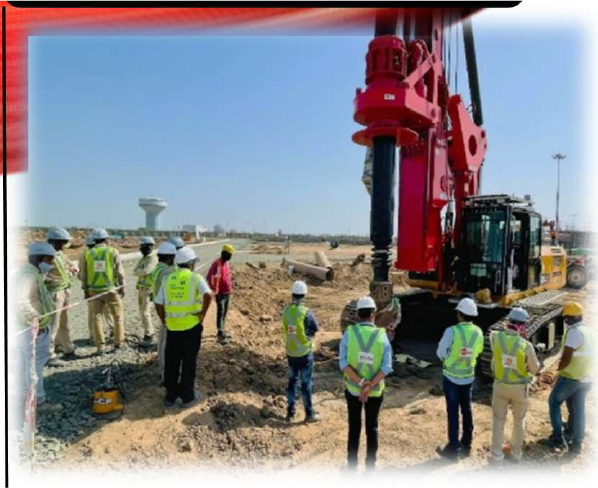
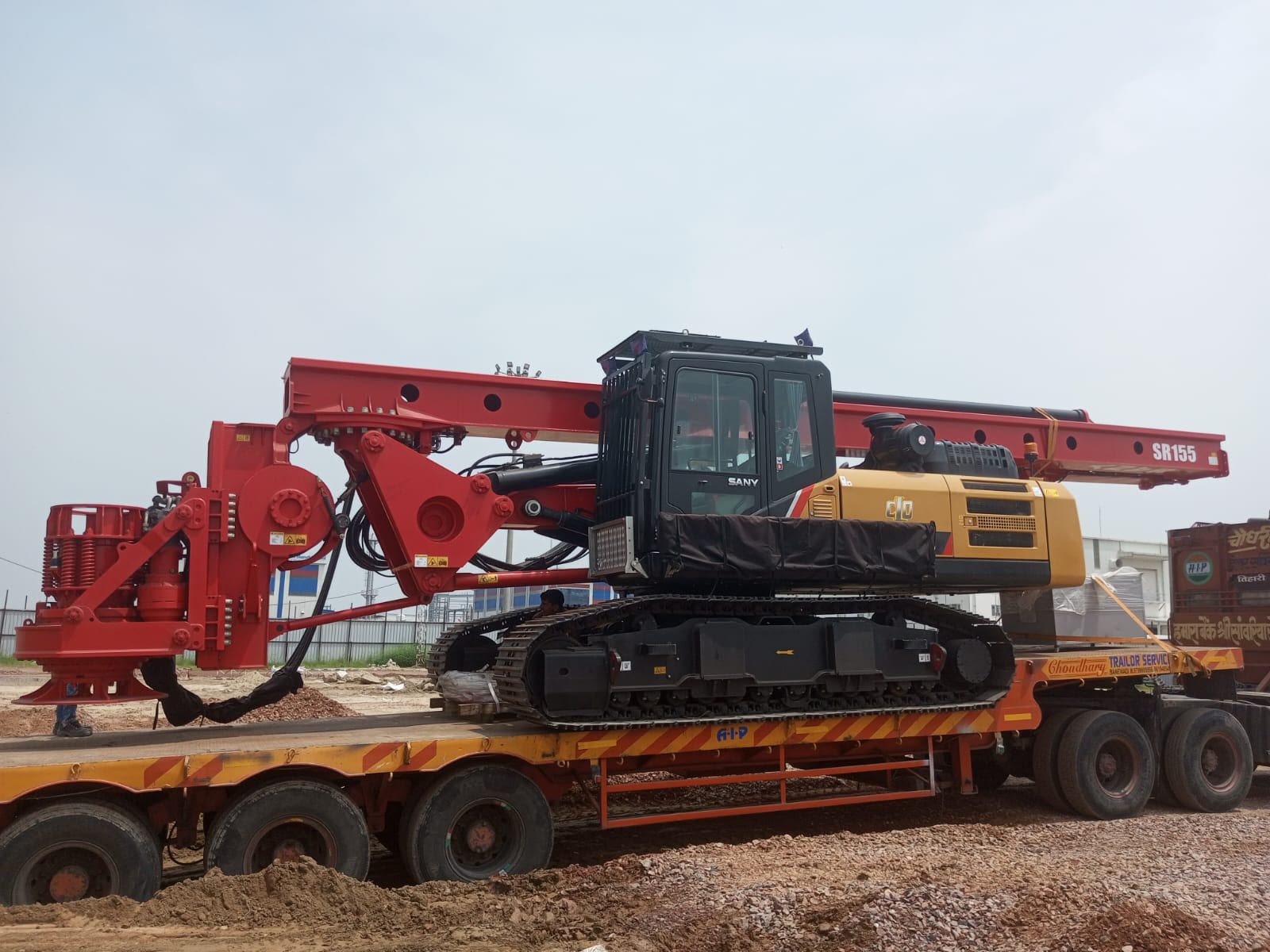
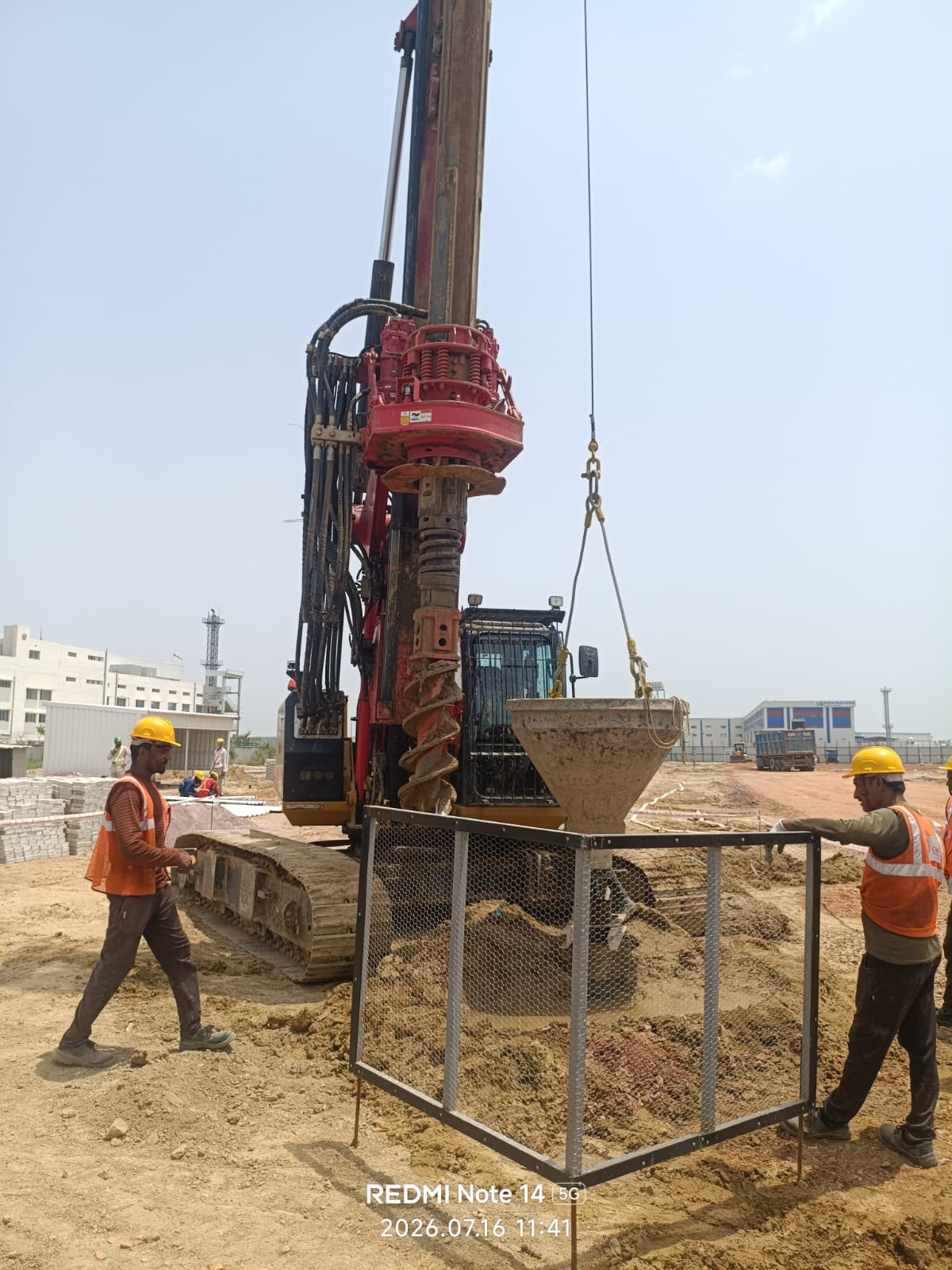
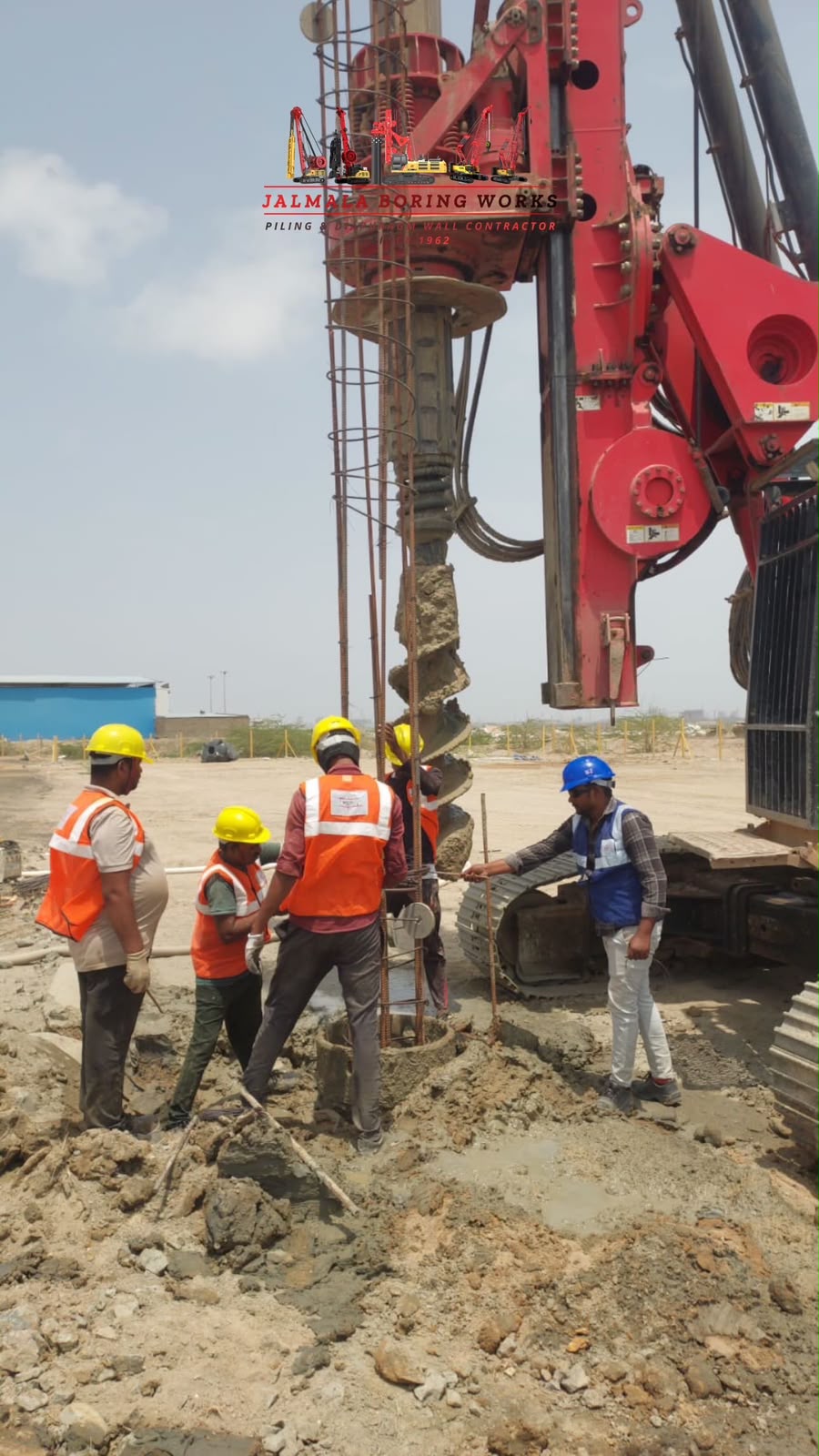
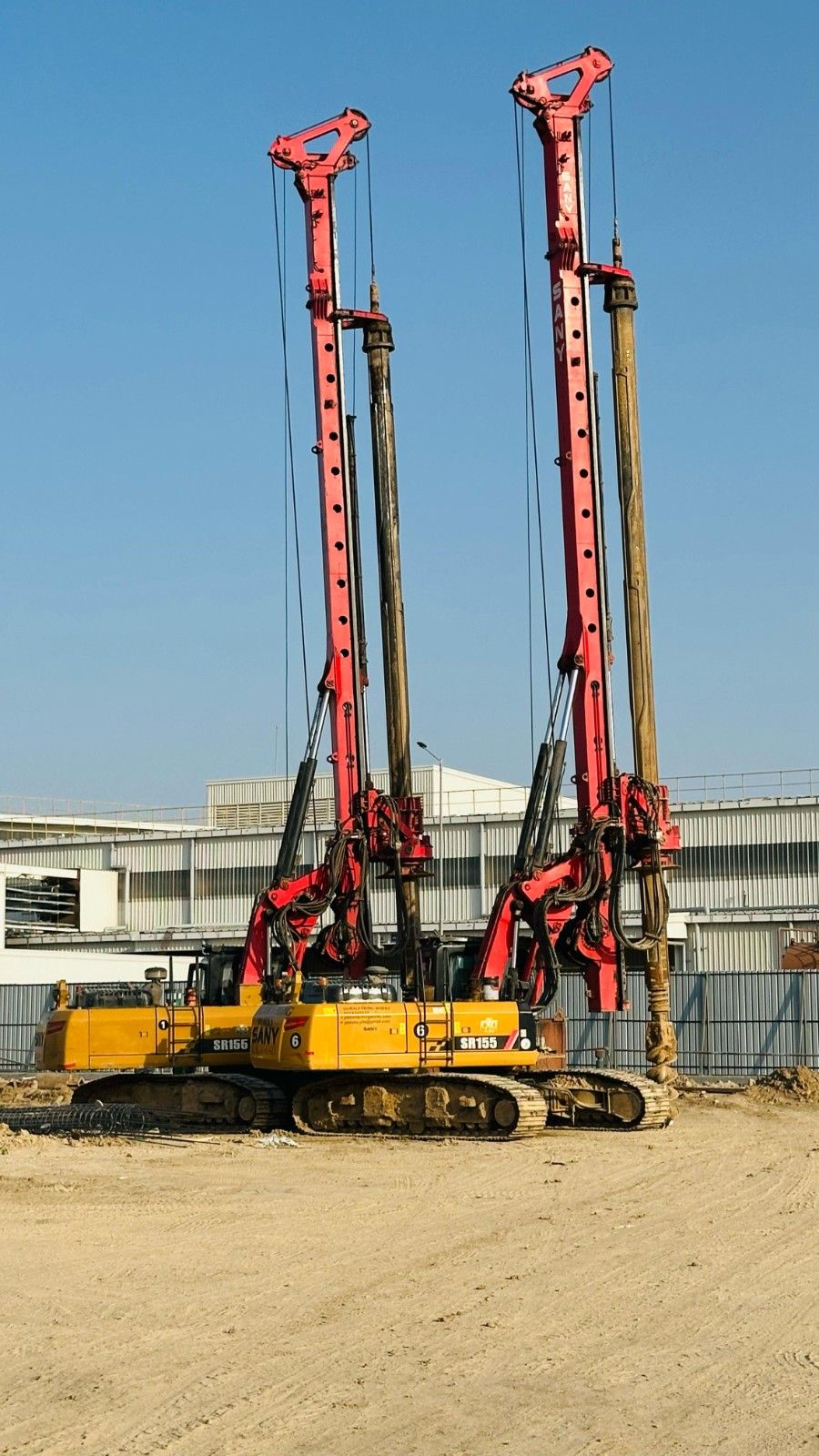
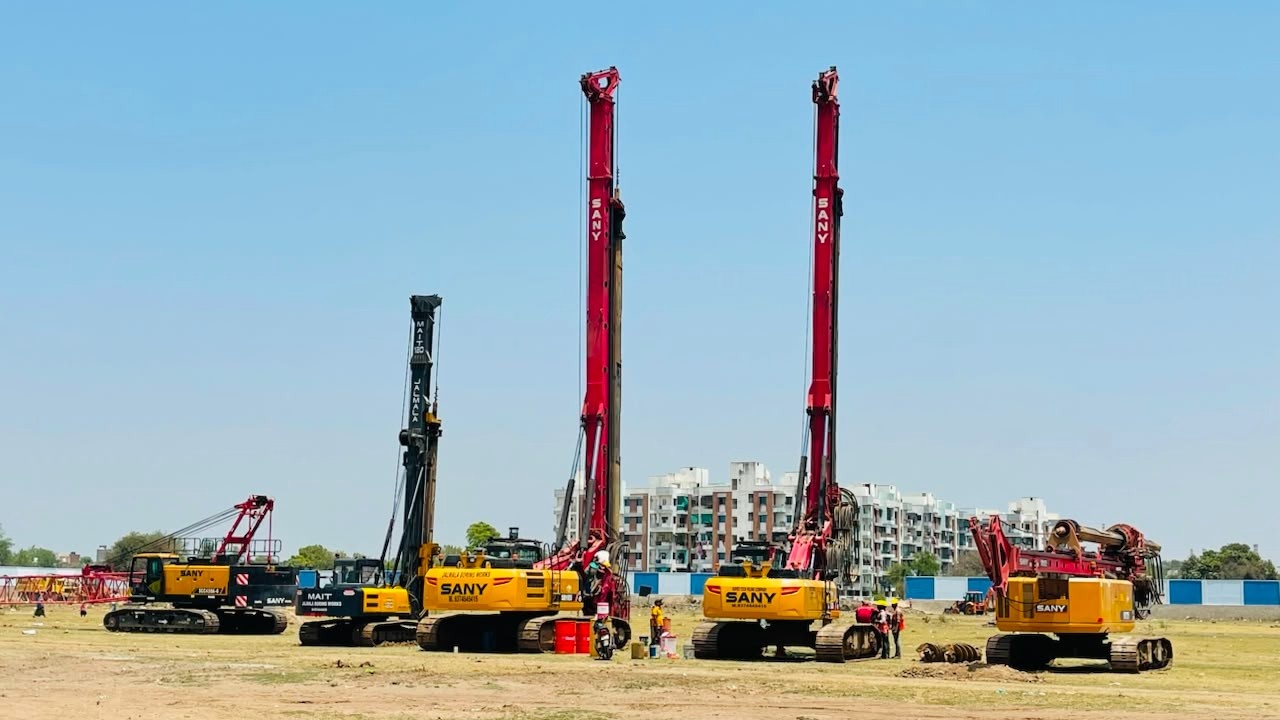
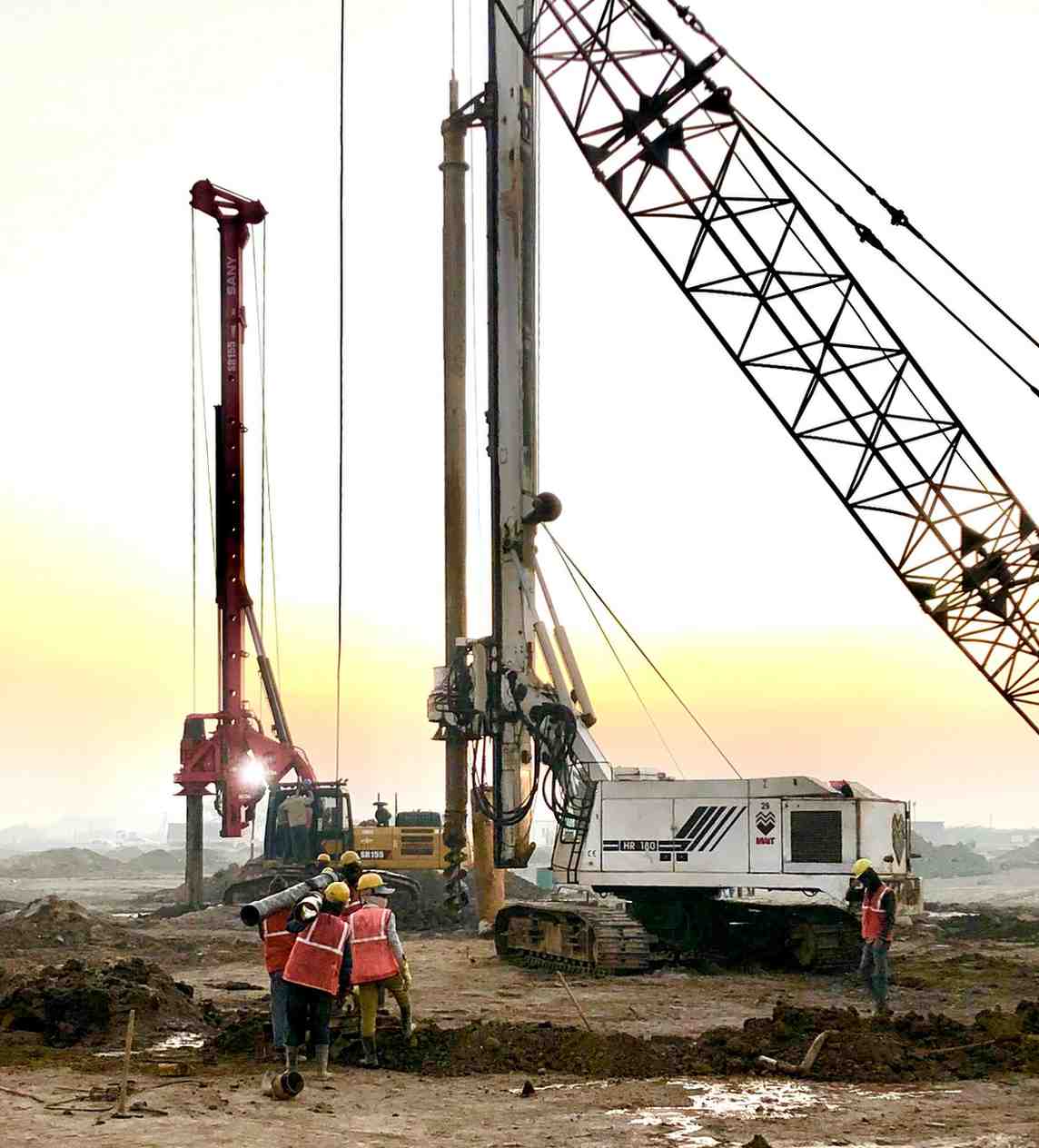
We specialize in bored piling with diameters ranging from 200 mm to 2000 mm and depths up to 50 meters. Using advanced hydraulic rotary rigs, we execute piling operations efficiently across a wide range of soil conditions. Our fleet includes high-performance rotary drilling rigs capable of working in restricted headroom areas while delivering precision, stability, and high productivity.
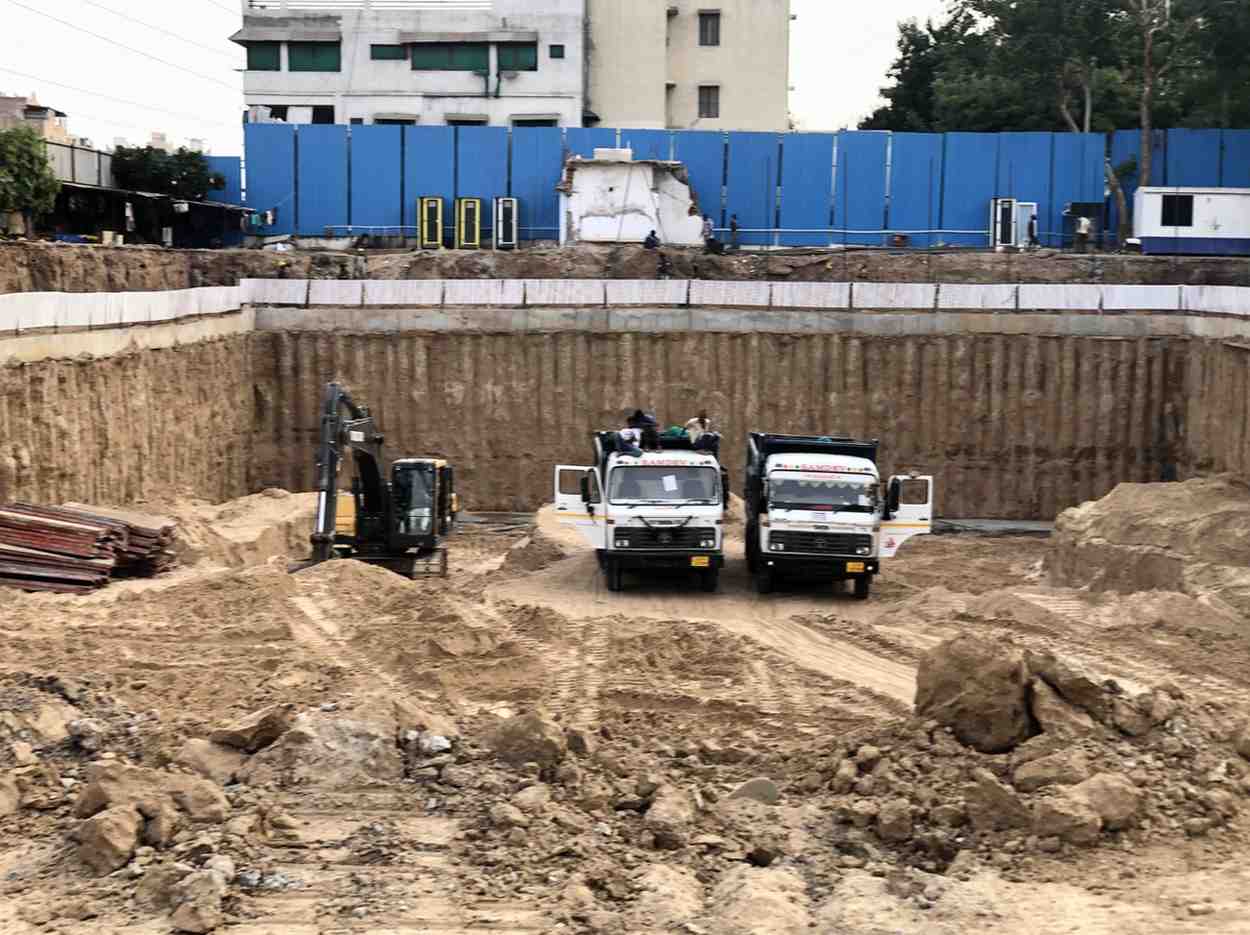
Secant pile walls are constructed by intersecting reinforced concrete piles to form a continuous retaining structure. Primary piles are installed first, followed by reinforced secondary piles after sufficient curing. This technique provides excellent groundwater control and soil retention, making it ideal for deep excavations, basements, and foundation support in challenging ground conditions.
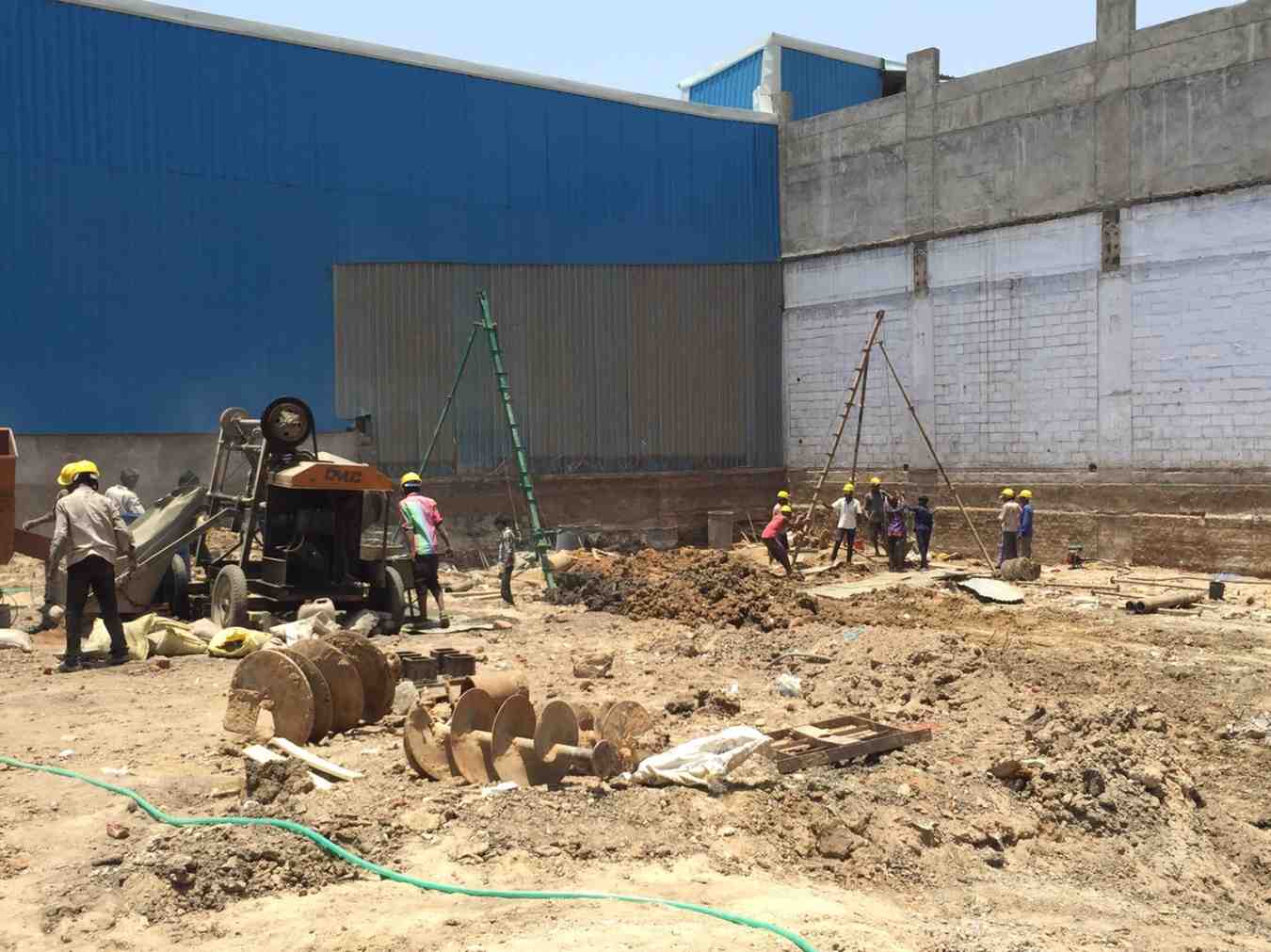
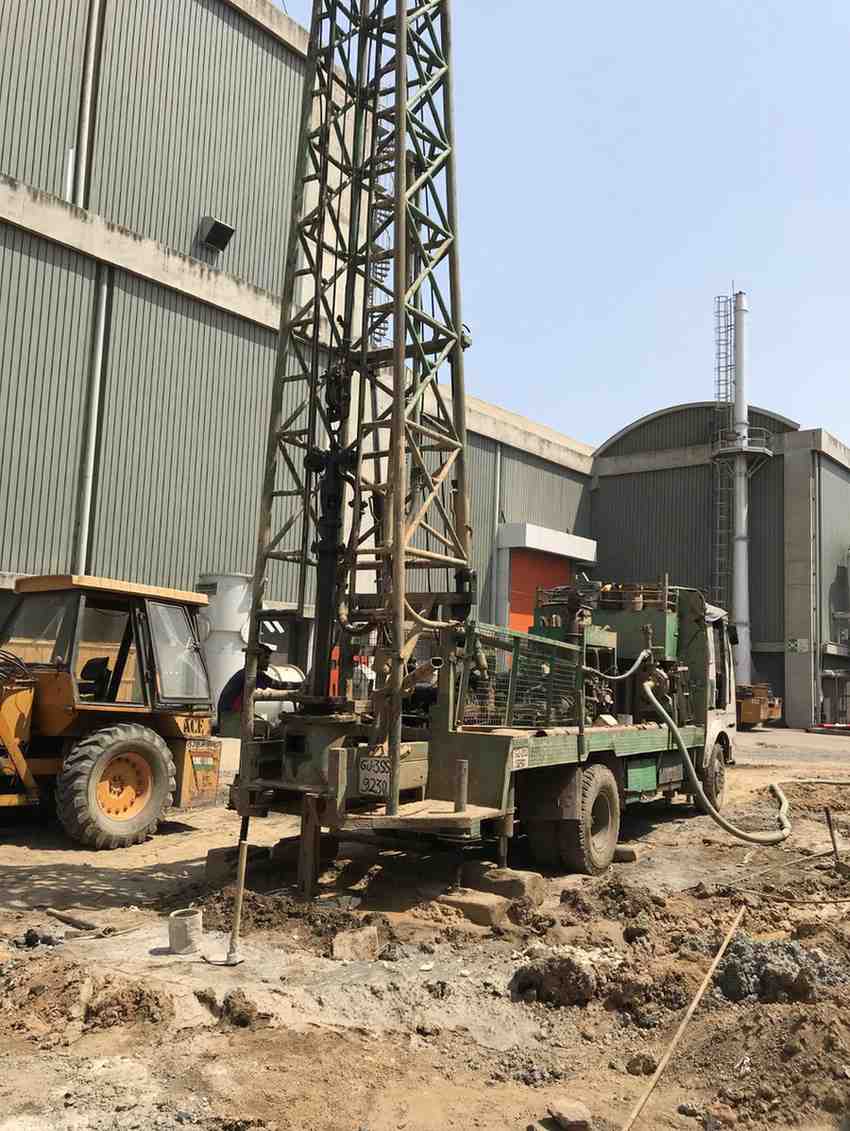
The Manual Auger Method is a reliable piling technique suitable for locations with restricted access or where low noise and vibration are essential. A tripod and manual winch system are used to drill boreholes using a helical auger. This method is commonly employed for pile diameters ranging from 250 mm to 1000 mm and offers an economical solution for smaller foundation projects.
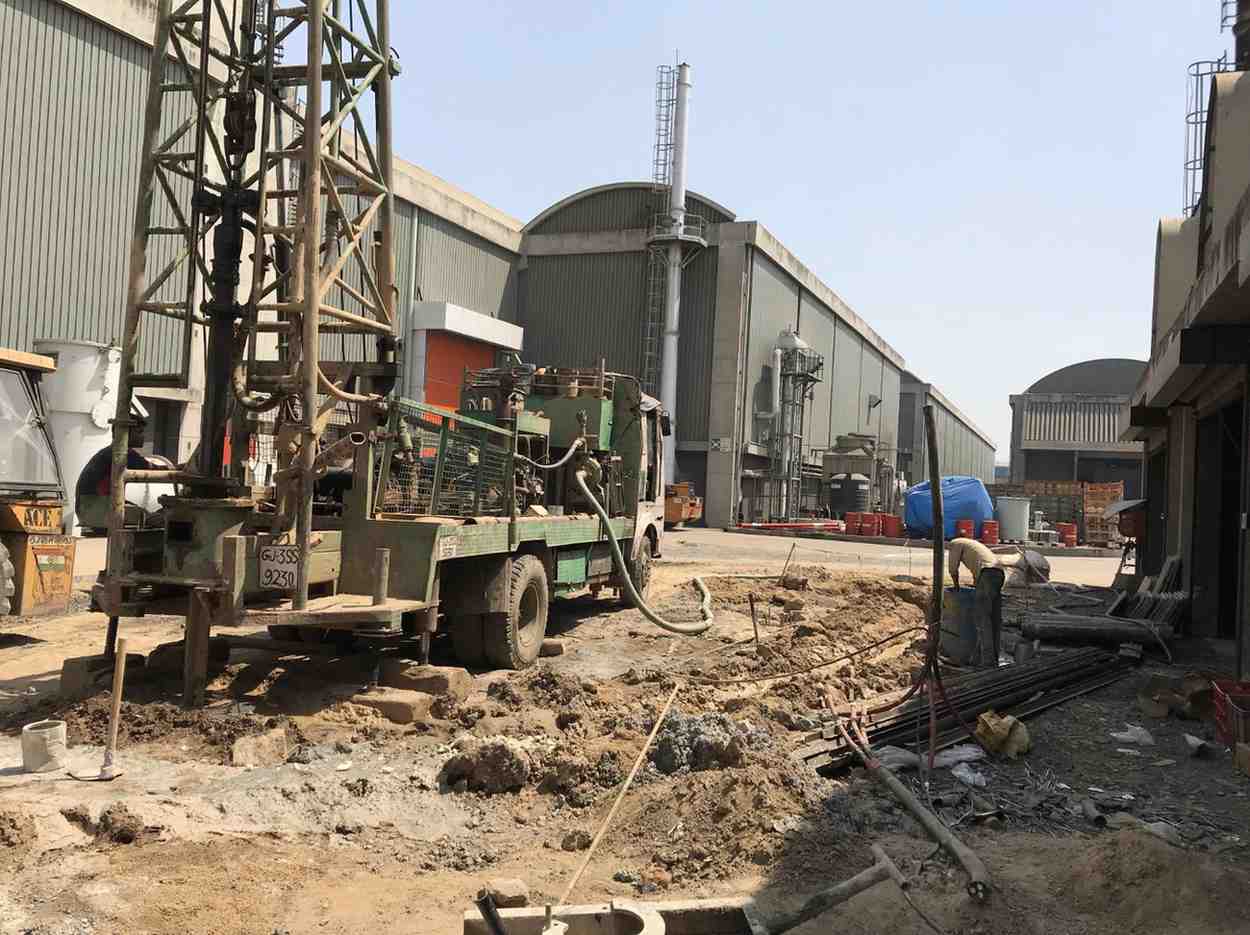
Our Truck Mounted Rotary (TMR) rigs utilize continuous bentonite slurry circulation to stabilize boreholes during drilling. Auger drilling is performed to the required depth while bentonite slurry supports the excavation and carries excavated soil back to a recycling tank. This method ensures bore stability, efficient spoil removal, and high productivity, particularly in loose or soft soil strata.
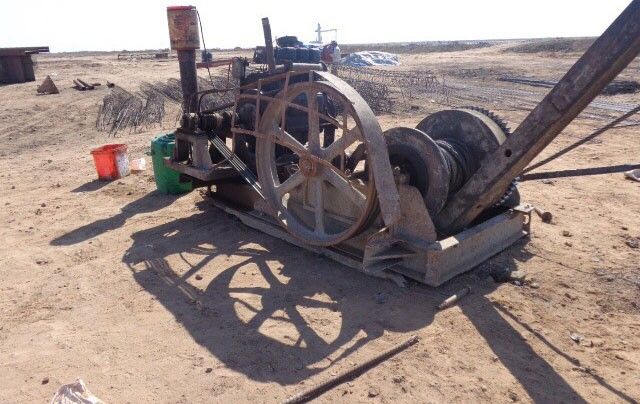
The DMC Pile Method employs Mendola-type rigs combined with bentonite drilling fluid for safe and efficient pile construction. Surface soil is loosened using a bailer before drilling continues with a percussion chisel. Bentonite slurry stabilizes the bore while transporting excavated material to settling pits. Once the desired depth is achieved, the drilling tools are removed and the final depth is verified before reinforcement and concreting.
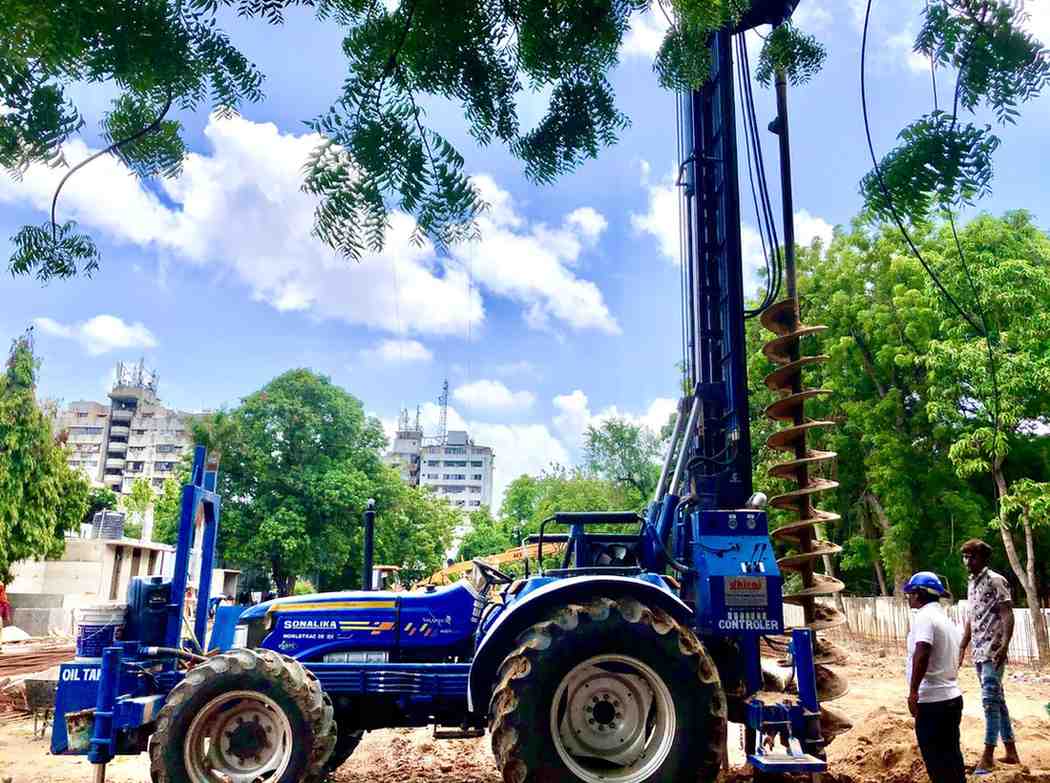
This method utilizes tractor-mounted rotary drilling rigs for fast and economical pile boring. Auger drilling is carried out to the required depth, with DMC rods added progressively to achieve deeper penetration through varying soil strata. It is particularly suitable for medium-depth foundation works and offers drilling capacities of up to 16 meters with excellent operational efficiency.
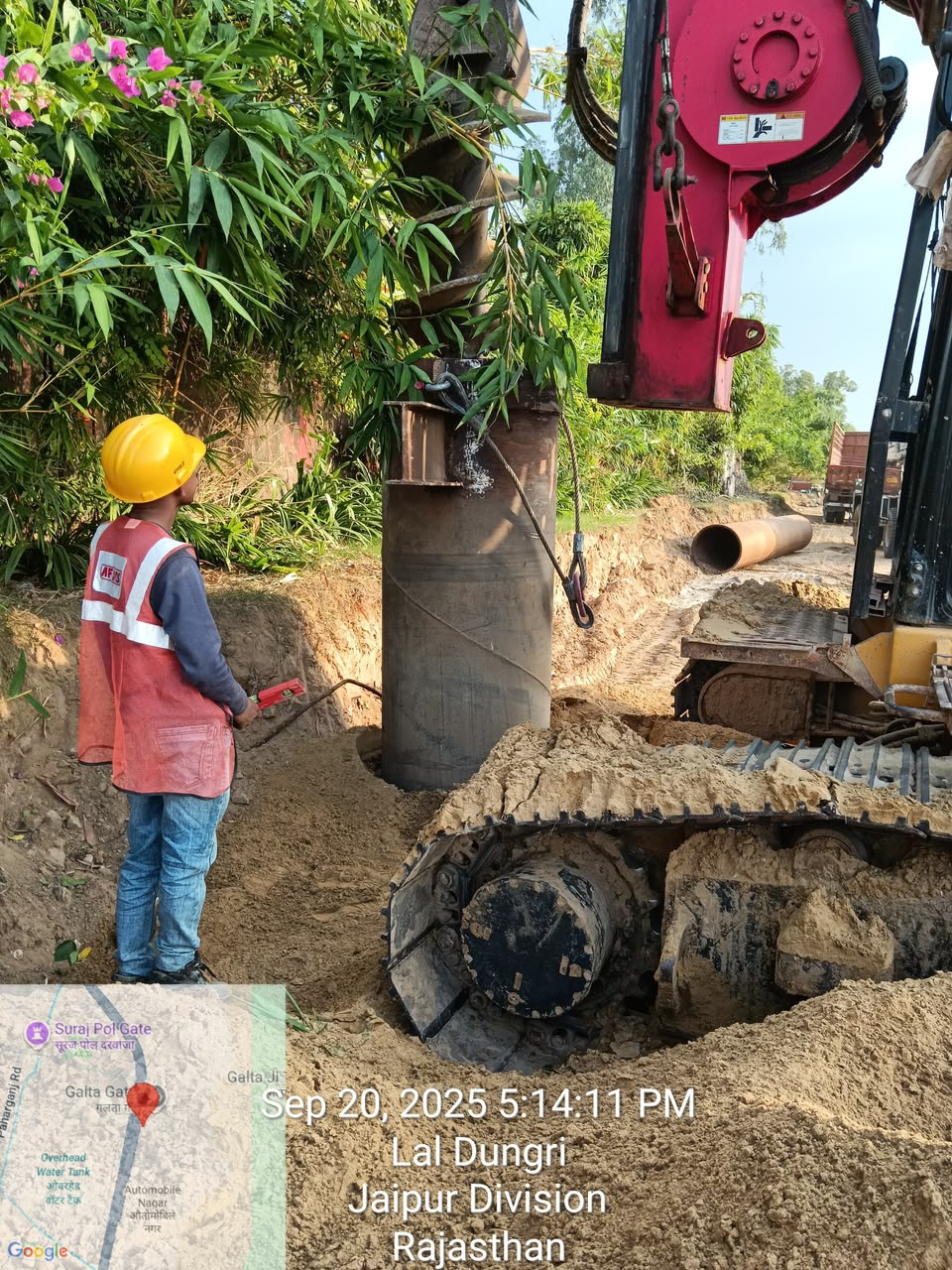
Our Work in Action
Click any image or video to view it in full screen.
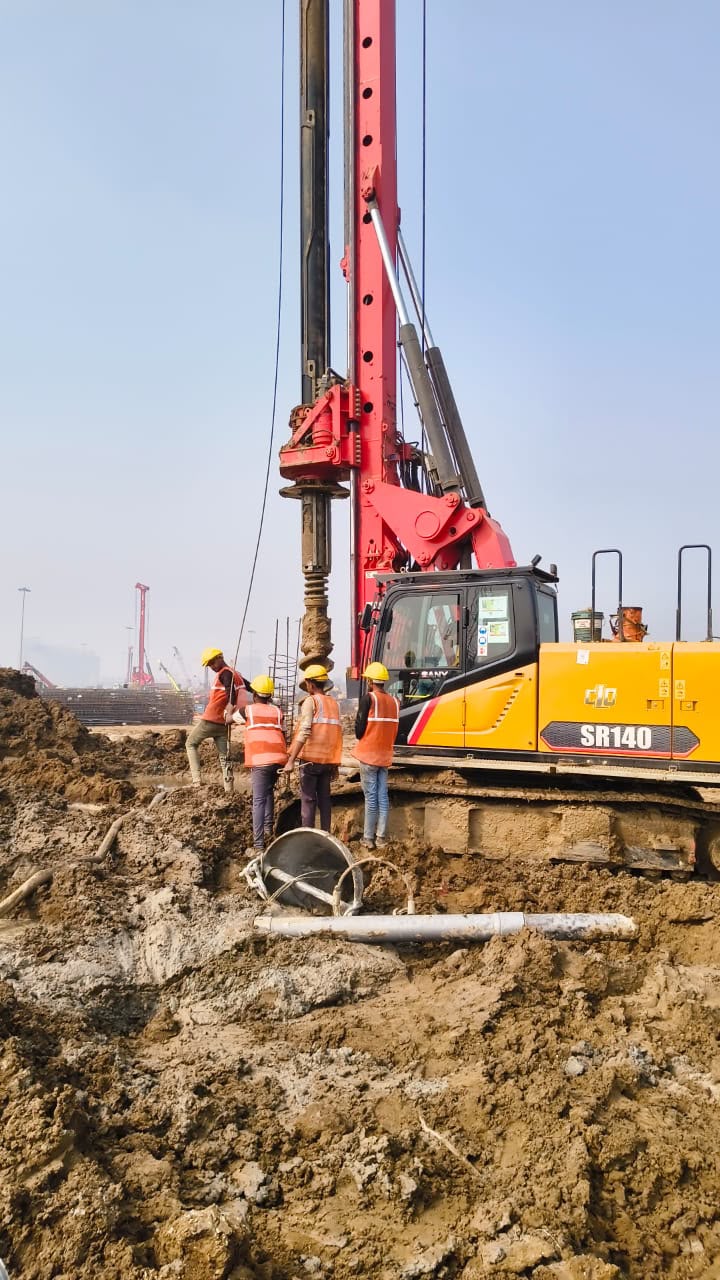
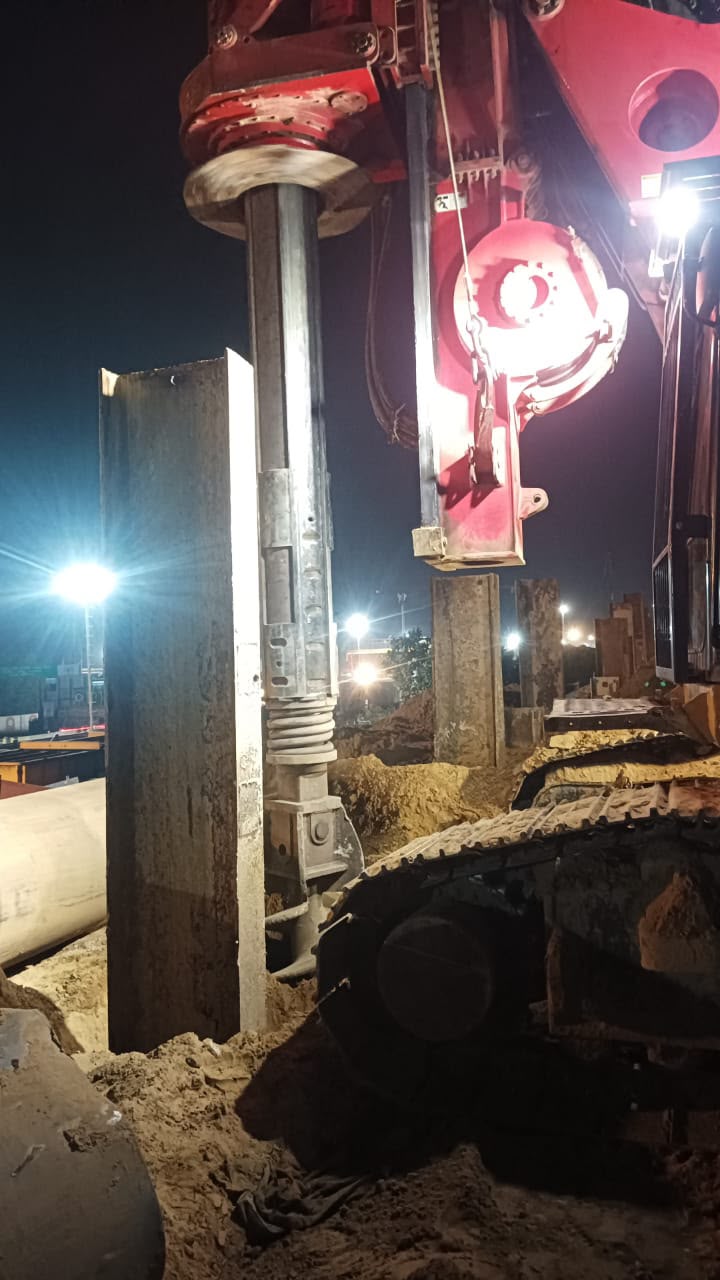
Recent Projects
Pile FoundationConstruction Process
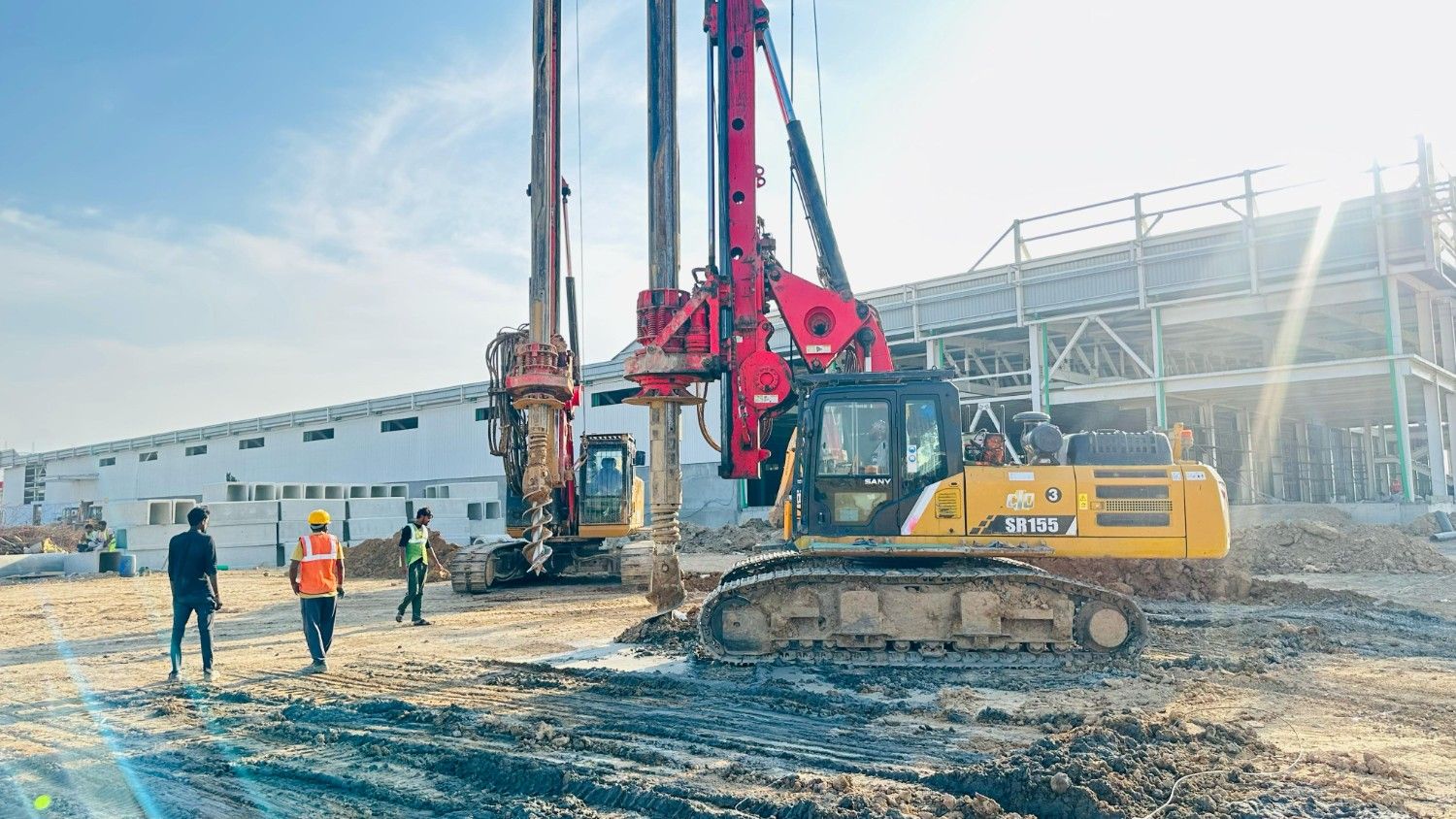
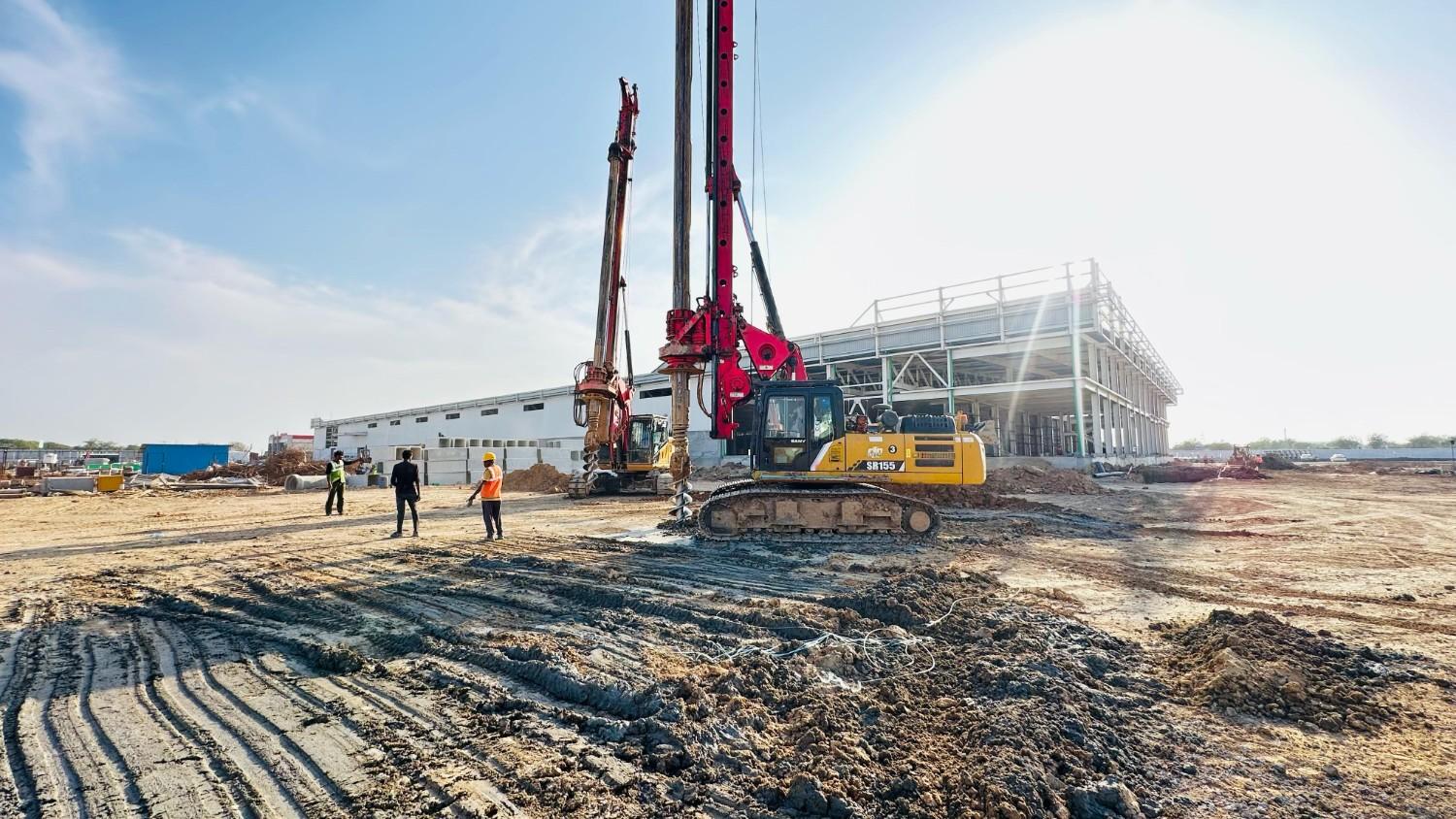
Survey, Setting Out & Guide Casing Installation
Detailed survey, marking of pile locations, and installation of temporary guide casing.
- Detailed survey and marking of pile locations
- Verification of pile coordinates and levels
- Positioning of Hydraulic Rotary Piling Rig
- Installation of temporary guide casing
- Ensures accurate pile alignment and protects bore opening
Pile Boring & Excavation
Drilling of pile bore using Hydraulic Rotary Rig to required depth.
- Drilling of pile bore using Hydraulic Rotary Rig
- Excavation carried out to the required depth and founding strata
- Suitable drilling tools used for soil, rock, or hard strata
- Continuous monitoring of depth, verticality, and pile diameter
- Removal and disposal of excavated soil from site
Slurry Support & Borehole Cleaning
Preparation and circulation of Bentonite/Polymer Slurry and borehole cleaning.
- Preparation and circulation of Bentonite/Polymer Slurry
- Stabilization of borehole walls during drilling
- Recycling of slurry through slurry plant
- Cleaning of borehole bottom to remove loose sediments
- Final inspection of bore depth and cleanliness
Reinforcement Cage Installation
Fabrication and lowering of reinforcement cage into the bore.
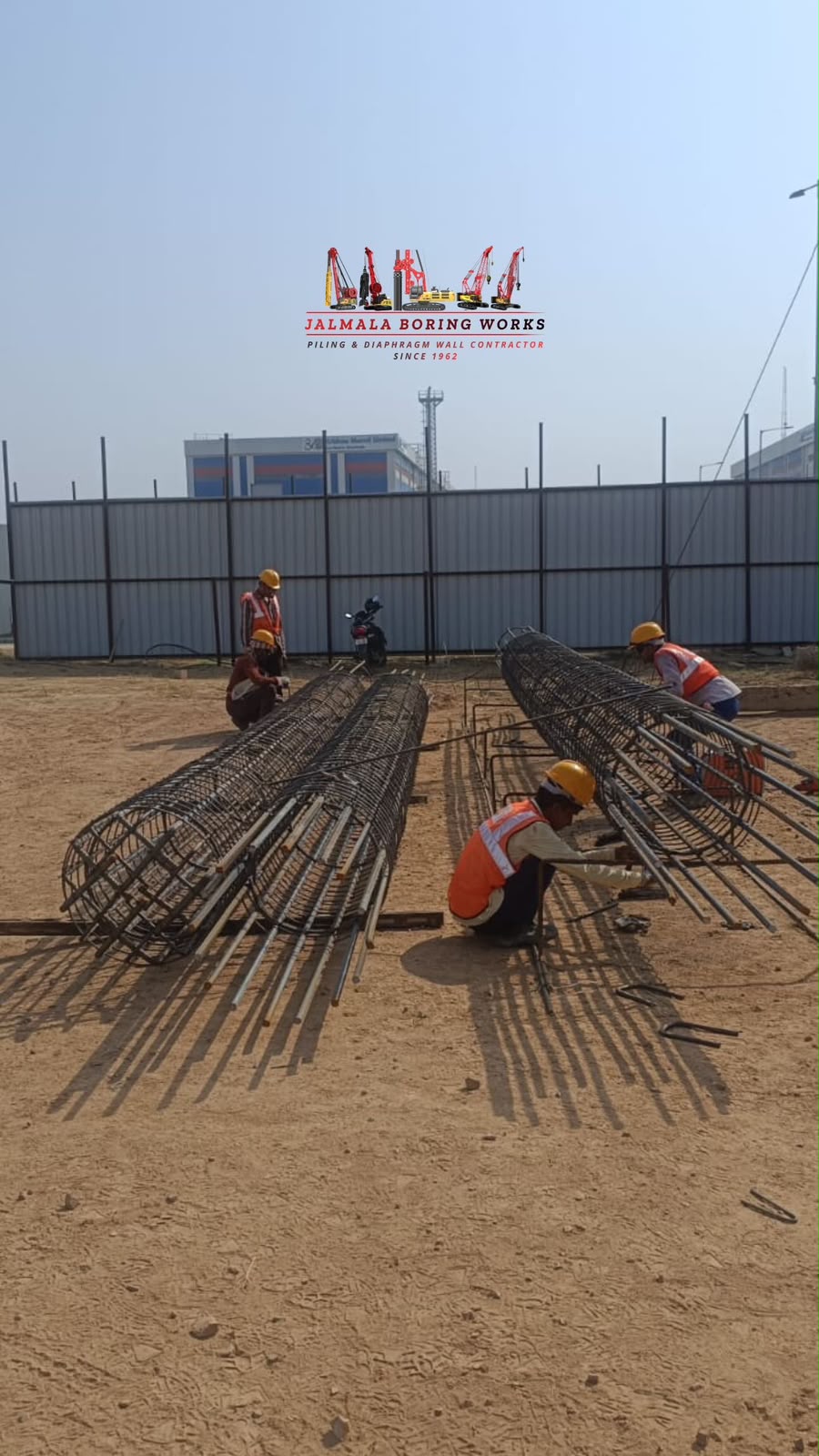
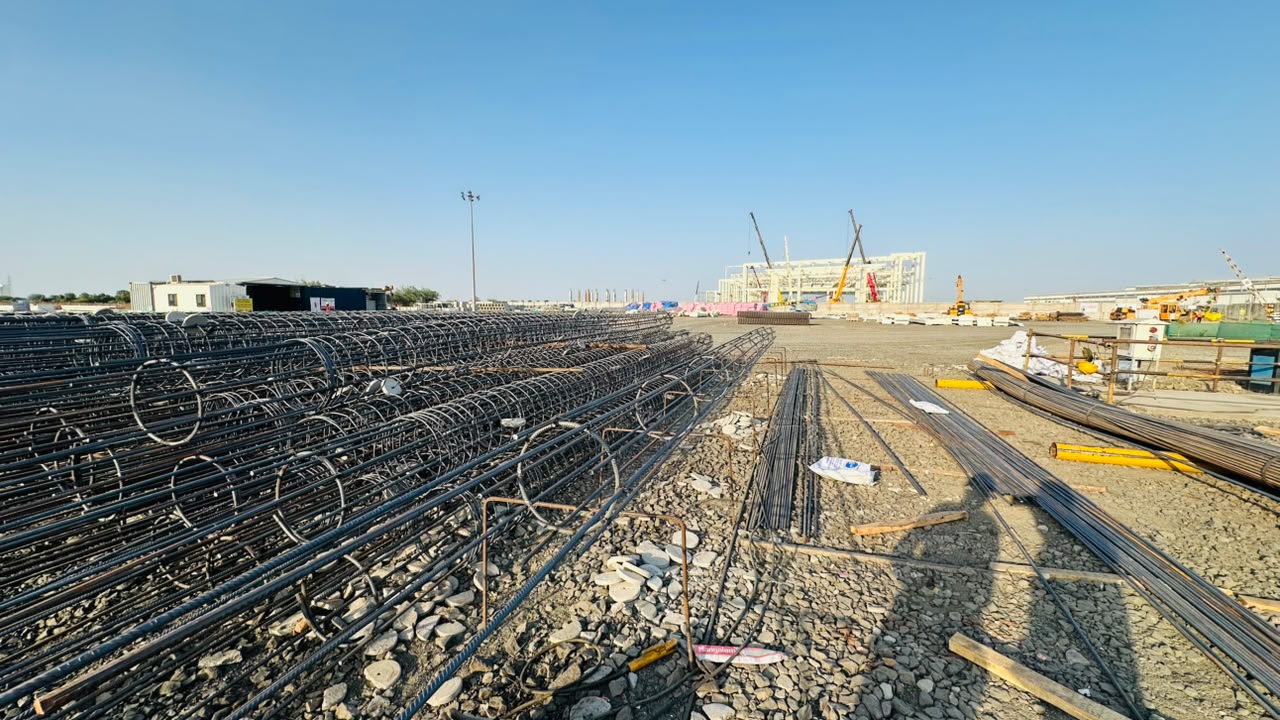
- Fabrication of reinforcement cage as per approved drawings
- Installation of spacers, couplers, lifting points, and cover blocks
- Lowering of reinforcement cage into the completed bore
- Accurate positioning and level adjustment
- Quality inspection before concrete placement
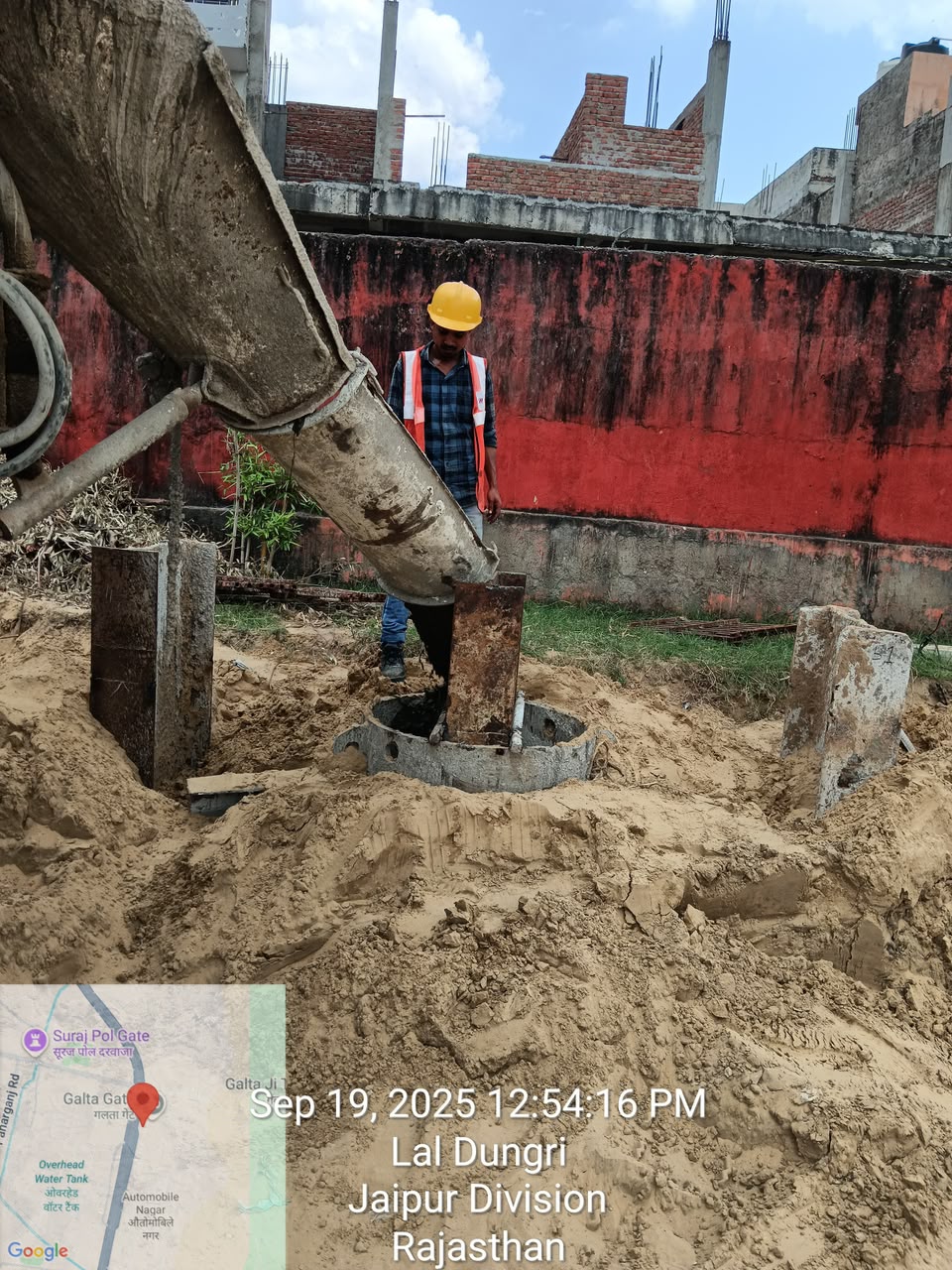
Tremie Concreting
Continuous concrete placement using tremie pipes.
- Installation of tremie pipes up to borehole bottom
- Continuous placement of concrete from bottom to top
- Prevention of concrete segregation through tremie method
- Displacement and recovery of slurry during concreting
- Completion of pile concreting in one uninterrupted operation
Pile Completion & Quality Control
Final pile completion, head trimming, and quality assurance.
- Extraction of temporary casing during or after concreting
- Recording of concrete consumption and pile parameters
- Pile head chipping up to cut-off level
- Verification of pile depth, diameter, and concrete quality
- Completion of testing, documentation, and quality assurance
- Ready for pile cap and foundation construction
Pile Foundation Services in Sanand – Auto Manufacturing & GIDC Plant Experts
Sanand is not a general Ahmedabad industrial estate — it is India's emerging auto manufacturing hub, anchored by the Tata Motors Nano plant legacy, MG Motor's Halol-Sanand corridor expansion, and dozens of tier-1 and tier-2 auto component suppliers. Auto plant piling is a specialized discipline — heavy press line vibration control, paint shop clean-room foundations, assembly line continuous foundations, and JIT logistics warehousing are fundamentally different from generic industrial piling. If you are looking for pile foundation services in Sanand, you need a contractor who understands the auto manufacturing requirements. Jalmala Boring Works brings 60+ years of deep foundation expertise to every Sanand pile foundation project we take on.
Sanand Auto Manufacturing Hub – OEM Plants & Tier-1/2 Suppliers
The Sanand-Mandal-Becharaji auto belt has emerged as one of India's largest auto manufacturing clusters. Tata Motors' Nano plant (which pioneered Sanand as an auto hub), MG Motor's Sanand plant (post-Ford acquisition), and dozens of tier-1 suppliers (Maruti Suzuki vendors, Bosch, Motherson, Sona Comstar, Subros, and many more) have established Sanand as a complete automotive ecosystem. Each OEM plant requires its own specialized piling: press line foundations for stamping shops, paint shop foundations with clean-room vibration tolerances, assembly line foundations with uniform support over long spans, proving ground foundations for testing facilities, and JIT logistics warehousing for inbound/outbound supply chains. Our auto industry piling in Sanand covers all of these.
Heavy Press Line Foundations – Vibration Control & Dynamic Loading
Press lines in auto stamping shops are among the most demanding industrial foundations. A typical 5,000-tonne press creates significant dynamic forces with each stroke cycle — foundations must absorb and dissipate this energy without transmitting vibration to adjacent equipment, building structure, or worker areas. Press line piling requires: dynamic load design — calculating the repeated impact forces and designing pile groups to resist fatigue and settlement; vibration isolation — using isolation pads, spring mounts, or inertia blocks per the press supplier's specification; continuous foundation — supporting the press, transfer system, and automation along the full 30-60 meter line; settlement control — even small differential settlement affects press alignment and product quality. Our heavy press line foundation work in Sanand starts with the press supplier's dynamic load specifications and works backward to the pile design.
Paint Shop Clean-Room Foundations – Sub-Millimeter Vibration Tolerances
Auto paint shops are clean-room environments with vibration tolerances typically 10× stricter than other plant areas. Paint spray robots and conveyors require sub-millimeter precision, and vibration transmission can affect paint finish quality. Paint shop piling requires: vibration transmission control (typically 50-100 microns or lower, per the paint equipment supplier's specification); elevated floor structure — paint shops typically have grating floors over pit structures for down-draft airflow; HVAC and filtration integration — the foundation must accommodate the paint shop's air handling and filtration systems; conveyor support along the full paint shop length. The pile design is usually specified by the paint shop equipment supplier (Dürr, Eisenmann, ABB, or similar), not the building structural consultant. Our paint shop foundation work in Sanand is calibrated to the paint supplier's specifications, not generic industrial standards.
Sanand GIDC & Sanand-II – Industrial Estate Coverage
Sanand GIDC and Sanand-II are the two main GIDC-administered industrial estates in the Sanand region. Sanand GIDC is the established estate with auto OEMs, tier-1 suppliers, and supporting industries. Sanand-II is the newer industrial expansion zone with additional auto suppliers, warehousing, and supporting industries. Both estates are GIDC-administered and require GIDC NAA permit coordination. Dense GIDC plot layouts typically require compact rigs, careful coordination with adjacent operating units, and NAA-compliant permit documentation. Our Sanand GIDC and Sanand-II piling services include NAA permit coordination as part of standard scope.
JIT Logistics Warehousing – Auto Supply Chain Foundations
Auto manufacturing depends on just-in-time (JIT) logistics — supplier parts arriving exactly when needed for assembly, with almost no buffer inventory. The Sanand corridor hosts dozens of JIT logistics warehousing facilities serving the OEM plants. JIT warehouse piling requires: heavy racking load support (typical racking systems place 50-200 tonnes per column on the foundation); uniform floor flatness (racking requires very strict floor flatness tolerances, typically FF50 or higher, achieved through pile cap alignment); fast construction (JIT warehouses are often fast-track to keep up with OEM ramp-ups); large footprint (JIT warehouses are typically 5,000-20,000 sqm). Our JIT logistics warehouse piling in Sanand handles the racking load design, floor flatness coordination, and fast-track execution these facilities require.
Narmada Canal Water Influence & Sanand Soil Conditions
The Narmada canal network supplies water to Sanand and the surrounding industrial corridor, but it also affects groundwater conditions in three ways: elevated water tables in areas along the canal alignment (1-3 meters higher than areas away from the canal); seasonal water table variation as canal flows are managed seasonally; and potential seepage in canal-adjacent plots affecting soil conditions. For piling projects within 1-2 km of the Narmada canal, we recommend site-specific water table monitoring as part of the geotechnical investigation. Additionally, Sanand's soil profile includes black cotton soil in some areas, alluvial deposits near the canal, and weathered rock in the peripheral zones. Generic "Sanand soil" data is insufficient — each plot requires its own geotechnical investigation. Our Sanand piling work includes site-specific soil and water table assessment.
Serving Sanand, Iyava, Shantipura, Mankol & Surrounding Areas
We serve the entire Sanand region — including pile foundation projects in Sanand GIDC, Sanand-II, Iyava, Shantipura, Mankol, and surrounding areas. Our site visit commitment is 24-48 hours across all Sanand locations (our Sarkhej headquarters is ~25 km away via SG Highway). Rig mobilization is typically 8-12 working days from contract award — faster than most other Gujarat cities due to proximity. Whether your project is an auto OEM plant expansion, a tier-1 supplier facility, a paint shop, a press line addition, a JIT warehouse, or a supporting residential project, our Sanand piling contractor team is ready to mobilize.
Contact Our Sanand Pile Foundation Team Today
Ready to discuss your pile foundation project in Sanand GIDC, Sanand-II, Iyava, Shantipura, or Mankol? Call our team at +91 93745 45415 or email jalmala.pile@gmail.com. Mention your location, project type (auto OEM, tier-1/2 supplier, warehousing, residential), and any specific machine requirements (press line, paint shop, assembly line) — our team responds within 2 business days with an initial technical review. Main office is at Dholka Road, near Nariampura Village, Narimanpura, Sarkhej, Ahmedabad, Gujarat 382210. For a complete overview of our pile foundation services in Sanand, explore this page and see why auto OEMs, tier-1 suppliers, and supporting industries across Sanand choose Jalmala Boring Works as their piling partner.