
Pile Foundation
Bored Cast-in-Situ Piling Specialists
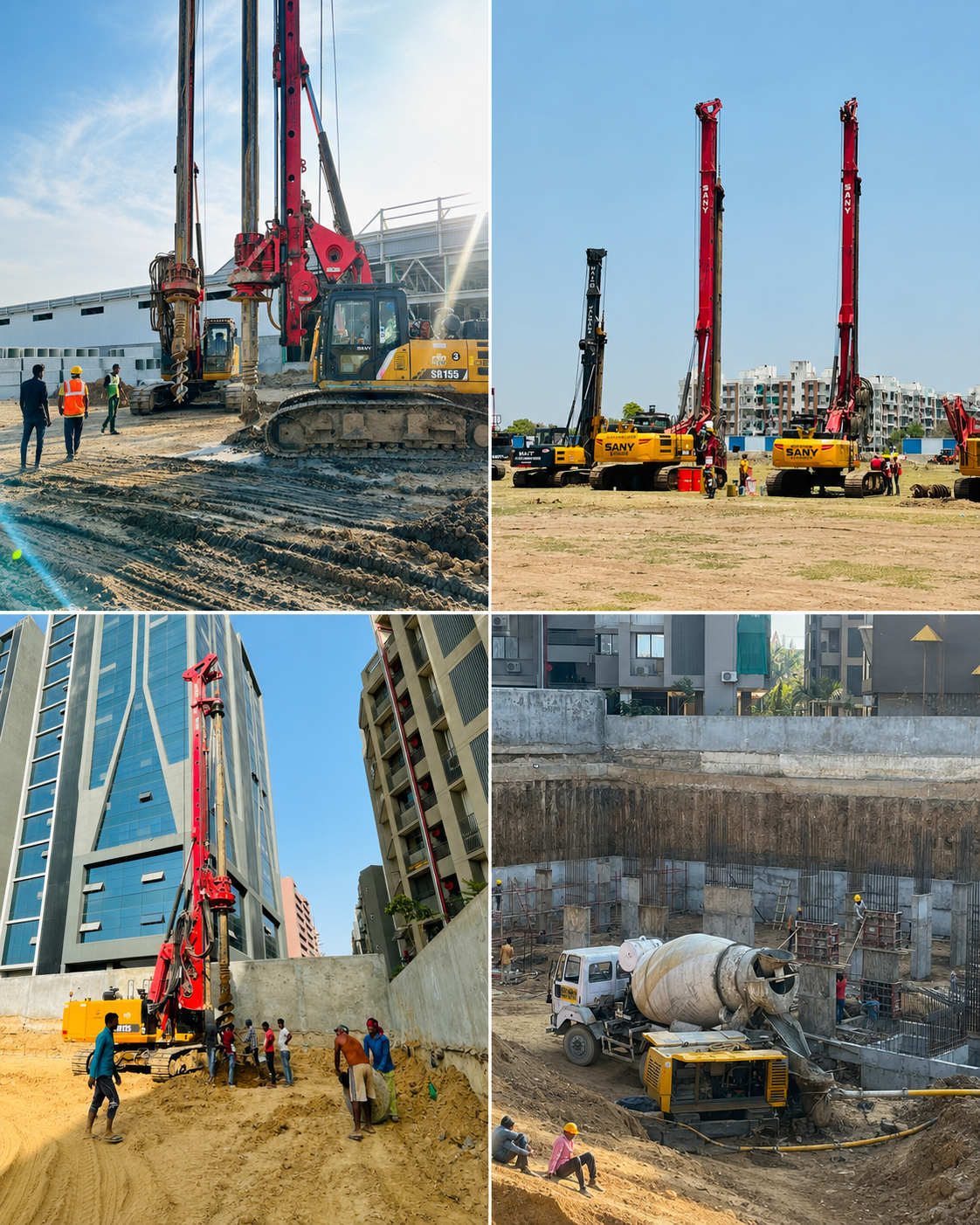
Jalmala Boring Works provides Pile Foundation and Deep Foundation Solutions using Bored Cast-in-Situ Piles for residential, commercial, industrial, and infrastructure projects. With advanced Hydraulic Rotary Rigs, we construct piles from 300 mm to 1800 mm diameter and depths of up to 50 metres, delivering reliable load-bearing capacity across soft soil, hard rock, and high groundwater conditions.
Our Piling Methods
We deploy six proven techniques — selected based on soil profile, site constraints, and project requirements.
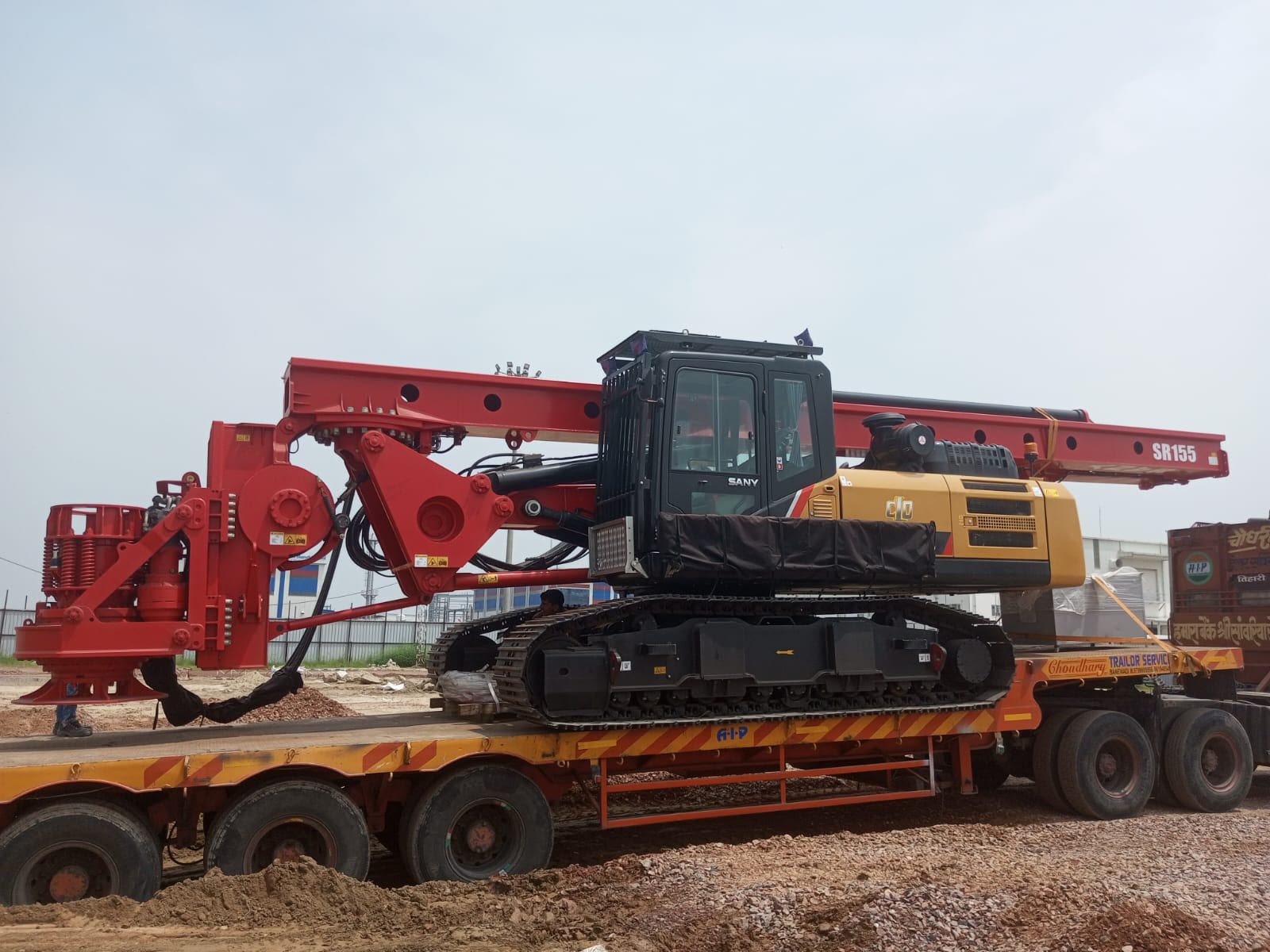
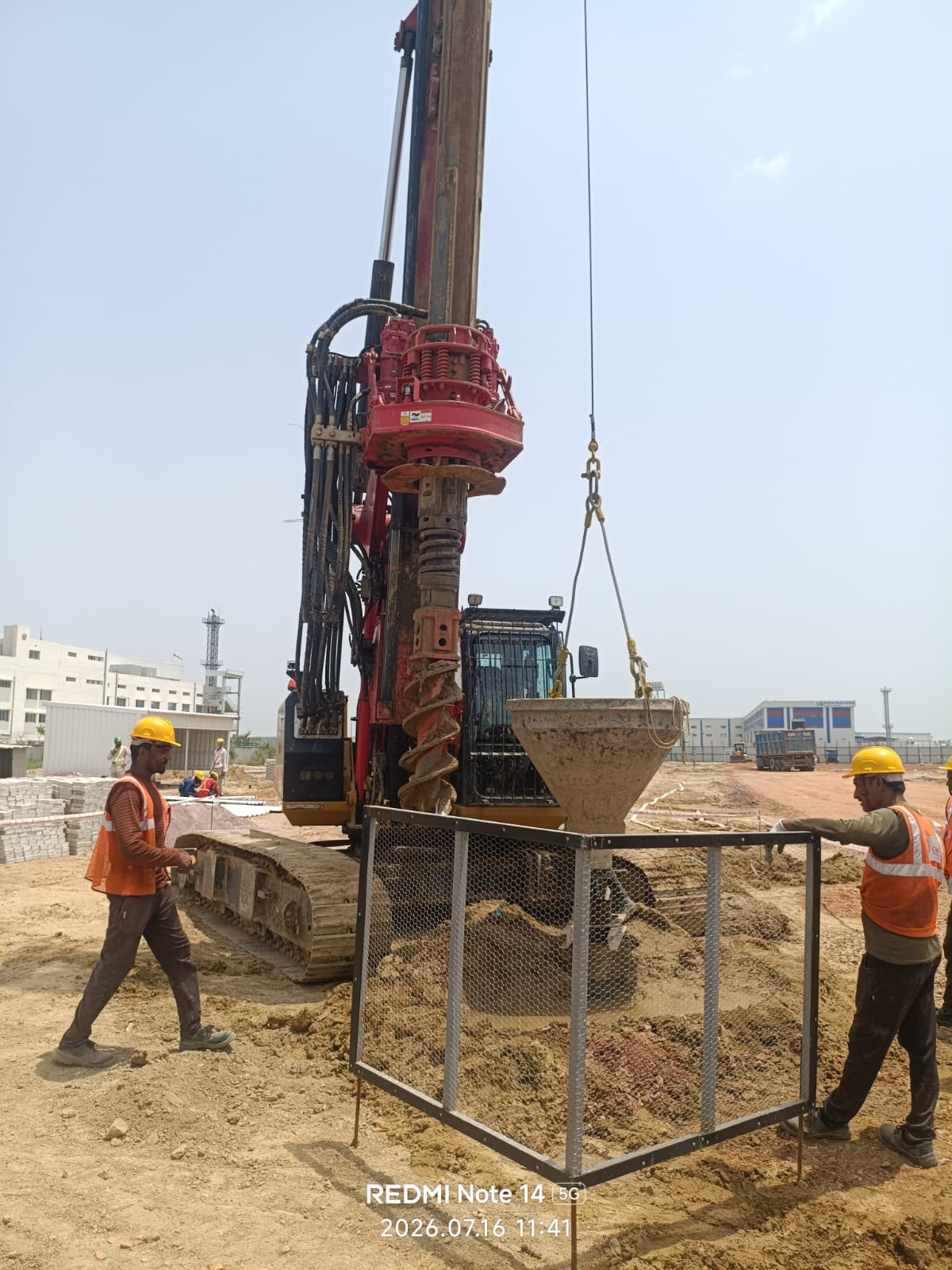
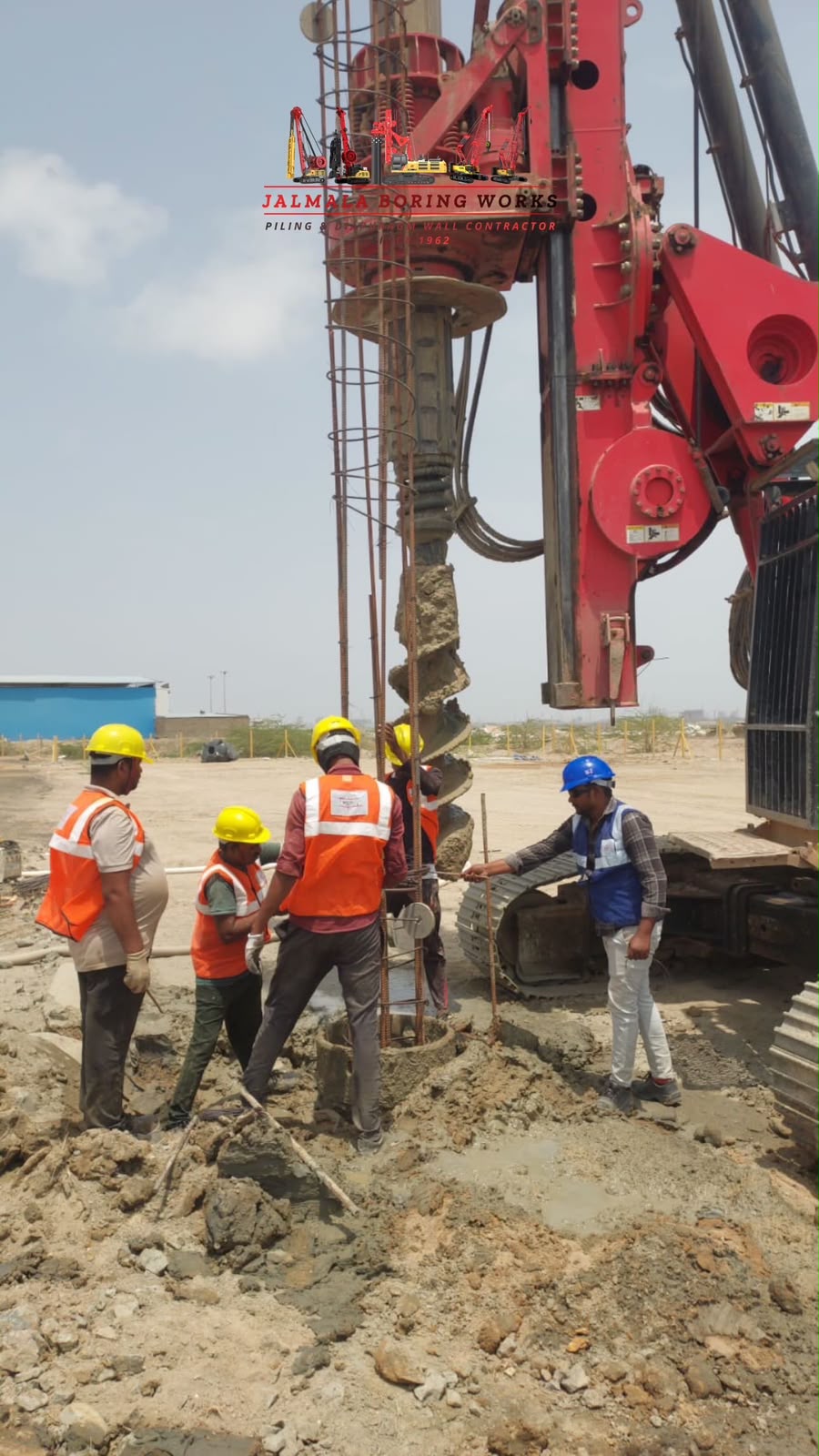
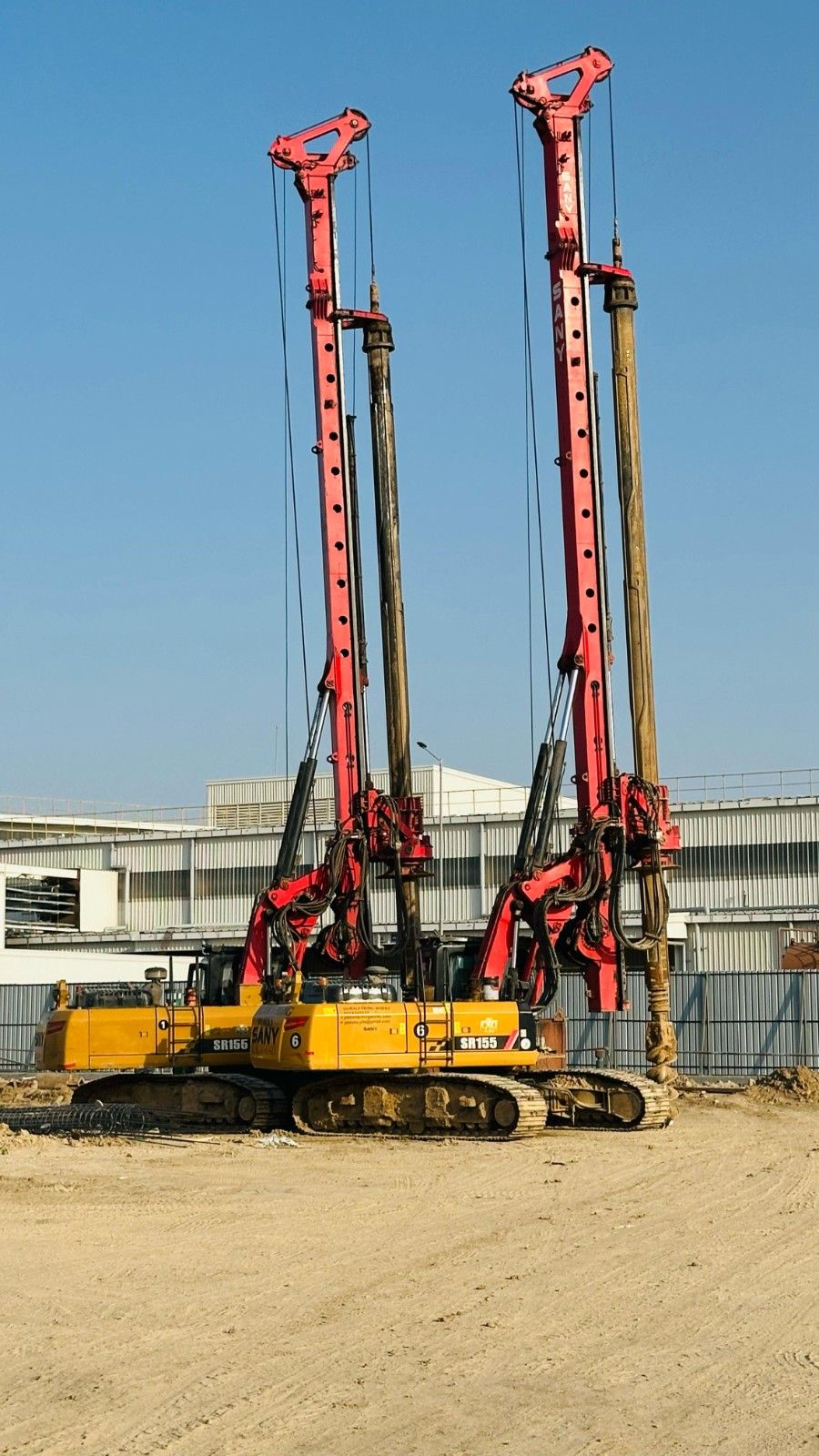
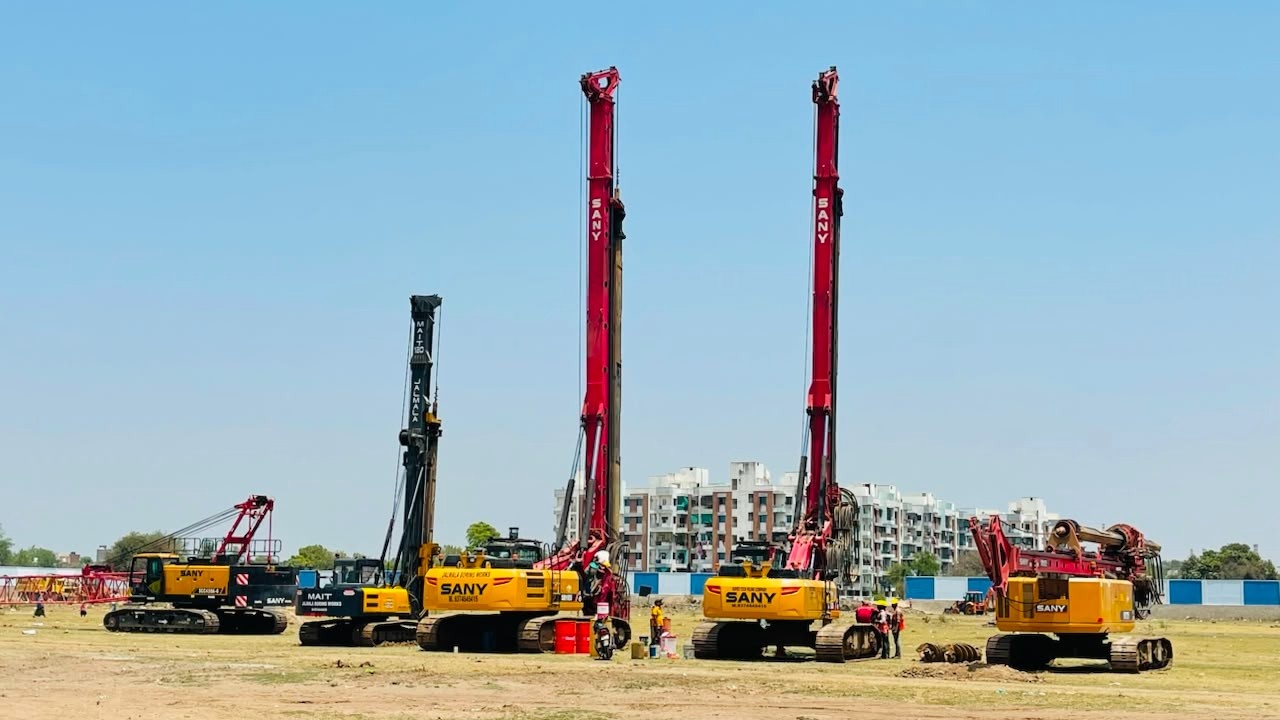
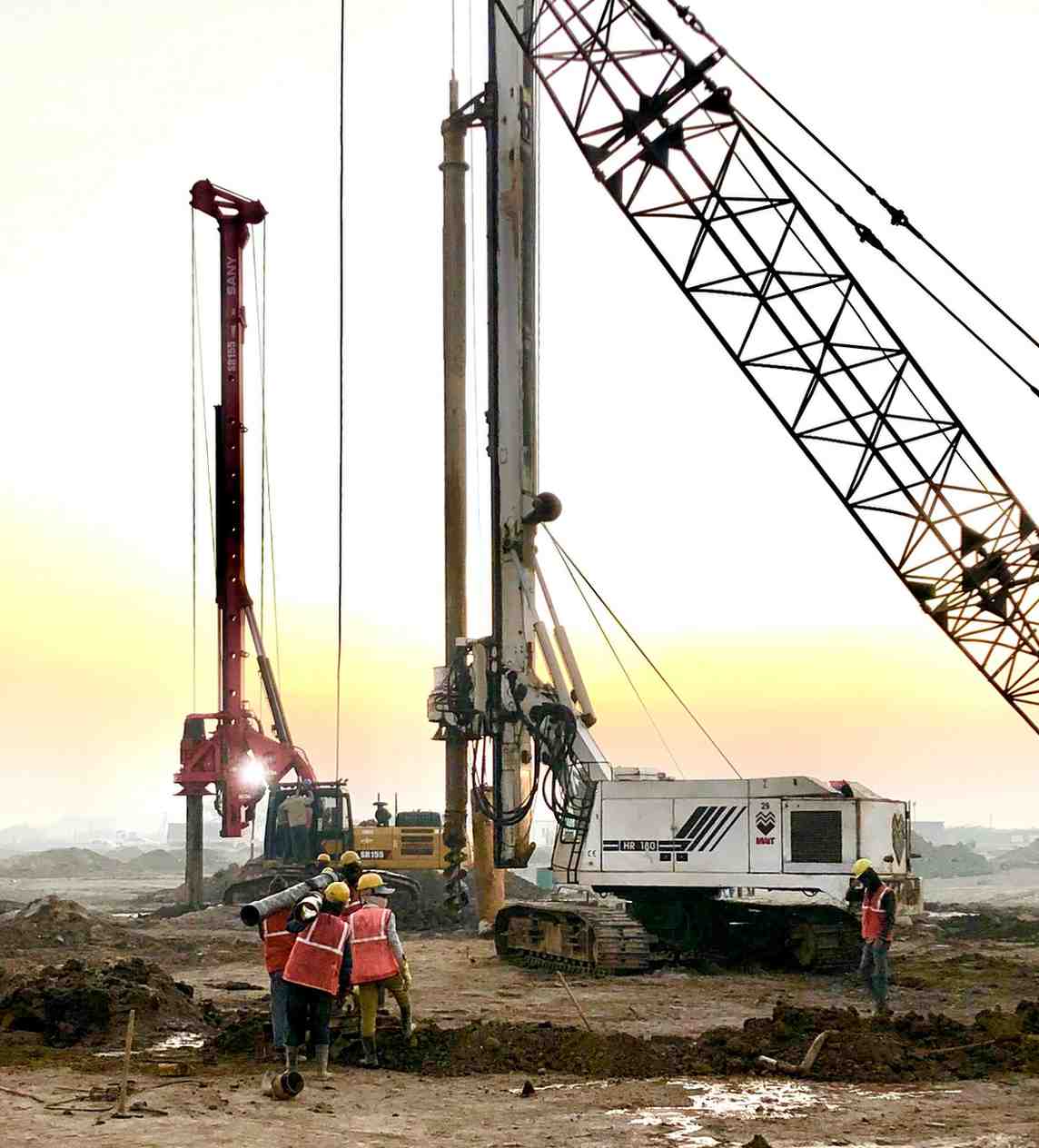
We specialize in bored piling with diameters ranging from 200 mm to 2000 mm and depths up to 50 meters. Using advanced hydraulic rotary rigs, we execute piling operations efficiently across a wide range of soil conditions. Our fleet includes high-performance rotary drilling rigs capable of working in restricted headroom areas while delivering precision, stability, and high productivity.
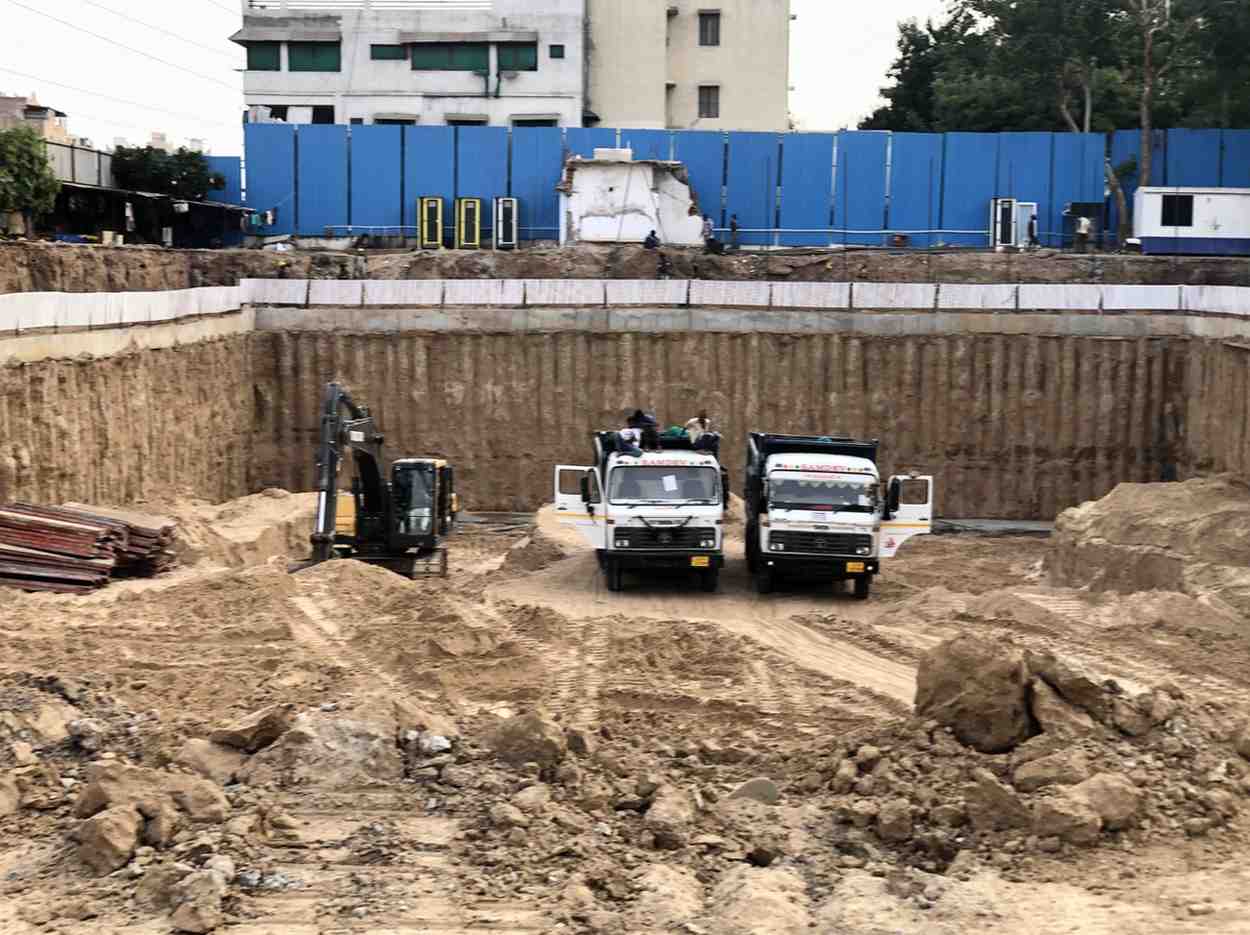
Secant pile walls are constructed by intersecting reinforced concrete piles to form a continuous retaining structure. Primary piles are installed first, followed by reinforced secondary piles after sufficient curing. This technique provides excellent groundwater control and soil retention, making it ideal for deep excavations, basements, and foundation support in challenging ground conditions.
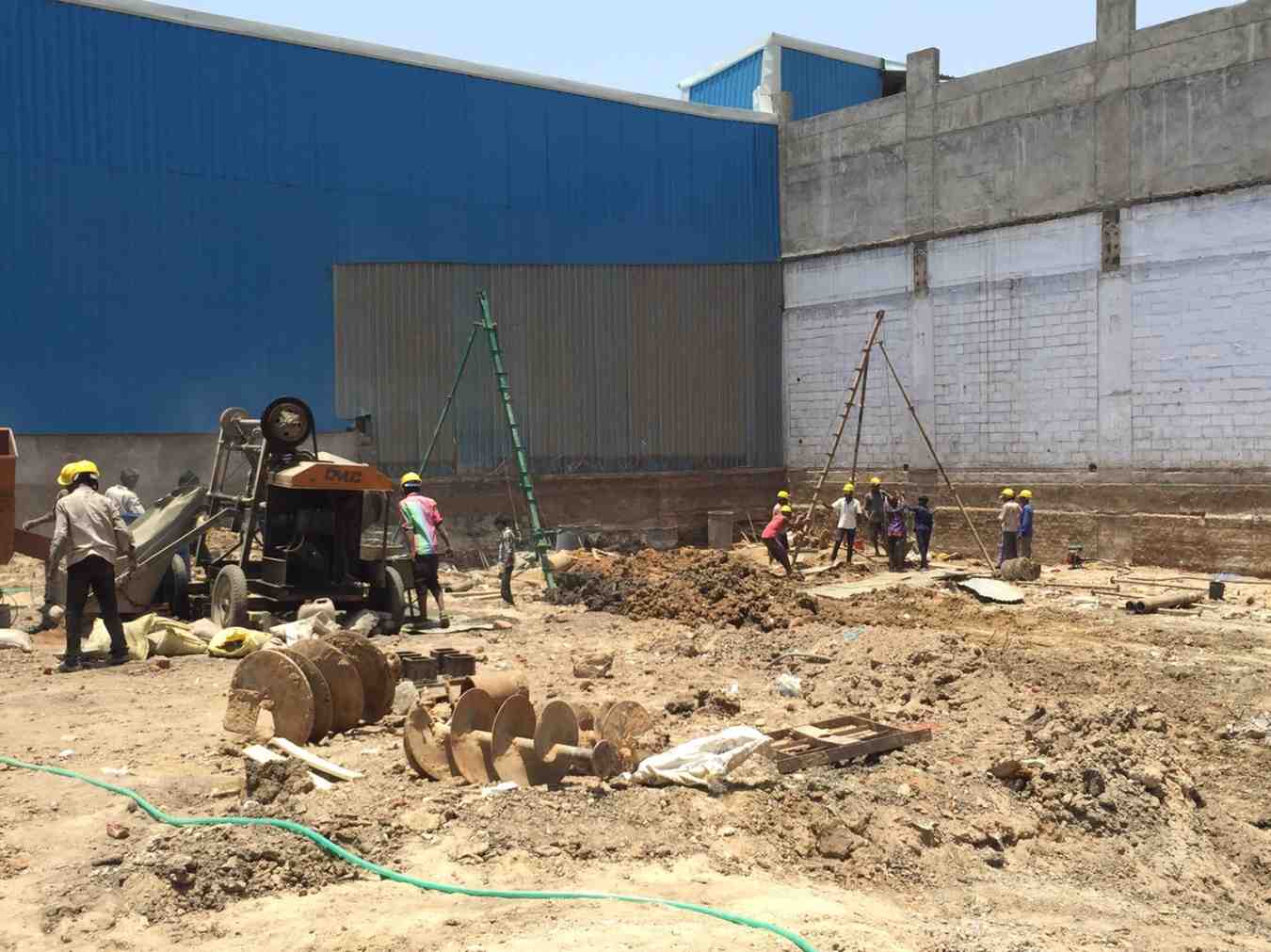
The Manual Auger Method is a reliable piling technique suitable for locations with restricted access or where low noise and vibration are essential. A tripod and manual winch system are used to drill boreholes using a helical auger. This method is commonly employed for pile diameters ranging from 250 mm to 1000 mm and offers an economical solution for smaller foundation projects.
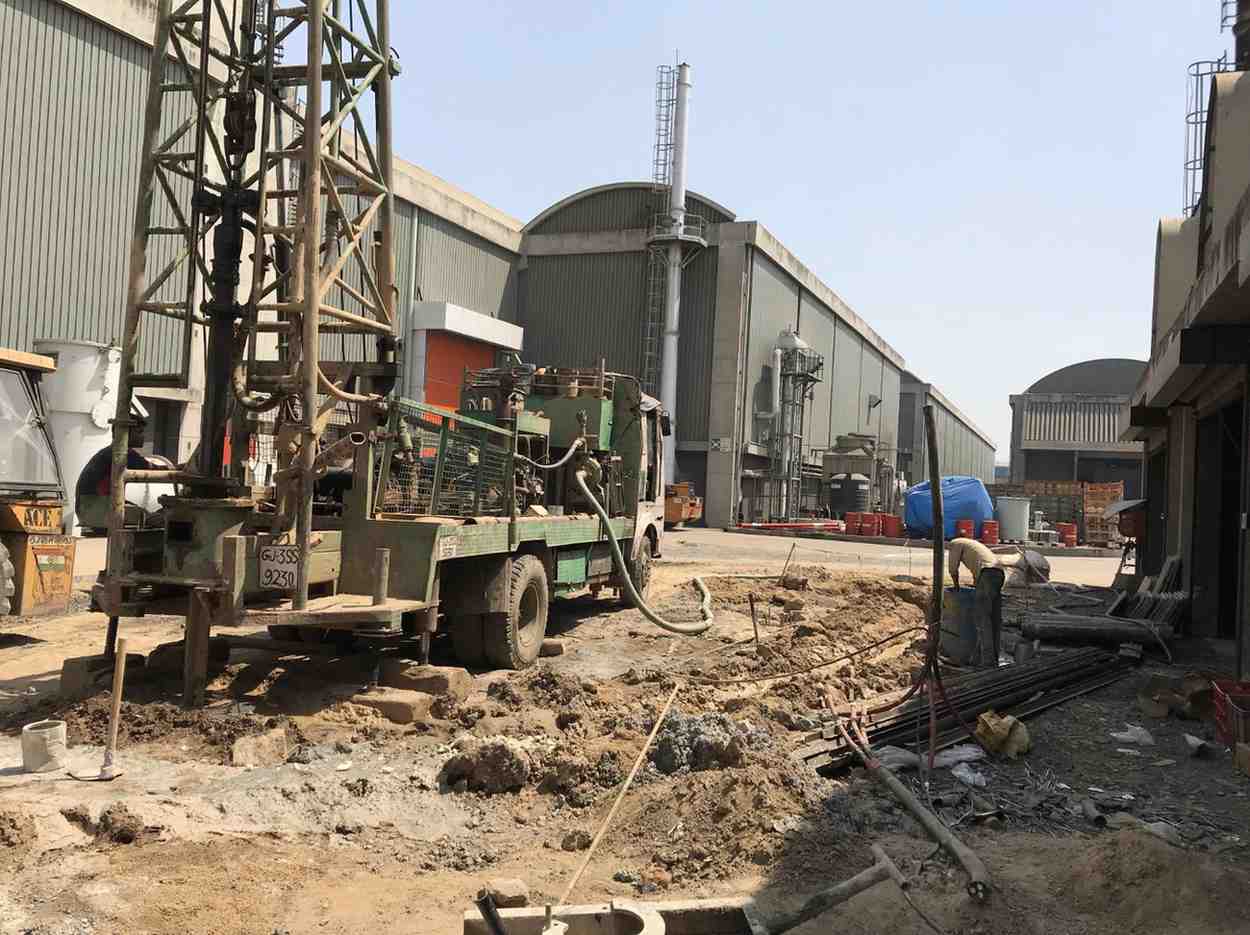
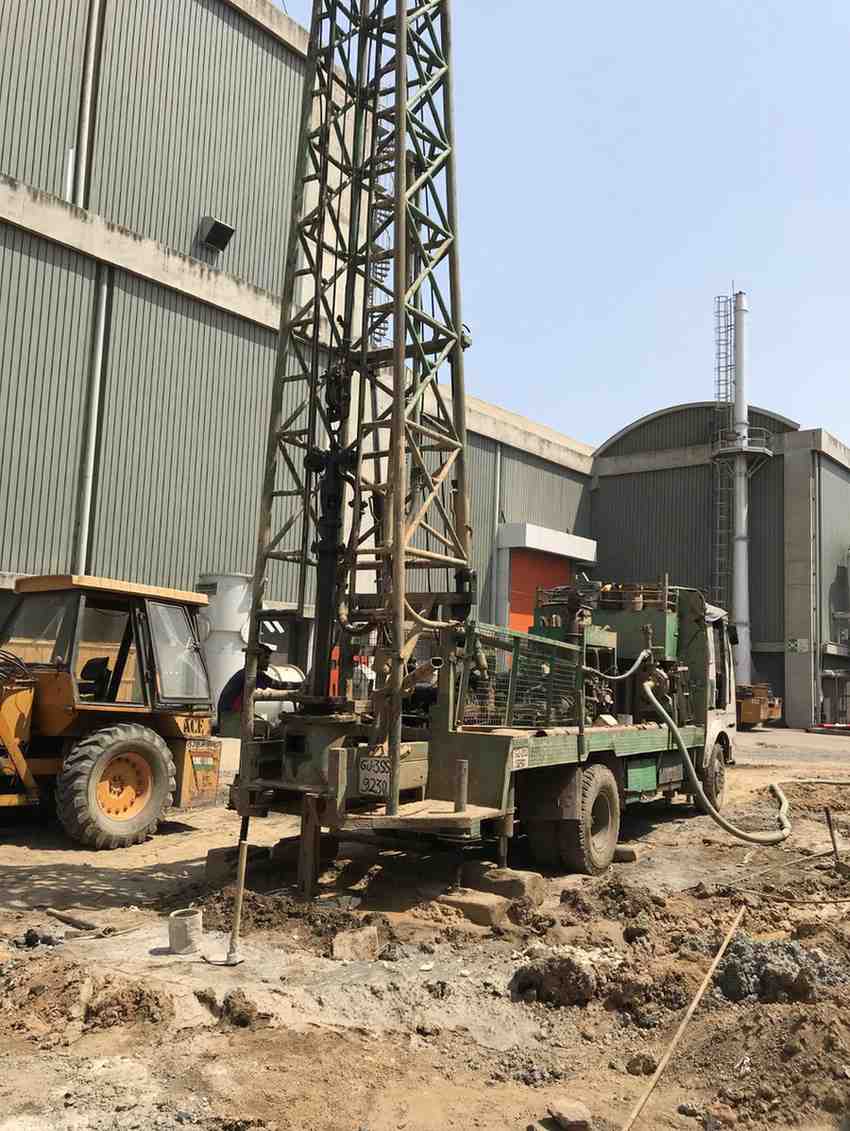
Our Truck Mounted Rotary (TMR) rigs utilize continuous bentonite slurry circulation to stabilize boreholes during drilling. Auger drilling is performed to the required depth while bentonite slurry supports the excavation and carries excavated soil back to a recycling tank. This method ensures bore stability, efficient spoil removal, and high productivity, particularly in loose or soft soil strata.
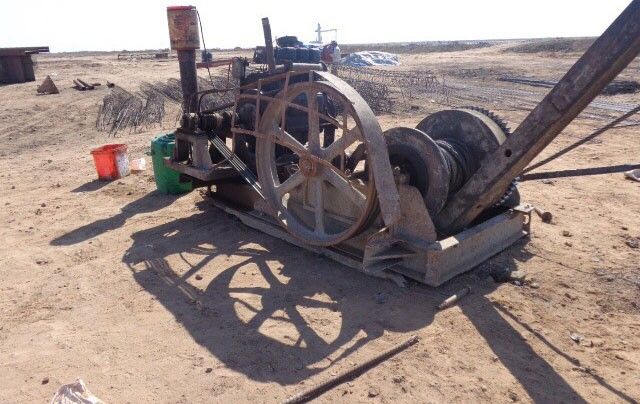
The DMC Pile Method employs Mendola-type rigs combined with bentonite drilling fluid for safe and efficient pile construction. Surface soil is loosened using a bailer before drilling continues with a percussion chisel. Bentonite slurry stabilizes the bore while transporting excavated material to settling pits. Once the desired depth is achieved, the drilling tools are removed and the final depth is verified before reinforcement and concreting.
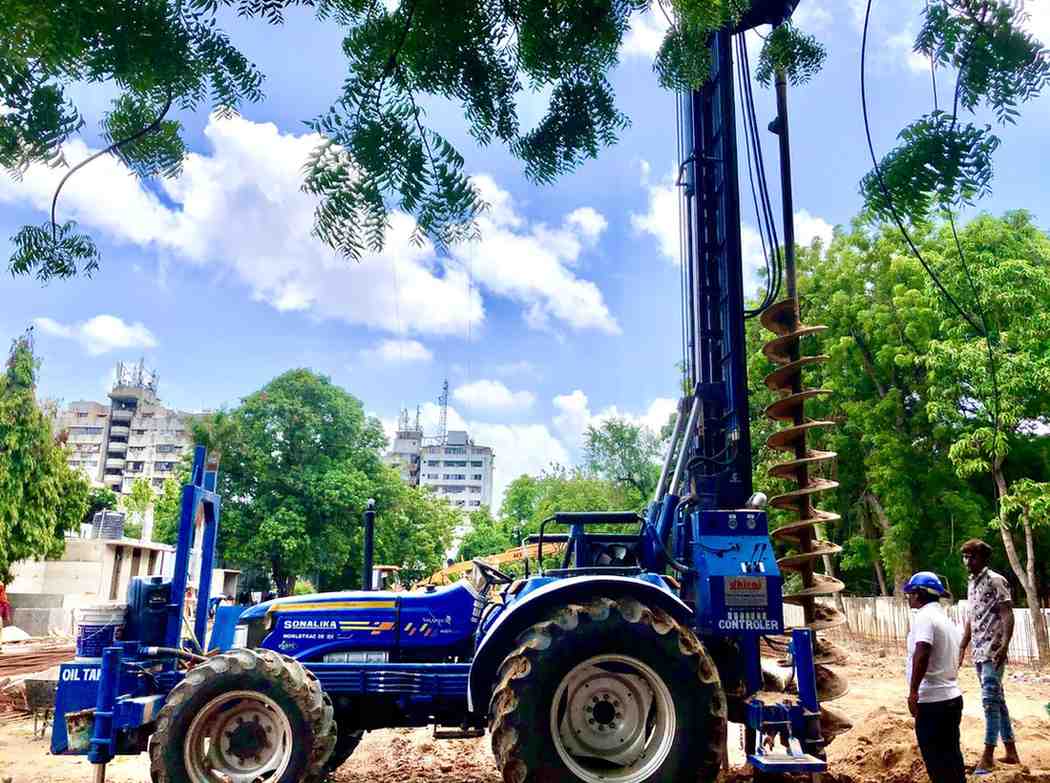
This method utilizes tractor-mounted rotary drilling rigs for fast and economical pile boring. Auger drilling is carried out to the required depth, with DMC rods added progressively to achieve deeper penetration through varying soil strata. It is particularly suitable for medium-depth foundation works and offers drilling capacities of up to 16 meters with excellent operational efficiency.
Our Work in Action
Click any image or video to view it in full screen.
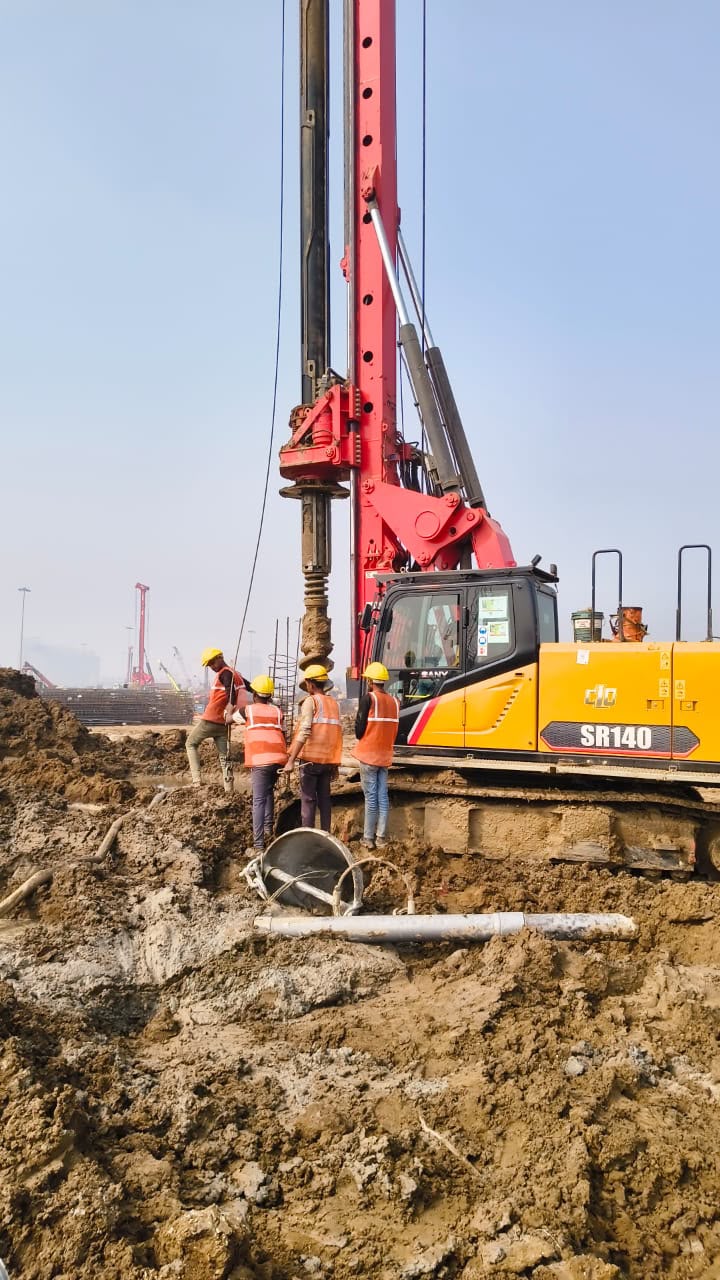
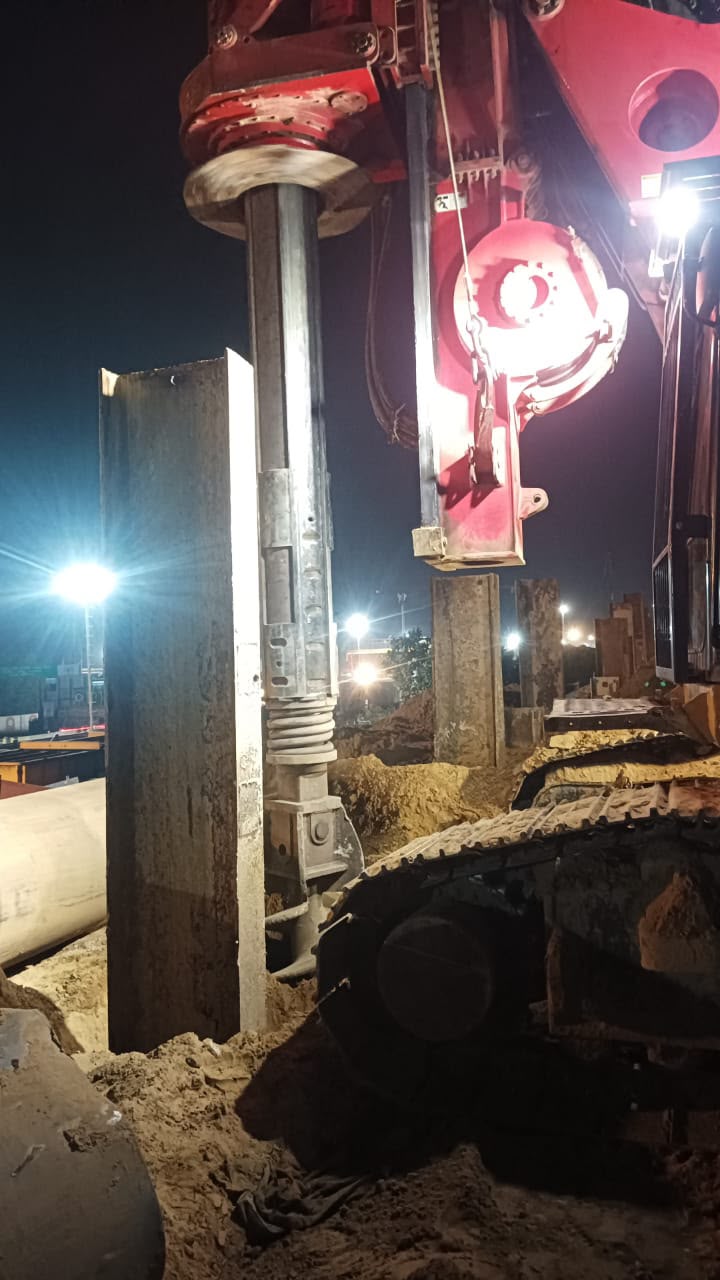
Recent Projects
Pile FoundationConstruction Process
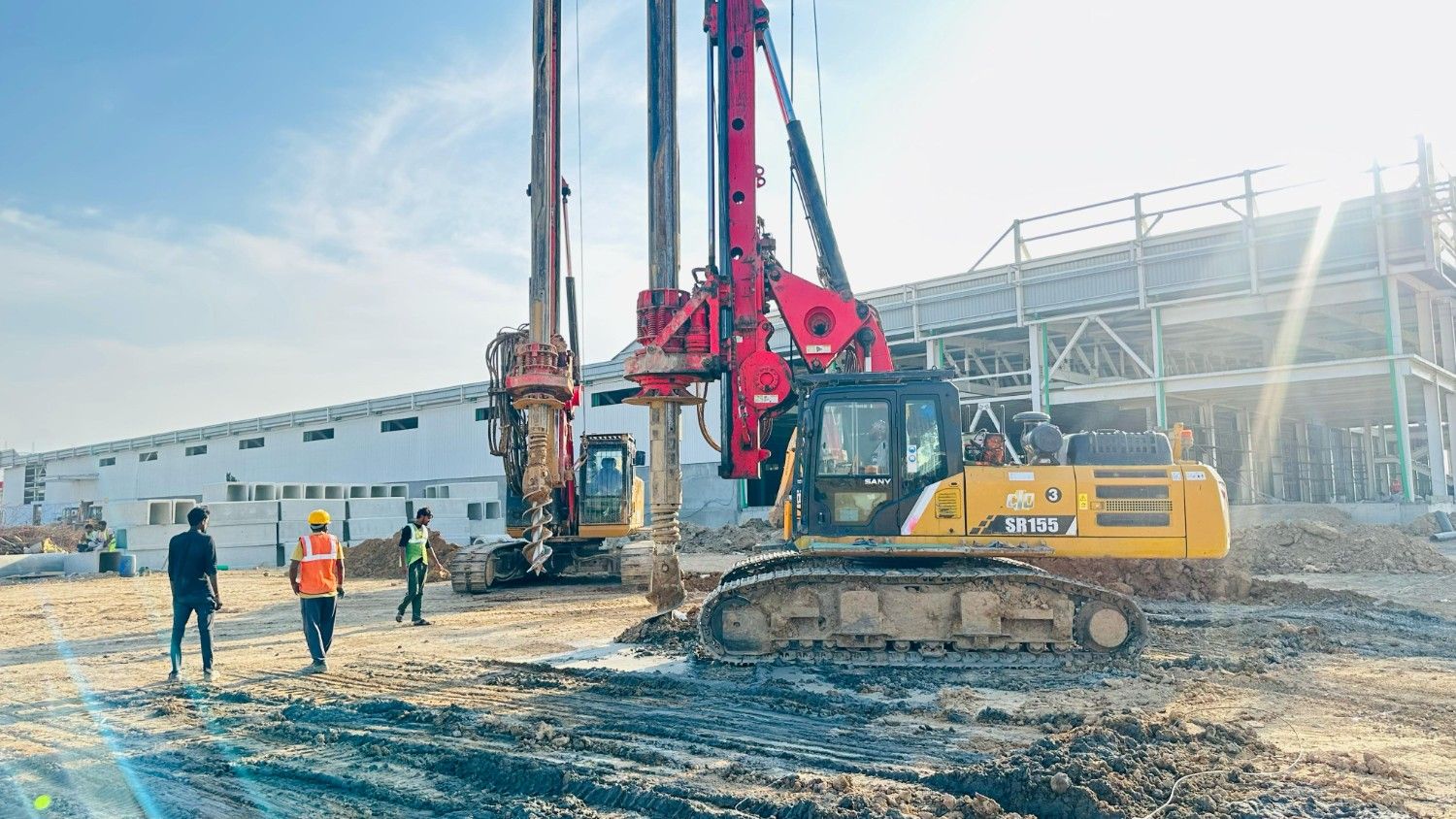
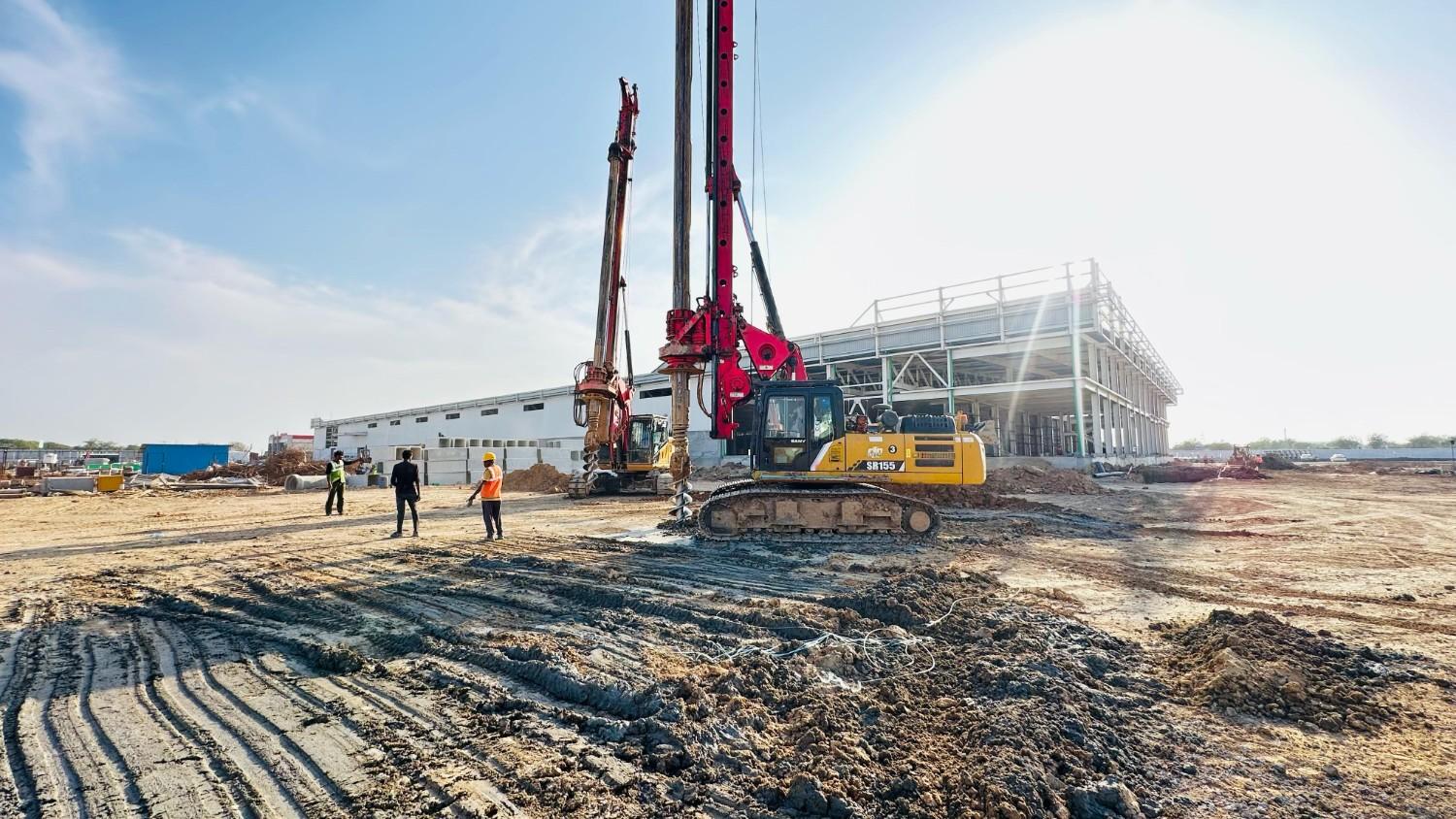
Survey, Setting Out & Guide Casing Installation
Detailed survey, marking of pile locations, and installation of temporary guide casing.
- Detailed survey and marking of pile locations
- Verification of pile coordinates and levels
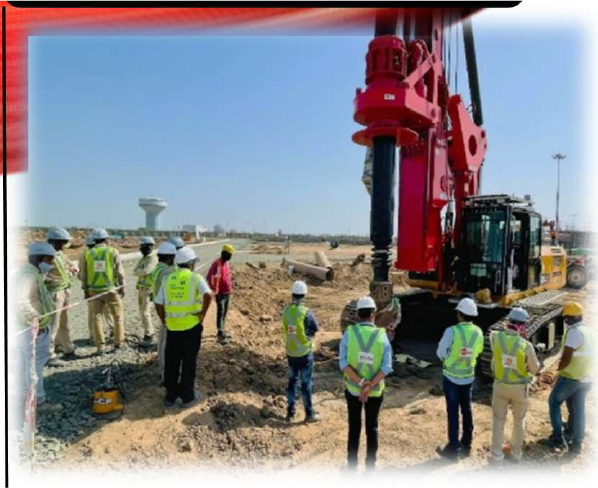
- Positioning of Hydraulic Rotary Piling Rig
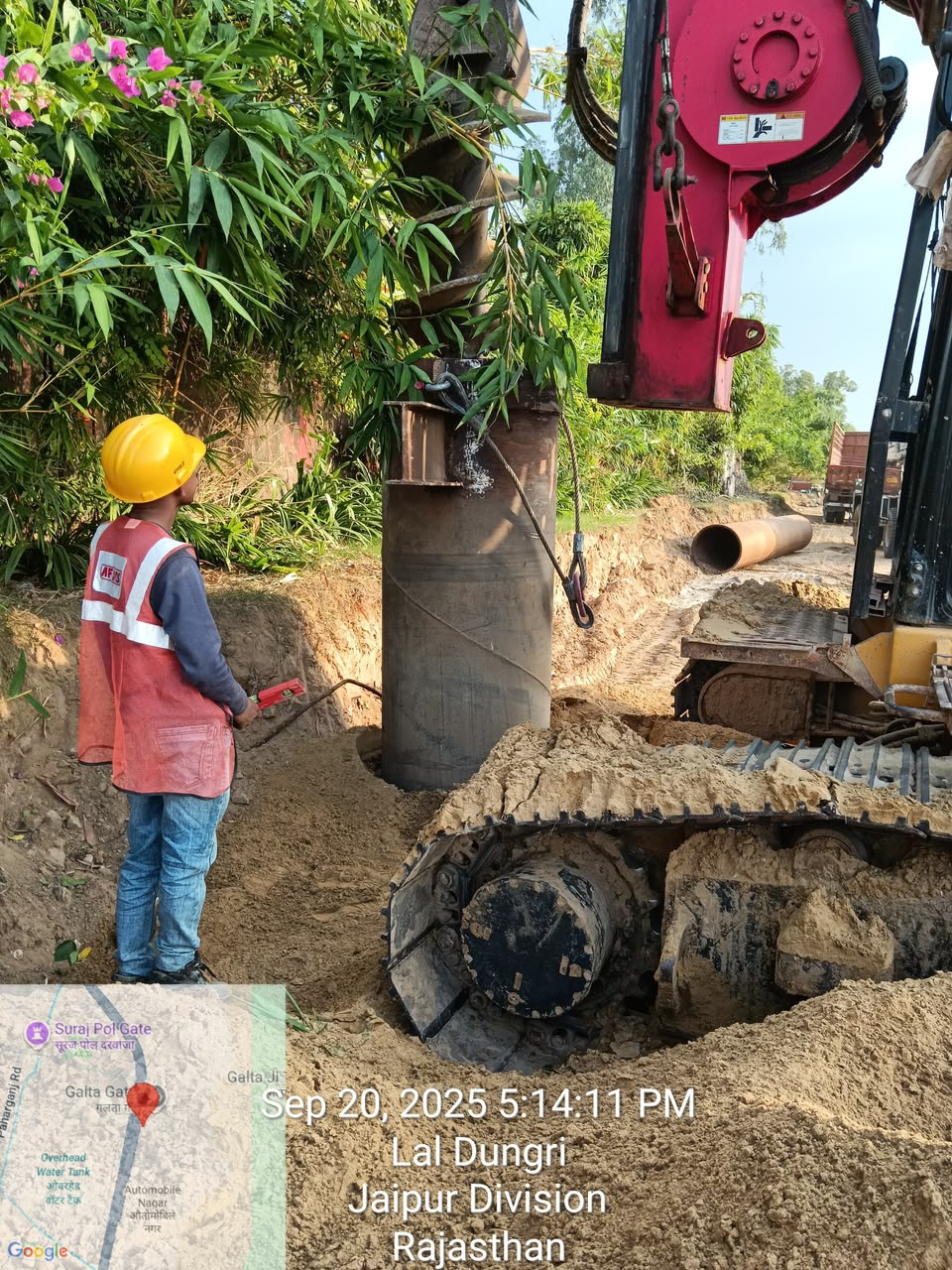
- Installation of temporary guide casing
- Ensures accurate pile alignment and protects bore opening
Pile Boring & Excavation
Drilling of pile bore using Hydraulic Rotary Rig to required depth.
- Drilling of pile bore using Hydraulic Rotary Rig
- Excavation carried out to the required depth and founding strata
- Suitable drilling tools used for soil, rock, or hard strata
- Continuous monitoring of depth, verticality, and pile diameter
- Removal and disposal of excavated soil from site
Slurry Support & Borehole Cleaning
Preparation and circulation of Bentonite/Polymer Slurry and borehole cleaning.
- Preparation and circulation of Bentonite/Polymer Slurry
- Stabilization of borehole walls during drilling
- Recycling of slurry through slurry plant
- Cleaning of borehole bottom to remove loose sediments
- Final inspection of bore depth and cleanliness
Reinforcement Cage Installation
Fabrication and lowering of reinforcement cage into the bore.
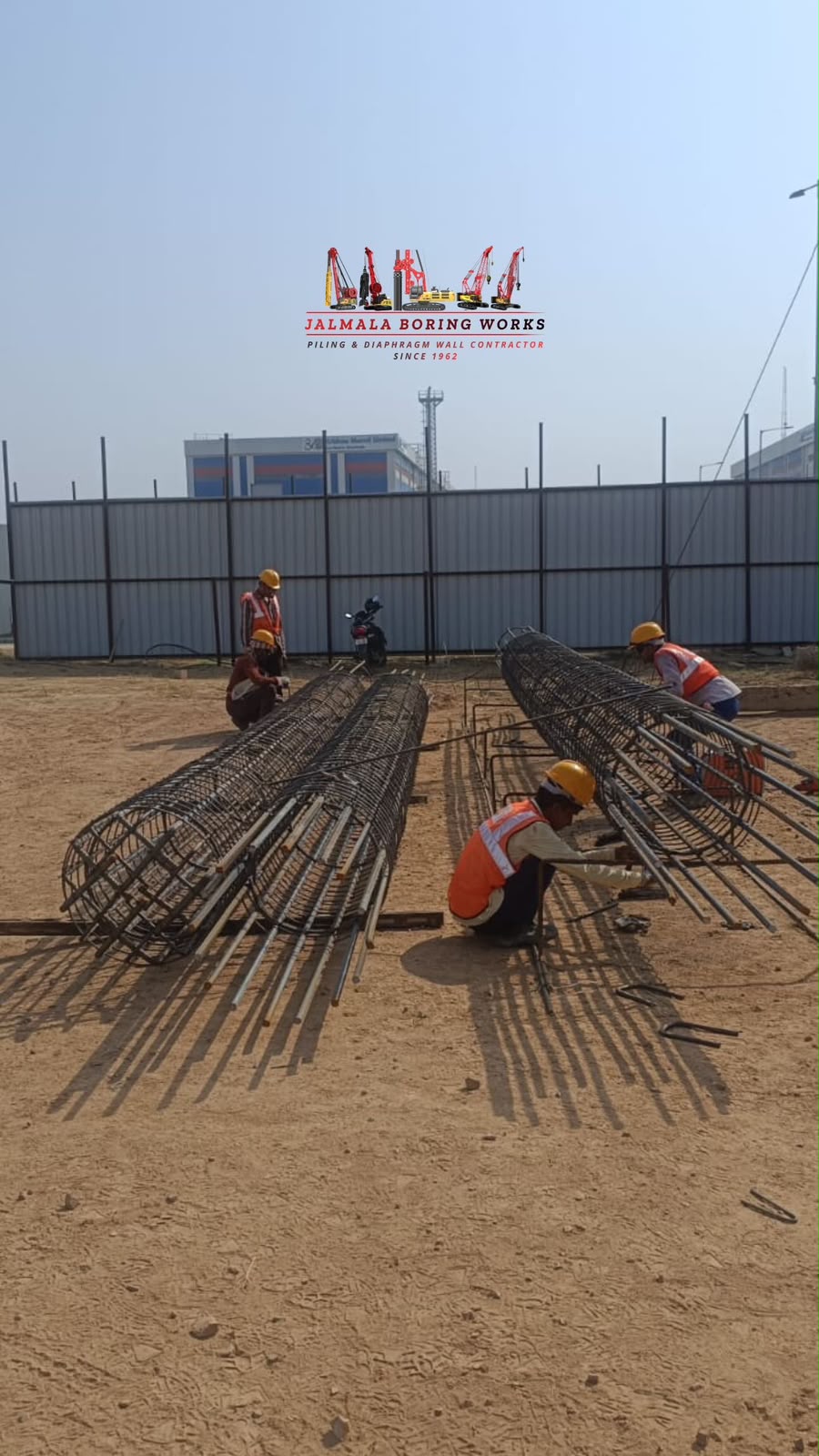
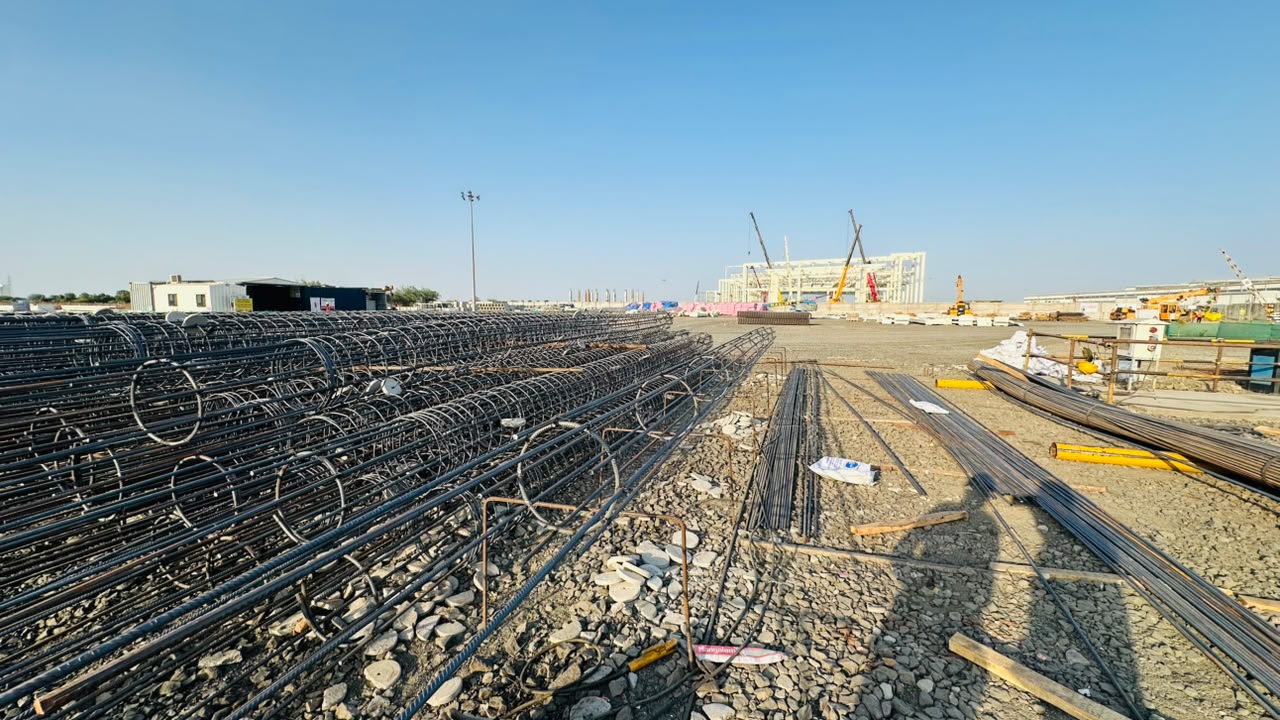
- Fabrication of reinforcement cage as per approved drawings
- Installation of spacers, couplers, lifting points, and cover blocks
- Lowering of reinforcement cage into the completed bore
- Accurate positioning and level adjustment
- Quality inspection before concrete placement
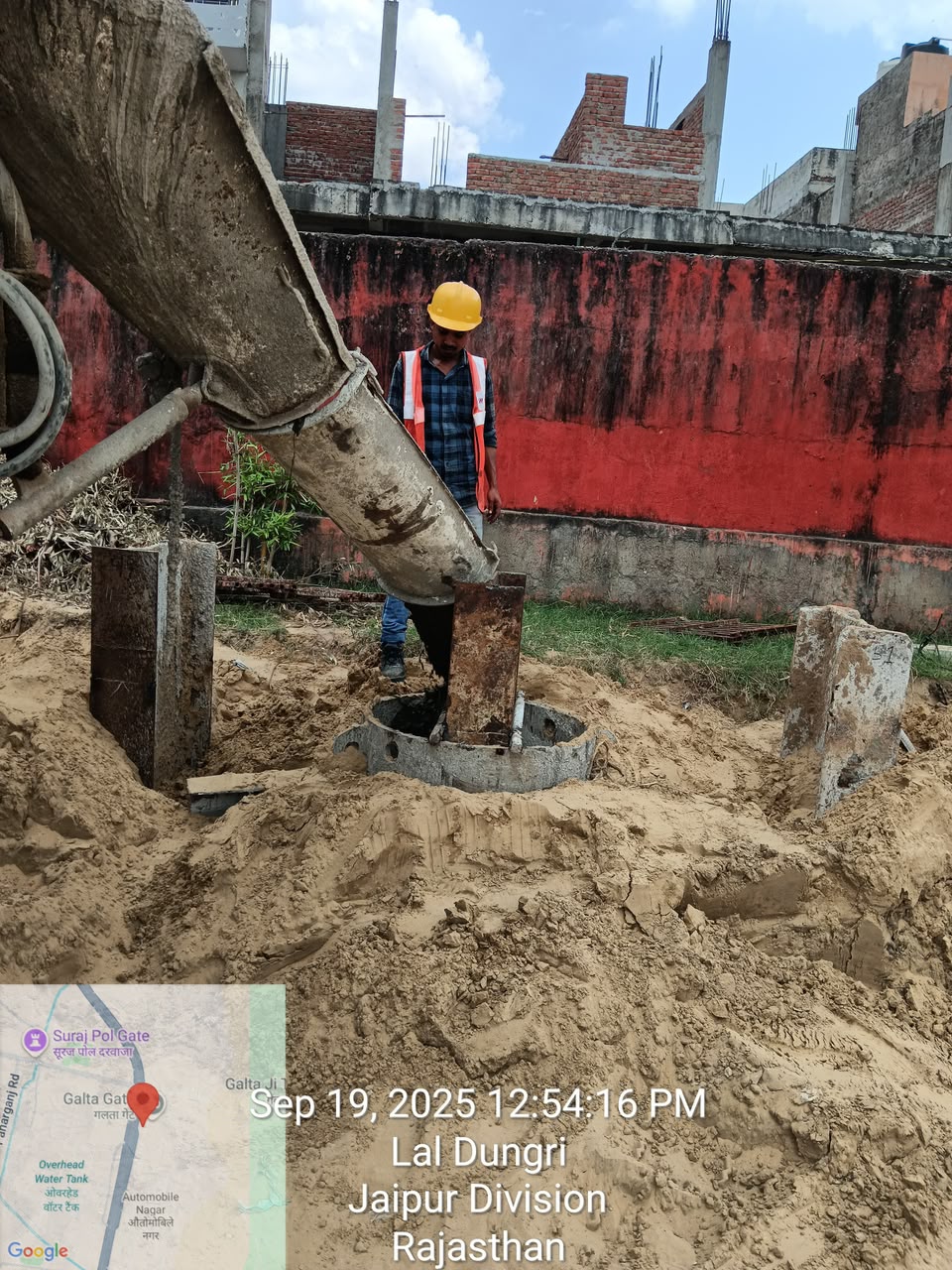
Tremie Concreting
Continuous concrete placement using tremie pipes.
- Installation of tremie pipes up to borehole bottom
- Continuous placement of concrete from bottom to top
- Prevention of concrete segregation through tremie method
- Displacement and recovery of slurry during concreting
- Completion of pile concreting in one uninterrupted operation
Pile Completion & Quality Control
Final pile completion, head trimming, and quality assurance.
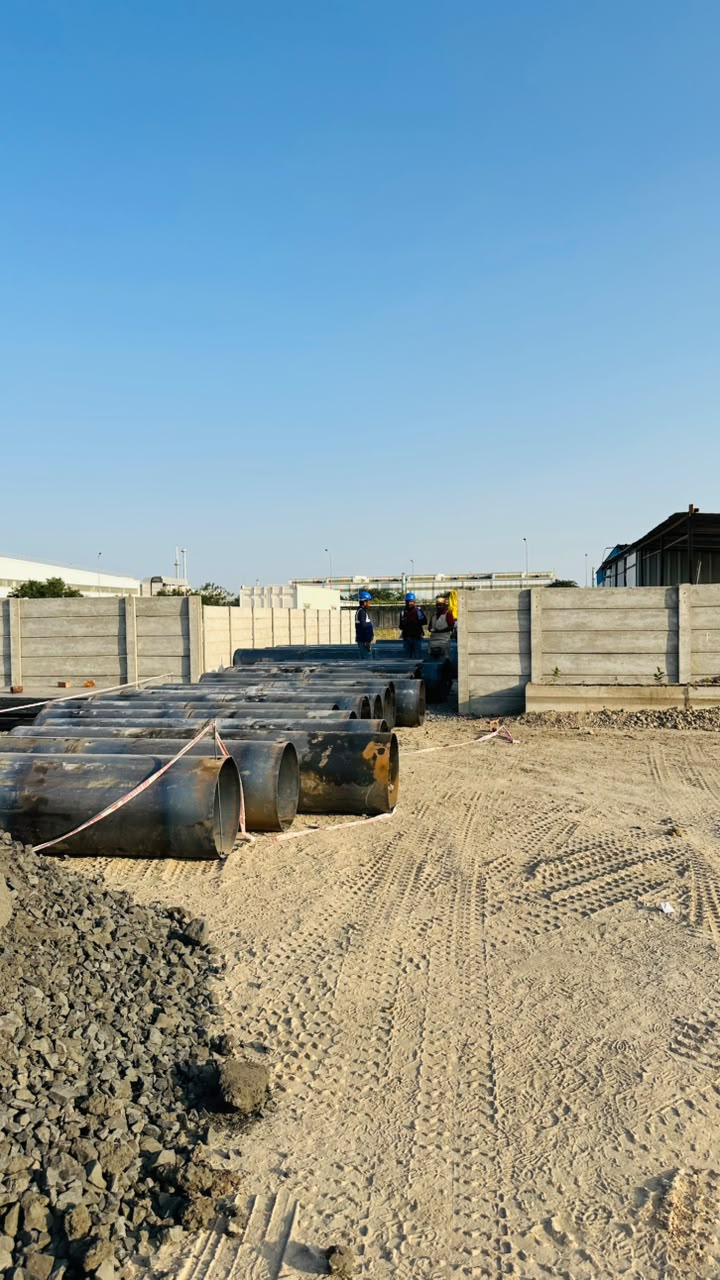
- Extraction of temporary casing during or after concreting
- Recording of concrete consumption and pile parameters
- Pile head chipping up to cut-off level
- Verification of pile depth, diameter, and concrete quality
- Completion of testing, documentation, and quality assurance
- Ready for pile cap and foundation construction
Hydraulic Rotary Piling Contractor Gujarat – Technical Guide to Tooling, Rotation & Penetration Rates
Hydraulic rotary piling is the dominant bored pile method in Gujarat — but the term hides a critical reality: tooling selection and rotation parameters determine pile quality. An auger and a roller bit are both rotary tools, but they are used for completely different soil and rock. Rotation speed, crowd force, and drilling fluid vary by stratum. This page is for engineers, spec-writers, and procurement teams who want the technical side of hydraulic rotary piling in Gujarat — the parameters that determine whether your pile hits design depth cleanly or wastes 40% of the concrete. For a broader overview of hydraulic piling equipment, see our hydraulic piling contractor Gujarat page — this page goes deeper into the rotary technique itself.
Tooling Selection – Auger vs Bucket vs Core Barrel vs Roller Bit
The tooling is the single biggest determinant of rotary piling performance. Continuous flight auger — a helical flight on a central shaft, cutting and conveying soft clay, silt, and loose sand to the surface. Rotation 30-40 RPM, crowd force 100-150 kN, penetration 8-15 m/hr in soft clay. Drilling bucket — a cylindrical bucket with cutting teeth at the bottom and a hinged bottom opening, used for general granular soils, dense sand, and stiff clay with gravel. Rotation 20-30 RPM, crowd 150-250 kN, penetration 3-6 m/hr in dense sand. Core barrel — a cylindrical barrel with hard-metal cutting teeth, used for weathered rock and moderately hard rock. Rotation 15-25 RPM, crowd 200-350 kN, penetration 1-3 m/hr. Rock roller bit — rotating cones with carbide studs, used for very hard rock (Saurashtra basalt, Kutch strata, Mehsana granite). Rotation 20-35 RPM, crowd 300-400 kN, penetration 0.5-1.5 m/hr. Casing oscillator — oscillating casing driven by hydraulic force, used for boulders, loose strata, and high-water-table coastal zones. Our rotary piling tooling selection for Gujarat matches the tool to each stratum in the borehole log — often multiple tools in the same pile.
Rotation Speed & Crowd Force – The Two Parameters That Matter Most
Rotation speed (RPM) and crowd force (kN) are the two parameters that determine penetration, tool wear, and pile quality. Every tool-soil combination has an optimal range, and operating outside that range causes problems. In soft clay with auger, rotation of 30-40 RPM with low crowd (100-150 kN) gives maximum penetration (8-15 m/hr). Operating at high crowd in soft clay causes the auger to spiral, not drill. In dense sand with bucket, rotation of 20-30 RPM with medium crowd (150-250 kN) is optimal. Too high RPM causes the bucket to skip and damage teeth. In hard rock with roller bit, rotation of 20-35 RPM with very high crowd (300-400 kN) is required. Insufficient crowd stops penetration; excessive crowd damages bit bearings. Our rotary piling operators in Gujarat monitor penetration rate continuously and adjust parameters in real time — this is the difference between a clean pile and a costly mistake.
Kelly Bar vs Telescopic Mast – Which Drive System for Your Project
Rotary rigs use one of two drive systems. Kelly bar — the older system, uses a multi-section telescoping square or hexagonal bar attached to the rotary head. High torque (up to 300+ kNm), but requires manual handling between passes and limits drilling depth per pass (typically 12-20 meters). Telescopic mast — the modern system used on our SANY SR-series fleet, integrates the rotary head on a telescoping mast. Faster tool changing, better depth control, and reaches 40-60+ meters in a single pass. For hydraulic rotary piling projects in Gujarat where pile depths exceed 30 meters — which is most high-rise and infrastructure work in Ahmedabad, Surat, and Gandhinagar — telescopic mast rigs are the default. For shallower residential projects, Kelly bar rigs remain cost-effective.
Drilling Fluid – Bentonite vs Polymer Selection
Drilling fluid performs four functions: cools the tool, lifts cuttings (hole cleaning), stabilizes the borehole wall, and prevents groundwater ingress. Two fluid types dominate Gujarat rotary piling. Bentonite — natural clay-based fluid, forms a filter cake on the borehole wall, low cost, widely available. Preferred for most Gujarat projects (South Gujarat alluvium, Saurashtra basalt, Kutch hard strata). Requires settling ponds for recycling and disposal. Polymer — synthetic fluid, better cutting suspension in sand, easier disposal (chemical breakdown breaks it down after use), higher cost. Preferred for coastal zones (Vapi, Dahej) with environmental sensitivity, and for deep Surat high-rise piles where bentonite disposal is problematic. Our rotary piling drilling fluid selection in Gujarat is calibrated to the soil, water table, and site conditions — not a one-size-fits-all decision.
Penetration Rates by Soil Type – For Project Scheduling
Penetration rate data is essential for project scheduling and rig selection. Our hydraulic rotary piling penetration rates across Gujarat soils: Soft clay (South Gujarat upper alluvium, black cotton) — 8-15 m/hr. Loose sand (coastal alluvial) — 6-10 m/hr. Dense sand (South Gujarat deep alluvium) — 3-6 m/hr. Stiff clay — 2-5 m/hr. Weathered rock (Mehsana granite, Bangalore-type laterite) — 1-3 m/hr. Moderately hard rock (Saurashtra basalt upper zone) — 0.5-1.5 m/hr. Very hard rock (Kutch deep strata, Mehsana granite core) — 0.2-0.8 m/hr. Using these rates, a 20-meter pile through mixed clay and rock takes 3-5 hours; a 40-meter pile through dense alluvium takes 8-12 hours; a 50-meter pile with rock socketing takes 15-25 hours. Rig and crew selection depends on these estimates.
Verticality Control – ±15 mm Tolerance in Gujarat High-Rises
Verticality matters more than most site engineers realize. Our rotary piling verticality control achieves 1:75 to 1:100 tolerance (15-20 mm deviation per 1.5 meter depth) using: rig leveling before drilling with digital inclinometer verification; hydraulic mast leveling (automatic on SANY rigs); continuous penetration monitoring to detect deflection; downhole inclinometer checks after drilling on every pile; and re-drilling or structural engineer coordination if tolerance is exceeded. For Ahmedabad, Surat, and Gandhinagar high-rise projects, tight verticality is essential — pile group capacity drops rapidly if piles deviate from design position. Our verticality-controlled rotary piling in Gujarat is documented on every pile log.
Serving All of Gujarat – From Kutch to Vapi
Our hydraulic rotary piling rigs serve the entire state — including Ahmedabad, Surat, Vadodara, Rajkot, Gandhinagar, Bharuch, Ankleshwar, Vapi, Dahej, Sanand, Dholera, Mundra, Kutch, Mehsana, Morbi, Bhavnagar, Jamnagar, Anand, and Nadiad. Every project is tooling-matched to the local geotechnical conditions, and rotation parameters are optimized for the specific soil profile. Whether your project is an Ahmedabad high-rise, a Surat commercial tower, a Vadodara refinery auxiliary, or a Rajkot basalt rock socket, our hydraulic rotary piling team in Gujarat is ready.
Contact Our Hydraulic Rotary Piling Team Today
Ready to discuss hydraulic rotary piling in Gujarat for your project? Call our team at +91 93745 45415 or email jalmala.pile@gmail.com. Share the pile diameter, design depth, and soil strata from your geotechnical report — our engineering team responds within 2 business days with tooling selection, rotation parameters, penetration rate estimates, and rig mobilization plan. Main office is at Dholka Road, near Nariampura Village, Narimanpura, Sarkhej, Ahmedabad, Gujarat 382210. For a complete overview of our hydraulic rotary piling rig fleet and technical services in Gujarat, explore this page and see why spec-writers and project engineers across Gujarat choose Jalmala Boring Works for rotary piling that is technically grounded.