
Pile Foundation
Bored Cast-in-Situ Piling Specialists
Jalmala Boring Works provides Pile Foundation and Deep Foundation Solutions using Bored Cast-in-Situ Piles for residential, commercial, industrial, and infrastructure projects. With advanced Hydraulic Rotary Rigs, we construct piles from 300 mm to 1800 mm diameter and depths of up to 50 metres, delivering reliable load-bearing capacity across soft soil, hard rock, and high groundwater conditions.
Our Piling Methods
We deploy six proven techniques — selected based on soil profile, site constraints, and project requirements.
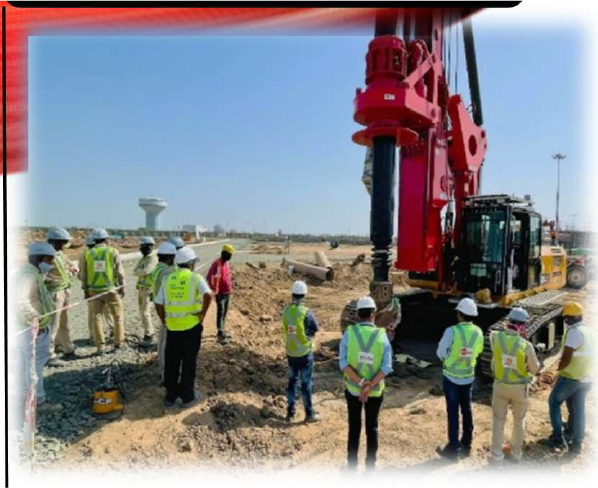
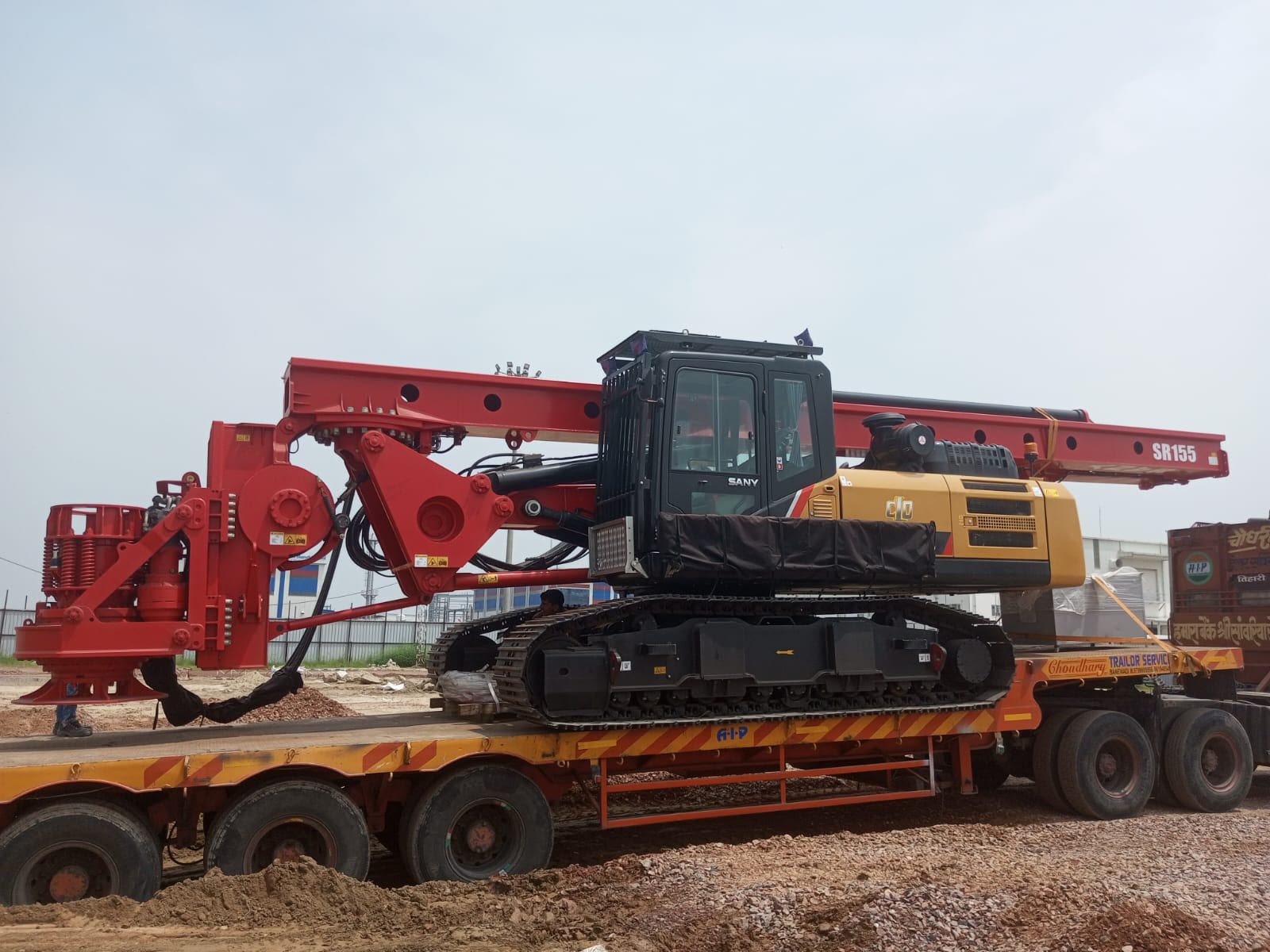
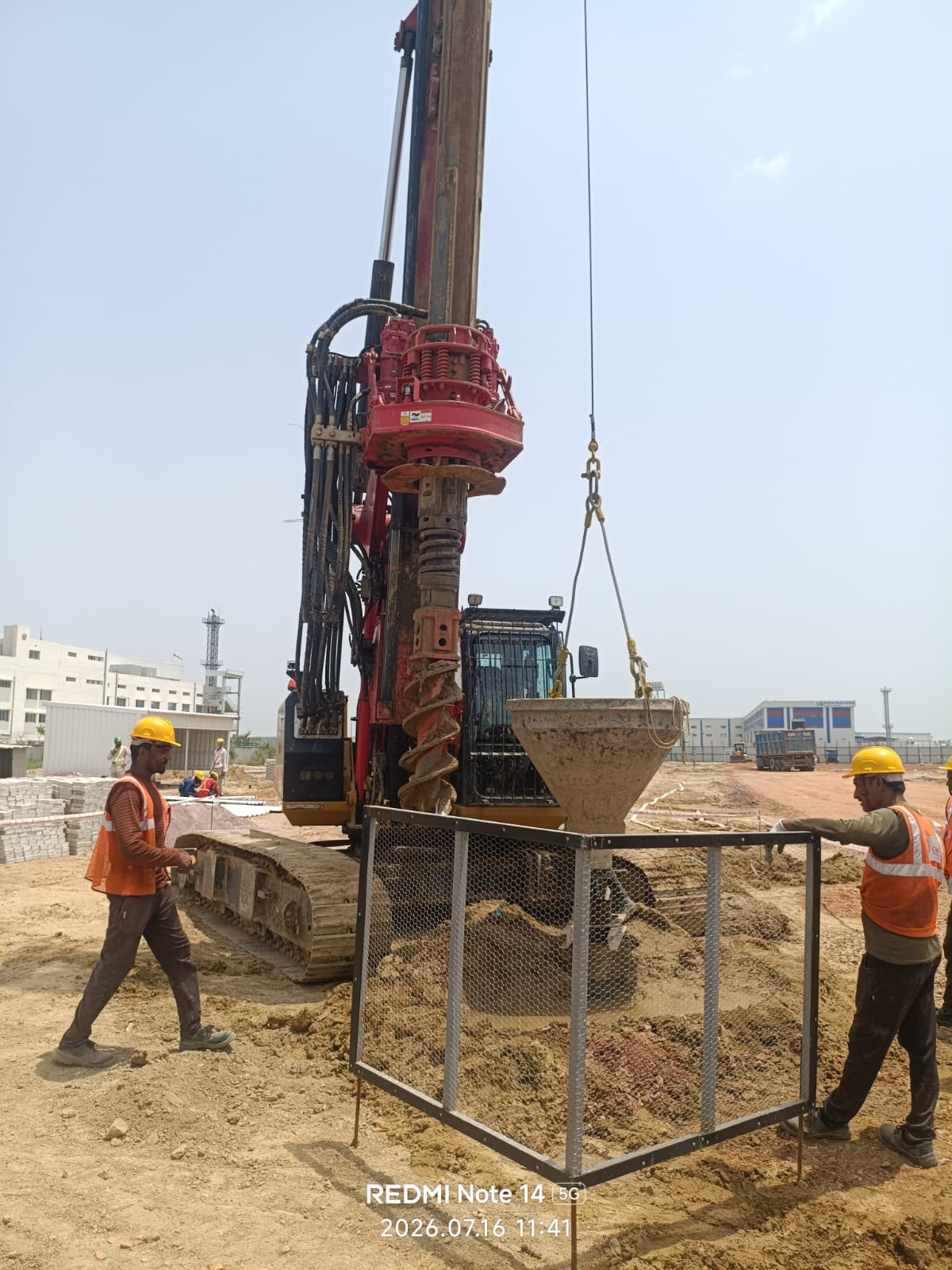
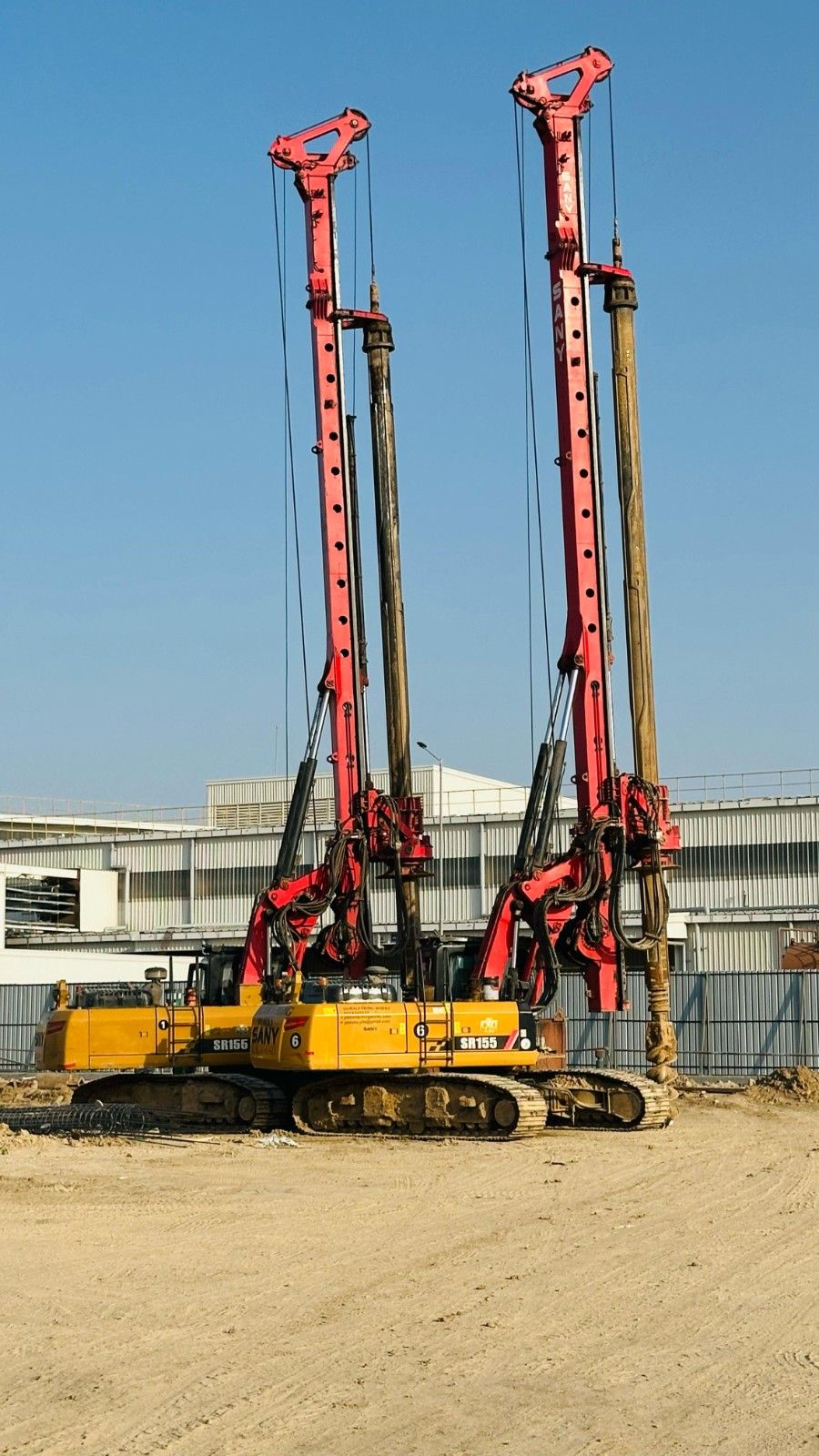
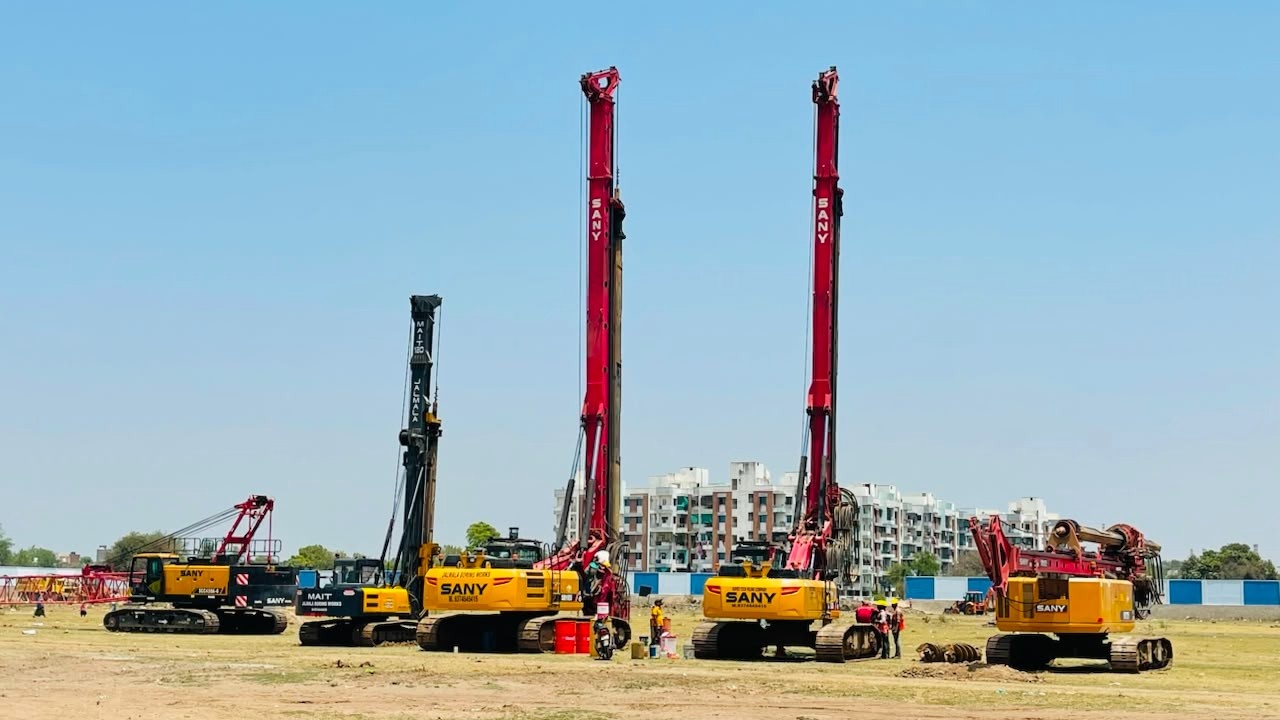
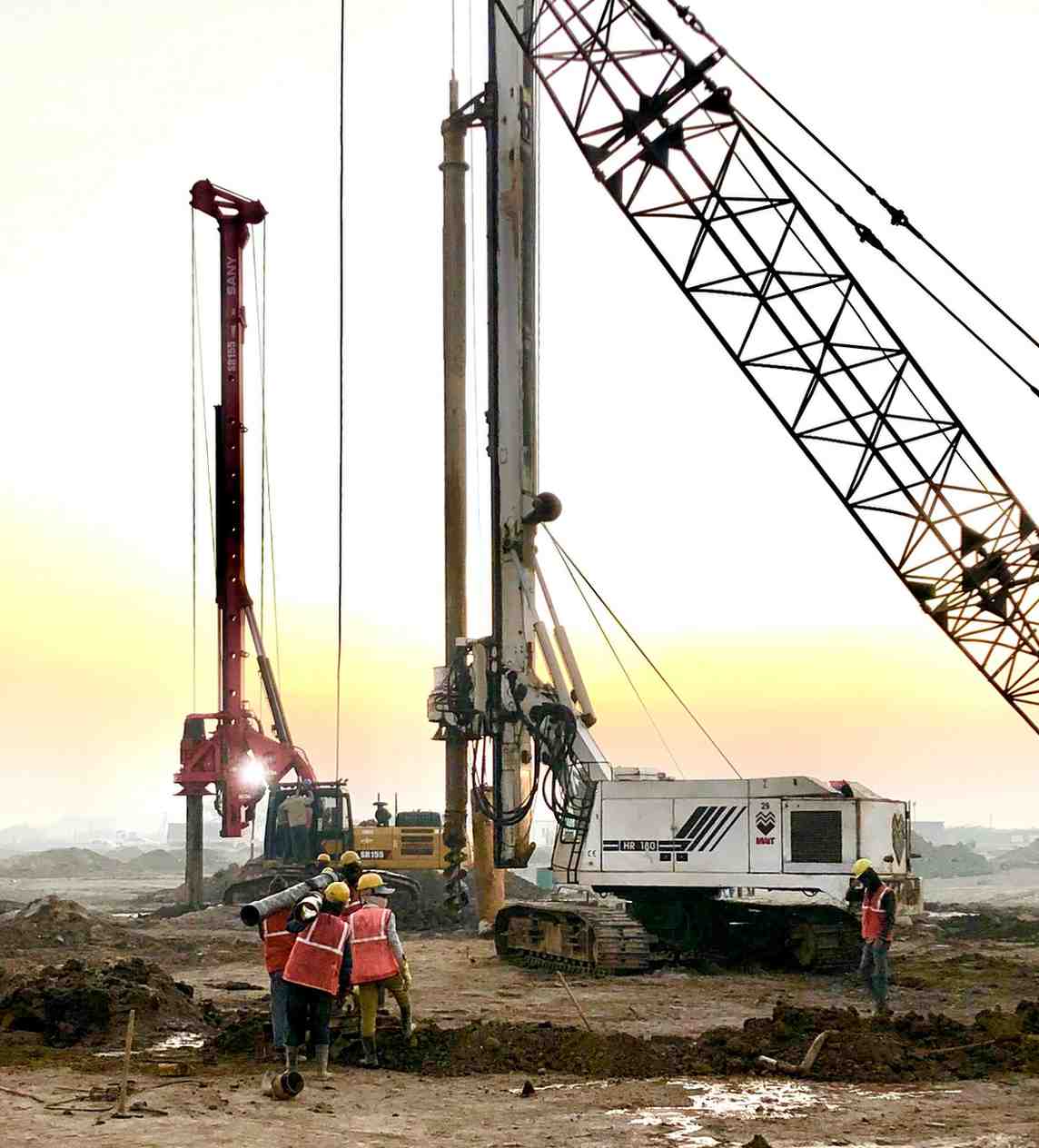
We specialize in bored piling with diameters ranging from 200 mm to 2000 mm and depths up to 50 meters. Using advanced hydraulic rotary rigs, we execute piling operations efficiently across a wide range of soil conditions. Our fleet includes high-performance rotary drilling rigs capable of working in restricted headroom areas while delivering precision, stability, and high productivity.
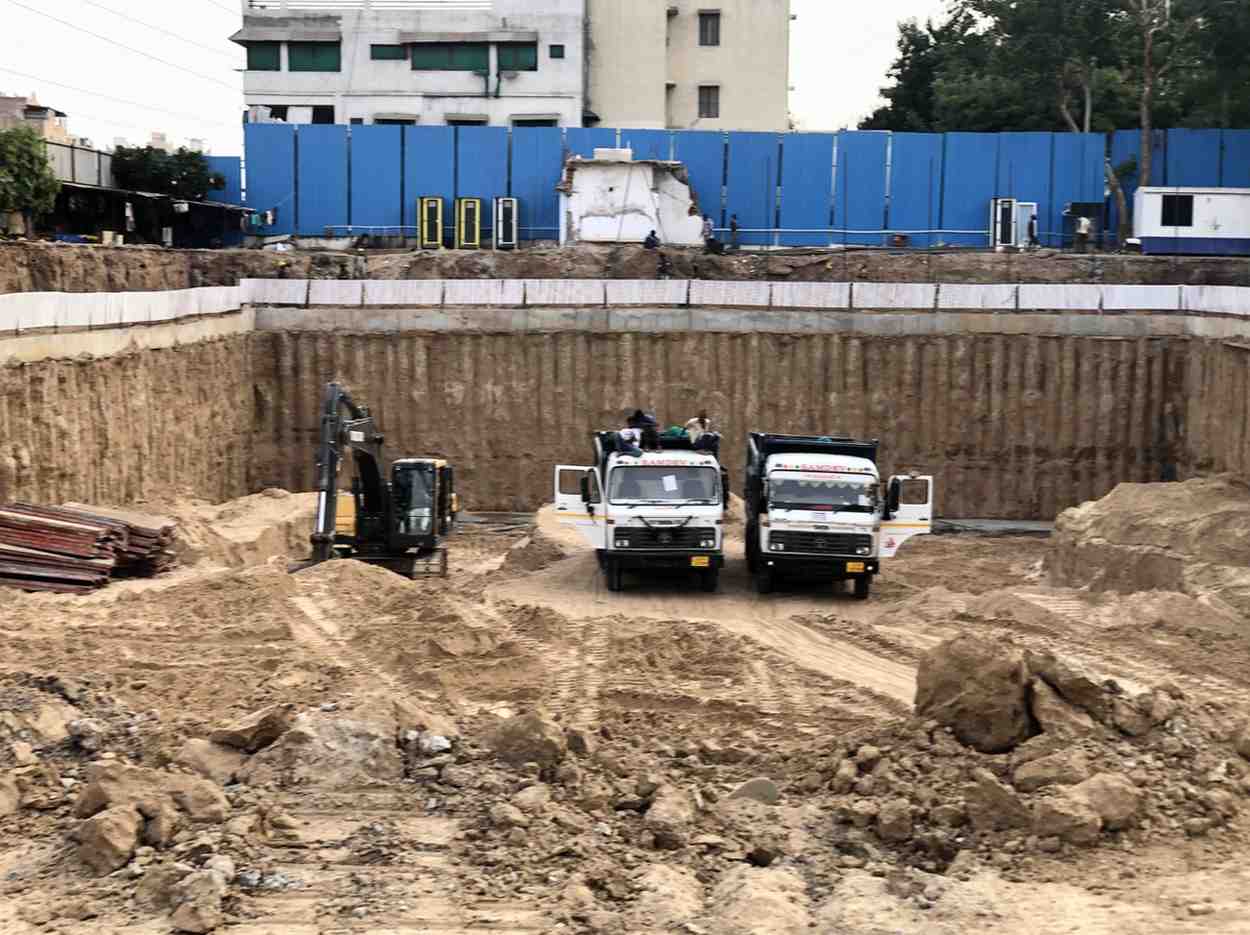
Secant pile walls are constructed by intersecting reinforced concrete piles to form a continuous retaining structure. Primary piles are installed first, followed by reinforced secondary piles after sufficient curing. This technique provides excellent groundwater control and soil retention, making it ideal for deep excavations, basements, and foundation support in challenging ground conditions.
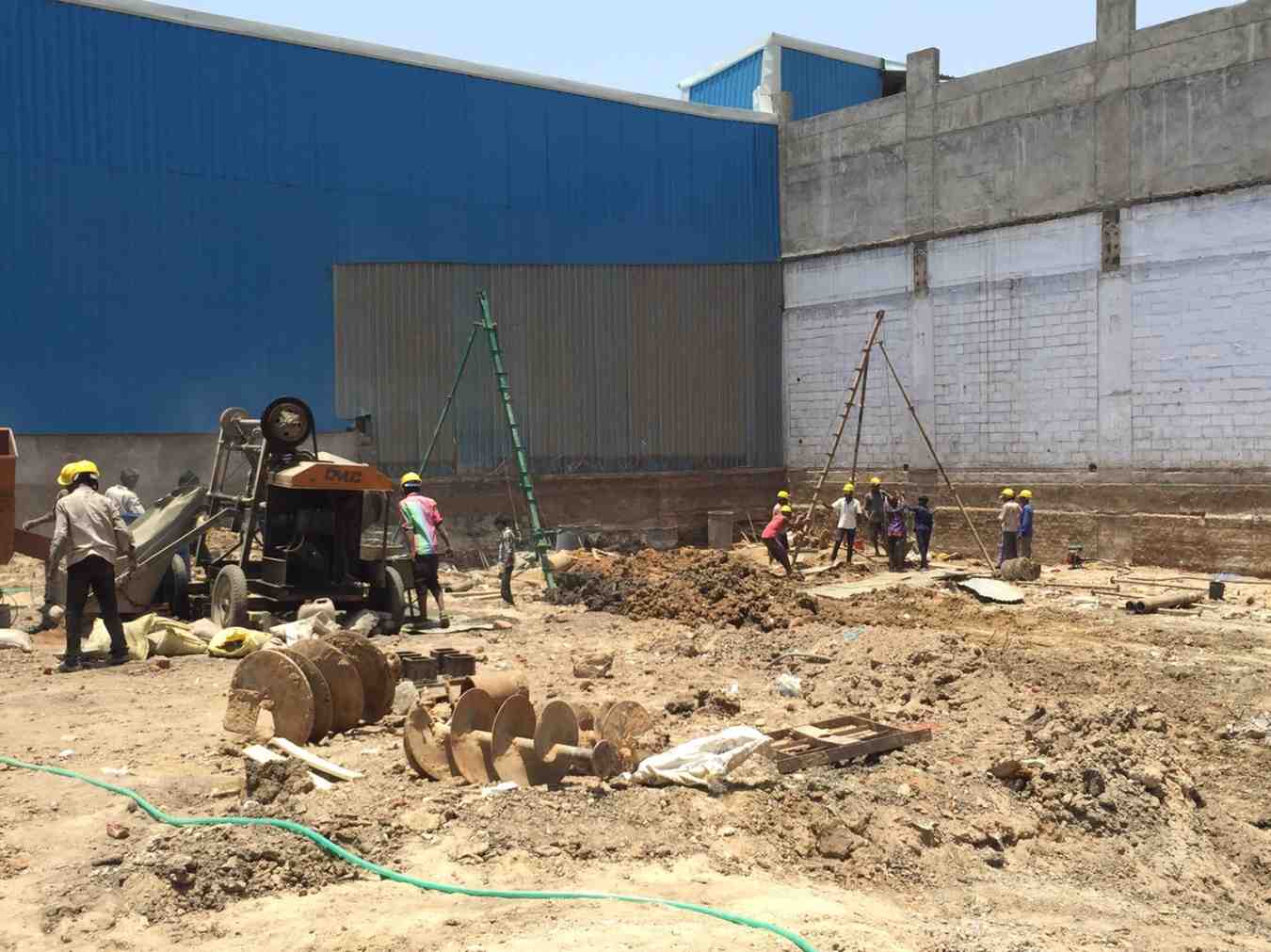
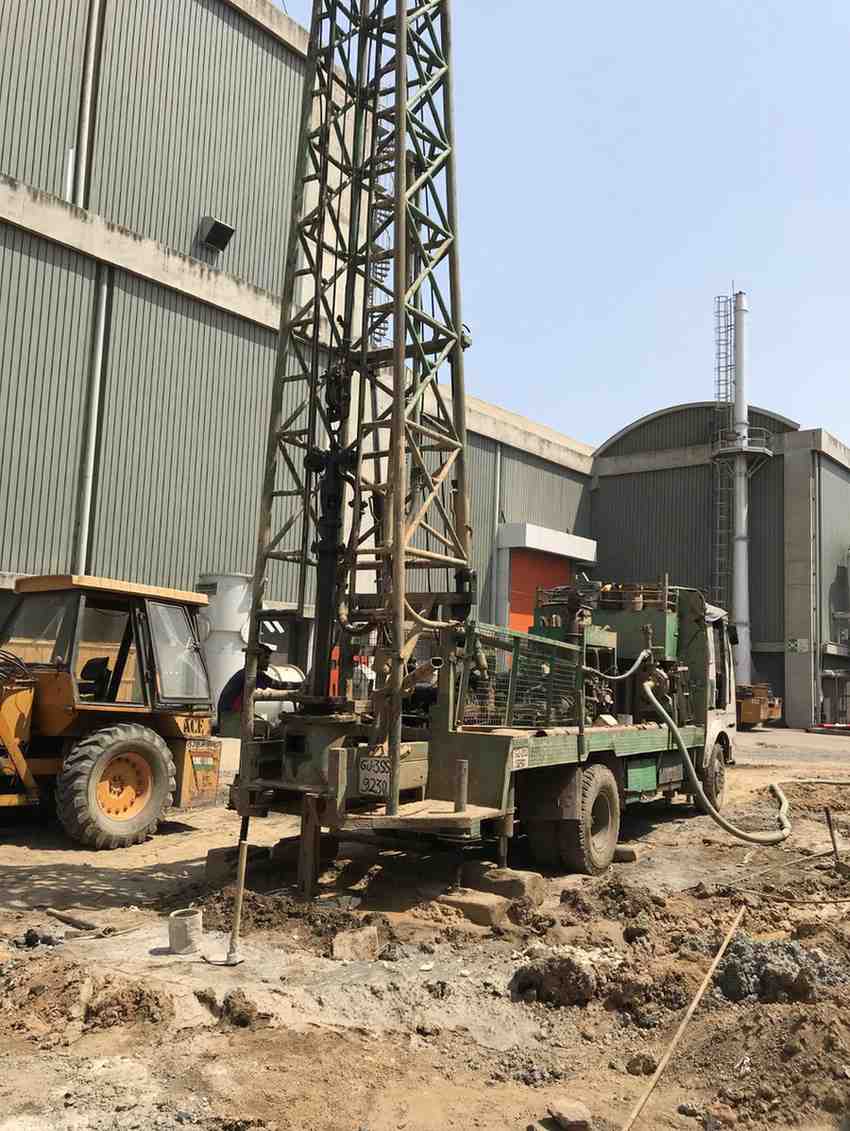
The Manual Auger Method is a reliable piling technique suitable for locations with restricted access or where low noise and vibration are essential. A tripod and manual winch system are used to drill boreholes using a helical auger. This method is commonly employed for pile diameters ranging from 250 mm to 1000 mm and offers an economical solution for smaller foundation projects.
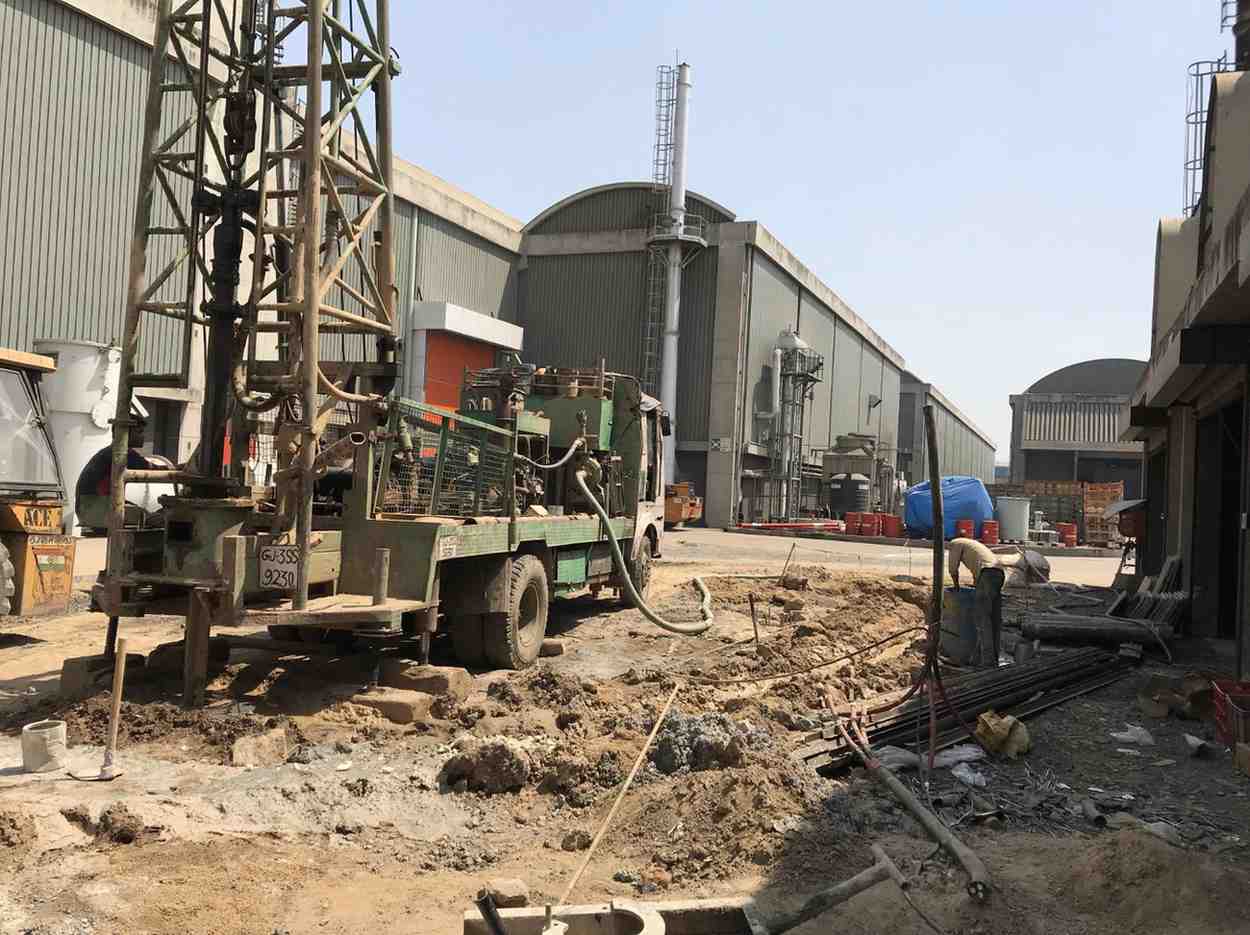
Our Truck Mounted Rotary (TMR) rigs utilize continuous bentonite slurry circulation to stabilize boreholes during drilling. Auger drilling is performed to the required depth while bentonite slurry supports the excavation and carries excavated soil back to a recycling tank. This method ensures bore stability, efficient spoil removal, and high productivity, particularly in loose or soft soil strata.
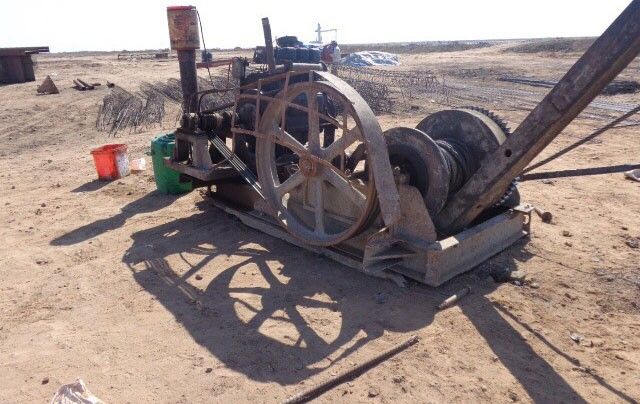
The DMC Pile Method employs Mendola-type rigs combined with bentonite drilling fluid for safe and efficient pile construction. Surface soil is loosened using a bailer before drilling continues with a percussion chisel. Bentonite slurry stabilizes the bore while transporting excavated material to settling pits. Once the desired depth is achieved, the drilling tools are removed and the final depth is verified before reinforcement and concreting.
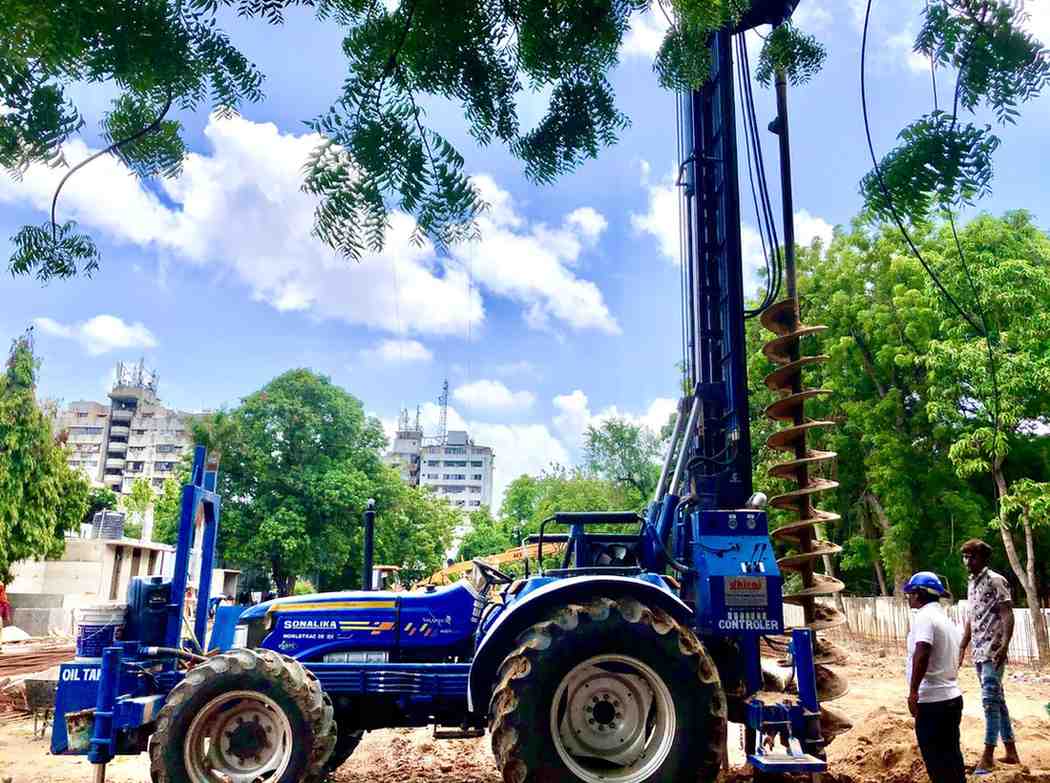
This method utilizes tractor-mounted rotary drilling rigs for fast and economical pile boring. Auger drilling is carried out to the required depth, with DMC rods added progressively to achieve deeper penetration through varying soil strata. It is particularly suitable for medium-depth foundation works and offers drilling capacities of up to 16 meters with excellent operational efficiency.
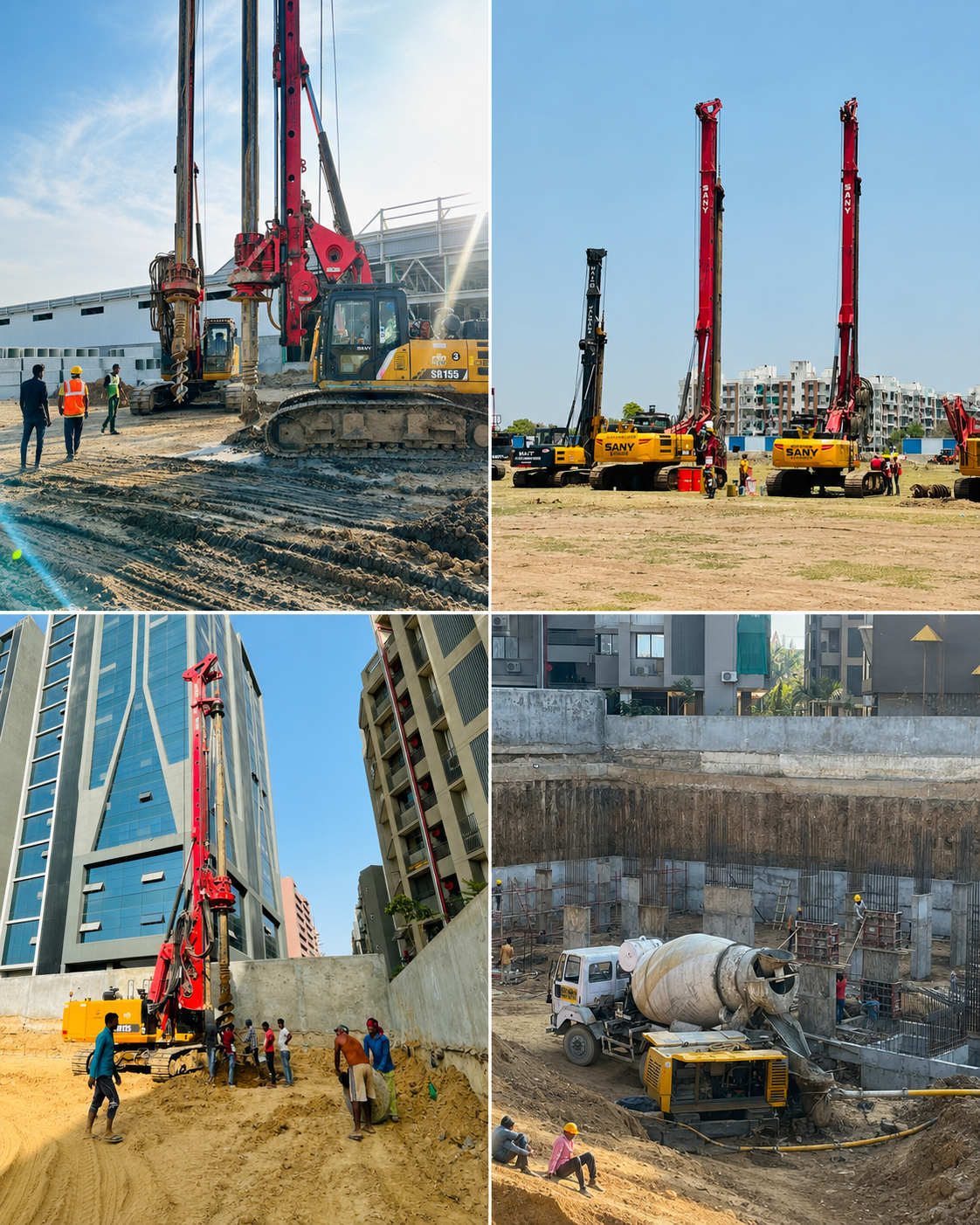
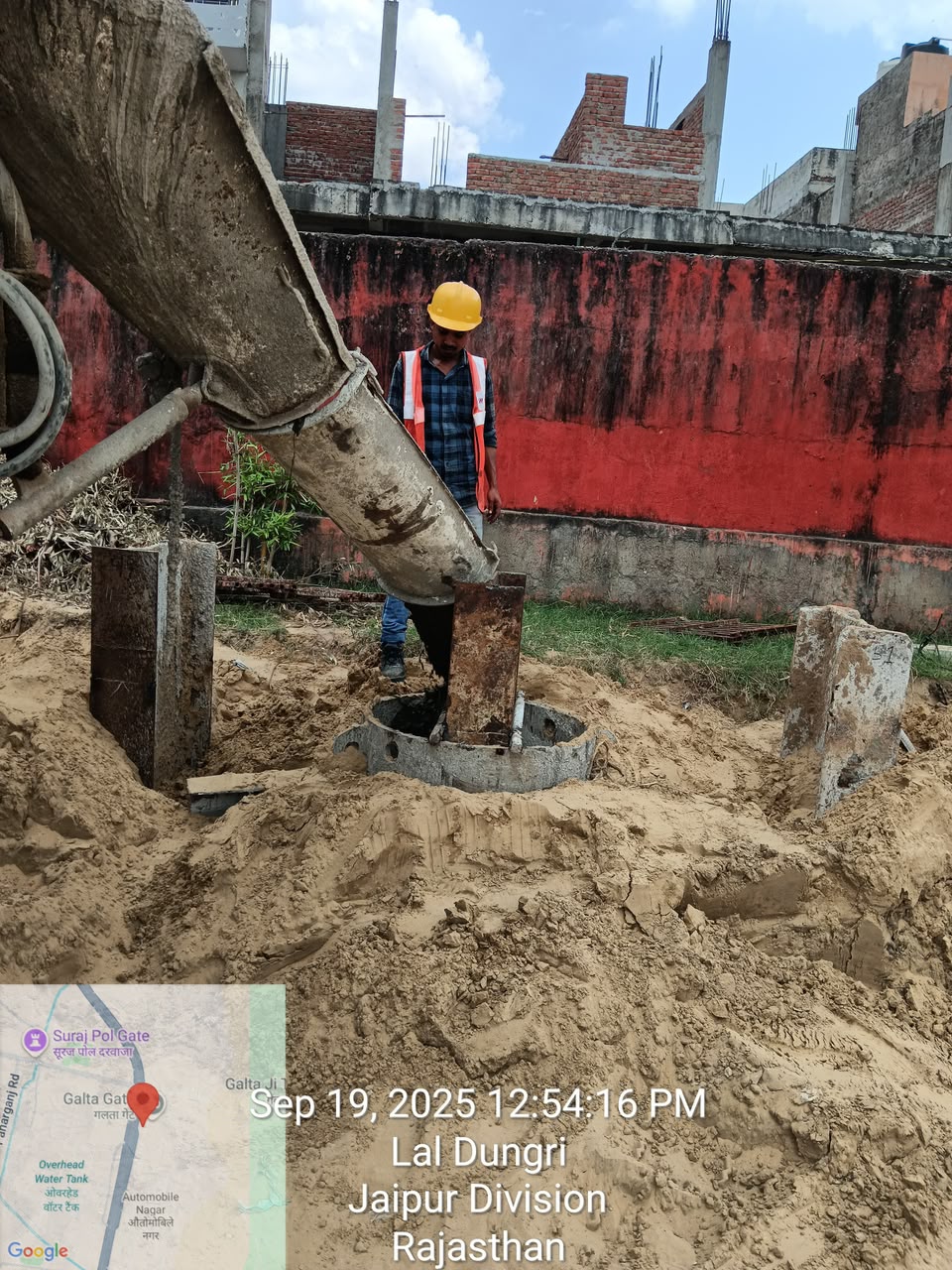
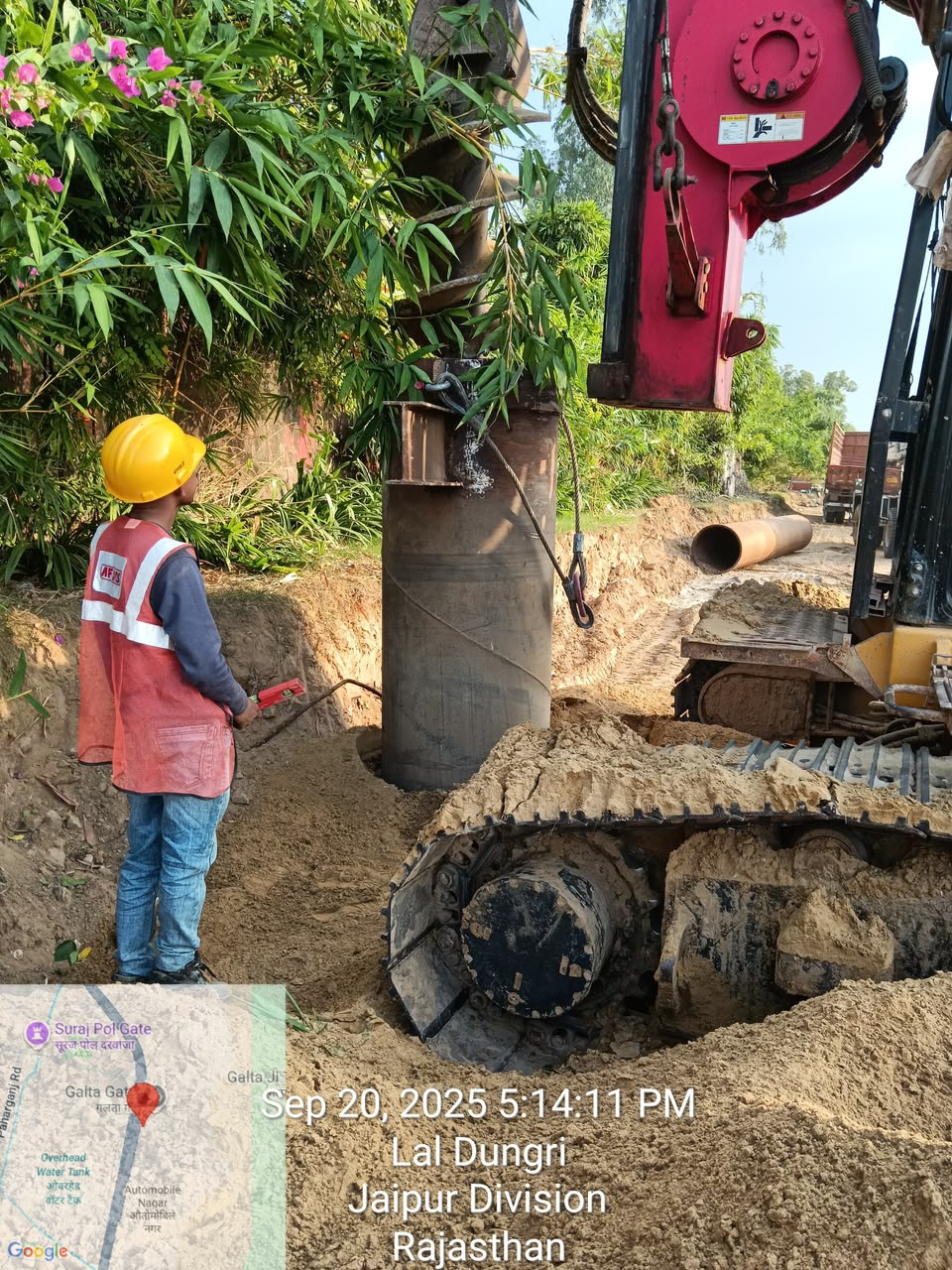
Our Work in Action
Click any image or video to view it in full screen.
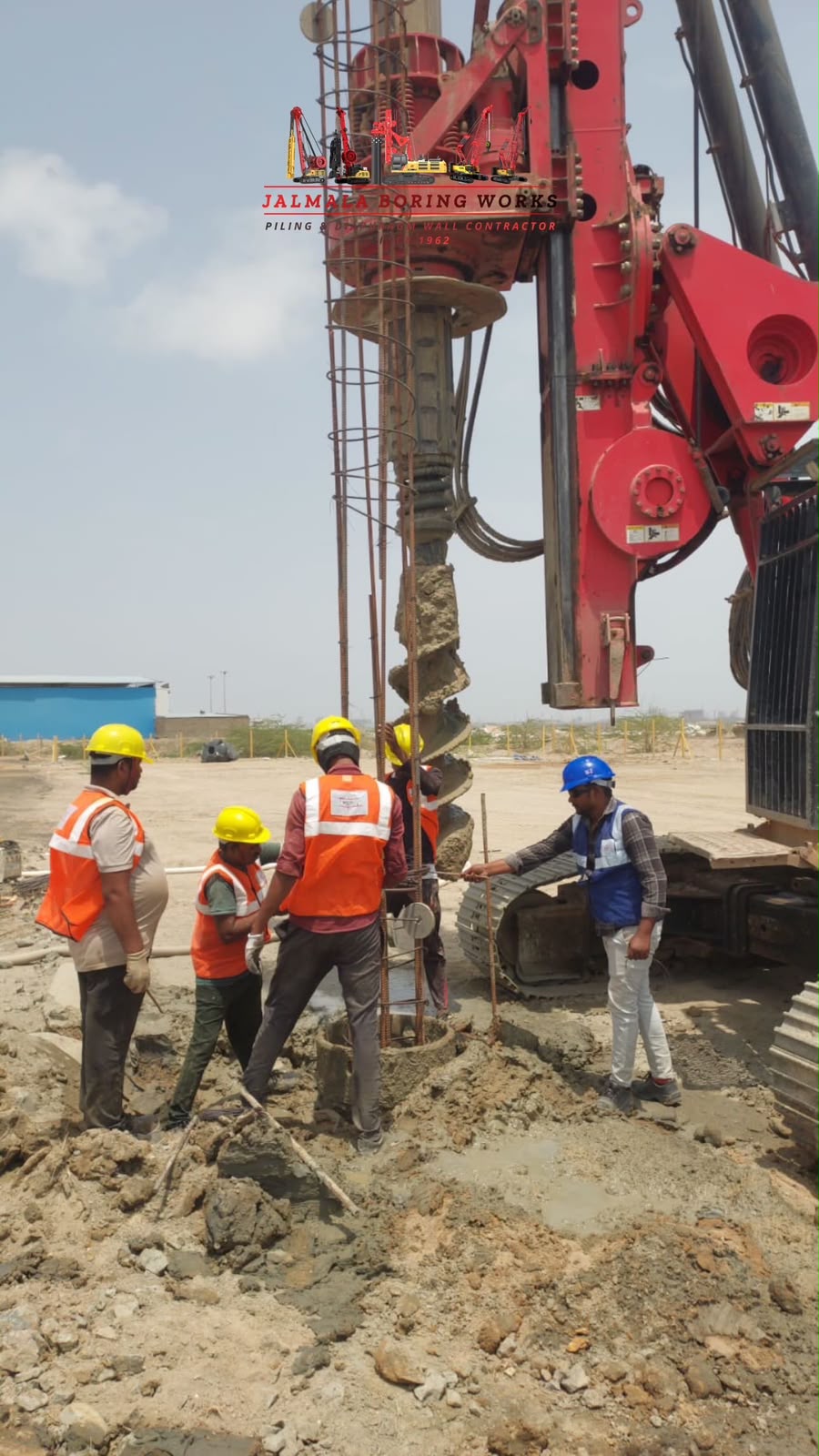
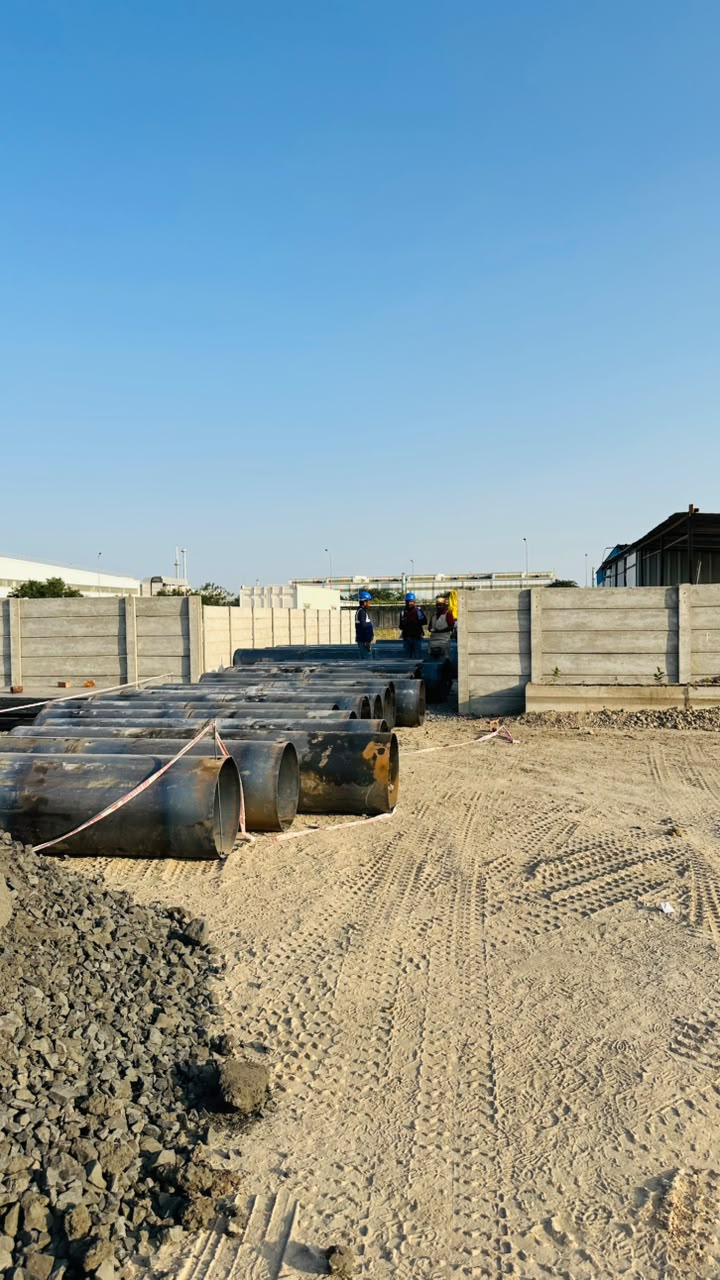
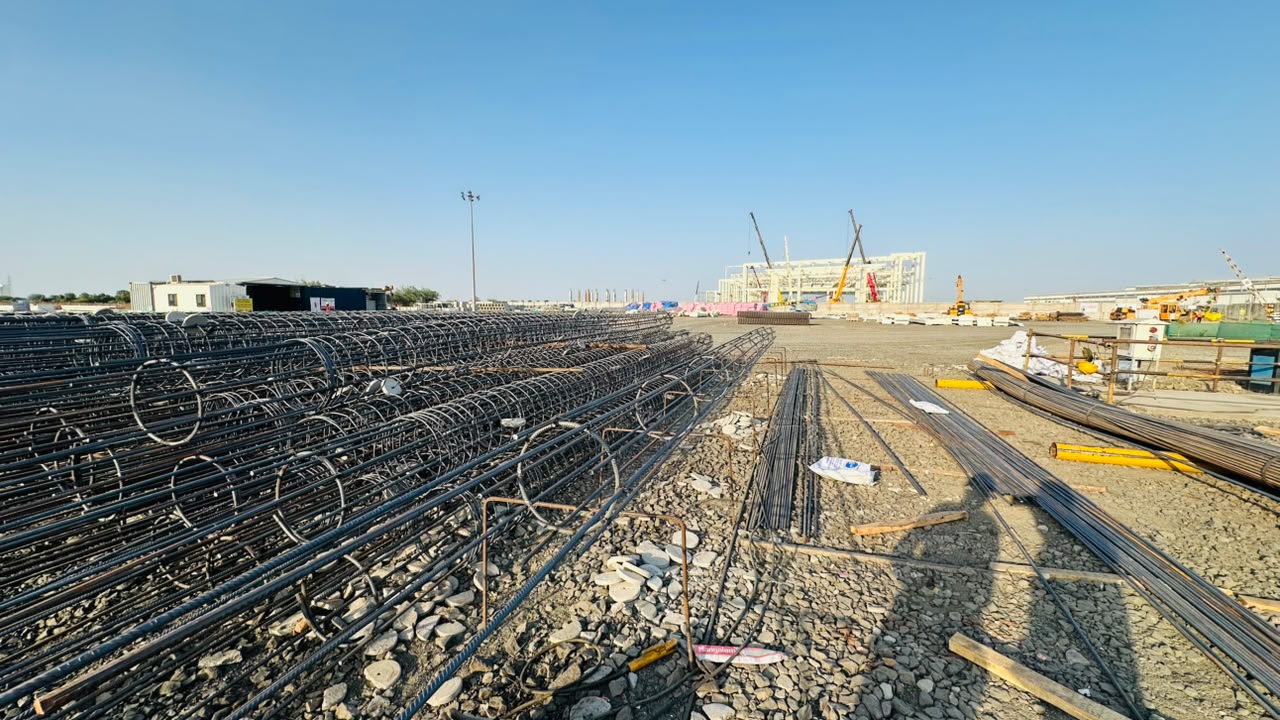
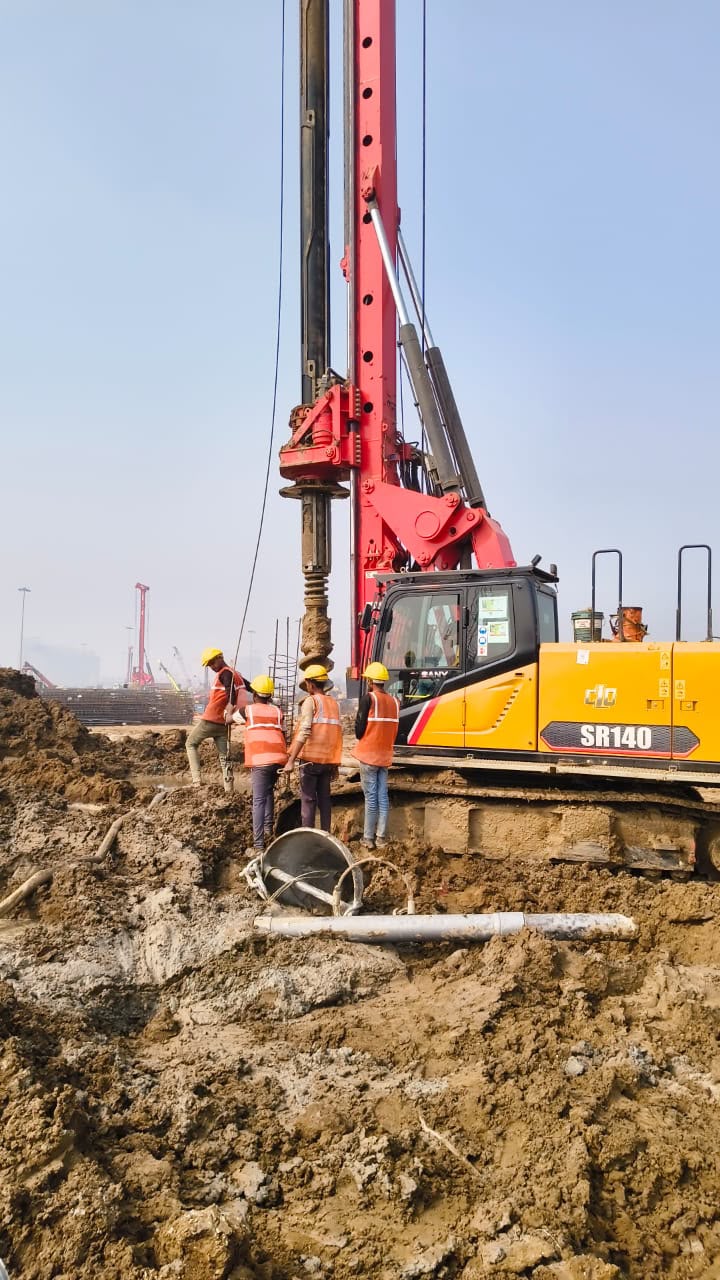
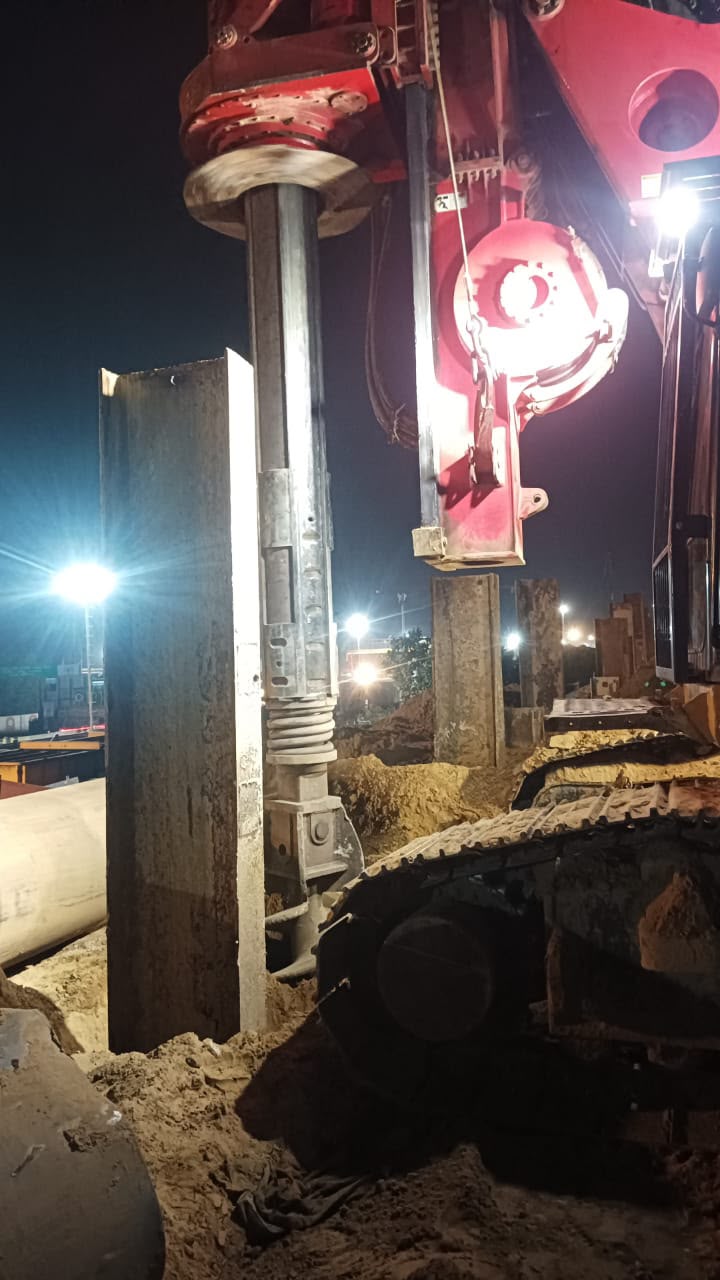
Recent Projects
Pile FoundationConstruction Process
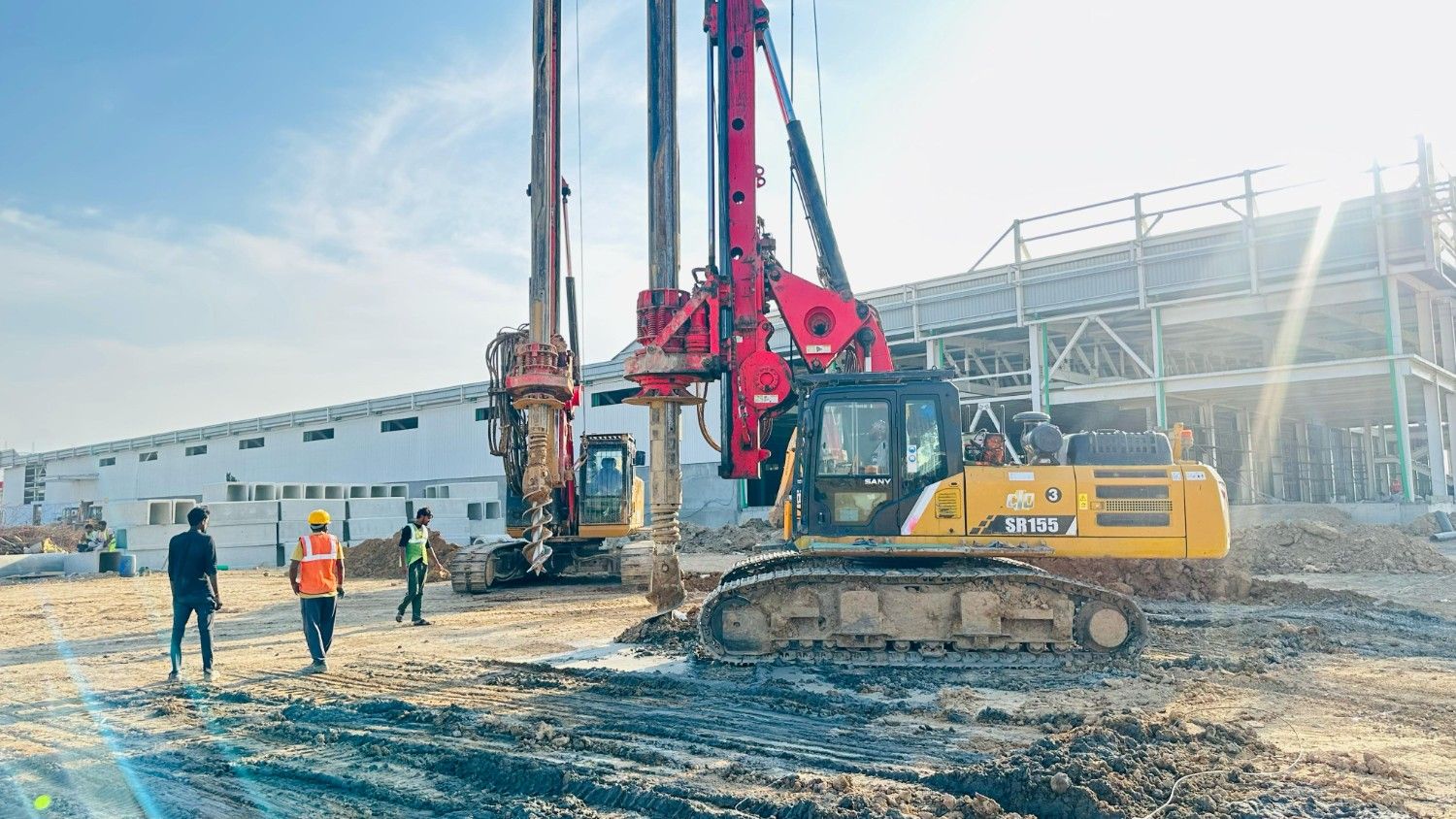
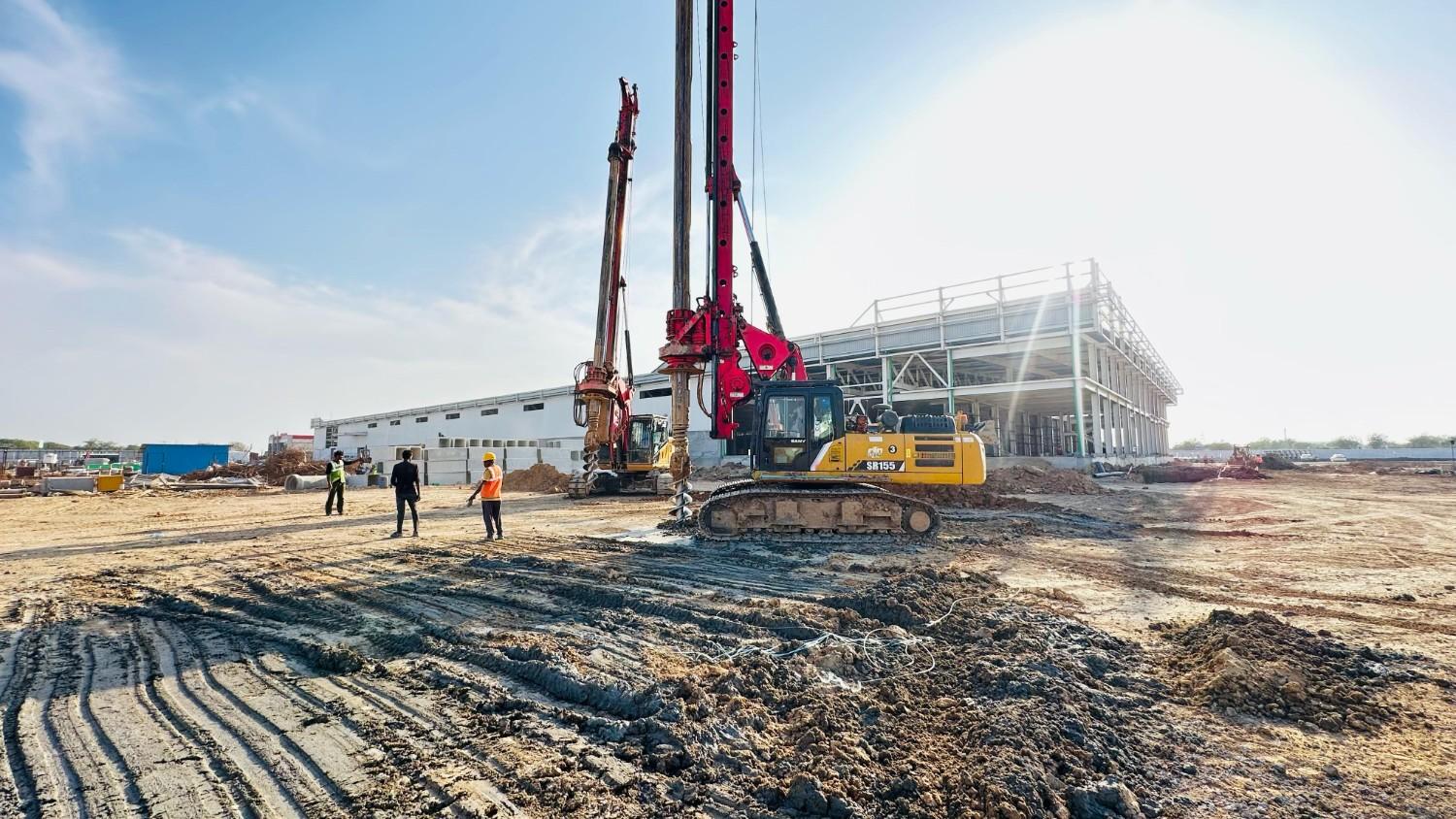
Survey, Setting Out & Guide Casing Installation
Detailed survey, marking of pile locations, and installation of temporary guide casing.
- Detailed survey and marking of pile locations
- Verification of pile coordinates and levels
- Positioning of Hydraulic Rotary Piling Rig
- Installation of temporary guide casing
- Ensures accurate pile alignment and protects bore opening
Pile Boring & Excavation
Drilling of pile bore using Hydraulic Rotary Rig to required depth.
- Drilling of pile bore using Hydraulic Rotary Rig
- Excavation carried out to the required depth and founding strata
- Suitable drilling tools used for soil, rock, or hard strata
- Continuous monitoring of depth, verticality, and pile diameter
- Removal and disposal of excavated soil from site
Slurry Support & Borehole Cleaning
Preparation and circulation of Bentonite/Polymer Slurry and borehole cleaning.
- Preparation and circulation of Bentonite/Polymer Slurry
- Stabilization of borehole walls during drilling
- Recycling of slurry through slurry plant
- Cleaning of borehole bottom to remove loose sediments
- Final inspection of bore depth and cleanliness
Reinforcement Cage Installation
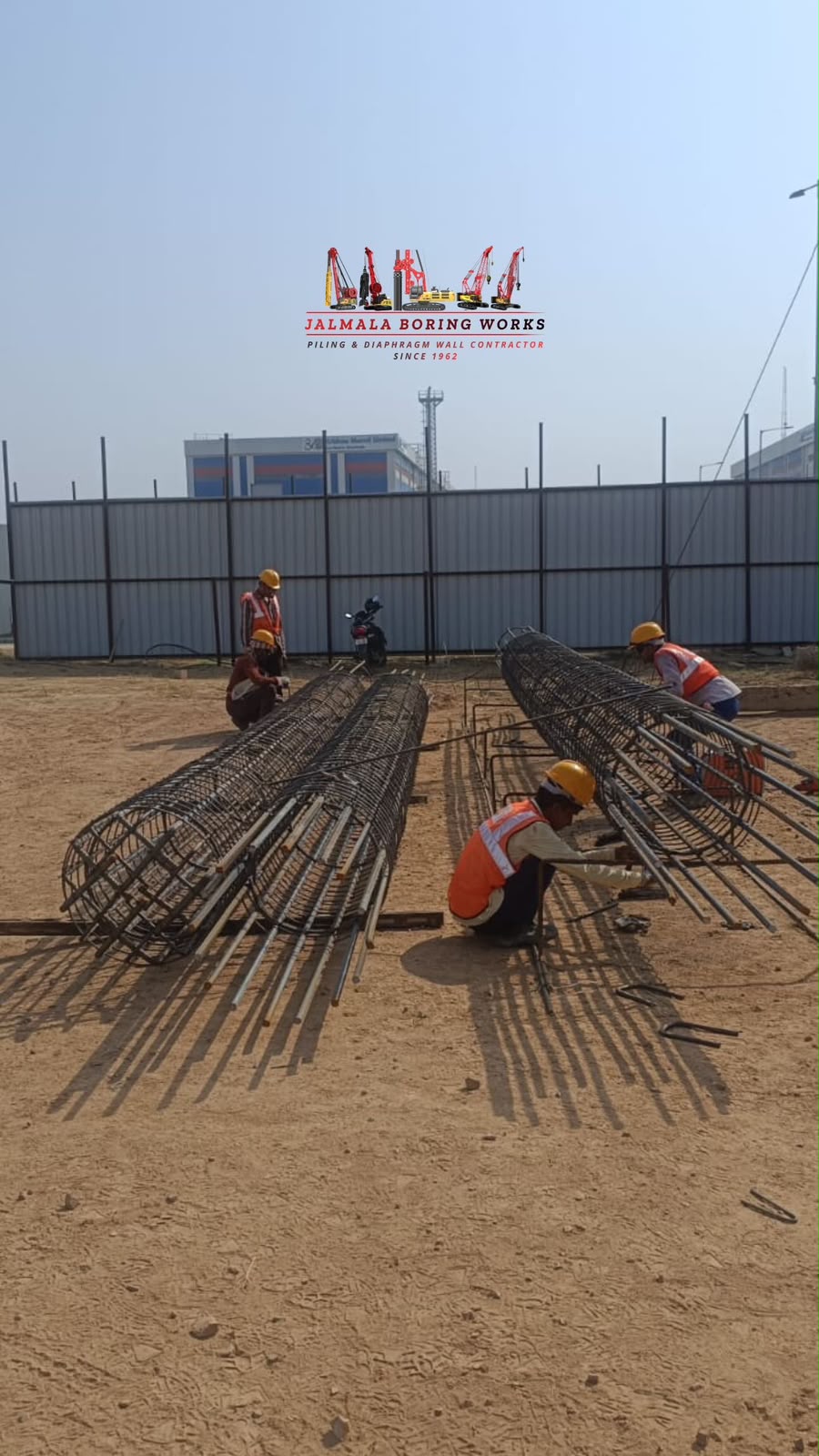
Fabrication and lowering of reinforcement cage into the bore.
- Fabrication of reinforcement cage as per approved drawings
- Installation of spacers, couplers, lifting points, and cover blocks
- Lowering of reinforcement cage into the completed bore
- Accurate positioning and level adjustment
- Quality inspection before concrete placement
Tremie Concreting
Continuous concrete placement using tremie pipes.
- Installation of tremie pipes up to borehole bottom
- Continuous placement of concrete from bottom to top
- Prevention of concrete segregation through tremie method
- Displacement and recovery of slurry during concreting
- Completion of pile concreting in one uninterrupted operation
Pile Completion & Quality Control
Final pile completion, head trimming, and quality assurance.
- Extraction of temporary casing during or after concreting
- Recording of concrete consumption and pile parameters
- Pile head chipping up to cut-off level
- Verification of pile depth, diameter, and concrete quality
- Completion of testing, documentation, and quality assurance
- Ready for pile cap and foundation construction
Rock-Socketed Piling Cost & Timeline in Rajkot – Why It's Priced Differently
If you have priced piling in Ahmedabad, Surat, or Vadodara and then called a pile foundation contractor in Rajkot, you have noticed a difference. Per-meter rates in Rajkot are typically 40-100% higher than equivalent diameters in other Gujarat cities. This is not a pricing anomaly — it is the direct economic consequence of Saurashtra basalt at shallow depth. This page explains why rock-socketed piling in Rajkot costs what it does, and how to evaluate quotes intelligently.
Why Chiselling Dominates the Cost Structure
In soil cities, piling cost is driven by boring time — a rig bores through soil at 5-10 meters per hour. In Rajkot, piling cost is driven by chiselling time — a rig chisels through basalt at 1-2 meters per hour (in fresh basalt) or 2-4 meters per hour (in weathered basalt). Every hour of chiselling consumes 3-10 times more rig-time, fuel, labor, and wear than an hour of boring. This is the single biggest cost driver in Rajkot piling. When you compare rock-socketed piling cost in Rajkot to friction piling in other cities, most of the delta is explained by the difference between chiselling-hours and boring-hours.
Rock Strength – The Biggest Variable in Your Cost
Saurashtra basalt ranges from 40 MPa (weathered) to 200+ MPa (fresh hard basalt). At 40 MPa, chiselling is relatively fast (3-4 meters/hour); at 200 MPa, it drops to 1 meter/hour or slower. This 5-10x range explains why two Rajkot projects with the same pile dimensions can cost 40-60% differently. If your geotechnical report shows only "rock encountered at 5 meters" without rock strength values, ask for core drilling with UCS testing in Rajkot — without it, no contractor can give you an accurate chiselling cost estimate. We recommend UCS testing at 2-3 locations per site during geotechnical investigation.
Typical Cost Ranges by Diameter and Depth
Reference rates for rock-socketed piles in Rajkot (site-specific pricing depends on rock strength, socket length, and depth): 500 mm diameter, 10-15 m depth: ₹1,200-₹1,800 per running foot; 600 mm diameter, 12-18 m depth: ₹1,500-₹2,200 per running foot; 750 mm diameter, 15-20 m depth: ₹1,800-₹2,500 per running foot; 1,000 mm diameter, 18-25 m depth: ₹2,200-₹3,200 per running foot. Compare to friction piles in other Gujarat cities at ₹700-₹1,500 per running foot for similar diameters. These are reference rates for rock-socketed piling in Rajkot — actual project pricing requires geotechnical review and site visit.
Timeline Reality – Longer Than Other Gujarat Cities
Rock-socketed pile installation in Rajkot takes 4-10 hours per pile, versus 2-4 hours for friction piles in soil cities. Project timelines: 20-40 pile villa/commercial: 4-6 weeks; 50-100 pile mid-rise: 8-12 weeks; 100-200 pile high-rise: 12-16 weeks; 200+ pile industrial: 16-24 weeks. Add 12-18 days mobilization (rock-socketed rigs require more transport and setup time) and 7-14 days for load test results. When you compare Rajkot piling timelines against other cities, plan for 40-60% longer than a comparable friction-pile project.
Three Design Decisions That Reduce Cost 10-20%
Rock-socketed piling cost in Rajkot can be reduced 10-20% through three design optimizations. First, socket length optimization — every extra meter of socketting costs 2-4x a meter of boring. Load testing (instead of over-conservative design) proves the required socket length, typically saving 15-25% on socket costs. Second, socket diameter optimization — larger diameter means more concrete and longer chiselling time. Where geotechnical conditions allow, more smaller-diameter piles can be more economical than fewer large ones. Third, layout coordination — careful coordination with the structural consultant to minimize conflicts with utility corridors, adjacent structures, and crane foundations reduces rework and delay. On a typical Rajkot high-rise (G+10, 100 piles), these three optimizations can save ₹15-30 lakh on a typical project piling budget.
Payment Structure and Chiselling Billing
Standard payment structure for rock-socketed piling in Rajkot: 20-30% mobilization advance (rock-socketed rigs are more expensive to mobilize); 30-40% during piling based on completed pile measurements per running foot; 20% on completion; 10% retention against defect liability (12-month warranty). Chiselling time is typically billed as "extra over boring" — the base rate is per running foot of pile, with an additional per-hour chiselling rate applied when rock is encountered. Best practice is for the contractor to document every chiselling hour with rig-hour logs signed by the site engineer. We provide this documentation on every project.
Why Rock-Socketed Can Still Be More Economical Overall
Despite the higher per-meter cost, rock-socketed piling in Rajkot often wins on total project cost because piles are shorter (10-18 meters total including 3-8 meters soil + 5-10 meters socket, versus 20-30 meters in soil cities), higher capacity per meter means fewer piles for the same load, less concrete and reinforcement consumed, and no risk of pile refusal during installation. Rajkot's shallow basalt is actually a geological advantage for cost-efficiency — if rock were deeper, Rajkot high-rises would need much longer friction piles that would cost substantially more per total project. The comparison that matters is not "Rajkot rate per meter vs Ahmedabad rate per meter" but "total piling cost for this building in Rajkot vs total piling cost for this building in a soil city of similar height."
How to Get an Accurate Rock-Socketed Piling Estimate
An accurate estimate for Rajkot rock-socketed piling requires three inputs: geotechnical investigation with rock core drilling and UCS testing at 2-3 locations; structural drawings with pile diameter, depth, and load requirements; site-specific assessment of access and utilities. Without all three, quotes are guesses. Jalmala Boring Works provides site-specific rock-socketed piling estimates after reviewing these inputs. Call +91 93745 45415 or email jalmala.pile@gmail.com for a technical review. Main office is at Dholka Road, near Nariampura Village, Narimanpura, Sarkhej, Ahmedabad, Gujarat 382210. For a broader overview of our pile foundation services in Rajkot, see the services page — this page is specifically for cost and timeline analysis of rock-socketed piling in Rajkot.