
Pile Foundation
Bored Cast-in-Situ Piling Specialists
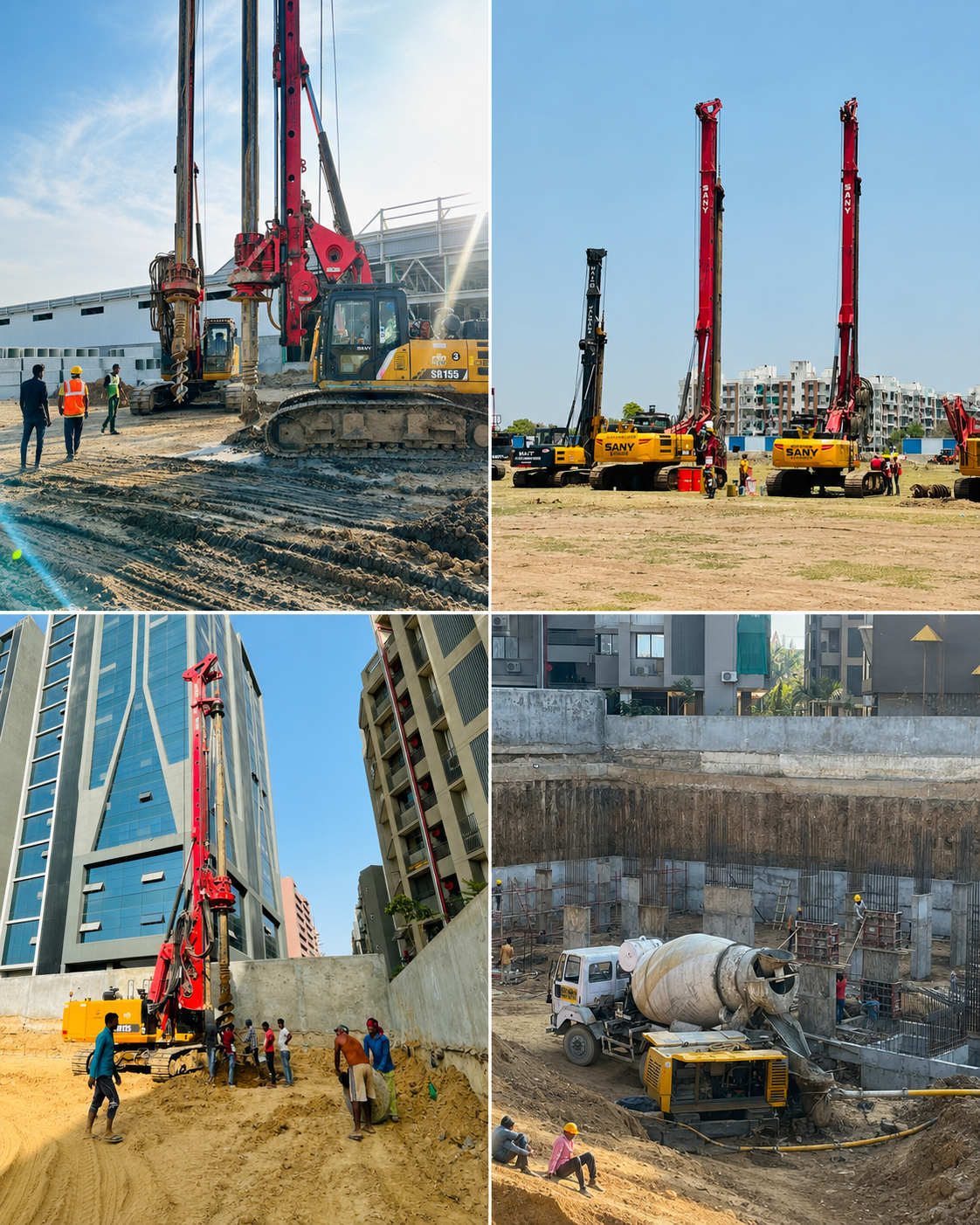
Jalmala Boring Works provides Pile Foundation and Deep Foundation Solutions using Bored Cast-in-Situ Piles for residential, commercial, industrial, and infrastructure projects. With advanced Hydraulic Rotary Rigs, we construct piles from 300 mm to 1800 mm diameter and depths of up to 50 metres, delivering reliable load-bearing capacity across soft soil, hard rock, and high groundwater conditions.
Our Piling Methods
We deploy six proven techniques — selected based on soil profile, site constraints, and project requirements.
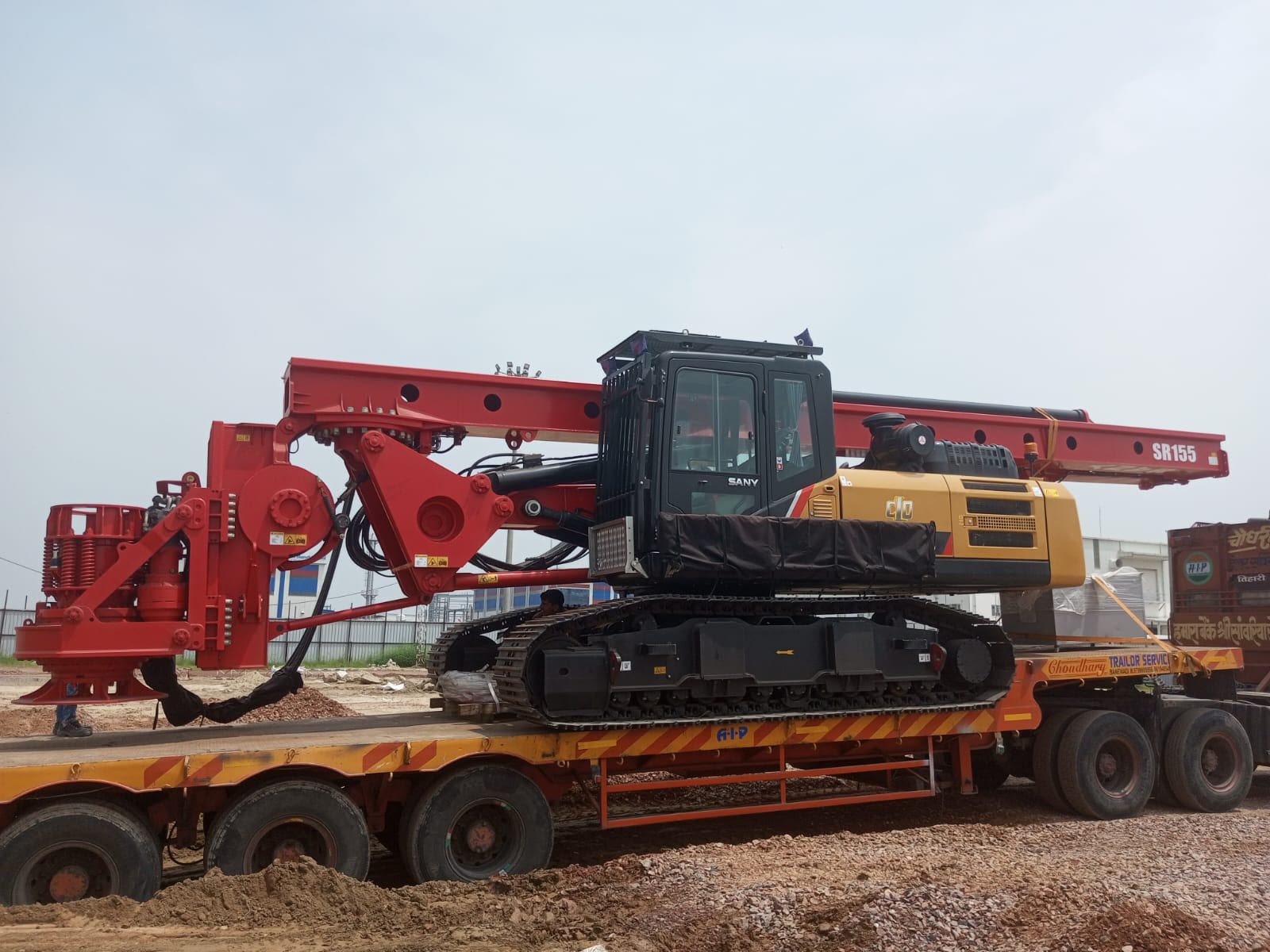
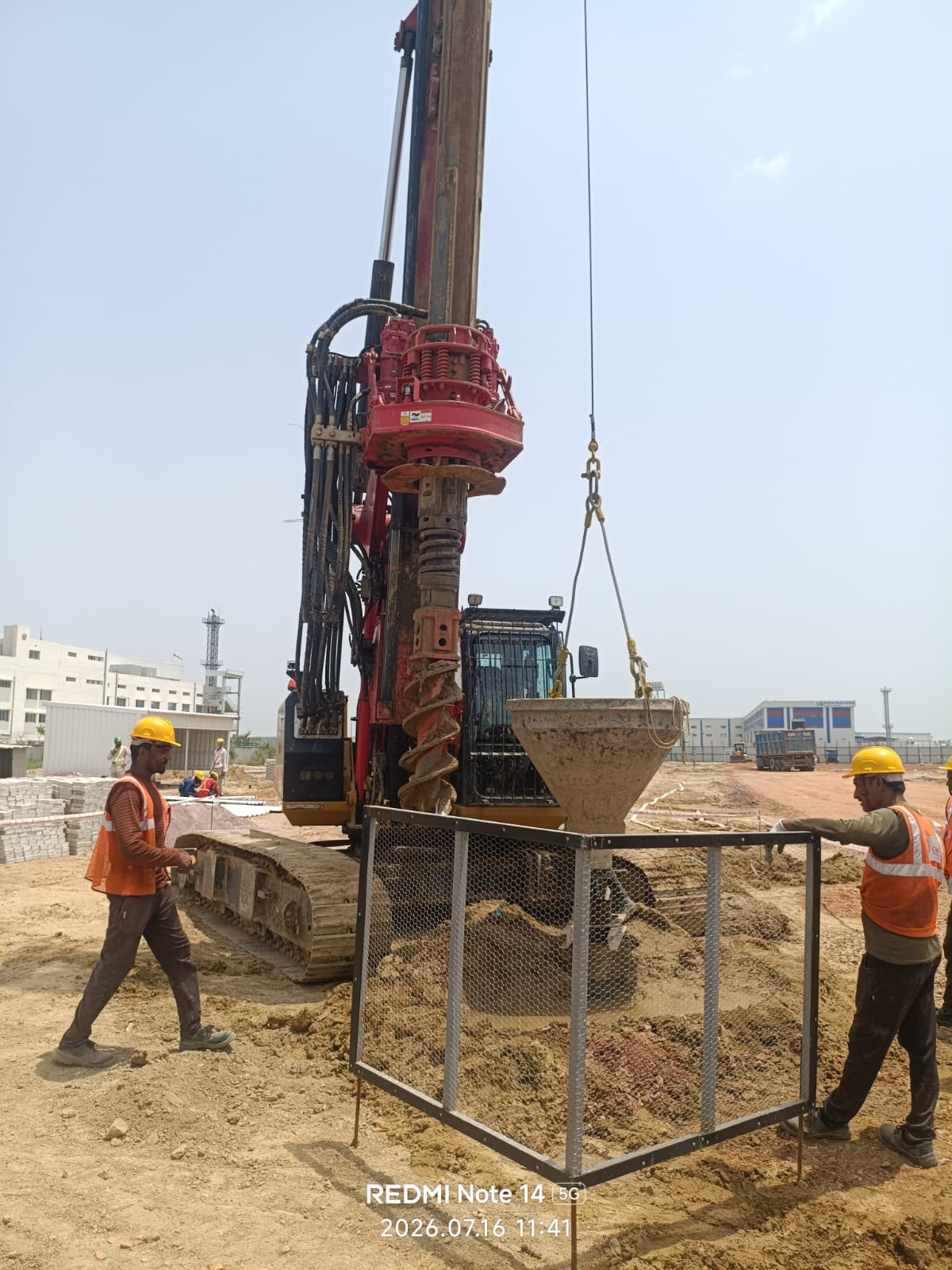
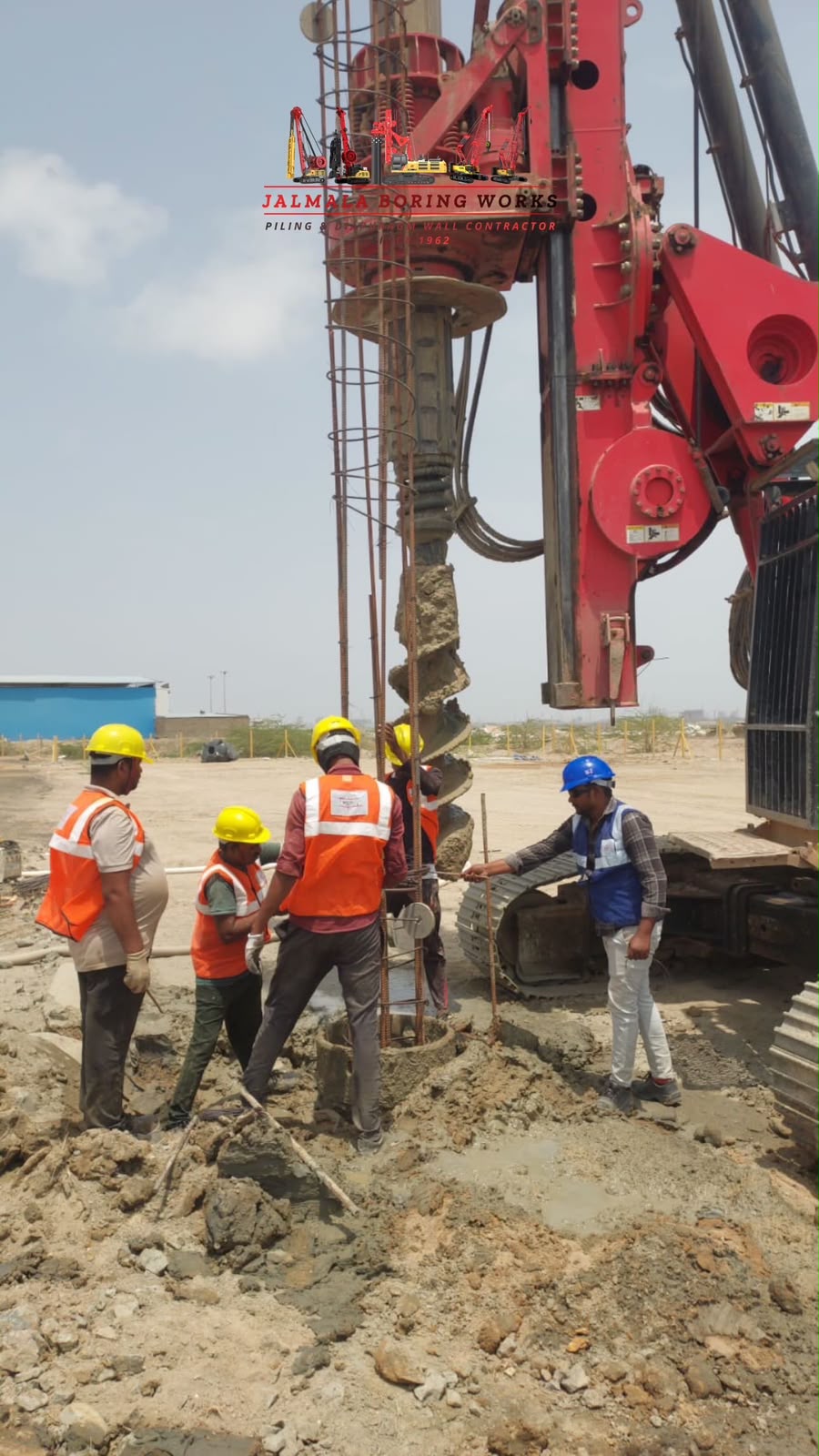
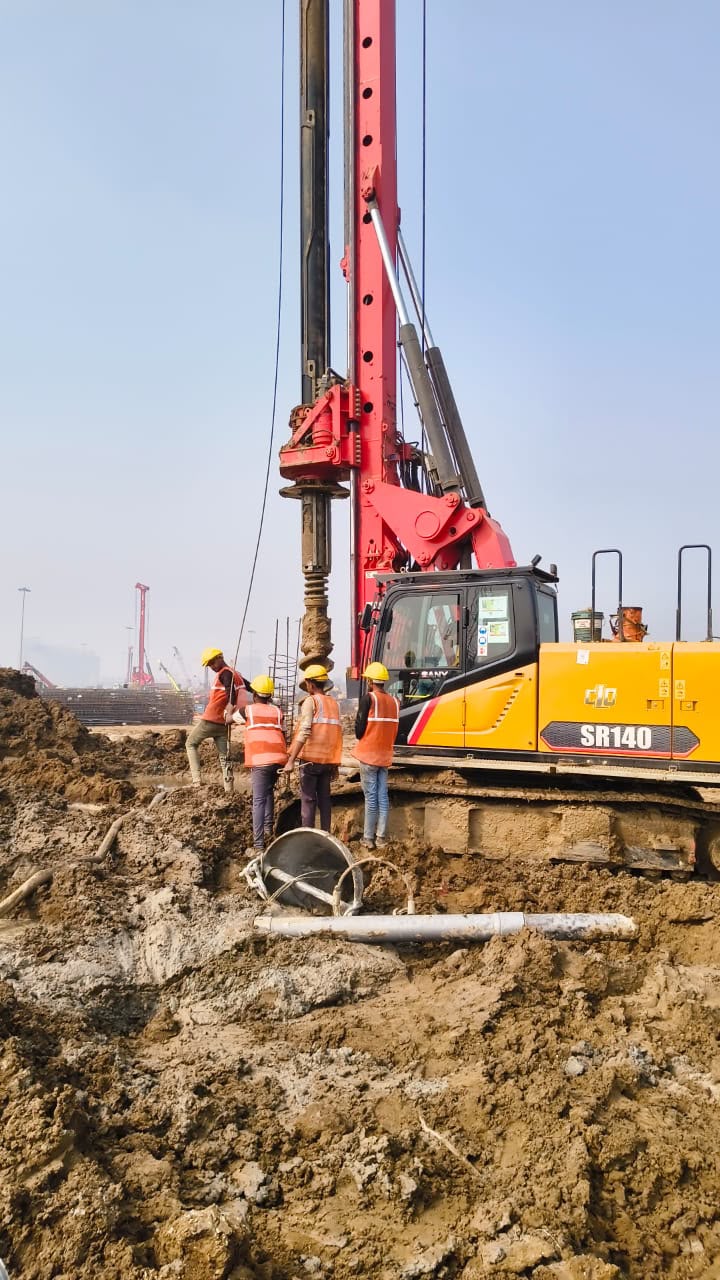
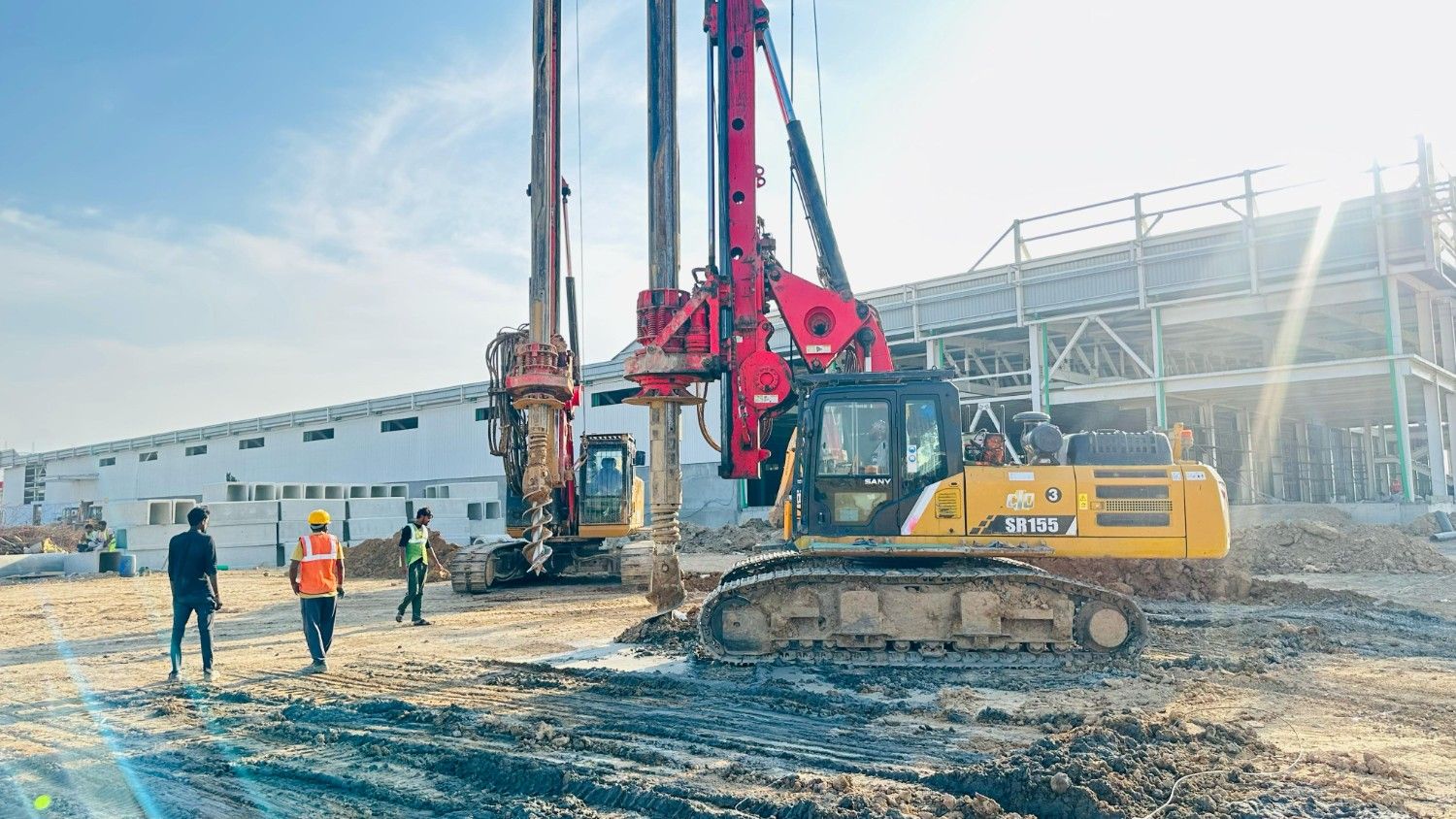
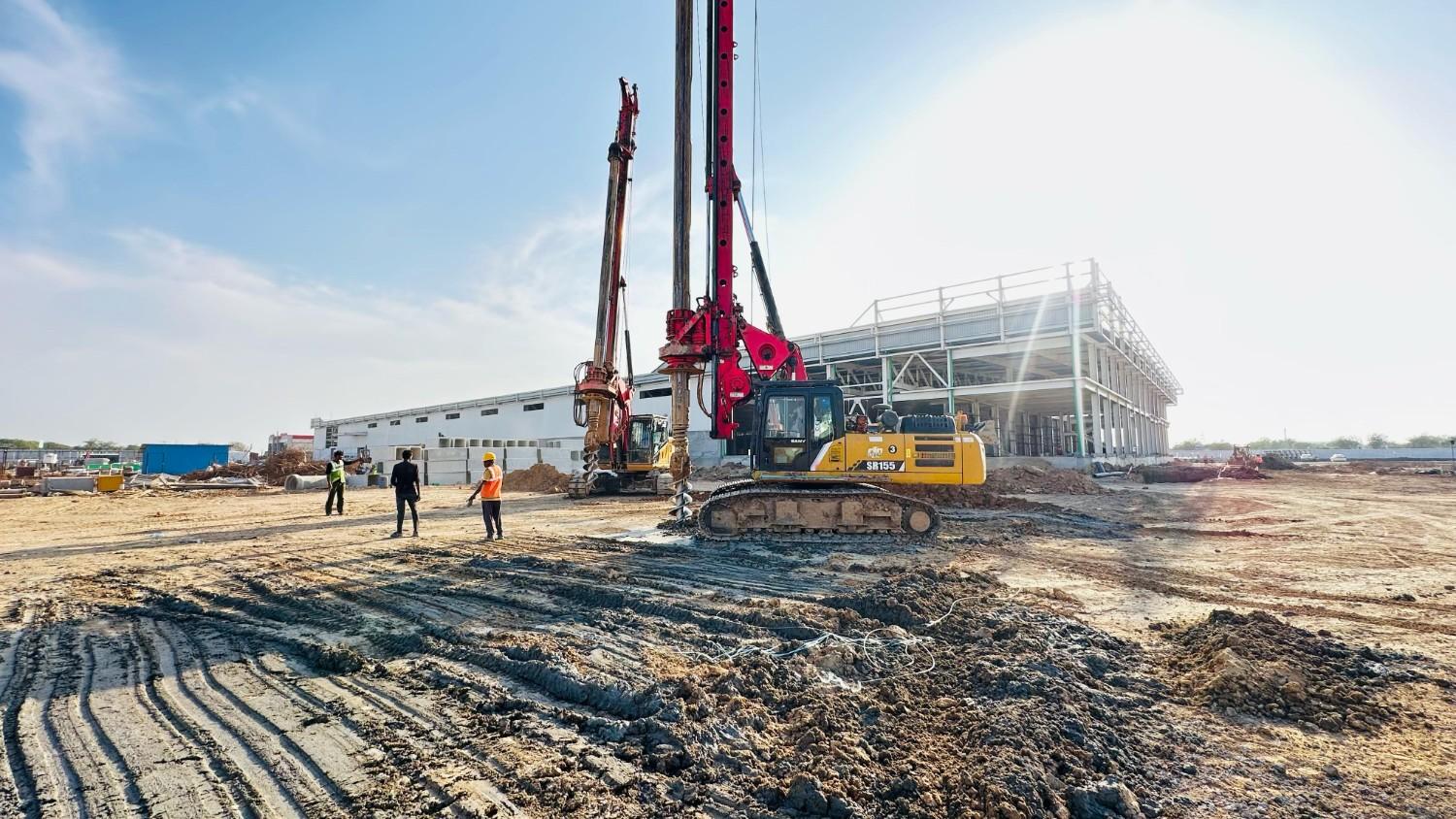
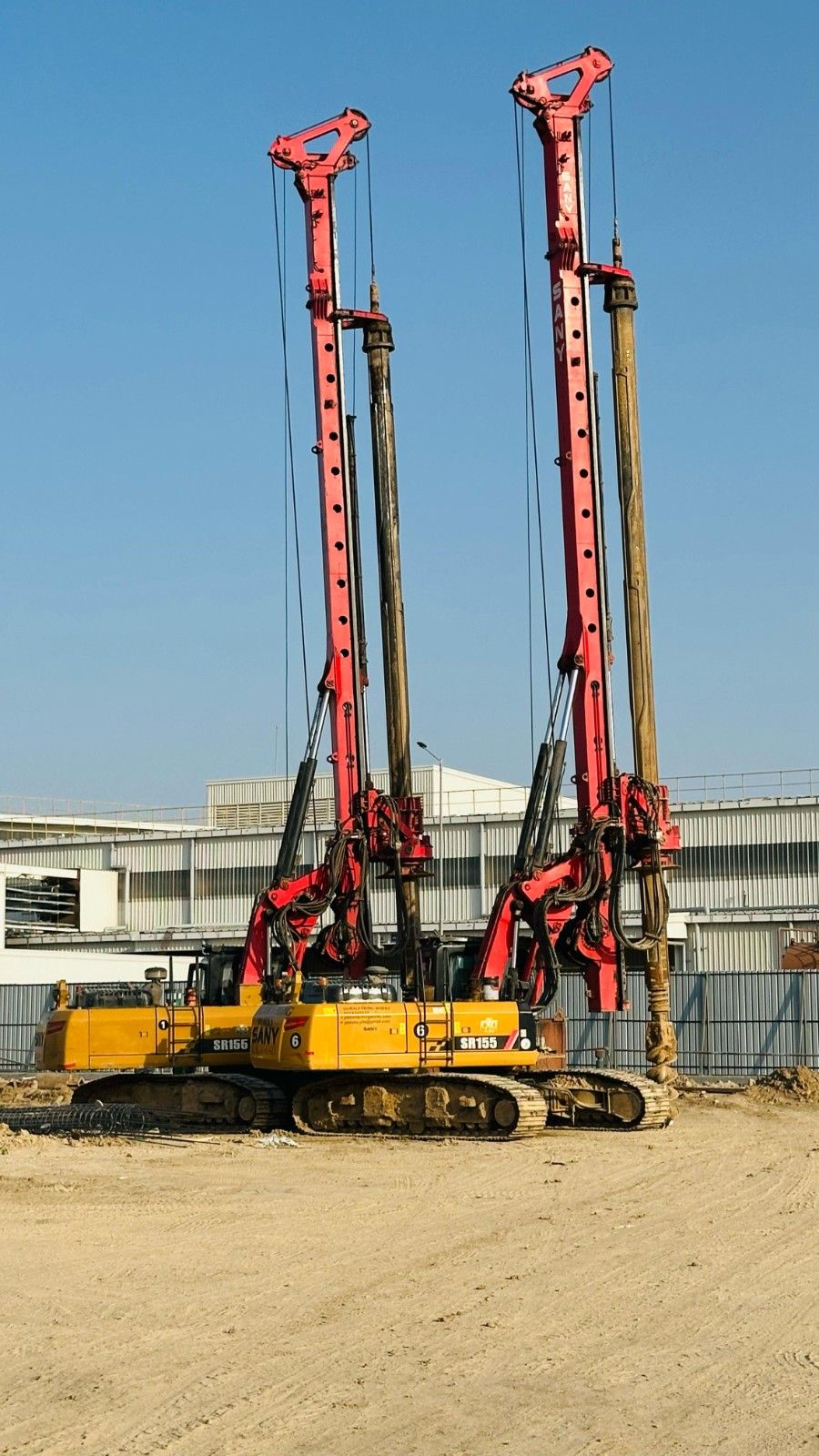
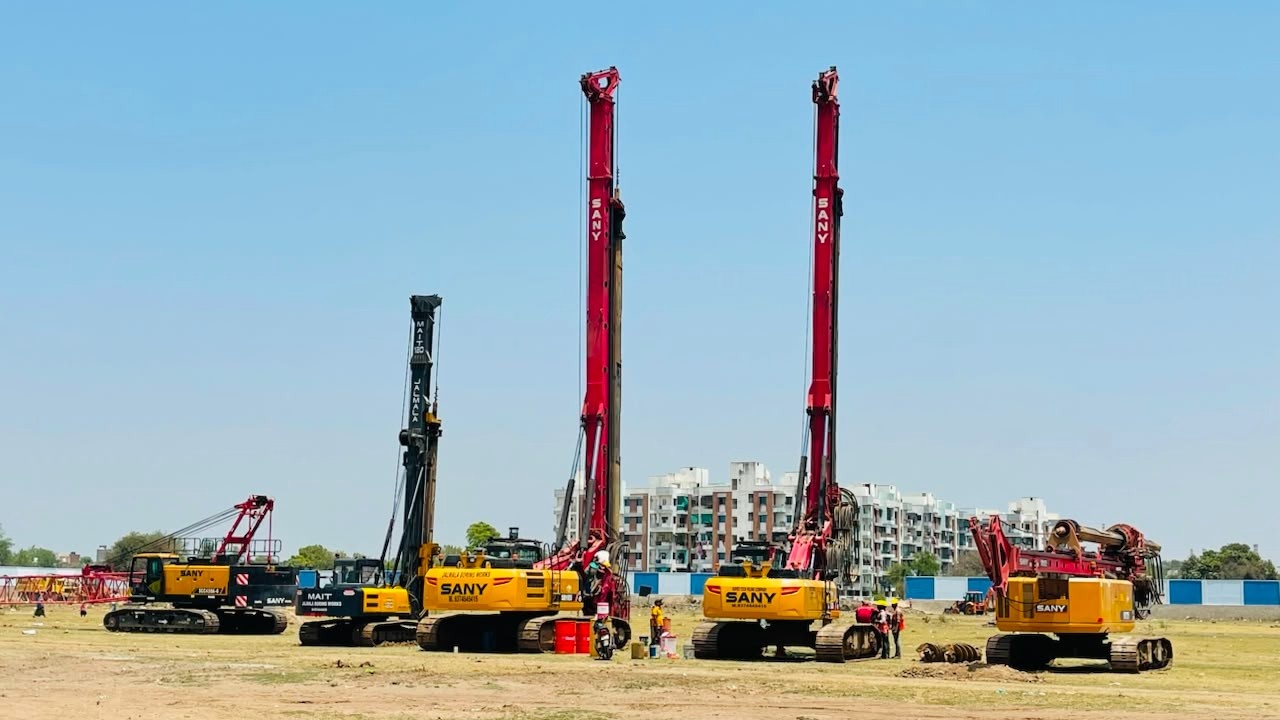
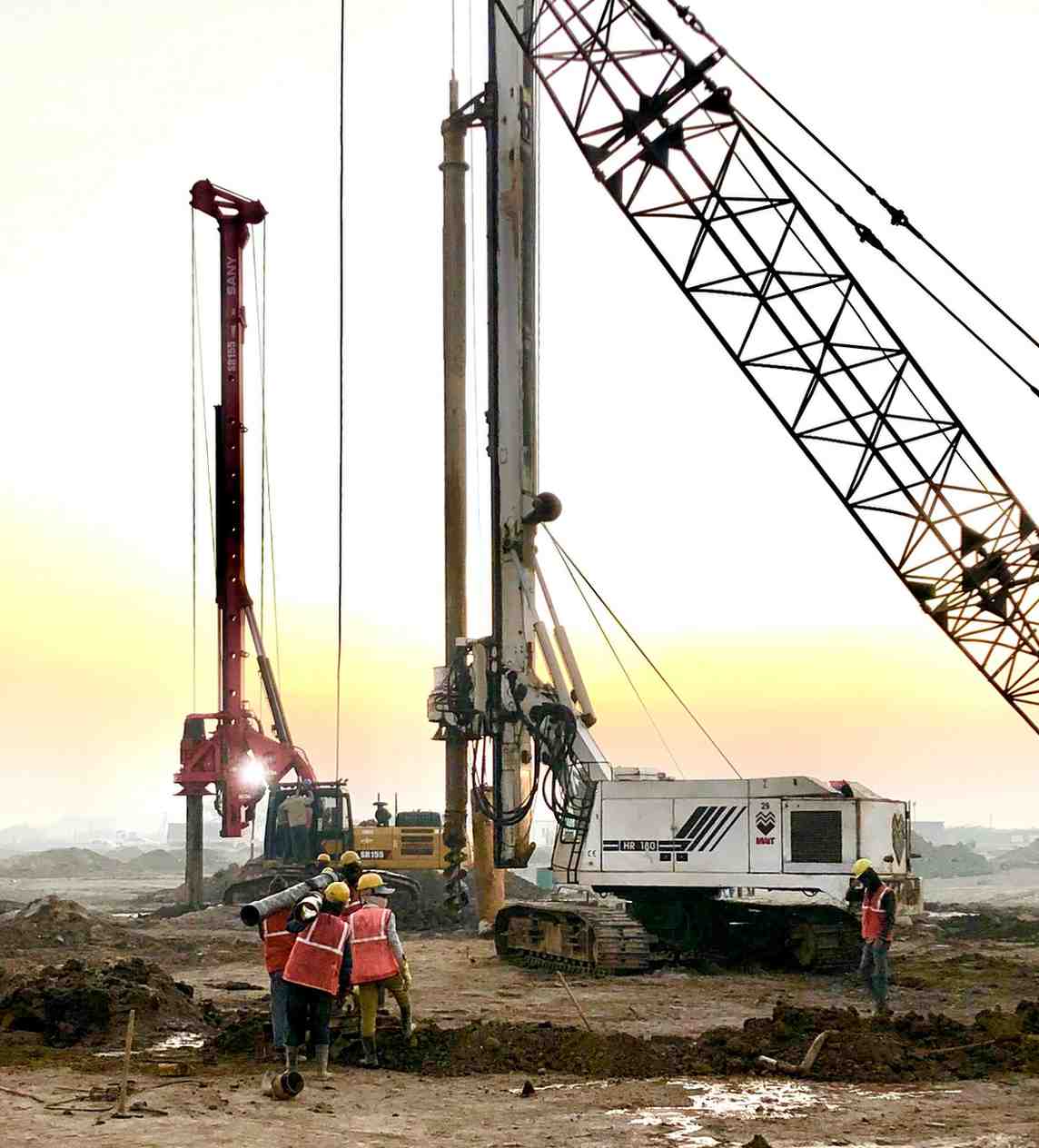
We specialize in bored piling with diameters ranging from 200 mm to 2000 mm and depths up to 50 meters. Using advanced hydraulic rotary rigs, we execute piling operations efficiently across a wide range of soil conditions. Our fleet includes high-performance rotary drilling rigs capable of working in restricted headroom areas while delivering precision, stability, and high productivity.
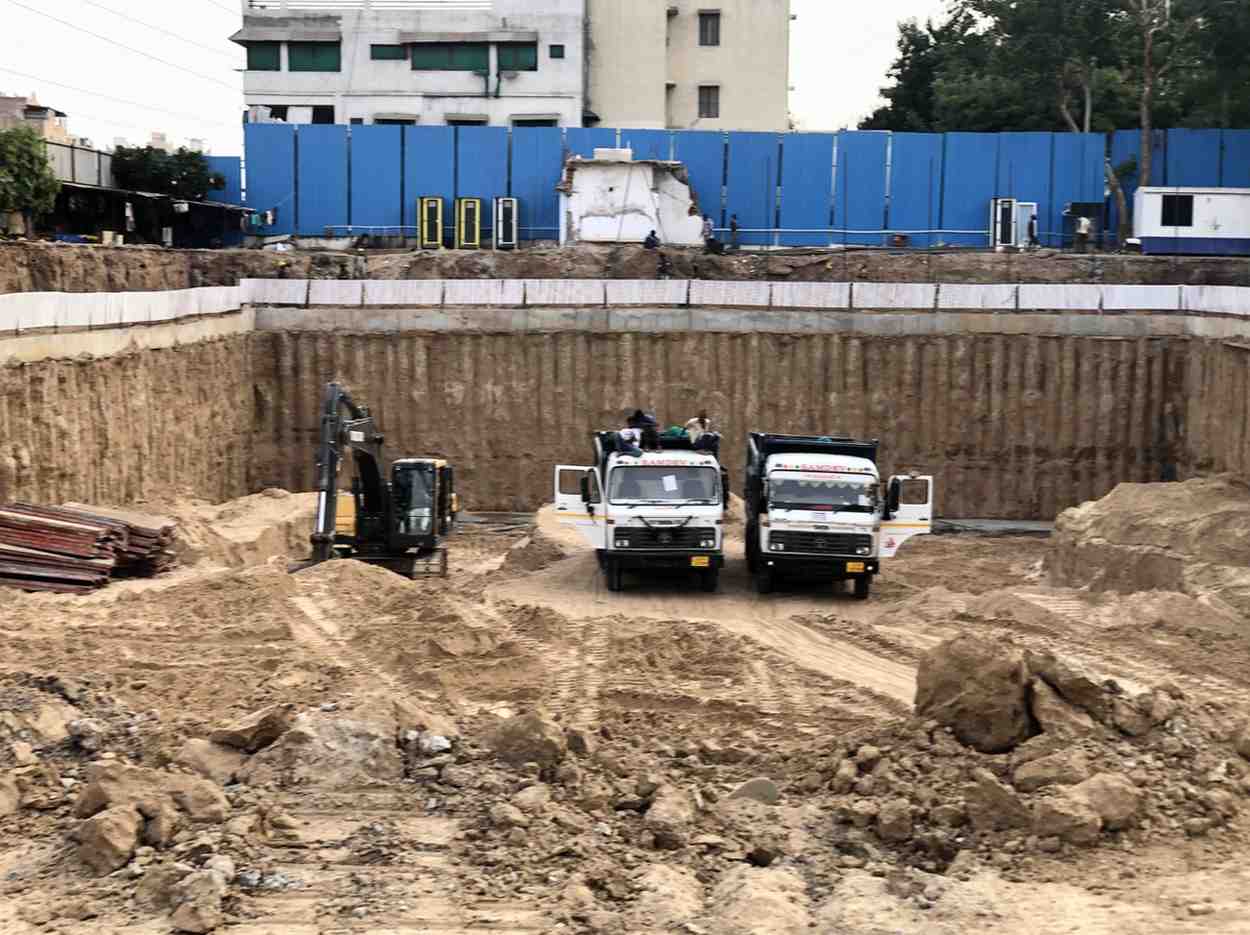
Secant pile walls are constructed by intersecting reinforced concrete piles to form a continuous retaining structure. Primary piles are installed first, followed by reinforced secondary piles after sufficient curing. This technique provides excellent groundwater control and soil retention, making it ideal for deep excavations, basements, and foundation support in challenging ground conditions.
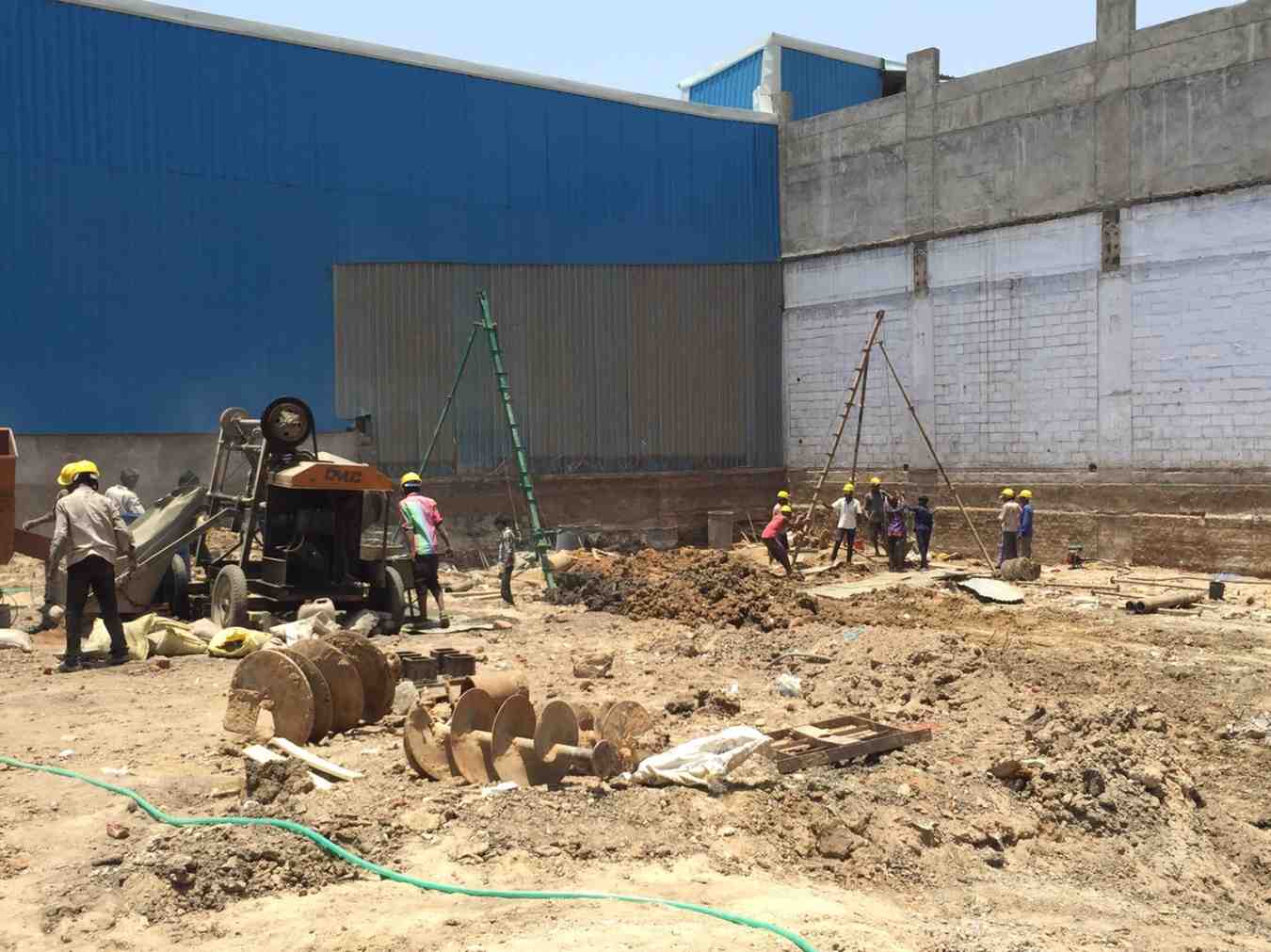
The Manual Auger Method is a reliable piling technique suitable for locations with restricted access or where low noise and vibration are essential. A tripod and manual winch system are used to drill boreholes using a helical auger. This method is commonly employed for pile diameters ranging from 250 mm to 1000 mm and offers an economical solution for smaller foundation projects.
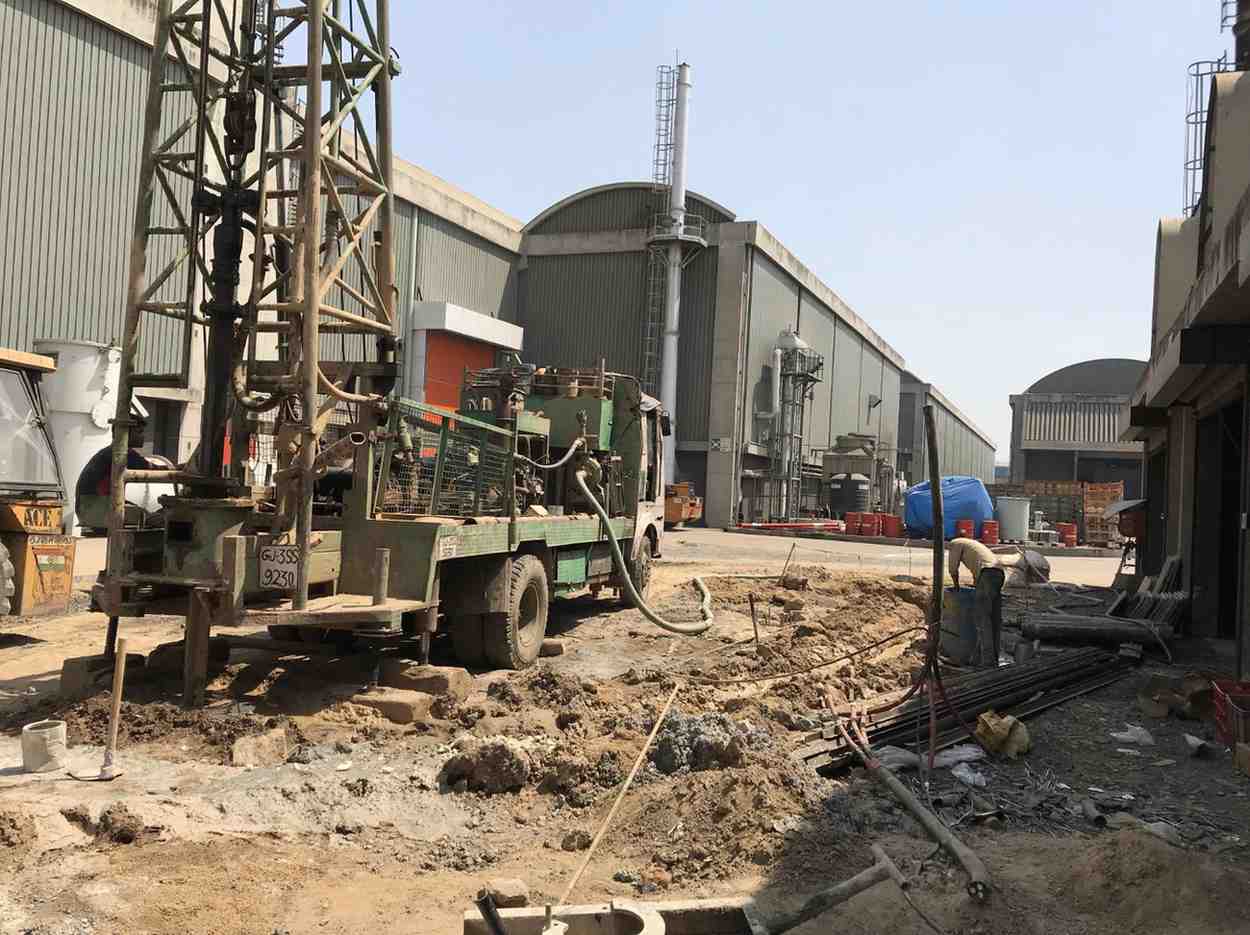
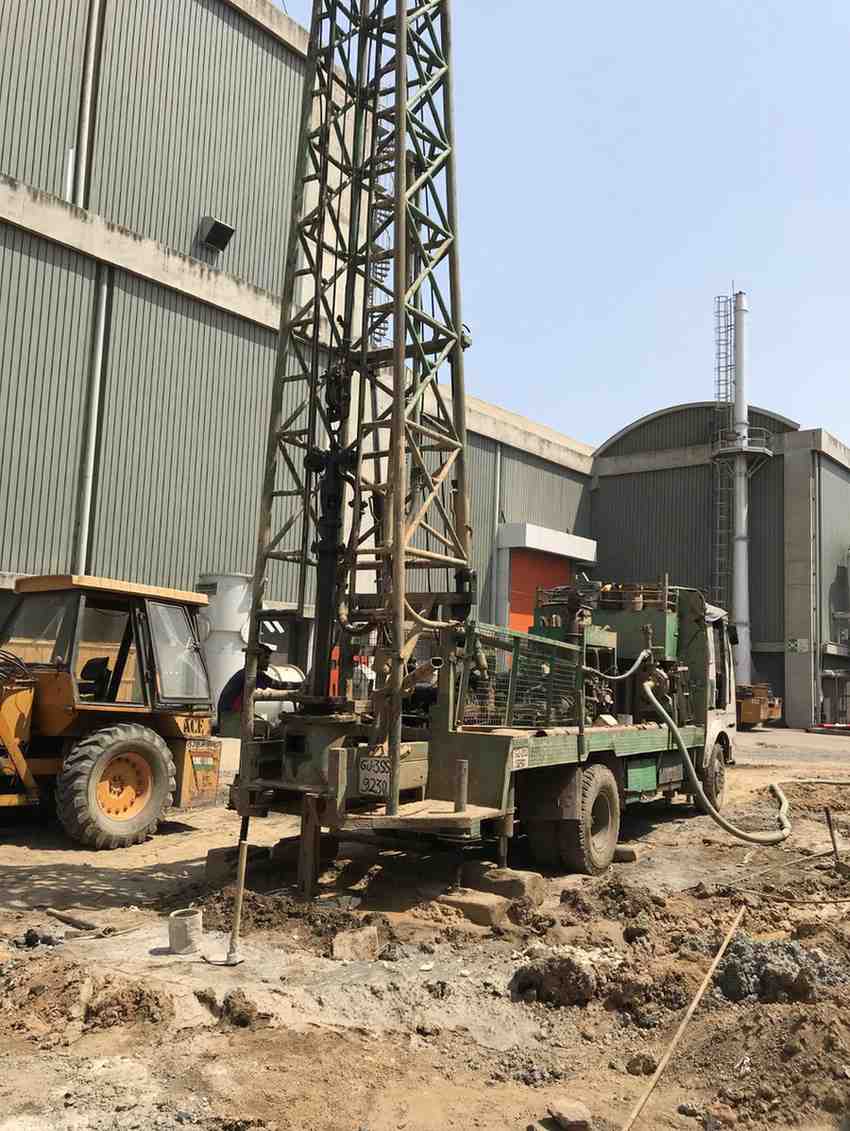
Our Truck Mounted Rotary (TMR) rigs utilize continuous bentonite slurry circulation to stabilize boreholes during drilling. Auger drilling is performed to the required depth while bentonite slurry supports the excavation and carries excavated soil back to a recycling tank. This method ensures bore stability, efficient spoil removal, and high productivity, particularly in loose or soft soil strata.
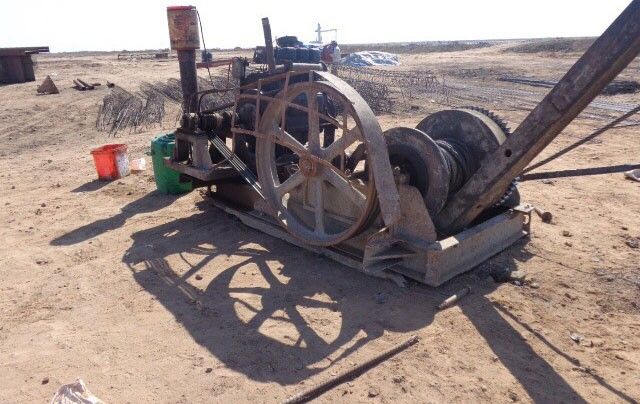
The DMC Pile Method employs Mendola-type rigs combined with bentonite drilling fluid for safe and efficient pile construction. Surface soil is loosened using a bailer before drilling continues with a percussion chisel. Bentonite slurry stabilizes the bore while transporting excavated material to settling pits. Once the desired depth is achieved, the drilling tools are removed and the final depth is verified before reinforcement and concreting.
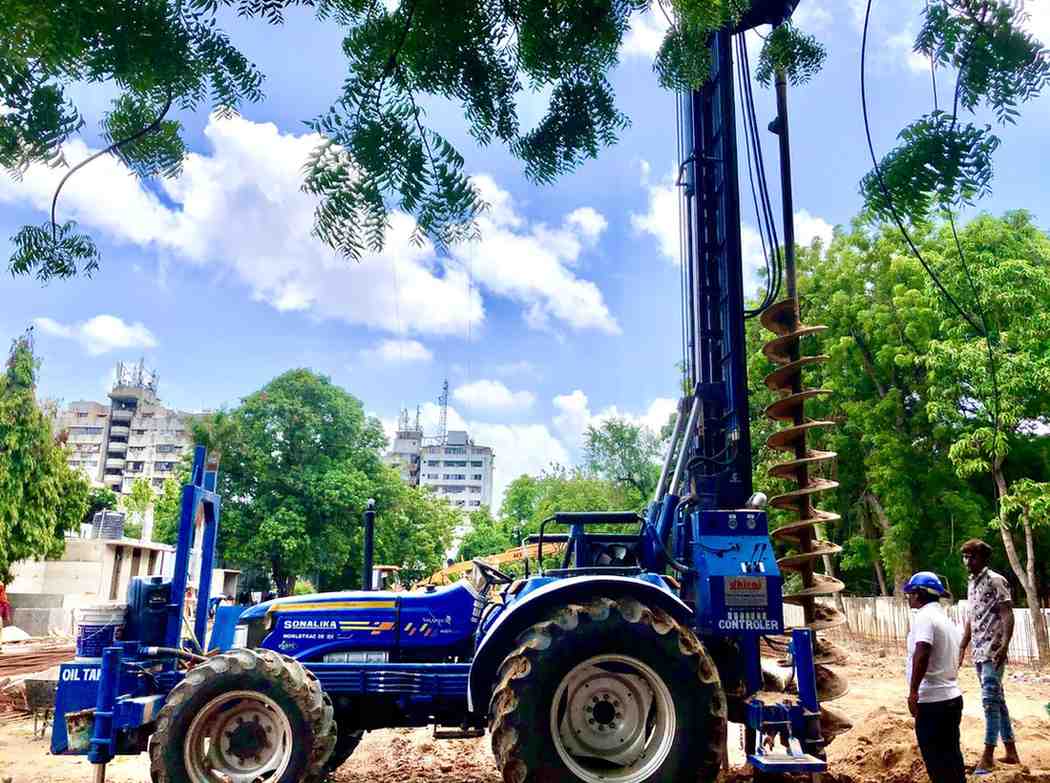
This method utilizes tractor-mounted rotary drilling rigs for fast and economical pile boring. Auger drilling is carried out to the required depth, with DMC rods added progressively to achieve deeper penetration through varying soil strata. It is particularly suitable for medium-depth foundation works and offers drilling capacities of up to 16 meters with excellent operational efficiency.
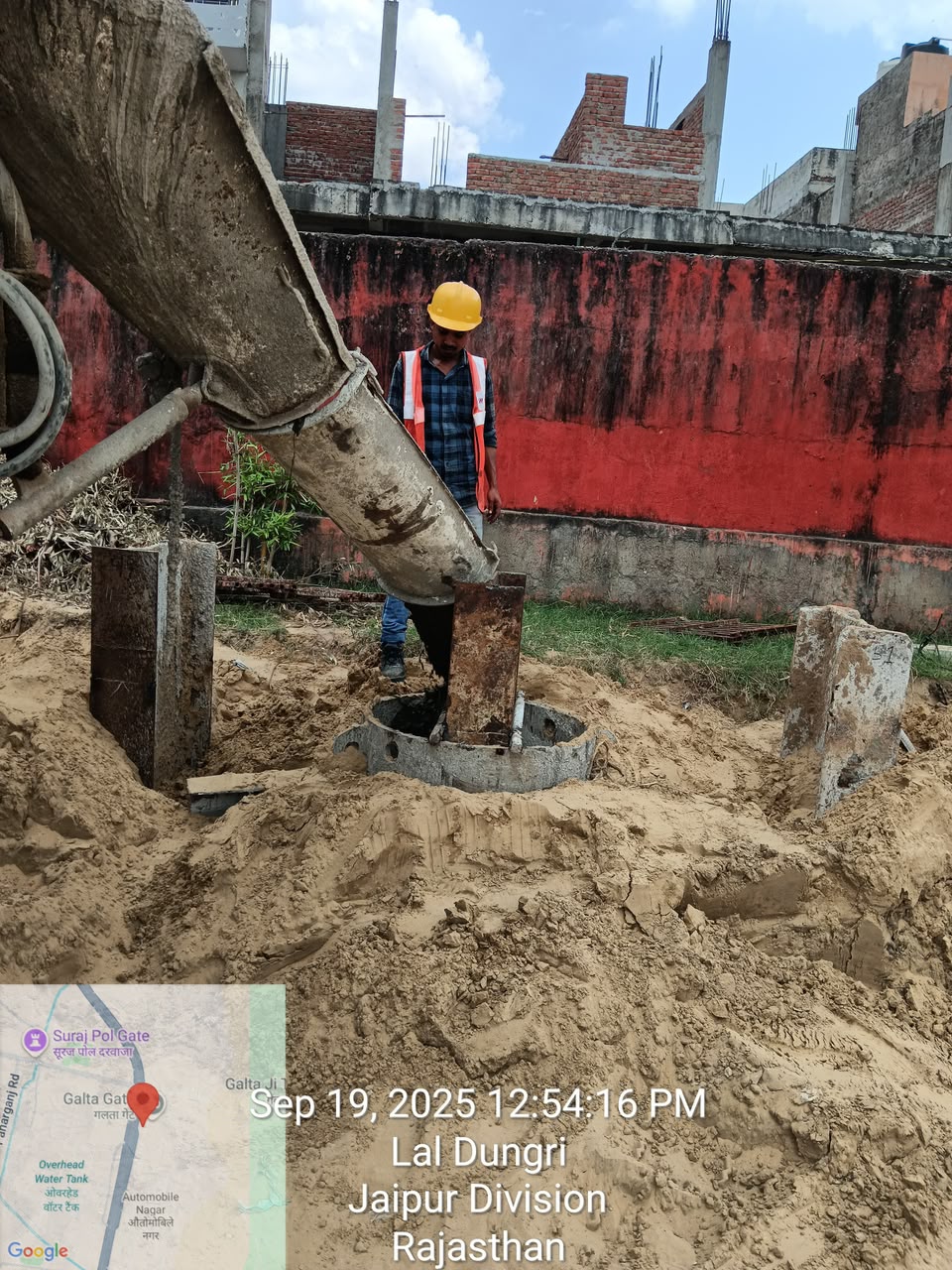
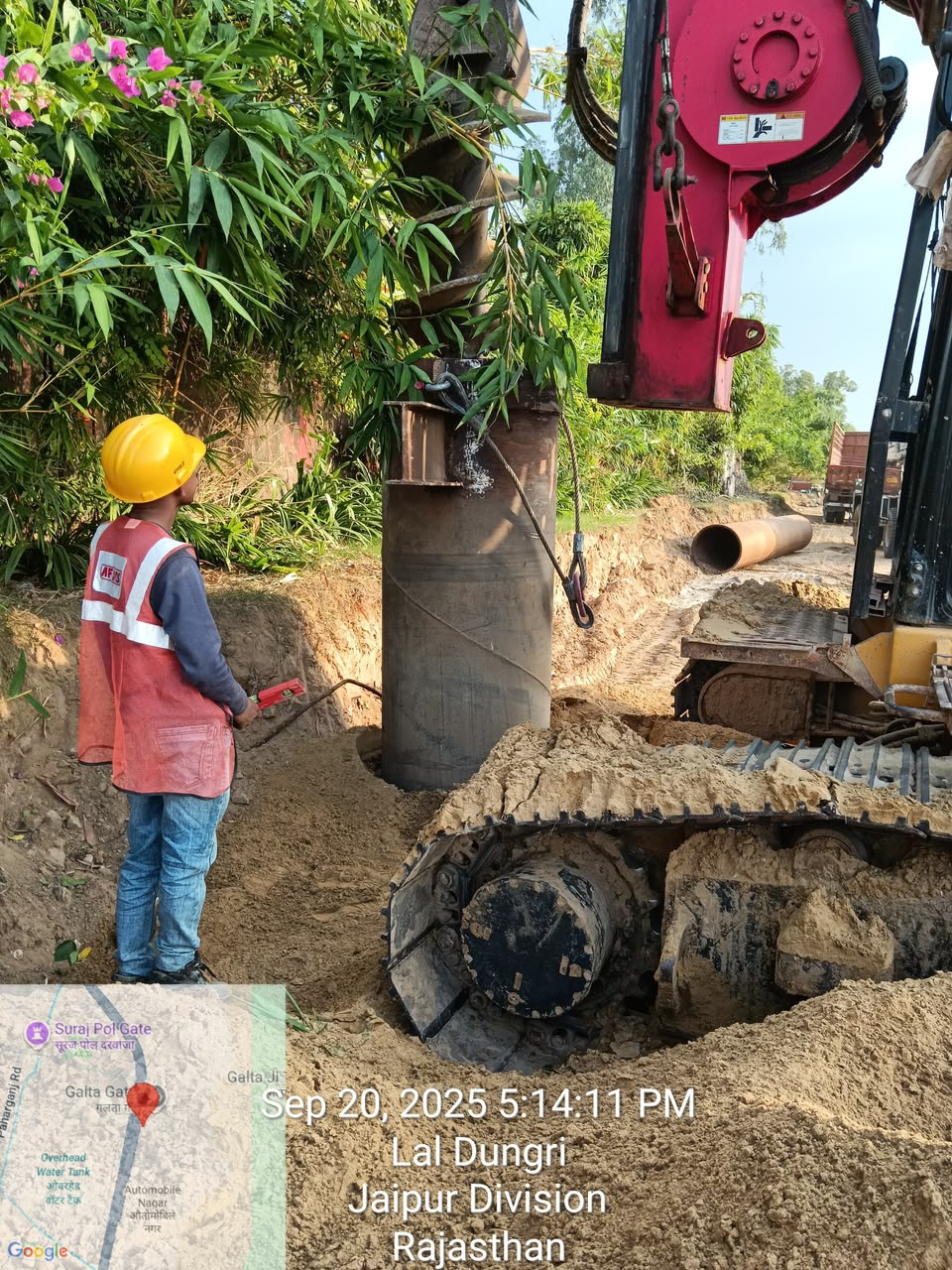
Our Work in Action
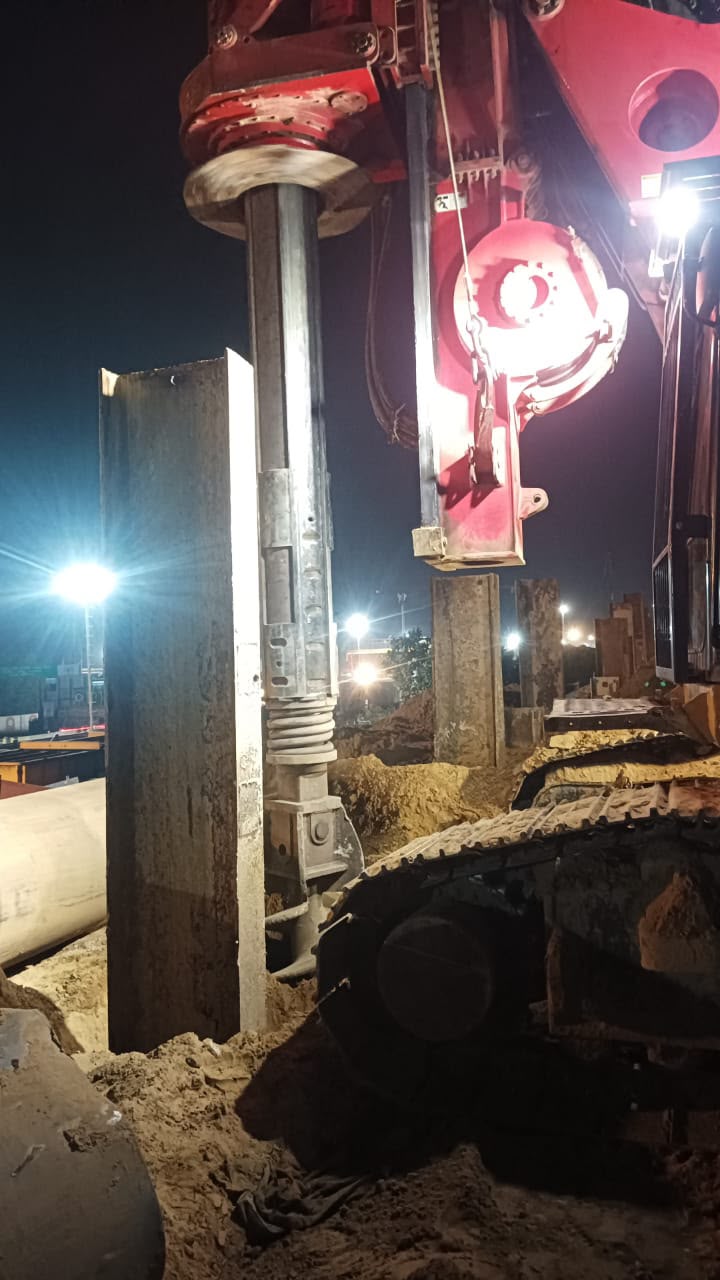
Click any image or video to view it in full screen.
Recent Projects
Pile FoundationConstruction Process
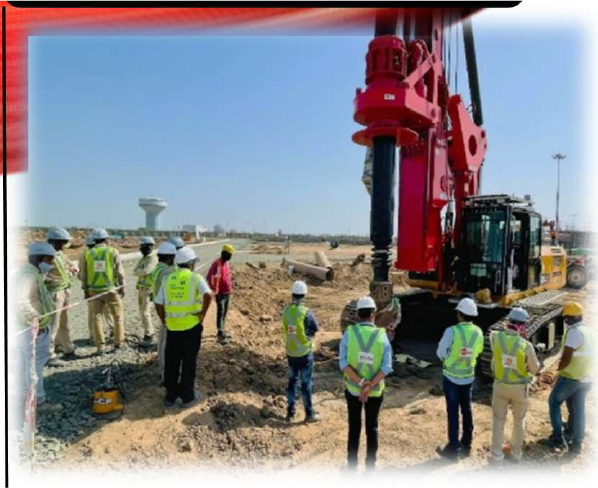
Survey, Setting Out & Guide Casing Installation
Detailed survey, marking of pile locations, and installation of temporary guide casing.
- Detailed survey and marking of pile locations
- Verification of pile coordinates and levels
- Positioning of Hydraulic Rotary Piling Rig
- Installation of temporary guide casing
- Ensures accurate pile alignment and protects bore opening
Pile Boring & Excavation
Drilling of pile bore using Hydraulic Rotary Rig to required depth.
- Drilling of pile bore using Hydraulic Rotary Rig
- Excavation carried out to the required depth and founding strata
- Suitable drilling tools used for soil, rock, or hard strata
- Continuous monitoring of depth, verticality, and pile diameter
- Removal and disposal of excavated soil from site
Slurry Support & Borehole Cleaning
Preparation and circulation of Bentonite/Polymer Slurry and borehole cleaning.
- Preparation and circulation of Bentonite/Polymer Slurry
- Stabilization of borehole walls during drilling
- Recycling of slurry through slurry plant
- Cleaning of borehole bottom to remove loose sediments
- Final inspection of bore depth and cleanliness
Reinforcement Cage Installation
Fabrication and lowering of reinforcement cage into the bore.
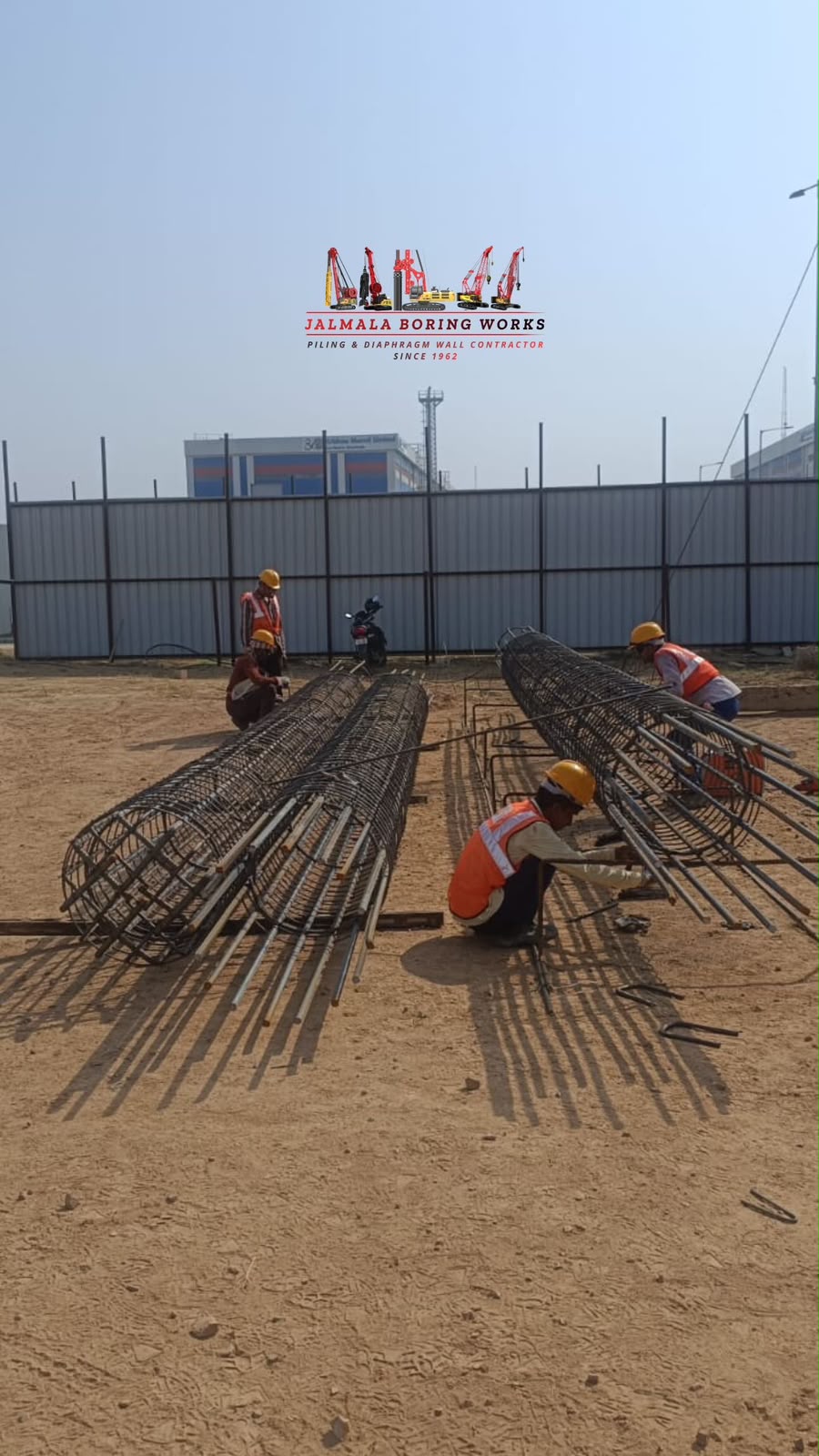
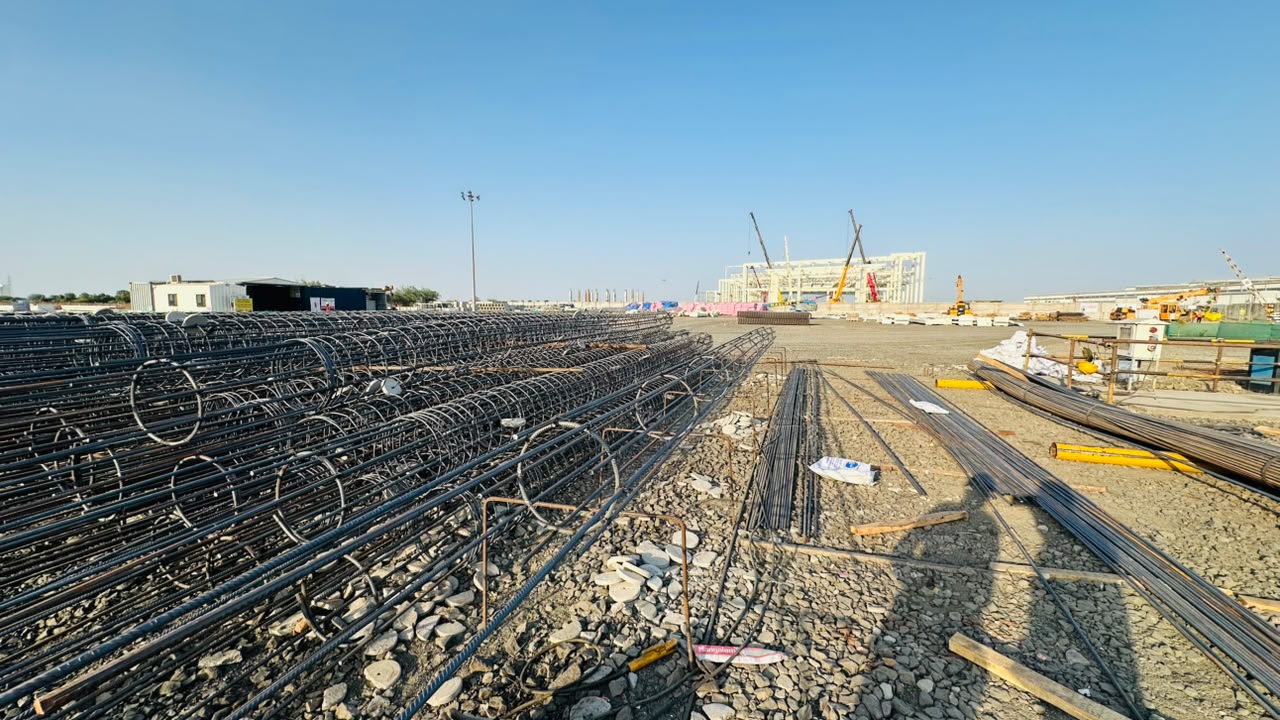
- Fabrication of reinforcement cage as per approved drawings
- Installation of spacers, couplers, lifting points, and cover blocks
- Lowering of reinforcement cage into the completed bore
- Accurate positioning and level adjustment
- Quality inspection before concrete placement
Tremie Concreting
Continuous concrete placement using tremie pipes.
- Installation of tremie pipes up to borehole bottom
- Continuous placement of concrete from bottom to top
- Prevention of concrete segregation through tremie method
- Displacement and recovery of slurry during concreting
- Completion of pile concreting in one uninterrupted operation
Pile Completion & Quality Control
Final pile completion, head trimming, and quality assurance.
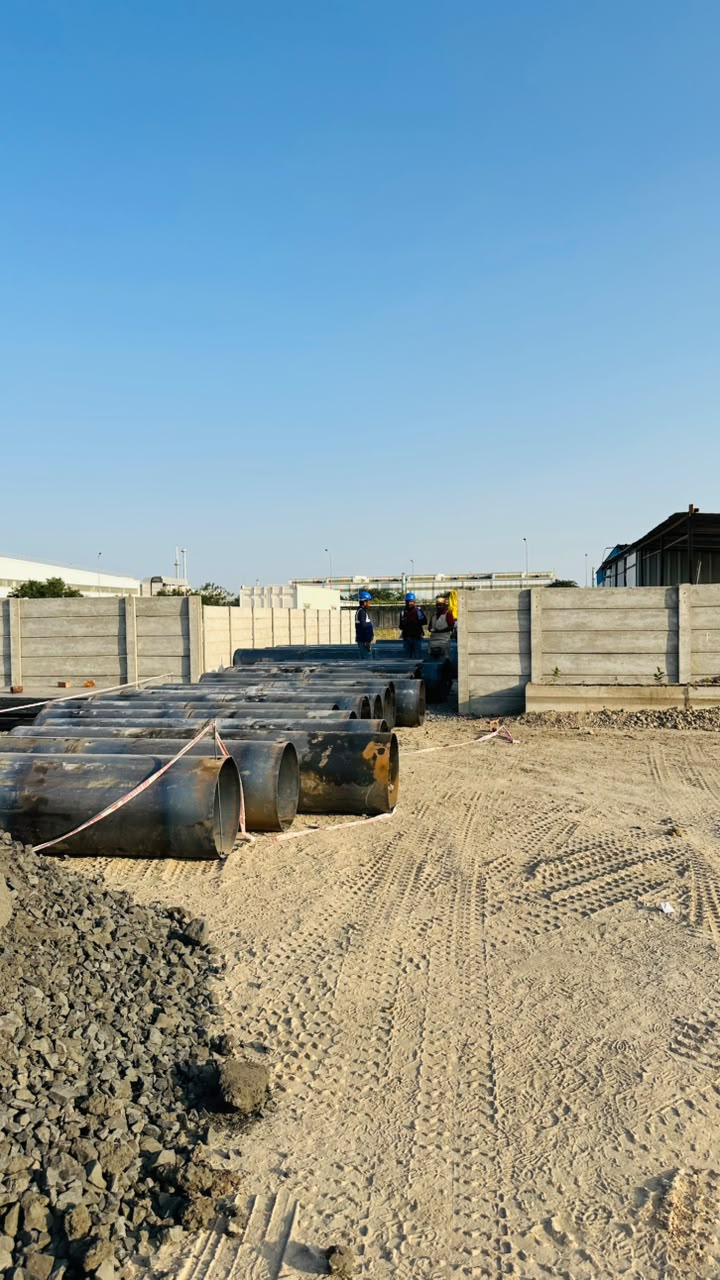
- Extraction of temporary casing during or after concreting
- Recording of concrete consumption and pile parameters
- Pile head chipping up to cut-off level
- Verification of pile depth, diameter, and concrete quality
- Completion of testing, documentation, and quality assurance
- Ready for pile cap and foundation construction
Pile Foundation Services in Kutch – District-Wide Seismic Zone V & Extreme Saline Expertise
Kutch is not a city — it is India's largest district (~45,652 sq km, larger than several Indian states), spanning five distinct geographic regions: the dense urban core around Bhuj, the logistics-industrial belt of Gandhidham-Kandla, the Adani-powered port and power ecosystem at Mundra, the Anjar-Nakhatrana interior, and the remote Rann of Kutch border. What unites the entire district is a unique combination of conditions not present anywhere else in Gujarat: Seismic Zone V (India's highest seismic hazard category), Rann salt marsh saline soil (groundwater chlorides 3,000-8,000 mg/L), cyclone exposure along the Gulf of Kutch coast, and the 2001 Bhuj earthquake legacy that fundamentally changed engineering standards across the district. If you are looking for pile foundation services in Kutch, you need a contractor who understands the district-wide requirements — not a single-city specialist. This page covers the district-level overview. For Mundra-specific piling (Adani Port, Adani Power, Mundra SEZ), see our Mundra piling services page. This page covers Bhuj, Gandhidham, Kandla, Anjar, Nakhatrana, Mandvi, and the wider district context.
Seismic Zone V & the 2001 Bhuj Earthquake Legacy
Kutch is India's most seismically active region and the only Zone V classification across Gujarat. The 2001 Bhuj earthquake (Mw 7.7) — India's most destructive earthquake in over 50 years — killed over 20,000 people and destroyed nearly 400,000 homes across the district. The reconstruction response fundamentally changed engineering practice: IS 13920 ductile detailing became mandatory earlier in Kutch than in most of India; Zone V seismic design is applied by every credible contractor in the district; lateral load testing per IS 2911 Part 4 is standard practice, not an exception; and site-specific geotechnical investigation is standard because the earthquake revealed significant subsurface variability across short distances. Whether your Kutch project is in Bhuj, Gandhidham, Kandla, Mundra, Anjar, or Mandvi, Zone V design applies. Our Kutch district-wide piling is designed to IS 1893 Zone V and IS 13920 from the ground up — across every sub-region of the district.
Rann of Kutch & Banni Grassland – Extreme Saline Soil
The Rann of Kutch is a vast salt marsh (~30,000 sq km) spanning the India-Pakistan border, covering the northern portion of the district. The Great Rann and Little Rann are seasonally flooded salt flats, and the surrounding land — including Banni grassland — has some of the world's most saline soil. Groundwater chlorides of 3,000-8,000 mg/L are common (versus 200-500 mg/L for normal inland sites). This requires "extreme" IS 456 exposure classification — the highest tier. Required specifications for Rann-adjacent and Banni-adjacent piling: PSC or SRC cement with maximum slag content; minimum 100 mm cover in all zones; often cathodic protection for any permanent structure; and anti-corrosion coated rebar or stainless steel in the most aggressive zones. Projects near the Rann boundary — border roads, BSF facilities, salt workers' infrastructure, industrial units near Kala Dungar — require specialized specifications that generic contractors don't provide. Our Rann-adjacent and Banni saline soil piling is specified to these extreme requirements.
The Five Kutch Sub-Regions
Kutch district has five distinct piling markets. Bhuj (district headquarters, historic capital) — urban, institutional, residential and commercial piling. Gandhidham-Adipur-Kandla (logistics and port hub) — warehousing, container freight stations, cold chain, Kandla Port marine and SEZ industrial piling. Mundra (Adani-powered port and power ecosystem) — Adani Port marine piling, Adani Power thermal plant piling, Mundra SEZ industrial piling (see dedicated Mundra page). Anjar-Nakhatrana (interior industrial and agricultural) — Anjar industrial belt and Nakhatrana interior piling for smaller industrial and commercial projects. Mandvi and Rann border (coastal and remote interior) — coastal piling for Mandvi port and beach properties, plus remote interior piling for Rann-adjacent projects. Our Kutch district piling covers all five sub-regions.
Kandla Port & Kandla SEZ – Distinct From Mundra
Kandla Port (Deendayal Port Authority) is India's first port-based SEZ and historically India's largest port by cargo, before Mundra overtook it. Kandla's marine piling differs from Mundra in three ways: older and tighter infrastructure (Kandla's port layout is denser, requiring more careful rig access planning); oil terminal focus (Kandla's primary cargo is crude and refined oil, requiring high-capacity oil terminal piling with Zone V design); and central government governance (Deendayal Port Authority, not private Adani). Kandla SEZ industrial piling (inside the SEZ boundary) also requires separate SEZ Development Commissioner empanelment — different from Mundra SEZ but similar in process. Our Kandla Port and SEZ piling covers these specific requirements.
Gandhidham – Kutch's Logistics and Industrial Hub
Gandhidham (with its residential twin Adipur) is Kutch's administrative, commercial, and logistics center — serving both Kandla Port and Mundra Port supply chains. Piling demand comes from warehousing, container freight stations, cold chain facilities, logistics parks, and supporting industry. Gandhidham's piling requires the same Zone V and saline soil specifications as the rest of Kutch, but with a distinct logistics facility profile: heavy racking loads (50-200 tonnes per column for container freight station racking), uniform floor flatness (FF50+ for warehouse racking systems), fast construction (logistics facilities are often fast-track to support port operations), and large footprint (10,000-40,000 sqm warehouses). Our Gandhidham logistics and industrial piling handles the racking load design, floor flatness coordination, and fast-track execution these facilities require.
Serving All of Kutch – From Bhuj to the Rann Border
We serve the entire Kutch district — including piling projects in Bhuj, Gandhidham, Adipur, Kandla, Mundra, Anjar, Nakhatrana, Mandvi, Madhapar, and Rann of Kutch border areas. Our site visit commitment is 24-48 hours across all Kutch locations (whether Bhuj or remote Rann border areas), with rig mobilization typically 12-18 working days from contract award. For remote interior locations (Nakhatrana, Mandvi, Rann border), mobilization adds 2-4 additional days due to road access and site preparation. Whether your project is a Bhuj commercial building, a Gandhidham warehouse, a Kandla Port marine terminal, an Anjar industrial unit, or a Rann-adjacent border facility, our Kutch district piling contractor team is ready to mobilize.
Contact Our Kutch Pile Foundation Team Today
Ready to discuss Kutch district piling for your project? Call our team at +91 93745 45415 or email jalmala.pile@gmail.com. Mention "Kutch" and specify your location (Bhuj, Gandhidham, Kandla, Mundra, Anjar, Nakhatrana, Mandvi, or Rann border area) and project type. Our team responds within 2-3 business days with an initial technical assessment. Main office is at Dholka Road, near Nariampura Village, Narimanpura, Sarkhej, Ahmedabad, Gujarat 382210. For Mundra-specific piling (Adani Port, Adani Power, Mundra SEZ), see our Mundra piling services page.