
Pile Foundation
Bored Cast-in-Situ Piling Specialists
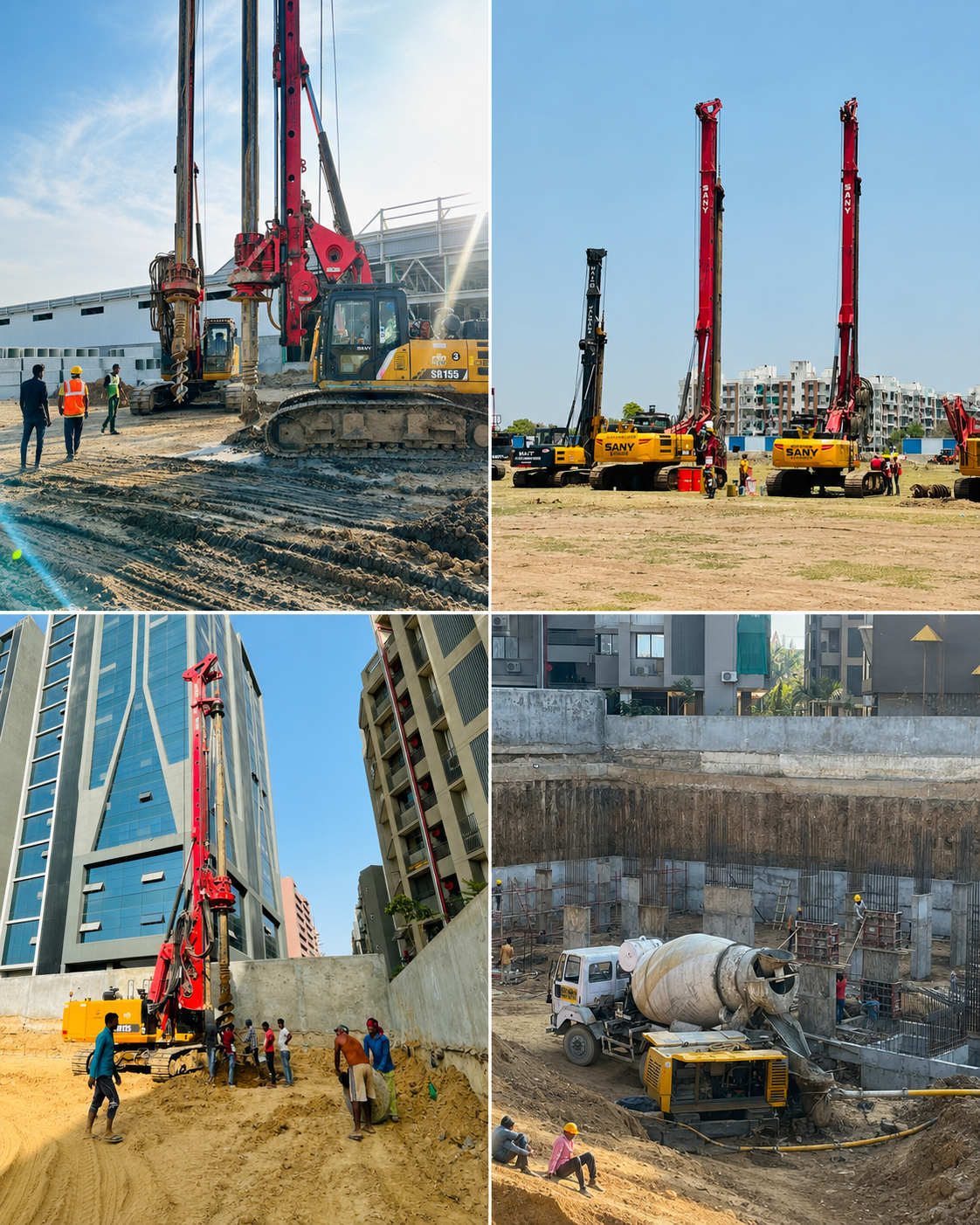
Jalmala Boring Works provides Pile Foundation and Deep Foundation Solutions using Bored Cast-in-Situ Piles for residential, commercial, industrial, and infrastructure projects. With advanced Hydraulic Rotary Rigs, we construct piles from 300 mm to 1800 mm diameter and depths of up to 50 metres, delivering reliable load-bearing capacity across soft soil, hard rock, and high groundwater conditions.
Our Piling Methods
We deploy six proven techniques — selected based on soil profile, site constraints, and project requirements.
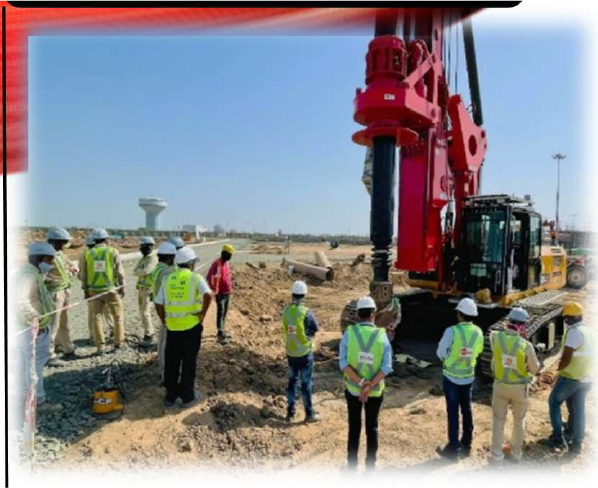
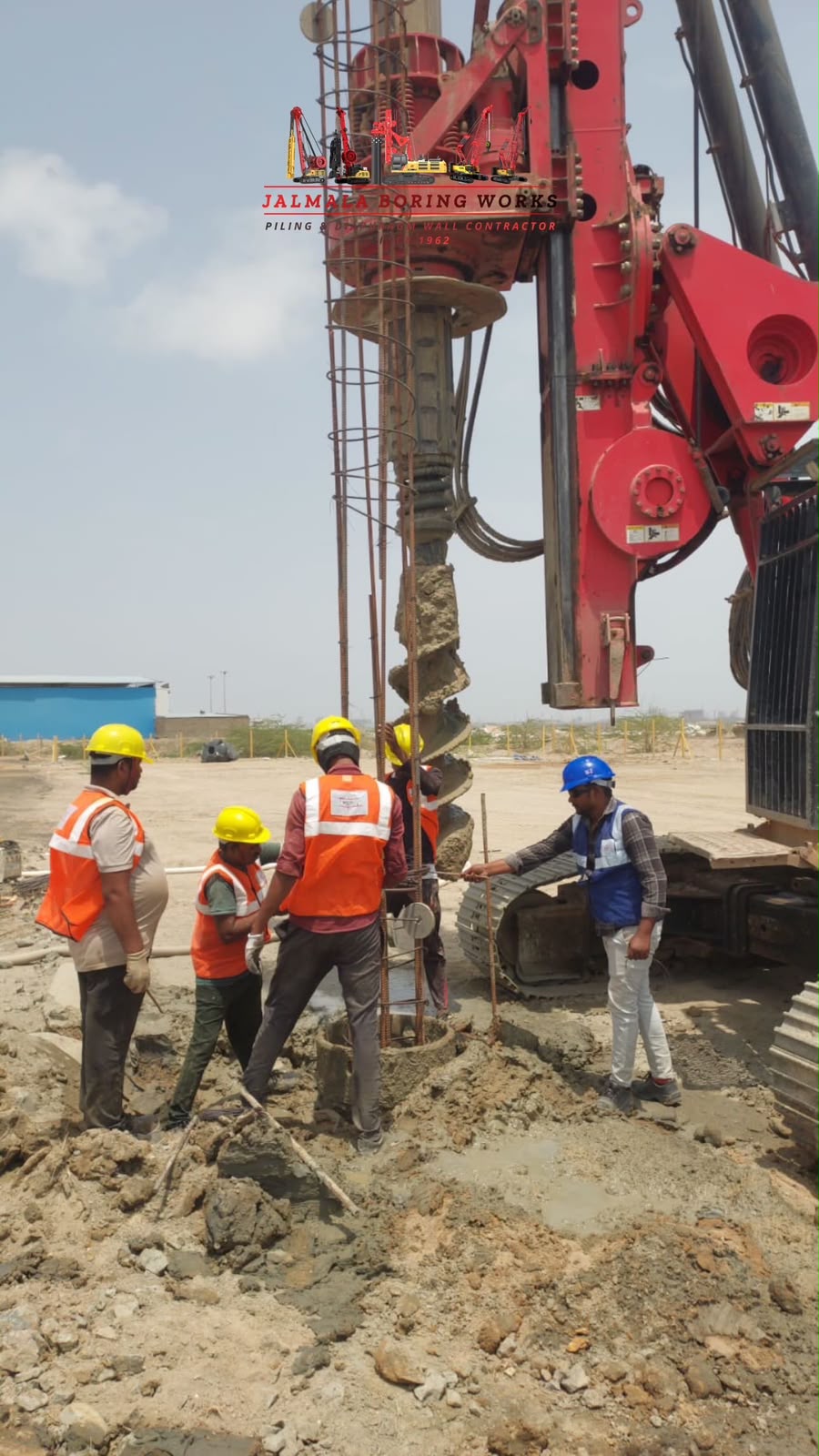
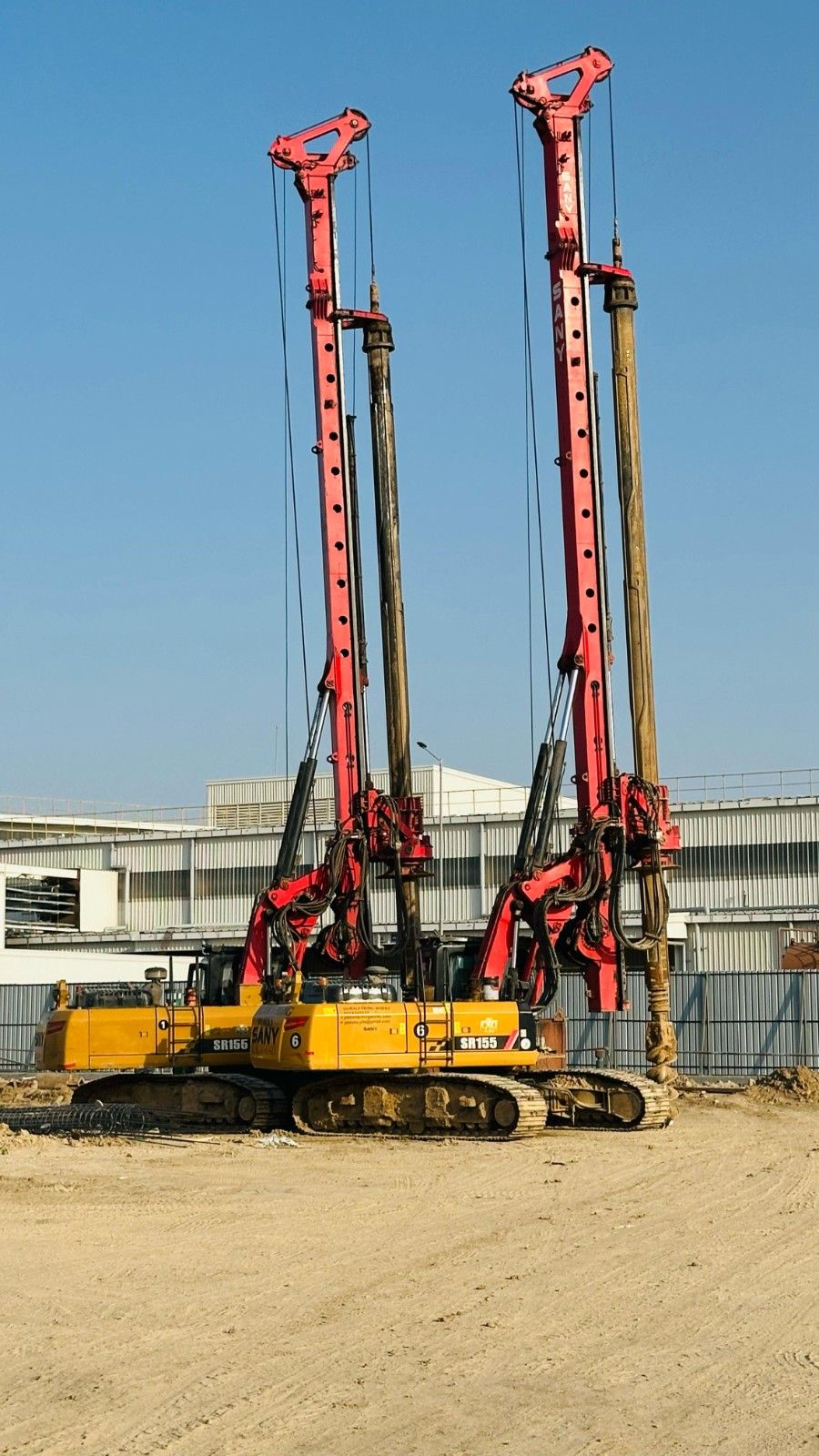
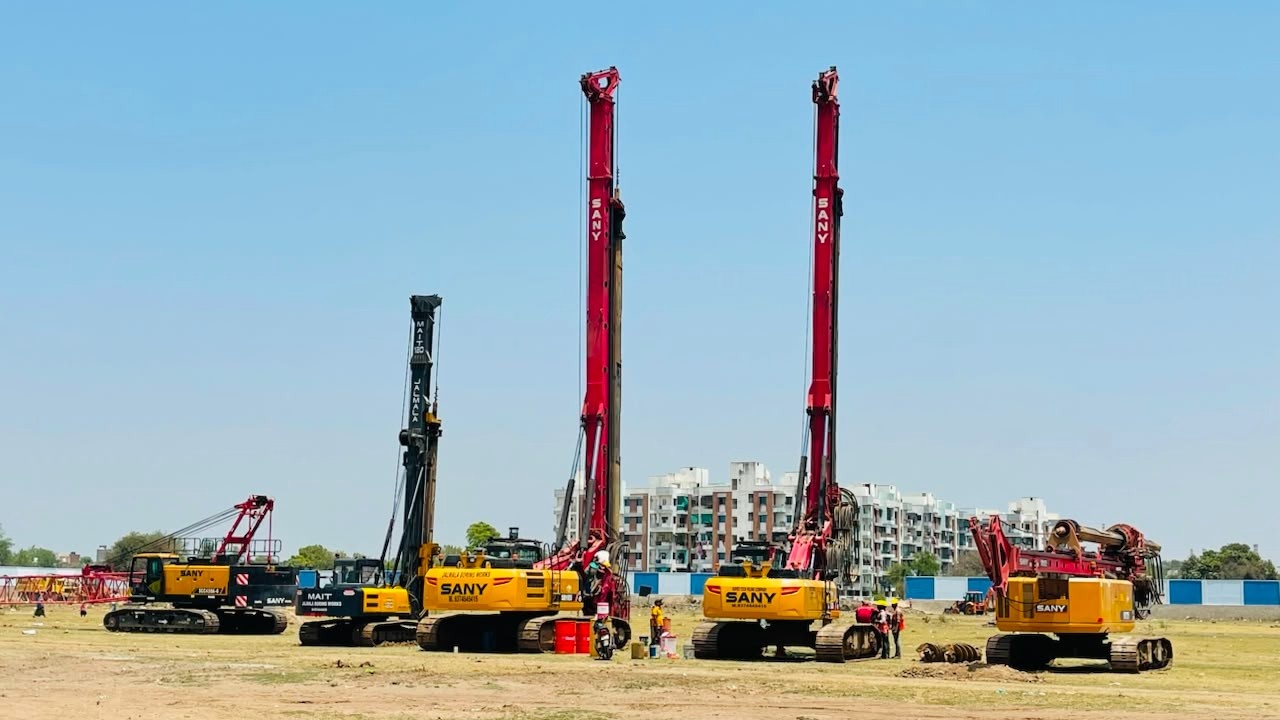
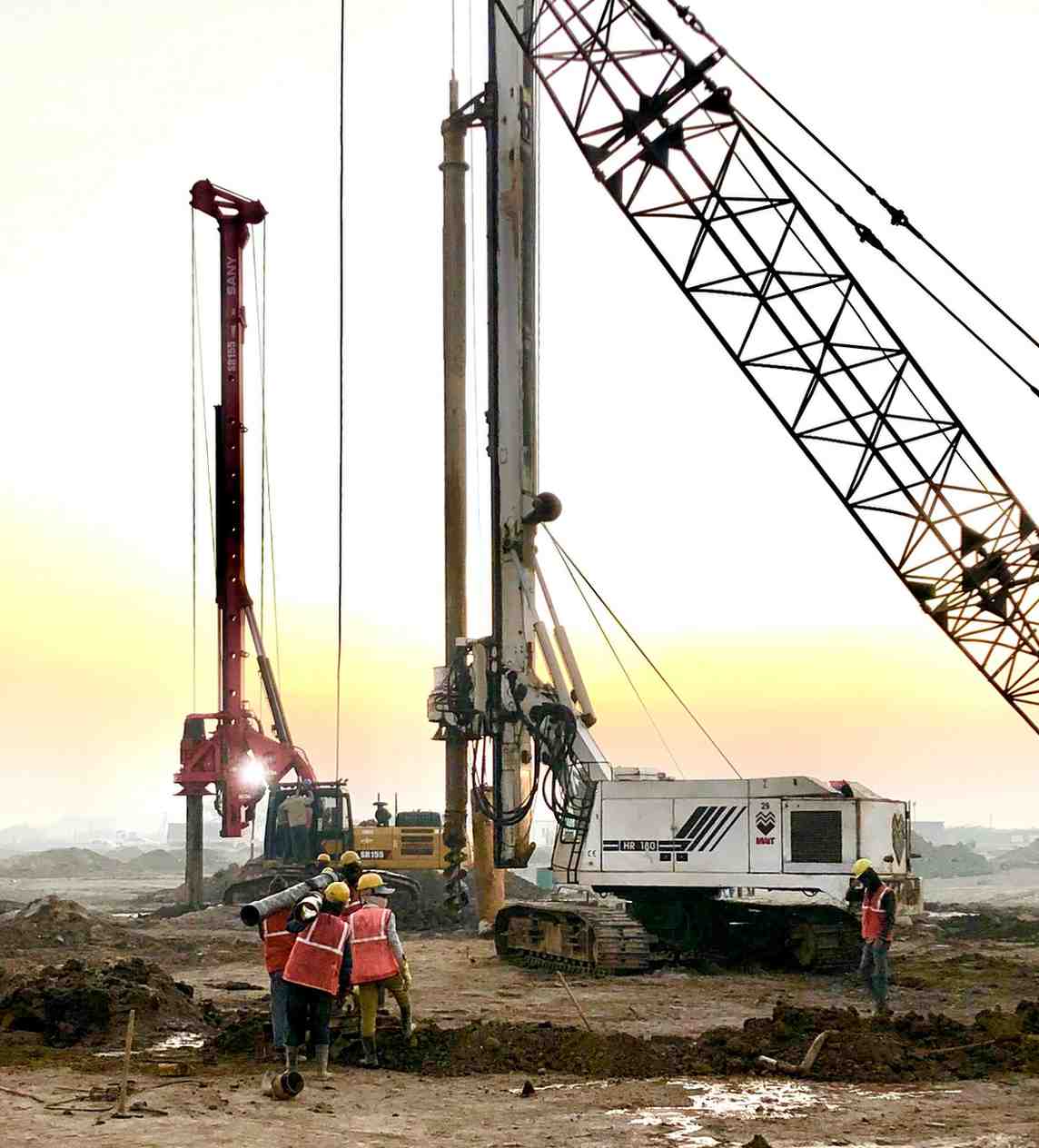
We specialize in bored piling with diameters ranging from 200 mm to 2000 mm and depths up to 50 meters. Using advanced hydraulic rotary rigs, we execute piling operations efficiently across a wide range of soil conditions. Our fleet includes high-performance rotary drilling rigs capable of working in restricted headroom areas while delivering precision, stability, and high productivity.
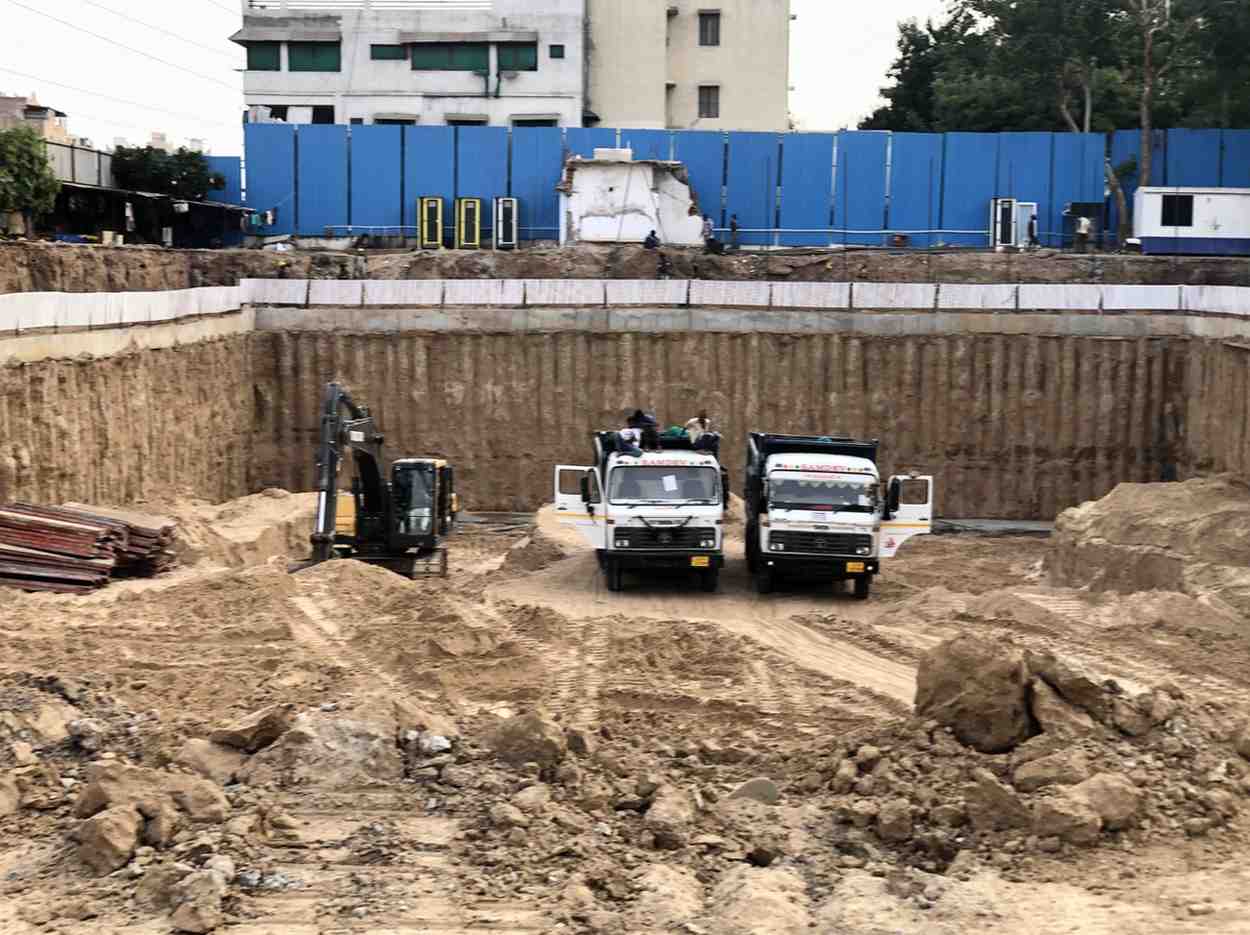
Secant pile walls are constructed by intersecting reinforced concrete piles to form a continuous retaining structure. Primary piles are installed first, followed by reinforced secondary piles after sufficient curing. This technique provides excellent groundwater control and soil retention, making it ideal for deep excavations, basements, and foundation support in challenging ground conditions.
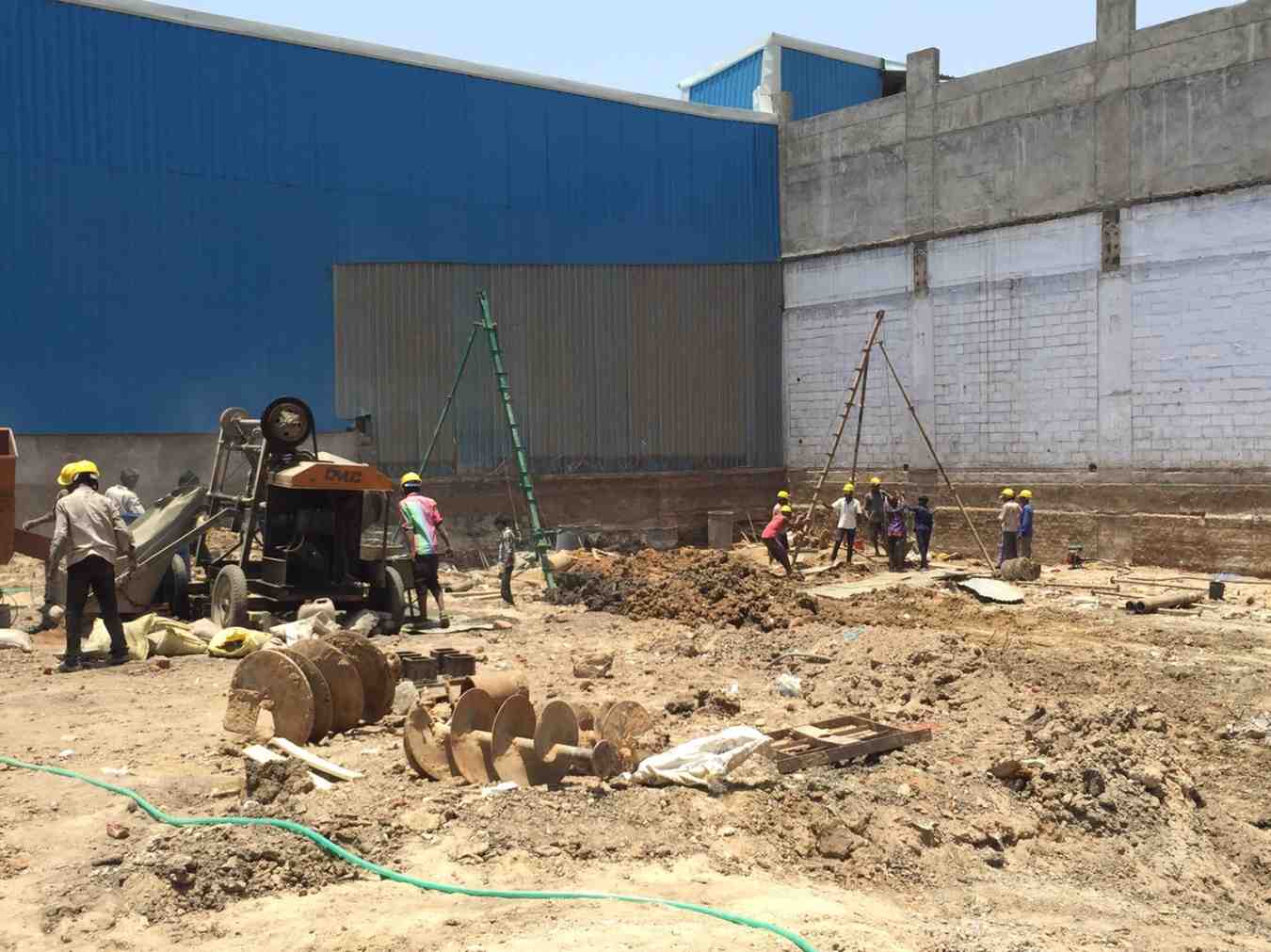
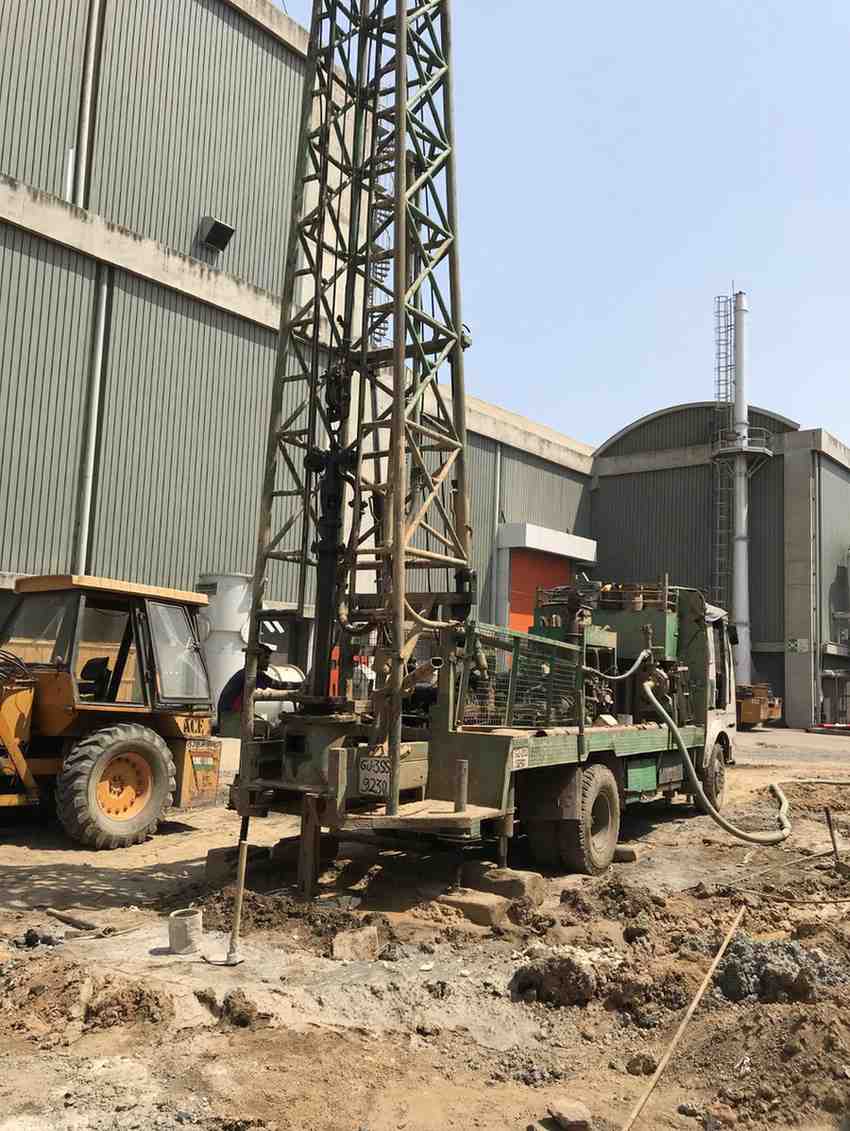
The Manual Auger Method is a reliable piling technique suitable for locations with restricted access or where low noise and vibration are essential. A tripod and manual winch system are used to drill boreholes using a helical auger. This method is commonly employed for pile diameters ranging from 250 mm to 1000 mm and offers an economical solution for smaller foundation projects.
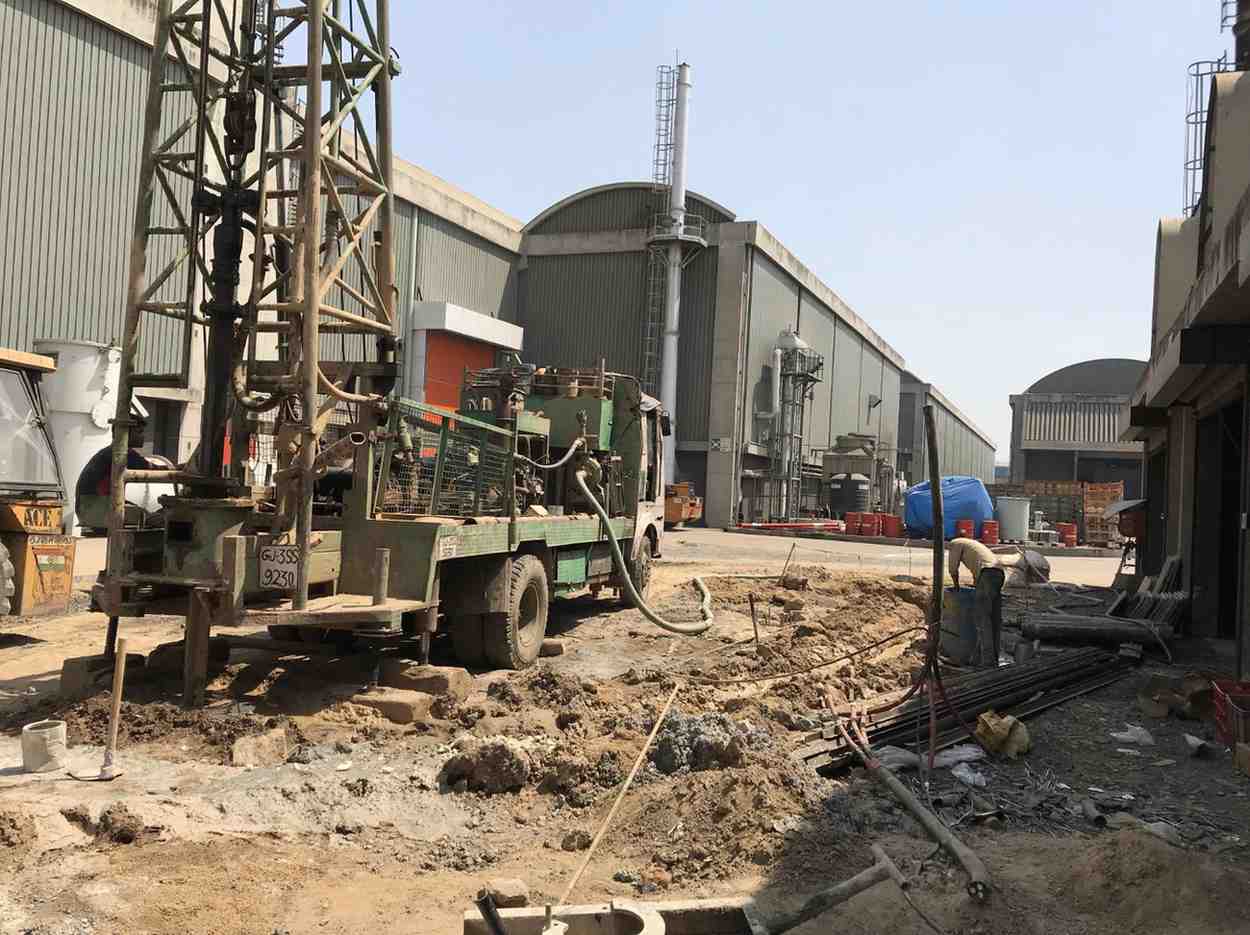
Our Truck Mounted Rotary (TMR) rigs utilize continuous bentonite slurry circulation to stabilize boreholes during drilling. Auger drilling is performed to the required depth while bentonite slurry supports the excavation and carries excavated soil back to a recycling tank. This method ensures bore stability, efficient spoil removal, and high productivity, particularly in loose or soft soil strata.
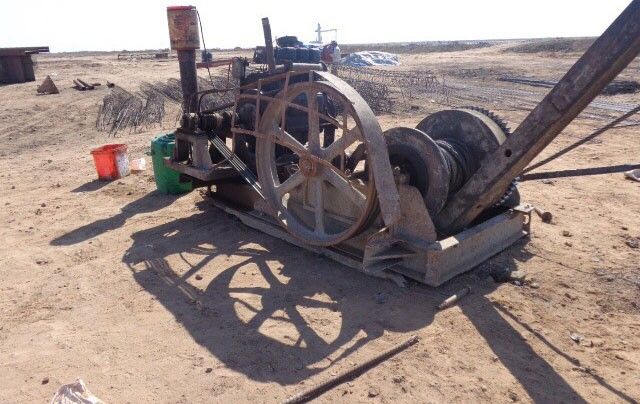
The DMC Pile Method employs Mendola-type rigs combined with bentonite drilling fluid for safe and efficient pile construction. Surface soil is loosened using a bailer before drilling continues with a percussion chisel. Bentonite slurry stabilizes the bore while transporting excavated material to settling pits. Once the desired depth is achieved, the drilling tools are removed and the final depth is verified before reinforcement and concreting.
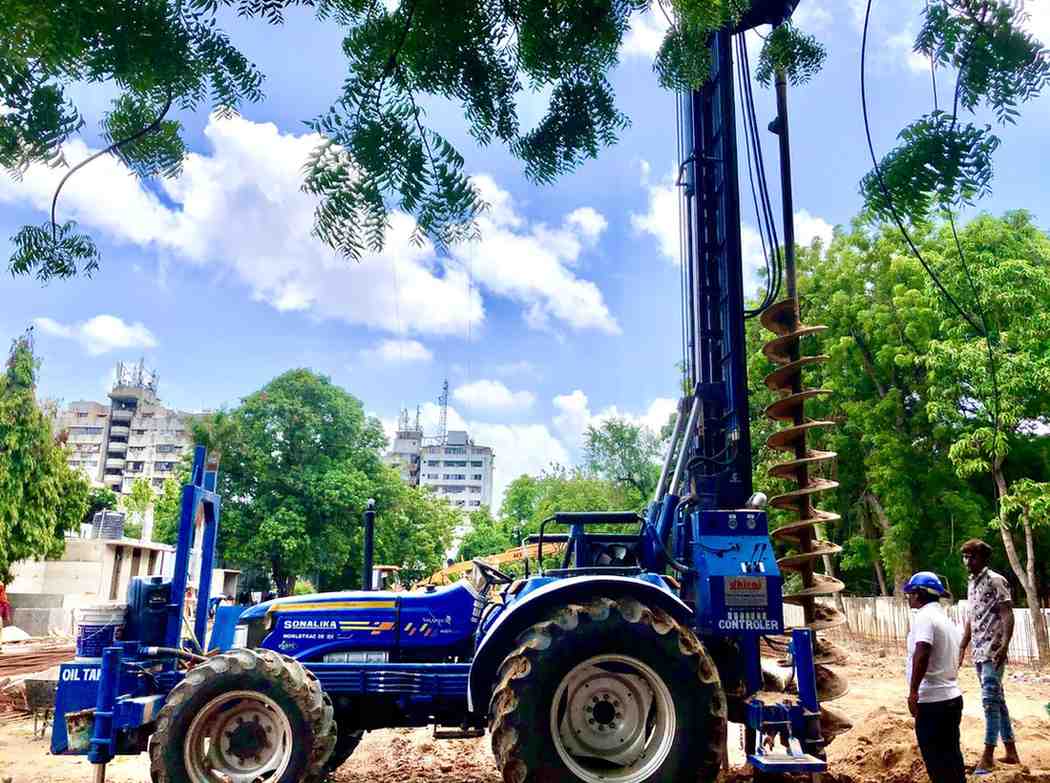
This method utilizes tractor-mounted rotary drilling rigs for fast and economical pile boring. Auger drilling is carried out to the required depth, with DMC rods added progressively to achieve deeper penetration through varying soil strata. It is particularly suitable for medium-depth foundation works and offers drilling capacities of up to 16 meters with excellent operational efficiency.
Our Work in Action
Click any image or video to view it in full screen.
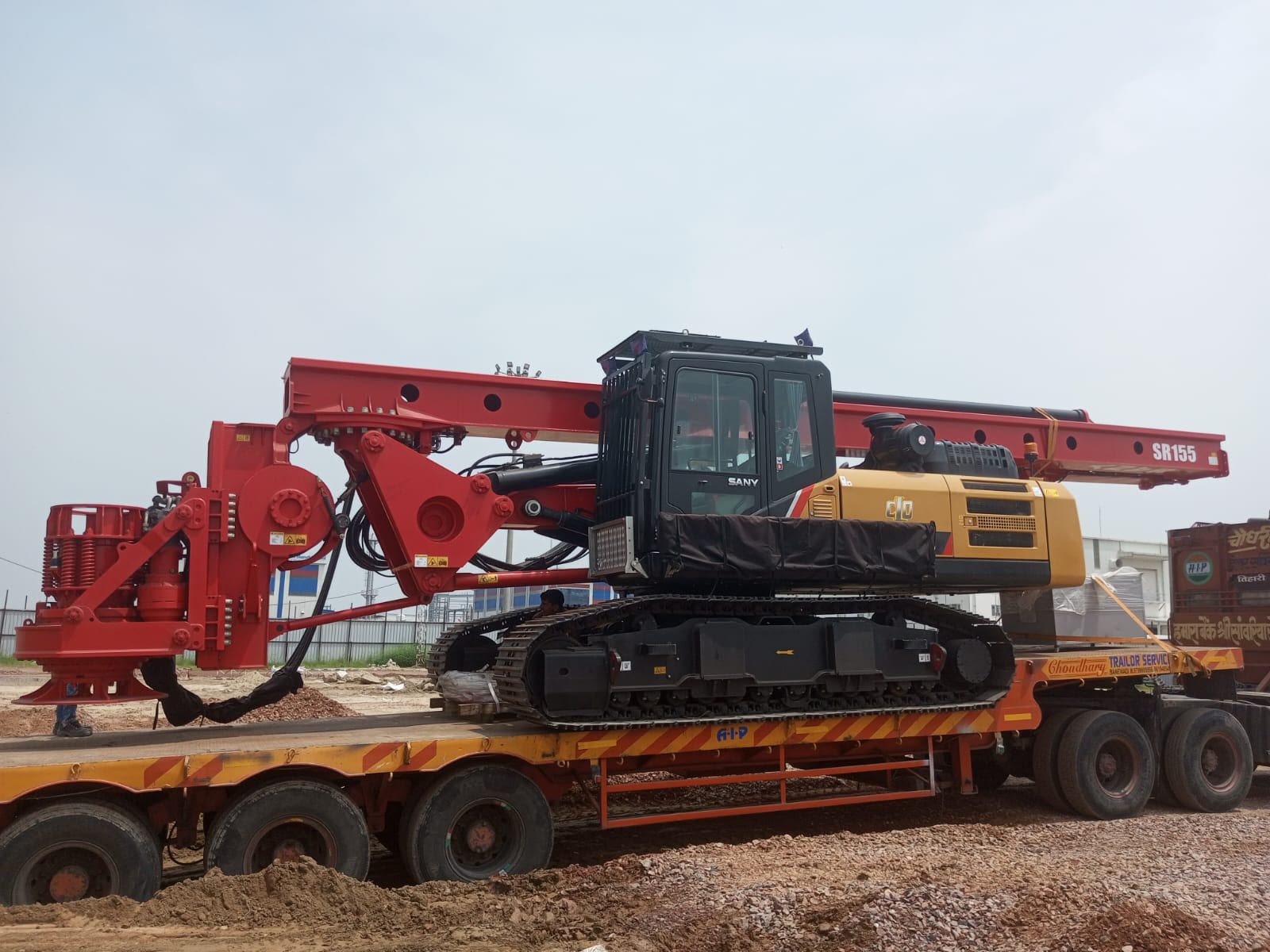
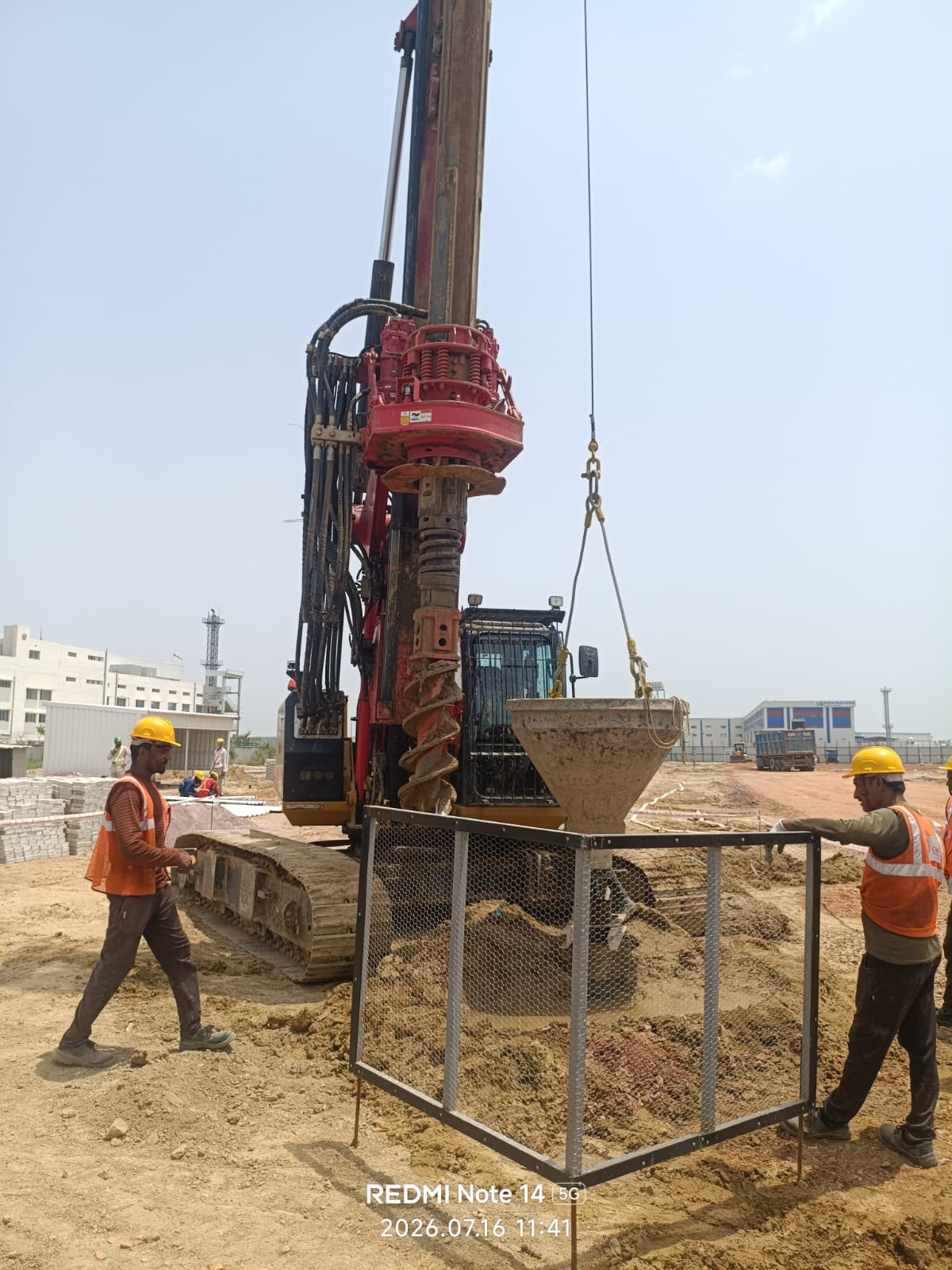
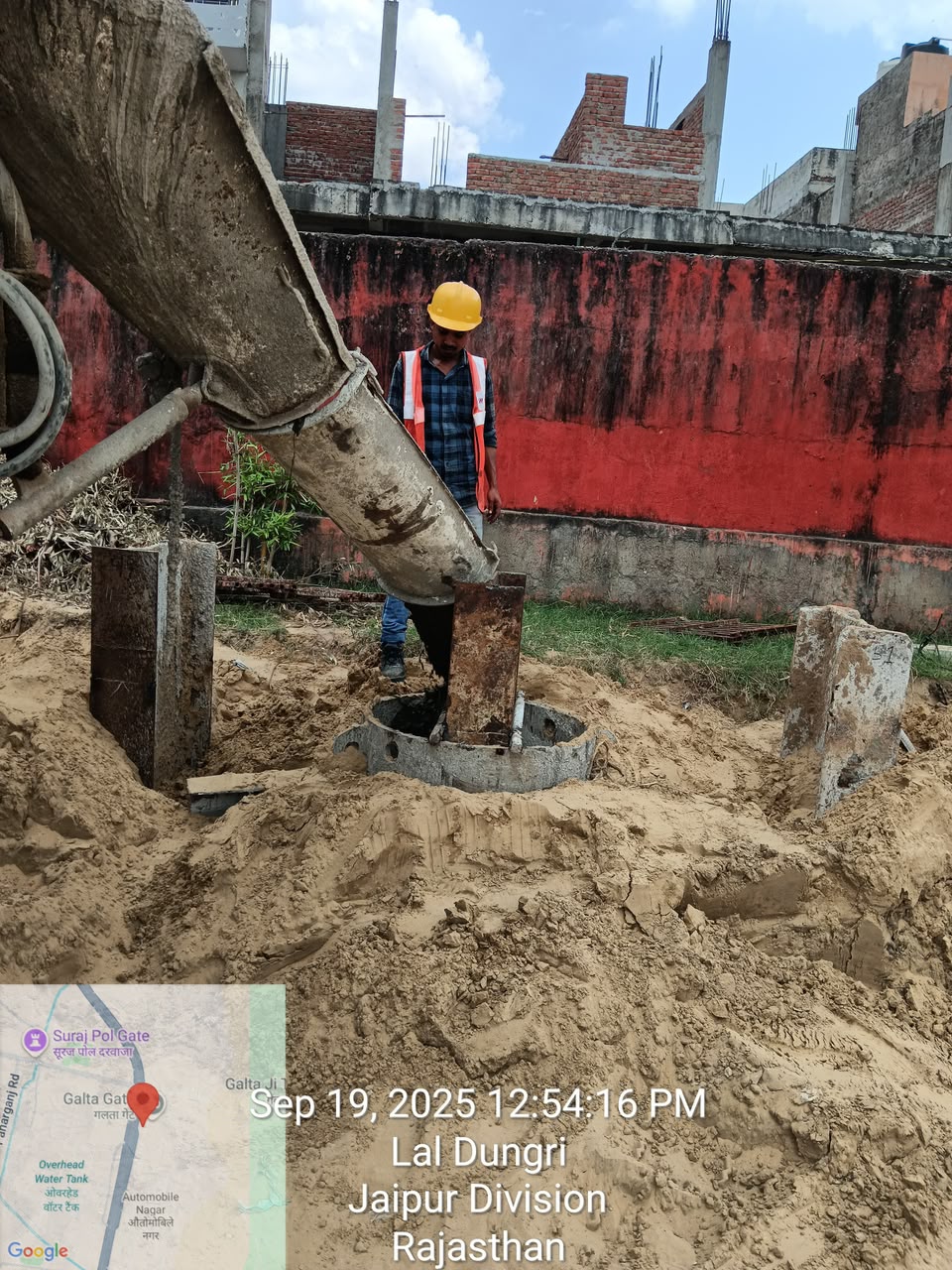
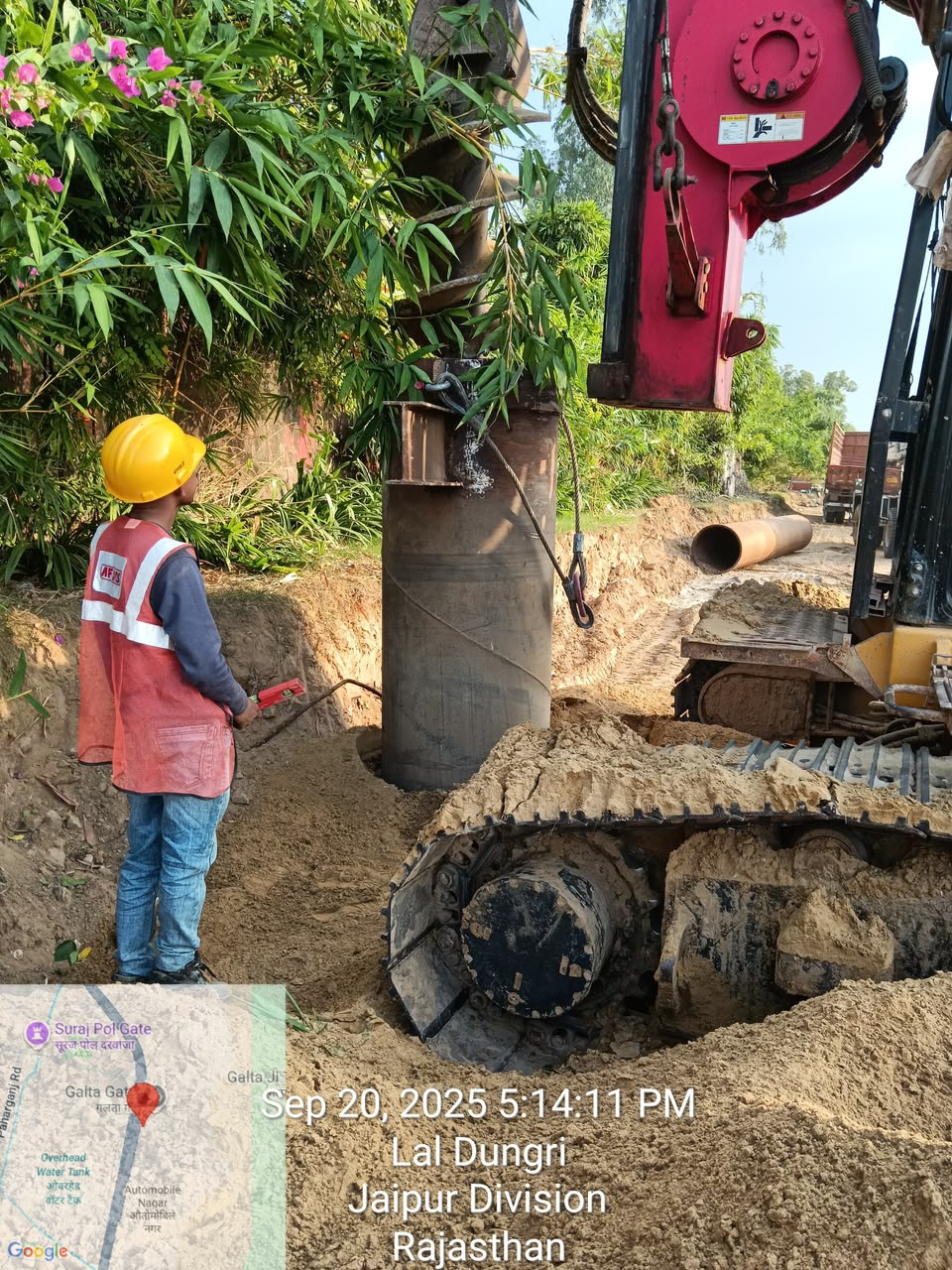
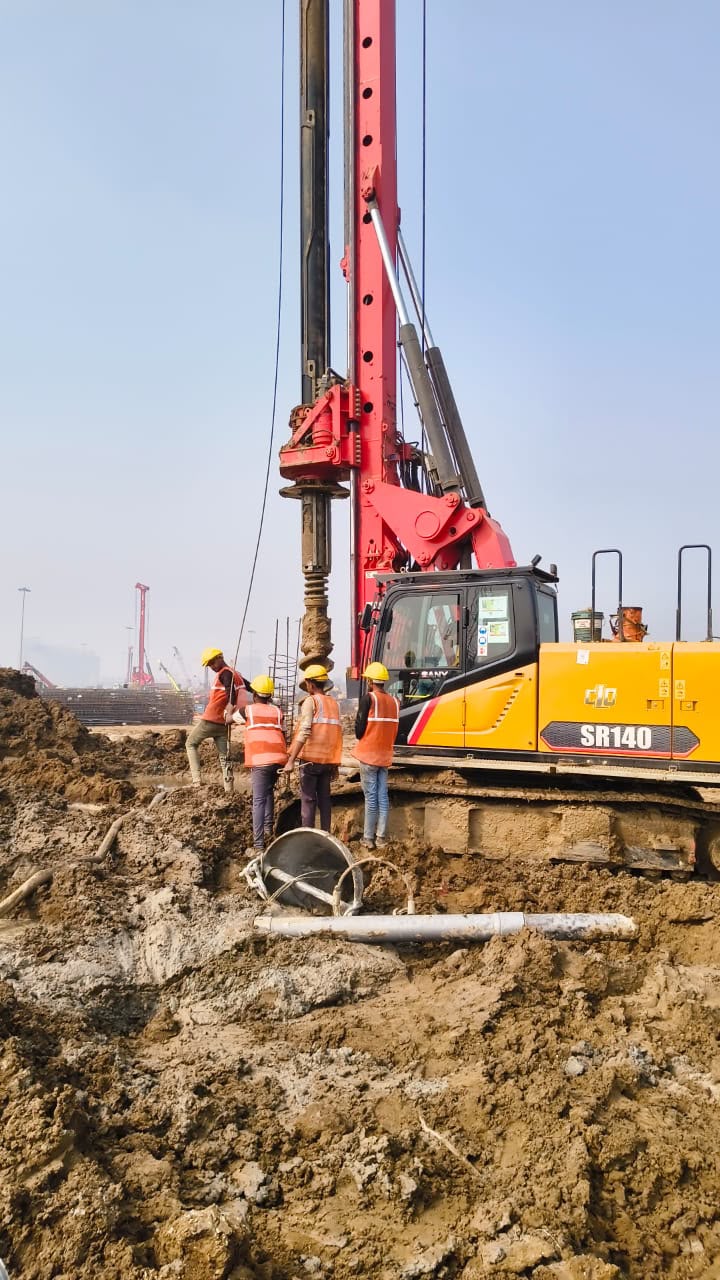
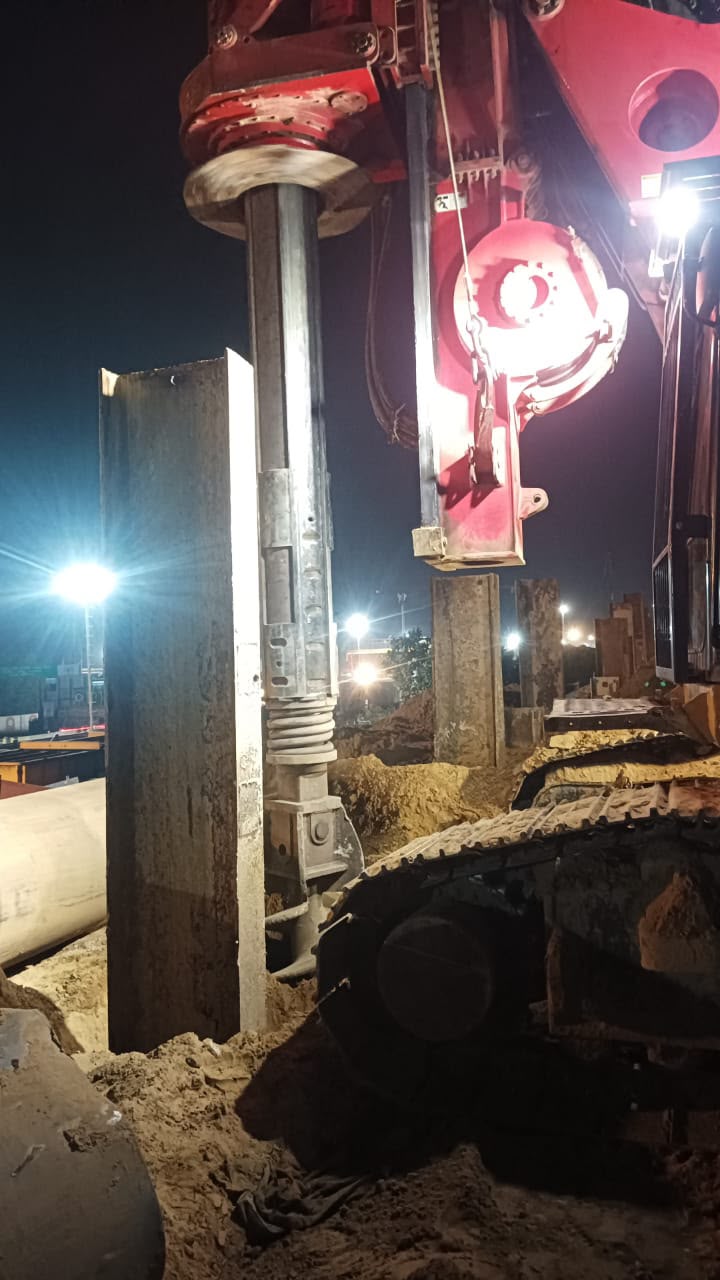
Recent Projects
Pile FoundationConstruction Process
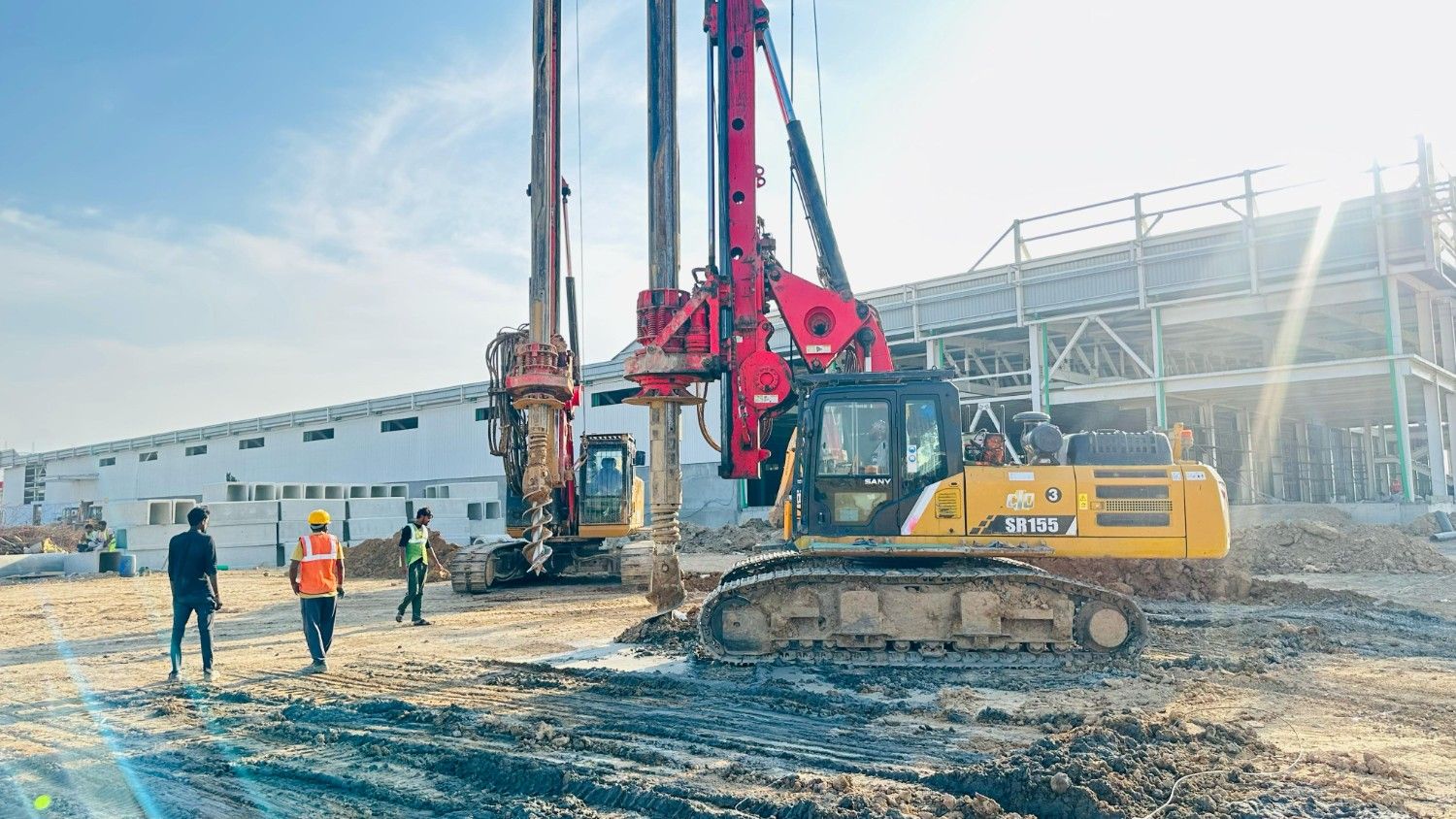
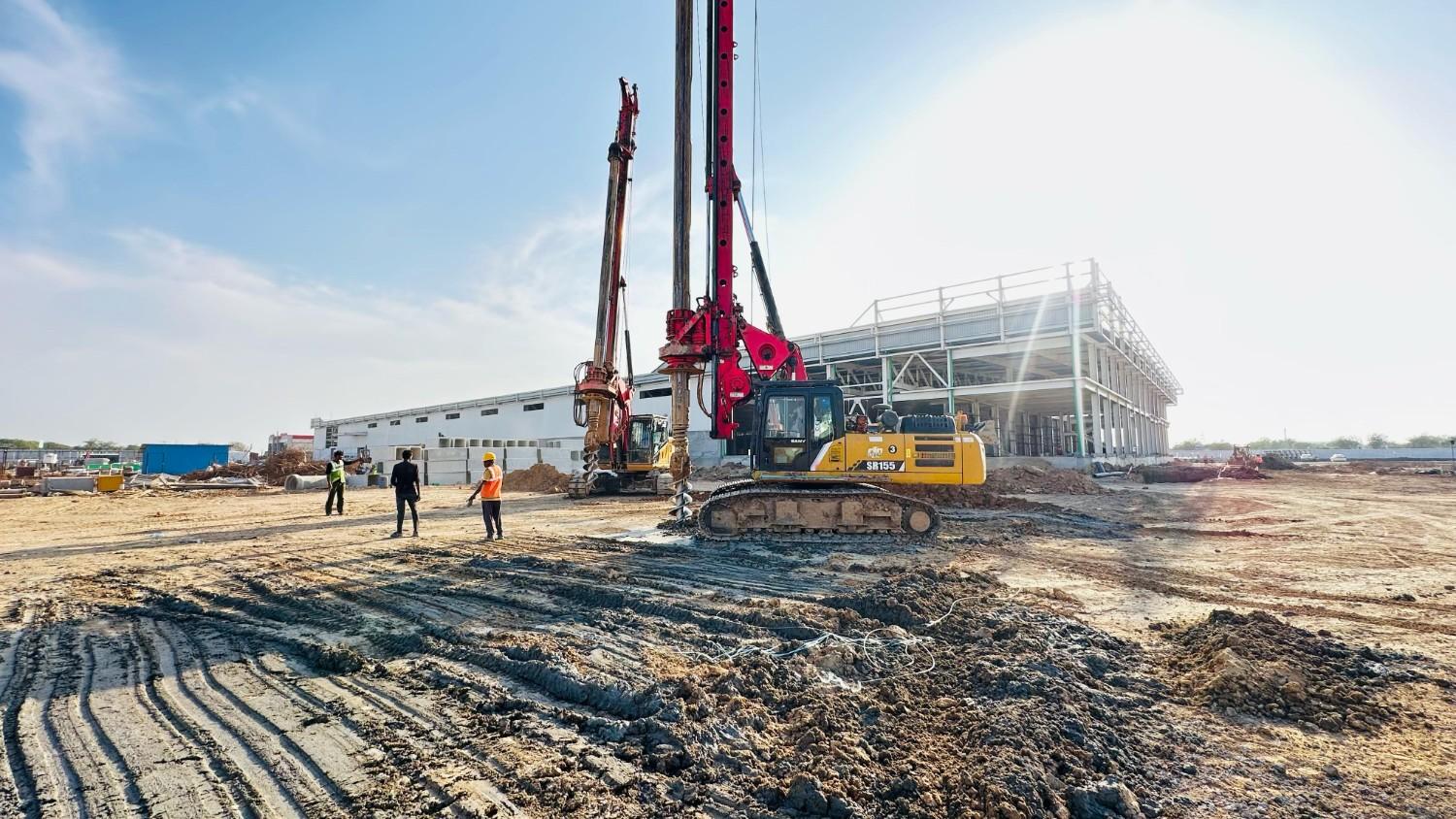
Survey, Setting Out & Guide Casing Installation
Detailed survey, marking of pile locations, and installation of temporary guide casing.
- Detailed survey and marking of pile locations
- Verification of pile coordinates and levels
- Positioning of Hydraulic Rotary Piling Rig
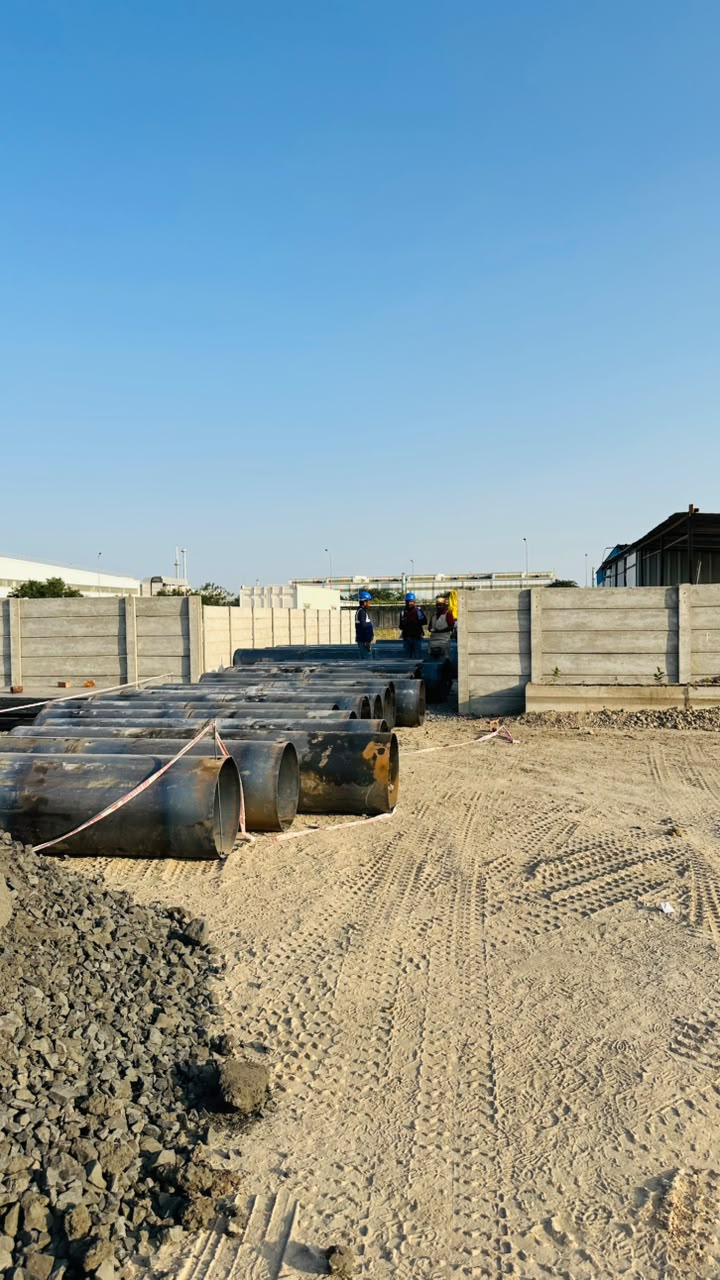
- Installation of temporary guide casing
- Ensures accurate pile alignment and protects bore opening
Pile Boring & Excavation
Drilling of pile bore using Hydraulic Rotary Rig to required depth.
- Drilling of pile bore using Hydraulic Rotary Rig
- Excavation carried out to the required depth and founding strata
- Suitable drilling tools used for soil, rock, or hard strata
- Continuous monitoring of depth, verticality, and pile diameter
- Removal and disposal of excavated soil from site
Slurry Support & Borehole Cleaning
Preparation and circulation of Bentonite/Polymer Slurry and borehole cleaning.
- Preparation and circulation of Bentonite/Polymer Slurry
- Stabilization of borehole walls during drilling
- Recycling of slurry through slurry plant
- Cleaning of borehole bottom to remove loose sediments
- Final inspection of bore depth and cleanliness
Reinforcement Cage Installation
Fabrication and lowering of reinforcement cage into the bore.
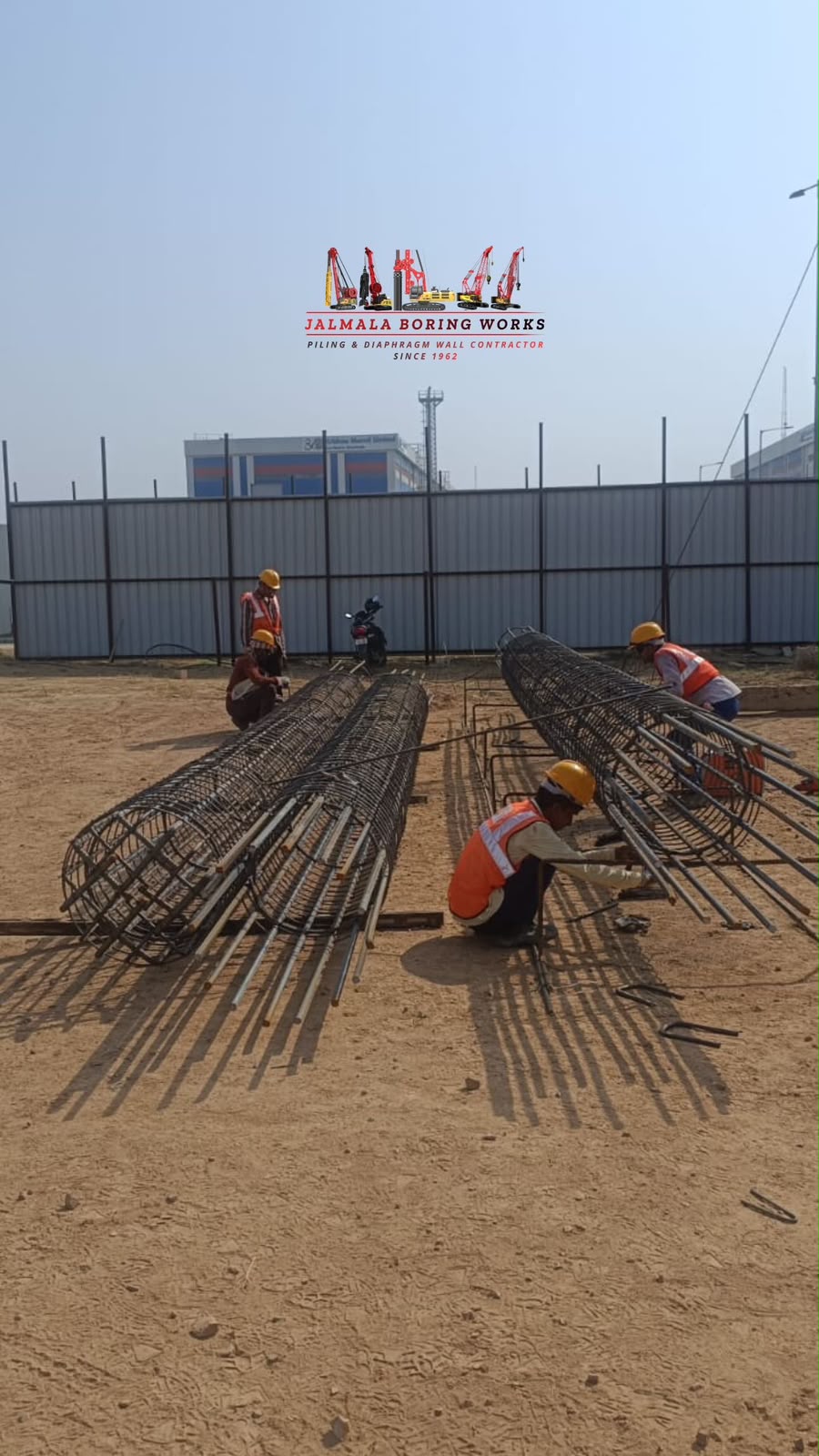
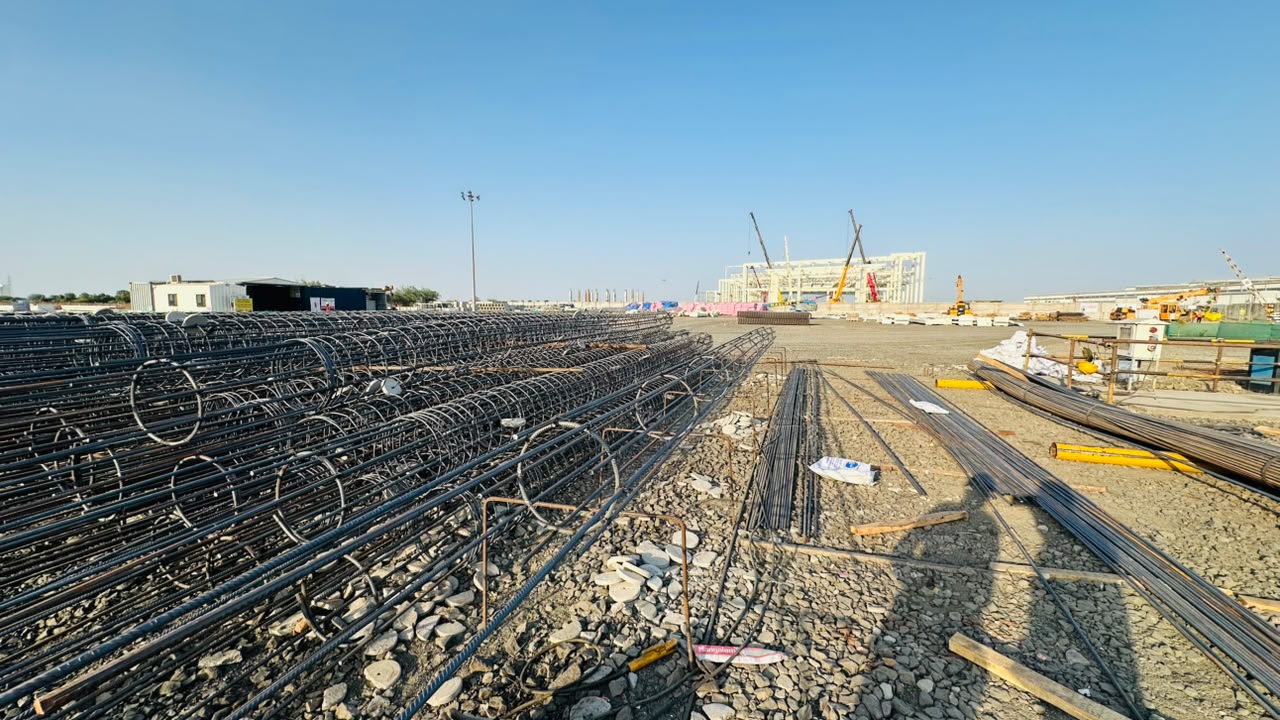
- Fabrication of reinforcement cage as per approved drawings
- Installation of spacers, couplers, lifting points, and cover blocks
- Lowering of reinforcement cage into the completed bore
- Accurate positioning and level adjustment
- Quality inspection before concrete placement
Tremie Concreting
Continuous concrete placement using tremie pipes.
- Installation of tremie pipes up to borehole bottom
- Continuous placement of concrete from bottom to top
- Prevention of concrete segregation through tremie method
- Displacement and recovery of slurry during concreting
- Completion of pile concreting in one uninterrupted operation
Pile Completion & Quality Control
Final pile completion, head trimming, and quality assurance.
- Extraction of temporary casing during or after concreting
- Recording of concrete consumption and pile parameters
- Pile head chipping up to cut-off level
- Verification of pile depth, diameter, and concrete quality
- Completion of testing, documentation, and quality assurance
- Ready for pile cap and foundation construction
Bored Cast-in-Situ Pile Contractor Gujarat – Tremie Concreting, Cage Installation & Integrity Testing
Bored cast-in-situ piles are the dominant foundation type in Gujarat — but most contractors only talk about the drilling. The critical quality phases happen after the borehole is drilled: cage installation, tremie concreting, casing extraction, and integrity testing. Get any of these wrong and the pile fails — even if the drilling was perfect. This page is for engineers, spec-writers, and quality managers who want the technical side of bored cast-in-situ piling in Gujarat — the concreting methodology, cage detailing, and testing protocols that determine whether your piles actually perform. For a broader hydraulic piling overview, see our hydraulic piling contractor Gujarat page; for drilling methodology, see our hydraulic rotary piling page. This page is about what happens AFTER drilling.
Tremie Concreting – The Method That Determines Pile Quality
Tremie concreting is the method of placing concrete underwater or under drilling fluid through a vertical pipe. The pipe's bottom is kept embedded 1.5-2 meters in fresh concrete throughout the pour — concrete flows into the hole from the bottom, displacing the drilling fluid upward. This method is critical because: (1) it prevents concrete segregation — concrete is not dropped from height; (2) it ensures the pile is continuously filled, no voids; (3) it displaces slurry without mixing; (4) it allows concreting in water-filled or slurry-filled boreholes. A tremie pour that breaks (concrete level drops below pipe bottom) causes a major pile defect — requiring expensive remediation. Our bored cast-in-situ piling concreting in Gujarat is executed by trained crews with continuous monitoring of concrete level, pipe embedment, and volume reconciliation.
Concrete Specification for Tremie Placement
Tremie concrete is designed for flow, not just strength. Typical specification for Gujarat bored piles: M30 to M40 grade depending on loading; slump 150-200 mm (higher than standard concrete to flow through tremie); minimum cement content 400 kg/m³; maximum aggregate 20 mm (smaller flows better through tremie); water-cement ratio ≤ 0.45; plasticizers or superplasticizers to achieve flow without excess water; and retarders to ensure concrete remains workable throughout the pour. IS 456 specifies these requirements. In Gujarat, chemical exposure (Ankleshwar, Vapi, Dahej, Mundra) requires additional specification: sulfate-resisting cement or PSC with slag content, enhanced cover 75-100 mm, and often epoxy-coated rebar. Our bored pile concrete specification for Gujarat is customized by project — not a generic M25 mix.
Reinforcement Cage – Detailing, Cover, and Installation
The reinforcement cage must be fabricated per IS 2911 and structural design, then lowered into the borehole with strict attention to detail. Key requirements: longitudinal steel — 1-2% of pile cross-section, extending full pile depth with lapping for pile cap connection; spiral or tied hoops — 8-12 mm diameter, spacing per design (usually 150-300 mm); cover blocks — 75-100 mm cover, positioned at 1-1.5m intervals around the cage; centering — cage must remain centered throughout lowering and concreting; lap length — 40-50× bar diameter for main steel. In Gujarat's seismic zones (Zone III in most cities, Zone V in Kutch), ductile detailing per IS 13920 is mandatory — specific tie spacing and confinement reinforcement. Our bored pile cage installation in Gujarat is verified against structural drawings before lowering.
Casing Extraction Timing – The Necking Question
Casing extraction timing is one of the most critical decisions in bored cast-in-situ piling. The principle: keep the casing bottom 1-2 meters below the rising concrete surface at all times. Extract too early (casing bottom above concrete surface) — soil intrudes into the pile, causing necking or soil inclusion. Extract too late (casing fully buried in concrete) — the casing may seize or cause concrete loss. Typical protocol: begin extraction when concrete reaches 2-3 meters above casing bottom; extract in short strokes (0.5-1 meter each) while observing concrete level; use casing vibrator or oscillator to assist smooth extraction; never stop extraction for more than 15-30 minutes. In Gujarat, casing extraction is especially critical in soft clay (South Gujarat alluvial) and loose sand (coastal) where hole collapse risk is high. Our bored pile casing extraction protocol for Gujarat is documented per pile and monitored by site engineers.
Pile Integrity Testing – PIT, Sonic Logging, Cross-Hole
Pile integrity testing verifies that the installed pile has no internal defects. Three methods: PIT (Pile Integrity Test) — low-strain sonic wave test, applied to 100% of piles, identifies major defects; Sonic logging — a probe is lowered into pre-installed tubes within the pile, checking concrete continuity; Cross-Hole Sonic Logging (CHSL) — sonic wave transmitted between tubes, provides detailed internal imaging — the most thorough method, used for critical piles (high-rise, infrastructure). IS 2911 Part 4 requires integrity testing as part of pile acceptance. In Gujarat, PIT is standard for all piles; CHSL is often required for Ahmedabad/Surat high-rise and infrastructure projects. Any anomaly requires remediation — jacketing, post-grouting, or replacement. Our bored pile integrity testing in Gujarat includes third-party PIT and CHSL with full documentation for project handover.
Pile Head Treatment – The Connection That Fails Most Often
Pile head treatment is critical for connecting the pile to the pile cap — and is often the weakest link in the system. After initial concrete set (7-14 days), the pile head is chipped to sound concrete — typically 300-500 mm below finished pile head to remove laitance, contaminated concrete, and any weak top layer. Then: expose main reinforcement for lapping into pile cap; expose at least 40× bar diameter for proper lap length; clean reinforcement of concrete debris; verify concrete strength by core testing if there is any doubt. Poorly treated pile heads are a common cause of structural failure at the pile-to-cap connection. In Gujarat, pile head treatment is inspected as part of quality acceptance. Our bored pile head treatment in Gujarat is documented with photographs at each pile.
Serving All of Gujarat – From Kutch to Vapi
Our bored cast-in-situ piling rigs and crews serve the entire state — including Ahmedabad, Surat, Vadodara, Rajkot, Gandhinagar, Bharuch, Ankleshwar, Vapi, Dahej, Sanand, Dholera, Mundra, Kutch, Mehsana, Morbi, Bhavnagar, Jamnagar, Anand, and Nadiad. Every project applies the full concreting methodology (tremie, casing extraction, cage installation, integrity testing) and is documented per IS 2911 Part 4. Whether your project is an Ahmedabad high-rise, a Surat commercial tower, a Vadodara refinery auxiliary, or a Rajkot basalt rock socket, our bored cast-in-situ pile team in Gujarat is ready.
Contact Our Bored Cast-in-Situ Piling Team Today
Ready to discuss bored cast-in-situ piling in Gujarat for your project? Call our team at +91 93745 45415 or email jalmala.pile@gmail.com. Share the pile diameter, design depth, soil strata, and any integrity testing requirements (PIT, CHSL) from your project specification — our engineering team responds within 2 business days with a technical proposal covering concreting methodology, concrete specification, cage design review, and testing protocol. Main office is at Dholka Road, near Nariampura Village, Narimanpura, Sarkhej, Ahmedabad, Gujarat 382210. For a complete overview of our bored cast-in-situ piling services in Gujarat, explore this page and see why spec-writers and quality managers across Gujarat choose Jalmala Boring Works for piles that pass integrity testing cleanly.