
Diaphragm Wall
Deep Excavation & Retaining Wall Specialists
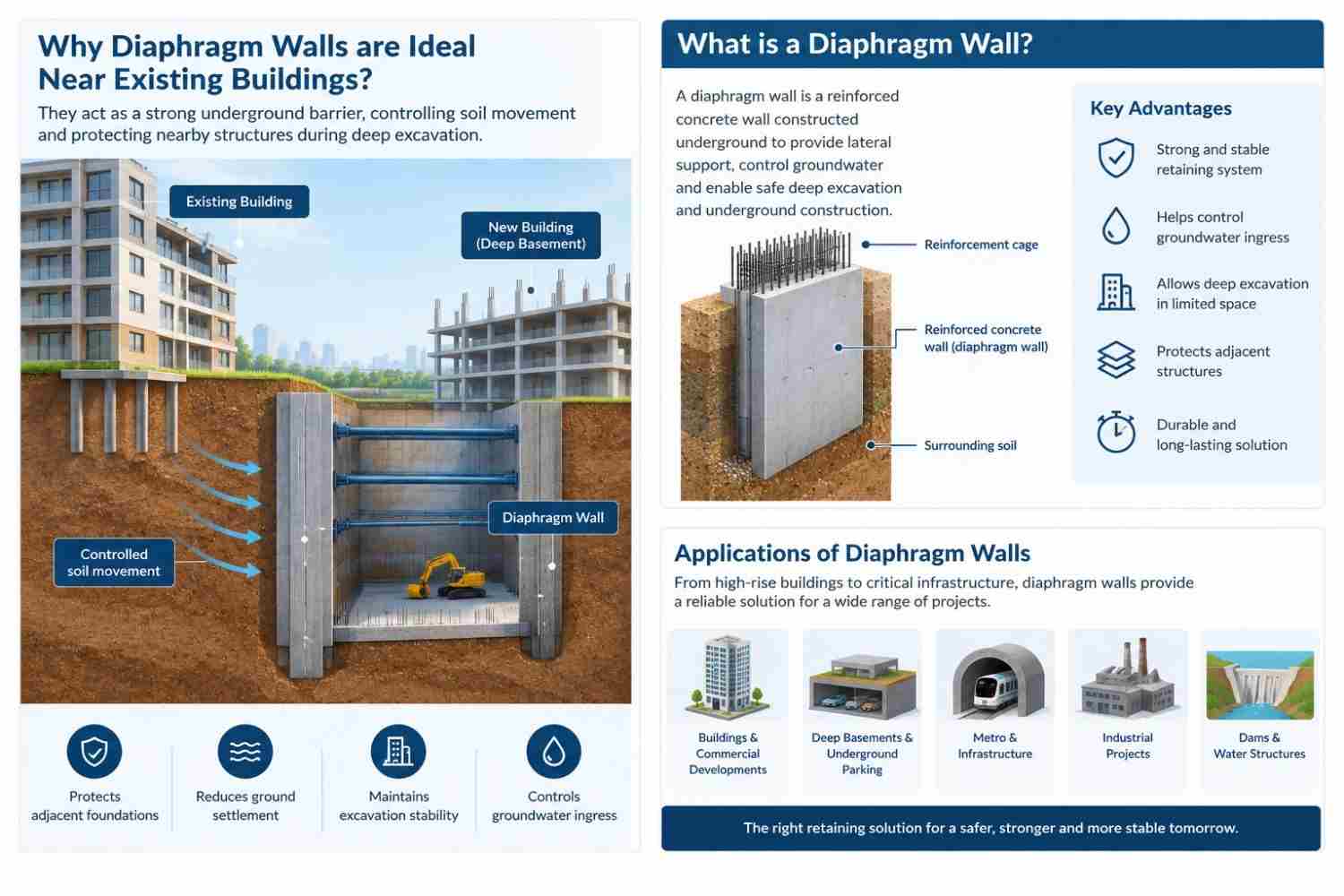
Jalmala Boring Works specializes in Diaphragm Wall Construction for deep excavations, basements, metro projects, commercial developments, and industrial infrastructure. We execute complete diaphragm wall work from 400 mm to 1200 mm thickness and depths of up to 40 metres, delivering watertight, high-strength retaining walls with minimal ground movement. Our end-to-end solution includes guide wall construction, slurry-supported panel excavation, reinforcement cage installation, tremie concreting, water-stop systems, and quality-controlled execution.
Diaphragm WallConstruction Process
A step-by-step overview of how Jalmala Boring Works constructs high-quality Diaphragm Walls — from guide wall installation to final panel completion — with precision, safety, and six decades of expertise.
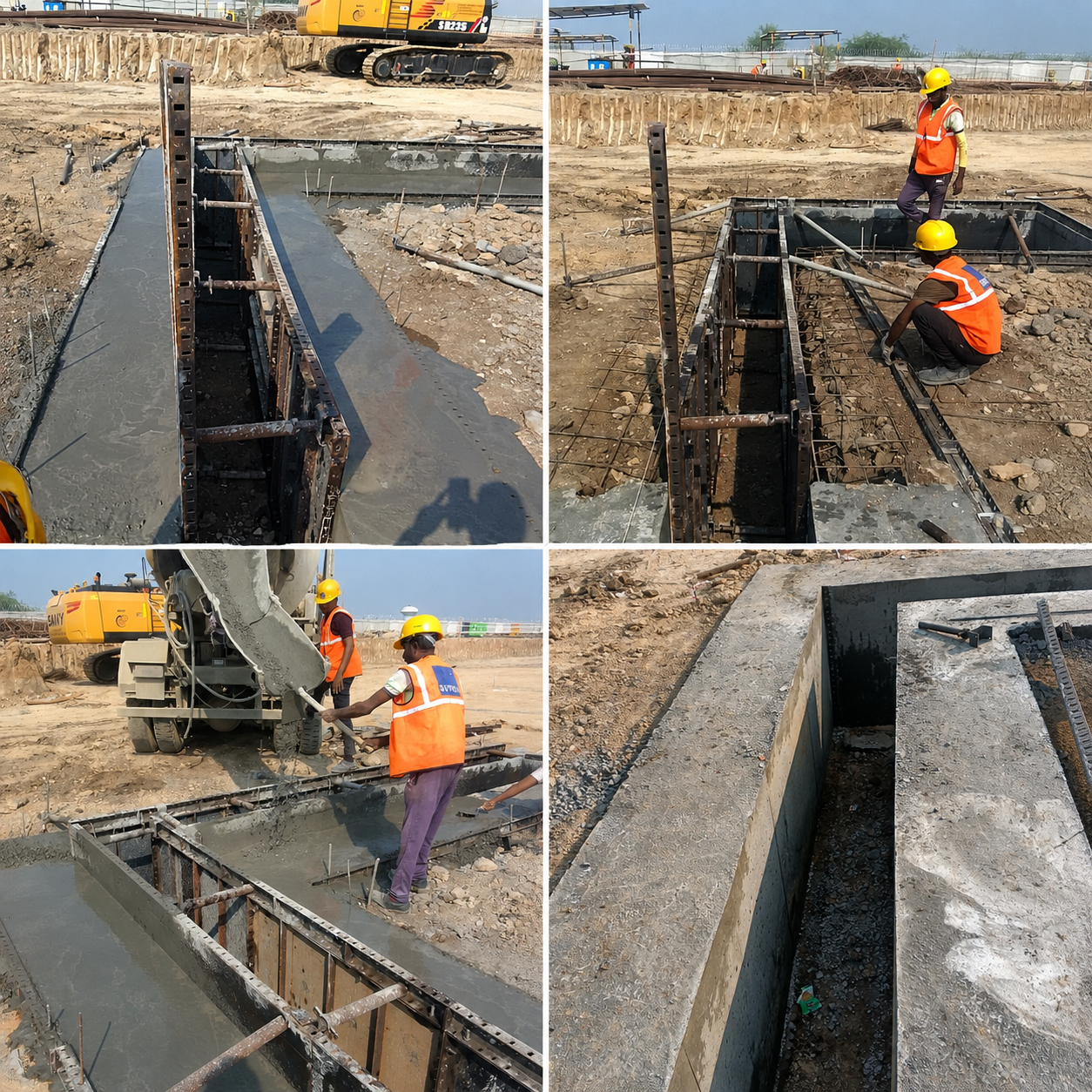
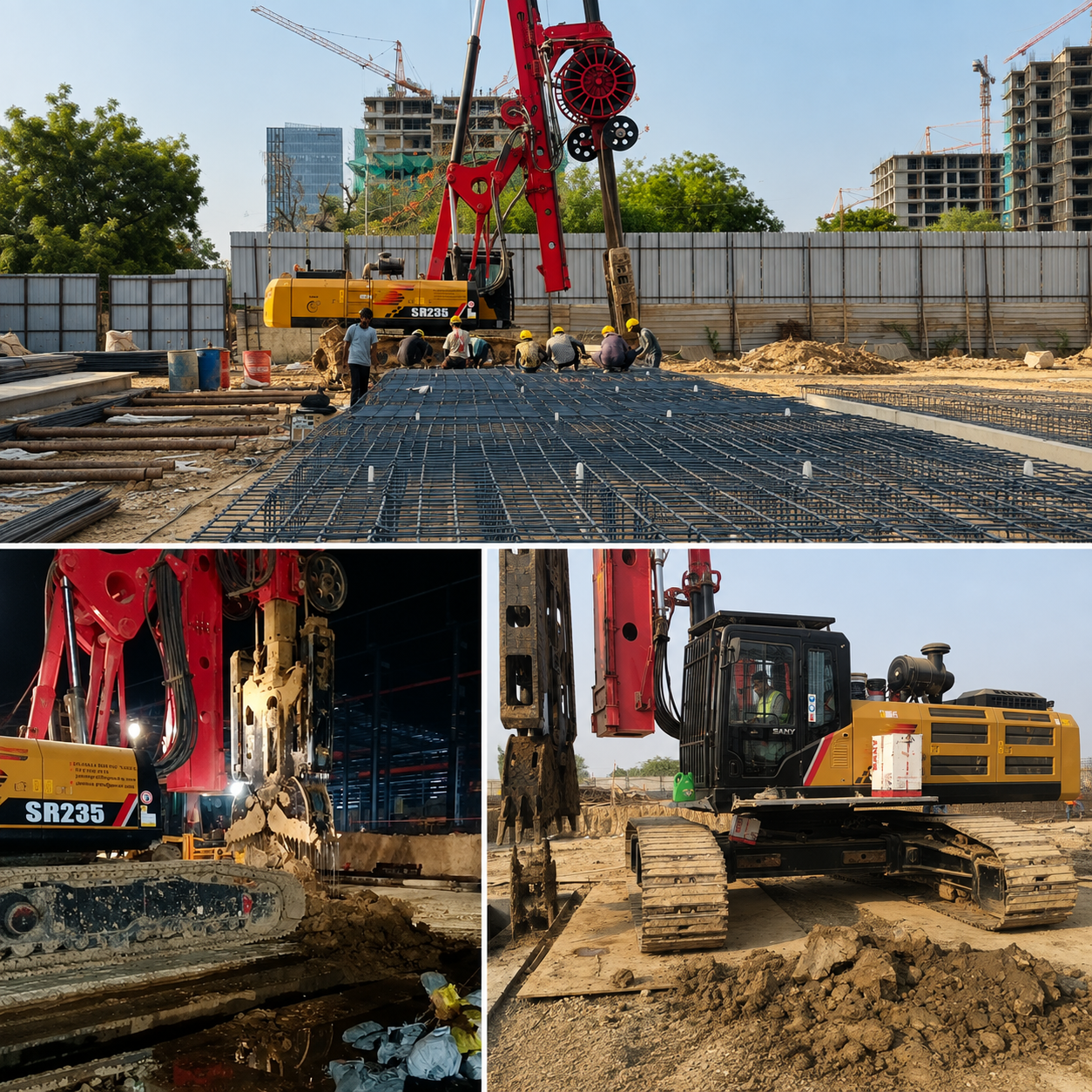
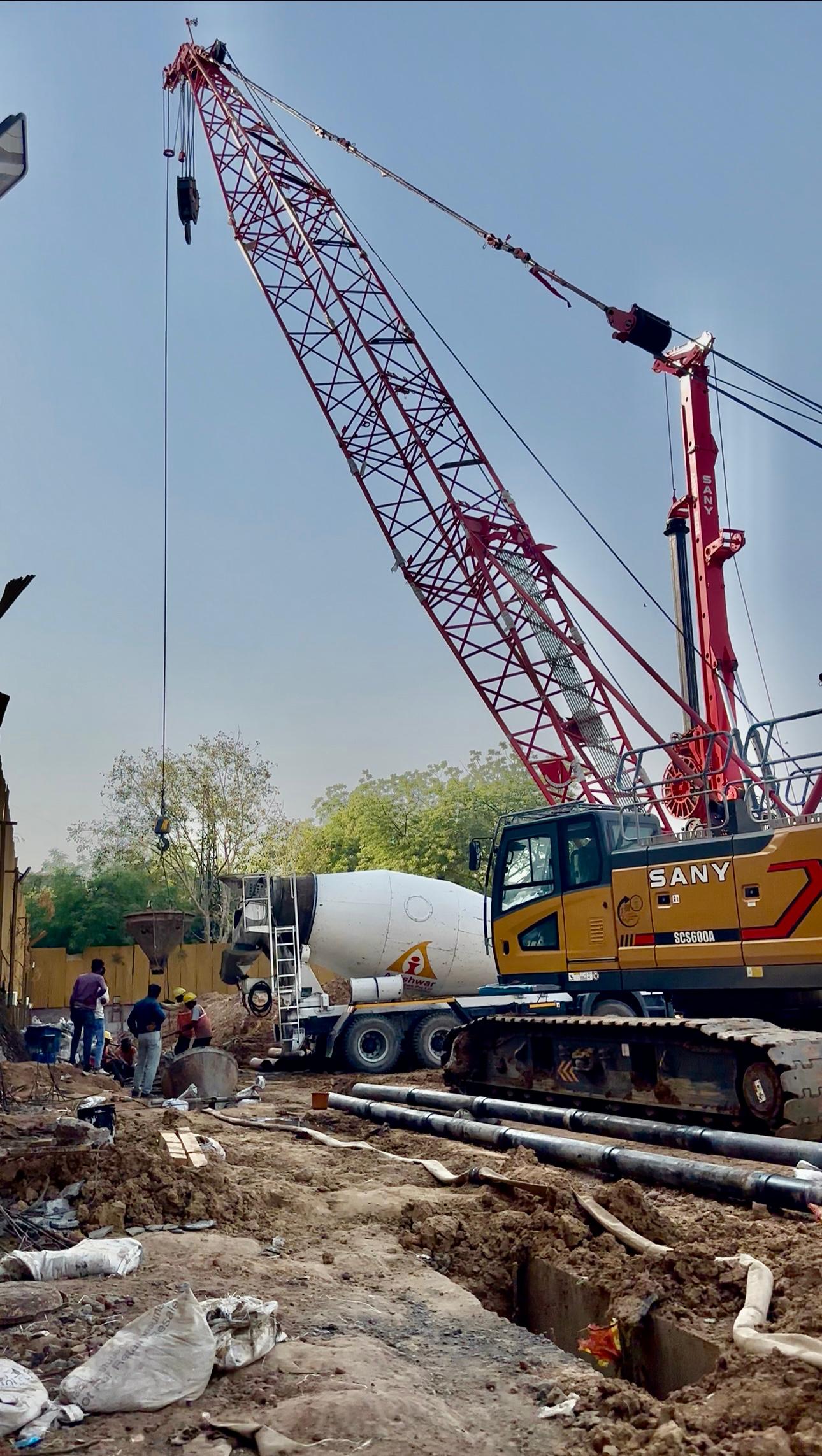
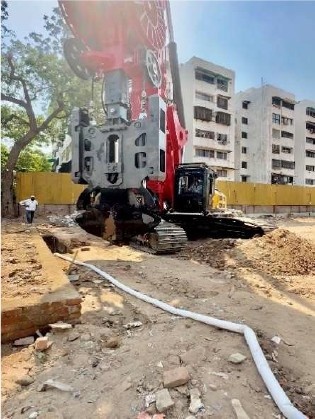
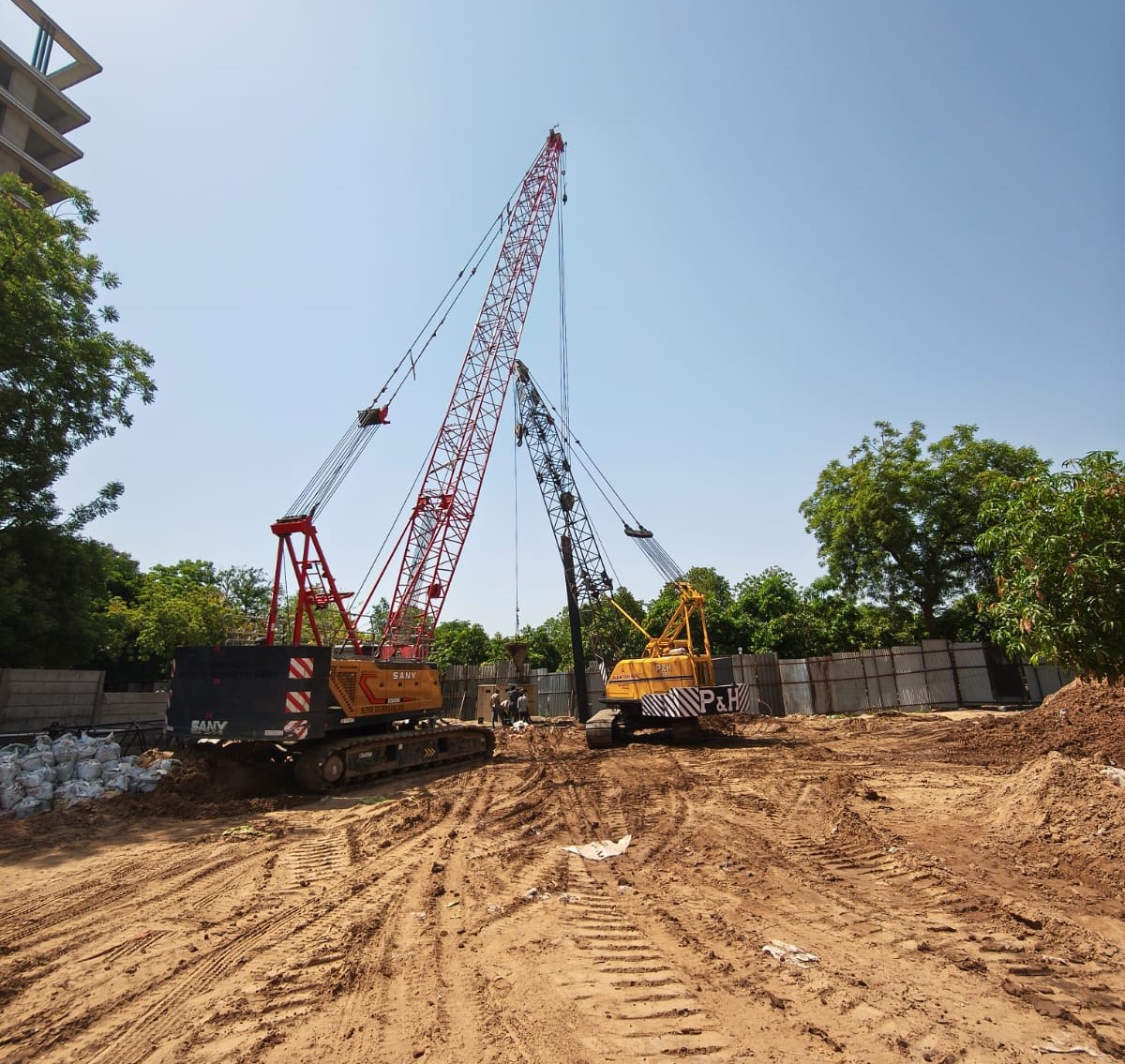
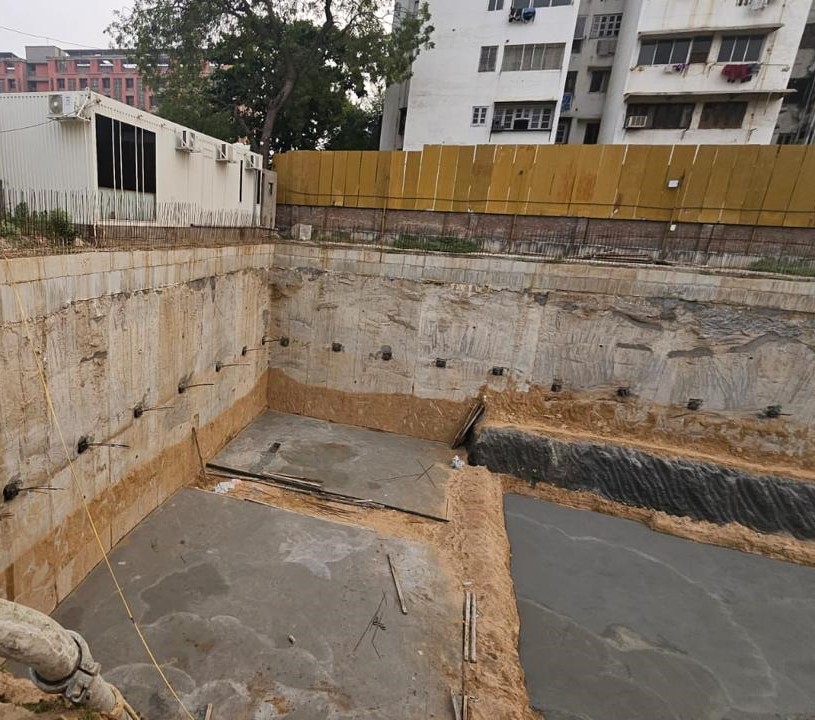
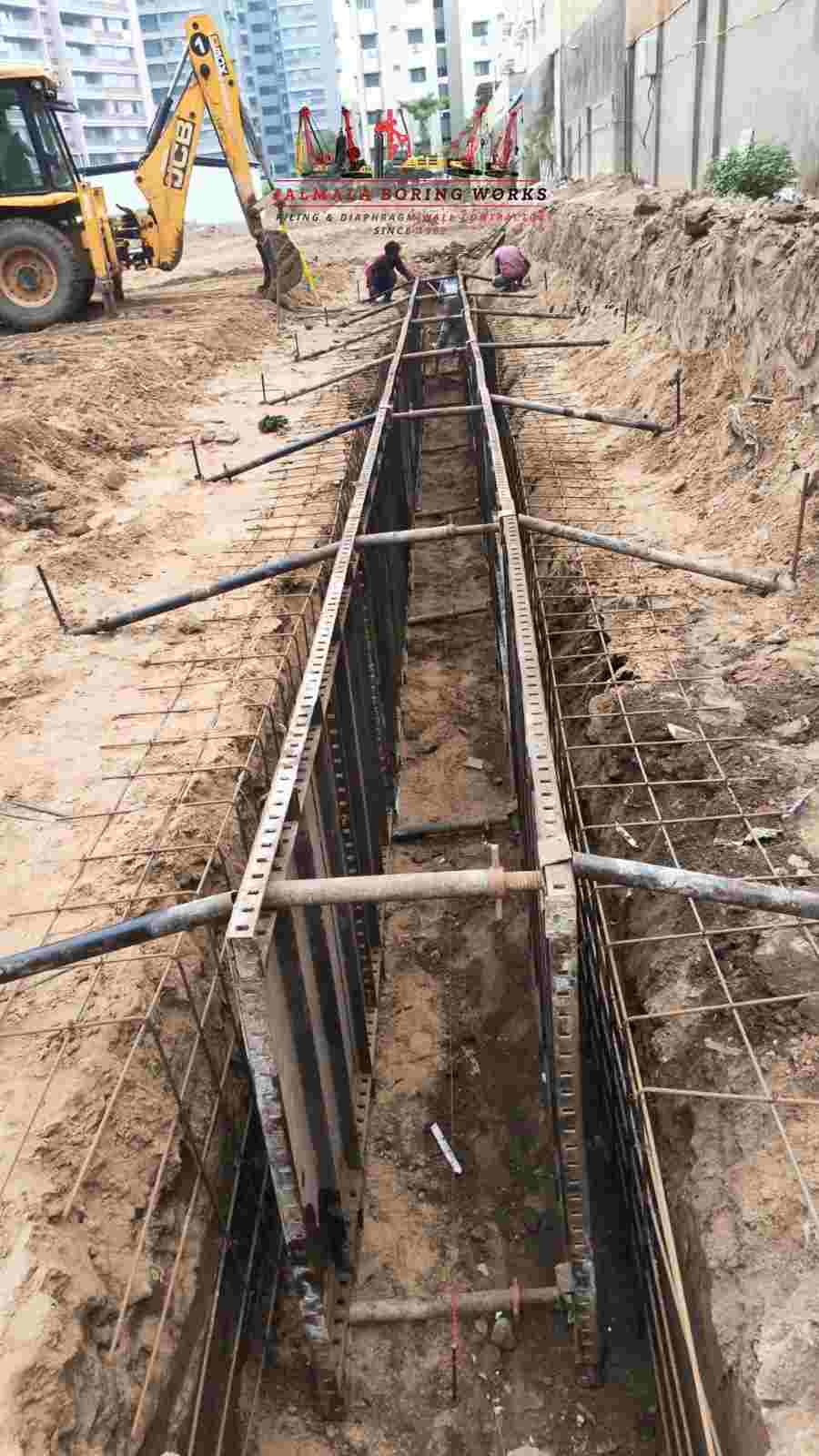
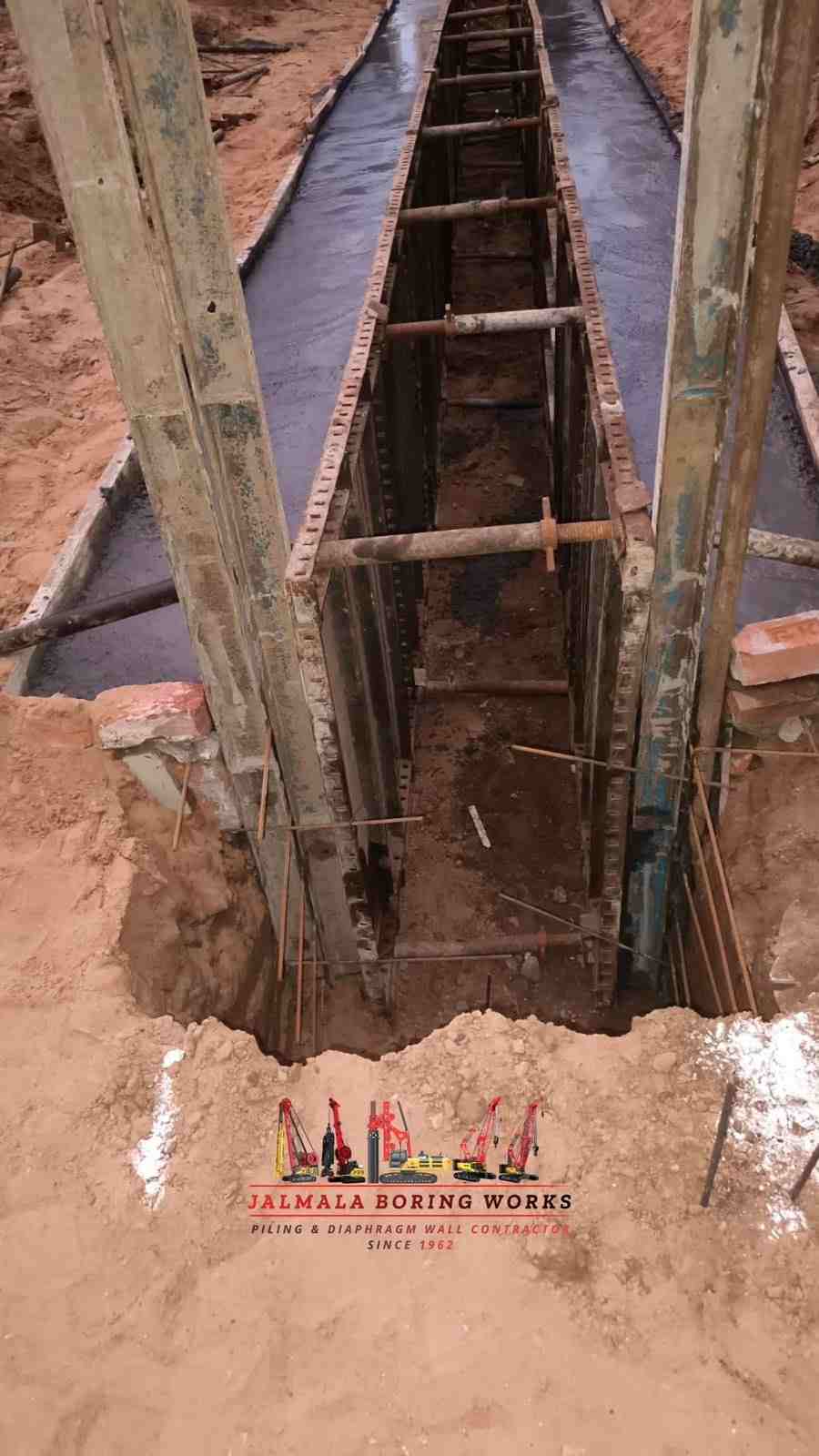
Survey, Setting Out & Guide Wall Construction
Detailed survey, panel marking, and guide wall construction for accurate alignment.
- Detailed survey and panel layout marking
- Construction of reinforced concrete guide walls
- Establishes accurate wall alignment
- Supports excavation equipment
- Prevents top soil collapse during excavation
Slurry Preparation & Panel Excavation
Preparation of slurry and excavation of diaphragm wall panels.
- Preparation of bentonite/polymer slurry
- Excavation using Hydraulic Grab or Hydromill
- Continuous slurry circulation for stability
- Excavation to required depth and founding strata
- Regular monitoring of depth and verticality
Joint Formation & Trench Cleaning
Formation of watertight joints and cleaning of excavated trench.
- Installation of Stop-End Pipes
- PVC Water Stopper installation
- Formation of watertight panel joints
- Desanding and slurry cleaning
- Removal of sediment from trench bottom
- Final trench inspection
Reinforcement Cage Installation
Fabrication and placement of reinforcement cage into trench.
- Fabrication as per approved drawings
- Installation of spacers and couplers
- Lowering cage into slurry-filled trench
- Maintains required concrete cover
- Pre-concreting quality inspection
Tremie Concreting
Continuous concrete placement using tremie pipes.
- Installation of tremie pipes
- Concrete poured from bottom to top
- Displacement and recovery of slurry
- Single uninterrupted concreting operation
- Formation of reinforced concrete wall panels
Panel Completion, Quality Control & Wall Formation
Final wall formation, testing, and quality assurance activities.
- Removal of stop-end elements
- Construction of secondary panels
- Formation of continuous watertight wall
- Verification of alignment and thickness
- Concrete quality testing and records
- Wall head trimming for capping beam
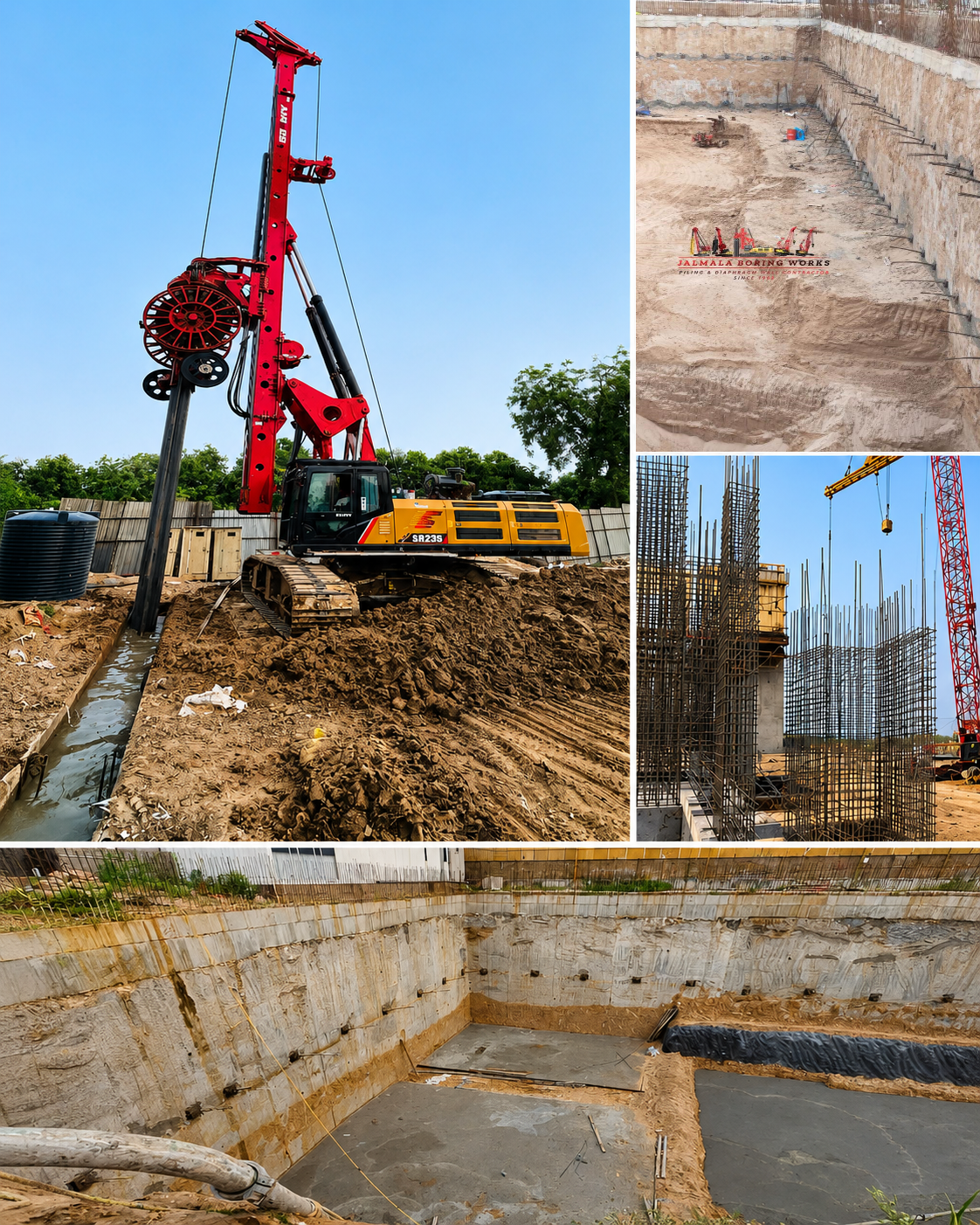
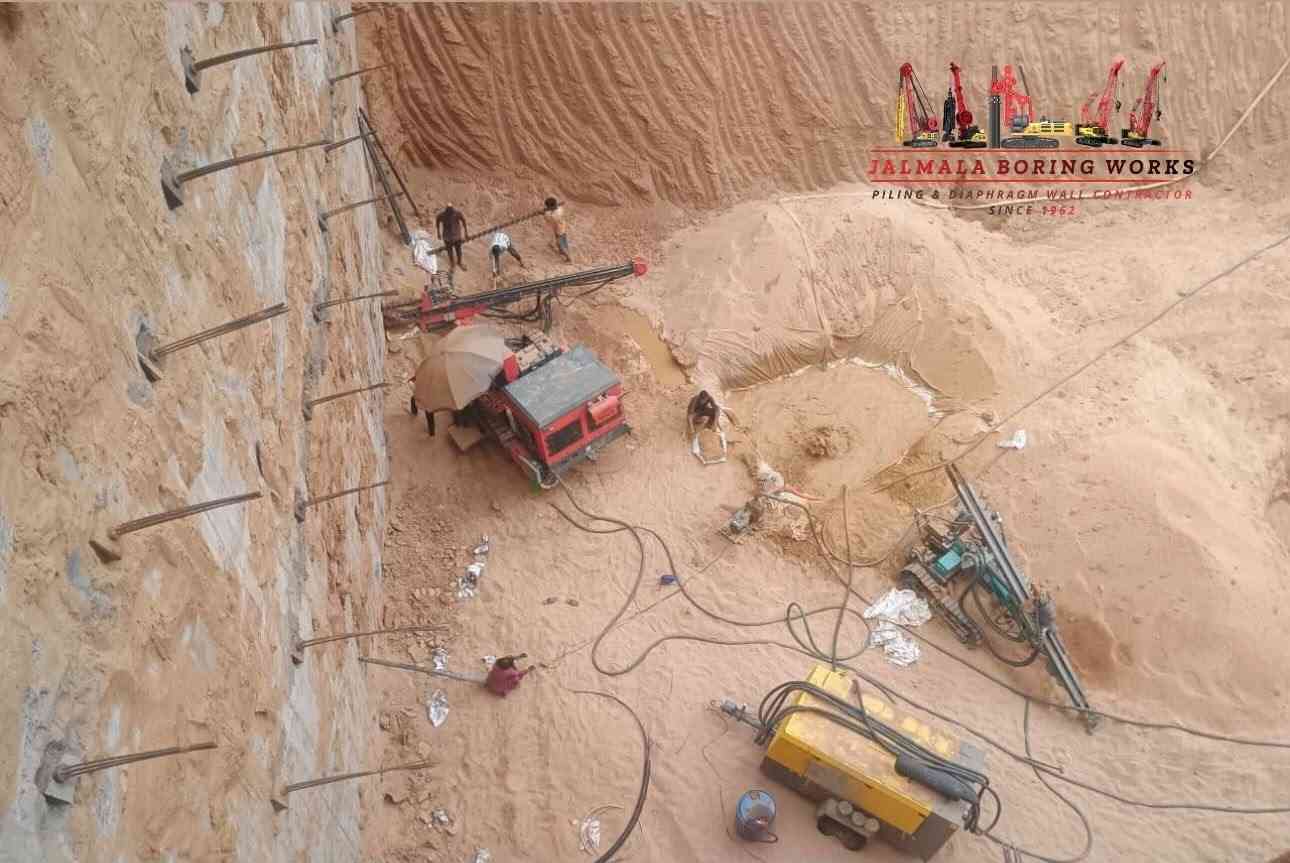
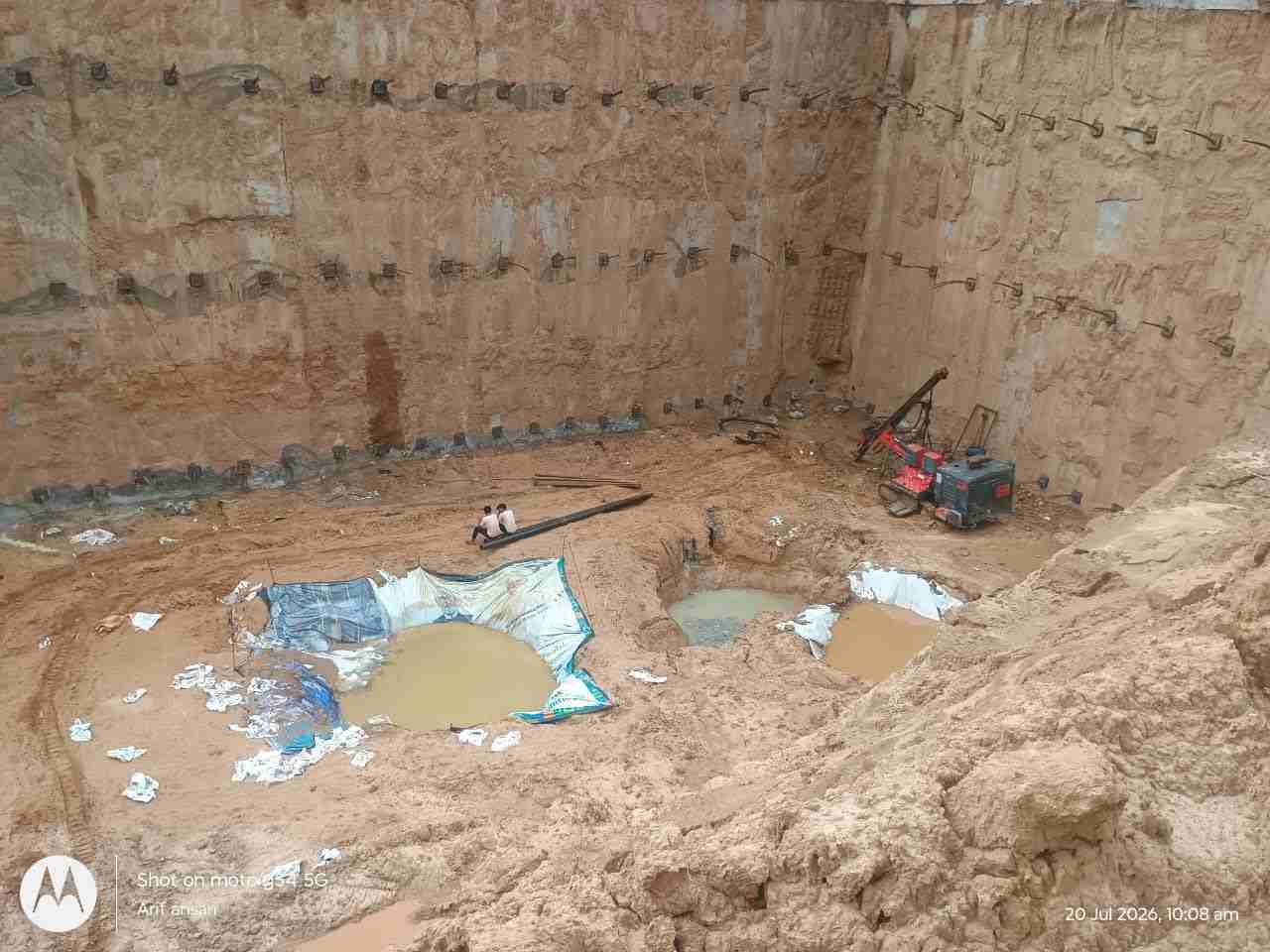
Execution Gallery
Recent Projects
Diaphragm Wall Price Per Meter in India: What the Number Actually Means
If you are searching for diaphragm wall price per meter, the first thing to understand is that diaphragm walls are not priced like ordinary concrete work. They are equipment-intensive, ground-dependent, and measured in three different ways depending on who is quoting. A single “per meter” number without thickness, depth, and geology is not a price — it is a placeholder. This guide explains how the number is actually built, what reference ranges exist in India, and what changes the cost from one project to the next.
Per Meter, Per Square Meter, or Per Cubic Meter?
Diaphragm walls are measured in three units, and confusing them is the most common source of pricing disputes. Per square meter (sqm) measures the wall face — length × depth — and is the standard unit for metro and infrastructure projects where the wall's retaining function is what matters . Per cubic meter (cum) measures volume — length × depth × thickness — and is used in CPWD and PWD schedules because it captures concrete and excavation quantity . Per running meter of wall length is sometimes used for early budgeting, but it is the least precise because it ignores both depth and thickness. When you ask for a diaphragm wall price per meter, always ask the contractor which measurement basis they are using.
Reference Ranges: Metro Projects and CPWD Schedules
Two reference points are widely used in India. For metro projects, industry analysis indicates that diaphragm walls account for 25–40% of underground civil costs, with execution rates ranging between ₹40,000 and ₹70,000 per square meter, depending on depth and geology . For standard schedule rates, CPWD DSR 2023 lists cast-in-situ RCC diaphragm wall (thickness up to 600 mm, M30, tremie-controlled) at ₹20,870.40 per cubic meter, excluding reinforcement . An IIT Delhi tender document shows a similar rate of ₹20,460.45 per cum for a comparable specification . These are schedule and reference rates, not market quotes — but they show the order of magnitude for diaphragm wall pricing in India. Private market listings on platforms like IndiaMART show a much wider spread, from a few hundred to over a thousand rupees per square foot, because the scope behind each listing varies enormously.
What Changes the Price the Most
Three factors dominate every diaphragm wall cost estimate. Geology is the biggest wildcard. A wall that passes through soft alluvial soil bores quickly; the same wall through weathered granite or hard rock consumes chisel hours and slows panel production. Depth is the second driver. Deeper walls require larger rigs, more bentonite circulation, and longer reinforcement cages — all of which increase cost per square meter. Thickness is the third. A 1,200 mm wall uses four times the concrete and reinforcement of a 300 mm wall per square meter of face area. Site constraints — tight urban access, adjacent structures, traffic restrictions — add another layer by reducing panel production rates.
What a Good Quote Should Separate
When comparing diaphragm wall price per meter from different contractors, ask them to break out the following: excavation and boring, bentonite slurry, guide walls, reinforcement cage (steel), concrete, stop-end joints, chipping to cut-off level, and GST. CPWD carries diaphragm wall as an item that excludes reinforcement steel, and most standard schedules follow this convention . A contractor who separates these heads is easier to compare and less likely to surprise you with exclusions later.
How to Get an Accurate Diaphragm Wall Price for Your Site
The only reliable way to know your diaphragm wall price per meter is to share three things with a contractor: the geotechnical report (especially the rock level), the structural drawings (wall thickness, depth, and reinforcement), and the site location (for access and logistics assessment). With those, a contractor can build a rate that reflects the actual ground conditions and scope. Jalmala Boring Works has been pricing and executing diaphragm wall work across India since the technique became mainstream in Indian construction, and we are happy to review your drawings and soil data to give you a site-specific estimate — not a generic per-meter figure.
Explore Our Diaphragm Wall Services
If you are comparing diaphragm wall pricing, it also helps to see how the work is executed. Our diaphragm wall contractor page covers the construction process, bentonite management, and panel sequencing. If your project is in Bangalore, our diaphragm wall services in Bangalore page addresses Namma Metro, tech corridor basements, and valley water table conditions specifically. And if you are weighing diaphragm walls against other retaining systems, our anchor piles vs soil nails comparison may be useful.
Talk to a Diaphragm Wall Contractor Who Prices Transparently
If you want to understand what your diaphragm wall price per meter should realistically be, call our team at +91 93745 45415 or email jalmala.pile@gmail.com. Our main office is at Dholka Road, near Nariampura Village, Narimanpura, Sarkhej, Ahmedabad, Gujarat 382210. For a complete overview of our diaphragm wall cost and service range, explore this page and see why project owners across India trust Jalmala Boring Works for transparent, technically grounded diaphragm wall estimates.