
Pile Foundation
Bored Cast-in-Situ Piling Specialists
Jalmala Boring Works provides Pile Foundation and Deep Foundation Solutions using Bored Cast-in-Situ Piles for residential, commercial, industrial, and infrastructure projects. With advanced Hydraulic Rotary Rigs, we construct piles from 300 mm to 1800 mm diameter and depths of up to 50 metres, delivering reliable load-bearing capacity across soft soil, hard rock, and high groundwater conditions.
Our Piling Methods
We deploy six proven techniques — selected based on soil profile, site constraints, and project requirements.
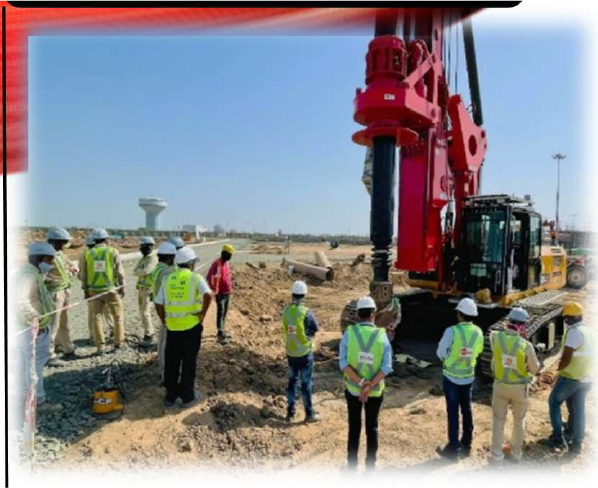
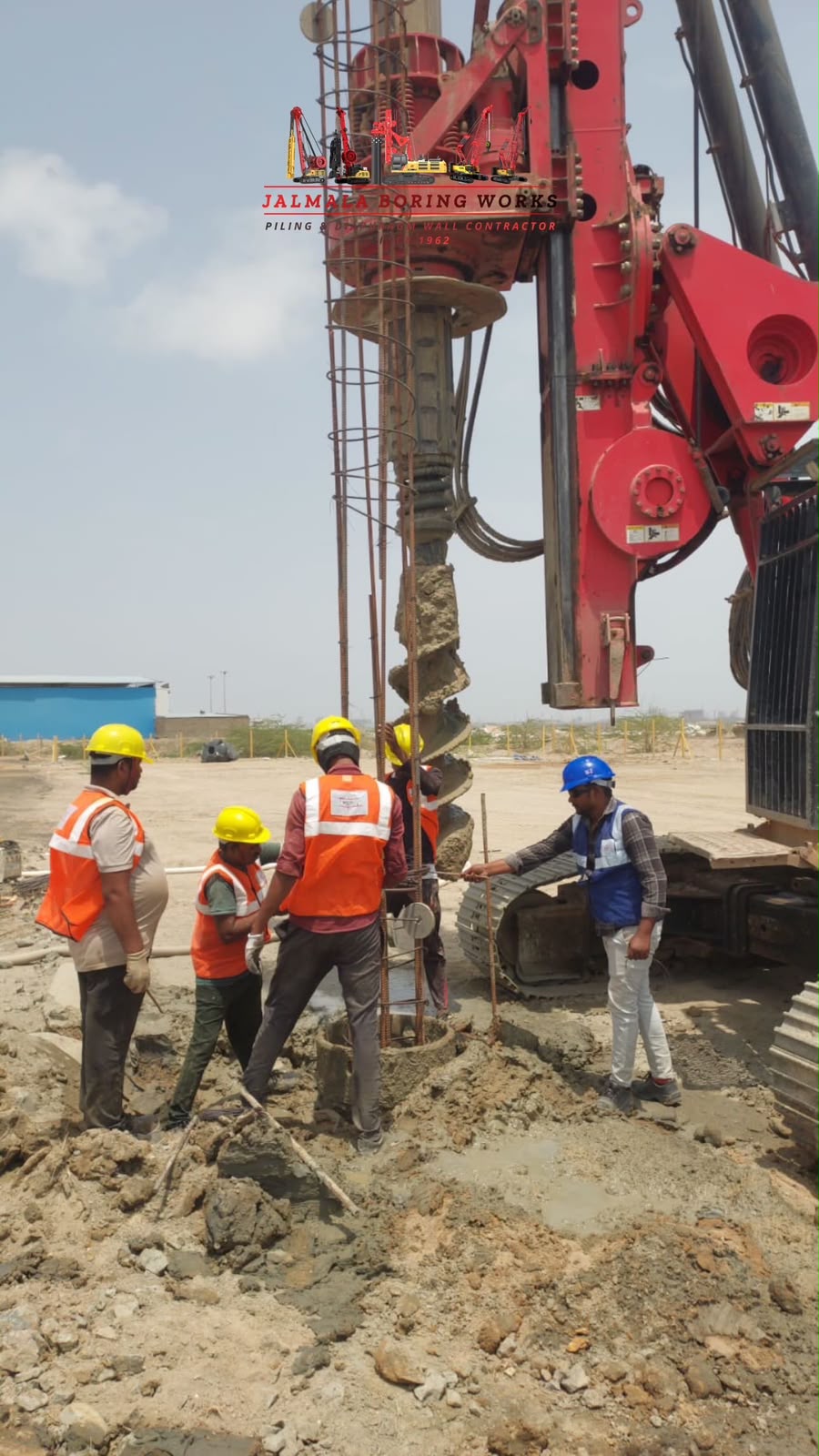
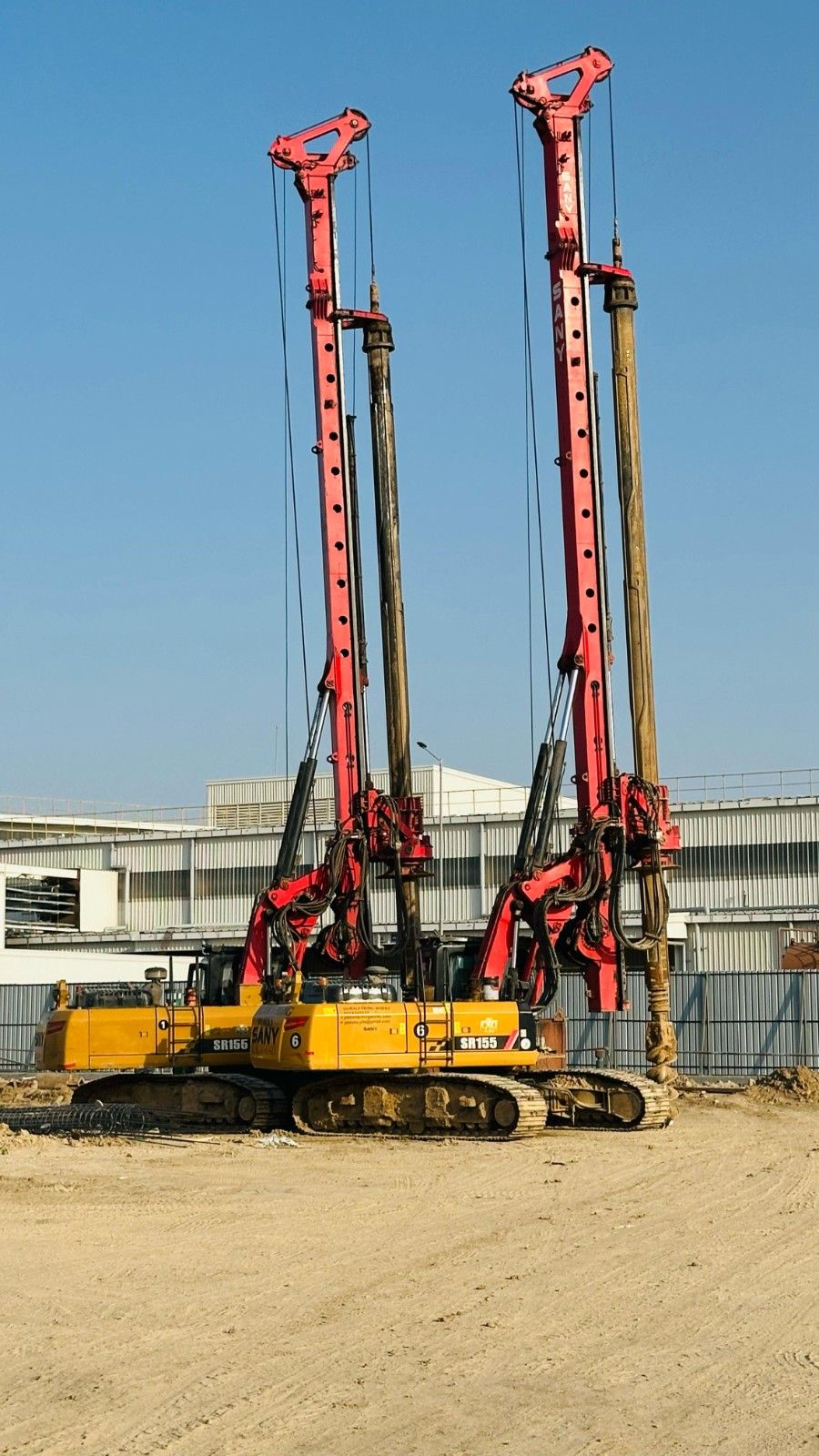
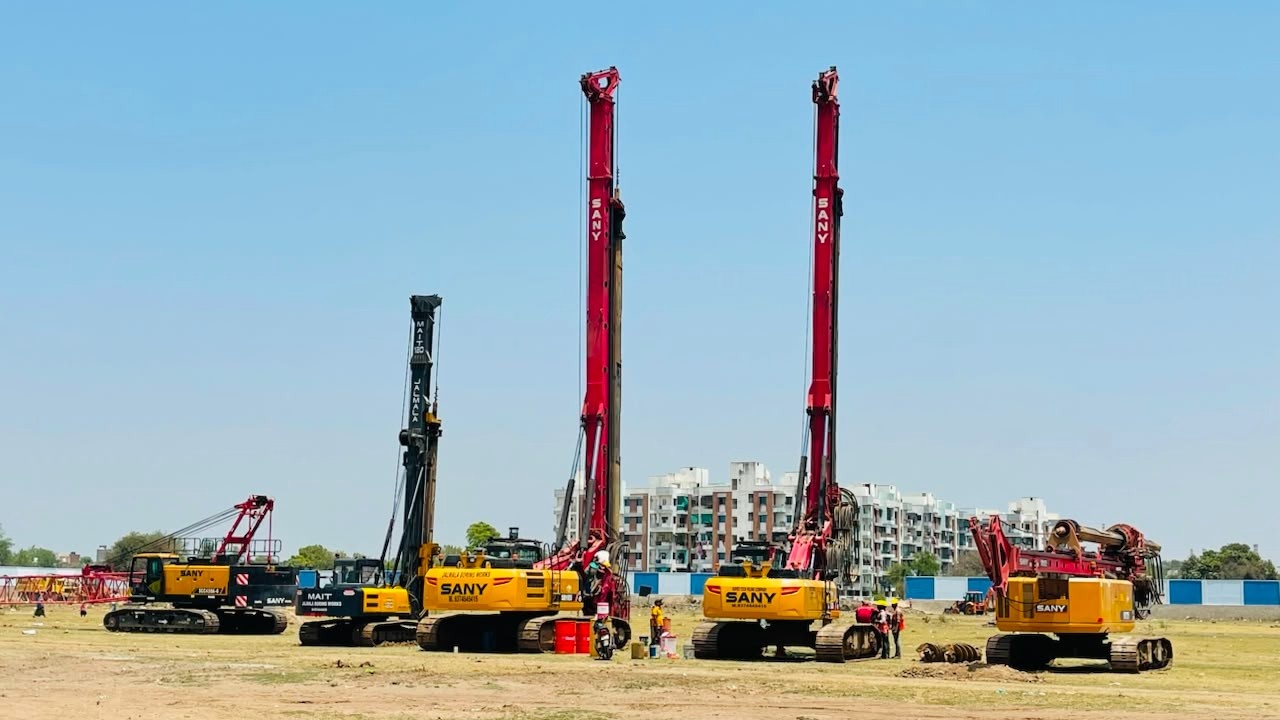
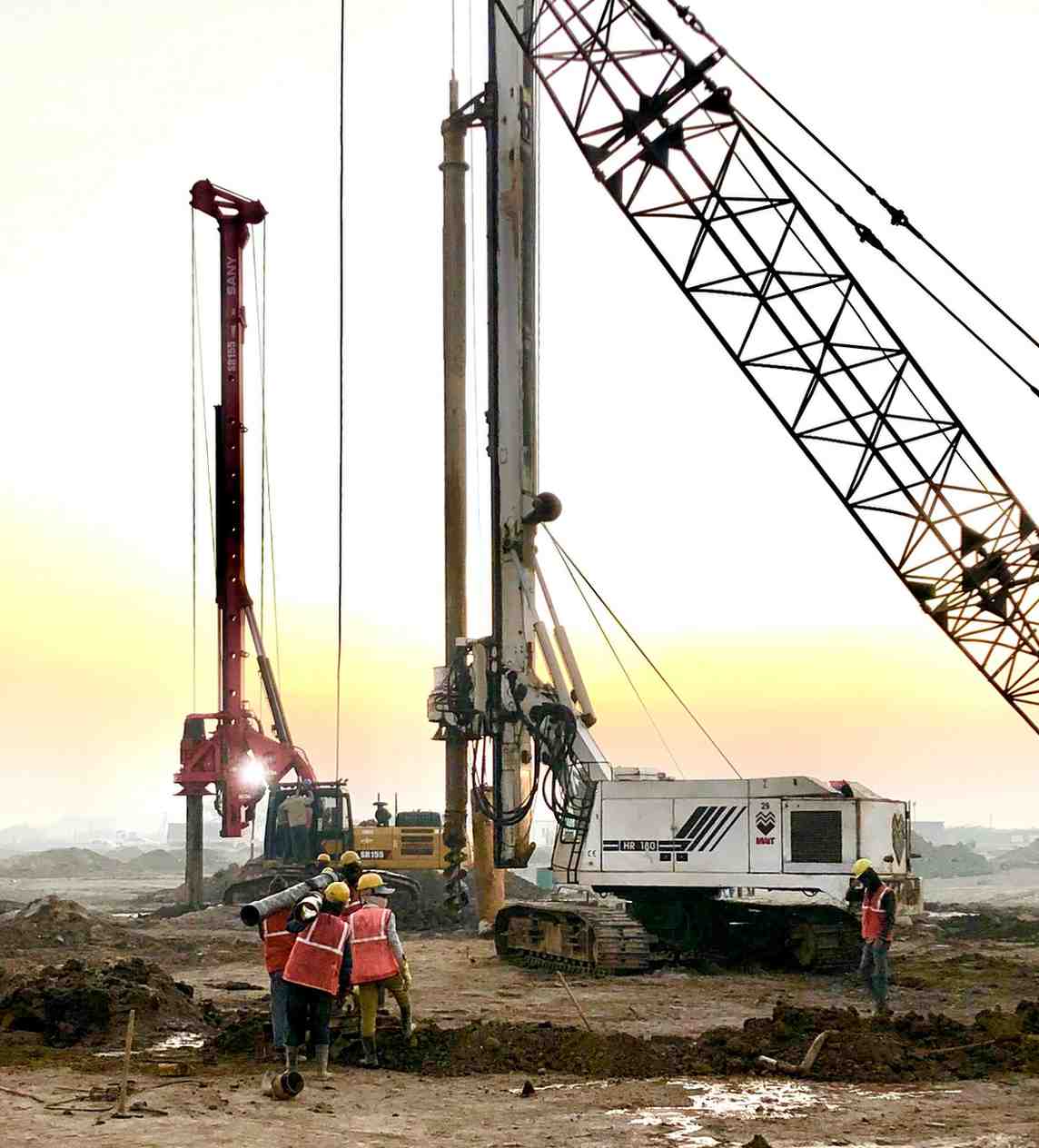
We specialize in bored piling with diameters ranging from 200 mm to 2000 mm and depths up to 50 meters. Using advanced hydraulic rotary rigs, we execute piling operations efficiently across a wide range of soil conditions. Our fleet includes high-performance rotary drilling rigs capable of working in restricted headroom areas while delivering precision, stability, and high productivity.
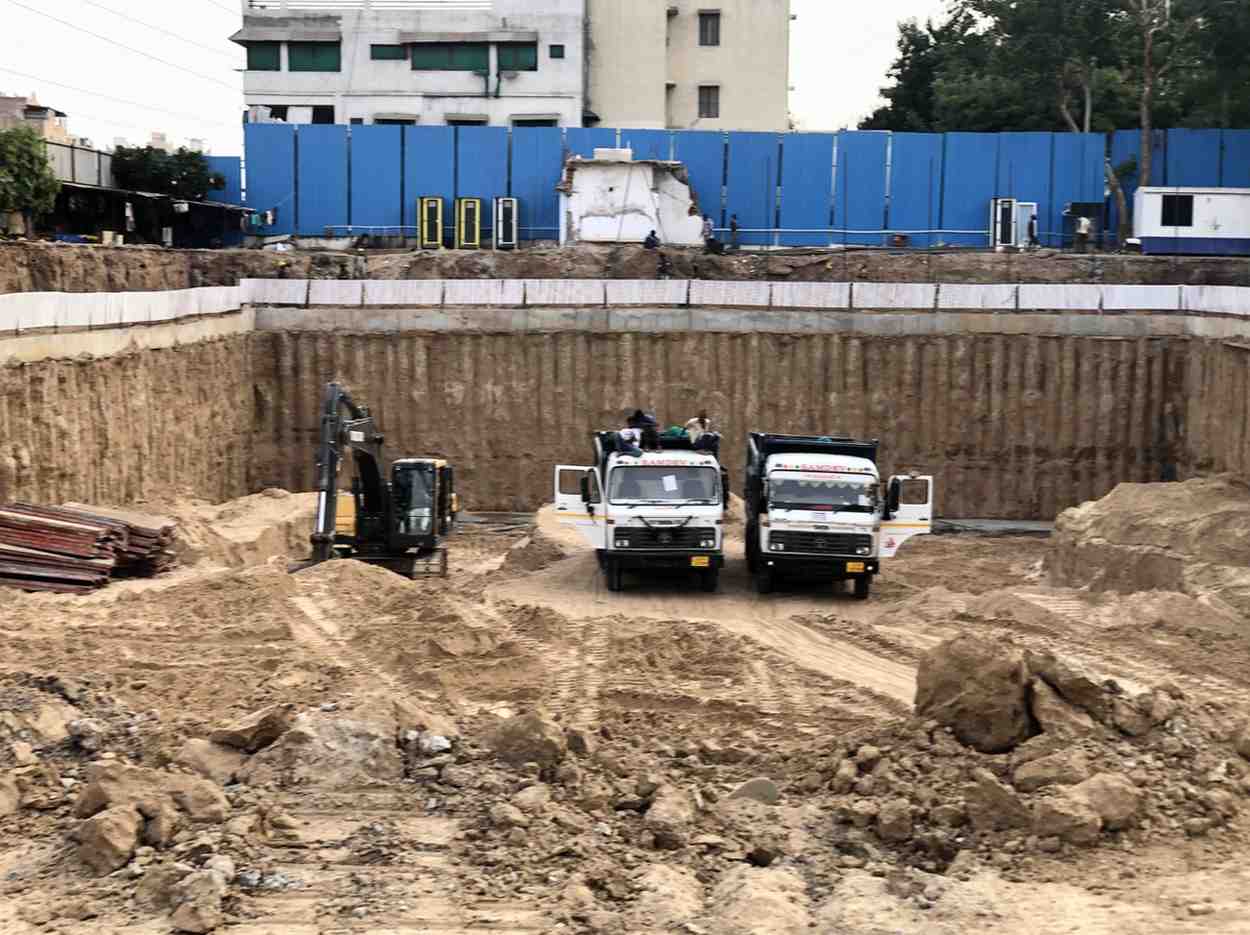
Secant pile walls are constructed by intersecting reinforced concrete piles to form a continuous retaining structure. Primary piles are installed first, followed by reinforced secondary piles after sufficient curing. This technique provides excellent groundwater control and soil retention, making it ideal for deep excavations, basements, and foundation support in challenging ground conditions.
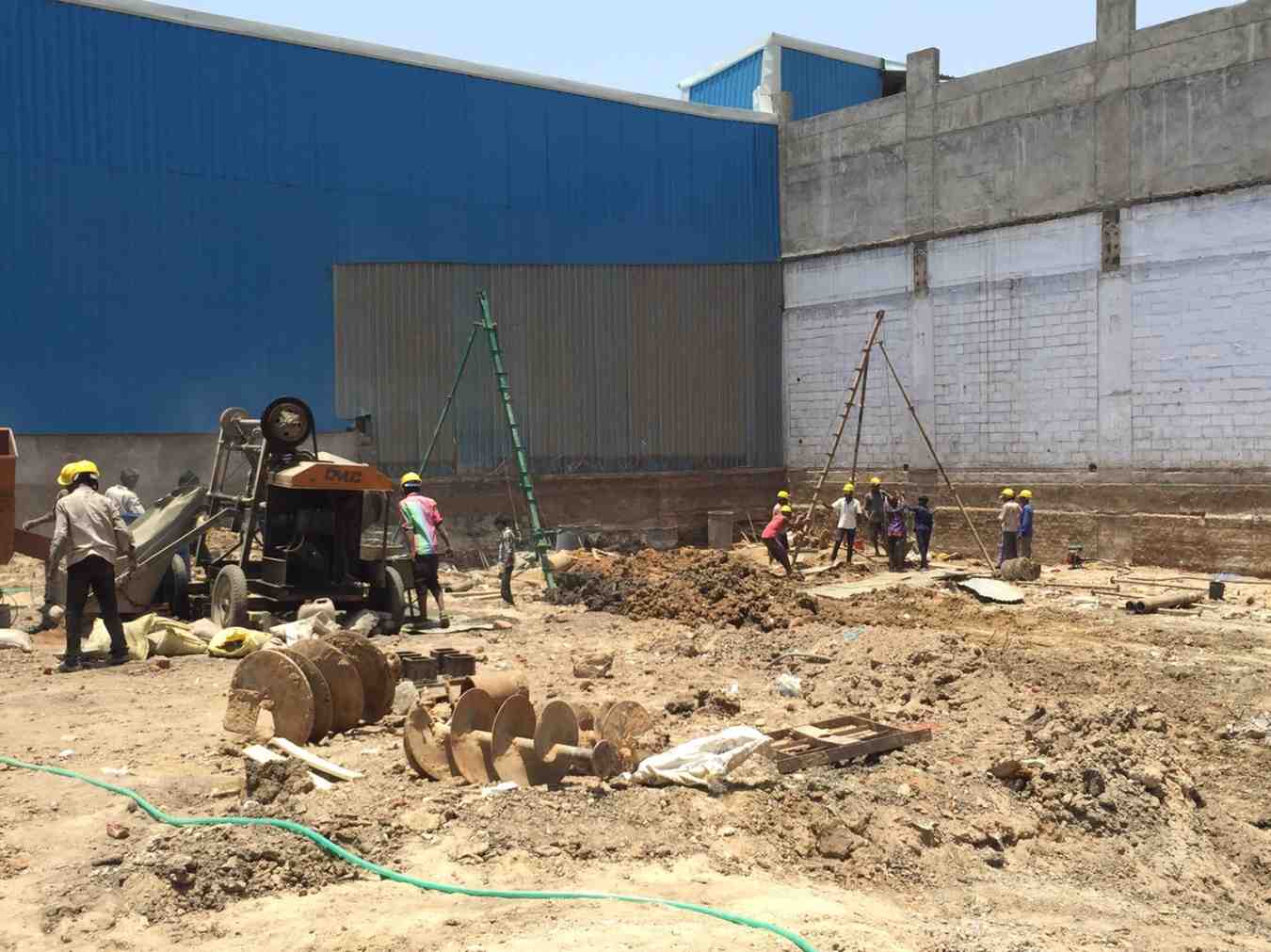
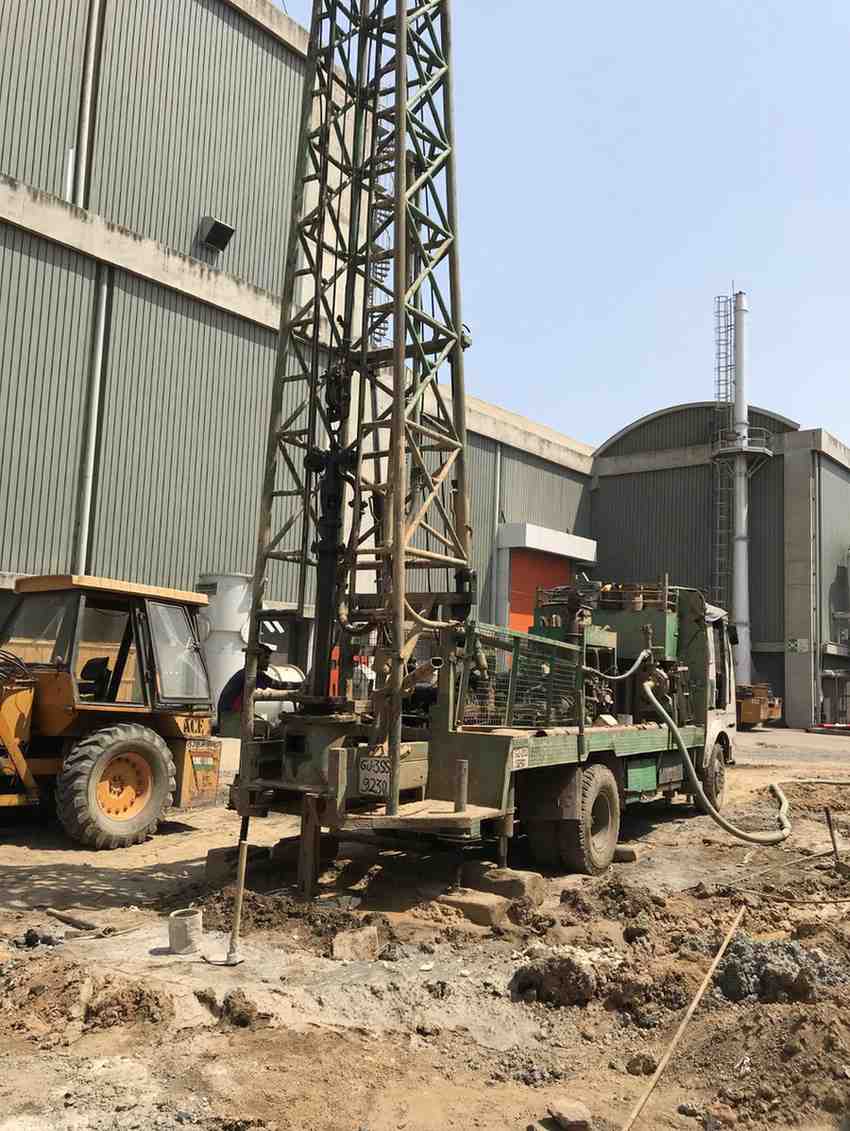
The Manual Auger Method is a reliable piling technique suitable for locations with restricted access or where low noise and vibration are essential. A tripod and manual winch system are used to drill boreholes using a helical auger. This method is commonly employed for pile diameters ranging from 250 mm to 1000 mm and offers an economical solution for smaller foundation projects.
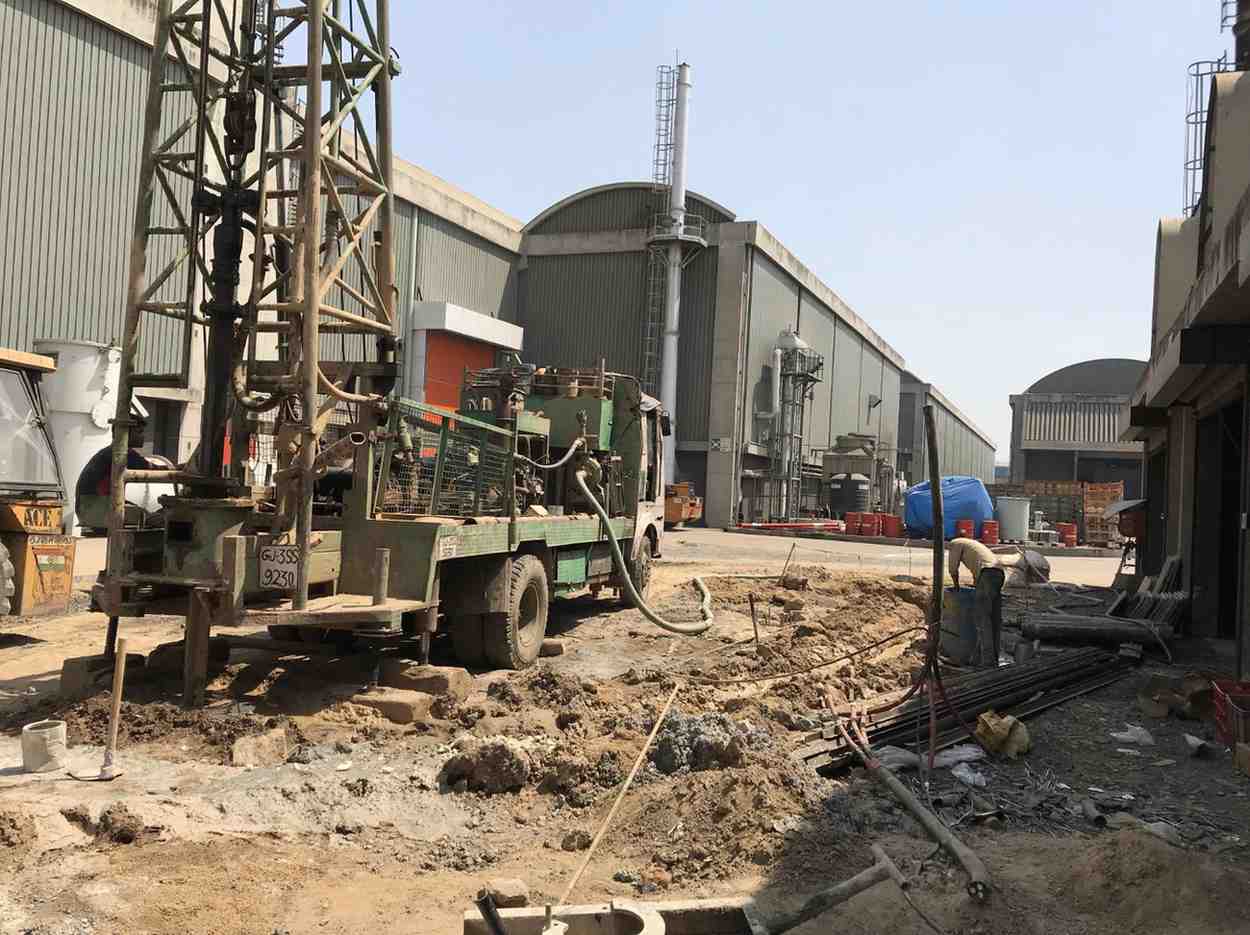
Our Truck Mounted Rotary (TMR) rigs utilize continuous bentonite slurry circulation to stabilize boreholes during drilling. Auger drilling is performed to the required depth while bentonite slurry supports the excavation and carries excavated soil back to a recycling tank. This method ensures bore stability, efficient spoil removal, and high productivity, particularly in loose or soft soil strata.
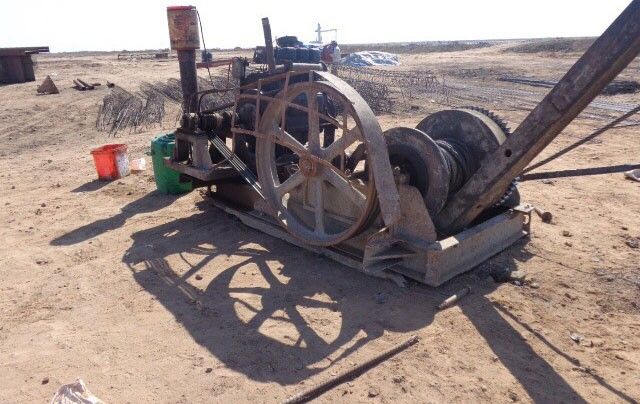
The DMC Pile Method employs Mendola-type rigs combined with bentonite drilling fluid for safe and efficient pile construction. Surface soil is loosened using a bailer before drilling continues with a percussion chisel. Bentonite slurry stabilizes the bore while transporting excavated material to settling pits. Once the desired depth is achieved, the drilling tools are removed and the final depth is verified before reinforcement and concreting.
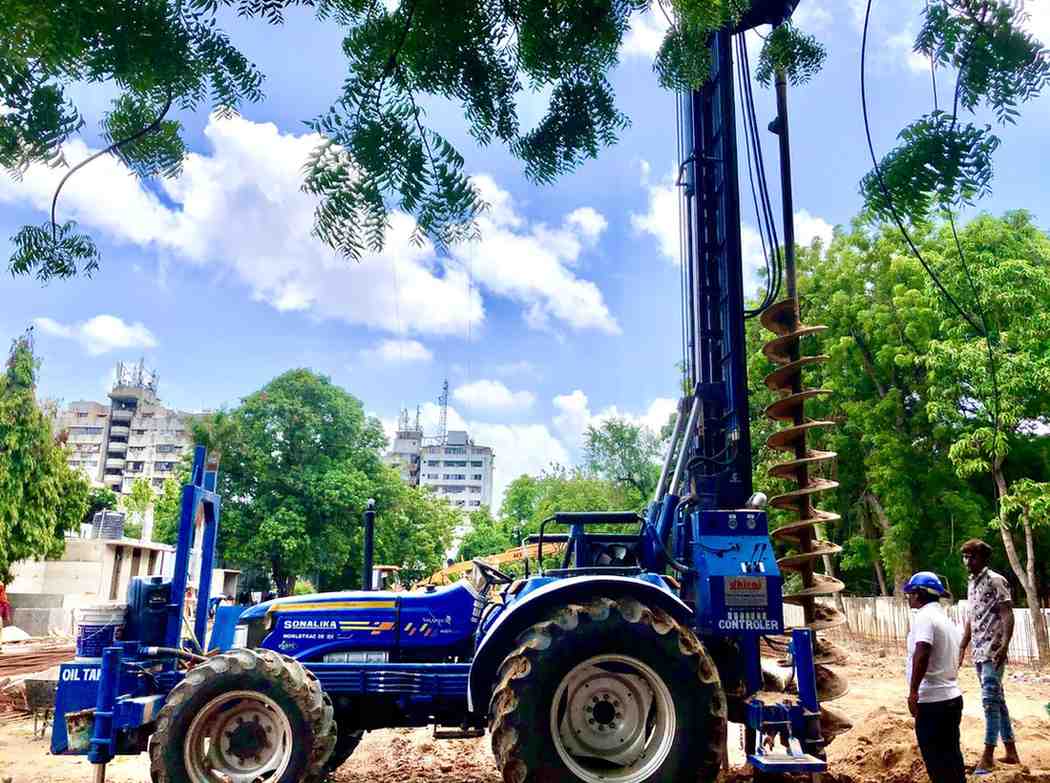
This method utilizes tractor-mounted rotary drilling rigs for fast and economical pile boring. Auger drilling is carried out to the required depth, with DMC rods added progressively to achieve deeper penetration through varying soil strata. It is particularly suitable for medium-depth foundation works and offers drilling capacities of up to 16 meters with excellent operational efficiency.
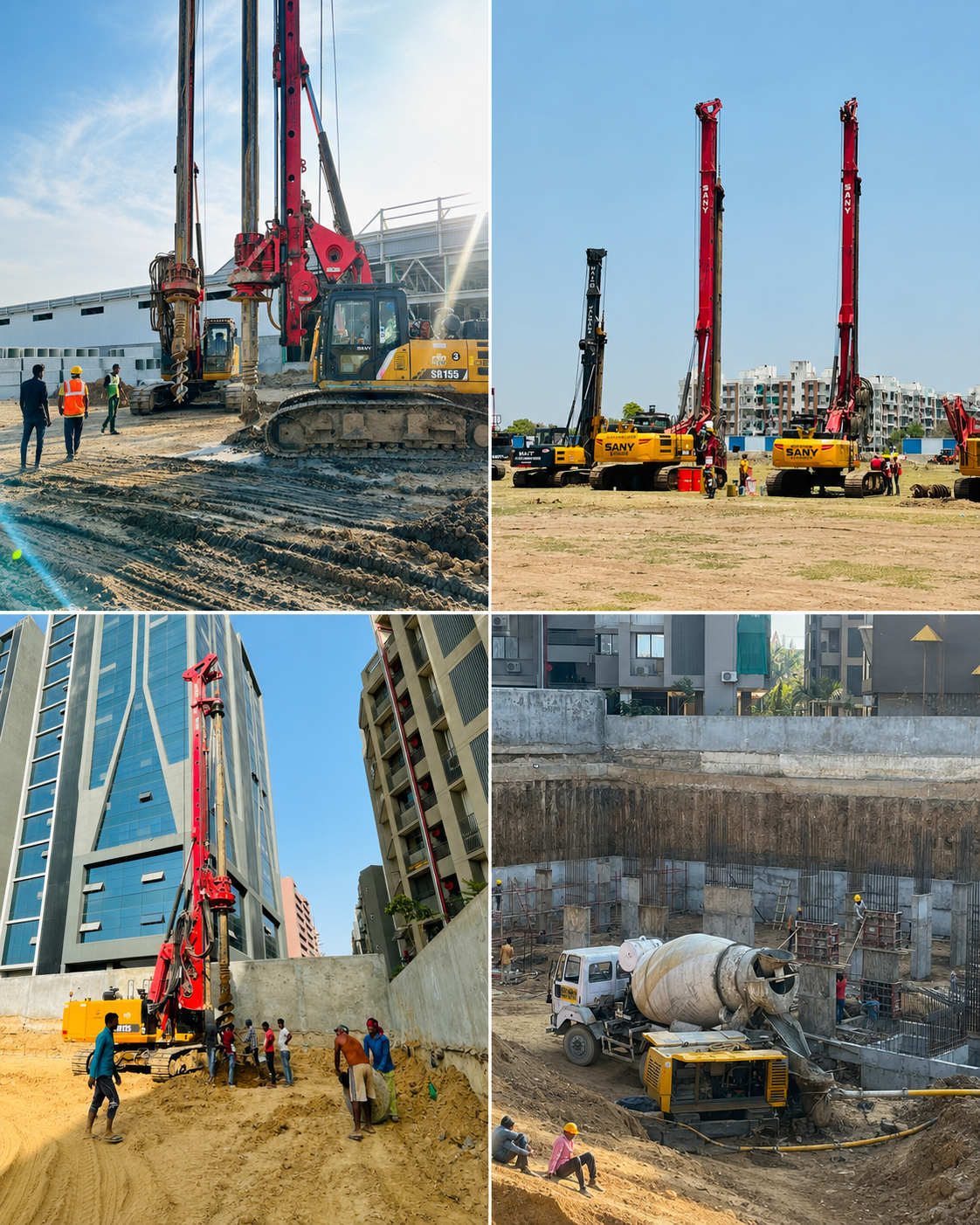
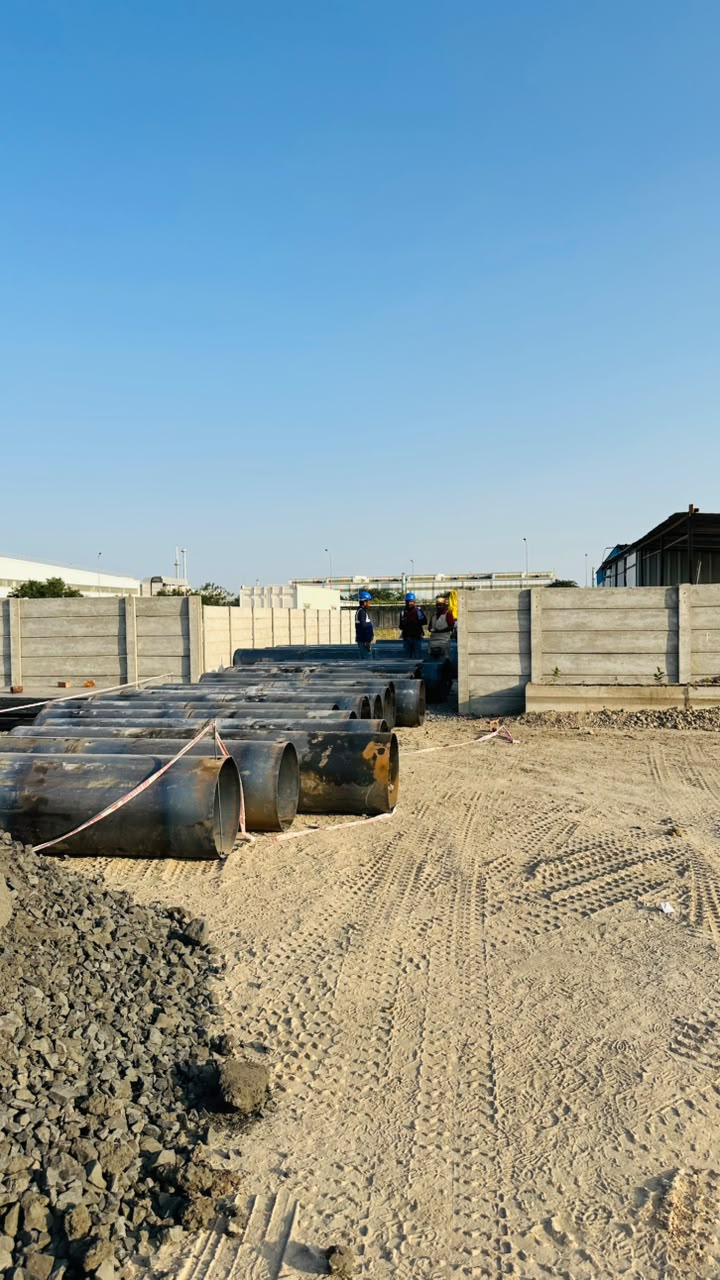
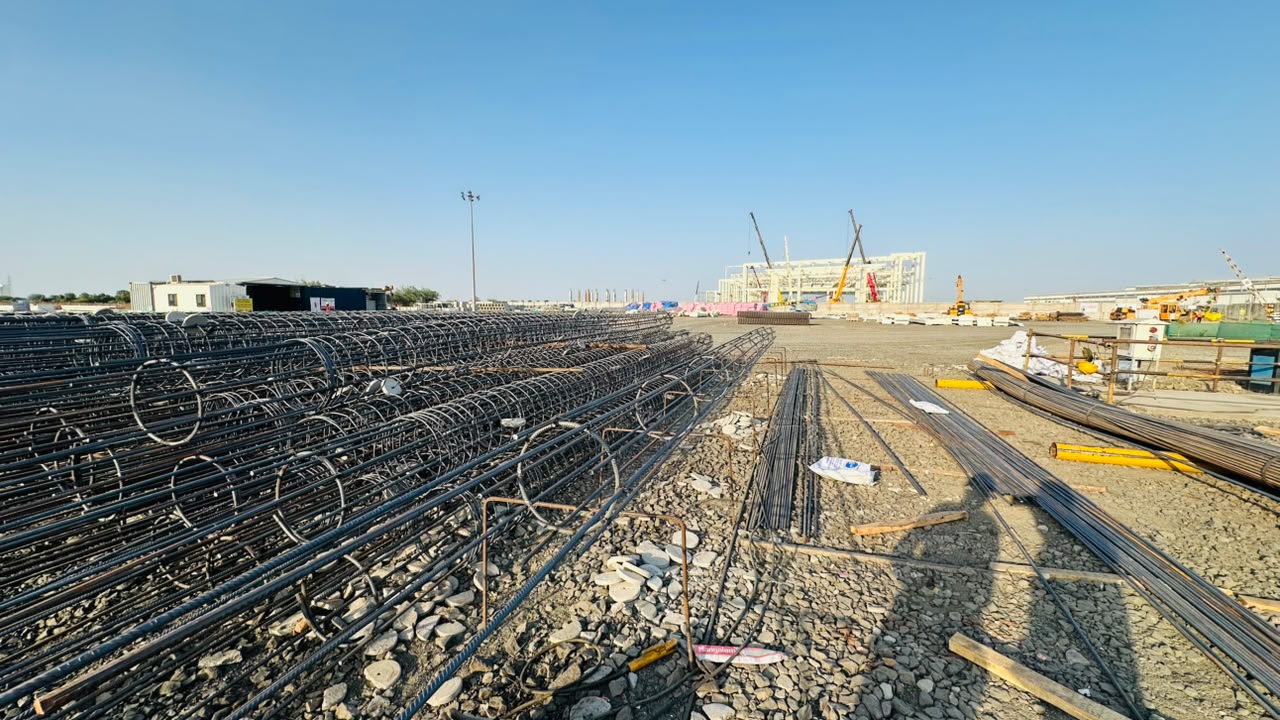
Our Work in Action
Click any image or video to view it in full screen.
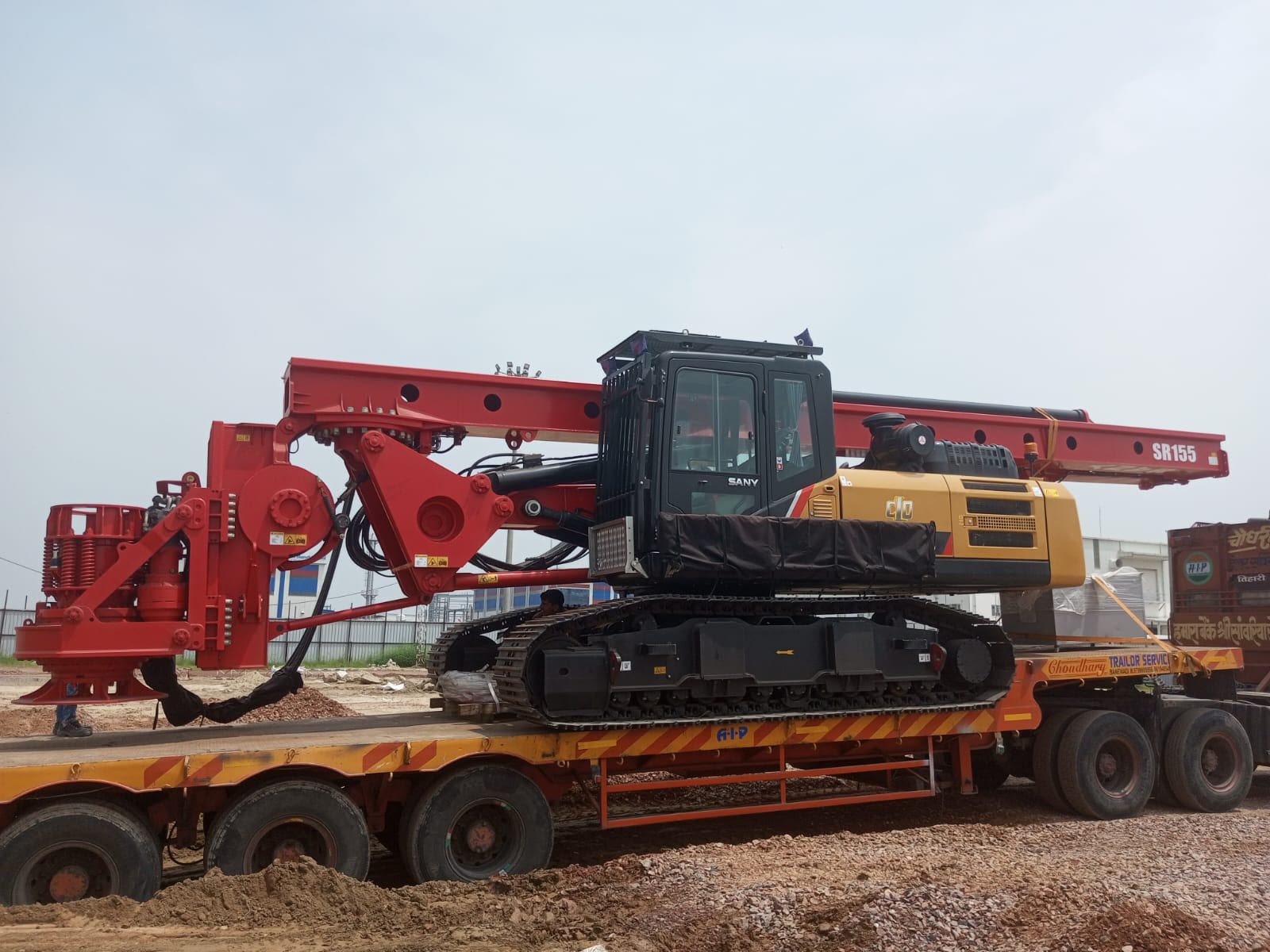
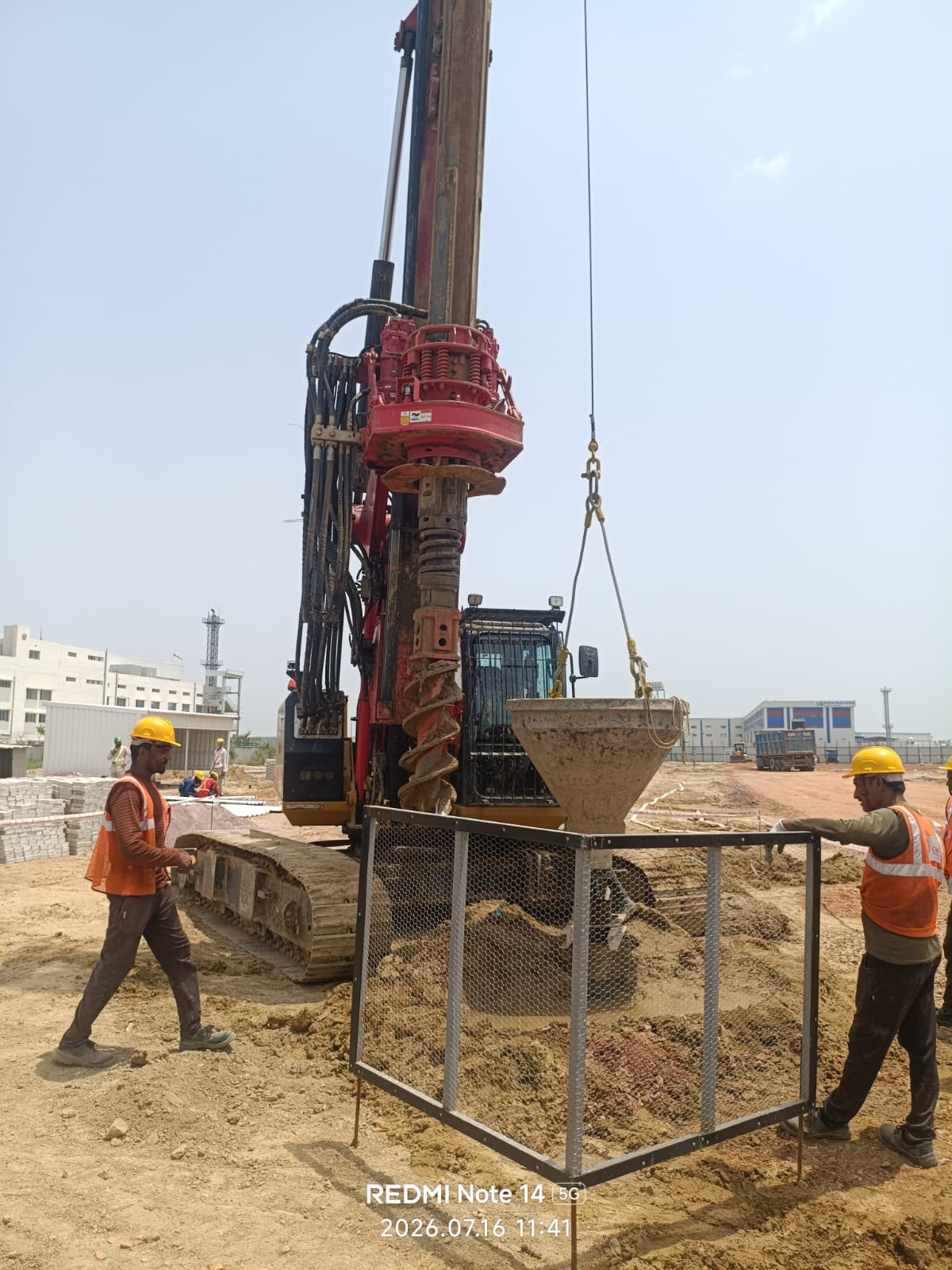
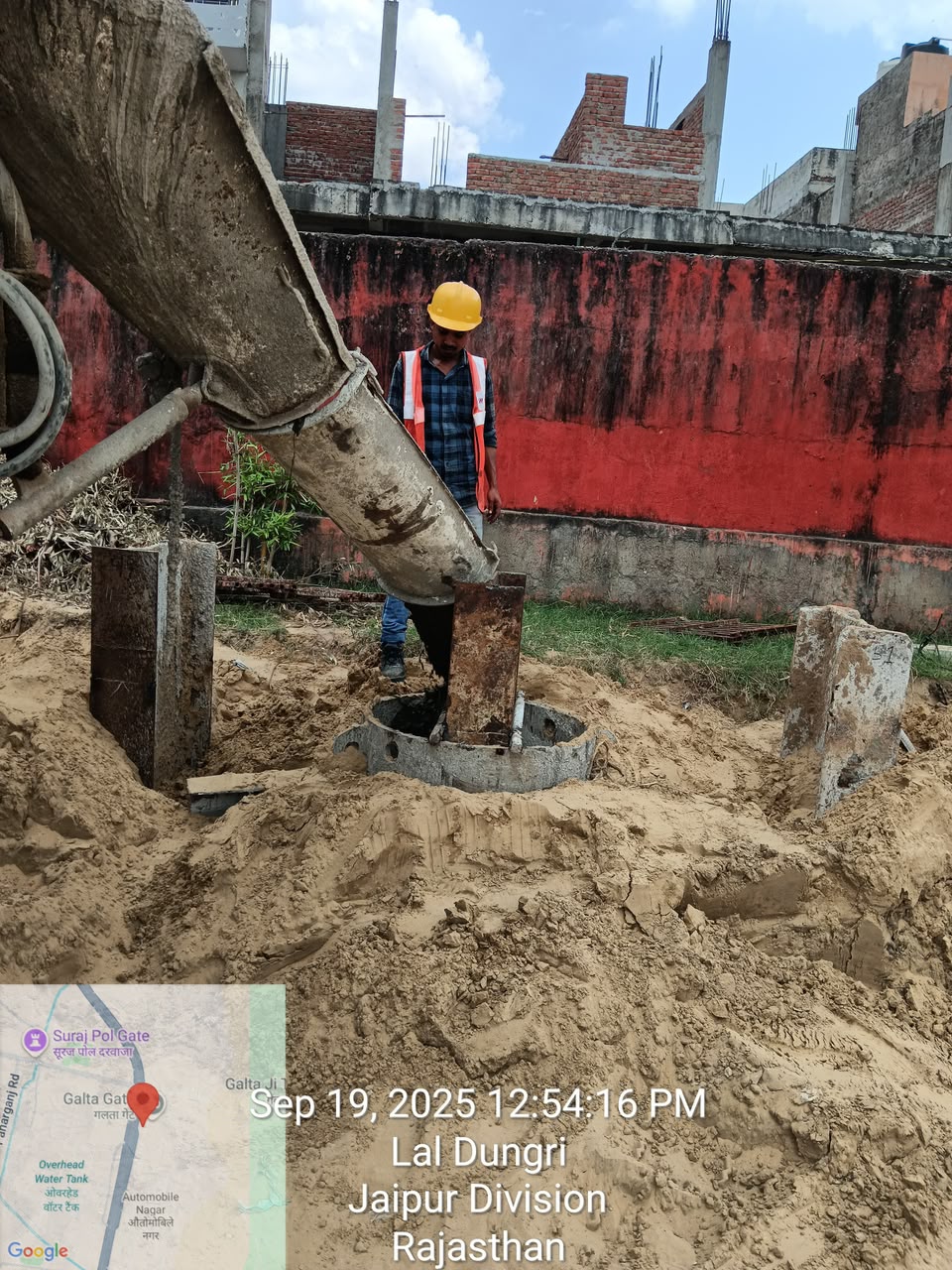
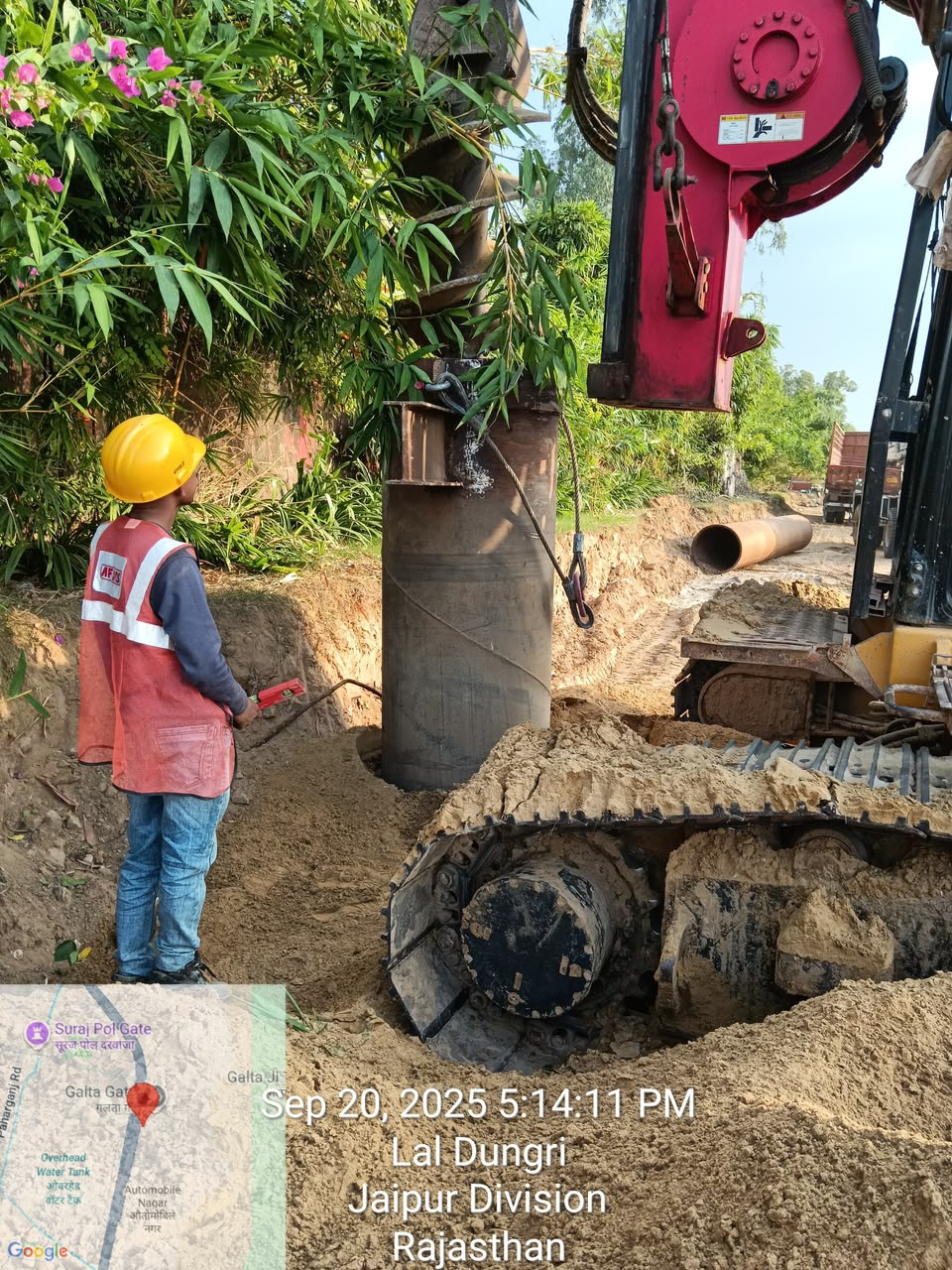
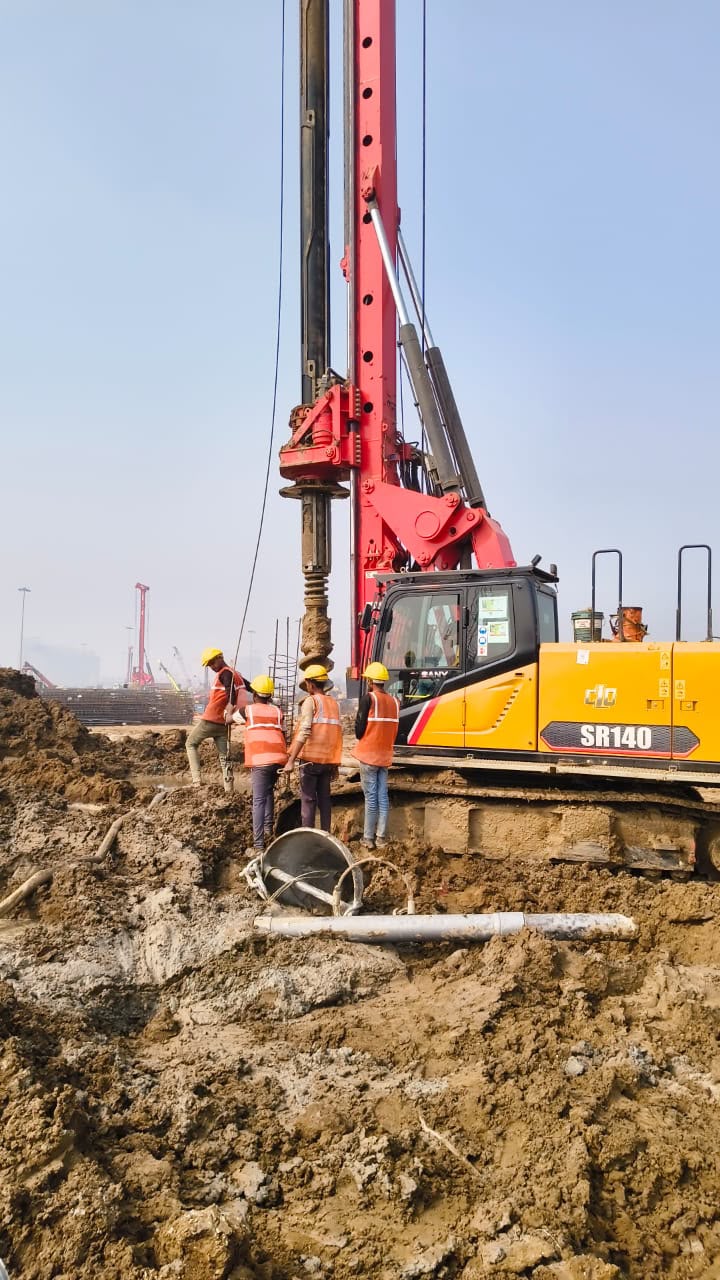
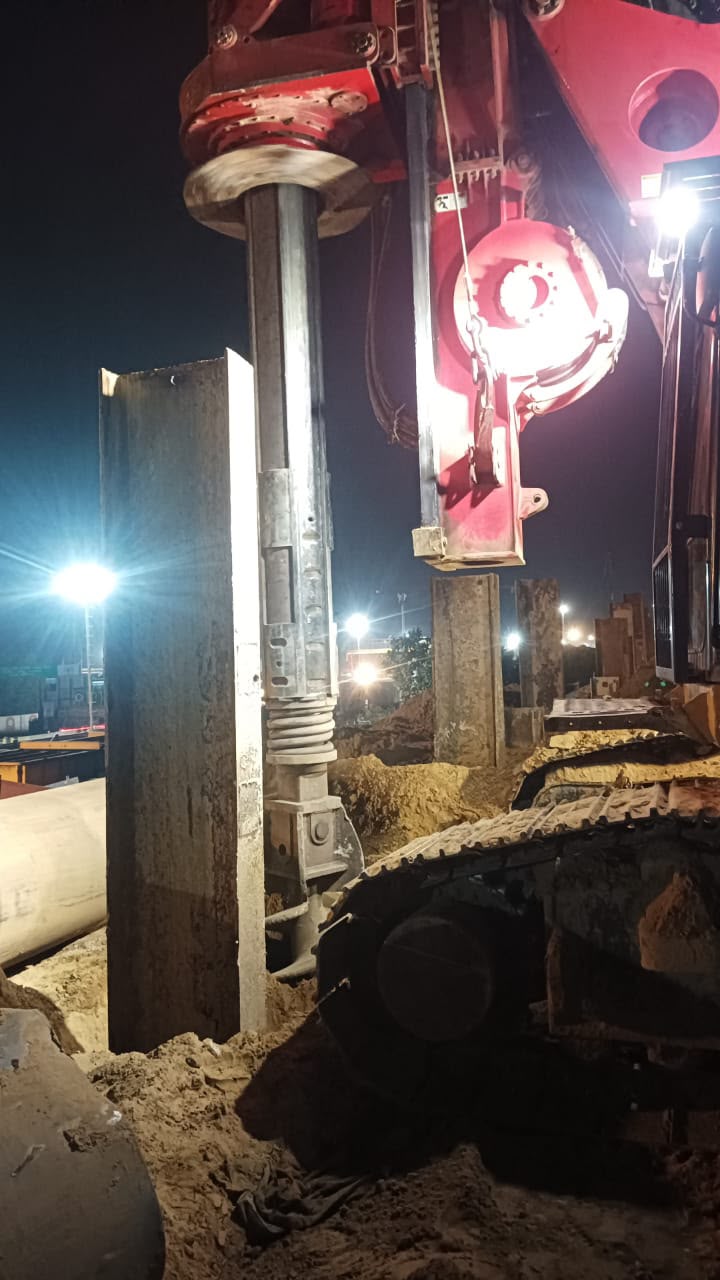
Recent Projects
Pile FoundationConstruction Process
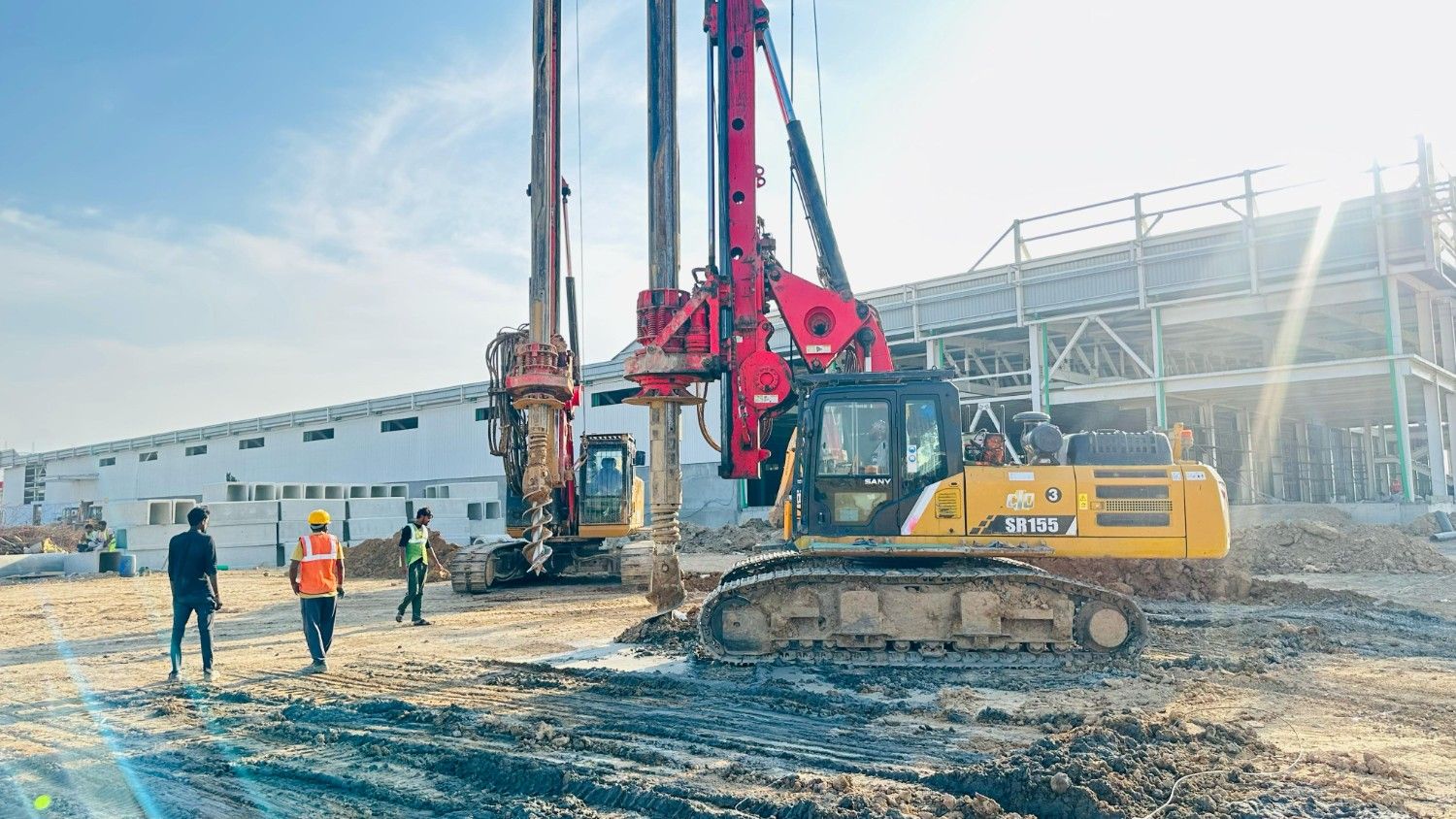
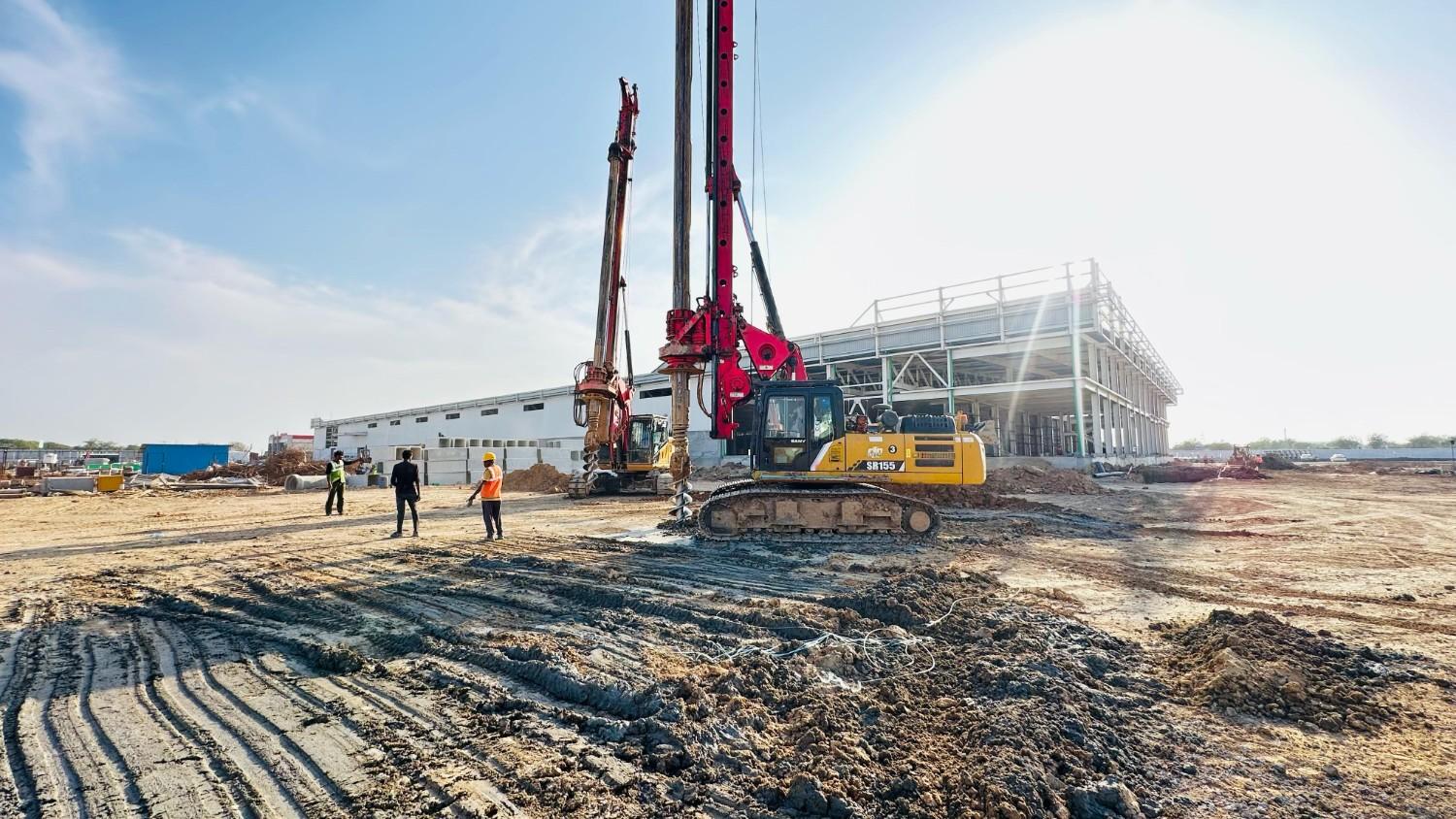
Survey, Setting Out & Guide Casing Installation
Detailed survey, marking of pile locations, and installation of temporary guide casing.
- Detailed survey and marking of pile locations
- Verification of pile coordinates and levels
- Positioning of Hydraulic Rotary Piling Rig
- Installation of temporary guide casing
- Ensures accurate pile alignment and protects bore opening
Pile Boring & Excavation
Drilling of pile bore using Hydraulic Rotary Rig to required depth.
- Drilling of pile bore using Hydraulic Rotary Rig
- Excavation carried out to the required depth and founding strata
- Suitable drilling tools used for soil, rock, or hard strata
- Continuous monitoring of depth, verticality, and pile diameter
- Removal and disposal of excavated soil from site
Slurry Support & Borehole Cleaning
Preparation and circulation of Bentonite/Polymer Slurry and borehole cleaning.
- Preparation and circulation of Bentonite/Polymer Slurry
- Stabilization of borehole walls during drilling
- Recycling of slurry through slurry plant
- Cleaning of borehole bottom to remove loose sediments
- Final inspection of bore depth and cleanliness
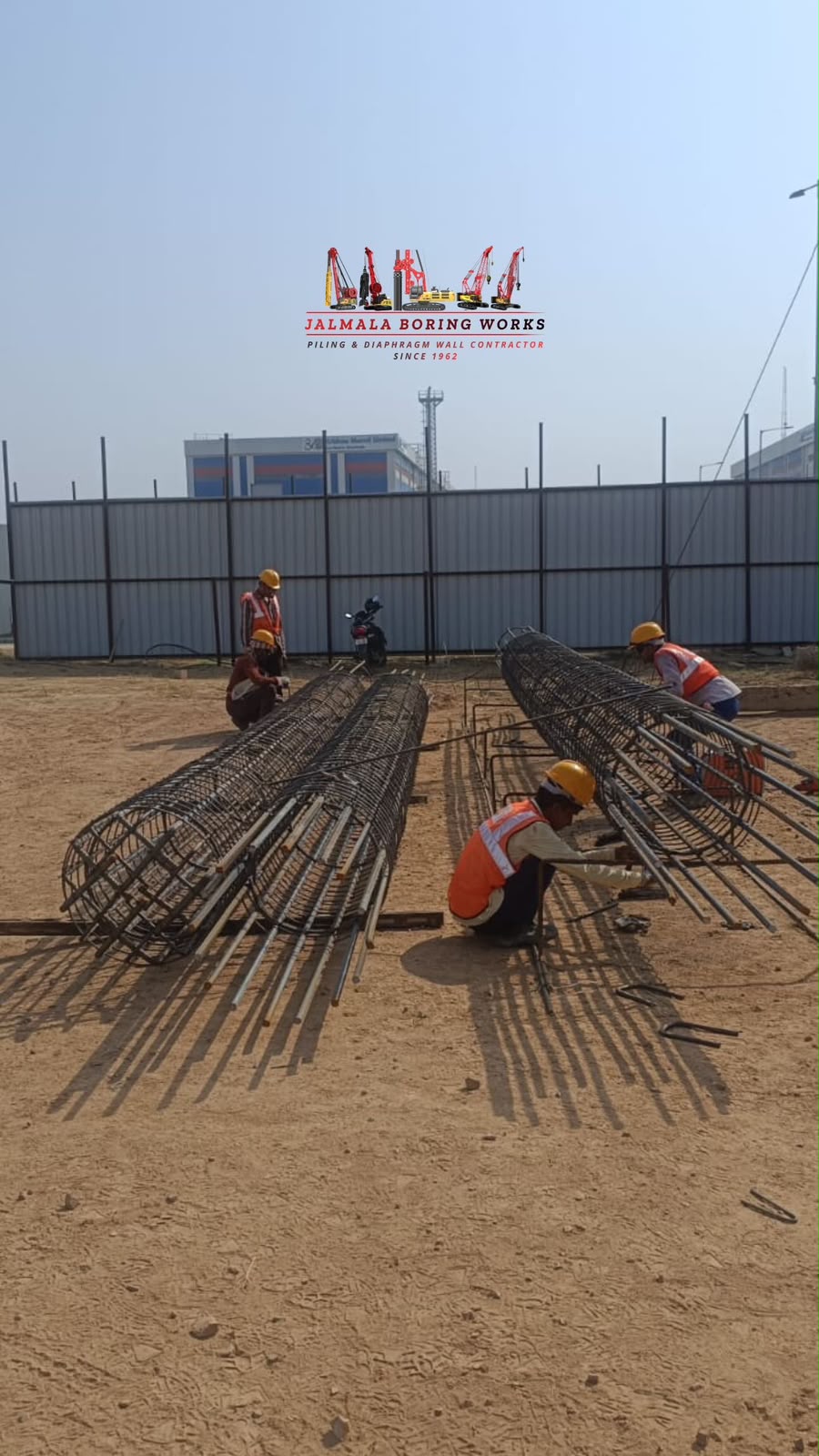
Reinforcement Cage Installation
Fabrication and lowering of reinforcement cage into the bore.
- Fabrication of reinforcement cage as per approved drawings
- Installation of spacers, couplers, lifting points, and cover blocks
- Lowering of reinforcement cage into the completed bore
- Accurate positioning and level adjustment
- Quality inspection before concrete placement
Tremie Concreting
Continuous concrete placement using tremie pipes.
- Installation of tremie pipes up to borehole bottom
- Continuous placement of concrete from bottom to top
- Prevention of concrete segregation through tremie method
- Displacement and recovery of slurry during concreting
- Completion of pile concreting in one uninterrupted operation
Pile Completion & Quality Control
Final pile completion, head trimming, and quality assurance.
- Extraction of temporary casing during or after concreting
- Recording of concrete consumption and pile parameters
- Pile head chipping up to cut-off level
- Verification of pile depth, diameter, and concrete quality
- Completion of testing, documentation, and quality assurance
- Ready for pile cap and foundation construction
Piling Contractor Rajkot – Pile Refusal & Rock Socket Recovery Specialist
Most piling contractors in Rajkot are great when everything goes as planned. Few are equipped for the moment the chisel jams 8 meters down, the boulder appears at 6 meters, or the rock socket fails its load test. In Saurashtra basalt, these events are not exceptions — they are regular occurrences on difficult projects. This page is for site engineers, contractors, and project managers facing pile installation problems in Rajkot. It covers the six most common failure scenarios, the recovery methods available, and when to call in a specialist.
Scenario 1 – Chisel Jam at Depth
The most common emergency in Rajkot basalt piling is chisel jamming — the chisel penetrates a fracture in the rock and becomes wedged, unable to be pulled out or rotated. Applying more force is dangerous — it can snap the chisel wire or hydraulic hose, making recovery significantly harder. Our recovery protocol: (1) stop all force immediately; (2) circulate high-pressure water or polymer fluid around the chisel to loosen debris; (3) attempt reverse-torque or hydraulic pull within safe limits; (4) if unsuccessful, use a separate smaller-diameter chisel alongside to break the wedging rock; (5) in rare cases, explosive extraction. Success rate: 90%+ with early intervention. Delay reduces success rate.
Scenario 2 – Boulder Obstruction Recovery
Rajkot's basalt terrain often contains isolated boulders separate from the main rock mass — sometimes 1-3 meters diameter, sometimes larger. When a boulder is hit, boulder obstruction recovery in Rajkot depends on depth and size. For shallow boulders (under 5 meters), pre-drilling a 150-200 mm pilot hole through the boulder and then reaming to design diameter works well. For deeper boulders, chiselling with a heavy chisel (until the boulder breaks or moves) or polymer fluid circulation (to reduce friction) are the first options. If the boulder cannot be penetrated, we offset the pile slightly (under 300 mm with structural consultant approval) or substitute a micropile cluster at the same location.
Scenario 3 – Rock Socket Failure Recovery
A rock socket failure means the pile's socket did not develop the design capacity — either because rock quality was lower than expected, socket length was insufficient, or installation compromised the socket. Recovery options in Rajkot: Socket extension — drill a smaller-diameter extension deeper into the rock (typically 2-5 meters) and install reinforcement; Adjacent micropiles — add 2-4 micropiles around the failed pile to share the load; Post-grouting — inject high-pressure cement grout into the socket zone to increase friction; or load test verification — sometimes the socket is adequate but the design was conservative, and a load test proves actual capacity. Rajkot basalt ranges from 40 to 200+ MPa, so socket capacity is inherently variable — load testing is essential.
Scenario 4 – Casing Damage and Loss
Casing loss occurs when the temporary casing becomes stuck, damaged, or drops into the borehole — common in Rajkot when basalt fracturing or bentonite mismanagement causes the borehole to collapse around the casing. Recovery methods: vibratory extraction (specialized equipment that vibrates the casing loose); water jetting around the casing (to loosen surrounding soil); cutting and leaving in place (in some cases the casing can remain and be treated as reinforcement); or abandonment if the casing is truly unrecoverable.
Scenario 5 – Pile Head Defect Repair
Pile head defects — honeycombing, concrete segregation, exposed reinforcement — occur at the top of the pile after casing extraction or concrete placement issues. In Rajkot projects, we typically see this in the top 500 mm to 1 meter of pile. Repair: chipping to sound concrete and recasting with high-strength non-shrink grout or micro-concrete. For deeper defects, jacketing with additional reinforcement may be required. Post-construction pile integrity testing (PIT) identifies head defects that visual inspection misses.
Scenario 6 – Post-Construction Integrity Failure
Occasionally, pile integrity failures are discovered after construction — during PIT during handover, or during load testing of the completed foundation. Common causes: soil intrusion during concreting, contaminated concrete, necking from soft soil layers, or reinforcement misalignment. Repair depends on severity: post-grouting (injection of cement grout to fill voids); micropile addition (supplement the failed pile's load capacity); jacketing (structural reinforcement of the pile); or complete replacement in extreme cases. For Rajkot high-rise projects, all piles should undergo PIT before acceptance.
Taking Over From a Failed Contractor
Many pile recovery projects in Rajkot come to us because the original contractor refused or failed. Taking over a partially completed project requires a specific process: (1) forensic review of existing pile logs and records; (2) integrity testing of completed piles (PIT) and depth verification of incomplete piles; (3) technical assessment of the failure mode (refusal, obstruction, socket failure, or installation defect); (4) recovery proposal with timeline and cost; (5) execution with weekly progress reports. We coordinate with the structural consultant and client throughout — this is not a "rip out and redo" situation but a carefully sequenced intervention.
How to Prevent Failures in the First Place
The best recovery is prevention. In Rajkot, the top prevention practices are: (1) thorough geotechnical investigation with core drilling and UCS testing to identify rock strength and boulder presence; (2) appropriate equipment selection — chiselling rigs matched to rock hardness; (3) experienced operators who recognize refusal signals early; (4) clear refusal protocols in the contract (when to stop, who to call, what documentation to maintain); (5) 100% PIT testing post- installation. If any of these are missing from your current project, it is worth addressing them before failures occur.
Contact Our Rajkot Recovery Team Today
Facing a pile refusal, chisel jam, or socket failure in Rajkot? Call our team at +91 93745 45415 or email jalmala.pile@gmail.com. Mention "emergency recovery" for priority response — site visit within 24 hours, initial recommendations within 48 hours. Main office is at Dholka Road, near Nariampura Village, Narimanpura, Sarkhej, Ahmedabad, Gujarat 382210. For regular piling projects in Rajkot, see our pile foundation services in Rajkot page and our rock-socketed piling cost and timeline guide.