
Pile Foundation
Bored Cast-in-Situ Piling Specialists
Jalmala Boring Works provides Pile Foundation and Deep Foundation Solutions using Bored Cast-in-Situ Piles for residential, commercial, industrial, and infrastructure projects. With advanced Hydraulic Rotary Rigs, we construct piles from 300 mm to 1800 mm diameter and depths of up to 50 metres, delivering reliable load-bearing capacity across soft soil, hard rock, and high groundwater conditions.
Our Piling Methods
We deploy six proven techniques — selected based on soil profile, site constraints, and project requirements.
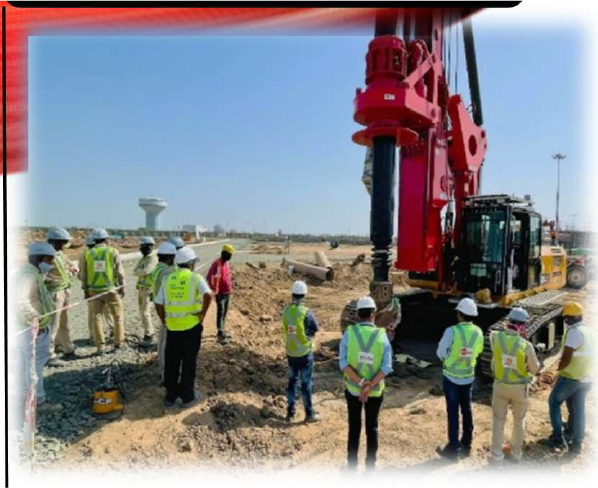
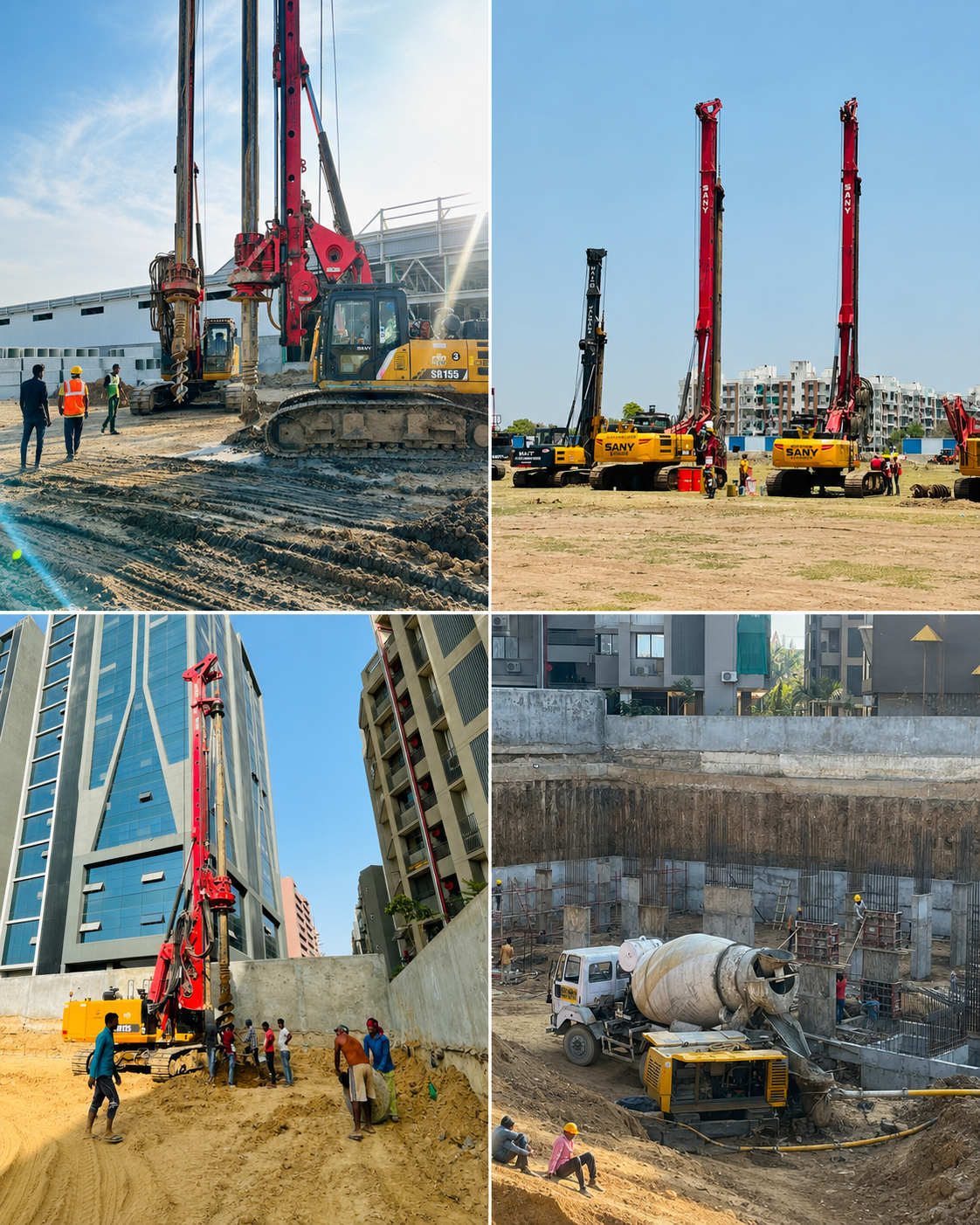
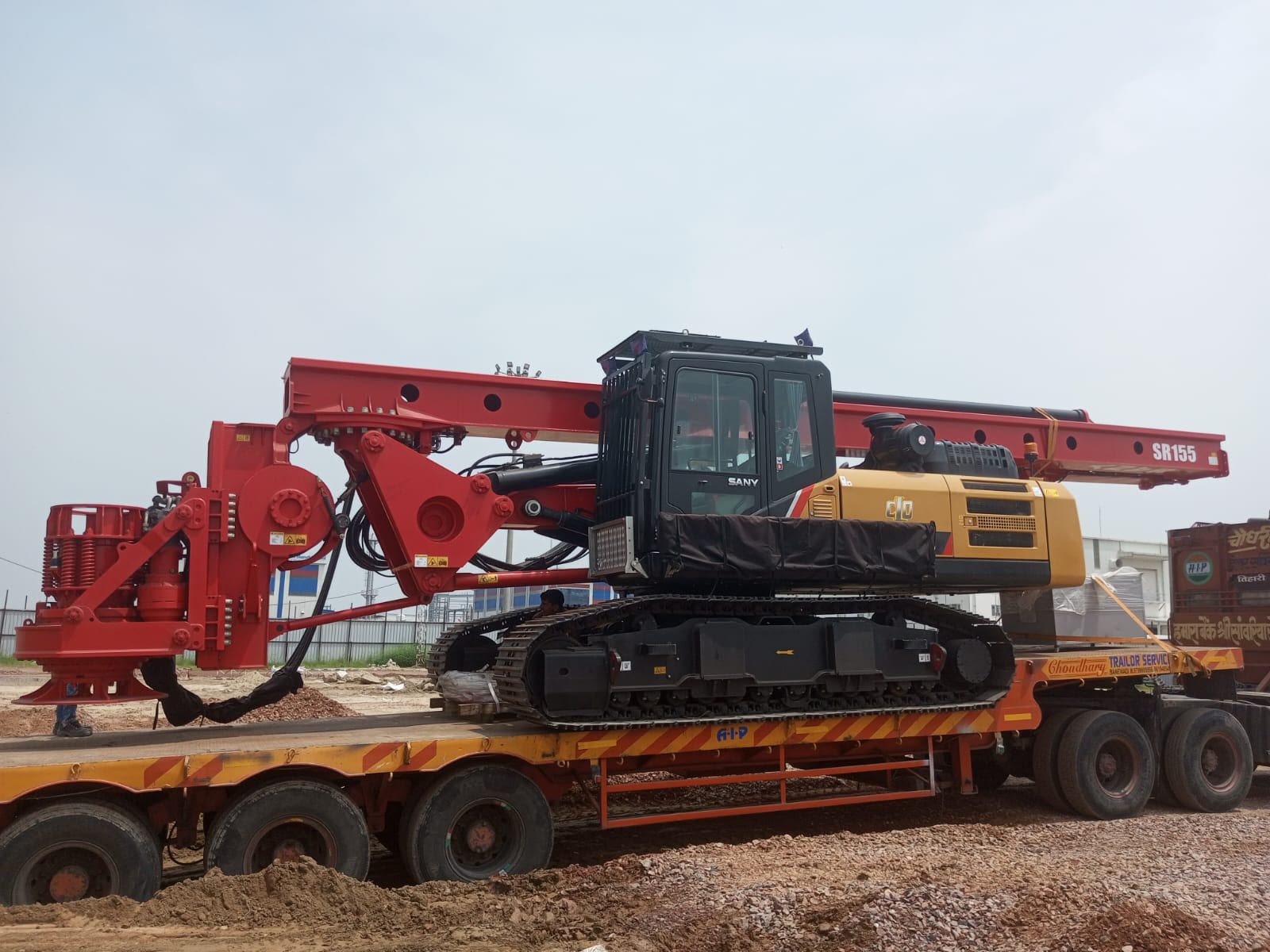
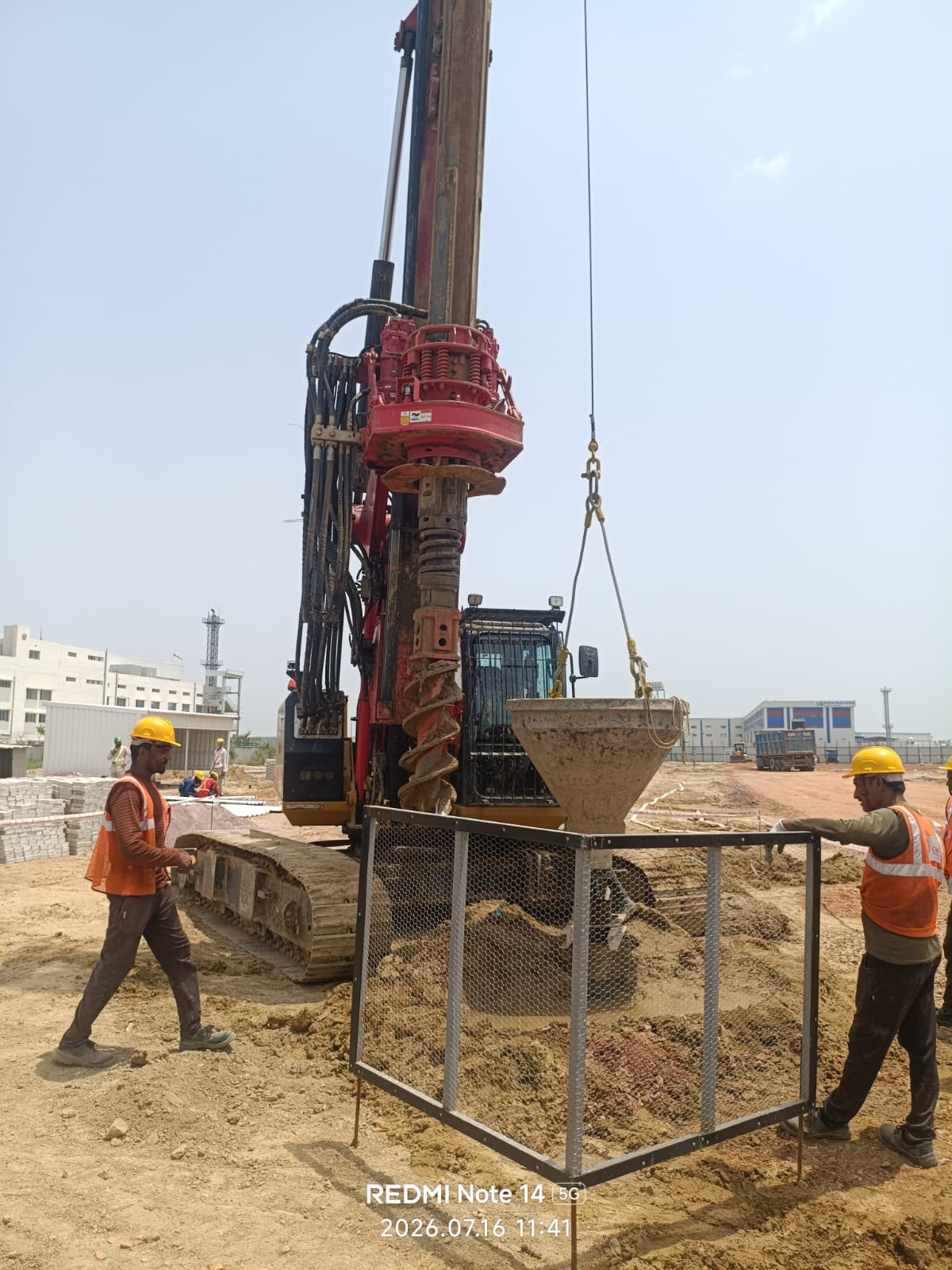
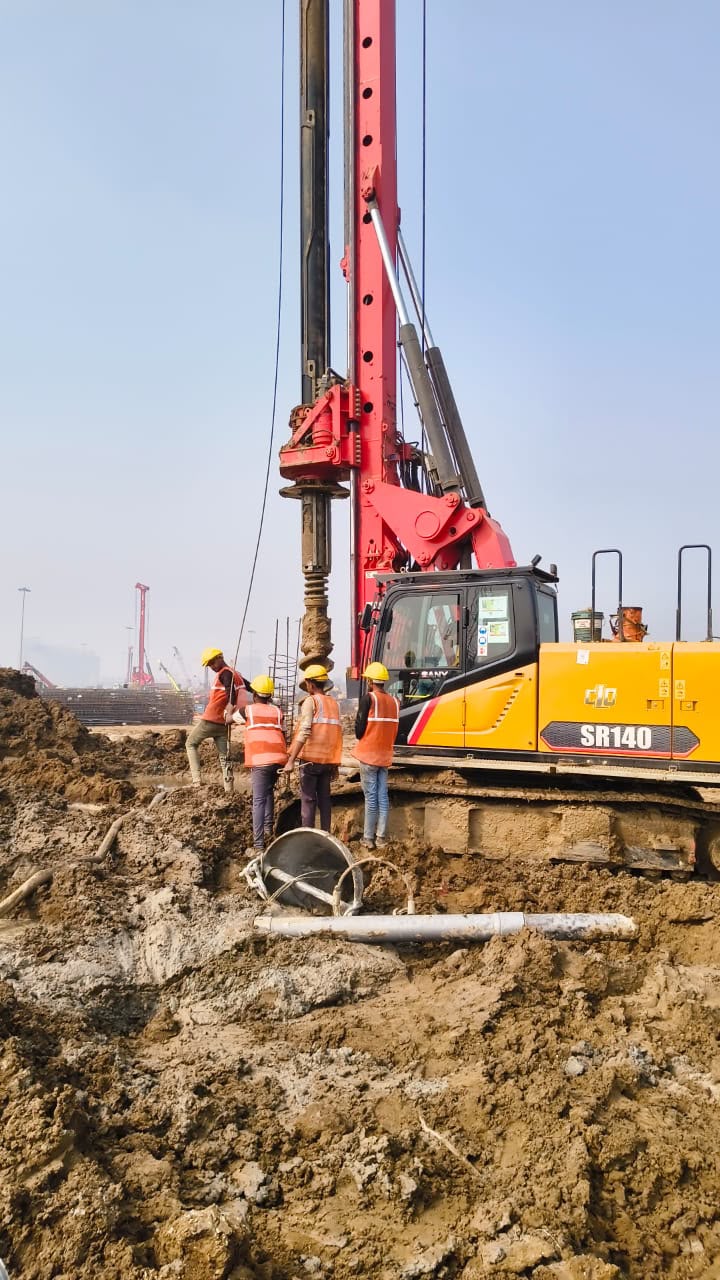
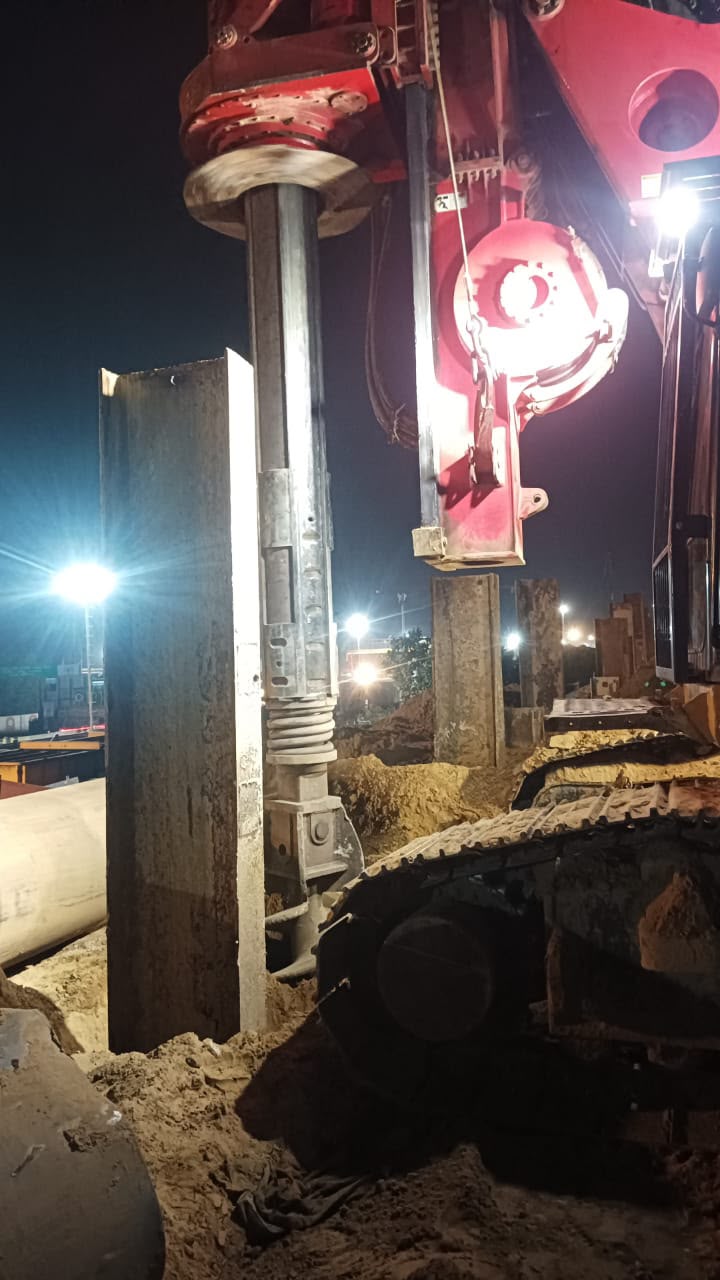
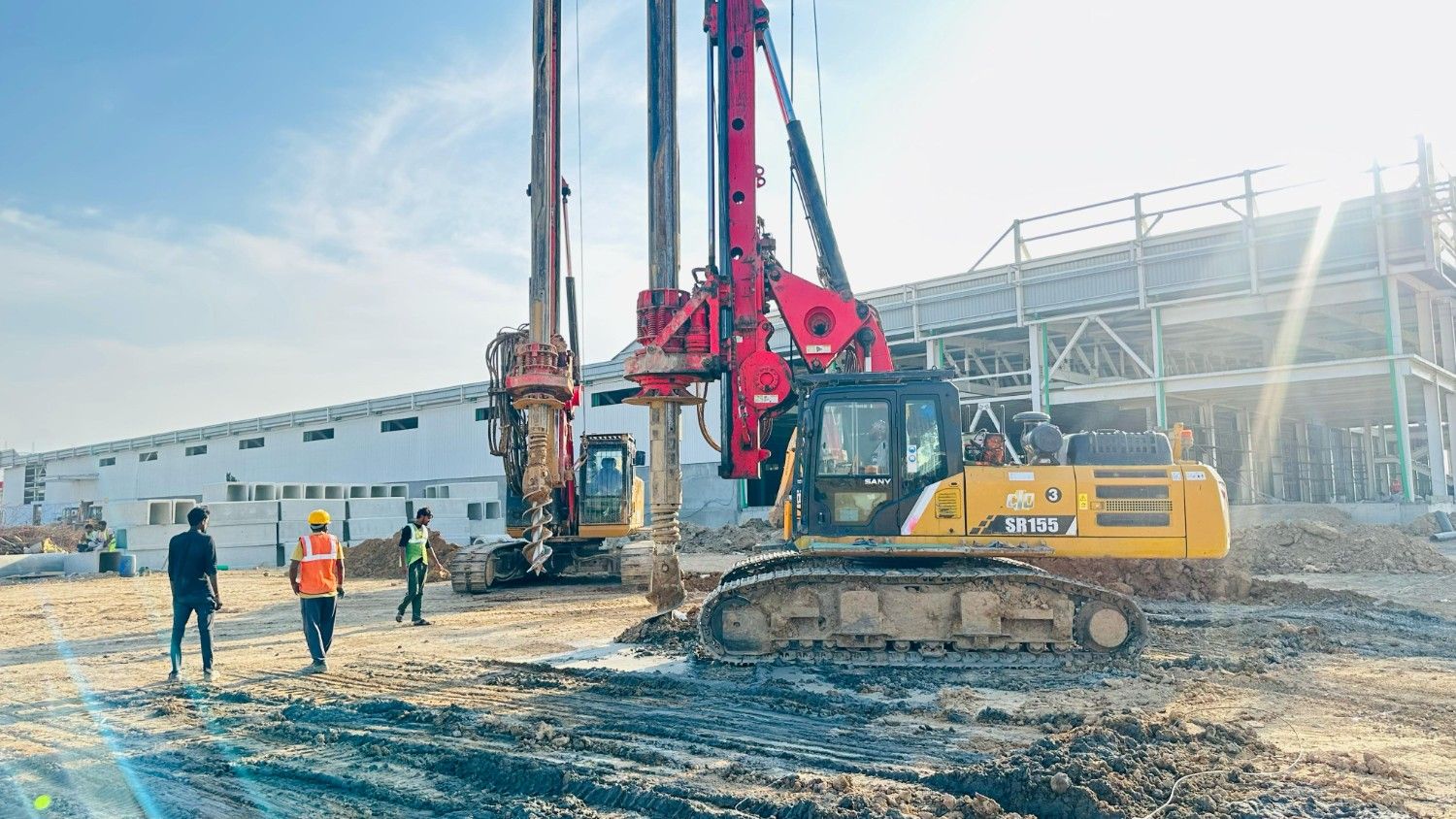
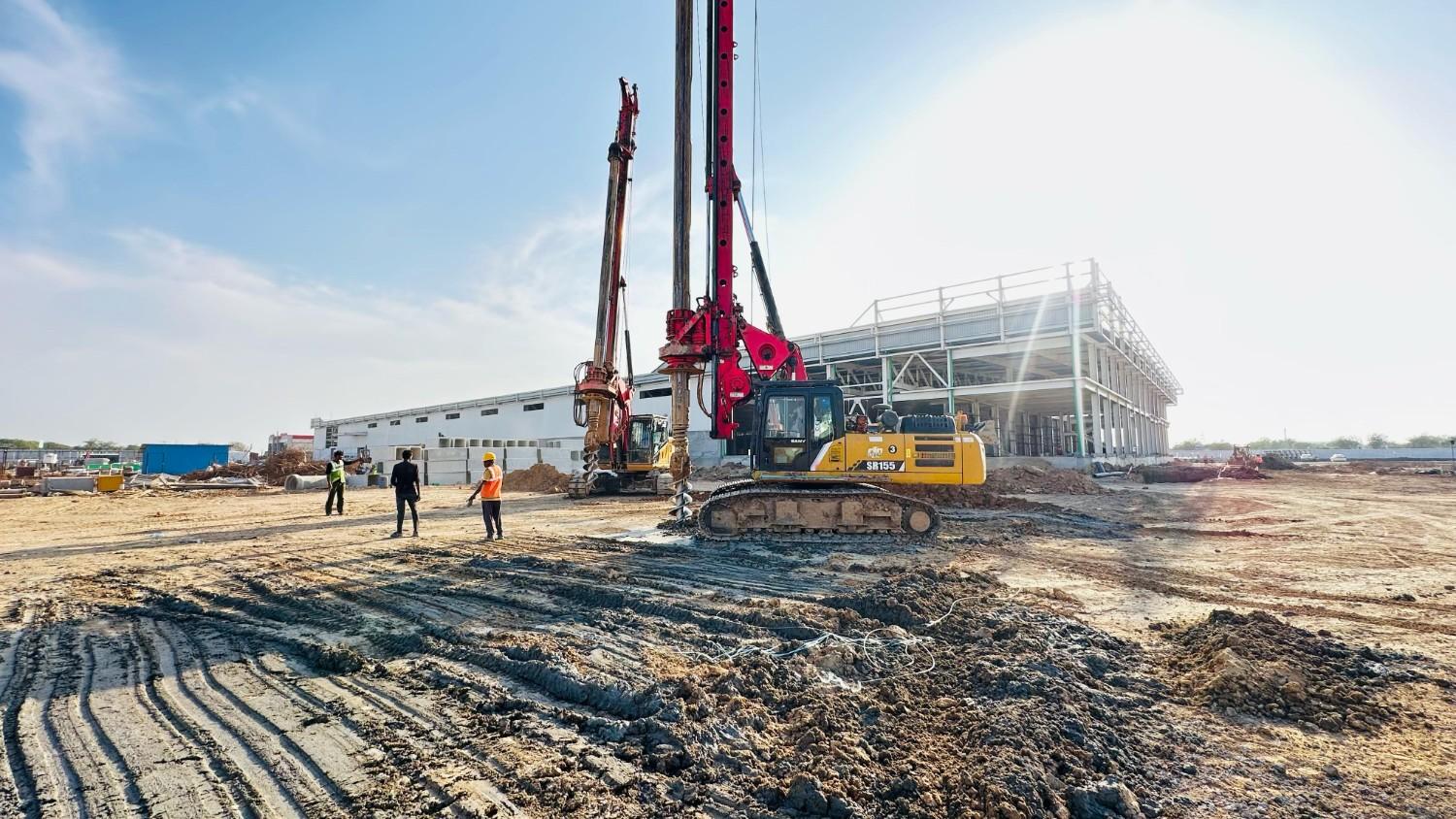
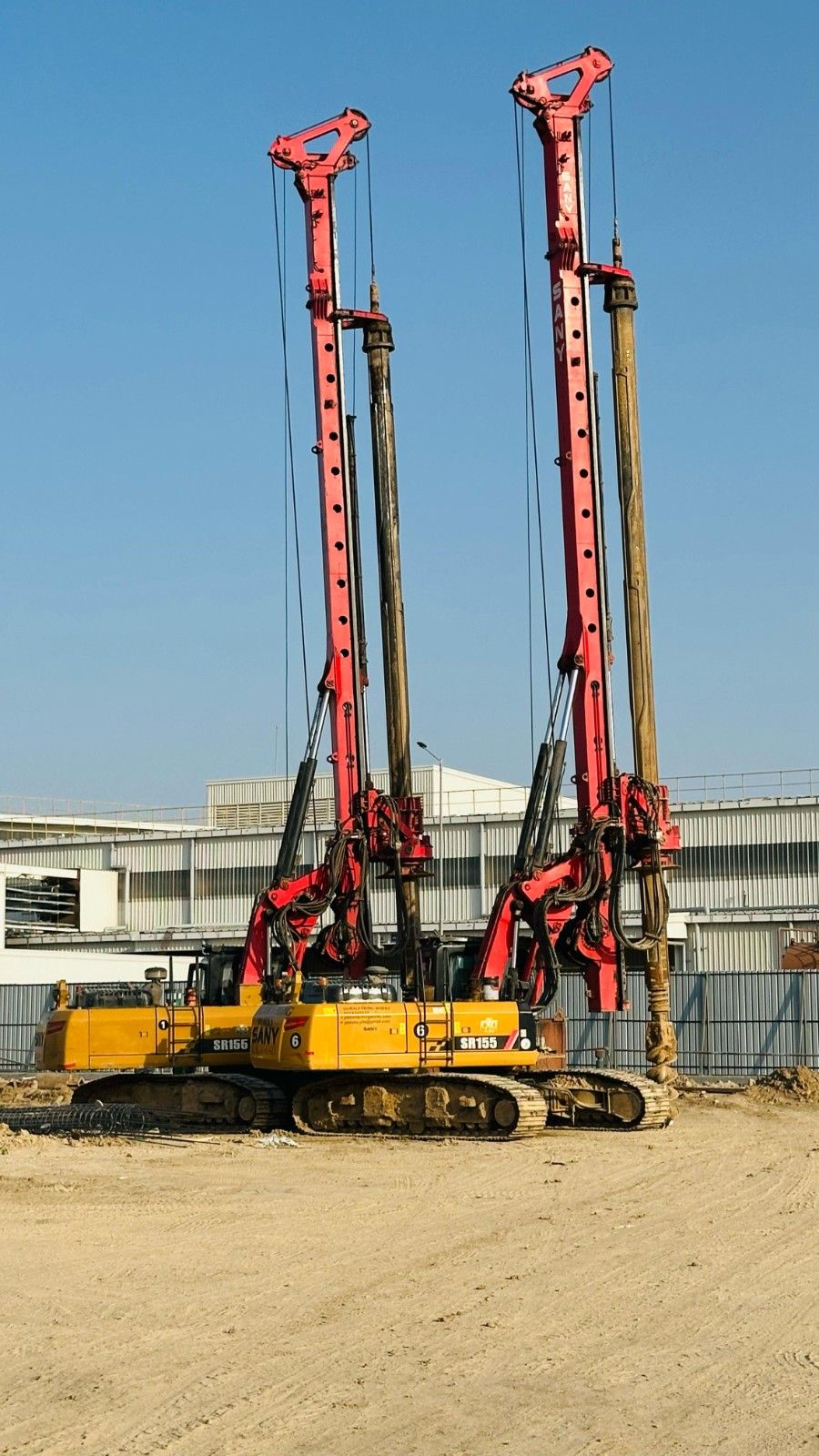
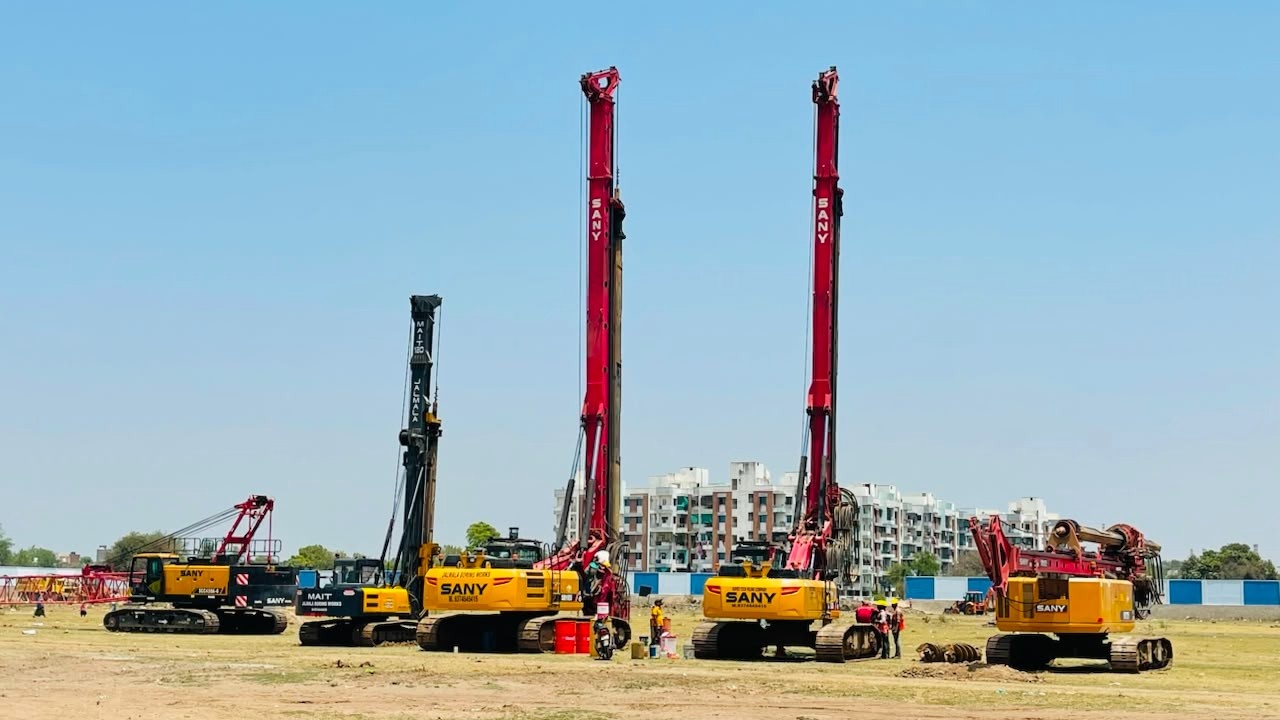
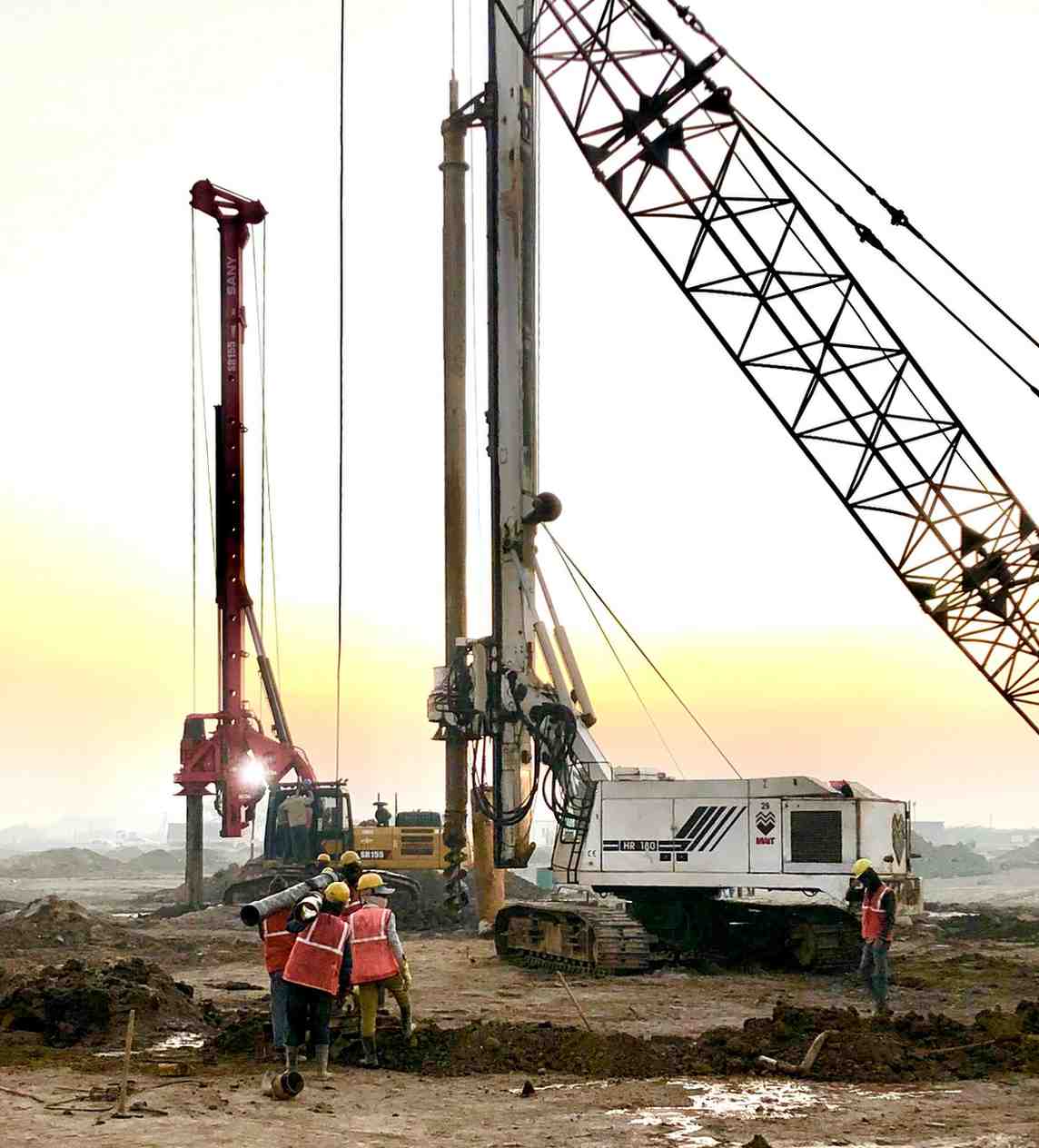
We specialize in bored piling with diameters ranging from 200 mm to 2000 mm and depths up to 50 meters. Using advanced hydraulic rotary rigs, we execute piling operations efficiently across a wide range of soil conditions. Our fleet includes high-performance rotary drilling rigs capable of working in restricted headroom areas while delivering precision, stability, and high productivity.
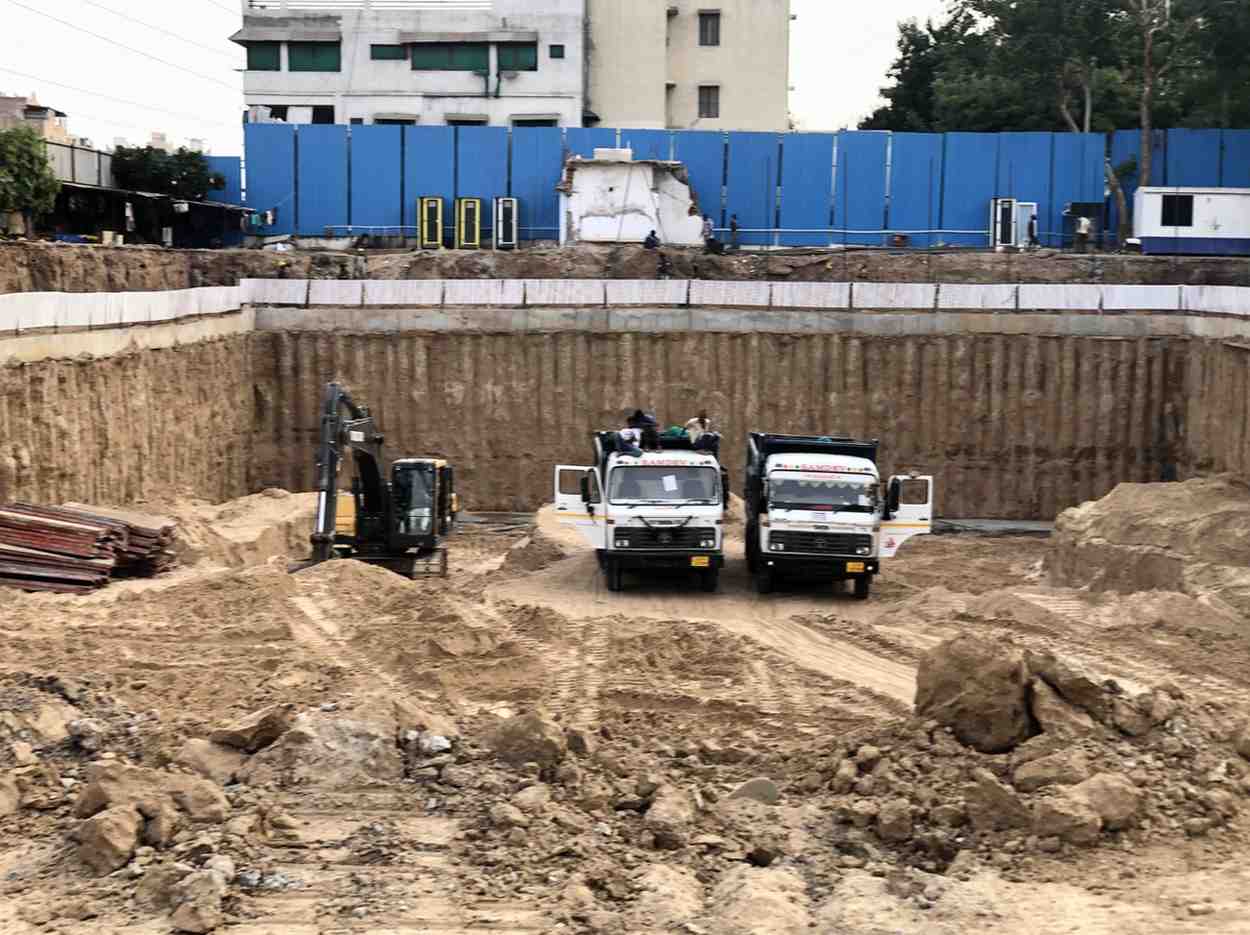
Secant pile walls are constructed by intersecting reinforced concrete piles to form a continuous retaining structure. Primary piles are installed first, followed by reinforced secondary piles after sufficient curing. This technique provides excellent groundwater control and soil retention, making it ideal for deep excavations, basements, and foundation support in challenging ground conditions.
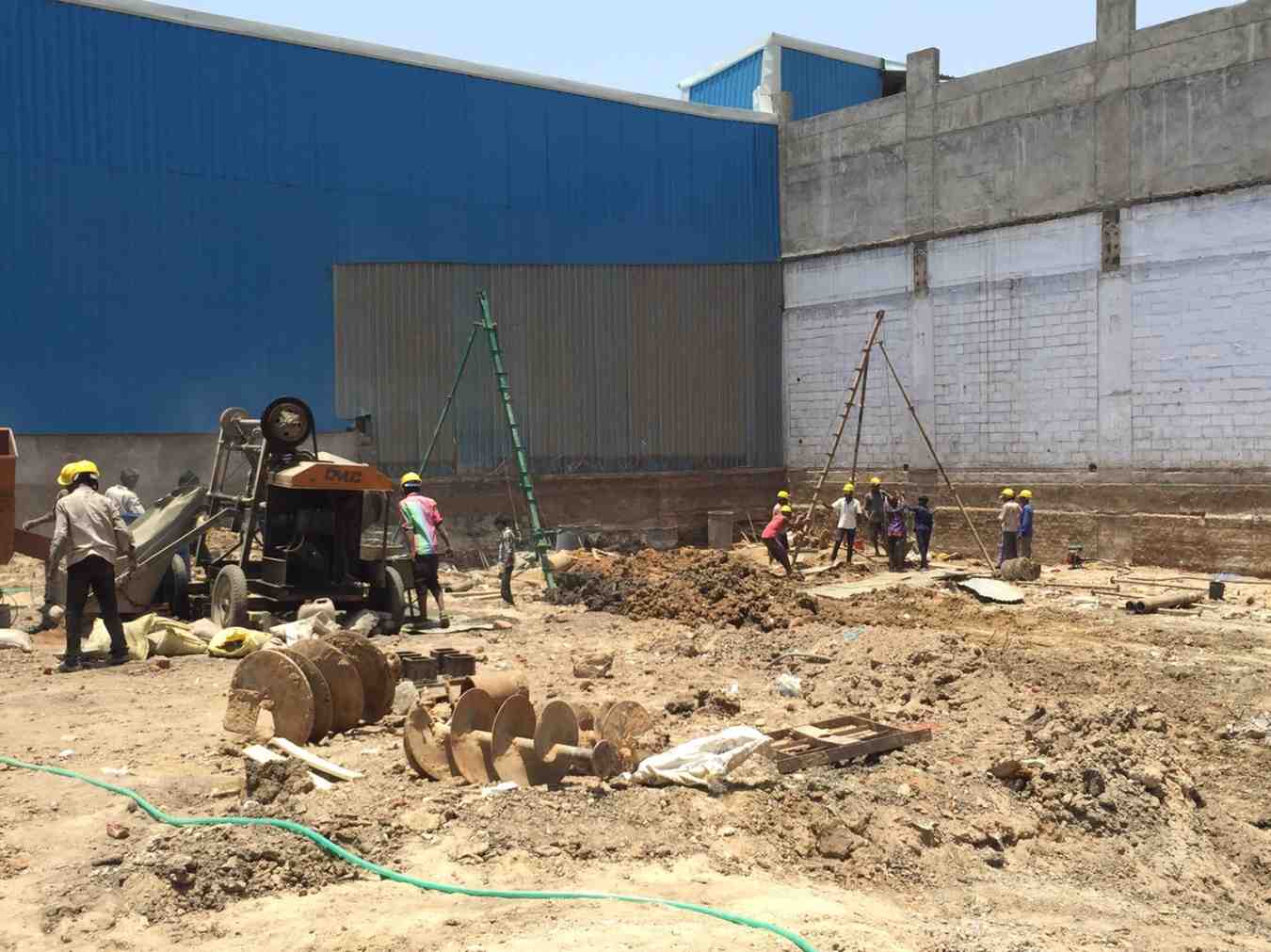
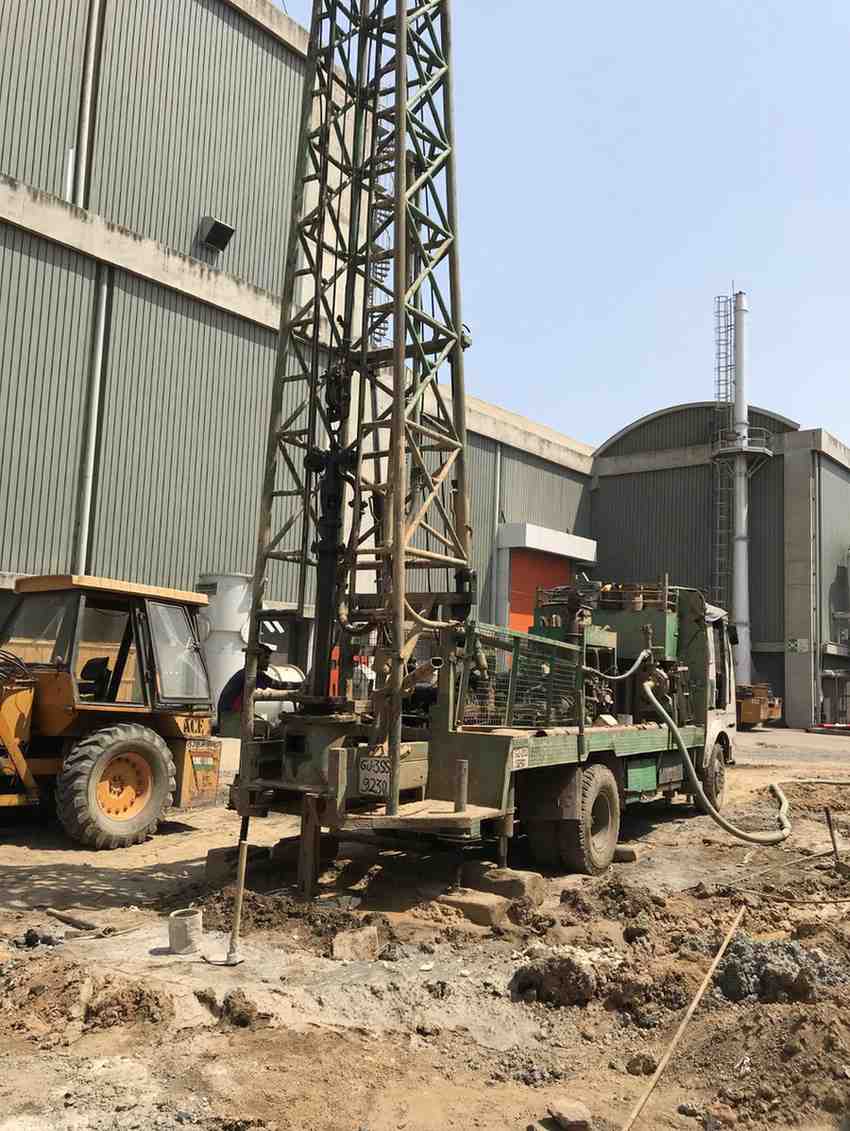
The Manual Auger Method is a reliable piling technique suitable for locations with restricted access or where low noise and vibration are essential. A tripod and manual winch system are used to drill boreholes using a helical auger. This method is commonly employed for pile diameters ranging from 250 mm to 1000 mm and offers an economical solution for smaller foundation projects.
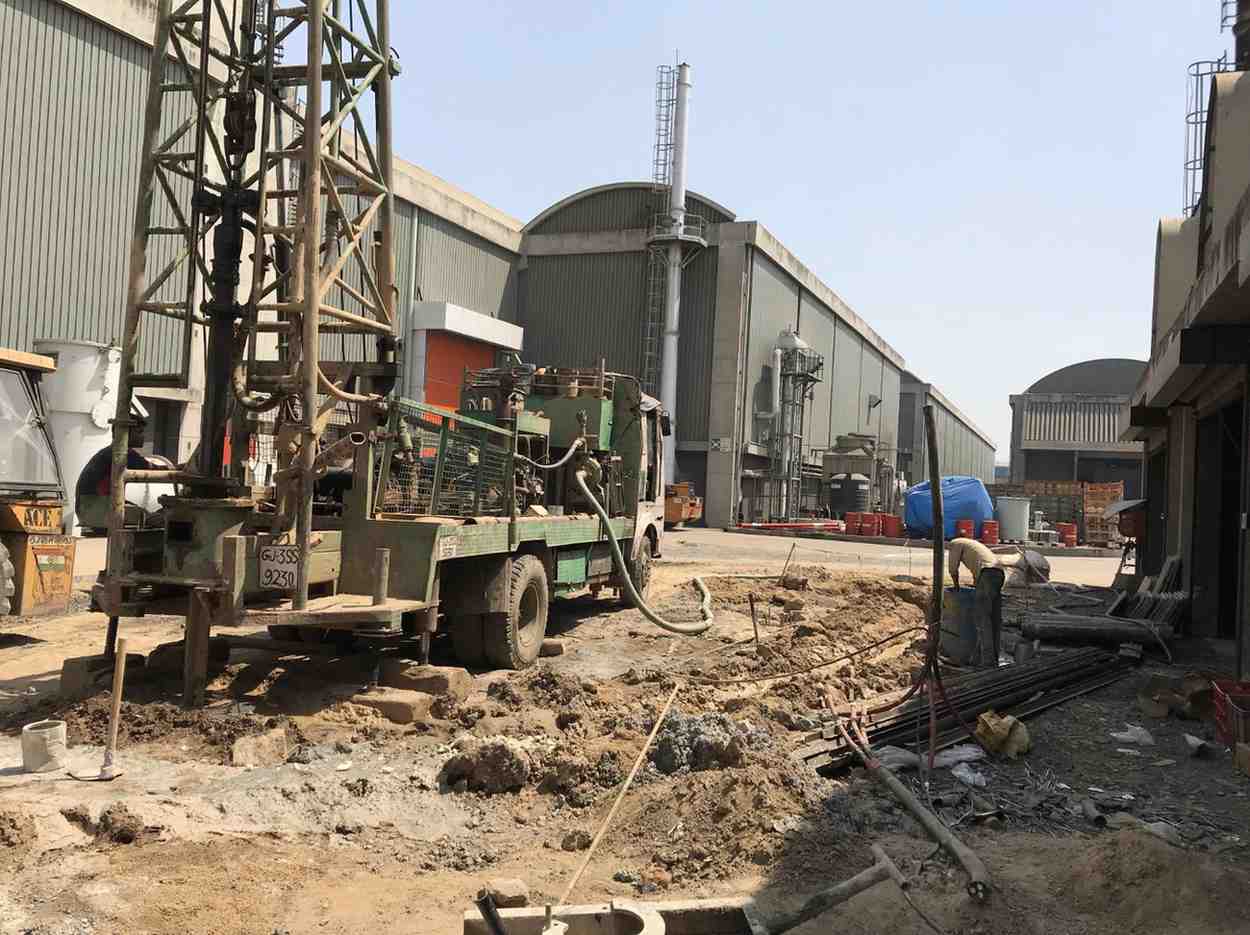
Our Truck Mounted Rotary (TMR) rigs utilize continuous bentonite slurry circulation to stabilize boreholes during drilling. Auger drilling is performed to the required depth while bentonite slurry supports the excavation and carries excavated soil back to a recycling tank. This method ensures bore stability, efficient spoil removal, and high productivity, particularly in loose or soft soil strata.
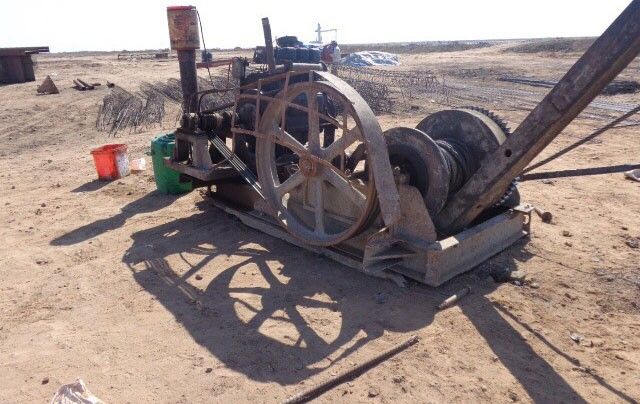
The DMC Pile Method employs Mendola-type rigs combined with bentonite drilling fluid for safe and efficient pile construction. Surface soil is loosened using a bailer before drilling continues with a percussion chisel. Bentonite slurry stabilizes the bore while transporting excavated material to settling pits. Once the desired depth is achieved, the drilling tools are removed and the final depth is verified before reinforcement and concreting.
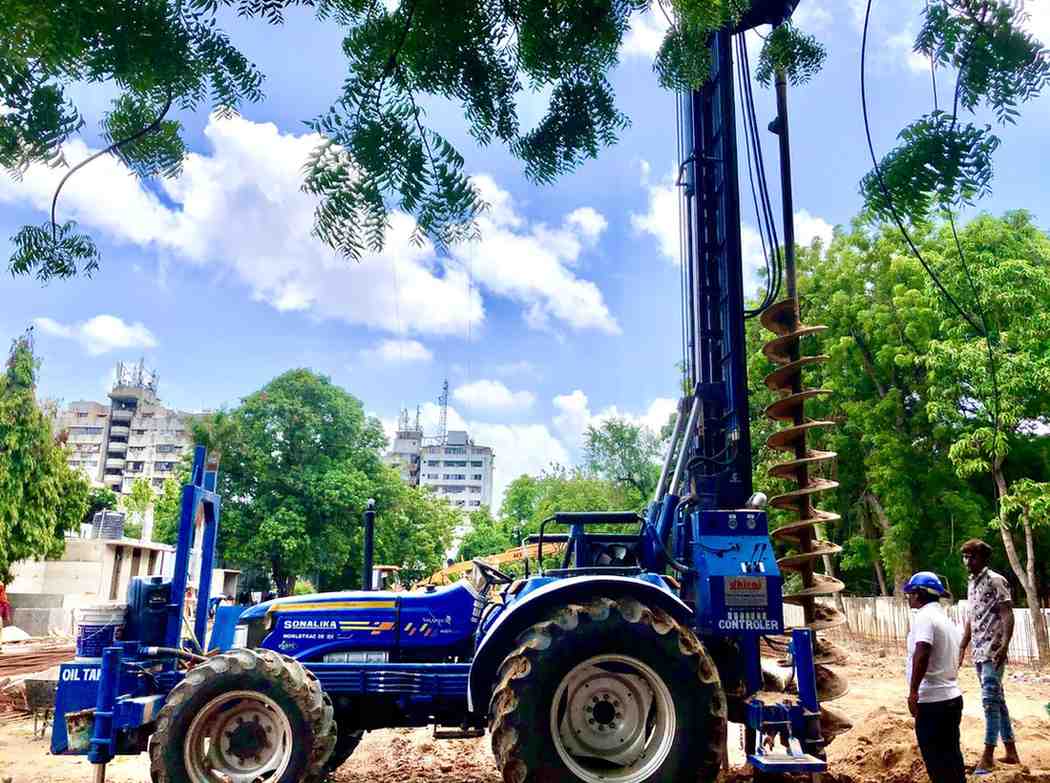
This method utilizes tractor-mounted rotary drilling rigs for fast and economical pile boring. Auger drilling is carried out to the required depth, with DMC rods added progressively to achieve deeper penetration through varying soil strata. It is particularly suitable for medium-depth foundation works and offers drilling capacities of up to 16 meters with excellent operational efficiency.
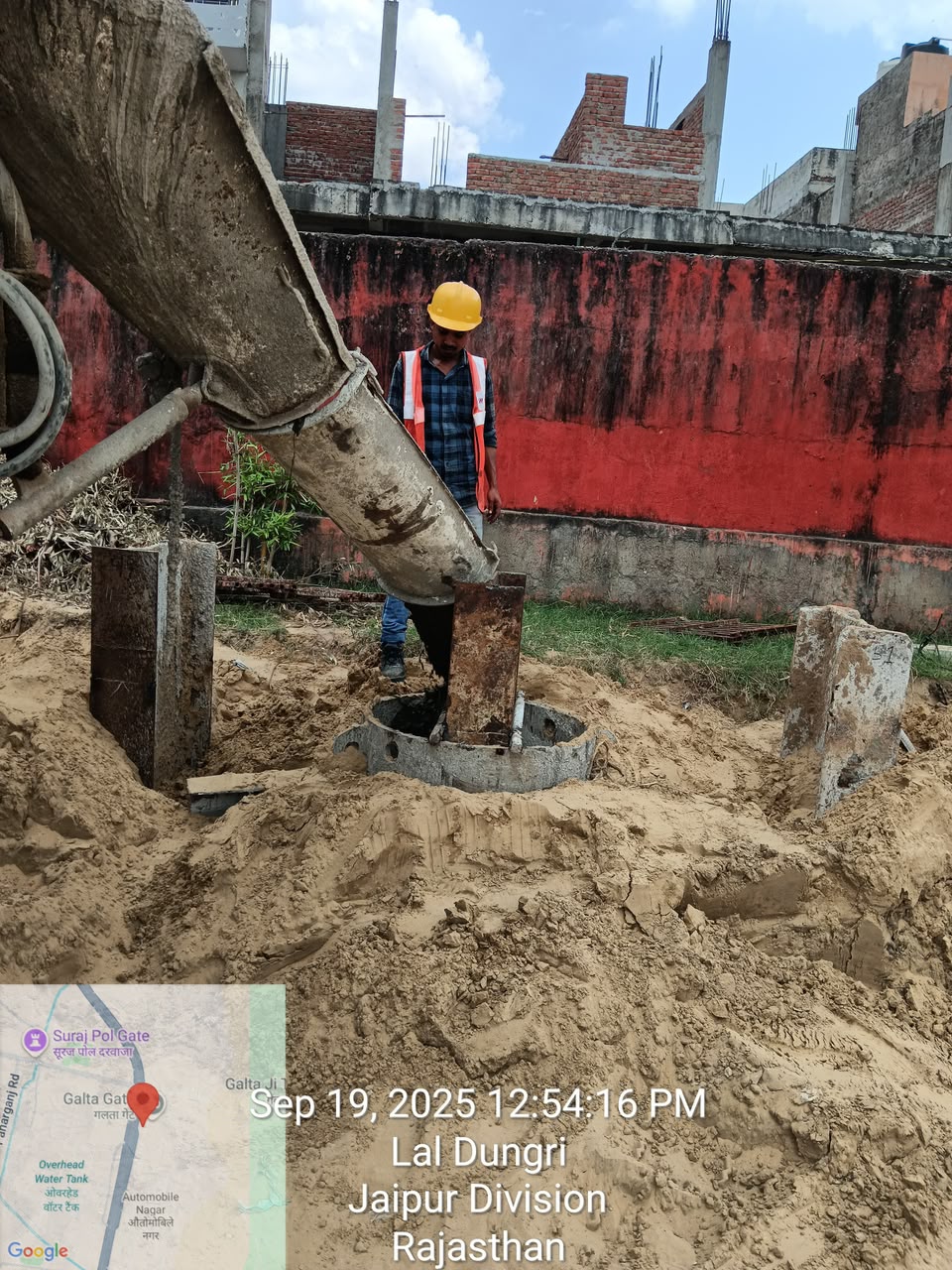
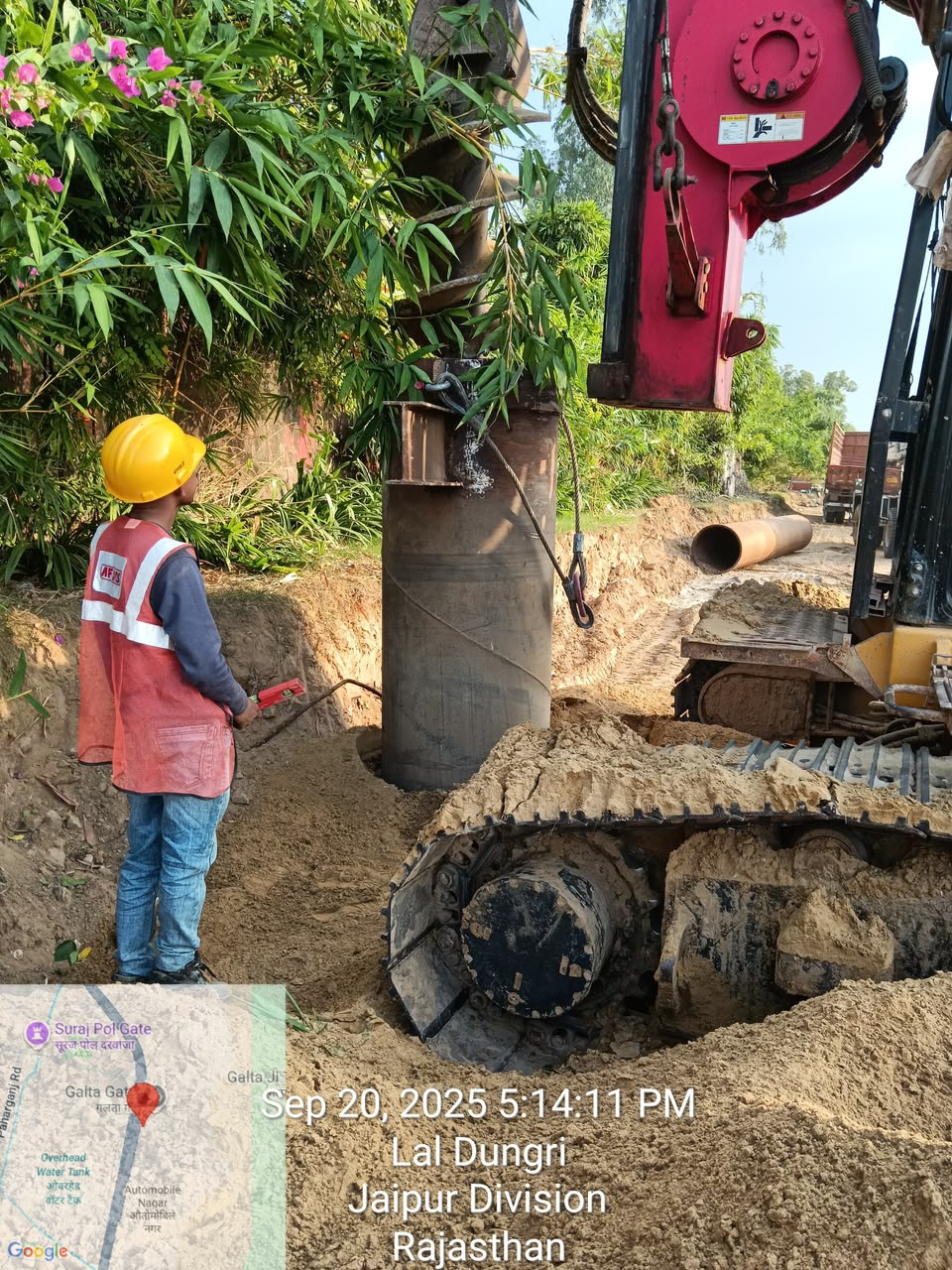
Our Work in Action
Click any image or video to view it in full screen.
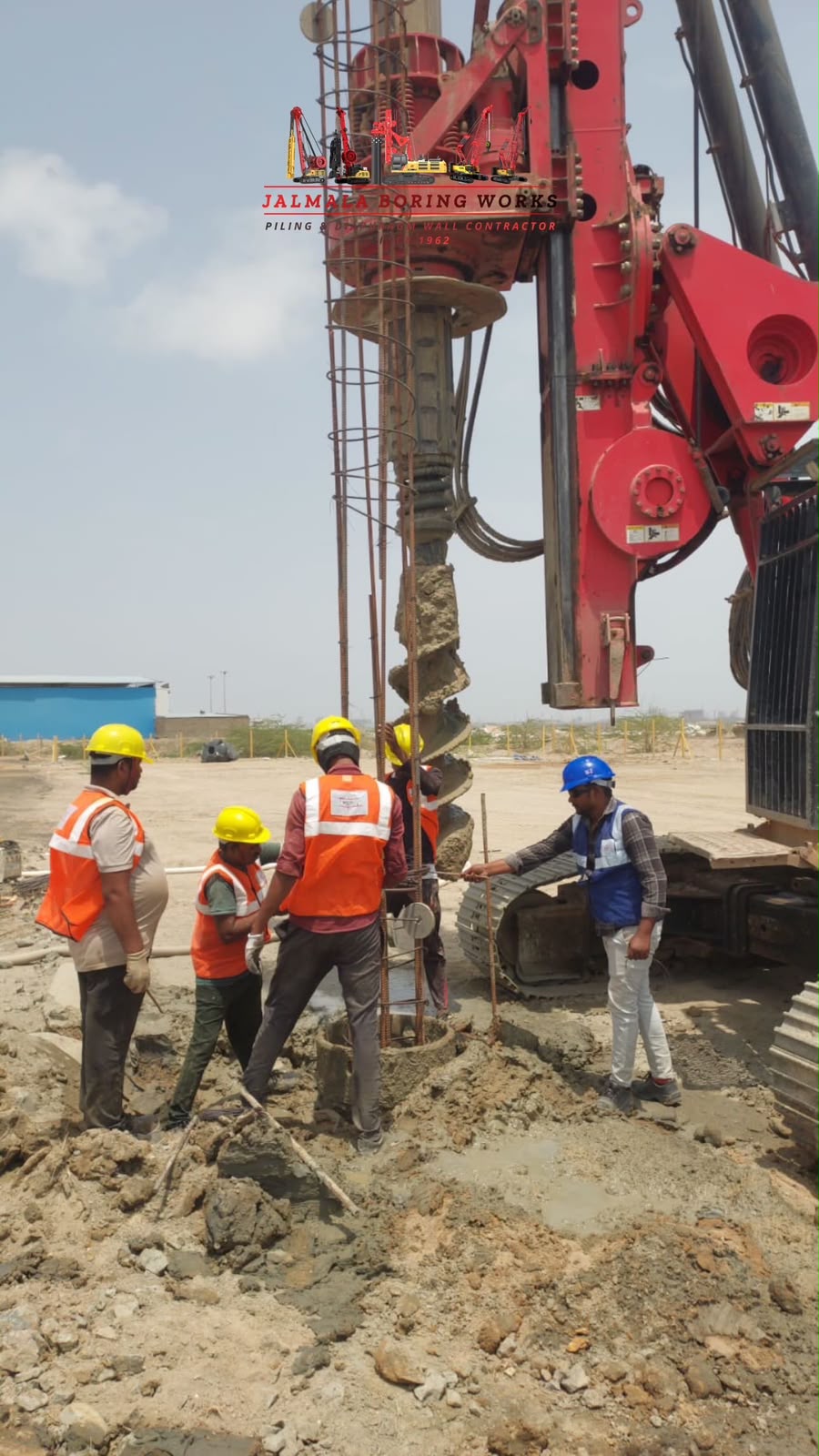
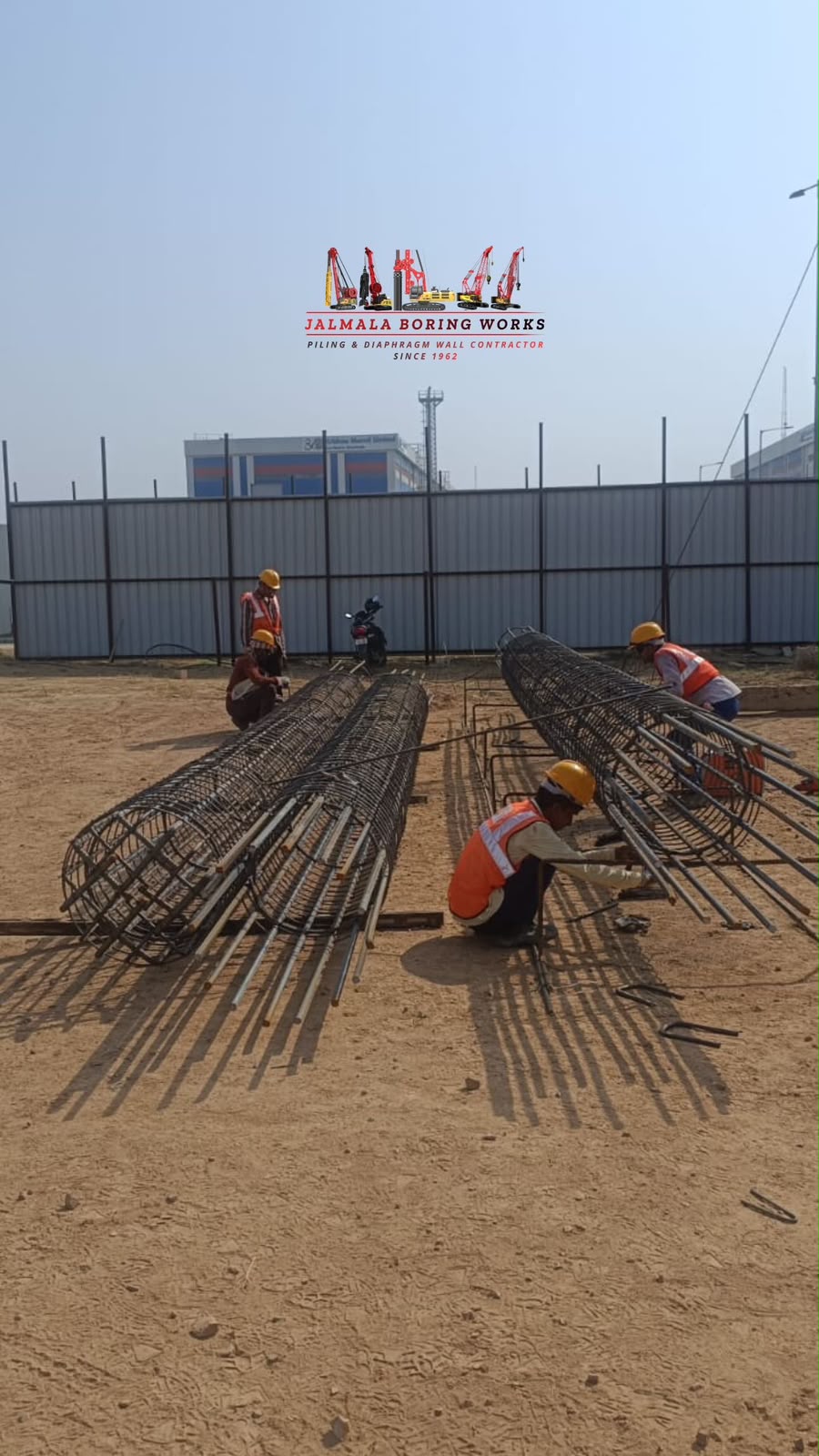
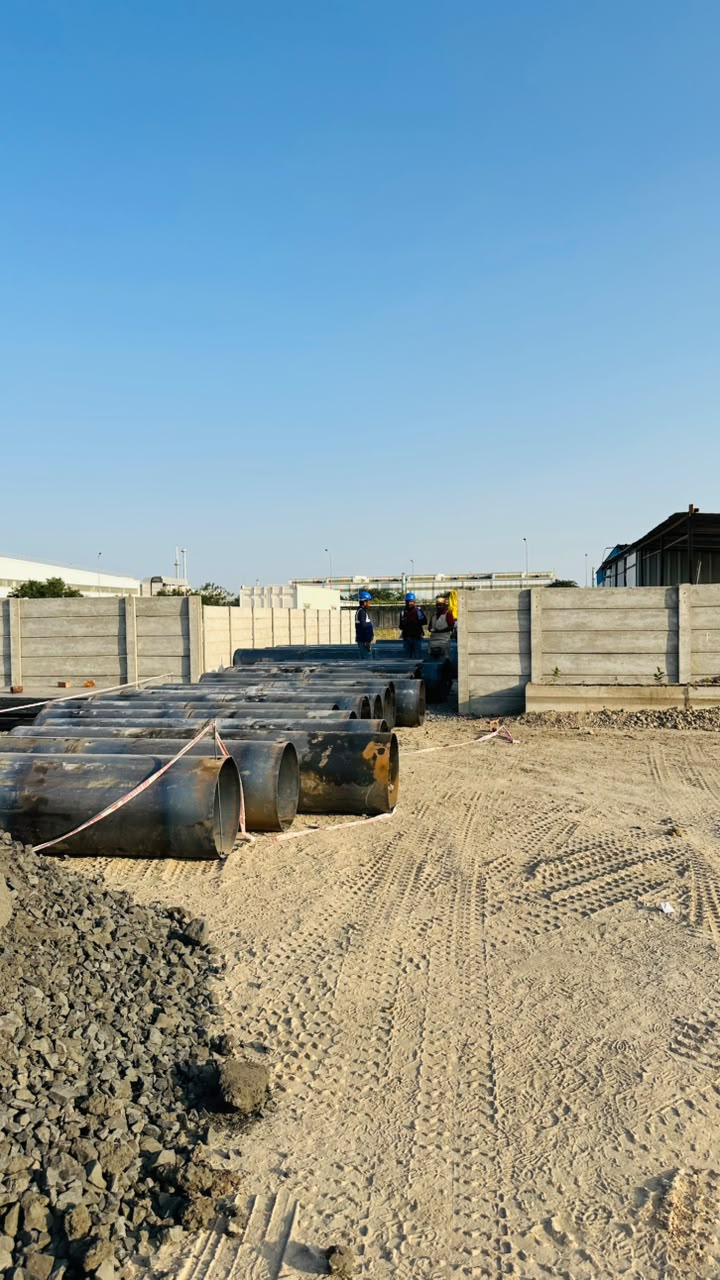
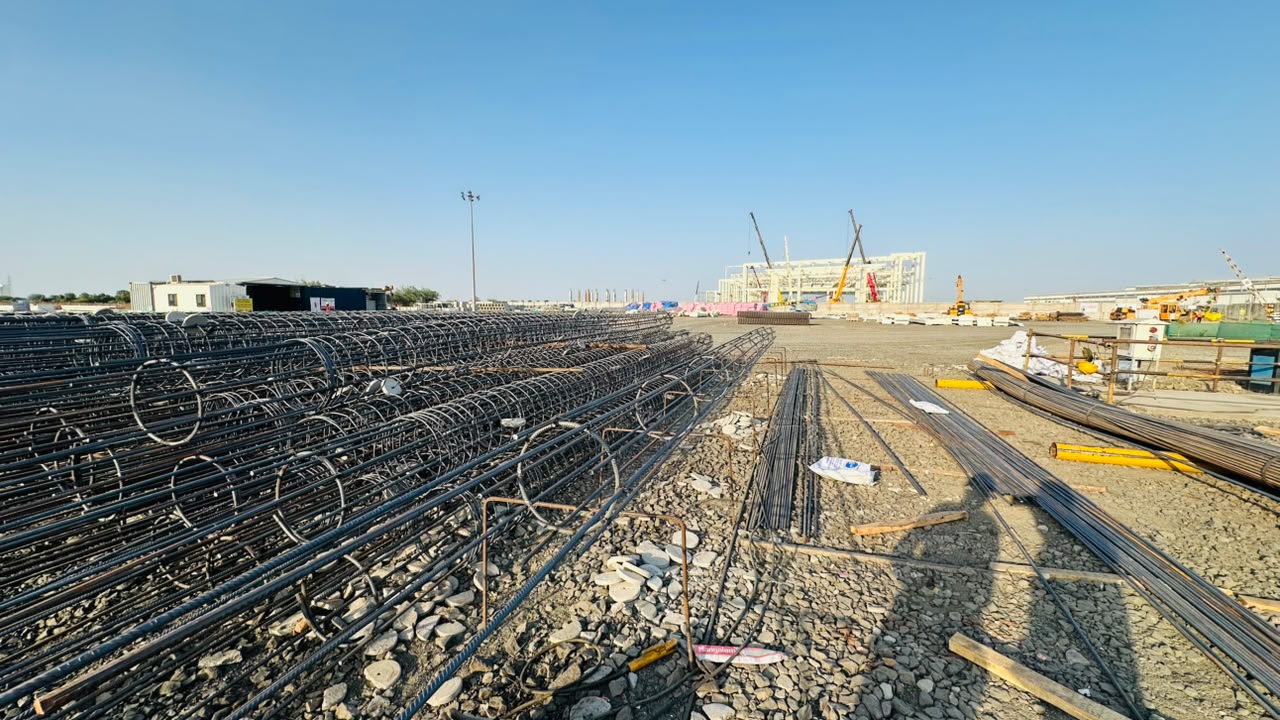
Recent Projects
Pile FoundationConstruction Process
Survey, Setting Out & Guide Casing Installation
Detailed survey, marking of pile locations, and installation of temporary guide casing.
- Detailed survey and marking of pile locations
- Verification of pile coordinates and levels
- Positioning of Hydraulic Rotary Piling Rig
- Installation of temporary guide casing
- Ensures accurate pile alignment and protects bore opening
Pile Boring & Excavation
Drilling of pile bore using Hydraulic Rotary Rig to required depth.
- Drilling of pile bore using Hydraulic Rotary Rig
- Excavation carried out to the required depth and founding strata
- Suitable drilling tools used for soil, rock, or hard strata
- Continuous monitoring of depth, verticality, and pile diameter
- Removal and disposal of excavated soil from site
Slurry Support & Borehole Cleaning
Preparation and circulation of Bentonite/Polymer Slurry and borehole cleaning.
- Preparation and circulation of Bentonite/Polymer Slurry
- Stabilization of borehole walls during drilling
- Recycling of slurry through slurry plant
- Cleaning of borehole bottom to remove loose sediments
- Final inspection of bore depth and cleanliness
Reinforcement Cage Installation
Fabrication and lowering of reinforcement cage into the bore.
- Fabrication of reinforcement cage as per approved drawings
- Installation of spacers, couplers, lifting points, and cover blocks
- Lowering of reinforcement cage into the completed bore
- Accurate positioning and level adjustment
- Quality inspection before concrete placement
Tremie Concreting
Continuous concrete placement using tremie pipes.
- Installation of tremie pipes up to borehole bottom
- Continuous placement of concrete from bottom to top
- Prevention of concrete segregation through tremie method
- Displacement and recovery of slurry during concreting
- Completion of pile concreting in one uninterrupted operation
Pile Completion & Quality Control
Final pile completion, head trimming, and quality assurance.
- Extraction of temporary casing during or after concreting
- Recording of concrete consumption and pile parameters
- Pile head chipping up to cut-off level
- Verification of pile depth, diameter, and concrete quality
- Completion of testing, documentation, and quality assurance
- Ready for pile cap and foundation construction
Piling Contractor Vadodara – Chemical Soil Engineering for Koyali, Nandesari & GSFC Corridors
Vadodara is not the same piling environment as Ahmedabad, Surat, or Rajkot. The city hosts India's largest single-site concentration of chemical, petrochemical, and fertilizer industries — IOCL Koyali Refinery, GSFC, IPCL, and dozens of chemical units in Nandesari and Makarpura GIDC. Decades of industrial activity have introduced three distinct chemical attack environments that require specialized pile design and construction. If you are a structural consultant, EPC contractor, or procurement team specifying piling work in Vadodara's chemical corridors, this guide explains what makes the engineering different.
Zone 1 – Koyali Refinery Belt: Sulfate Attack
The Koyali belt around IOCL's refinery experiences elevated soil sulfate concentrations from decades of refinery emissions, sulfur handling, and process byproducts. Sulfate attack targets the cement paste itself — sulfates react with tricalcium aluminate (C3A) in cement to form ettringite and gypsum, which are expansive. The concrete cracks from inside, exposing reinforcement to further attack. In Koyali's core zone, sulfate concentrations can exceed 5,000 ppm — well above IS 456 "very severe" classification. Mitigation per Vadodara sulfate-resistant piling practice: sulfate-resisting cement (SRC) per IS 12330 with C3A below 3% or Portland pozzolana cement (PPC) with 25-35% fly ash, minimum 75 mm cover, and concrete grade M35 or higher.
Zone 2 – Nandesari GIDC: Chloride + Effluent Acid Attack
Nandesari GIDC hosts a dense concentration of chemical processing units producing dyes, intermediates, and specialty chemicals. The soil and groundwater in this zone are contaminated with chlorides from chemical processing and various effluent acids that lower the soil pH below 5.0 in many locations. Chloride attack damages reinforcement — it breaks down the passive oxide layer on steel, causing corrosion that expands and cracks the concrete. Where chlorides and sulfates coexist (common in Nandesari), the combined attack accelerates deterioration. Mitigation per Nandesari chloride-protected piling practice: Portland slag cement (PSC) with 50%+ slag content (slag binds chlorides), epoxy-coated or galvanized reinforcement in aggressive zones, minimum 75 mm cover, and concrete grade M40 or higher with low permeability.
Zone 3 – GSFC Belt: Ammonia and Urea Attack
The GSFC fertilizer complex produces ammonia and urea, which attack concrete through a different mechanism than sulfates or chlorides. Ammonium compounds dissolve calcium hydroxide in the cement paste, reducing pH and disrupting the passivation layer around reinforcement. Urea decomposes to ammonia over time, so the attack intensifies with age. This is a less-discussed but significant mechanism affecting piling near the GSFC belt. Mitigation per GSFC-area piling practice: high-density concrete with low permeability, SRC or PPC cement, enhanced cover (75-100 mm), and specific attention to ammonium compound concentrations during soil testing.
Soil Testing Requirements for Vadodara Chemical Zones
Standard geotechnical investigation must be supplemented with chemical analysis of soil and groundwater: sulfates as SO3 (target: below 0.2% for negligible, 0.5-1.0% for severe, above 1.0% for very severe per IS 456), chlorides as Cl (target: below 0.2% for low risk, 0.5-1.0% for high, above 1.0% for very high), pH (below 5.5 indicates acidic aggressive conditions), and specific contaminants where relevant (ammonia near GSFC, effluent- specific acids near Nandesari). Testing should be done at multiple depths because contamination is often stratified — surface soil may be more contaminated than deeper strata, or vice versa. Every Vadodara chemical-zone project should have chemical test reports as part of the geotechnical investigation.
Cement Selection Matrix for Vadodara Zones
Cement selection depends on the specific chemical exposure. For sulfate-rich Koyali: Sulfate Resisting Portland Cement (SRPC) per IS 12330 with C3A below 3%, or Portland Pozzolana Cement (PPC) per IS 1489 with 25-35% fly ash. For chloride + effluent Nandesari: Portland Slag Cement (PSC) per IS 455 with 50%+ slag content (slag provides better chloride binding than fly ash) or PPC with 30%+ fly ash. For ammonia-urea GSFC: SRC or PPC with concrete grade M40+ and low permeability. For mixed effluent Makarpura: PPC with 30%+ fly ash or PSC with 50%+ slag. Never use Ordinary Portland Cement (OPC) alone in aggressive Vadodara zones — the C3A content and low pozzolanic protection make it vulnerable to all three attack mechanisms.
Concrete Cover and Reinforcement Protection
Cover is the single most cost-effective protection against all three chemical attack mechanisms because it extends the diffusion path for aggressive ions. Per IS 456 exposure classification, Vadodara's chemical zones fall into "severe" or "very severe" categories. Minimum cover for cast-in-situ piles: severe — 50 mm; very severe — 75 mm. For Koyali and Nandesari core zones, best practice is 75-100 mm regardless of classification. For reinforcement protection, epoxy-coated or galvanized rebar is specified in the most aggressive zones. Corrosion-inhibiting admixtures (calcium nitrite or amine-based) can be added to the concrete mix for enhanced protection. For extreme cases — permanent piles in Koyali's core with 100-year design life — cathodic protection systems may be evaluated.
Why This Technical Depth Matters in Vadodara
Piling contractors who do not understand chemical attack mechanisms will use OPC and standard cover, and their piles will look fine for 10-15 years before the damage becomes visible. By then, retrofitting or replacement is a 5-10× cost multiplier over doing it right the first time. In Vadodara, piling durability is not an optional engineering decision — it is a core project requirement. Structural consultants who have specified piles in this region know the difference. Jalmala Boring Works has executed piling in the Koyali, Nandesari, and GSFC corridors with the cement selection, cover, and testing protocols that 30-50 year design lives require.
Contact Our Vadodara Chemical Soil Piling Team
Ready to discuss chemical soil piling in Vadodara for your project? Call our team at +91 93745 45415 or email jalmala.pile@gmail.com. Share your geotechnical report and chemical test results, and our team will respond with a specific cement selection, cover specification, and corrosion protection recommendation for your project. Main office is at Dholka Road, near Nariampura Village, Narimanpura, Sarkhej, Ahmedabad, Gujarat 382210. For an overview of our broader pile foundation services in Vadodara, see the services page — and for PSU vendor registration, see our PSU vendor contractor Vadodara page.